

After surgery your dog needs protection more than style. the right soft collar helps prevent licking and biting at incisions while keeping your pet comfortable enough to rest and heal. you want a collar that stays in place, is easy to put on and take off, and is gentle against sensitive skin. This guide covers six shortlisted soft collars built specifically for after-surgery recovery. we evaluated each option against practical criteria such as fit, material, and ease of care to help you pick the best collar for your dog's healing period.
Top Picks at a Glance
| Best Overall Soft Collar for Dogs After Surgery The best all-around soft collar for post-op healing and comfort | Supet Inflatable Dog Cone Collar |  |
| Best Budget Soft Collar for Dogs After Surgery A low-cost soft collar that still protects and fits reliably | Didopet Inflatable Donut Dog Cone Medium |  |
| Best Adjustable Soft Collar Highly adjustable fit to accommodate changing bandages and sizes | GLADOG Soft Dog Cone Collar |  |
| Best Lightweight Soft Collar Minimal bulk and weight for easier movement and tolerance | Mabawa Soft Dog Recovery Collar M |  |
| Best Breathable Soft Collar Breathable, moisture-wicking fabrics to reduce irritation and heat | Avont Breathable Dog Cone Collar |  |
Supet Inflatable Dog Cone Collar
Best Overall Soft Collar for Dogs After Surgery

| Fit Type | Adjustable |
|---|---|
| Closure Type | Hook & Loop |
| Water Resistance Level | Water Resistant |
| Target Species | Dog |
| Neck Size | 11 inches |
The Supet inflatable dog cone is a donut-shaped recovery collar designed to keep dogs and cats from reaching wounds while staying lightweight and comfortable. It inflates into a cushioned ring and secures with an inner loop system that lets you thread your pet's regular collar through to help prevent slipping, plus an outer hook-and-loop strap for adjustment. The non-stick outer fabric resists hair clinging and can be removed for cleaning, and the water-resistant inner bladder provides neck support without blocking peripheral vision so pets can eat, sleep, and move more naturally than in a hard Elizabethan cone. It is best used for typical post-surgery protection, hotspot care, or to stop persistent licking on body areas the donut can physically block; however, the shape and size mean it is not suitable for breeds with very long noses or extremely long bodies. You will need to measure neck circumference to pick the right size and inflate it properly; very determined chewers may still be able to damage the bladder if left unsupervised.
Best for: Pet owners who want a low-profile, cushioned alternative to rigid Elizabethan collars for routine post-surgery or wound protection and prioritize comfort and mobility for their animal.
Less Ideal for: Owners of very long-nosed or very long-bodied breeds and households with pets that chew persistently should consider a different style of protective collar.
- Soft, cushioned barrier that is gentler than rigid cones
- Inner loops let you thread the pet’s regular collar to reduce slipping
- Outer hook-and-loop strap provides adjustable fit
- Non-stick outer fabric resists pet hair and is removable for cleaning
- Lightweight and water resistant so pets can eat and rest comfortably
- Not suitable for breeds with very long noses, legs, tails, or bodies
- Inflatable bladder can be punctured by determined chewers
Verdict: The best overall soft collar for dogs after surgery that balances comfortable protection, secure fit, and ease of cleaning for most recovery needs.
Didopet Inflatable Donut Dog Cone Medium
Best Budget Soft Collar for Dogs After Surgery
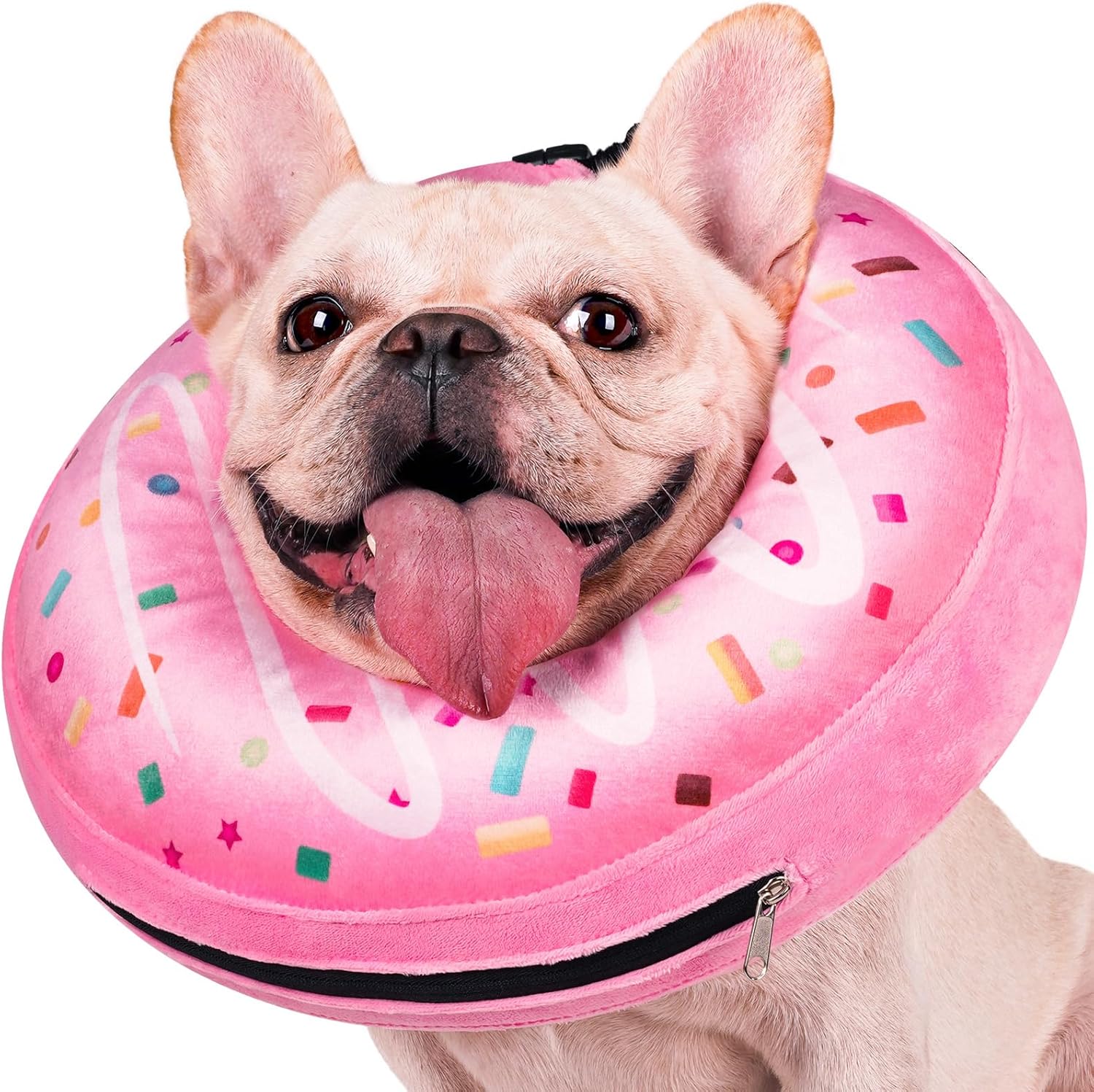
| Size guide | M (Neck 8"-11") |
|---|---|
| Closure type | Buckle, Hook & Loop, Zipper |
| Fit type | Adjustable |
| Water resistance | Water Resistant |
This inflatable donut collar replaces a hard Elizabethan cone with a soft, lightweight ring that keeps a dog from reaching wounds while allowing normal activities like eating and playing. Made of velvet with an internal air bladder, it inflates to provide a cushioned barrier and can be adjusted with a buckle, hook-and-loop, and zipper closure for a secure fit; five elastic loops let you attach it to the dog's regular collar for extra security. The design is aimed at pug-faced and other short-muzzled breeds and doubles as a neck pillow when not in active recovery use. Practical benefits include easier mobility and less stress for sensitive or small pets, machine-washable cover after deflating, and water resistance for quick cleaning. Important limitations are breed fit: it is not suitable for long-snouted or long-bodied breeds, and very determined chewers can still damage or bypass the collar, so supervision is required.
Best for: Pet owners who need a lightweight, low-stress recovery option for small or short-muzzled dogs that still prevents access to surgical sites while letting the animal move and eat normally.
Less Ideal for: Owners of long-snouted, large, or very powerful dogs that can reach wounds despite a donut collar or may chew through an inflatable design should choose a more substantial, rigid protector.
- Low-profile inflatable design reduces weight and improves mobility compared with rigid cones
- Velvet cover and air cushioning double as a comfortable neck pillow during recovery
- Multiple closures (buckle, hook & loop, zipper) and elastic loops help secure fit and prevent escapes
- Machine-washable cover and water resistant construction make cleaning straightforward
- Not suitable for long-nosed or long-bodied breeds by manufacturer guidance
- Can be damaged or bypassed by determined chewers, so it requires supervision
Verdict: The best budget soft collar for dogs after surgery that provides basic protection and a secure, comfortable fit without extra features or high cost.
GLADOG Soft Dog Cone Collar
Best Adjustable Soft Collar

| Material Type | Polypropylene (PP) |
|---|---|
| Closure Type | Hook & Loop |
| Fit Type | Adjustable custom fit |
| Water Resistance Level | Not Water Resistant |
The GLADOG Soft Dog Cone Collar is a lightweight, semi-transparent e-collar intended for post-surgery recovery and general wound protection. It fits by wrapping around the neck and securing with a wide hook-and-loop closure so you can fine-tune tightness for a more secure fit than fixed plastic cones. The soft fabric-trimmed edges and flexible polypropylene body reduce rubbing and allow most dogs to eat, drink, and navigate home spaces with less stress, while the clear material preserves peripheral vision. It ships in size sets (three sizes per set for most SKUs, XL/XXL sold as a single cone) so you can choose for breed and neck measurements, and the PVC construction is washable for repeated use. Important limits are that it is not water resistant and the flexible material can be less rigid than hard cones, so very determined chewers or dogs that need a wider physical barrier may still reach wounds. Measure the neck carefully to pick the right size because fit is important for effective protection.
Best for: Buyers who prioritize a precise, easily adjustable collar that minimizes rubbing and keeps dogs calm during recovery across a range of breeds and neck shapes.
Less Ideal for: Owners needing a fully water-resistant or extremely rigid barrier for aggressive chewers or when a larger hard cone is required for full protection.
- Adjustable hook-and-loop closure for customized, secure fit
- Soft fabric-trimmed edges reduce neck rubbing and increase comfort
- Transparent, lightweight design preserves vision and makes daily activities easier
- Flexible, washable PVC construction for repeated use
- Not water resistant so it can become soggy if exposed to moisture
- Less rigid than hard plastic cones and may not stop very determined chewers
Verdict: The best adjustable soft collar for owners who need a customizable fit to accommodate wound dressings, swelling changes, or different neck sizes during recovery.
Mabawa Soft Dog Recovery Collar M
Best Lightweight Soft Collar

| Target Species | Dog, Cat |
|---|---|
| Fit Type | Adjustable |
| Closure Type | Drawstring, Elastic Cord, Snap Buttons |
| Water Resistance Level | Water Repellent |
This soft recovery collar uses a lightweight EVA foam core wrapped in a water-repellent fabric to block pets from licking, biting, and scratching wounds while allowing much more mobility than hard plastic cones. It fastens with a combination of drawstring, elastic cord and dual snap buttons so you can adjust fit as your pet settles; a ribbed neck cushion reduces rubbing for longer wear. The flexible cone shape lets most dogs and cats eat, drink and rest more comfortably and the outer surface wipes clean after meals. It is intended to extend beyond the pet's nose for effective protection, so sizing carefully is important and choosing the larger size is recommended if the pet falls between sizes. Because it is soft and light it will not fully prevent all reach for very determined chewers and it is not designed for full water immersion, so avoid swimming or bathing while your pet wears it.
Best for: Pet owners who prioritize mobility and comfort during postoperative recovery and want a low‑restriction collar that still reduces access to wounds.
Less Ideal for: Pets that require absolute immobilization of the head or owners who need a fully waterproof solution should consider other options.
- Lightweight EVA foam core reduces neck strain compared with rigid cones
- Water-repellent outer fabric wipes clean after meals or spills
- Adjustable fit with drawstring and dual snap closures for a secure, customizable fit
- Ribbed neck cushion softens contact and lowers rubbing and pressure during long wear
- Not suitable for full water exposure or bathing
- May not stop very determined chewers or reachers compared with rigid cones
Verdict: The best lightweight soft collar for dogs that need minimal restriction and greater mobility while still preventing access to surgical sites.
Avont Breathable Dog Cone Collar
Best Breathable Soft Collar

| Closure Type | Drawstring, Hook & Loop |
|---|---|
| Fit Type | Custom Fit |
| Material Type | Mesh |
| Target Species | Dog |
The Avont Breathable Dog Cone Collar is a soft, mesh recovery cone intended to replace rigid plastic Elizabethan collars after surgery or during wound healing. Made from a thickened, breathable mesh fabric, it provides lightweight protection while allowing pets to eat, sleep, and move more naturally than hard cones. The collar uses a drawstring plus hook-and-loop closure with a D-ring to secure fit and deter escape, and the adjustable buckle design lets you fine-tune tension around the neck. In use it reduces anxiety and overheating compared with solid plastic cones and the mesh is washable for repeat use. Important limitations are that soft cones do not block every angle of access to wounds the way stiff cones do, and very determined chewers or dogs with facial wounds may still reach treated areas. Measure the neck-to-nose distance carefully and size up when close to the maximum to ensure adequate depth. For dogs that need better ventilation and lower skin irritation risk, this delivers a comfortable, breathable option for post-surgery recovery.
Best for: Owners who prioritize airflow and lower skin irritation during recovery and need a gentle, comfortable collar that lets a dog eat and rest normally while protecting wounds.
Less Ideal for: Pet parents whose dogs are aggressive chewers, have head or facial injuries that require rigid blockage, or who need a collar for high-risk escape behavior should choose a sturdier option.
- Breathable mesh construction reduces heat buildup and skin irritation
- Adjustable drawstring and hook-and-loop closure for a custom fit
- D-ring and buckle design improves security and helps prevent escapes
- Lightweight and allows normal eating, playing, and sleeping
- Machine-washable and reusable fabric
- Soft design may not fully prevent access to some facial wounds compared with rigid cones
- Not ideal for heavy chewers or dogs determined to remove collars
Verdict: The best breathable soft collar for dogs prone to overheating or skin irritation, offering airflow and moisture management while protecting healing sites.
Choosing the Right Soft Collar Dog Surgery: Key Factors to Consider
Fit and Adjustability
A correct fit is the foundation of an effective soft postoperative collar. A collar that is too loose will slide and expose wound sites, while one that is too tight can restrict breathing or rubbing against incisions.
Look for collars with a wide range of adjustment and clear sizing guidance so you can match the collar to your dog's neck and body proportions. Many soft collars rely on straps or hook-and-loop closures; those solutions should allow micro-adjustments and hold securely without chafing. Proper fit also affects how long a dog will tolerate the collar—comfortable, well-fitting collars are more likely to be worn reliably throughout the recovery period.
Coverage and Protective Shape
Coverage determines whether the collar actually prevents access to the incision or irritated area. Soft collars vary from short neck rings that block direct access to full-body donut-style cushions that create a barrier around the head.
Consider the type and location of the surgery when evaluating protective shape. For wounds on the torso, you may need a collar that extends or pairs well with other protective garments. For facial or neck procedures, a narrower but firmer profile might be enough. The ideal collar provides a physical barrier without forcing the neck into an unnatural position.
Material Comfort and Skin Friendliness
Postoperative dogs often have sensitive skin, shaved areas, or irritation near incisions. The collar's fabric and internal padding should be soft, breathable, and nonabrasive.
Materials that wick moisture and dry quickly reduce the risk of dampness-related irritation. Seam placement and the absence of hard edges matter because any pressure points can cause rubbing at or near healing tissue. Allergy-prone dogs benefit from collars made with hypoallergenic or natural-feeling fabrics. Also consider how the material behaves when wet or soiled since recovery often includes occasional messes.
Ease of Use for Owners
A collar's practical usability affects whether it will be worn consistently and how stressful it is to manage daily care. Owners should be able to put the collar on and remove it quickly without startling or hurting the dog.
Look for intuitive closures, simple cleaning instructions, and designs that allow access to food and water without full removal. If a collar requires frequent adjustment, that increases handling time and can upset anxious animals. Ease-of-use features also include machine-washable fabrics, removable covers, and the ability to compress or fold the collar for storage or travel.
Safety and Visibility
Safety-related design choices reduce secondary risks during recovery. Reflective trim or neutral high-visibility colors help owners monitor a recovering dog in dim light. Avoid collars with small detachable parts that could be chewed off and swallowed.
Check that closures cannot be accidentally released by a restless dog. Also consider how the collar interacts with harnesses or seat belts if you plan to transport the dog; some soft collars are easier to pair with other gear than rigid cones. Prioritize collars that maintain protective coverage while minimizing new hazards.
Maintenance and Longevity
Recovery periods can last days to weeks and collars may need frequent cleaning after vomiting, wound drainage, or outdoor use. Durable materials and washable construction extend useful life through repeated cleaning cycles.
Consider whether covers are replaceable, if foam cores will lose shape over time, and whether fasteners hold after many openings. A collar that degrades quickly can expose an incision or force an early replacement, so longevity matters both for safety and cost-effectiveness.
How Do Soft Collars Protect Surgical Sites Without a Rigid Cone?
Soft collars create a physical barrier that reduces a dog's ability to reach wounds while being more comfortable and flexible than rigid cones. They rely on padding and an increased neck profile to block direct access, and their softer surfaces are less likely to cause anxiety or interfere with sleep.
While they do not prevent every stretching motion, well-designed soft collars combine shape and fit to limit the most common licking and biting behaviors, especially when paired with supervision and other protective garments.
- Padding cushions contact points and distributes pressure over a larger area
- A raised neck profile blocks the most direct mouth reach to the torso and limbs
- Flexible materials reduce stress and allow more natural movement for resting and eating
Can My Dog Eat and Drink While Wearing a Soft Postoperative Collar?
Many soft collars are designed to allow normal eating and drinking, but ease of access depends on collar height and shape. Shorter collars or those with a tapered front let dogs reach bowls more easily, while bulkier donut styles may require raised bowls or brief collar removal under supervision.
If your dog struggles to eat, try elevating food and water dishes or offering wet food that is easier to lap. Always monitor your pet when the collar is off and only remove it if you can prevent immediate licking of the wound.
- Try raised dishes to improve bowl access
- Check whether the collar blocks peripheral vision and adjust feeding setup accordingly
- Supervise any feeding sessions when you remove the collar
What Size Measurements Should You Take Before Buying a Soft Collar?
Measure around the base of the neck where a collar normally sits, and note the widest circumference if your dog has a thick coat or folds of skin. For donut-style or wider collars, also measure shoulder width and the distance from the base of the neck to the middle of the back to estimate how much coverage is needed.
Compare measurements to the manufacturer's sizing ranges and choose the option that allows for snug but not restrictive fastening. When between sizes, prefer the larger fit if the collar's adjustability can compensate, since overly tight collars create greater health risks than slightly looser ones.
- Neck circumference at the base
- Shoulder width for full-coverage designs
- Distance from neck base to mid-back for coverage estimation
How to Manage a Dog That Resists Wearing a Collar After Surgery
Start by introducing the collar gradually before or immediately after surgery, allowing short supervised wear sessions to build tolerance. Use calm praise, soft treats, and a relaxed environment when first putting the collar on and avoid forcing prolonged wear during an initial introduction.
If your dog becomes highly stressed, consult your veterinarian for tips; they may suggest alternatives like additional bandaging strategies or temporary medication for anxiety. Small behavioral strategies—short positive sessions, gradual increases in wear time, and ensuring the collar does not press on sensitive areas—often improve compliance over a few days.
- Introduce collar in short increments with positive reinforcement
- Check fit and adjust to remove pressure points
- Ask your vet about behavioral or medical supports if resistance continues
When Is a Soft Collar Not the Right Choice?
Soft collars are not ideal for every situation. If the wound is on a location a dog can reach despite a padded barrier, or if the animal is relentless about chewing and can dismantle soft materials, a more restrictive solution may be necessary. Similarly, post-surgical instructions that require rigid immobilization should be followed as directed by a veterinarian.
Also avoid soft collars when heavy soiling or exposure to water will make the collar soggy and uncomfortable. In those cases, alternate protective strategies or more water-resistant options are preferable until the incision is less vulnerable.
- Not suitable if a dog can reach the wound despite padding
- Avoid when heavy moisture exposure is expected
- Not appropriate when veterinary instructions call for rigid immobilization
Simple Care Tips to Keep a Soft Collar Sanitary During Recovery
Inspect the collar daily for dampness, soiling, or loose seams and clean it according to the manufacturer's guidelines. Many covers are machine-washable and fast-drying, which helps maintain hygiene without damaging padding or closures.
Rotate between two collars or have a spare cover available if recovery is lengthy to ensure you always have a clean option. After cleaning, confirm fasteners still function and foam retains its shape before returning the collar to regular use.
- Check for soiling and dampness daily
- Machine wash or spot-clean per instructions
- Keep a spare or alternate cover for extended recoveries
How We Chose the Best Soft Collar Dog Surgery
We selected collars based on features that matter for postoperative recovery rather than general fashion or nonspecific comfort claims. Our process prioritized physical protection, comfort for extended wear, and practical usability for owners supporting healing dogs. Primary evaluation criteria included how well the collar prevents access to surgical sites while allowing normal breathing and drinking, the materials used and their impact on skin and fur, fit range and adjustability for commonly encountered body shapes, and ease of cleaning and maintenance after soiling. We also considered durability of construction to withstand repeated use during a multi-week recovery and whether the collar could be put on or removed without causing stress to a healing pet. We excluded products designed mainly for travel restraint, pure fashion collars, and rigid cones that do not claim soft recovery use. We did not include collars intended only for brief wear or single-use medical devices. The final list emphasizes options that balance protection, comfort, and real-world practicality for owners managing a dog after surgery.
Our full evaluation process is outlined in our review methodology.
FAQ
How long should my dog wear a soft collar after surgery?
The duration depends on the type of surgery and healing speed, but dogs often need continuous protection for at least 7 to 14 days. Follow your veterinarian's guidance and keep the collar on until sutures are removed or the wound is fully sealed.
Can a soft collar cause skin irritation around the incision?
Soft collars can irritate sensitive skin if they are abrasive, too tight, or remain damp. Choose breathable, smooth fabrics and check the skin under the collar regularly. If you see redness or chafing, adjust fit or consult the veterinarian.
Are soft collars safe for brachycephalic or short-necked breeds?
They can be used but require particular attention to fit and breathing. Short-necked or flat-faced dogs may need a collar that does not constrict the throat and still prevents head access. Always monitor breathing and comfort closely when these breeds wear a collar.
Will a soft collar stop my dog from scratching fleas or hot spots?
Soft collars can reduce access to some areas but may not completely prevent scratching depending on the location. For persistent scratching or infestations, address the underlying cause with your veterinarian and consider additional protective measures.
How do I know if the collar is restricting my dog too much?
Watch for signs like labored breathing, panting when resting, refusal to lie down, or visible rubbing and sores where the collar contacts skin. The collar should allow normal breathing and movement while preventing direct reach to the wound.
Final Verdict
Prioritize a balance of protective coverage and comfort when choosing a soft collar for dogs after surgery. fit, material, and ease of cleaning determine whether a collar will be practical for daily wear through the recovery period. Consider the incision location and your dog's temperament to choose a shape and fastening method that the dog will tolerate. Accept tradeoffs: more coverage often means reduced access to bowls and slightly more bulk, while smaller designs are easier to live with but may not fully prevent access. Choose a collar that offers secure coverage without causing distress, and consult your veterinarian if you encounter persistent access or irritation issues.

