

If you want a chew that lasts and is made from simple ingredients, yak chews are a reliable option for many dogs. You likely care about durability, digestibility, and whether a chew will stand up to your dog's bite pattern and chewing intensity. This guide lists the top yak chews we shortlisted for different sizes and chewer types and explains the practical differences between options. Below you will find our top picks along with how we evaluated durability, ingredient sourcing, and safety considerations so you can pick the best yak chew for your dog with confidence.
Top Picks at a Glance
| Best Overall Yak Chew A balanced, reliable chew that fits most dogs' needs | Himalayan Dog Chew Yak Cheese 3-Pack |  |
| Best Budget Yak Chew A low-cost chew that still delivers decent enjoyment | WAG Yak Cheese Dog Chews Small |  |
| Best Premium Yak Chew Higher-end ingredients and construction for discerning owners | ValueBull Himalayan Yak Cheese Dog Chews Large |  |
| Best Long-Lasting Yak Chew Made to withstand heavy chewers and extended gnawing sessions | EcoKind Yak Cheese Dog Chews |  |
| Best Soft Yak Chew A gentler texture that's easier on teeth and gums | Himalayan Dog Chew Yaky Churro Peanut Butter |  |
| Best All-Natural Yak Chew Minimal ingredients with natural sourcing and simple processing | REXIPETS Yak Cheese Dog Chews |  |
Himalayan Dog Chew Yak Cheese 3-Pack
Best Overall Yak Chew

| Flavor | Yak Cheese – 3 sticks |
|---|---|
| Item Form | Stick |
| Allergen Information | Gluten Free, Lactose Free, Wheat Free |
| Breed Recommendation | Large Breeds |
| Package Size Name | 3 Count |
These Himalayan Yak Cheese chews are hard, long-lasting sticks made by drying and smoking yak and cow milk with minimal processing, producing a chew that wears down slowly as dogs lick and gnaw it. They are typically given as an occasional treat or boredom buster for medium to large dogs and are marketed for heavy chewers and dogs with sensitivities because the curing process removes most lactose. The chews come in mixed large and extra-large sizes and require supervision as dogs gradually soften the ends and flake off small pieces. Practical benefits include a low-odor, protein-rich option that is grain and gluten free and does not use preservatives or binding agents, so it suits dogs with simple ingredient needs. Limitations are that these are very hard at first—so puppies and dogs with dental issues should avoid them—and owners must monitor for small chunks that could pose choking or digestive risks once the chew is reduced to a nub.
Best for: Owners who prioritize a natural, durable chew and are willing to supervise their medium to large dogs during long chewing sessions to reduce boredom and support dental wear.
Less Ideal for: People with very small dogs, puppies, or dogs with compromised teeth should avoid these and choose softer, size-appropriate chews instead.
- Made from all natural yak and cow milk with no preservatives or binding agents
- Long-lasting hard texture keeps heavy chewers occupied
- Lactose reduced through traditional curing, suitable for lactose-sensitive dogs
- Grain free and gluten free which helps dogs with dietary sensitivities
- Very hard initially and may be inappropriate for puppies or dogs with dental problems
- Small pieces can break off as the chew wears and require supervision
Verdict: The best overall Yak Chew offers a balance of taste, durability, safety, and size options that suit most dogs and everyday use.
WAG Yak Cheese Dog Chews Small
Best Budget Yak Chew
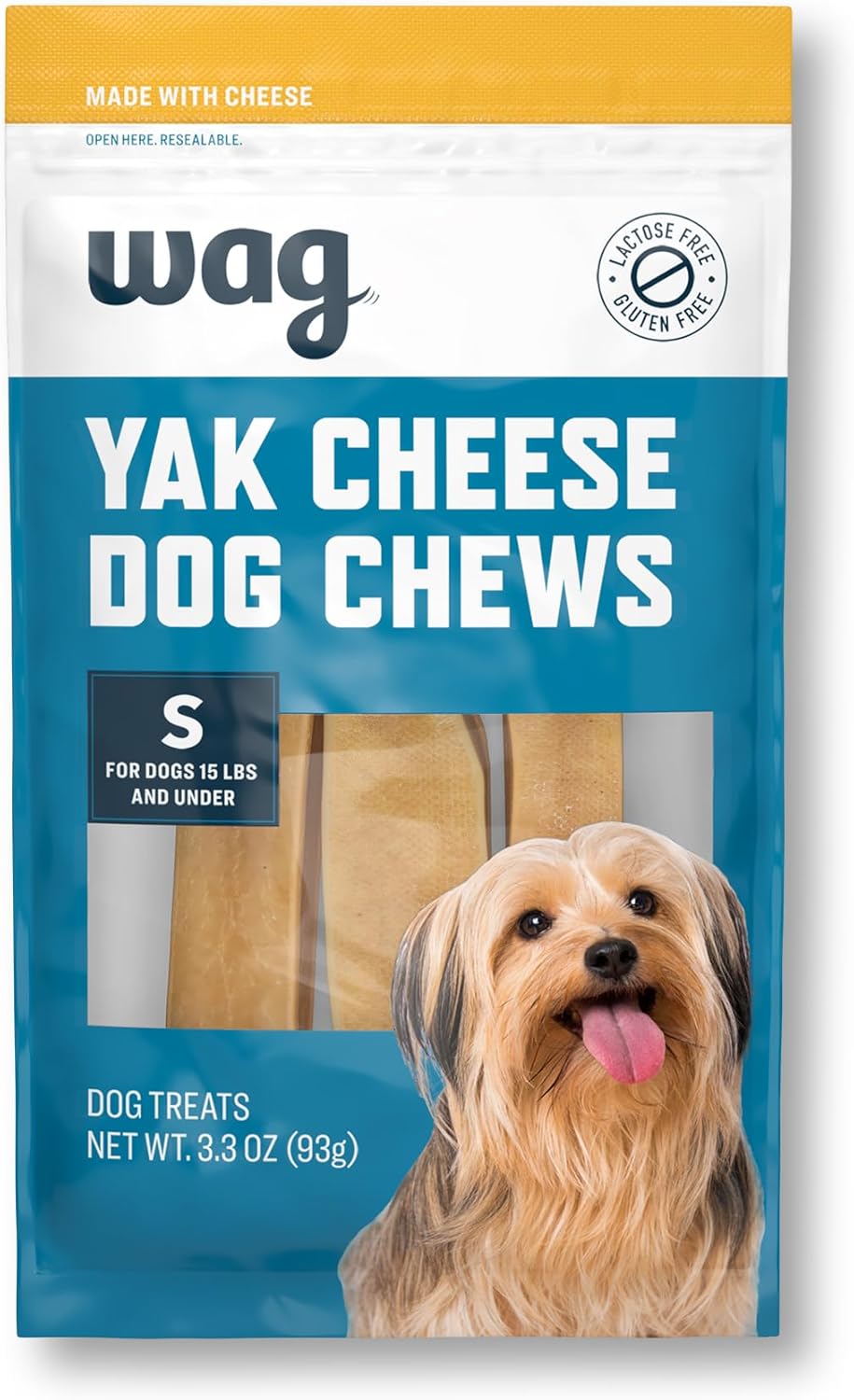
| Flavor | Cheese |
|---|---|
| Item Form | Chews |
| Age Range Description | All Life Stages |
| Unit Count | 3 Count |
These WAG Yak Cheese Dog Chews are firm, bone-like chews made from yak cheese intended for small dogs under 15 lb. Dogs chew them like a natural bone; the hard texture slowly wears down tartar and helps reduce mouth odor while providing extended engagement. The recipe is very simple—skim milk, citrus juice, salt, and natural enzymes—so there are no grains, corn, or soy and the product is lactose-free after processing. Each bag contains three 2.5-inch chews that claim at least 65% protein by weight, so they function as a protein-rich treat rather than a daily food replacement. Expect long chewing sessions but not indestructible durability for power chewers; owners should supervise use and remove pieces if they become small enough to swallow. The small size and straightforward ingredient list make these a practical, lower-cost option for small-breed dogs that enjoy persistent chewing without complex additives.
Best for: Buyers who want an affordable, minimally processed chew that keeps small dogs occupied and supports dental scraping without extra fillers.
Less Ideal for: Owners seeking indestructible chews for larger or extremely aggressive chewers should choose sturdier, heavy-duty options instead.
- Hard, long-lasting texture encourages prolonged chewing and dental scraping
- Simple ingredient list with no grains, corn, or soy and processed to be lactose-free
- High protein content (certified minimum 65% by weight) suitable as a protein-rich treat
- Sized for small breeds so pieces are manageable for toy and small dogs
- Not intended for aggressive large chewers and can wear down for strong chewers over time
- Only sold in small-count bags which may require frequent repurchases for heavy chewers
Verdict: The best budget Yak Chew gives owners an affordable option that still provides safe, satisfying chewing and reasonable durability for the price.
ValueBull Himalayan Yak Cheese Dog Chews Large
Best Premium Yak Chew

| Item form | Stick |
|---|---|
| Flavor | Cheese |
| Age range | All Life Stages |
| Unit count | 96 Ounce |
| Special ingredients | Yak Milk, Cow Milk |
ValueBull Himalayan Yak Cheese Dog Chews are dense, long‑lasting chew sticks made from yak milk, cow milk, salt, and lime juice that aim to keep strong chewers occupied while supporting dental scraping. They are typically given as an occasional treat or boredom buster for medium to large dogs and are described as low‑odor compared with some natural chews. The bars are edible and marketed as fully digestible, high in protein and calcium, and microwaveable for a crunchy finish when they get small. Practically, these chews work well for aggressive chewers that need something substantial to gnaw on and for owners who prefer single-ingredient, minimally processed treats. Expect variability in individual bar size and hardness since these are natural products, and small pieces should be supervised and reheated per instructions before offering. They are not a daily kibble replacement but a durable treat that can last multiple sessions for larger jaws. Packaging in a bulk 6 pound box suits households with one or more heavy chewers but may be overkill for small dogs or infrequent use.
Best for: Buyers who prioritize premium, minimally processed ingredients and want a durable, longer‑lasting chew for medium to large dogs with strong jaws.
Less Ideal for: Owners of small or light chewers, or those who prefer preportioned single treats rather than bulk packs, should consider a smaller or softer alternative.
- Single‑ingredient style recipe with yak milk and cow milk for a natural treat profile
- Long lasting and dense texture suited to aggressive chewers and large breeds
- Low odor compared with other natural chews, easier to keep indoors
- Microwaveable when reduced to nubs to renew crunchy texture and extend use
- Natural chews vary in size and hardness which can lead to inconsistent chewing times
- Bulk 6 pound packaging may be more than needed for small dogs or occasional use
Verdict: The best premium Yak Chew is for owners willing to pay more for superior ingredient quality, craftsmanship, and longer overall lifespan.
EcoKind Yak Cheese Dog Chews
Best Long-Lasting Yak Chew

| Flavor | Cheese |
|---|---|
| Item Form | Stick |
| Age Range Description | All Life Stages |
| Special Ingredients | Yak and Cow milk; Salt; Lime |
| Unit Count | 16 Ounce |
These yak cheese chews are hardened treats made from yak and cow milk that give dogs a dense, long‑lasting object to gnaw on. Typically offered as an occasional treat, they are used to keep dogs occupied during crate time, grooming, or quiet periods and are described as suitable for moderate to aggressive chewers. The product is essentially a single-ingredient chew cured into a hard stick, which makes it low-odor, low-mess, and higher in protein and calcium than many processed chews. Because they are very hard, they provide significant mechanical abrasion on teeth that can help reduce plaque with regular supervised chewing, but the hardness also means small fragments can break off so supervision and removal of small pieces is recommended. These chews are lactose free and made without additives, which can make them easier on sensitive stomachs, but they are not intended as a meal replacement and should be given as a treat under supervision.
Best for: Owners who prioritize a durable, attention-holding chew to occupy dogs for extended periods and prefer natural, low-odor options that are gentler on sensitive stomachs.
Less Ideal for: People looking for soft, easily digestible training treats or those who do not supervise chews closely should consider softer, portioned options instead.
- Very hard, dense texture designed for long chewing sessions
- Single‑ingredient base of yak and cow milk with no artificial additives
- Low odor and low mess compared with rawhide
- Lactose free and positioned as gentle on sensitive stomachs
- Provides mechanical chewing action that can help oral hygiene
- Extremely hard texture can break into small pieces that require supervision and removal
- Not suitable as a meal substitute and meant strictly as an occasional treat
Verdict: The best long-lasting Yak Chew is designed to hold up to persistent chewing, minimizing replacements for dogs that chew frequently and vigorously.
Himalayan Dog Chew Yaky Churro Peanut Butter
Best Soft Yak Chew

| Flavor | Peanut Butter |
|---|---|
| Item Form | Stick |
| Special Ingredients | Cheese, Peanut Butter, Yak Milk |
| Allergen Information | Gluten Free, Lactose Free, Soy Free |
| Unit Count | 4 Ounce |
These Yaky Churro sticks are handcrafted Himalayan-style cheese chews made from boiled yak and cow milk that are cured to create a dense, long-lasting chew with a peanut butter flavor. Dogs soften the ends by licking and chewing over a single session, working slowly to scrape small pieces off rather than shredding large chunks, which makes them suitable for dogs that prefer a firm but not brittle chew. The resealable pouch holds four sticks and the recipe removes lactose and avoids common allergens such as gluten, wheat and soy, so the treats are easier on sensitive stomachs. They also help massage teeth and gums while encouraging prolonged engagement, which can reduce boredom and support oral scraping. Important limitations: these are still firm chews that require supervision, and very small pieces should be removed as they appear to avoid choking; they are labeled for adult dogs and portion size varies since pieces are packaged by weight.
Best for: Pet owners seeking a gentler alternative to hard bully sticks or rawhide for dogs that have sensitive teeth or are younger but still need a durable chew.
Less Ideal for: Owners looking for an immediately soft treat for very small puppies or dogs with advanced dental issues should choose a specifically soft or veterinary-softened option instead.
- Made from 100% natural yak and cow milk with no preservatives or additives
- Lactose removed and free from gluten, wheat and soy, easing stomach sensitivity
- Dense, long-lasting texture that keeps dogs occupied for hours
- Peanut butter flavor provides strong palatability for picky chewers
- Still quite firm so needs supervision and cannot be munched down instantly
- Packaged by weight so stick size and chew time can vary between pouches
Verdict: The best soft Yak Chew suits pets with sensitive teeth or younger dogs, offering safer, easier chewing without sacrificing flavor.
REXIPETS Yak Cheese Dog Chews
Best All-Natural Yak Chew

| Flavor | Yak Cheese Chew |
|---|---|
| Item Form | Stick |
| Age Range Description | All Life Stages |
| Unit Count | 14.1 Ounce |
These REXIPETS yak cheese chews are firm, single-ingredient sticks made from traditional Himalayan yak cheese and intended to provide long-lasting chewing for dogs. Owners give one to an aggressive chewer as an occupied-time treat; the hard, dense texture lets dogs gnaw slowly while the abrasive surface helps scrape plaque and tartar from teeth. The chews are marketed lactose free and free of preservatives, which is useful for dogs with simple ingredient needs, and the product is sized for larger breeds though other sizes are offered. Practical benefits include extended chewing time that reduces destructive chewing behavior and a natural way to support dental hygiene between brushings. Important limitations are that a very small dog could struggle with the hardness and that highly determined chewers can break off pieces that may require supervision; the product should be kept dry and out of direct sun to maintain shape. Overall this is a straightforward, natural dental-focused chew for owners who want a durable, single-ingredient option that also contributes to oral care.
Best for: Buyers focused on improving their dog’s oral health with a natural, long‑lasting chew and who prioritize single-ingredient, preservative‑free treats.
Less Ideal for: Owners looking for soft or easily portioned treats for puppies, very small breeds, or dogs that must avoid hard chews for dental reasons.
- Very hard, long‑lasting chew that keeps aggressive chewers occupied
- Single-ingredient, no preservatives or additives
- Abrasive texture helps reduce plaque and tartar during chewing
- Ethically sourced Himalayan production supports traditional craftsmanship
- Not suitable for very small dogs due to hardness and size
- Can splinter for extremely forceful chewers so supervision is recommended
Verdict: The best all-natural Yak Chew appeals to owners who prioritize simple, minimally processed ingredients and transparent sourcing in pet chews.
Choosing the Right Yak Chew: Key Factors to Consider
Durability and Hardness
How hard a yak chew is directly affects how long it lasts and whether it is appropriate for your dog. Harder chews hold up longer for heavy chewers but can be very stressful on young dogs' developing teeth and on dogs with tooth damage.
Assess your dog's bite strength and typical chewing session length. For aggressive chewers, a denser yak chew that wears gradually is preferable. For moderate or light chewers, a softer, more pliable yak chew reduces the risk of dental strain. Durability also influences safety: chews that resist crumbling into small, sharp pieces lower the risk of sudden choking hazards.
Ingredient Transparency and Sourcing
Yak chews are often marketed for their simple, traditional ingredient lists. Knowing exactly what is inside helps you avoid undesirable additives and better predict digestibility and allergy risks.
Look for products that list whole-food ingredients and describe sourcing or processing methods. Clear labeling about smoke-drying, pressing, or heating steps indicates whether a chew has been altered with stabilizers or flavorings. Ingredient origin can also affect odor and texture; chews made with minimal processing typically have predictable wear patterns.
Digestibility and Nutritional Impact
Although primarily a chew, yak chews are edible and will be ingested bit by bit. Digestibility matters to prevent gastrointestinal upset or blockages. Some yak chews soften gradually and are more easily digested, while denser versions may pass through more slowly.
Consider your dog's digestive sensitivity and overall diet when selecting a chew. For dogs with sensitive stomachs, choose products that emphasize simple, single-ingredient formulations and monitor stool changes after initial use. Also account for caloric contribution if your dog consumes a significant portion over time.
Size and Portioning Options
Choosing the right size prevents choking and ensures the chew lasts an appropriate amount of time. Yak chews are available in multiple sizes and thicknesses; match the size to your dog's muzzle, jaw strength, and chewing style.
Smaller dogs need shorter, thinner chews that they can manipulate without forcing large bites. Large or power chewers require bigger, thicker pieces so the chew does not become a choking risk. Consider whether the product can be split safely or whether it is sold in sizes that cover multiple life stages and chewing habits.
Odor and Palatability
Yak chews vary in smell and flavor intensity. Some dogs prefer stronger-smelling chews, while others are indifferent. Odor can impact how comfortable you are leaving the chew in shared indoor spaces.
If indoor odor is a concern, look for products described as low-odor or that use specific processing steps to reduce smell. Palatability relates to whether your dog will actually engage with the chew; a very durable chew is useless if your dog ignores it, so consider samples or starter sizes if unsure.
Safety and Breakage Behavior
Different yak chews break down in different ways. Some wear smoothly, shedding small, digestible layers, while others can create harder shards. How a chew behaves under stress is a key safety consideration.
Observe how your dog approaches chewing: heavy gnawers that produce sharp fragments should be given chews that wear in rounded shavings rather than brittle fragments. Always supervise initial sessions and inspect chews regularly for sudden cracks, sharp edges, or small pieces that could become choking hazards.
How Long Do Yak Chews Typically Last for Different Chewers?
Longevity varies widely based on chew density and the dog's chewing style. Light chewers may polish a medium chew over days to weeks, while vigorous chewers can reduce the same piece in hours.
Expect variance between individual products: some are meant to be long-term boredom busters that wear slowly, and others are intended for shorter-time chewing satisfaction. To set expectations, match the chew's described hardness to your dog's recorded chewing intensity.
- Light chewers: weeks to months depending on size.
- Moderate chewers: several days to weeks.
- Heavy chewers: hours to a few days for smaller sizes; larger, denser pieces last longer.
Can Yak Chews Cause Dental Damage or Help Dental Health?
Yak chews can help remove soft plaque and offer mechanical abrasion that some owners find beneficial. However, extremely hard chews can risk enamel wear or fractures, especially in dogs with preexisting dental issues.
If your dog has dental sensitivity or a history of cracked teeth, choose softer options and consult your veterinarian. Monitor teeth and gums regularly and avoid letting dogs chew vigorously on super hard pieces if you are unsure about their dental condition.
- Inspect teeth for chips or cracks after initial sessions.
- Prefer moderate-density chews for dogs with dental concerns.
- Supervise all chews with unknown hardness behavior.
What to Do if a Yak Chew Breaks or Splinters
If a chew develops a large crack or you notice sharp splinters, remove it immediately. Sharp fragments can injure the mouth or throat or become a choking hazard. Replace the chew with a safer-sized piece or a softer alternative.
If your dog swallows a large fragment and shows signs of distress, contact your veterinarian. For smaller, gradually formed shavings, monitor stool consistency and appetite to confirm normal digestion.
- Remove chews showing sharp edges.
- Watch for choking, gagging, drooling, or vomiting after ingestion.
- Keep emergency contact info for your veterinarian accessible.
How to Introduce Yak Chews to a New Dog
Introduce any chew under supervision and for short sessions initially. Offer the chew while the dog is calm and seated rather than during highly excited play to reduce the chance of aggressive chewing or gulping.
Observe how your dog manipulates the chew for the first 10 to 20 minutes. If the dog breaks off large chunks or creates hard fragments, discontinue and try a different density. Reward calm, focused chewing behavior to encourage safe use.
- Start with 10 to 20 minute supervised sessions.
- Remove and inspect chews after each session.
- Gradually increase unsupervised time only if wear pattern is safe.
Storage and Handling Tips to Keep Yak Chews Fresh
Store yak chews in a cool, dry place away from direct sunlight and moisture to prevent softening or mold. Airtight containers reduce odor transfer and keep chews in consistent condition.
If a chew becomes unusually soft or develops an off smell, dispose of it. Rotate chews and avoid leaving them in humid areas where the texture could change and increase the risk of unexpected breakage.
- Use airtight bins for multi-piece packages.
- Keep away from damp basements or outdoors.
- Discard chews with any visible mold or strange odor.
How We Chose the Best Yak Chew
We focused on criteria that matter most for yak chews and for owners who want a long-lasting, edible alternative to synthetic chews. Primary evaluation points included chew durability under real-world chewing patterns, ingredient transparency and sourcing, digestibility and ease of break down, size and portion options appropriate for different dog sizes, and manufacturing hygiene or processing standards. We also considered the variety of textures offered to suit light nibblers through heavy chewers and whether the products produced small, hard shards during use. To assemble the list we prioritized products with clear ingredient lists, consistent user feedback about longevity, and options that matched common feeding and chewing safety recommendations. We excluded items that are primarily flavored sticks with undisclosed ingredients or soft, short-lived products that do not fulfill the durability expectation for a yak chew. We also filtered out treats that rely heavily on additives rather than simple, traditional formulations. The resulting shortlist emphasizes transparency, measurable durability, and safer consumption characteristics.
Our full evaluation process is outlined in our review methodology.
FAQ
Are yak chews safe for puppies?
Puppies with developing teeth should use softer or smaller chews and be supervised. Very hard yak chews can stress developing enamel and increase risk of dental injury, so choose appropriately sized, gentler options for young dogs.
How do I know if my dog is eating yak chew pieces safely?
Monitor stool consistency after initial use and watch for signs of discomfort such as vomiting, constipation, or reduced appetite. Also observe chewing sessions for large, rapid fragment removal which may indicate unsafe breakage behavior.
Can dogs with food sensitivities handle yak chews?
Many yak chews use minimal ingredients, which can be suitable for dogs with sensitivities, but check ingredient transparency first. If your dog has known allergies, confirm the chew's ingredients and introduce it slowly while monitoring for reactions.
Do yak chews need to be refrigerated or frozen?
Yak chews do not require refrigeration. Keep them in a cool, dry place. Refrigeration or freezing can change texture and may make some chews more brittle, which can increase breakage risk.
How often should I give my dog a yak chew?
Frequency depends on your dog's chewing intensity and the chew size. For most dogs, offering a chew a few times per week is reasonable; heavy chewers may need larger, less frequent chews to avoid excess caloric intake and dental wear.
Final Verdict
When choosing a yak chew, prioritize a match between chew hardness and your dog's chewing style, and favor products with clear ingredient lists and predictable wear behavior. Balance durability against dental safety and digestibility to reduce the risk of broken teeth or gastrointestinal upset. Select the size and density that fit your dog's jaw and supervise early sessions to confirm safe breakage patterns. With the right match and sensible supervision, yak chews can be a long-lasting, engaging treat that supports chewing satisfaction without unnecessary additives.

