

If your puppy needs to gain weight or maintain steady growth, the right high-calorie puppy food makes a big difference. Puppies burn a lot of energy during growth and activity, and a formula with higher calories can help prevent unhealthy weight loss or slow development. At the same time, you want calories delivered in digestible protein and fat rather than empty fillers. This guide shortlists the top high-calorie puppy foods for weight gain and explains the criteria used to evaluate them, including calorie density, macronutrient balance, digestibility, and ingredient quality. Use the picks below to find options that fit your puppy's age, size, and feeding routine, then check the product details to match feeding amounts to your pet's needs.
Top Picks at a Glance
| Best Overall High-Calorie Puppy Food A balanced, reliable choice for most puppies needing weight gain | Bully Max Pro 2X High-Calorie Dog Food 4 lb |  |
| Best Budget High-Calorie Puppy Food A cost-conscious formula that still supports healthy weight gain | Diamond Puppy High Protein 6lb |  |
| Best Premium High-Calorie Puppy Food A higher-end formula with superior ingredients and nutrient profile | ORIJEN Amazing Grains Puppy Large |  |
| Best High-Protein High-Calorie Puppy Food Extra protein plus calories for muscle building during growth | Bully Max Puppy Food 24/14 |  |
| Best Wet High-Calorie Puppy Food Canned or pouch options that boost calories and moisture intake | Purina Pro Plan Puppy Pate 13 oz |  |
| Best Limited-Ingredient High-Calorie Puppy Food Simpler formulas ideal for sensitive puppies with calorie needs | FirstMate Pacific Ocean Fish Meal Puppy Food 25 lb |  |
| Best Bulk High-Calorie Puppy Food Large-bag options for multi-puppy households or long-term use | Purina Pro Plan Large Breed Puppy Chicken & Rice 34 lb |  |
Bully Max Pro 2X High-Calorie Dog Food 4 lb
Best Overall High-Calorie Puppy Food

| Flavor | Chicken |
|---|---|
| Unit Count | 64 Ounce |
| Protein | 31% Protein |
| Fat | 25% Fat |
| Calories per Cup | 600 cal |
Bully Max Pro 2X is a calorie-dense kibble designed to help puppies gain healthy weight and build muscle with 600 calories per cup and a 31% protein / 25% fat profile. It is typically fed as a daily maintenance or growth diet for puppies and active or recovering dogs that need extra calories without dramatically increasing portion volume. The formula lists chicken meal first, includes chicken fat, white fish meal, flaxseed, probiotics, and a vitamin/mineral mix to support digestion, skin and coat, and overall condition. Practical benefits include smaller serving sizes to hit calorie targets, high palatability for picky eaters, and added probiotics for better nutrient absorption. Important limitations are that its calorie density and high fat content make it inappropriate for average or weight-sensitive puppies without close portion control, and a gradual transition is recommended to avoid digestive upset. The product is presented in a 4 lb bag, so frequent repurchasing may be needed for larger pups or multi-dog households.
Best for: Buyers who need a concentrated, palatable puppy formula to drive steady weight gain and support muscle development in growing or underweight puppies, and who are willing to manage portions and monitor progress closely.
Less Ideal for: Owners looking for a moderate-calorie starter diet or those with puppies prone to excess weight or pancreatitis should choose a milder, lower-fat option instead.
- Extremely high calorie density (600 cal per cup) for efficient weight gain
- High protein and fat (31% protein, 25% fat) to support muscle building and energy
- Contains probiotics and omega sources to aid digestion and skin and coat health
- Formulated for all life stages including puppies and dogs needing recovery or increased calories
- Free from corn, wheat, soy, artificial colors, and preservatives
- Small 4 lb bag size may require frequent repurchase for growing puppies
- Not suitable as a default diet for puppies that do not need extra calories without strict portion monitoring
Verdict: The best all-around high-calorie puppy food that balances calorie density, digestibility, nutrient balance, and palatability for most growing puppies that need to gain weight.
Diamond Puppy High Protein 6lb
Best Budget High-Calorie Puppy Food

| Flavor | Puppy |
|---|---|
| Item Form | Dry Kibble |
| Special Ingredients | Chicken, Flaxseed, Fish Meal, Salmon Oil |
| Unit Count | 96 Ounce |
Diamond Puppy High Protein is a puppy kibble formulated to support growth with chicken protein listed as the first ingredient and a nutrient package targeted at brain, vision and bone development. It is used as a daily feeding for puppies and is also suitable for pregnant or nursing adults; the bag contains smaller kibble suited to young mouths. Notable features include DHA from salmon oil for neural and visual development, a probiotic blend and antioxidants to support digestion and immune health, and higher protein and fat levels to fuel growth. Ingredients list includes chicken by-product meal, whole grains, flaxseed and fish meal, so you get concentrated protein sources alongside grains and added functional fats. Practical benefits are straightforward nutrition designed by veterinarians, family-owned U.S. manufacturing, and an emphasis on value for owners who need a complete high-protein puppy diet on a budget. Limitations include the use of by-product meal and grain ingredients for some buyers who prefer single-source or grain-free recipes, and limited packaging size choices compared with larger bulk bags for heavy feeders.
Best for: Cost-conscious puppy owners who need a complete, higher-protein growth formula that supports brain and bone development without a high price tag.
Less Ideal for: Owners seeking grain-free or single-source whole-muscle protein formulas, or those who prefer novel protein recipes for allergy-prone puppies.
- Chicken protein is listed first for muscle-building support
- Includes DHA from salmon oil to support brain and vision development
- Contains a probiotic blend and antioxidants to aid digestion and immune health
- Smaller kibble size formulated for puppies and suitable for pregnant or nursing adults
- Uses chicken by-product meal and mixed grain ingredients rather than single whole-muscle protein sources
- Limited bag size may require more frequent repurchasing for fast-growing litters
Verdict: The best low-cost high-calorie puppy food that delivers extra calories and acceptable nutrient levels for owners prioritizing affordability while supporting steady weight gain.
ORIJEN Amazing Grains Puppy Large
Best Premium High-Calorie Puppy Food

| Package size | 22.5 lb |
|---|---|
| Item form | Dry Kibble |
| Breed recommendation | Large breed puppy |
| Key ingredients | Chicken, herring, whiting, chicken liver, salmon |
| Special ingredients | Oats, quinoa, chia, pollock oil |
ORIJEN Amazing Grains Puppy Large is a grain-containing, high-protein dry kibble designed to support rapid growth and development in large-breed puppies. It is typically fed twice daily as a complete diet and emphasizes animal ingredients by listing fresh or raw chicken, whole herring, whole whiting, chicken liver and salmon among the first components, plus a freeze-dried coating for added palatability. The formula combines animal proteins with selected grains like oats, quinoa and chia to provide a balanced fiber profile intended to support digestive health, and includes pollock oil for omega-3s to help skin, coat and immune function. Notable practical benefits are the WholePrey ingredient approach that increases natural sources of vitamins and minerals and added prebiotics and probiotics to aid digestion during transitions. Trade-offs are that it is a premium, veterinary-diet style product aimed at growth so buyers should follow the feeding guide and transition gradually, and the high-protein, nutrient-dense formula may be more than needed for less-active puppies or those already on veterinarian-prescribed diets.
Best for: Buyers who prioritize top-tier ingredient sourcing and nutrient-dense, growth-focused nutrition for large-breed puppies and are comfortable investing in a premium diet.
Less Ideal for: Owners looking for budget-focused dog food or those whose puppy requires a veterinary-prescribed or lower-calorie maintenance diet should consider other options.
- High proportion of animal ingredients including fresh or raw meats and organs for nutrient density
- Formulated specifically for large-breed puppy growth and development
- Includes omega-3 source (pollock oil) for skin, coat and immune support
- Prebiotics, probiotics and whole grains blend to support digestive health during growth
- Freeze-dried coating improves palatability for picky eaters
- Premium formulation may be more expensive than standard puppy foods
- Rich, high-protein formula requires careful portioning to avoid overfeeding less active puppies
Verdict: The best premium high-calorie puppy food for owners who want top-quality ingredients, advanced formulations, and higher digestibility to support optimized growth and weight gain.
Bully Max Puppy Food 24/14
Best High-Protein High-Calorie Puppy Food

| Crude Protein | 24% |
|---|---|
| Crude Fat | 14% |
| Calories | 419 cal/cup |
| Primary Flavor | Lamb |
Bully Max Puppy Food is a meat-forward dry kibble designed to support healthy muscle growth, energy needs, and digestive health in growing puppies. It supplies 24% protein and 14% fat with 419 calories per cup, so it is typically used as a primary daily diet for puppies that need extra calories and protein during growth phases. Notable features include lamb meal as the first ingredient, added pork and fish meal for concentrated animal protein, and a TruMune postbiotic blend alongside prebiotics and probiotics to support gut health and immune development. Practical benefits include concentrated nutrition for steady weight gain and muscle development, formula gentleness for sensitive stomachs, and omega fatty acids for skin and coat support. Important limitations are that the formula is calorie-dense so portioning must be monitored to avoid excessive weight gain in less active puppies, and some owners may prefer a chicken-inclusive protein if lamb/pork is not suitable for their dog. It is best used with a feeding plan adjusted for breed, activity, and growth rate.
Best for: Puppy owners seeking a high-protein, calorically rich formula to support muscle development and growth, especially for puppies that benefit from digestive support.
Less Ideal for: Owners who need a lower-calorie or lower-protein puppy food for less active or quickly maturing breeds should consider gentler formulations instead.
- High protein (24%) and calorie density (419 cal/cup) to support muscle growth and energy
- Lamb meal listed as the first ingredient for concentrated animal protein
- Includes TruMune postbiotics plus prebiotics and probiotics for digestive and immune support
- Formulated without corn, wheat, soy, or artificial colors and suitable for sensitive stomachs
- High calorie density requires careful portion control to prevent overfeeding
- Chicken-free formulation may not suit puppies that tolerate or need chicken-based diets
Verdict: The best high-protein high-calorie puppy food for puppies that need additional protein to support lean muscle development alongside calorie-driven weight gain.
Purina Pro Plan Puppy Pate 13 oz
Best Wet High-Calorie Puppy Food
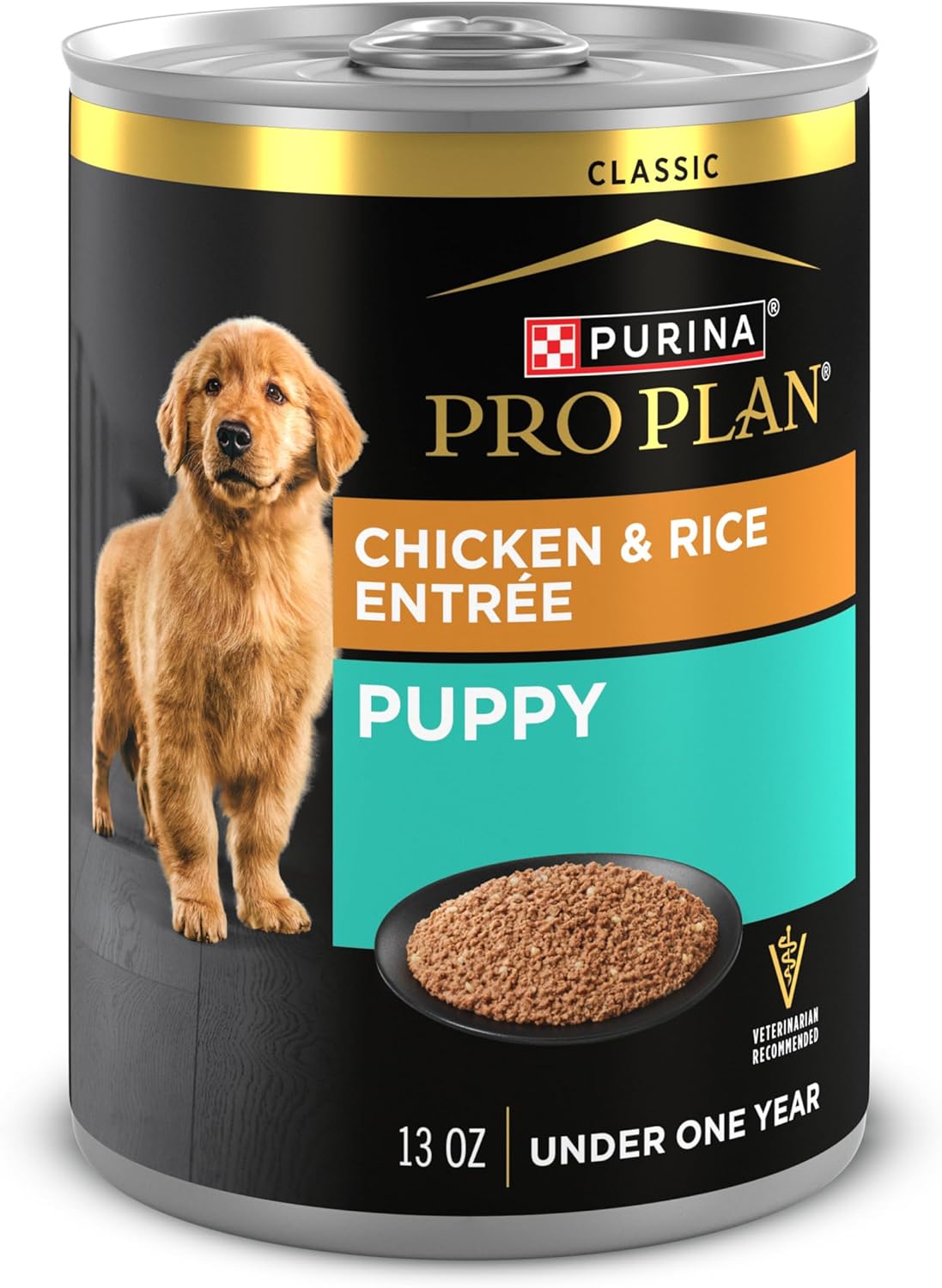
| Flavor | Chicken & Rice |
|---|---|
| Age Range Description | Puppy |
| Item Form | Wet |
| Container Type | Can |
| Unit Count | 156 Ounce |
Purina Pro Plan Development Chicken & Brown Rice Entree is a high-protein wet puppy pate meant to be fed as part of a daily ration for puppies up to about one year (longer for larger breeds). It uses real chicken as the first ingredient and provides DHA, vitamins, minerals, and antioxidants to support brain and vision development, immune function, and skin and coat health. The pate texture makes it easy to spoon, mix with dry kibble, or use for weaning and picky eaters, and the formula contains no artificial colors, flavors, or preservatives. Practical benefits include a nutrient-dense canned option that replaces about 1 cup of dry Pro Plan per 13 oz can and a feeding schedule that divides portions for young puppies. Limitations are that the ingredient list includes meat by-products and typical canned fillers, so buyers seeking single-source or limited-ingredient recipes may prefer specialty formulas, and the product is targeted to puppies specifically rather than adult maintenance feeding.
Best for: Buyers who want a widely available, nutrient-dense wet puppy food that supports growth, brain development, and easy feeding transitions for typical puppies during their development.
Less Ideal for: Owners seeking limited-ingredient, single-protein, or hypoallergenic wet diets or those who need a long-term adult maintenance canned food.
- Real chicken as the first ingredient for high-quality protein
- Includes DHA plus 23 vitamins and minerals to support brain and vision development
- 100 percent complete and balanced for puppy growth and development
- No artificial colors, flavors, or preservatives
- Pate texture mixes easily with dry food and helps with weaning or picky eaters
- Contains meat by-products and typical canned fillers rather than single-source proteins
- Formulation is puppy-focused and not intended as an adult maintenance diet
Verdict: The best wet high-calorie puppy food for puppies who benefit from higher moisture and palatable, calorie-dense meals to encourage eating and healthy weight gain.
FirstMate Pacific Ocean Fish Meal Puppy Food 25 lb
Best Limited-Ingredient High-Calorie Puppy Food

| Flavor | Pacific Ocean Fish Meal Puppy |
|---|---|
| Item Form | Dry Kibble |
| Diet Type | Limited Ingredient |
| Package Size | 25 lb Bag |
| Age Range | Puppy |
This FirstMate Pacific Ocean Fish Meal Endurance/Puppy formula is a grain- and pea-free dry kibble built for growing puppies and active young dogs that need concentrated calories and simple ingredients. It uses wild-caught herring, anchovies, and sardines for most of its protein, with chicken fat added as an efficient energy source and vegetable protein contributing the remainder. The smaller kibble size is aimed at puppies and helps with transition from weaning, while the recipe emphasizes digestibility and suitability for dogs with suspected grain or common-protein sensitivities by avoiding chicken protein and common grains. Practical benefits include high calorie density for weight gain or endurance needs, omega fatty acids from marine sources for skin and coat, and a limited-ingredient list that can simplify elimination diets. Limitations are that it remains a dry kibble so portion control and monitoring are needed to avoid excessive weight gain once growth slows, and puppies with severe or multiple specific allergies should still work with a veterinarian before switching diets. The formula is positioned for puppies requiring extra energy without a long ingredient list, not as a therapeutic prescription diet.
Best for: Buyers seeking a concentrated, limited-ingredient puppy food to support rapid growth or high activity levels while minimizing common grain and poultry proteins.
Less Ideal for: Families looking for prescription therapeutic diets for diagnosed food allergies or owners who prefer wet/fresh food solutions for picky or medically fragile puppies.
- High calorie, endurance-focused formula suited for weight gain and active puppies
- Majority of protein from wild-caught ocean fish for omega fatty acids and lean growth
- Grain- and pea-free limited-ingredient recipe helpful for puppies with mild sensitivities
- Smaller kibble size designed for easier chewing and transition from weaning
- Dry kibble requires portion monitoring to prevent overconditioning as growth slows
- Not a veterinary prescription diet for severe food allergies or medical conditions
Verdict: The best limited-ingredient high-calorie puppy food for puppies with mild sensitivities who still require concentrated calories without a long list of ingredients.
Purina Pro Plan Large Breed Puppy Chicken & Rice 34 lb
Best Bulk High-Calorie Puppy Food

| Weight | 34 lb |
|---|---|
| Flavor | Chicken & Rice |
| Breed recommendation | Large Breeds |
| Item form | Dry |
| Animal food nutrient content claim | High Protein |
Purina Pro Plan Large Breed Puppy Chicken & Rice is a high-protein dry formula designed to support growth and development in puppies expected to exceed 50 pounds as adults. It is typically fed as a staple kibble for large-breed puppies and can be served moistened for weaning puppies or dry for older pups. The formula lists real chicken first, includes DHA from fish oil to support brain and vision development, and delivers added vitamins and omega-6s for skin and coat health. Glucosamine-containing ingredients and targeted nutrients aim to support bone and joint development in fast-growing large-breed dogs. In practical use the 34 lb bag reduces the need for frequent repurchasing and simplifies feeding schedules for multi-puppy or high-consumption households. Potential limitations are that it is a calorie-dense, large-breed puppy formula so portion control is important to avoid overfeeding, and some ingredient choices include grain and by-product meals which some buyers avoid. Feed according to the bag chart and consult your veterinarian when transitioning or adjusting amounts for ideal growth.
Best for: Buyers with large-breed puppies who need a vet-backed, growth-focused formula supplied in large bags to cut repurchase frequency and lower cost per serving.
Less Ideal for: Owners who prefer grain-free or limited-ingredient diets, or those who want boutique single-protein formulations should consider alternatives.
- Large 34 lb bag reduces frequency of reorders for busy households
- Real chicken listed as the first ingredient for protein-focused growth
- Contains DHA from fish oil to support brain and vision development
- Includes glucosamine sources and nutrients targeted for bone and joint development
- Contains grain and poultry by-product meal which some owners prefer to avoid
- Calorie-dense formulation requires careful portion control to prevent excess growth
Verdict: The best bulk high-calorie puppy food for owners who need larger quantities—providing cost-effective, calorie-dense nutrition for ongoing weight-gain feeding plans.
Choosing the Right High Calorie Puppy Food Weight Gain: Key Factors to Consider
Calorie Density
Higher calorie density determines how much energy your puppy gets per serving and directly affects how much food you need to feed for weight gain. A calorie-dense formula lets you increase energy intake without dramatically increasing meal volume, which is useful for puppies with smaller stomachs or lower appetites.
When evaluating calorie density, compare calories per cup and use the feeding chart to calculate daily needs by weight and activity level. Keep in mind that rapidly increasing calories can upset digestion, so gradual increases and monitoring stool quality are important. Calorie density also interacts with macronutrient composition because calories from fat are more concentrated than calories from protein or carbohydrate.
Protein Quality and Level
Protein supports muscle growth and overall development, so the source and amount matter for healthy weight gain. Look for named animal protein sources listed near the top of the ingredient panel, and a guaranteed analysis that provides sufficient protein for growth rather than adult maintenance.
Higher protein alone will not cause fat gain, but it supports lean mass as the puppy adds weight. Very high protein with insufficient calories can still hinder weight gain, so protein should be considered alongside fat and total energy. Digestibility of the protein source affects how much usable amino acids the puppy absorbs, which influences growth efficiency.
Fat Content and Fatty Acid Profile
Fat is the most calorie-dense macronutrient and the quickest way to increase dietary energy without adding bulk. A higher fat content helps puppies gain weight more easily and supplies essential fatty acids important for skin, coat, and brain development.
Assess both total fat percentage and the presence of quality fat sources such as named oils or animal fats. Omega-3 and omega-6 fatty acids support cognitive and immune development, so formulas that list beneficial oil sources or fish-derived ingredients can be advantageous. Watch for too much saturated fat or unfamiliar fat sources if your puppy has special health concerns.
Digestibility and Stool Tolerance
Introducing more calories can lead to loose stools if the puppy cannot digest the new formula well. Ingredients that promote digestibility, such as moderate fiber levels, probiotics, and easily digestible proteins, reduce the risk of gastrointestinal upset during a feeding change or calorie increase.
Consider the fiber type and amount because both very low and very high fiber can cause issues for some puppies. Gradual transition periods and monitoring stool consistency help you identify whether a higher-calorie option is actually tolerated. Ingredients certified for quality sourcing and clear processing claims can also be indirect indicators of better digestibility.
Micronutrients and Growth Support
Puppies need a balance of vitamins and minerals to support bone development, immune function, and overall growth while gaining weight. Adequate calcium and phosphorus ratios are particularly important for developing bones, and other micronutrients such as vitamin A, zinc, and B vitamins support metabolism and tissue growth.
Ensure the formula is complete for growth-stage puppies rather than a maintenance recipe. Some higher-calorie diets concentrate macronutrients but may compromise on micronutrient balance, so verify that vitamin and mineral levels meet established growth recommendations to avoid future developmental problems.
Palatability and Feeding Behavior
A calorie-dense formula is only effective if the puppy will eat it consistently. Palatability depends on flavor profile, texture, kibble size, and whether the puppy prefers dry, wet, or moistened food. Highly palatable formulations can help picky eaters increase their intake for weight gain.
Watch for options that use natural flavor enhancers rather than excessive artificial additives. Feeding frequency, presentation, and warming or moistening food can also improve intake. If appetite is a primary barrier to weight gain, choose a formulation designed for palatability while still meeting nutritional and digestibility criteria.
How Quickly Should I Expect My Puppy to Gain Weight on a High-calorie Diet?
Expect gradual progress rather than overnight changes. Healthy weight gain varies by breed, age, and starting condition; small or toy-breed puppies may show measurable gains in a few weeks, while larger-breed puppies gain more slowly but steadily.
Monitor weight weekly and watch body condition rather than scale alone. Aim for consistent increases without rapid jumps that could stress developing bones or cause excess fat. If weight does not improve after a few weeks, consult your veterinarian to rule out underlying illness, adjust ration size, or consider alternate feeding strategies.
- Weigh the puppy weekly at the same time of day.
- Adjust calories in small increments and monitor stool quality.
- Seek veterinary advice if weight stalls or if the puppy shows lethargy, vomiting, or persistent diarrhea.
Can I Add Supplements or Toppers to Increase Calories Safely?
Yes, calorie-boosting toppers and supplements can help, but choose options designed for growing puppies. High-fat toppers, nutrient-dense wet mixes, or specialized growth supplements can increase energy intake without excessive volume.
Use toppers as a complement to a balanced growth formula rather than a replacement. Avoid human foods that are high in salt, sugar, or ingredients toxic to dogs. Introduce toppers gradually and track both caloric intake and digestive tolerance to prevent upset.
- Prefer commercial puppy-safe toppers with clear nutritional information.
- Start with small amounts and increase slowly while observing stool consistency.
- Avoid abrupt diet changes; blend new items into regular meals over 5 to 7 days.
What Feeding Schedule Works Best when Promoting Weight Gain?
Younger puppies typically do best with more frequent meals because of smaller stomach capacity. Splitting total daily calories into three to four meals can improve intake and reduce the chance of digestive issues while increasing overall energy consumption.
As the puppy grows, transition to fewer meals per day according to age and feeding guidelines on the formula. Consistent meal times and measured portions help you track intake and make precise adjustments when weight gain is slower than expected.
- Feed multiple small meals daily for puppies under six months.
- Use a measured scoop and keep a feeding log to track calories.
- Adjust frequency and portion size gradually rather than making large sudden changes.
How to Transition a Puppy to a Higher-calorie Formula Without Upsetting Digestion
Transition slowly over 7 to 10 days by mixing increasing proportions of the new formula with the current food. Start with 10 to 25 percent new food and increase the ratio every two to three days while monitoring stool consistency and appetite.
If your puppy develops loose stools or vomiting during the transition, slow the pace and allow the digestive system more time to adapt. In cases of persistent gastrointestinal signs, pause the transition and consult your veterinarian to rule out underlying issues or recommend a different approach.
- Begin with a small percentage of the new food and increase gradually.
- Keep a daily log of appetite, stool quality, and weight.
- Pause or slow the transition if digestion becomes abnormal and consult your vet if symptoms continue.
Signs a High-calorie Feeding Plan Is Working
Positive signs include steady weekly weight increases, improved muscle tone, a shiny coat, and normal energy levels. Healthy stool consistency and consistent appetite are also good indicators that the puppy is tolerating the higher calorie intake.
Watch for balanced improvement rather than rapid fat accumulation. If the puppy becomes lethargic, develops excessive panting, or shows difficulty moving, those can be signs of overfeeding or that the calorie increase is too aggressive; in those cases adjust portions downward and seek veterinary input.
- Track weight and body condition score weekly.
- Look for normal energy and steady appetite.
- Confirm stool remains formed and consistent while weight increases.
How We Chose the Best High Calorie Puppy Food Weight Gain
To assemble this list we applied criteria focused on supporting healthy weight gain in growing puppies while minimizing digestive upset. We prioritized formulations with higher calorie density per cup, clear macronutrient ratios favoring digestible animal protein and wholesome fats, and appropriate vitamin and mineral levels for growth. Digestibility indicators such as named protein sources, moderate fiber, and inclusion of prebiotics or probiotics were considered to reduce the risk of loose stools when increasing caloric intake. We evaluated ingredient transparency and avoided options that rely heavily on low-quality fillers or ambiguous meat-byproduct listings. Calorie-per-serving information and feeding guidelines were checked to ensure practical portion planning for different puppy sizes. Palatability factors and texture variety were included because appetite can limit effective weight gain. We excluded products lacking published nutritional facts or those formulated for adult or maintenance needs rather than growth. Overall, the list favors balanced, nutrient-dense puppy formulations designed to support steady, healthy weight gain without sudden digestive issues.
Our full evaluation process is outlined in our review methodology.
FAQ
How many extra calories does a puppy need to gain weight?
It depends on age, breed, and activity. Small adjustments of 10 to 20 percent above maintenance energy requirements are common starting points, with monitoring and further tweaks based on weight trajectory and stool quality.
Is it safe to feed a high-calorie puppy food to all breeds?
Often yes, but large-breed puppies need careful balance of calories, calcium, and phosphorus to support slow, steady bone growth. Consult your veterinarian to ensure a high-calorie option aligns with breed-specific growth recommendations.
Will higher fat in the food cause pancreatitis in puppies?
Pancreatitis is uncommon in healthy puppies but can be triggered by very high fat intake in susceptible animals. If your puppy has a history of digestive or pancreatic issues, consult a veterinarian before increasing dietary fat.
Can wet food help with weight gain compared with dry food?
Wet food can be more palatable and easier to increase caloric intake for picky eaters, but it is usually less calorie-dense by volume than concentrated dry formulas. Use wet food as a topper or mix to boost intake while monitoring total daily calories.
How long should i try a high-calorie plan before seeking veterinary help?
If you do not see steady weight improvement within two to four weeks despite correct feeding and no digestive problems, consult your veterinarian. Persistent poor weight gain or other signs such as vomiting, diarrhea, or lethargy warrant prompt veterinary evaluation.
Final Verdict
When choosing a high-calorie puppy food for weight gain, prioritize calorie density delivered through digestible protein and quality fats while maintaining complete growth-stage nutrition. Monitor your puppy frequently for steady weight increases, good stool quality, and sustained energy, and adjust calories gradually to avoid digestive upset. Balance the need for extra calories with appropriate micronutrient ratios and a feeding plan that suits your puppy's age and breed. Use the evaluation factors above to select a formula that supports healthy, controlled weight gain and consult your veterinarian if progress stalls or health concerns arise.

