

Finding the right dog food for a golden retriever matters more than taste alone. because golden retrievers have unique needs—higher activity, a tendency to gain weight, and susceptibility to joint issues—your food choice affects their long-term health, energy, and coat condition. this guide shortlists seven top options that balance protein, fat, calories, and joint-friendly nutrients to match typical golden retriever life stages. Below you'll find concise reasons each type of food made the cut plus the evaluation criteria used so you can pick the one that best fits your dog's age, activity level, and health priorities.
Top Picks at a Glance
| Best Overall Food The all-around top pick that suits most Golden Retrievers' needs | ROYAL CANIN Golden Retriever Adult Dog Food 30 lb |  |
| Best Budget Food A low-cost option that still provides adequate nutrition and calories | Wag Wholesome Grains Salmon Dog Food 30 lb |  |
| Best Premium Food Higher-end formulas with superior ingredients and comprehensive nutrient profiles | ACANA Butchers Favorites Dry Dog Food 17 lb |  |
| Best High-Protein Food Formulas with elevated protein levels for active or muscular dogs | Purina Pro Plan Sport 30/20 Chicken & Rice 37.5 lb |  |
| Best Sensitive-Stomach Food Gentle formulas designed to reduce digestive upset and food reactions | Purina Pro Plan Sensitive Skin & Stomach Salmon 16 lb |  |
| Best Grain-Free Food Formulas that omit grains for owners preferring grain-free diets | Now Fresh Large Breed Dry Dog Food 25 lb |  |
| Best Large-Breed Food Nutrition tailored for bigger dogs with joint and growth considerations | Hill's Science Diet Large Breed |  |
ROYAL CANIN Golden Retriever Adult Dog Food 30 lb
Best Overall Food

| Flavor | Chicken |
|---|---|
| Age Range Description | Adult |
| Item Form | Pellet |
| Breed Recommendation | Golden Retriever |
| Unit Count | 480 Ounce |
Royal Canin Golden Retriever Adult is a breed-targeted dry formula designed for purebred Golden Retrievers 15 months and older. It uses a unique kibble shape and texture that encourages chewing for the breed's straight muzzle and scissor bite, and it includes nutrients such as taurine, EPA and DHA for heart support plus specific ingredients to reinforce the skin barrier and maintain coat condition. The recipe provides a controlled calorie and fat profile aimed at helping large Golden Retrievers maintain ideal weight, and contains supplements like glucosamine and chondroitin to support joint health. Because it is formulated for breed-specific needs, this food is typically used as a daily complete diet for adult Goldens and is convenient in a 30 lb bag for multi-dog households or long feeding cycles. Limitations include common cereal ingredients and chicken by-product meal rather than single-source novel protein, so owners seeking grain-free or single-protein formulas may prefer other options. The product shines when you want a scientifically targeted, easy-to-feed diet tailored to Golden Retriever morphology and common health priorities.
Best for: Buyers who want a complete, breed-targeted daily diet for adult Golden Retrievers and value tailored nutrition and feeding convenience.
Less Ideal for: Owners seeking grain-free, limited-ingredient, or single-novel-protein diets, or those feeding puppies younger than 15 months should consider other formulas.
- Breed-specific formulation supports Golden Retriever chewing style and nutritional needs
- Includes heart-supporting nutrients taurine, EPA and DHA
- Nutrients aimed at skin and coat health and a controlled calorie profile for weight management
- Contains joint-support ingredients like glucosamine and chondroitin
- Contains common grains and chicken by-product meal rather than a single novel protein
- Not suitable for puppies under 15 months or dogs requiring grain-free diets
Verdict: The best overall Food balances nutrition, palatability, ingredient quality, and value for typical Golden Retriever adults and growing dogs.
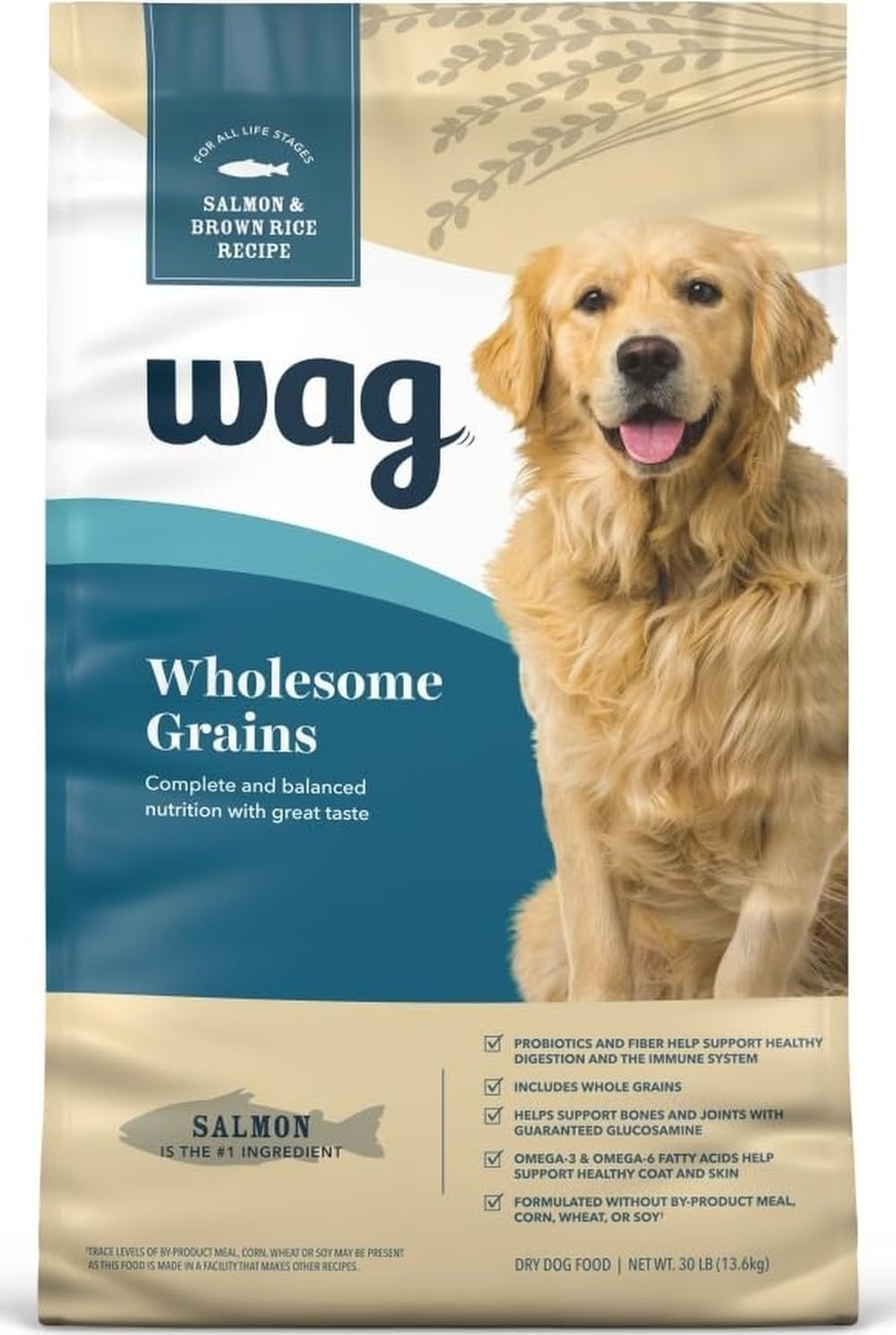
Wag Wholesome Grains Salmon Dog Food 30 lb
Best Budget Food
| Flavor | Salmon |
|---|---|
| Age Range Description | Adult |
| Item Form | Pellet |
| Unit Count | 480 Ounce |
Wag Wholesome Grains Salmon is a 30 lb adult dry dog formula that puts salmon as the first ingredient and uses whole grain brown rice for carbohydrate. It is intended for daily feeding and includes added calcium and phosphorus plus glucosamine to support bone and joint health, DHA and antioxidants for immune and brain support, and a package of probiotics listed in the ingredient panel. Typical use is straightforward: follow the bag feeding transition guidance over 7 to 10 days, portion by weight and activity level, and keep fresh water available. The recipe avoids corn, wheat, soy, artificial colors, flavors, and preservatives, which makes it a reasonable budget-conscious option for owners who want a simpler ingredient set. Because it is a large 30 lb bag and positioned as an affordable Amazon brand, it delivers calories and key nutrients at a lower price per pound, though it is not a specialized veterinary prescription or limited-ingredient diet for food-sensitive dogs. Buyers should expect a standard kibble texture and conventional ingredient sourcing rather than premium single-origin formulas.
Best for: Owners who need an economical daily adult formula that still lists a real meat first and includes joint and cognitive support ingredients for a large-breed dog.
Less Ideal for: Dogs with diagnosed food allergies, multi-ingredient sensitivities, or those needing a prescription diet for medical conditions should consider specialized formulas instead.
- Real salmon listed as the first ingredient
- Includes added calcium, phosphorus and glucosamine for bone and joint support
- No corn, wheat, soy, artificial colors, flavors, or preservatives listed
- Large 30 lb bag offers lower cost per feeding for everyday use
- Not a veterinary therapeutic or limited-ingredient formula for dogs with diagnosed food sensitivities
Verdict: The best budget Food delivers reliable daily nutrition and calories for owners who need to economize without sacrificing basic ingredient standards.
ACANA Butchers Favorites Dry Dog Food 17 lb
Best Premium Food

| Flavor | Free-Run Poultry Recipe |
|---|---|
| Item Form | Dry Kibble |
| Age Range Description | Adult |
| Unit Count | 272 Ounce |
| Special Ingredients | Flaxseed |
ACANA Butcher's Favorites Free-Run Poultry & Liver is a premium, grain-free dry kibble designed to deliver animal-forward nutrition for adult dogs. The formula emphasizes fresh or raw free-run chicken, chicken liver and turkey and includes both standard kibble and tender jerky pieces to increase palatability. It is intended for twice-daily feeding and to support digestive health, healthy weight and skin and coat through a blend of animal proteins, legumes and added probiotics. For owners prioritizing higher protein content and recognizable meat-first ingredients, ACANA provides a nutrient-dense option that can satisfy picky eaters and active adults. Practical limitations include its grain-free profile and use of legumes which some dogs may not tolerate, and the richer ingredient set can be more calorie-dense than economy formulas so portion control is important. The bag is a standard retail package that requires typical storage to maintain freshness between feedings.
Best for: Owners who prioritize premium, meat-forward nutrition and are willing to invest in higher-quality proteins to support overall health and a shiny coat.
Less Ideal for: Owners seeking budget formulas, limited-ingredient grain-inclusive diets, or dogs with veterinarian-diagnosed sensitivities to legumes or high-protein diets should consider alternatives.
- High proportion of animal ingredients with fresh or raw free-run chicken and turkey
- Includes real chicken jerky pieces to improve taste and texture
- Formulated to support digestive health and skin and coat with added probiotics and omega sources
- Made in the USA with a focus on premium, recognizable protein sources
- Grain-free, legume-rich recipe may not suit dogs with specific sensitivities or veterinary carbohydrate recommendations
- Higher calorie and protein density requires careful portioning to avoid weight gain
Verdict: The best premium Food is for owners willing to pay more for higher-quality proteins, targeted ingredients, and more rigorous formulation for overall health.
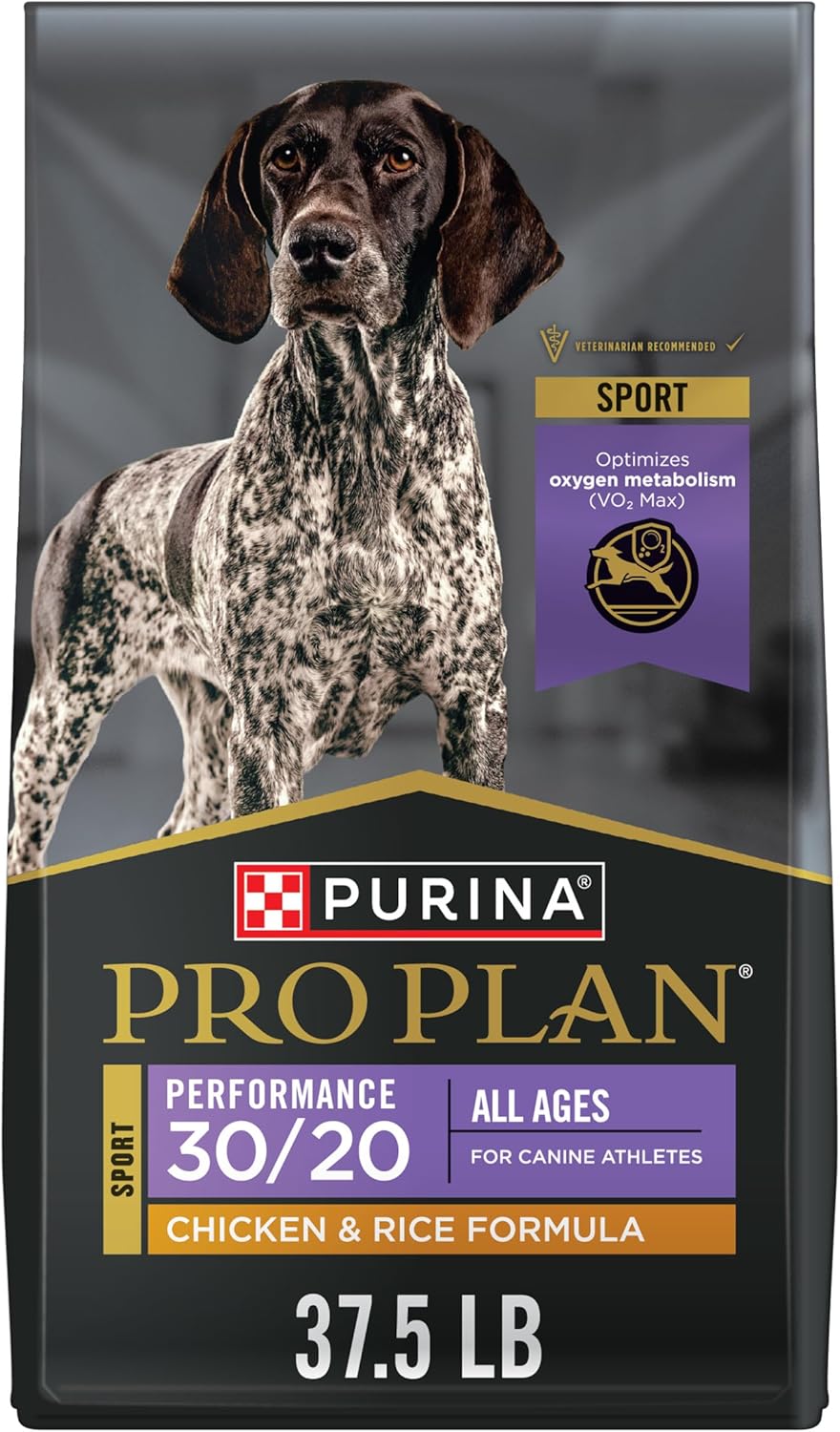
Purina Pro Plan Sport 30/20 Chicken & Rice 37.5 lb
Best High-Protein Food
| Flavor | Chicken & Rice |
|---|---|
| Protein:Fat | 30% protein / 20% fat |
| Life Stage | All Life Stages |
| Package Size | 37.5 lb |
| Form | Dry |
Purina Pro Plan Sport 30/20 Chicken & Rice is a concentrated, high-protein dry formula aimed at physically active dogs. It delivers about 30% protein and 20% fat with chicken listed as the first ingredient, plus added amino acids, EPA and glucosamine to help support muscle repair and joint mobility after exercise. You would typically feed this as the main daily diet for an athletic adult dog or during training cycles, using the package feeding guidelines and adjusting for activity level. The formula emphasizes endurance and metabolic support with antioxidant and vitamin mixes to support immune health. Practical benefits include dense calories for dogs that burn a lot of energy, targeted nutrients to help maintain lean mass, and joint-support ingredients for heavy-use joints. Important limitations are that it is a calorie-dense, performance-focused diet that may be excessive for less active or overweight dogs, and the ingredient list contains poultry by-product meal and cereals that some owners avoid when seeking limited-ingredient or grain-free options.
Best for: Owners of athletic or working Golden Retrievers who prioritize maintaining lean muscle, endurance and joint support during heavy training or high-activity periods.
Less Ideal for: Golden Retrievers that are sedentary, prone to weight gain, or require a limited-ingredient or grain-free prescription should consider alternative formulas.
- High protein-to-fat ratio (30/20) supports muscle maintenance and energy for active dogs
- Real chicken is the first ingredient for animal-based protein
- Includes amino acids, EPA and glucosamine to support post-exercise muscle recovery and joint health
- Concentrated calories and nutrients useful for highly active or working dogs
- Not formulated for low-activity or weight-management needs due to high calorie density
- Contains poultry by-product meal and corn ingredients, which may not suit owners preferring limited-ingredient diets
Verdict: The best high-protein Food suits active, working, or athletic Golden Retrievers that need extra protein to support muscle maintenance and activity.
Purina Pro Plan Sensitive Skin & Stomach Salmon 16 lb
Best Sensitive-Stomach Food

| Flavor | Salmon & Rice |
|---|---|
| Age Range Description | Adult |
| Item Form | Dry |
| Specific Uses For Product | Digestive Health, Sensitive Skin, Sensitive Stomach |
| Special Ingredients | Omega Rich |
This formula is built around salmon as the first ingredient and rice and oatmeal as gently digestible carbohydrates, making it appropriate for dogs with mild stomach sensitivities. It includes guaranteed live probiotics and prebiotic fiber to support beneficial gut bacteria and help reduce digestive upsets during diet transitions. Fish oil and sunflower oil provide omega fatty acids to support skin, coat, and joint health while the recipe omits corn, wheat, and soy to limit common allergens. In practice the kibble works as a daily adult maintenance diet for sensitive dogs and is easy to switch to over 7 to 10 days using the recommended gradual transition. Be aware this is a high-protein veterinary-style formula and not a limited-ingredient single-protein diet, so dogs with strict novel-protein or multiple-food allergies may still need a prescription or elimination feeding under veterinary guidance. Packaging is a standard bag format, so scoop-and-serve feeding is straightforward but bulk handling and storage should be planned for larger households.
Best for: Owners of Golden Retrievers looking for a daily maintenance dry food to reduce mild GI upset and improve skin and coat condition while keeping a balanced, high-protein diet.
Less Ideal for: Dogs with confirmed multiple or severe food allergies or those requiring a veterinarian-prescribed elimination diet should consider a single-protein prescription alternative.
- Real salmon listed as the first ingredient for a high-quality protein source
- Contains guaranteed live probiotics and prebiotic fiber to support digestion
- Formulated without corn, wheat, or soy to reduce common allergen exposure
- Includes omega fatty acids from fish and sunflower oil to support skin, coat, and joints
- Not a limited-ingredient or single-novel-protein prescription formula for severe food allergies
Verdict: The best sensitive-stomach Food is formulated for Goldens prone to GI upset or mild intolerances, focusing on easily digestible ingredients and soothing nutrients.
Now Fresh Large Breed Dry Dog Food 25 lb
Best Grain-Free Food

| Flavor | Turkey, Salmon, Duck – Adult |
|---|---|
| Item Form | Dry Kibble |
| Breed Recommendation | Large Breeds, Giant Breeds |
| Special Ingredients | Probiotic, Pumpkin, Glucosamine/Chondroitin |
| Package Size Name | 25-lb bag |
Now Fresh Grain-Free Large Breed Dry Dog Food is a premium kibble formulated specifically for adult large and giant breeds. It uses fresh de-boned turkey, salmon, and duck as top ingredients and a larger, ridged bar-shaped kibble meant to slow chewing for big mouths. The recipe includes added glucosamine and chondroitin for hip and joint support, probiotics plus pumpkin and sweet potato for digestive health, and a blend of fruits and vegetables for antioxidants and overall nutrient balance. Practical benefits include higher-quality animal proteins without by-product meals, targeted joint support useful for heavy or aging large breeds, and grain-free carbohydrate sources for owners avoiding grains. Limitations are that grain-free formulas may not be necessary for every dog and can be higher in calorie density, so portions should be monitored to maintain healthy weight, and the larger kibble may not suit dogs that prefer smaller bites or have specific dental issues. This is a thoughtfully formulated option for large-breed owners prioritizing grain-free ingredients and joint support.
Best for: Owners who want a grain-free, high-protein diet tailored to large or giant adult breeds and who prioritize joint support and digestive-friendly ingredients.
Less Ideal for: Owners whose dogs require grain-inclusive veterinary diets, small-breed dogs that need smaller kibble, or those looking for lower-calorie maintenance formulas without grain-free composition.
- Fresh de-boned turkey, salmon, and duck listed as primary proteins
- Formulated grain-free with no by-product meals or meat meals
- Includes glucosamine and chondroitin to support hips and joints
- Probiotics plus pumpkin and sweet potato to aid digestion and stool quality
- Larger ridged kibble designed to slow chewing in large breeds
- Higher calorie density typical of premium grain-free formulas requires careful portion control
- Large kibble size may not be suitable for dogs that prefer or need smaller bite sizes
Verdict: The best grain-free Food is intended for owners who prefer or require diets without grains, offering alternative carbohydrate sources while meeting nutritional needs.
Hill's Science Diet Large Breed
Best Large-Breed Food

| Flavor | Chicken & Barley |
|---|---|
| Age Range Description | Adult 1-5 |
| Item Form | Pellet |
| Specific Uses For Product | Hip and Joint Support, Muscle Care, Skin and Coat Health, Digestive Health, Large Breed Formula |
| Animal Food Diet Type | Veterinary Diet |
Hill's Science Diet Large Breed is a dry adult formula designed to meet the nutritional needs of big dogs by combining high quality protein with joint-supporting ingredients and digestive fibers. You would feed this as an everyday kibble for large-breed adults; the packaging includes a feeding guide and the brand recommends transitioning gradually over about a week. Notable features include added glucosamine and chondroitin for mobility, a blend of omega-6 fatty acids and vitamin E for skin and coat, and prebiotic fibers and antioxidants (ActivBiome+) to support digestion and immune health. Practical benefits include support for lean muscle through concentrated protein, nutrients targeted toward hip and joint health, and a formulation intended to be easily digestible for larger dogs. Limitations are that it is a standard large-breed maintenance diet rather than a prescription therapeutic formula, and buyers concerned about specific ingredient exclusions or novel-protein diets should check the ingredient list since it contains common grains and chicken-derived ingredients.
Best for: Owners of adult large-breed dogs who prioritize everyday nutrition that supports joints, lean muscle, and digestive health for steady, maintained activity levels.
Less Ideal for: Dogs that require grain-free or limited-ingredient novel-protein diets, growing large-breed puppies that need controlled-growth puppy formulas, or pets needing a veterinary prescription diet for medical issues.
- Formulated for large-breed adults with nutrients aimed at joint health including glucosamine and chondroitin
- High-quality protein to support lean muscle maintenance
- Contains omega-6 fatty acids and vitamin E to help nourish skin and coat
- Includes prebiotic fibers and antioxidants (ActivBiome+) to support digestion and immune health
- Contains common grains and chicken ingredients, so not suitable for grain-free or novel-protein diets
- Not a veterinary prescription diet for specific medical conditions
Verdict: The best large-breed Food is formulated to support the size, joint health, and controlled growth patterns typical of larger retrievers and adult Goldens.
Choosing the Right Dog Food Golden Retriever: Key Factors to Consider
Protein Quality and Source
Protein is the foundation of a golden retriever's diet because it supports muscle maintenance, immune function, and overall vitality. look for named animal proteins listed near the top of the ingredient panel and a balance of primary sources rather than vague descriptors. high-quality proteins are easier to digest and tend to deliver more usable amino acids, which is important for active dogs and growing puppies.
Different protein sources have different digestion profiles and allergenic potential. rotating proteins or selecting formulas with novel proteins can help dogs with sensitivities, but any change should be gradual. for adult golden retrievers, a consistent animal-based protein level that supports lean mass without promoting excess body condition is ideal.
Calorie Density and Weight Control
Golden retrievers are prone to weight gain, which can worsen joint stress and shorten active lifespan. calorie density tells you how much energy is packed into each cup of food, and matching that to your dog's activity level is critical. active, working dogs need more calories per pound than sedentary pets, so choose a formula that aligns with your dog's lifestyle.
Look for feeding guidelines that offer ranges and be prepared to adjust portions based on body condition scoring. formulations that emphasize lean protein with moderate fat can help maintain muscle while preventing unnecessary weight gain.
Joint-supporting Nutrients
Large-breed dogs like golden retrievers benefit from ingredients that support joint health because of their predisposition to hip and elbow issues. nutrients such as glucosamine and chondroitin are commonly included to support cartilage maintenance, while omega-3 fatty acids reduce inflammation and support mobility. the presence of these components does not replace veterinary care but offers nutritional support that can help delay or reduce progression of degenerative changes.
When assessing joint support, consider both quantity and bioavailability. some diets also include antioxidants and vitamins that support tissue repair and reduce oxidative stress, which can be a helpful complement to direct joint supplements.
Kibble Size and Texture
Kibble geometry affects ease of chewing, dental abrasion, and how quickly a dog eats. golden retrievers typically do well with medium to large kibble that encourages chewing rather than gulping. a properly sized kibble can help reduce choking risk and promote dental health through mild abrasion.
Texture also influences palatability and the dog's willingness to eat. if you have a golden retriever that gulps meals, consider a formulation with larger or irregular-shaped pieces or use feeding enrichment to slow intake.
Fatty Acids and Coat Health
Golden retrievers are known for their dense double coats, which require a steady supply of essential fatty acids to remain healthy and manageable. omega-3 and omega-6 fatty acids support skin barrier function, reduce shedding related to poor coat health, and promote a glossy appearance. fish oil or algae-derived omega-3s are typically the most effective sources.
Consistent levels of these nutrients in daily feeding will show results over weeks, not days. pairing a balanced fatty acid profile with good grooming practices yields the best coat condition outcomes.
Digestive Tolerance and Ingredient Transparency
Golden retrievers can have sensitive stomachs or food intolerances, so easy-to-digest formulas and clear ingredient lists reduce the risk of gastrointestinal upset. look for diets that use whole-food ingredients and list specific protein and carbohydrate sources. prebiotics and probiotics in the formula can support gut health and stool quality, which makes life easier for owners.
Ingredient transparency also helps you trace potential allergens or low-quality filler ingredients. avoid products with multiple unnamed meat meals or long chains of chemical-sounding additives when possible.
Matching Food to Life Stage and Activity
Select a formula that aligns with your golden retriever's life stage—puppy, adult, or senior. growth-phase puppies need higher protein and calorie density to support development, while adult maintenance diets focus on steady energy and joint support. seniors often benefit from slightly reduced calories and added joint-support ingredients.
Also match the calorie level to activity. a highly active dog or one with outdoor work will require a different feeding plan than a largely indoor pet. monitor body condition and adjust portion sizes rather than assuming a feeding chart is fixed.
- Puppy formulas: higher calories and DHA for brain development
- Adult maintenance: balanced protein and moderate fat
- Senior diets: lower calories, added joint support
How to Transition Foods Safely
When changing diets, move slowly over 7 to 10 days to avoid digestive upset. start with a small percentage of the new food mixed into the current diet and increase the ratio daily. watch for loose stool, decreased appetite, or vomiting and slow the transition if any signs appear.
If your dog has a known sensitivity, consider a longer transition or consult your veterinarian for a tailored plan. keep feeding times and water availability consistent during the switch to reduce additional stressors.
- Day 1–3: 25% new, 75% old
- Day 4–6: 50% new, 50% old
- Day 7–10: 75% new, 25% old, then full switch
Reading Labels: What to Prioritize
Focus on named animal proteins, the first few ingredients, and the guaranteed analysis. crude protein, fat, fiber, and moisture give insight into nutrient density, but ingredient order and specificity reveal quality. avoid long ingredient lists filled with ambiguous terms.
Also check for added joint and skin-support nutrients, and look for probiotic or prebiotic inclusion if digestive health is a concern. feeding guidelines are helpful but treat them as starting points rather than strict rules.
- Prioritize named meat sources near the top
- Check for glucosamine, chondroitin, and omega-3s
- Use guaranteed analysis to compare protein and fat levels
Feeding Strategies to Prevent Weight Gain
Daily portion control and regular body condition scoring are the most effective ways to prevent unwanted weight gain in golden retrievers. measure food with a scale or cup and account for treats and extras in the daily calorie budget. broken-up meals or timed feeders can help regulate intake for dogs that eat quickly.
Incorporate regular exercise tailored to your dog's age and joint health. swimming and controlled leash walks offer cardiovascular benefits with less joint impact compared with high-impact activities. adjust daily calories when activity levels change seasonally.
- Weigh portions instead of estimating
- Include exercise as part of weight management
- Limit high-calorie treats and use low-calorie training rewards
Supplements and when to Add Them
Supplements can fill nutritional gaps but should not replace a balanced diet. consider adding joint supplements if your dog shows early stiffness or has been diagnosed with joint degeneration by a veterinarian. omega-3 supplements can be useful when the base diet lacks sufficient EPA and DHA.
Before starting any supplement, discuss it with your veterinarian to avoid interactions or unnecessary duplication of nutrients. watch for standardized dosing and quality when selecting supplemental products.
- Use supplements to complement, not replace, food
- Consult a vet for dosing and necessity
- Monitor for changes after starting supplements
How We Chose the Best Dog Food Golden Retriever
We evaluated options against criteria that matter for golden retrievers specifically and for general canine nutrition. each candidate had to meet minimum standards for digestible animal protein, appropriate calorie density for medium-large active dogs, and transparent ingredient sourcing. we also prioritized formulas that include joint-support nutrients, such as glucosamine and chondroitin, and sources of omega-3 fatty acids for skin and coat health. kibble size and texture were considered because many golden retrievers prefer medium to large kibble for comfortable chewing. palatability and protein quality were assessed through ingredient lists rather than taste tests. We excluded foods that rely heavily on unnamed meat meals, excessive fillers, or non-specific ingredient labeling. we also filtered out specialist therapeutic diets not intended for the general population of healthy golden retrievers. the final list focuses on well-balanced maintenance and life-stage formulas that offer clear nutrition profiles, joint-supporting ingredients, and appropriate calorie targets for the breed.
Our full evaluation process is outlined in our review methodology.
FAQ
How much should a golden retriever eat each day?
Daily amounts vary by age, activity level, and calorie density of the food. start with the manufacturer's feeding range, then adjust portions based on regular body condition scoring and weight trends. frequent short checks are better than relying solely on the initial guideline.
Are grain-free diets better for golden retrievers?
Grain-free diets are not inherently better. some dogs tolerate grains fine, and whole grains can be a useful energy and fiber source. choose grain-free only if your dog has a diagnosed intolerance or specific veterinary guidance.
When should I switch my golden retriever to a senior formula?
Consider a senior formula when you see decreased activity, early signs of stiffness, or changes in body composition, typically around 7 to 8 years old. consult your veterinarian to tailor the timing to your dog's health and lifestyle.
How can I tell if a food supports joint health?
Look for included glucosamine and chondroitin and adequate omega-3 fatty acids listed on the label. the amount per serving and bioavailability matter, so pairing diet selection with veterinary advice can help determine if the formula provides meaningful support.
Is wet food or dry kibble better for golden retrievers?
Both wet and dry formats can meet nutritional needs if the formula is balanced. dry kibble often helps with dental abrasion and convenience, while wet food can be more palatable and hydrating. choose based on your dog's preferences, dental health, and the practicalities of feeding.
Final Verdict
Prioritize high-quality animal protein, appropriate calorie density, and joint-supporting nutrients when choosing food for a golden retriever. balance those priorities with kibble size, digestibility, and your dog's life stage to maintain healthy weight and mobility. Focus on consistent portion control and monitor body condition regularly. by matching a well-formulated diet to your dog's activity level and age, you can support long-term health and reduce the risk of weight-related joint problems.