

Picking the right dry dog food matters for your dog's daily energy, digestive health, and long-term wellbeing. The right formula supports activity levels, maintains healthy weight, and provides essential vitamins and minerals without unnecessary fillers. This guide shortlists the six top dry foods that meet these goals and explains the features you should prioritize. We evaluated nutrient balance, ingredient transparency, and feeding practicality so you can narrow choices faster and pick a formula that fits your dog's life and health needs.
Top Picks at a Glance
| Best Overall Dry Food A balanced everyday formula that suits most adult dogs | Purina Pro Plan Sensitive Skin & Stomach 30 lb |  |
| Best Budget Dry Food A lower-cost option that still delivers basic nutrition and calories | Pedigree Complete Nutrition Dry Dog Food 18 lb |  |
| Best Premium Dry Food Higher-end recipes with better ingredients and rigorous quality controls | ACANA Red Meat Recipe 25 lb |  |
| Best High-Protein Dry Food Formulas focused on elevated protein for active or lean-maintenance needs | Purina Pro Plan Sport 30/20 48 lb |  |
| Best Limited-Ingredient Dry Food Simpler recipes with fewer components to reduce allergy triggers | Natural Balance Limited Ingredient Dry Dog Food |  |
| Best Large-Breed Dry Food Kibble and nutrient profiles tailored for bigger dogs' joint and growth needs | Hill's Science Diet Large Breed |  |
Purina Pro Plan Sensitive Skin & Stomach 30 lb
Best Overall Dry Food

| Flavor | Salmon & Rice |
|---|---|
| Age Range Description | Adult |
| Item Form | Dry |
| Specific Uses For Product | Sensitive Skin, Digestive Health, Immune Support, Skin and Coat Health |
| Animal Food Diet Type | Veterinary Diet |
Purina Pro Plan Sensitive Skin & Stomach Salmon and Rice is a high-protein adult dry formula that uses salmon as the first ingredient and includes guaranteed live probiotics to support digestion and immune health. It is typically fed as a daily staple for adult dogs that have food sensitivities or need a gentler formula, and the package directions include a gradual transition plan to avoid upset stomachs. Notable features are the easily digestible carbohydrate sources like rice and oatmeal, added fish oil and sunflower oil for omega fatty acids to support skin, coat and joint health, and a formulation that excludes corn, wheat and soy. In practice the kibble provides concentrated nutrition and is convenient for households wanting a single, vet-recommended option for digestive and skin support. Trade-offs are that this is a large 30 lb bag intended for regular feeding so it may not suit households wanting small trial sizes, and buyers seeking grain-free or novel-protein limited-ingredient diets will need other options. The product is made by an established brand and positioned as a reliable everyday choice for dogs with sensitive stomachs or skin.
Best for: Households that want a veterinarian-recommended everyday dry food that balances digestibility, protein quality, and skin/coat support for adult dogs with mild food sensitivities.
Less Ideal for: Owners who need small trial sizes, strictly grain-free recipes, or single-ingredient elimination diets for dogs with severe allergies should consider alternative formulas.
- Salmon is the first ingredient providing a high-quality protein source
- Guaranteed live probiotics to support digestive and immune health
- Formulated with omega-3 and omega-6 sources for skin and coat support
- No corn, wheat or soy which can reduce common allergen exposure
- Only available in large 30 lb bag size in this listing which is less convenient for first-time testers
- Not grain-free and contains multiple ingredients that may still trigger allergies in highly sensitive dogs
Verdict: The best overall dry food offers balanced nutrition, palatability, ingredient quality, and value for the majority of dog households looking for a reliable staple.
Pedigree Complete Nutrition Dry Dog Food 18 lb
Best Budget Dry Food

| Flavor | Steak & Vegetable |
|---|---|
| Age Range Description | Adult |
| Item Form | Dry Kibble |
| Special Ingredients | Soybean Meal |
| Unit Count | 288 Ounce |
Pedigree Complete Nutrition Dry Dog Food is a standard, full‑life adult kibble designed for everyday feeding. It is typically used as a primary dry diet or mixed with wet food and is marketed to support six basic health areas including digestion, immunity, skin and coat, heart, bones, and dental health. Notable features include Vitamin Goodbites pieces for extra vitamins, prebiotic fiber to aid digestion, and added calcium and protein to support bones and muscles. In practice this product delivers consistent, palatable crunchy kibble that many dogs accept readily and the 18 lb bag is convenient for households feeding multiple dogs or those wanting less frequent reordering. The formula contains common grains and soybean meal and includes some artificial colors and preservatives, so owners seeking grain‑free or limited‑ingredient diets will need an alternative. As a widely available economy option, it balances basic nutrition and convenience at an accessible scale, but it is not positioned as a premium or specialty formula.
Best for: Budget‑minded owners who need an affordable, everyday adult dry food that covers basic nutrient needs and is easy to feed and store.
Less Ideal for: Owners of dogs with grain sensitivities, food allergies, or those seeking premium, limited‑ingredient, or grain‑free formulas should consider alternatives.
- Formulated to support six everyday health essentials including digestion and immunity
- Includes Vitamin Goodbites pieces for added vitamin boost
- Contains prebiotic fiber to support healthy digestion
- Large 18 lb bag reduces purchase frequency for multi-dog or busy households
- Contains common grains, soybean meal, artificial colors, and preservatives
- Not suitable for dogs requiring grain‑free or limited‑ingredient diets
Verdict: The best budget dry food gives pet owners an affordable daily diet that meets essential nutrient needs without costly extras, ideal for cost-conscious households.
ACANA Red Meat Recipe 25 lb
Best Premium Dry Food

| Package Size | 25 lb |
|---|---|
| Flavor | Red Meat |
| Item Form | Dry Kibble |
| Age Range | 1 month and up |
ACANA Red Meat Recipe is a premium, grain‑free kibble formulated around a high proportion of animal ingredients and whole fruits and vegetables. It is designed for everyday feeding across life stages and uses a blend of fresh or raw beef, pork and lamb plus freeze‑dried coatings to boost palatability. Typical use is twice‑daily feeding guided by the bag chart while monitoring weight; the formula emphasizes protein density and added omegas for skin and coat support and includes fibers and probiotics for digestion. The ingredient list shows a mix of named meats, meat meals and legumes, and the product is marketed as produced with chilled or frozen raw inputs rather than heavy preservatives. Trade‑offs are that it is grain‑free and contains pulses, which some dogs with specific sensitivities or calorie needs may not suit, and the bag is large and heavy to store. For owners prioritizing ingredient quality, higher animal‑ingredient ratios, and nutrient density, this is a strong daily diet option that aims for long‑term health benefits.
Best for: Buyers who prioritize premium ingredient sourcing and higher nutrient density and are willing to pay for a formula aimed at long‑term health.
Less Ideal for: Owners who need a kibble specifically for grain-containing diets, strict calorie restriction, or dogs with pulse legume sensitivities should consider other options.
- High animal‑ingredient content with named fresh or raw meats for protein density
- Freeze‑dried coating to improve palatability and encourage eating
- Includes fruits, vegetables and added omegas for broader nutrient support
- Contains probiotics and fiber sources for digestive health
- Grain‑free, pulse‑rich formula may not be appropriate for dogs with certain food sensitivities or specific calorie management needs
- Large 25 lb bag can be bulky to store and handle
Verdict: The best premium dry food is for owners willing to spend more for superior ingredient sourcing, nutrient density, and production standards for long-term health benefits.
Purina Pro Plan Sport 30/20 48 lb
Best High-Protein Dry Food

| Flavor | Chicken & Rice |
|---|---|
| Age Range Description | Adult |
| Item Form | Dry |
| Unit Count | 768 Ounce |
| Animal Food Nutrient Content Claim | High Protein |
Purina Pro Plan Sport 30/20 is a high-protein, high-fat dry formula designed to fuel active and working dogs. It delivers 30 percent protein and 20 percent fat with chicken listed as the first ingredient, which supports lean muscle maintenance and recovery after exercise. The formula includes added amino acids, omegas, and vitamins and minerals to support endurance, immune health, and skin and coat condition, and the manufacturer positions it for sporting, hunting, and high-energy dogs. In practice this is fed like any kibble — portioned once or twice daily and gradually introduced over 7 to 10 days — and the concentrated nutrition can help dogs with heavy activity maintain weight and performance. Limitations to note are that the ingredient list contains common cereal and by-product meals, so buyers seeking single-protein or grain-free options should look elsewhere, and the large 48 lb bag is bulky to store for small households. Overall this is a practical choice when you need a calorie- and protein-dense kibble for active adult dogs.
Best for: Buyers who prioritize higher protein and calorie density to support endurance, recovery, and lean-muscle maintenance in active adult dogs.
Less Ideal for: Owners seeking grain-free, limited-ingredient, or single-protein diets for food-sensitive or picky dogs should consider other formulas.
- High protein and fat formula (30% protein, 20% fat) tailored for active or working dogs
- Real chicken is first ingredient, providing a familiar animal protein source
- Includes amino acids, omegas, vitamins and minerals to support muscle maintenance, endurance, and skin and coat health
- Large 48 lb bag reduces purchase frequency for multi-dog or high-consumption households
- Contains grain ingredients and poultry by-product meal rather than limited single-source proteins
- 48 lb bag can be cumbersome for storage or occasional feeders
Verdict: The best high-protein dry food suits active dogs or those needing extra lean-muscle support by offering higher-quality protein sources and elevated protein percentages.
Natural Balance Limited Ingredient Dry Dog Food
Best Limited-Ingredient Dry Food
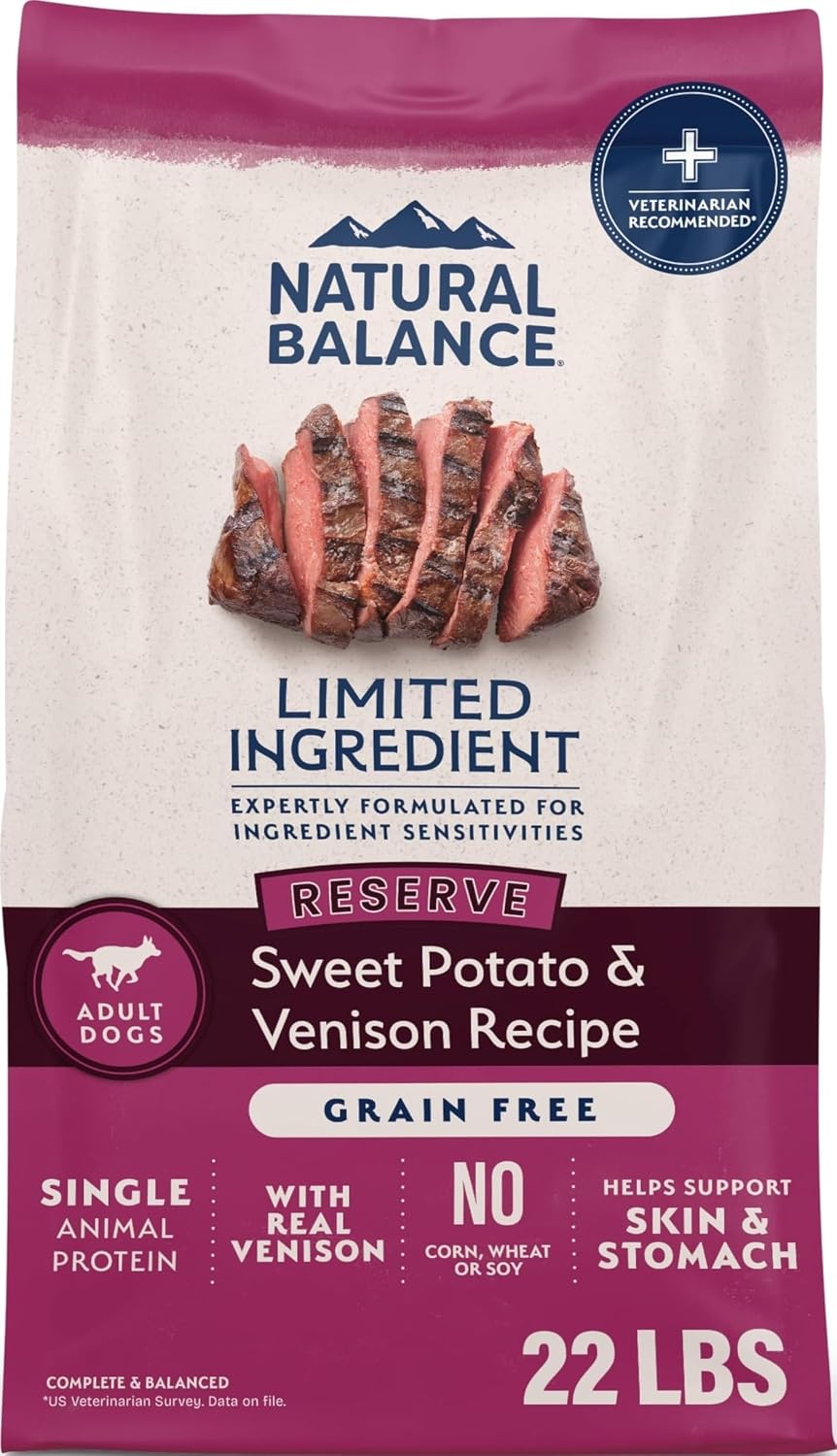
| Flavor | Sweet Potato & Venison |
|---|---|
| Age Range Description | Adult |
| Item Form | Pellet |
| Animal Food Diet Type | Limited Ingredient |
| Allergen Information | Corn-Free, Grain-Free, Soy Free |
This limited-ingredient dry formula uses reserve venison as the primary animal protein and a short ingredient profile intended to reduce exposure to common irritants. It is typically fed as an everyday dry kibble for adult dogs that need simplified nutrition or have digestive or skin sensitivities. Notable features include single animal protein focus, grain-free formulation, and added vitamins, minerals, and omega sources like salmon oil and flaxseed to support skin and coat. Practical benefits include easier elimination diet trials because of the simplified recipe, potentially gentler digestion thanks to digestible carbohydrate sources like sweet potato, and a complete nutrient profile for regular feeding. Limitations to consider are that it is grain-free and contains ingredients like pea protein and potato protein that some elimination protocols exclude, and dogs with specific diagnosed allergies should still be guided by a veterinarian. Bagged packaging makes it convenient for daily service but introduces the usual shelf-life and freshness considerations once opened.
Best for: Buyers seeking a shorter, single-protein dry food to trial for dogs with suspected ingredient sensitivities or sensitive digestion who want a complete, everyday kibble.
Less Ideal for: Owners who need a strictly hydrolyzed or veterinarian-prescribed hypoallergenic diet, or who require a formula without any pulse or potato-derived ingredients.
- Single primary animal protein (venison) simplifies elimination diets
- Grain-free and formulated without corn, wheat, or soy
- Includes added vitamins, minerals, and omega sources for skin and coat support
- Designed for dogs with sensitive stomachs and ingredient sensitivities
- Contains plant proteins (pea protein, potato protein) that some elimination plans avoid
- Grain-free formulation may not be necessary for all dogs and can be higher in certain carbs
Verdict: The best limited-ingredient dry food is designed for dogs with dietary sensitivities, offering a shorter ingredient list and single or limited protein sources to simplify elimination and feeding.
Hill's Science Diet Large Breed
Best Large-Breed Dry Food

| Flavor | Chicken & Barley |
|---|---|
| Age Range Description | Adult 1-5 |
| Item Form | Pellet |
| Breed Recommendation | Large Breeds |
| Unit Count | 560 Ounce |
Hill's Science Diet Large Breed is a dry adult dog food formulated specifically for large breeds, combining high-quality protein, joint-supporting ingredients and prebiotic fibers in a large-bag format. It is typically fed as a daily kibble for adult large or giant dogs and includes glucosamine and chondroitin to help support hip and joint health while higher-quality protein helps maintain lean muscle mass. The formula also includes omega-6 fatty acids and vitamin E for skin and coat conditioning and a blend of prebiotic fibers and antioxidants to support digestion and immune health. Kibble size and calorie density are tuned for larger dogs, and the package provides feeding guidelines to adjust amounts as needed. Limitations are that it is a non-therapeutic, general adult formula so dogs with specific medical conditions may need a prescription diet, and some dogs may require a gradual transition period to avoid digestive upset when switching foods.
Best for: Buyers seeking a vet-recommended everyday adult dry food for large or giant breeds that prioritizes joint support, lean-muscle maintenance and digestive health.
Less Ideal for: Owners whose dogs have diagnosed medical conditions requiring a prescription diet or who need a limited-ingredient formula for food sensitivities should consider alternatives.
- Formulated for large-breed adult dogs with targeted nutrient balance
- Contains glucosamine and chondroitin to support joint health
- Higher-quality protein to help build and maintain lean muscle
- Includes prebiotic fibers and antioxidants to support digestion and immune health
- Omega-6 and vitamin E for skin and coat condition
- Not a veterinary prescription diet for dogs with specific clinical conditions
- Large 35 lb bag may be heavy to handle for some buyers
Verdict: The best large-breed dry food provides appropriate calorie density, joint-support nutrients, and kibble size for adult large and giant breed dogs to support healthy structure and weight.
Choosing the Right Dry Dog Food: Key Factors to Consider
Guaranteed Analysis and Nutrient Balance
A complete nutrient panel shows the percentages of protein, fat, fiber, and moisture, plus added vitamins and minerals. Use these numbers to compare formulas against your dog's life stage and activity level. Puppies and highly active dogs usually need higher protein and fat, while seniors or less active dogs may require lower calorie density to avoid weight gain.
Beyond macronutrient percentages, look for specified levels of omega fatty acids for skin and coat health, and adequate calcium and phosphorus for bone support. An appropriate balance reduces the risk of nutritional deficiencies and supports sustained energy, making mealtimes both predictable and healthful.
Primary Protein Source and Ingredient Transparency
High-quality protein early in the ingredient list indicates the formula's main protein source, which affects digestibility and how well the food meets amino acid needs. Foods that list named meats or fish are generally easier to assess than ones that use vague terms. Consider whether the protein type matches your dog's tolerance or dietary requirements.
Ingredient transparency also means clear labeling of added vitamins, minerals, and functional ingredients. Transparency lets you assess whether a formula relies on whole-food sources, concentrates, or synthetic additives and helps avoid unnecessary fillers that add calories without nutrients.
Digestibility and Gut Support
Digestibility determines how much nutrition your dog actually absorbs from a meal. Look for easily digestible protein sources, moderate fiber levels, and ingredients like prebiotics or probiotics that support a healthy microbiome. Soluble fiber can help with stool quality, while insoluble fiber helps with regularity.
Dogs with sensitive stomachs benefit from limited-ingredient or specially formulated recipes that minimize likely irritants. Good digestibility reduces gas, irregular stool, and nutrient wastage, which matters for both health outcomes and feeding cost-effectiveness over time.
Calorie Density and Portion Control
Calorie density tells you how many calories are in each cup or gram of food and informs portion sizes. High-calorie formulas are appropriate for hard-working or underweight dogs, while lower-calorie options help maintain weight in sedentary or older dogs. Pay attention to feeding charts and be prepared to adjust portions based on body condition and activity.
Accurate portion control avoids overfeeding and supports weight management. If a food is calorie-dense, you may feed smaller volumes, which can also affect feeding frequency and bowl type considerations.
Allergen Considerations and Special Diets
Common dietary allergens include certain proteins, dairy, wheat, and soy. If your dog shows signs of food sensitivity, look for limited-ingredient diets or formulas that use single novel proteins. Grain-inclusive versus grain-free options matter for dogs with specific sensitivities, but grain-free is not automatically better for all dogs.
Special diets—such as those for weight control, joint health, or urinary support—should be chosen based on a veterinarian's guidance and clear labeling of active ingredients. Matching a formula to a diagnosed health concern improves outcomes and reduces the risk of unintended nutrient imbalances.
Kibble Size, Shape, and Feeding Convenience
Kibble size and shape affect how easily a dog can pick up and chew food, which is important for small breeds, puppies, and seniors with dental issues. Choose a kibble geometry that suits your dog's muzzle and chewing ability to promote comfortable eating.
Packaging that preserves freshness and clear feeding instructions make daily use simpler. Consider whether the food is easy to scoop, reseal, and store to maintain crunch and reduce spoilage.
How Do I Match Dry Food to My Dog's Life Stage and Activity Level?
Select formulas labeled for the appropriate life stage—puppy, adult, or senior—because each stage has differing energy and nutrient needs. Puppies generally need higher calories, more protein, and specific calcium-to-phosphorus ratios for growth, while seniors may benefit from lower calorie density and joint-support nutrients.
For activity level, pick higher-protein and higher-fat formulas for working or highly active dogs to sustain endurance and lean muscle. For less active or weight-prone dogs, choose lower-calorie recipes and monitor portions carefully to prevent gradual weight gain.
- Adjust portion sizes based on body condition scoring rather than package recommendations alone
- Consider life-stage-specific micronutrients like DHA for puppies and joint-support ingredients for seniors
- Reassess food choice after changes in activity, health, or life stage
What Signs Indicate My Dog Is Not Tolerating a Dry Food?
Watch for persistent loose stool, repeated vomiting, excessive gas, or a dull coat as potential signs of poor tolerance. It is normal to have a short adjustment period after switching foods, but issues that persist beyond a couple of weeks suggest the formula may not suit your dog.
Behavioral signs such as decreased appetite or lethargy can also indicate intolerance or inadequate nutrition. If you see these signs, consult with a veterinarian and consider switching to a limited-ingredient or easily digestible option.
- Give a 7 to 14 day transition when changing diets to allow the gut to adjust
- Keep a food journal noting stool quality, energy levels, and coat condition
- Seek veterinary advice for severe or persistent digestive problems
How to Handle Picky Eaters and Encourage Consistent Eating
Picky eating can stem from texture preferences, flavor, dental discomfort, or a habit of selective feeding. Try gradual formula rotations and warm the food slightly or add a small amount of wet food or toppers to increase aroma. Avoid excessive treats or table scraps that condition refusal of regular meals.
If picky eating persists, check for dental pain, underlying illness, or improperly balanced meals that leave the dog unsatisfied. A consistent feeding schedule and removing the bowl after 20 minutes helps reinforce regular meal behavior.
- Offer meals at the same times each day to establish routine
- Use food puzzles or slow feeders to make mealtime engaging
- Rule out dental issues with a vet exam if reluctance to chew is present
Can Dry Food Support Specific Health Goals Like Weight Loss or Coat Improvement?
Many dry foods are formulated to support targeted goals through adjusted macronutrients and added functional ingredients. Weight management formulas reduce calorie density and increase fiber to promote satiety. For coat health, look for sufficient omega-3 and omega-6 fatty acids and quality protein to support hair and skin cell repair.
These nutritional supports are helpful but work best alongside lifestyle changes like adjusted feeding amounts, increased activity, and regular grooming. For medical conditions, consult a veterinarian before switching to a therapeutic formula.
- Check the guaranteed analysis for omega fatty acid content for skin and coat support
- Use body condition scoring to guide weight-loss feeding plans
- Combine dietary choices with exercise and routine veterinary monitoring
How to Transition Between Dry Foods Safely
Transition gradually over 7 to 14 days by increasing the new food portion while decreasing the old. A slow transition reduces gastrointestinal upset and helps maintain stool quality. Monitor appetite, stool, and behavior during the process and adjust the pace if mild digestive changes occur.
If digestive symptoms appear and persist, pause the transition and consult a veterinarian. For dogs with sensitive stomachs, extend the transition period and consider mixing in small amounts of a familiar, bland food temporarily.
- Start with 25 percent new food and 75 percent old, increasing new food every 2 to 3 days
- Keep water available and monitor hydration during any diet change
- Document changes to identify patterns in tolerance
Storage and Freshness Tips for Dry Dog Food
Store dry food in a cool, dry place away from direct sunlight to preserve oils and prevent rancidity. Keep the food in its original bag inside an airtight container to maintain the manufacturer's freshness barrier and preserve the nutrient profile. Avoid storing near strong-smelling substances which can transfer odors.
Use the oldest bags first and note opened dates on the package. Discard food past recommended shelf life or if it develops an off smell, visible mold, or insect contamination.
- Resealable bags and airtight bins reduce oxidation
- Check for signs of spoilage before each feeding
- Buy amounts you can reasonably use within a few months to keep food fresh
How We Chose the Best Dry Dog Food
We focused on attributes that most directly affect a dog's health and the practical needs of caretakers. Key evaluation criteria included guaranteed nutrient analysis to confirm complete and balanced formulations, ingredient sourcing and transparency to assess protein quality and the presence of whole-food ingredients, and the balance of macronutrients to match common life stages and activity levels. We also considered digestibility indicators, such as fiber types and probiotic inclusion, and manufacturing quality controls reflected in packaging and safety practices. Products that lacked clear nutrient panels, relied heavily on unspecified meat byproducts, or did not list sourcing or manufacturing information were excluded. We prioritized foods with clear feeding guidelines and those designed to support common concerns like weight management, sensitive stomachs, and coat health. Final selections balanced nutritional soundness, practical feeding convenience, and ingredient clarity rather than marketing claims alone.
Our full evaluation process is outlined in our review methodology.
FAQ
How much dry food should I feed my dog each day?
Daily amounts depend on calorie density, your dog's weight, activity level, and life stage. Use the feeding chart on the package as a starting point, then adjust portions based on body condition scoring and energy. Monitor weight and adjust gradually rather than making large changes at once.
Is grain-free dry food better for dogs?
Grain-free diets can help dogs with specific grain sensitivities, but they are not inherently superior for all dogs. Evaluate actual ingredient quality and consult a veterinarian if you suspect a sensitivity. Balance and digestibility matter more than the simple presence or absence of grains.
Can I feed dry food exclusively or should I mix wet food in?
High-quality dry foods can provide complete nutrition on their own when fed according to guidelines. Mixing in wet food occasionally can increase palatability and hydration, but ensure the total daily calorie intake stays appropriate to avoid weight gain.
How quickly should I switch to a new dry food?
Switch gradually over 7 to 14 days to minimize digestive upset. Start with a small proportion of the new food and increase it every few days while decreasing the old food, watching stool quality and appetite.
What should I do if my dog develops diarrhea after a food change?
Pause the transition and return to the previously tolerated food until symptoms resolve. For mild cases, extend the transition period. Seek veterinary advice if diarrhea is severe, prolonged, or accompanied by vomiting, lethargy, or loss of appetite.
Final Verdict
Choose a dry food that matches your dog's life stage, activity level, and any specific health needs. Prioritize clear ingredient lists, appropriate protein sources, and a balance of macronutrients and functional additives like omega fatty acids or probiotics when relevant. Remember that portion control and monitoring body condition are as important as the formula itself. Tradeoffs are inevitable: higher-calorie formulas support active dogs but require stricter portion control, while limited-ingredient diets may aid sensitive dogs but offer fewer flavor options. Use the factors outlined here to weigh those tradeoffs and select a dry food that delivers reliable nutrition for your dog's routine and long-term health.