

If your puppy struggles with loose stools, gas, or picky appetite, choosing the right food matters for daily comfort and steady development. Puppies with sensitive stomachs need formulas that are easy to digest, provide complete puppy nutrition, and avoid common dietary triggers. This guide shortlists seven puppy foods chosen for digestive tolerance, ingredient quality, and nutritional completeness. Use the evaluation notes below to find an option that supports healthy growth while minimizing digestive upset.
Top Picks at a Glance
| Best Overall Puppy Food for Sensitive Stomach Well-rounded gentle formula balancing digestion, nutrition, and puppy growth | Purina Pro Plan Sensitive Skin & Stomach Puppy Salmon |  |
| Best Budget Puppy Food for Sensitive Stomach A low-cost, gentle formula that still meets puppy nutritional needs | Jinx Grain Free Dry Dog Food 4lb |  |
| Best Premium Puppy Food Higher-end formulas with advanced ingredients and craftsmanship for puppies | Open Farm Freeze Dried Raw Puppy Food 13.5oz |  |
| Best Limited-Ingredient Puppy Food Simple recipes with fewer proteins and carbohydrates to reduce triggers | Natural Balance Limited Ingredient Puppy Food |  |
| Best Grain-Free Puppy Food Formulas without grains for puppies with grain-related sensitivities | Go! Solutions Sensitivities Salmon 3.5 lb |  |
| Best High-Protein Puppy Food Protein-forward recipes to support growth, muscle, and active puppies | Blue Buffalo Wilderness Puppy Food 4.5 lb |  |
| Best Digestive-Support Puppy Food Formulas with probiotics, prebiotics, or enzymes to aid digestion | Hill's Prescription Diet i/d Puppy |  |
Purina Pro Plan Sensitive Skin & Stomach Puppy Salmon
Best Overall Puppy Food for Sensitive Stomach

| Flavor | Salmon & Rice |
|---|---|
| Item Form | Dry |
| Age Range Description | Puppy |
| Special Ingredients | Prebiotic |
| Unit Count | 64 Ounce |
Purina Pro Plan Sensitive Skin & Stomach Puppy Salmon is a dry puppy kibble designed for puppies with sensitive digestion and skin. It uses real salmon as the top ingredient and rice as a gentle carbohydrate to help maintain stool quality and reduce digestive upset, while added live probiotics and natural prebiotic fiber support gut flora. The formula supplies DHA from fish oil for brain and vision development, omega-6 fatty acids and vitamin A for skin and coat health, and a mix of minerals to support bone development. It is intended for everyday feeding through the first year and includes feeding guidance for gradual transitions and portioning. Practical benefits include vet-backed nutrient targets, familiar kibble format that works with free feeding or scheduled meals, and no artificial colors or flavors. Limitations are that the listing is for a 4 lb bag size which may require more frequent repurchasing for larger litters or fast-growing breeds, and ingredient sensitivities vary so individual puppies may still react to components like fish or grains despite the sensitive-stomach focus.
Best for: Buyers who prioritize everyday complete nutrition for puppies with mild to moderate digestive sensitivity and want a formula that is both palatable and backed by veterinary nutrition.
Less Ideal for: Owners seeking grain-free or fish-free formulas, or those who need bulk sizes for large litters or long-term feeding without frequent repurchase.
- Real salmon as the first ingredient for high-quality protein and omega-3s
- Includes guaranteed live probiotics plus natural prebiotic fiber to support digestion
- DHA from fish oil plus balanced vitamins and minerals for brain, vision, and bone development
- Formulated without artificial colors or flavors and excludes corn, wheat, and soy
- Sold in a 4 lb bag which may be small for multi-puppy homes or fast-growing breeds
Verdict: The best overall puppy food for sensitive stomachs that balances highly digestible ingredients, complete puppy nutrition, and palatability for everyday feeding.
Jinx Grain Free Dry Dog Food 4lb
Best Budget Puppy Food for Sensitive Stomach

| Flavor | Salmon |
|---|---|
| Age Range Description | All Life Stages |
| Item Form | Kibble |
| Special Ingredients | Carrot, Probiotic, Sweet Potato |
| Unit Count | 64 Ounce |
Jinx Grain Free Dry Dog Food is a salmon-forward, grain-free kibble formulated for puppies through seniors and packaged in a 4 pound bag. It is intended as a complete diet with salmon as the first ingredient, added probiotic culture, and fiber-rich ingredients like sweet potato and carrot to support digestion and immune health. In practice the medium-sized kibbles are easy for many puppies to pick up and the omega-rich recipe supports skin and coat condition. The inclusion of probiotics and digestible carbohydrates can help dogs with mild stomach sensitivity transition to solid food while still delivering a high-protein profile for growth. Buyers should note this is a grain-free recipe and contains fish and tree nut allergens, and some dogs with specific sensitivities may still react to legume proteins listed in the ingredient panel. The 4 lb bag is convenient for trying the formula or for small-breed litters, but buyers needing larger quantities or specialized veterinary diets may need to look elsewhere.
Best for: Budget-minded puppy owners seeking a digestible, salmon-based kibble that delivers complete nutrition and digestive support without artificial colors or common grains.
Less Ideal for: Owners whose puppies require a veterinary prescription diet, have known legume allergies, or who need bulk-sized bags for large breeds should consider other options.
- Real salmon listed as the first ingredient for high-quality animal protein
- Formulated for all life stages so puppies receive complete AAFCO-compliant nutrition
- Contains patented probiotics and fiber sources to support digestion
- Includes omega-3 and omega-6 sources to promote skin and coat health
- Grain-free formula includes legumes which can trigger sensitivities in some dogs
- Small 4 lb bag may be inefficient for larger breeds or multi-dog households
Verdict: The best budget puppy food for sensitive stomachs that provides essential nutrients and gentle digestibility at a lower price without unnecessary fillers.
Open Farm Freeze Dried Raw Puppy Food 13.5oz
Best Premium Puppy Food

| Flavor | Puppy Chicken & Salmon |
|---|---|
| Item Form | Pellet |
| Unit Count | 13.5 Ounce |
| Age Range Description | Puppy |
| Animal Food Diet Type | Raw |
Open Farm Freeze Dried Raw Puppy Food is a high-protein freeze-dried formula built around chicken and salmon morsels that can be served as a complete meal or used as a nutrient-dense topper. The recipe highlights DHA-rich salmon oil for brain and vision development plus organic vegetables, fruits, seeds, and added vitamins and minerals to support growth and digestive health. Freeze-drying preserves flavor and many heat-sensitive nutrients without artificial preservatives, and the small pellet/piece format is convenient for portioning and training. Practical benefits include a high animal-protein profile, humanely sourced ingredients, and ingredients that read like whole foods rather than fillers. Buyers should note the product comes in a 13.5 ounce bag, so daily feeding for larger litters or big-breed puppies will require more frequent repurchasing, and freeze-dried raw diets usually cost more per serving than standard kibble. Puppies with very specific medical diets should consult a veterinarian before switching to a raw-format freeze-dried food.
Best for: Owners who prioritize premium, minimally processed ingredients and enhanced nutrient support for puppies with sensitive digestion or developmental needs.
Less Ideal for: Owners on a tight budget, those who need large-volume feeding solutions, or puppies requiring a prescription therapeutic diet.
- High animal-protein content with chicken and salmon as primary proteins
- Contains DHA-rich salmon oil to support brain and vision development
- Freeze-drying preserves flavor and many nutrients without artificial preservatives
- Includes organic vegetables, fruits, seeds, and added vitamins and minerals for a balanced profile
- Small 13.5 oz bag may be expensive to maintain for large-breed puppies or multiple pups
- Freeze-dried raw format can be costlier per serving than conventional kibble
Verdict: The best premium puppy food for owners who want top-tier ingredients, enhanced nutrient profiles, and superior manufacturing standards for sensitive puppies.
Natural Balance Limited Ingredient Puppy Food
Best Limited-Ingredient Puppy Food

| Flavor | Lamb & Brown Rice |
|---|---|
| Item Form | Pellet |
| Animal Food Diet Type | Limited Ingredient |
| Allergen Information | Corn-Free |
| Unit Count | 64 Ounce |
Natural Balance Limited Ingredient Lamb & Brown Rice puppy formula is a simplified dry food aimed at puppies with sensitive stomachs or ingredient sensitivities. It uses a single animal protein first (lamb) and includes brown rice and other select grains as the carbohydrate source, plus lamb meal and added omega fatty acids for skin and coat support. Typical use is daily feeding during puppy growth and for pregnant or nursing dogs, with guidance on meal frequency and portioning for different ages and weights. The formula avoids corn, wheat, soy, poultry, artificial colors and flavors, and lists flaxseed and fish oil to support coat and digestion. Practical benefits include a straightforward ingredient panel that makes it easier to identify potential triggers and a vet-recommended positioning for sensitive pups. Important limitations are that it is a grain-inclusive limited ingredient diet rather than grain-free, and the bagged kibble format may not suit puppies needing softer textures without moistening. Buyers should also follow the transition and feeding recommendations to avoid digestive upset when switching foods.
Best for: Owners who want a limited-ingredient puppy formula with a clear, short ingredient list to help identify and avoid likely digestive triggers while still using digestible grains.
Less Ideal for: Owners who require a grain-free recipe or who need a wet/soft-texture food for newborns or very small puppies.
- Single predominant animal protein (lamb) simplifies ingredient tracking for sensitivities
- Formulated without corn, wheat, soy, poultry, artificial colors, or flavors
- Includes omega fatty acids and flaxseed to support skin and coat health
- Veterinarian-recommended positioning and feeding guidance for puppies and nursing dogs
- Contains grains (brown rice and brewers rice) so not suitable for owners wanting a grain-free option
- Kibble texture may require moistening for very young puppies or those that need softer food
Verdict: The best limited-ingredient puppy food for owners seeking minimal, easily identifiable components to help pinpoint and avoid digestive triggers.
Go! Solutions Sensitivities Salmon 3.5 lb
Best Grain-Free Puppy Food

| Flavor | Salmon |
|---|---|
| Item Form | Dry Kibble |
| Age Range Description | All Life Stages |
| Animal Food Diet Type | Limited Ingredient |
| Allergen Information | Grain-Free, Corn-Free, Gluten Free, Potato-Free, Soy Free |
Go! Solutions Sensitivities Limited Ingredient Salmon is a grain-free dry kibble built around salmon as the novel single animal protein to reduce exposure to common allergens. It is typically used as a complete diet for dogs with food sensitivities or digestive upset and is marketed for all life stages and breed sizes. Notable features include prebiotic fiber from dried chicory root to support gut bacteria, a short ingredient set focused on legumes and salmon, and added omega fatty acids from oils for skin and coat support. In practice this formula can simplify elimination diets and often improves stool quality and tolerance when grains or chicken are suspected triggers. The bag is recyclable and reclosable, which helps keep kibble fresh between feedings. Limitations are that it relies on legumes and tapioca as carbohydrate sources, which some dogs may also react to, and switching to any novel-protein limited diet still requires a transition period and monitoring for individual reactions.
Best for: Puppy owners looking to remove grains and common proteins from the diet to see if digestive symptoms improve and who want a single novel animal protein to simplify an elimination approach.
Less Ideal for: Owners seeking a large-breed–specific puppy formulation or those who need a non-legume carbohydrate base should consider alternative formulas.
- Salmon is the first and single primary animal protein to limit common allergen exposure
- Grain-free and free from chicken, soy, corn, wheat, and artificial colors or flavors
- Includes dried chicory root as a prebiotic to support healthy digestion
- Formulated for all life stages so it can be used through growth and adulthood
- Reclosable, recyclable bag for freshness and reduced waste
- Uses legumes and tapioca as carbohydrate sources which can be problematic for some sensitive dogs
- Not specifically tailored to large-breed puppy growth rates despite being labeled for all life stages
Verdict: The best grain-free puppy food for puppies whose digestive issues are tied to grains and who need alternative carbohydrate sources.
Blue Buffalo Wilderness Puppy Food 4.5 lb
Best High-Protein Puppy Food

| Flavor | Chicken, With Wholesome Grains |
|---|---|
| Age Range Description | Puppy |
| Item Form | Kibble |
| Special Ingredients | Antioxidant, Barley |
| Unit Count | 72 Ounce |
Blue Buffalo Wilderness High-Protein Puppy Food is a kibble-style formula built around real chicken and concentrated animal proteins to support muscle development and sustained energy. It is typically fed as a complete daily diet for puppies and includes DHA and other nutrients aimed at brain and eye development. Notable features include LifeSource Bits for antioxidants, a high proportion of animal-sourced protein, and a recipe free of corn, wheat, soy, artificial flavors, and poultry by-product meals. For practical use this means it can help active or growing puppies meet elevated protein needs while providing formulated feeding guidelines to adjust portions by age and weight. The grain-inclusive recipe uses oatmeal, barley, and brown rice, which can be gentler on digestion than some grain-free carbohydrate replacements, though puppies with diagnosed grain sensitivities should avoid it. The formula lists probiotics and omega sources like fish oil and flaxseed to support gut health and cognitive development, but buyers seeking limited-ingredient or single-protein elimination diets will need a different option. Packaging in a 4.5 lb bag makes it convenient for trying smaller dogs or rotating diets before committing to larger bags.
Best for: Puppy owners who prioritize higher animal-sourced protein and nutrient support for growth and cognitive development and who want a formula that leans toward digestibility without being grain-free.
Less Ideal for: Owners searching for a single-protein, limited-ingredient, or grain-free elimination diet for suspected food intolerances should choose a specialized veterinary or single-protein formula instead.
- Real deboned chicken listed as first ingredient for high-quality animal protein
- Formulated with added DHA and LifeSource Bits to support brain development and immune health
- No corn, wheat, soy, artificial flavors, or poultry by-product meals
- Includes probiotic fermentation ingredients and omega sources to support digestion and coat health
- Not a limited-ingredient or single-protein formula for elimination diets
- Small 4.5 lb bag may require frequent repurchasing for larger litters or fast-growing breeds
Verdict: The best high-protein puppy food for puppies that need extra protein for healthy growth while still using easily digestible protein sources when possible.
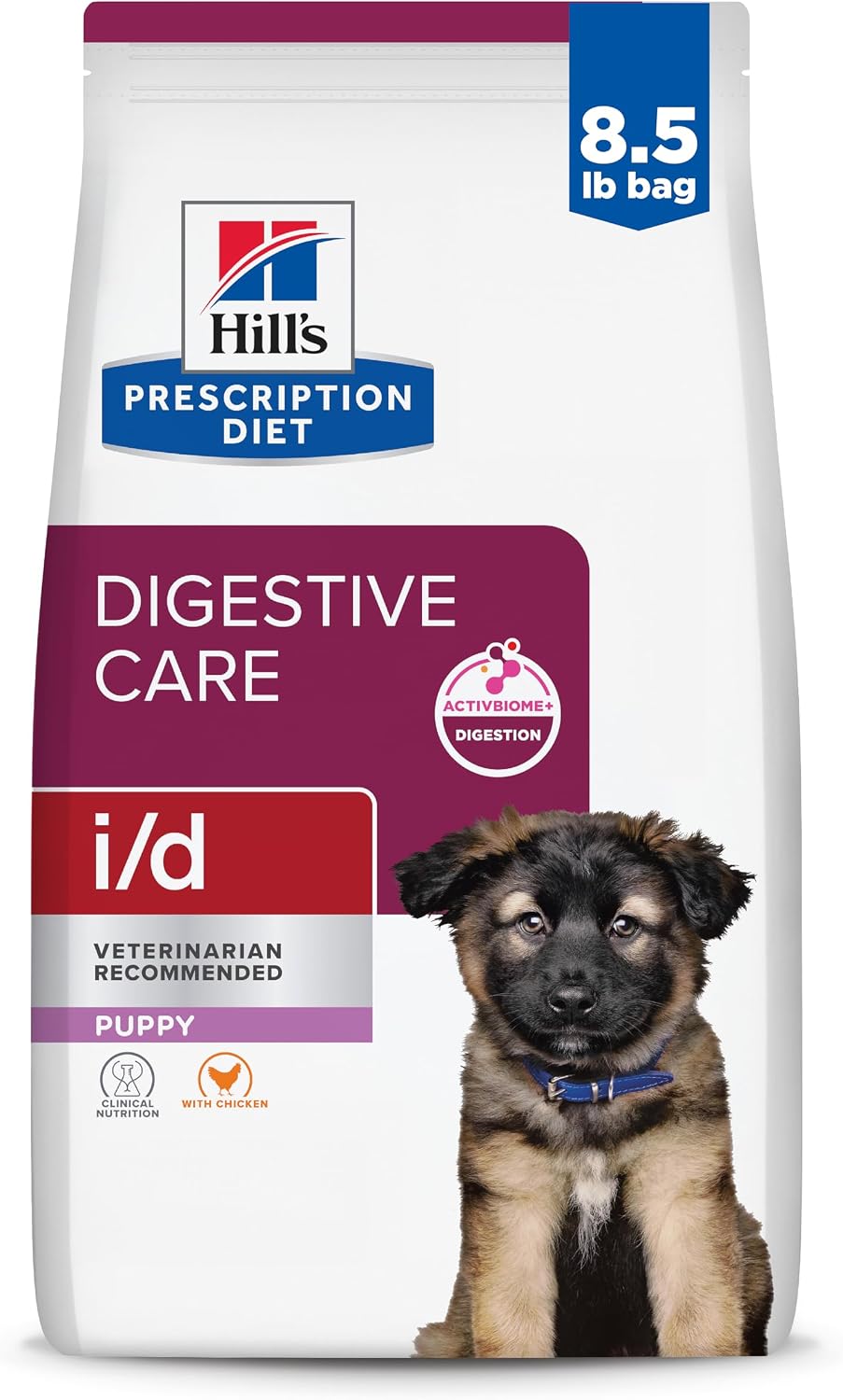
Hill's Prescription Diet i/d Puppy
Best Digestive-Support Puppy Food
| Flavor | Chicken |
|---|---|
| Age Range Description | Puppy |
| Specific Uses For Product | Digestive Support |
| Animal Food Diet Type | Veterinary Diet |
Hill's Prescription Diet i/d Digestive Care Puppy is a dry veterinary diet developed to soothe and stabilize puppies with sensitive stomachs. It is typically fed as the primary kibble when a veterinarian recommends dietary management for digestive upset, with transition guidance on the package for a gradual switch. Notable features include a highly digestible formula, Hill's ActivBiome+ prebiotic blend to rapidly activate the gut microbiome, added electrolytes and B vitamins to replace nutrients lost during digestive episodes, and omega-3 and -6 fatty acids plus antioxidants for immune and skin support. In practice this means easier nutrient absorption, support for recovery from digestive disturbances, and nutrition targeted at overall wellbeing rather than general maintenance. The product is made in the USA, developed by Hill's nutritionists and veterinarians, and intended for short- or long-term feeding under veterinary guidance. Limitations are that it is a prescription-style veterinary diet aimed specifically at digestive issues so it may be more than needed for healthy puppies without sensitivities and feeding guidance from a vet is recommended for proper use.
Best for: Puppy owners seeking a vet-developed, digestion-focused diet that provides targeted prebiotics and nutrient support to soothe and stabilize a sensitive stomach.
Less Ideal for: Owners looking for an everyday nonclinical puppy food for normal growth or those wanting a grain-free or specialty ingredient recipe should consider other formulas.
- ActivBiome+ prebiotic blend clinically shown to activate the gut microbiome for digestive support
- Highly digestible formula promotes easier nutrient absorption during recovery from digestive upset
- Added electrolytes and B vitamins help replace nutrients lost with vomiting or diarrhea
- Includes omega-3 and -6 fatty acids and antioxidants to support skin, coat, and immune health
- Formulated as a clinical veterinary diet so it may be unnecessary for otherwise healthy puppies
- Requires following package or veterinary feeding guidance for safe transition and use
Verdict: The best digestive-support puppy food for owners who want added probiotics, prebiotics, or digestive enzymes to help soothe and stabilize sensitive stomachs.
Choosing the Right Puppy Food Sensitive Stomach: Key Factors to Consider
Protein Source and Quality
Protein is essential for puppy growth, but the source and digestibility affect tolerance. Whole-meat proteins and clearly named animal meals are easier to evaluate and often digest more predictably than vague "meat" listings. For puppies with sensitive stomachs, choose formulas that use one or two defined protein sources to reduce the chance of food intolerance.
Additionally, consider protein level for growth stage. Puppies need higher protein than adult dogs, but extremely high protein from unfamiliar sources can stress a sensitive gut. Look for digestible proteins and avoid frequent switching between protein types to help stabilize digestion.
Fat Content and Digestibility
Fat supplies concentrated energy for growing puppies but can also trigger loose stools if too high or from hard-to-digest sources. Moderate fat levels with quality sources like poultry or fish oils often balance energy needs with tolerance. Formulas that include added omega-3 fatty acids can support skin and brain development while remaining gentle if levels are balanced.
For sensitive stomachs, avoid abrupt increases in dietary fat during feeding transitions. Check that the formula lists digestible fat sources and does not rely on heavy fillers that amplify fat-related digestive upset.
Carbohydrate Choice and Fiber Balance
Carbohydrates and fiber influence stool consistency and gut motility. Easily digestible carbohydrate sources, such as well-cooked grains or single-source alternatives like sweet potato or rice, are often tolerated better than mixed, highly processed blends. Soluble fiber supports healthy fermentation and stool shape, while insoluble fiber adds bulk and can speed transit.
A balanced fiber profile helps maintain consistent stool quality. For puppies with sensitivity, look for moderate total fiber and a mix of soluble and insoluble sources rather than very high-fiber formulas that may accelerate transit time.
Ingredient Simplicity and Exclusions
Limited-ingredient or simpler recipes reduce the number of components that could trigger intolerance. Avoid formulas with long, complex ingredient panels that mix multiple novel proteins, artificial colors, or excessive additives. Natural preservatives and recognizable whole-food ingredients make it easier to isolate and manage triggers.
If your puppy shows signs of food sensitivity, a formula with fewer ingredients makes elimination and reintroduction testing more practical. Excluding common irritants such as artificial additives and heavy spice blends also reduces the risk of digestive upset.
Guaranteed Analysis and Life-stage Formulation
Guaranteed analysis tells you the minimum protein and fat and the maximum fiber and moisture, which are crucial for balancing growth needs with digestive tolerance. Puppies require formulations specifically labeled for growth or all life stages, ensuring adequate calories, calcium, and other nutrients for bone and organ development.
Selecting a product with a complete puppy nutrient profile prevents nutritional gaps that could exacerbate sensitivity or developmental issues. Confirm that the formula meets recognized nutritional standards for puppy growth.
Transition Guidance and Feeding Flexibility
How a food recommends transitioning from one diet to another matters for sensitive puppies. Gradual transition schedules, mixing ratios, or step-down programs reduce the chance of gastrointestinal upset. Some formulas also offer wet or grainless counterparts that can ease the switch in texture and moisture.
Feeding flexibility includes portion guidance for different puppy ages and sizes. Clear instructions on feeding frequency and amounts help prevent overfeeding, which can worsen soft stools, and support steady weight gain.
How Quickly Should I Switch My Puppy to a New Diet?
Switch your puppy gradually over at least seven days to allow the digestive system to adapt. Start by mixing a small portion of the new food with the old, then slowly increase the new ratio each day while observing stool consistency and appetite.
If your puppy shows worsening diarrhea, vomiting, or marked lethargy during the transition, pause the increase and consult your veterinarian. A slower ramp-up or a shorter trial of the new formula can help identify tolerance without causing prolonged upset.
- Day 1–2: 75% old food, 25% new food
- Day 3–4: 50% old, 50% new
- Day 5–6: 25% old, 75% new
- Day 7: 100% new food
What Signs Indicate a Food Intolerance Versus an Allergy?
Food intolerance typically shows as digestive upset such as loose stools, gas, or occasional vomiting. These signs are usually dose-dependent and may improve when the problematic ingredient is reduced or removed.
Food allergy more often produces skin-related symptoms like persistent itching, redness, hair loss, or chronic ear infections, though gastrointestinal signs can also occur. Allergies involve an immune response and often require veterinary testing to confirm.
- Intolerance: digestive symptoms that vary with amount eaten
- Allergy: consistent immune-related signs, often skin or ears
- If you suspect allergy, seek veterinary diagnosis before changing to a new protein long-term
Should I Consider Limited-ingredient or Novel-protein Diets?
Limited-ingredient diets simplify troubleshooting by reducing the number of potential triggers. They are useful when you want to conduct an elimination trial to identify a problematic component. Novel-protein diets that use an uncommon single animal protein can also help when common proteins are suspected causes.
Use these diets under guidance if symptoms are persistent. While they are helpful for diagnosis, long-term use of an unnecessarily restrictive diet can risk nutritional imbalance unless the formula is explicitly complete for puppies.
- Use limited-ingredient diets for short-term elimination trials
- Ensure any restrictive diet is complete and balanced for growth
- Work with a veterinarian if symptoms persist beyond a few weeks
How Does Kibble Size and Texture Affect Puppies with Sensitive Stomachs?
Kibble size and texture influence chewing effort and saliva mixing, which affect digestion. Properly sized kibble helps puppies eat at a reasonable pace and reduces gulping, which can lead to increased gas and minor digestive upset. Softer kibbles or moistened food can be easier to digest temporarily for very young puppies or those recovering from stomach issues.
Consider your puppy's age and jaw strength when selecting kibble size. Very hard or oversized kibble may cause frustration and rapid eating behavior, while appropriately sized pieces encourage calm, measured feeding.
- Smaller kibble for small breeds and young puppies
- Moisten kibble with warm water for easier digestion if needed
- Avoid feeding large, hard pieces to puppies with limited chewing ability
When Should I Contact a Veterinarian About Persistent Digestive Issues?
Contact a veterinarian if digestive symptoms last more than 48 to 72 hours, if your puppy shows signs of dehydration, weight loss, blood in stool, repeated vomiting, or marked lethargy. These symptoms can indicate infections, parasites, or medical conditions that require diagnosis and treatment.
Also consult a veterinarian before making long-term diet changes if your puppy is very young, underweight, or has known medical conditions. Professional guidance helps ensure the chosen feeding plan supports both digestive health and developmental needs without risking nutrient deficiencies.
- Seek immediate care for blood in stool or repeated vomiting
- Call your vet if your puppy is not improving after a careful diet transition
- Regular checkups can catch underlying issues that mimic food sensitivity
How We Chose the Best Puppy Food Sensitive Stomach
We prioritized products that address digestive sensitivity without sacrificing the nutrients puppies need for growth. Our selection criteria emphasized ingredient transparency, digestibility, guaranteed nutrient levels for puppies, and formulations designed to minimize common triggers. We looked for clinical feeding guidance or veterinary nutrition input where available, protein and fat levels appropriate for growing dogs, and carbohydrate sources that are gentle on developing digestive systems. We also evaluated practical feeding factors: kibble size and texture for young mouths, availability of steps for transition or limited-ingredient options, and whether the formulas support stool quality and hydration. Shelf stability and sensible preservative use were considered for safety and freshness. Exclusions included adult-only formulas, foods lacking complete and balanced puppy nutrient profiles, and products with unclear ingredient sourcing or undisclosed nutrient analyses. The final list reflects options that balance digestibility, growth nutrition, and straightforward ingredient lists.
Our full evaluation process is outlined in our review methodology.
FAQ
Can I add probiotics to help my puppy's digestion?
Probiotics can support gut flora and improve stool consistency for some puppies. Use products formulated for dogs and follow dosing guidance; discuss with your veterinarian if your puppy is very young, ill, or on other medications.
Is grain-free better for puppies with sensitive stomachs?
Grain-free is not inherently better or worse. Some puppies tolerate grains like rice or oats well, while others do better on alternative carbohydrate sources. Choose formulations that use easily digestible carbohydrates and focus on overall ingredient quality.
How long should I try a new food before deciding it works?
Allow at least two to four weeks after completing a gradual transition to evaluate tolerance, since the gut can take time to stabilize. If digestive issues persist beyond that period, reassess the formula or consult your veterinarian.
Are wet foods easier on a sensitive stomach than dry kibble?
Wet foods can be easier to chew and more hydrating, which may help some puppies with mild digestive trouble. However, wet food is not automatically gentler; ingredient composition and digestibility still determine tolerance.
Should I rotate proteins to avoid sensitivities?
Frequent rotation can sometimes confuse a sensitive digestive system. If your puppy tolerates a protein well, keeping a consistent diet is often beneficial. Rotation can be useful strategically but should be done slowly and deliberately.
Final Verdict
Prioritize digestible ingredients, appropriate protein and fat levels, and a formula formulated specifically for puppies when selecting food for a sensitive stomach. Keep ingredient lists simple enough to support elimination testing if needed, and follow a careful transition plan to reduce the risk of digestive upset. Balance practical feeding factors against your puppy's individual reactions, and consult a veterinarian for persistent or severe issues. With the right approach you can support healthy growth while minimizing tummy troubles and make a confident, sustainable choice.