

Training treats for puppies are one of the most powerful tools you can use during housebreaking, basic obedience, and socialization. The right treat helps you mark the behavior you want, keeps a young dog focused during short attention spans, and supports positive reinforcement without disrupting nutrition. This guide narrows the field to seven top training treats that work well for young dogs and litter-training schedules. We evaluated texture, ingredient quality, and ease of use so you can pick treats that fit your puppy's attention level and dietary needs. Read on for practical buying notes and quick tips to get the most from short training sessions.
Top Picks at a Glance
| Best Overall Training Treat The top pick that balances taste, size, and training utility | Blue Buffalo Baby BLUE Training Treats 4 oz |  |
| Best Budget Training Treat A low-cost option that still motivates and holds up in training | Old Mother Hubbard Puppy Mini Biscuits 20 oz |  |
| Best Premium Training Treat A higher-end pick focused on quality ingredients and craftsmanship | Pupford Freeze Dried Training Treats 4 oz |  |
| Best High-Protein Training Treat Formulated with extra protein to support growth and training energy | Bully Max Puppy Training Treats |  |
| Best Low-Calorie Training Treat Low-calorie rewards for frequent repetition without extra weight gain | Covetrus NutriSentials Trusted Trainers Chicken |  |
| Best Soft Training Treat Moist, easily breakable treats for puppies and small mouths | Wellness Soft Puppy Bites 8 oz |  |
| Best Long-Lasting Training Treat More durable or chewy rewards for extended engagement and value | N-Bone Puppy Teething Sticks Chicken |  |
Blue Buffalo Baby BLUE Training Treats 4 oz
Best Overall Training Treat
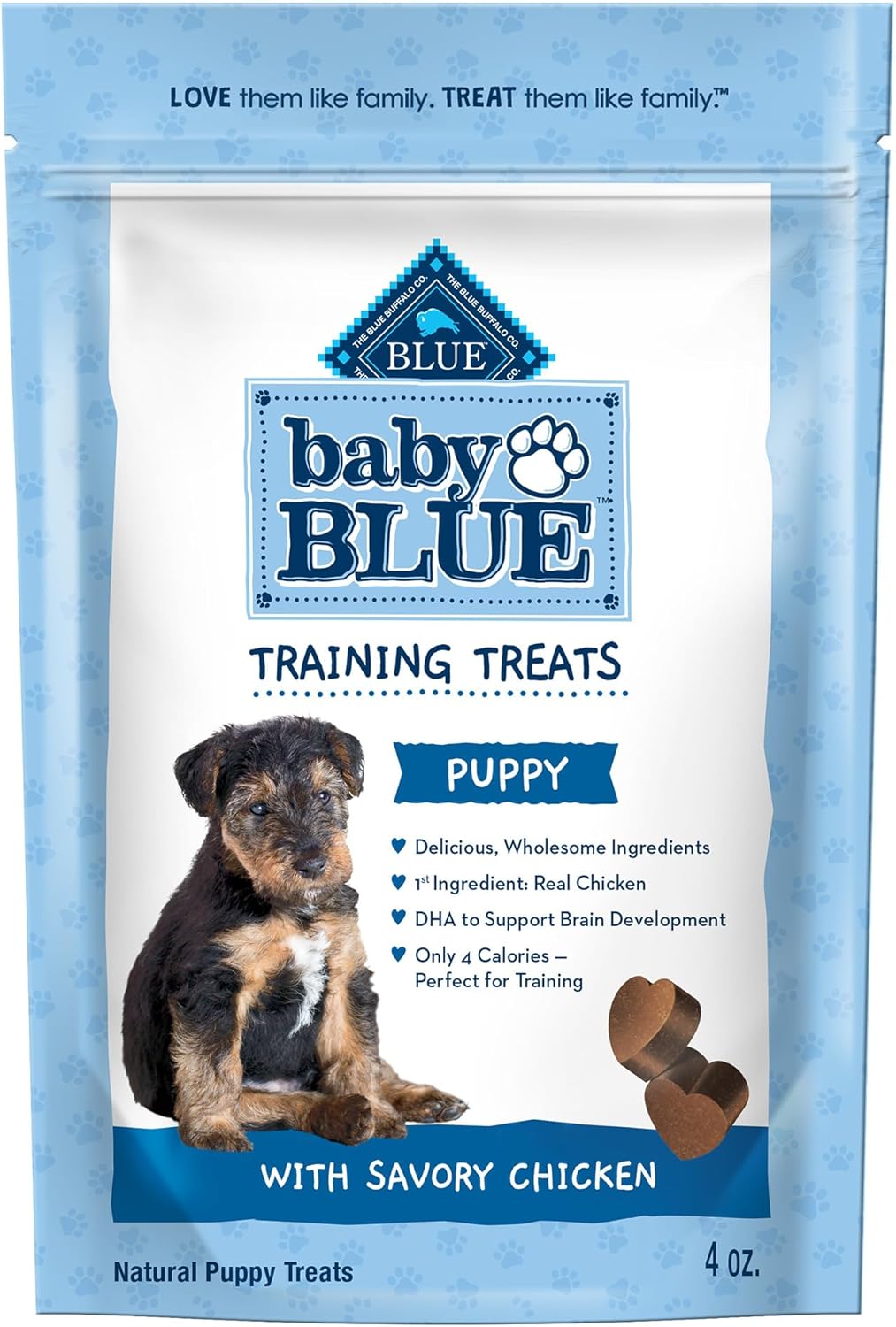
| Flavor | Chicken |
|---|---|
| Age Range Description | Puppy |
| Item Form | Semi Moist |
| Unit Count | 4 Ounce |
| Allergen Information | Corn-Free, Soy Free, Wheat Free |
These Baby BLUE Savory Chicken training treats are soft, bite-sized morsels designed for puppy training and intermittent rewards. Made with real chicken as the first ingredient and a semi-moist texture, they are easy to break or feed quickly during multi-step training sessions. The formula includes DHA for cognitive development and omega fatty acids to support skin and coat, while LifeSource-inspired nutrients and no corn, wheat, or soy aim to reduce common allergens. In practice the treats are highly palatable to most puppies and the small pieces minimize interruptions during repetitious drills. The 4-ounce bag is convenient for short outings or a training class, but frequent trainers may find the pack small and need to replenish often. Nutritional specs show modest protein and fat levels appropriate for treats rather than meal replacement, so they work best as rewards rather than primary food. Overall these treats balance taste and puppy-friendly texture, though the small package size limits how long one bag lasts for heavy training schedules.
Best for: Puppy owners focused on efficient, frequent reward-based training who want a tasty, soft treat that is easy to portion and gentle on young digestive systems.
Less Ideal for: People who run long, intensive daily training sessions or need bulk packaging for many repetitions should consider larger multi-pack options.
- Real chicken listed as the first ingredient for strong palatability
- Soft, semi-moist texture is easy to break and quick to deliver during training
- Includes DHA and omega fatty acids to support cognitive development and skin and coat
- Free of corn, wheat, soy and artificial colors or preservatives
- Small 4-oz bag may not be economical for heavy daily trainers
- Treat nutrient levels are modest so they should not replace regular food
Verdict: The best overall training treat offers the right balance of palatability, bite-size convenience, and consistency to work across most training sessions and puppy temperaments.
Old Mother Hubbard Puppy Mini Biscuits 20 oz
Best Budget Training Treat

| Flavor | Oatmeal & Chicken Puppy Mini |
|---|---|
| Unit Count | 20 Ounce |
| Intended Age | Puppy |
| Item Form | Treat |
These Old Mother Hubbard Classic Puppy mini biscuits are crunchy, bone-shaped training treats designed for growing puppies. They are oven-baked with ingredients such as whole wheat flour, oatmeal, chicken, apples and carrots, and the recipe is fortified with vitamins and minerals so treats can double as an occasional nutritional boost. The mini size and firm crunch make them easy to break into smaller pieces for frequent reinforcement during training, and the mix of savory and mild sweet flavors tends to be appealing to most pups. Because they are intended as supplemental snacks, use them alongside a balanced diet and follow portion guidance for puppies. The biscuits are not soft, so very young puppies with fragile teeth may need smaller broken pieces or softer alternatives. Ingredients list includes mixed tocopherols and botanical extracts for preservation and freshness rather than artificial preservatives.
Best for: Puppy owners who need an inexpensive, everyday reward to use repeatedly during training and want a treat made from recognizable ingredients.
Less Ideal for: Owners seeking grain-free or very soft treats for teething puppies should consider alternatives formulated for those needs.
- Mini size and crunchy texture that breaks into training-appropriate pieces
- Made with recognizable natural ingredients including chicken, oatmeal, apples and carrots
- Fortified with vitamins and minerals to support puppy development
- Oven-baked recipe without meat by-products and no artificial preservatives listed
- Crunchy hardness may be too firm for very young puppies or dogs with dental sensitivity
- Contains wheat and other grains, so not suitable for grain-free diets
Verdict: The best budget training treat gives good value for frequent reward use by staying flavorful and appropriately sized without costing much per pouch or bag.
Pupford Freeze Dried Training Treats 4 oz
Best Premium Training Treat

| Flavor | Beef |
|---|---|
| Item Form | Pellet |
| Unit Count | 4 Ounce |
| Ingredients | Beef Liver, Beef Heart, Mixed Tocopherols (Natural Antioxidant) |
These freeze-dried beef liver treats are made from just a few natural ingredients and are built for everyday training. The pellets are bite-sized and lightweight so you can give multiple rewards in a short session without overfeeding, and the dry texture keeps hands and treat pouches clean during walks, classes, or clicker work. Because they are essentially meat, they are highly motivating for most dogs and work well for shaping behaviors, recall practice, and reward-based training. The simple ingredient list and low calorie profile also make them a reasonable choice for dogs with sensitive stomachs or owners tracking intake. Limitations include the small 4 ounce pouch, which will be used up quickly with frequent sessions, and the single-flavor profile may not suit dogs that need stronger variety to stay interested long term.
Best for: Trainers who want a simple, highly motivating everyday reward that stays mess free and supports frequent, low-calorie reinforcement.
Less Ideal for: People looking for large bulk quantities or multiple flavor mixes for long-term variety should consider larger or multi-flavor packs.
- Single-ingredient, natural meat formula that boosts motivation
- Freeze-dried, low-odor pellets that do not make hands or pockets messy
- Small, bite-sized pieces suitable for rapid repetition during training
- Low calorie so you can reward frequently without large calorie load
- Small 4 oz pouch can be depleted quickly with heavy training use
- Only one flavor option in this listing limits variety for picky dogs
Verdict: The best premium training treat is for owners who prioritize superior ingredients, texture consistency, and higher perceived quality for occasional splurges during important training moments.
Bully Max Puppy Training Treats
Best High-Protein Training Treat

| Flavor | Beef |
|---|---|
| Protein | 22% |
| Intended age | 4 weeks & older |
| Form | Soft puppy training treats |
| Container type | Resealable bag-style pouch |
These are bite-sized, soft beef-flavored training treats designed for puppies and meant to be used as frequent rewards during training or sprinkled over food as a topper. Each chew delivers 22% protein to support muscle growth and energy for active pups, plus DHA from salmon oil to aid cognitive development and faster learning. The formula also includes glucosamine and chondroitin to help developing joints and omega fatty acids for skin and coat health, so a single treat combines reward value with targeted nutritional support. The soft texture makes them easy to break into smaller pieces for many repetitions in a session and suitable for very young or small puppies starting at four weeks. Limitations are that they are intended as intermittent or supplemental feeding only and not a complete diet, and dogs with sensitivities to included ingredients like peas or gelatin should be checked against the ingredient list. Packaging is a resealable pouch which keeps treats handy for training sessions but portion control is still needed with frequent use.
Best for: Puppy owners prioritizing growth and active training who want a training treat that also delivers concentrated protein and functional nutrients to support development and learning.
Less Ideal for: Owners looking for a complete meal replacement or those whose puppies have known sensitivities to any listed ingredients should consider alternatives or consult a vet.
- High protein content (22%) supports muscle development and energy for growing or active puppies
- Includes DHA to support brain development and learning during training
- Glucosamine and chondroitin provide joint support for developing puppies
- Soft, bite-sized texture is easy to break into smaller pieces for many repetitions
- Resealable pouch keeps treats fresh and convenient for training sessions
- Formulated as a supplemental treat rather than a complete nutritional feed
- Contains ingredients (pea flour, gelatin) that could bother dogs with specific sensitivities
Verdict: The best high-protein training treat suits puppies needing extra protein for growth or active training, delivering a concentrated protein punch in small, training-friendly bites.
Covetrus NutriSentials Trusted Trainers Chicken
Best Low-Calorie Training Treat

| Flavor | Chicken |
|---|---|
| Age Range Description | All Life Stages |
| Item Form | Chunk |
| Specific Uses For Product | Behavior |
| Special Ingredients | chicken liver |
These soft training treats are formulated for frequent reinforcement and made with real chicken and chicken liver, which makes them appealing to most dogs. Each bite-sized chunk is low in calories at about 2.7 kcal per treat, so you can use multiple rewards during a session or for daily practice without a big calorie hit. The soft texture allows for quick delivery and easy chewing, useful for puppies and older dogs that need gentler snacks. Ingredients list includes chicken meal and preservatives commonly used for shelf stability, and the treats are made in the USA. The pouch format is convenient for carrying during walks or classes, though the product does not advertise a resealable design in the provided details. If you want a simple, meat-forward training reward that lets you reward frequently while managing daily calories, these treats perform that role well.
Best for: Buyers who need a palatable, low-calorie reward for frequent reinforcement during puppy or basic obedience training and who prioritize easily delivered, meat-forward treats.
Less Ideal for: Owners seeking grain-free or preservative-free training treats or specialty diets should consider alternatives tailored to those restrictions.
- Low calorie at approximately 2.7 kcal per treat supports frequent rewards
- Soft, bite-sized texture enables immediate delivery during training
- Real chicken and chicken liver listed near the top of ingredients for palatability
- Formulated for dogs of all life stages so puppies and adults can use the same treat
- Contains preservatives such as BHA and propionates which some buyers avoid
- Ingredient list includes wheat flour and glycerin, so not grain-free
Verdict: The best low-calorie training treat is ideal for frequent reinforcement during sessions or for pups on calorie-controlled plans, providing motivation without adding excess calories.
Wellness Soft Puppy Bites 8 oz
Best Soft Training Treat

| Flavor | Lamb & Salmon |
|---|---|
| Age Range Description | Puppy |
| Item Form | Wafer |
| Unit Count | 8 Ounce |
Wellness Soft Puppy Bites are bite-sized, soft training treats made for puppies with a tender texture and simple ingredients. They are typically used as quick rewards during training sessions or as occasional supplemental snacks; each piece is low calorie which makes them convenient for repeated reinforcement. The recipe centers on lamb and salmon, and includes salmon-derived DHA to support brain development, while avoiding wheat, corn, soy, and artificial colors. The soft wafer form and small size let puppies chew and swallow fast, which speeds up high-repetition training and reduces interruptions. Because they are grain-free and made in the USA, they suit owners looking for limited-ingredient, premium treats. Limitations to note are that the bag is only 8 ounces so frequent trainers may need multiple bags, and the product is formulated specifically for puppies under one year so adult-only formulas might be a better fit for older dogs. Ingredients like chickpeas and potatoes add texture and carbs, so dogs with very specific allergies should check the full list first.
Best for: Puppy owners who need a soft, low-calorie treat that dogs can eat quickly during fast-paced training and who prefer limited-ingredient, grain-free options.
Less Ideal for: Buyers looking for long-lasting chews, larger bulk packs for extensive daily training, or treats formulated for adult dogs should consider other options.
- Soft, tender texture made for young puppies and sensitive mouths
- Small, bite-sized wafers that are quick to chew and ideal for rapid training repetitions
- Includes salmon for DHA to support brain development
- Grain-free recipe with no added wheat, corn, soy, or artificial colors
- Made in USA with a short, recognizable ingredient list
- Small 8 oz bag may require frequent repurchase for heavy trainers
- Formulated specifically for puppies under one year rather than adults
Verdict: The best soft training treat is designed for young puppies and sensitive mouths, offering a tender texture that’s easy to chew and quick to eat during rapid training sequences.
N-Bone Puppy Teething Sticks Chicken
Best Long-Lasting Training Treat

| Flavor | Chicken |
|---|---|
| Age Range Description | Puppy |
| Item Form | Stick |
| Special Ingredients | Chicken, Fish Oil, Brewers Dried Yeast |
| Animal Food Ingredient Claim | No Artificial Colors |
N-Bone Puppy Teething Sticks are soft, rice-based chew sticks designed to soothe teething puppies while providing a chew outlet that is edible and digestible. They are typically given as a supervised treat during teething or training sessions when you want the puppy to chew rather than gnaw on furniture. The sticks are pliable rather than rock-hard, so they satisfy chewing urges without stressing developing teeth and include added calcium and DHA for dental and cognitive support. The chicken flavor and ingredients like fish oil and brewer's yeast make them palatable to most puppies, and the pouch format keeps portions convenient. Because they are designed to be eaten rather than long-term indestructible chews, each stick gives moderate lasting engagement but will soften and be consumed with repeated chewing, so they work best when you want longer chew time than soft training bites but still want an edible reward. Notable limits are that very aggressive chewers may finish them quickly and they are intended specifically for puppies rather than adult heavy chewers.
Best for: Puppy owners who want a chewable, edible reward that soothes teething and keeps a young dog engaged for longer than a soft training bite during training or quiet-time sessions.
Less Ideal for: Handlers seeking an indestructible or multi-week chew for powerful adult chewers should choose a sturdier, nonedible option instead.
- Pliable texture soothes teething gums without damaging developing teeth
- Edible and digestible rice-based formula with added calcium and DHA
- Chicken flavor and included palatability ingredients promote puppy interest
- Free of rawhide, corn, wheat, and soy and contains no artificial colors
- Convenient pouch packaging for single-session use or training rewards
- Not intended as an indestructible, very long-lasting chew for aggressive chewers
- Smaller size and soft texture mean individual sticks are consumed rather than lasting for many sessions
Verdict: The best long-lasting training treat fits sessions where you want sustained engagement or a slower reward pace, delivering longer chew time and perceived value per treat.
Choosing the Right Training Treat Puppy: Key Factors to Consider
Texture and Size
Puppies have smaller mouths and developing teeth, so treat texture matters. Soft treats or those that can be broken into pea-sized pieces let you deliver rapid rewards without forcing a puppy to munch on something tough. A consistent, moist texture avoids choking risk and prevents the handler from spending extra time preparing each reward.
Size affects pacing and calorie control. Smaller pieces let you give more repetitions in one session, which is essential when teaching new behaviors. Look for treats that hold together when grabbed but compress easily between fingers so you can quickly tear them into appropriate portions.
Ingredient Safety and Digestibility
Young digestive systems are more sensitive, so choose treats with simple, recognizable ingredients and minimal fillers. Single-protein or limited-ingredient options reduce the chance of gastrointestinal upset and make it easier to spot potential allergens. Avoid treats with artificial colors, high fructose syrups, or excessive chemical preservatives that can irritate a puppy's stomach.
Digestibility also links to energy delivery during training. Ingredients that are quickly metabolized provide an immediate reward without heavy slow-release calories that could disrupt meal schedules or weight management.
Palatability and Scent
A treat's appeal—flavor and aroma—directly affects whether a puppy will work for it. For many puppies, strong-smelling, meaty treats elicit faster responses than bland biscuits. However, palatability should be balanced with ingredient quality to avoid overly salty or fatty formulations that are unsuitable for frequent use.
Consider rotating a primary training treat with a secondary higher-value option for proofing difficult behaviors. That lets you preserve the novelty of the high-value item while using a reliable everyday reward for routine reinforcement.
Calorie Density and Portion Control
Because training relies on many short repetitions, the calories from treats can add up quickly. Low calorie density or treats intended to be split into many pieces make it easier to reward without surpassing daily calorie needs. Some treats are explicitly formulated for training and list calories per piece; those are simpler to use.
If the treat is calorie-dense, plan to reduce meal portions correspondingly. Portion control also matters for weight management during growth; excessive calories can contribute to unhealthy weight gain in puppies still developing their skeletal structure.
Packaging and Convenience
Training often happens on the move, so packaging that is resealable and pocket-friendly improves consistency. Squeeze pouches, small reclosable bags, or compact tubs that prevent crumbling keep treats fresh and easy to access during short sessions. Clear packaging or labeling that indicates batch freshness and storage recommendations also helps maintain treat quality over time.
Ease of portioning is another convenience factor. Treats that are pre-scored, come in small bite sizes, or break predictably simplify fast-paced training without interrupting momentum.
Suitability Across Training Stages
Different training goals call for different treat characteristics. For early potty and recall work you may need ultra-high-value, aromatic treats to beat distractions. For shaping small behaviors you want very small, low-calorie pieces you can give dozens of times per session. Choose treats that match the type of behavior you are teaching and consider having two kinds on hand: one for high-distraction proofing and one for repetition during classroom-style practice.
Also consider any dietary transitions. Puppies moving from weaning to adult food may have changing sensitivities; treats that are gentle and consistent help avoid interruptions to that transition.
What Is the Best Way to Use Training Treats with a Puppy?
Short, frequent sessions work best. Keep training rounds to one to five minutes for very young puppies, extending gradually as attention improves. Offer treats immediately after the desired behavior so the puppy links the action with the reward.
Use small pieces so each repetition is a single treat. For new behaviors use a higher-value, more aromatic treat to earn attention; once the puppy understands the cue, transition to lower-calorie pieces to maintain consistency without overfeeding.
- Prepare pea-sized pieces in advance.
- Reward within one second of the behavior.
- Stage difficulty progressively and only add distractions after the puppy reliably responds.
How to Manage Calories While Training
Account for training treats by reducing regular meal portions slightly on heavy training days. Calculate an approximate daily calorie budget for treats and meals combined and stick to it to protect healthy growth.
Choose low-calorie training pieces for high-repetition sessions, and reserve richer, higher-value rewards for troubleshooting or high-distraction environments.
- Weigh or estimate pieces for consistency.
- Track total daily treats until you have a feel for how many rounds equal a meal portion.
Dealing with Picky Puppies or Low Motivation
If a puppy ignores basic treats, try warmer, stronger-smelling rewards such as soft meaty pieces or lightly warmed food-safe options to increase aroma. Change the pacing or location of sessions to find an environment where the puppy is more engaged.
If motivation remains low, shorten sessions and increase treat frequency so the puppy experiences more success. Also check that the puppy is not too full from earlier meals and that there are no underlying health issues affecting appetite.
- Test different textures and protein sources.
- Use movement-based cues combined with treats for extra engagement.
Storing Treats and Keeping Them Fresh
Store treats according to package guidance to preserve aroma and texture. Many soft treats do best in resealable bags kept in a cool, dry place to prevent drying out or mold growth.
For single-serve training you can portion small amounts into airtight containers or pill organizers so you only open a small cache at a time. This helps maintain freshness and prevents temptation to use more than planned.
- Avoid humid storage areas.
- Label portions with the date they were opened.
Can You Use Kibble as Training Treats?
Kibble can work for training if it is small, palatable, and the puppy is motivated by it. For very young pups or in high-distraction settings, plain kibble often lacks sufficient scent to compete with environmental stimuli.
If you use kibble, consider pairing it with a food topper or reserving a portion of the puppy's daily meal exclusively for training so it has value. Kibble is a low-calorie option for high-repetition sessions when it is effective.
- Test kibble in short sessions before relying on it for challenging tasks.
- Split kibble pieces further for more repetitions.
How We Chose the Best Training Treat Puppy
To compile this list we applied strict, puppy-specific filters that reflect real training needs. We prioritized treat formulations that are soft or easily broken into small pieces so puppies can chew and swallow quickly during rapid-fire reward sequences. Ingredient safety was a top filter: we looked for limited, recognizable ingredient lists and avoided products with known high-risk additives for young dogs. Other evaluation criteria included palatability—how likely a puppy is to respond positively—calorie density and portion control to prevent overfeeding during many short sessions, and consistent texture so treats do not crumble into dust or turn soggy. We also considered practicality: resealable packaging, ease of portioning, and shelf life once opened. Finally, we checked suitability across common puppy stages, from early weeks through basic-lesson age, and favored treats that work for both indoor and outdoor training. Excluded from consideration were novelty or long-lasting chews intended for extended gnawing, medicated products, and treats formulated exclusively for adult dogs or specific health conditions. Our goal was to highlight treats that reliably support short, frequent training interactions while keeping puppies safe and motivated.
Our full evaluation process is outlined in our review methodology.
FAQ
How often should I give treats during a training session?
During initial learning, give a treat every successful repetition to reinforce the behavior. Sessions should be short and focused, with many repetitions; as the puppy masters the cue, gradually reduce frequency and substitute praise or play.
Are soft treats better than crunchy ones for puppies?
Soft treats are usually preferable because they are easier to chew and can be broken into small pieces. Crunchy treats can work for older puppies with stronger teeth but may interrupt flow if the puppy needs more time to chew.
What if my puppy gets full from treats?
If your puppy seems full, cut back meal portions slightly and choose lower-calorie training pieces. You can also increase the number of repetitions using smaller pieces so the puppy gets frequent rewards without excess calories.
When should I switch treat types during training?
Switch treat types when you need to raise the reward value, such as proofing in distracting environments, or when a puppy develops a preference. Keep a consistent everyday training treat for routine work and reserve higher-value items for tougher lessons.
Can puppies have human food as training treats?
Some plain human foods are safe in tiny amounts, but many common snacks are unsafe for dogs. Use human food sparingly and only items known to be dog-safe. For routine training, commercial puppy treats designed for regular use are a safer option.
Final Verdict
Choose training treats that match the stage and goals of your puppy's training. Prioritize soft texture and small size for rapid reinforcement, check ingredient lists for digestibility, and manage calories so frequent rewards do not unbalance daily intake. Keep a high-value option for difficult or distracting environments and a low-calorie everyday piece for repetition. With the right treats and consistent short sessions you can accelerate learning while protecting your puppy's health and appetite.

