

Finding the right training leash matters because it affects how effectively you can teach cues, manage distractions, and keep your dog safe during practice. A leash that balances control, durability, and comfort lets you focus on timing and consistency, which are the two elements that make training sessions productive. This guide lists the top shortlisted training leashes and explains why they are good picks for common training tasks, from loose-leash walking to recall practice. Below you will find concise evaluations and the criteria we used to judge each leash and pick the most useful options for trainers and everyday owners alike.
Top Picks at a Glance
| Best Overall Leash The all-around top pick for most dog owners and trainers | Primal Pet Gear Dual-Handle Leash 6FT |  |
| Best Budget Leash A low-cost option that still performs reliably for daily use | Taglory Rope Dog Leash 6 FT |  |
| Best Premium Leash A higher-end choice with superior materials and refined features | Viper Biothane K9 Working Dog Leash 6ft |  |
| Best Retractable Leash A variable-length leash for giving dogs controlled freedom outdoors | TUG Original Retractable Dog Leash Medium |  |
| Best Heavy-Duty Leash Built for strong or large dogs needing extra strength and control | JEWOSTER Heavy Duty Dog Leash 6 ft | 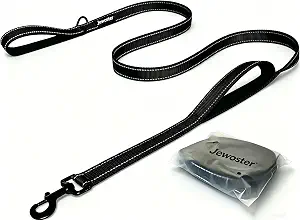 |
| Best Hands-Free Leash A wearable leash option for running, hiking, or hands-free control | iYoShop Hands Free Dog Leash Large |  |
Primal Pet Gear Dual-Handle Leash 6FT
Best Overall Leash

| Size | 6FT |
|---|---|
| Material Type | Metal, Nylon |
| Closure Type | Snap |
| Dog Breed Size | Medium |
This Primal Pet Gear leash is built for everyday walks and basic training sessions where control and comfort matter. The 6-foot length gives enough room for loose-leash walking while the secondary, traffic handle lets you instantly shorten the lead for close control during recalls or street crossings. Neoprene-padded handles reduce hand strain on longer outings and the heavy stitched nylon feels durable for regular use. Double-sided reflective stitching improves visibility at night and the metal snap clips to collars or harnesses securely. It is a simple, well-made leash that focuses on practical features rather than extras. Limitations are few: the leash is single-layer nylon rather than padded along its full length, and it does not include a swivel snap with a separate reinforced bail for extreme chewers, so very determined dogs might wear it faster than a bespoke heavy-duty option. For routine walking and basic training the leash offers a dependable blend of comfort, control, and visibility.
Best for: Buyers who want a single everyday leash that balances comfortable handling with the ability to quickly switch to close control during walks and basic training.
Less Ideal for: People who need a specialized heavy-duty lead for powerful pullers, or those who want a fully padded or hands-free leash design.
- Dual handles provide both standard and close-control grip for training and traffic situations
- Neoprene-padded handles reduce hand fatigue on long walks
- Reflective stitching on both sides increases visibility in low light
- Durable, tightly stitched nylon construction suitable for regular use
- Strong metal snap clips securely to collars and harnesses
- Leash webbing is not fully padded along its length
- Not designed for heavy chewers or extreme pullers compared with specialized heavy-duty leads
Verdict: The best overall leash balances durability, comfortable handling, appropriate length, and reliable hardware to suit everyday walks and basic training sessions.
Taglory Rope Dog Leash 6 FT
Best Budget Leash

| Length | 6 FT |
|---|---|
| Material Type | Metal, Nylon |
| Size | 1/2" x 6 FT (20~120 lbs.) |
| Closure Type | Snap |
The Taglory Rope Dog Leash is a straightforward, sturdy everyday leash built from 1/2-inch climbing rope for reliable strength with medium and large dogs. It is typically used for daily walks, light training sessions, and outdoor hikes where a durable, tangle-resistant lead is needed. Notable features include a cushioned foam handle that reduces rope burn during sudden pulls, woven reflective threads for better low-light visibility along the entire length, and a zinc-alloy 360-degree swivel clip to prevent tangling and simplify attachment to collars or harnesses. In practice the rope construction gives a nice balance of flexibility and grip and the padded handle makes longer outings more comfortable. Limitations are that it is a simple fixed-length leash without hands-free or multi-length adjustment options, and the rope thickness and hardware are basic rather than premium; very strong, sustained pullers may prefer a thicker or specialty lead. For routine walks and basic training this leash delivers dependable, no-frills performance at a low cost.
Best for: Buyers who want a low-cost, reliably strong leash for everyday walking and basic training with medium or large dogs and value visibility and comfort over adjustable features.
Less Ideal for: Owners seeking a multi-length, hands-free, or heavy-duty professional training lead for very large or high-energy dogs should consider alternative specialized leashes.
- Built from 1/2-inch climbing rope for strong, durable construction
- Padded foam handle reduces rope burn and improves comfort on longer walks
- Woven reflective threads along the rope increase visibility in low light
- 360° swivel zinc-alloy clip prevents tangles and makes attachment easy
- Fixed single-length design with no adjustment or hands-free option
- Hardware and rope are functional but not premium-grade for extreme pullers
Verdict: The best budget leash gives pet owners solid everyday performance and safety at a low price, prioritizing dependable materials and simple construction for regular walks and basic training.
Viper Biothane K9 Working Dog Leash 6ft
Best Premium Leash

| Length | 6 ft |
|---|---|
| Width | 5/8" |
| Material Type | Biothane, Brass |
| Closure Type | Snap |
The Viper Biothane K9 Working Dog Leash is a waterproof, odor-resistant 6-foot training lead built from coated Biothane webbing and fitted with a solid brass snap. It is meant for frequent handling in wet, muddy, or cold conditions where leather or nylon would absorb moisture, stiffen, or smell. Typical use cases are obedience classes, tracking, Schutzhund, and daily fieldwork where durability and easy cleaning matter. The Biothane coating keeps the leash flexible in cold weather and resists sticking or swelling after exposure to water, while the stated 625 lb breaking strength for the 5/8-inch width gives confidence for stronger dogs. The brass hardware resists rust, making it suitable for long-term outdoor work. Trade-offs include that the material is not chew proof and should not be used as a tie-out, and the leash is utilitarian rather than heavily padded or ergonomically contoured for extended hand comfort. For buyers prioritizing premium, low-maintenance materials and rugged hardware for serious training, this leash performs reliably; casual walkers who want extra hand cushioning or a chew-resistant solution may want different options.
Best for: Owners who prioritize long-term durability, low-maintenance materials, and robust hardware for frequent training, tracking, or outdoor work with medium to large dogs.
Less Ideal for: Buyers who need a chew-resistant tie-out solution or who prefer heavily padded, ultra-ergonomic handles for long daily walks should consider other leash styles.
- Waterproof Biothane coating that cleans easily and resists odors
- High breaking strength (625 lb for 5/8" width) for secure control of strong dogs
- Solid brass snap hardware that resists rust in wet conditions
- Stable flexibility in extreme temperatures so it stays usable in cold or heat
- Not chew proof and not intended for use as a tie-out
- Minimal padding on the handle so extended sessions can be less comfortable
Verdict: The best premium leash is for owners willing to pay more for top-tier materials, reinforced hardware, ergonomic handling, and long-term durability during frequent walking and training.
TUG Original Retractable Dog Leash Medium
Best Retractable Leash

| Length | 16 feet |
|---|---|
| Dog Breed Size | Medium |
| Material Type | Nylon |
| Closure Type | Snap |
The TUG Original Retractable Leash gives medium dogs up to 55 lb useful freedom while keeping control within easy reach. Its 16 foot nylon tape and 360 degree tangle-free inlet let dogs explore at distance without the lead twisting, and the heavy duty internal coil provides consistent retraction and recoil for predictable line management. The thumb-operated quick lock and unlock makes adjusting length simple on the move, and the ergonomic anti-slip handle is comfortable for longer walks. Practical extras include a sturdy snap closure and clear safety guidance about inspecting the tape for wear. Limits to consider are the tape design itself, which is less chew-resistant than chain or rope options, and retractable leashes like this require attentive use around traffic or other dogs since long extended line can increase pull force. For owners wanting a smooth, lightweight retractable solution for everyday neighborhood walks, this model balances reach and control well.
Best for: Owners who want to give medium dogs flexible off-leash range while retaining one-handed control and a smooth retraction system during everyday walks.
Less Ideal for: People needing a chew-proof or heavy-duty tether for very strong pullers or those who prefer fixed-length leashes for tight control in busy urban settings.
- 16 ft nylon tape with 360 degree tangle-free inlet reduces twisting
- Quick thumb lock/unlock for easy length adjustments while walking
- Ergonomic anti-slip handle for comfortable grip on longer outings
- Heavy duty internal coil provides consistent retraction and recoil
- Nylon tape is vulnerable to chewing and abrasion compared with rope or chain
- Extended line increases pull force and requires careful handling near traffic
Verdict: The best retractable leash provides smooth, secure retraction and a reliable locking mechanism so owners can safely offer distance while retaining control during outings.
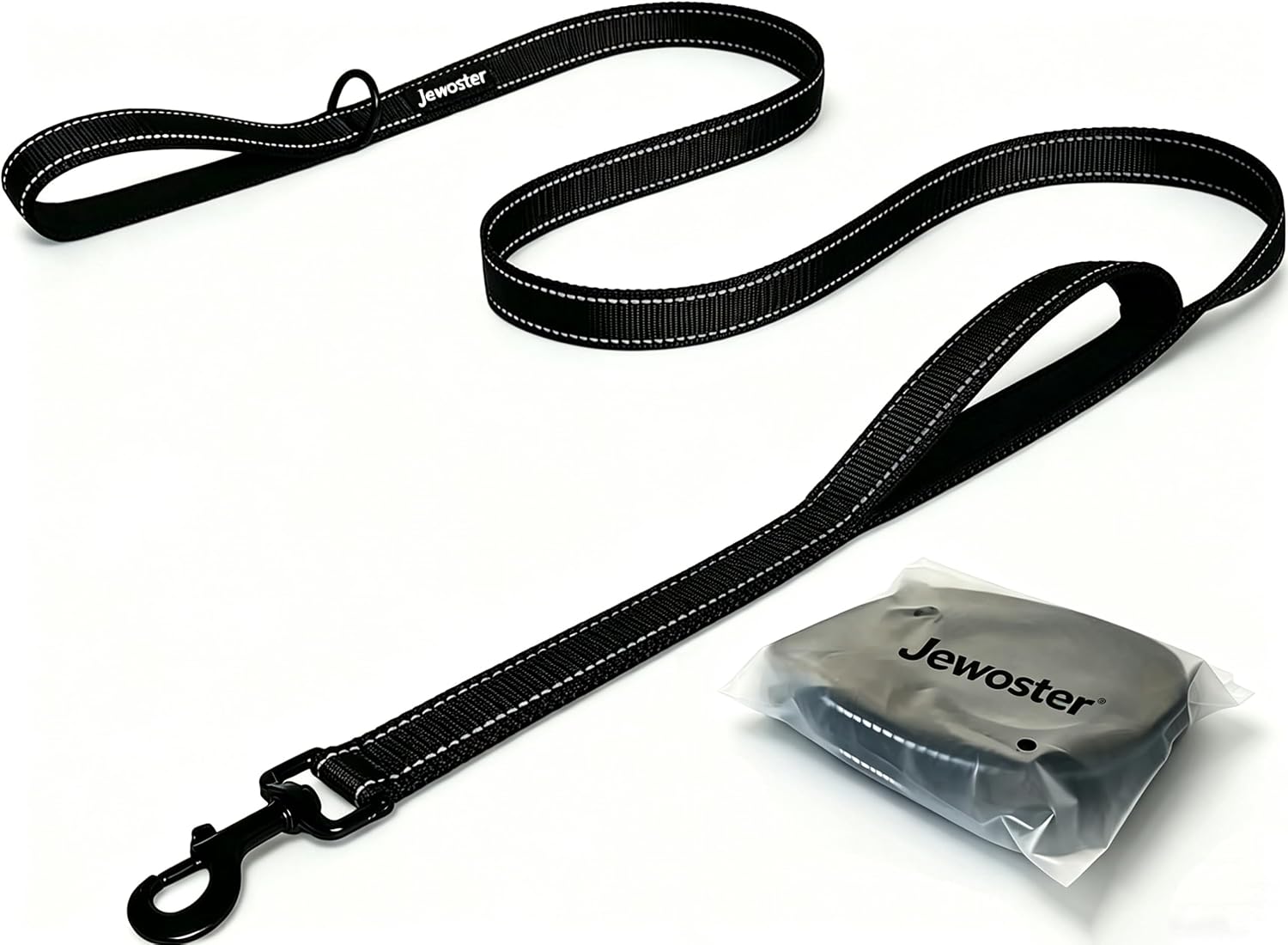
JEWOSTER Heavy Duty Dog Leash 6 ft
Best Heavy-Duty Leash
| Size | 6 ft |
|---|---|
| Material Type | Neoprene, Nylon |
| Included Components | D ring, Metal hook, Two soft handles |
| Item Type Name | Dog Leash |
This JEWOSTER heavy-duty leash is built for control and durability during training and everyday walks. The 6-foot nylon webbing is noticeably thicker than standard leashes and uses direct sewing at stress points to reduce weak knots, which makes it suitable for strong, active dogs. Two padded handles—a primary loop and a close-quarters traffic handle—let you switch between relaxed walking and tight control quickly, and the neoprene padding keeps the grip comfortable during extended use. A 360-degree swivel metal clasp and a sturdy D-ring for accessories prevent tangles and make attaching waste bags or a clicker straightforward. Reflective thread increases visibility on evening outings. The leash is practical and rugged, though the nylon construction can still show wear over time compared with full leather or braided metal options, and it is not rated with a specific tensile strength on the listing. For handlers focused on training and managing strong pulls, the combination of reinforced stitching, padded handles, and heavy hardware makes this a functional, affordable choice.
Best for: Buyers who need a robust, trainer-ready leash to control medium to large dogs during walks and structured training sessions and who prioritize durability and added control features.
Less Ideal for: Those seeking a formal leather lead, a leash with a specified breaking strength, or an ultra-light option for very small dogs should look elsewhere.
- Thicker, tightly webbed nylon with reinforced sewing for greater durability than standard leashes
- Dual padded handles (regular and traffic) for comfortable long walks and immediate close control
- Heavy-duty swivel metal clasp and D-ring reduce tangles and provide secure attachment points
- Reflective stitching improves night visibility for safer low-light walks
- No listed tensile strength or certified load rating for exact breaking force
- Nylon will eventually show fraying with prolonged, extreme use compared with leather or metal alternatives
Verdict: The best heavy-duty leash is designed with reinforced webbing or leather and heavy-gauge hardware to handle powerful pulls and withstand long-term wear for larger or stronger dogs.
iYoShop Hands Free Dog Leash Large
Best Hands-Free Leash

| Leash length | 51"–68" |
|---|---|
| Waist belt length | 27"–48" |
| Dog size | Large (25–120 lbs option) |
| Material type | Nylon |
| Handles | Dual padded handles |
This iYoShop hands-free leash is designed to let you run, walk, or train without holding a traditional leash. It fastens around your waist with an adjustable belt (27" to 48") and connects to a 51"–68" leash that includes two bungee shock-absorbing sections to soften sudden pulls. Two padded handles give you closer control when needed, and a heavier 2" clip with D-ring makes attaching accessories straightforward. The removable zipper pouch keeps essentials like a phone, keys, or treats within reach during training sessions or longer outings. In practice the bungee delivers noticeable give that reduces jolts during jogs, while the traffic handle helps manage your dog in busy situations. The leash is nylon-built and intended for medium to large dogs with a larger clasp option for stronger pups. Limitations include a single attachment style focused on waist wear rather than shoulder carry and the nylon webbing can show wear faster than heavier webbing options, so owners who need a shoulder strap or want premium hardware may prefer alternatives.
Best for: Active owners who want true hands-free control during jogging, hiking, or focused leash training and value a secure waist attachment plus quick-access storage.
Less Ideal for: Those who prefer shoulder-style hands-free rigs or need the most heavy-duty, commercial-grade hardware for very strong or frequently pulling dogs.
- Hands-free waist belt adjustable from 27" to 48" for a secure fit
- Dual bungee shock absorbers reduce jerks during runs and active training
- Two padded handles including a traffic handle for on-demand close control
- Removable zipper pouch for phone, keys, treats and waste bags
- Heavy duty 2" clip and D-ring for secure attachment and accessories
- Designed primarily for waist wear so it lacks a dedicated shoulder carry option
- Nylon webbing and hardware are functional but not as premium or long-lasting as heavier-duty materials
Verdict: The best hands-free leash keeps owners hands-free with a secure waist or shoulder attachment and comfortable handling, ideal for jogs, hikes, or multitasking while maintaining control.
Choosing the Right Dog Leash Training: Key Factors to Consider
Length and Adjustability
Leash length influences distance and control during different training exercises. Shorter lengths give better control for heel work and tight corrections, while longer lengths are useful for recall, scent work, and building distance cues. Adjustable leashes or those with multiple attachment points let you quickly change length without switching tools, which keeps sessions efficient.
Consider how the leash behaves when clipped at different points. A leash that becomes awkward or twists when shortened can interfere with timing and signal clarity. For many handlers, a 4-6 foot range covers typical needs, with an option to extend to 10-30 feet for off-leash style recall practice.
Material and Durability
Training leashes see frequent tension, rubbing, and exposure to dirt and moisture, so material choice matters. Nylon webbing is lightweight and affordable but varies widely in density and edge finish; thicker, tightly woven webbing resists fraying and transfers less shock to the handler. Leather offers a comfortable hand feel and a predictable break-in characteristic but requires maintenance to avoid drying or stiffening.
Pay attention to stitching quality and edge binding. Reinforced bartacks and box stitches at stress points extend service life. Metal hardware should be rated and corrosion-resistant; cheaply plated clips can fail after repeated use or exposure to wet environments.
Hardware and Attachment Options
The clip and attachment design determine how securely the leash connects to a collar or harness and how easily you can change configurations mid-session. A reliable snap hook that locks or has a thick gate resists accidental opening. Swivels reduce twisting between leash and collar, which helps maintain a clean line of communication during movement.
Multiple attachment rings or carabiner points increase versatility: they let you convert a long line into a hands-free leash, fashion a temporary tether, or shorten the leash for close work without re-rigging. Ensure any metal hardware is sized appropriately for your dog so it does not deform under load.
Handle Design and Handler Comfort
Comfortable handles reduce hand fatigue and allow you to maintain precise signals during repeated drills. Padded handles cushion against sudden tugs and make longer walks or training sessions more pleasant. The distance between the clip and the handle affects leverage and how much force you feel; handles placed closer to the clip can give faster, crisper corrections for heel work.
Also consider handle placement for two-handed control. Some leashes include an extra leader handle closer to the clip to give you a near-hand hold for momentary restraint. The handle opening should fit your hand while allowing room for gloves in cooler weather.
Visibility and Safety Features
Training often happens around dawn, dusk, or in busy areas, so visibility features matter. Reflective stitching or high-visibility color options make it easier for others to see you and your dog. Bright colors also help you locate a dropped leash quickly in grass or leaves.
Think about how the leash behaves under load: a leash that bounces unpredictably or has loose hardware can create safety hazards. Where relevant, choose a leash with secure stitching and fail-safe attachments to reduce the chance of accidental release during critical training moments.
Weight and Packability
The leash weight affects both your comfort and the dog's experience, especially with small or lightweight breeds. Heavy hardware and thick leather add durability but increase carried weight and can be fatiguing for small dogs. Lightweight synthetic options pack smaller and are easier to store in a training bag or pocket.
Consider how compact the leash becomes when looped or folded. If you travel frequently for training sessions or need to stash the leash in a treat pouch, a more compressible material will be convenient without sacrificing key functional features.
How Long Should a Training Leash Be for Different Exercises?
Length depends on the exercise. For heel work and loose-leash walking in urban spaces, a short leash of 4 to 6 feet keeps the dog close and gives the handler precise control. For recall practice and distance commands, a long line of 15 to 30 feet lets you create graduated distance while retaining a safety tether.
Adjustable leashes or models with multiple clip points let you shift between these roles quickly. When choosing a single leash for both close work and distance drills, favor one with secure attachment options and predictable handling at both short and long lengths.
- 4 to 6 feet: close control and urban walks
- 8 to 15 feet: intermediate distance work and field transitions
- 15 to 30 feet: recall practice and off-leash skill building
Do Padded Handles or Two-handed Grips Improve Training?
Yes. Padded handles reduce hand soreness and help you maintain a steady, readable contact, especially during repetitive sessions. A second handle closer to the clip—a traffic or leader handle—gives you instant short-range control without reaching forward and disrupting timing.
For handlers who do longer sessions or work with larger breeds, ergonomic grips and well-placed handles enhance safety and communication by letting you deliver clearer, consistent cues with less fatigue.
- Padded handle: comfort on long walks and less reactive recoil on sudden tugs
- Leader handle: quick close-in control without changing hand position
What Attachment Setups Work Best with Harnesses?
Many trainers prefer attaching leashes to front-clip harnesses for dogs that pull, because the forward attachment provides clearer directional feedback. When using a harness, ensure the leash clip aligns with the harness attachment point so the line runs cleanly and does not rub sensitive areas.
If you switch between collar and harness, choose a leash with a clip that opens easily yet closes securely so you can change setups quickly during a session. Consider a swivel or low-profile clip to minimize twisting and keep the dog comfortable.
- Front-clip harness: better directional control for pullers
- Back-clip harness: useful for reward-based walking where pulling is minimal
Should I Use Reflective or High-visibility Gear for Training?
Reflective or high-visibility features are worth adding if you train near roadways or during low-light hours. These elements make you more noticeable to drivers and pedestrians and help you spot a dropped leash quickly in low contrast environments.
Even in daylight, bright colors can make locating the leash easier in grass or cluttered areas. Choose reflective trims that are well stitched and designed to endure washing and abrasion so visibility does not degrade after a few sessions.
- Reflective stitching: passive visibility during low light
- Bright colors: easier to locate outdoors and reduce search time
How to Maintain and Extend the Life of a Training Leash
Regular maintenance keeps a training leash reliable. Rinse synthetic leashes after exposure to mud, sand, or salt water and allow them to air dry to avoid interior moisture buildup. Leather requires occasional conditioning to prevent cracking and to retain flexibility.
Inspect hardware and stitching periodically. Replace a leash if the clip gate deforms, seams loosen, or webbing shows deep fraying. Small repairs, like reinforcing a weakened stitch, can extend service life but do not replace the need for timely replacement of compromised safety components.
- Rinse and air-dry after exposure to salt or mud
- Condition leather to prevent drying and cracking
- Inspect hardware and seams before regular training sessions
How We Chose the Best Dog Leash Training
We focused on features and real-world performance factors that matter most for training leashes. First, we evaluated control mechanics: length options, handle placement, hardware quality, and how those features affect communication between handler and dog. Second, we checked construction and durability, including material strength, stitching, and hardware corrosion resistance, because training tools take heavy, repeated use. Third, we assessed comfort and ergonomics for both dog and handler, including padded handles and weight distribution to reduce fatigue during longer sessions. Fourth, we considered versatility: whether the leash supports multiple training techniques such as loose-leash walking, recall drills, and temporary tethering. We also reviewed safety features such as breakaway risk, reflective trim for low-light use, and secure fasteners. Items that lacked adequate hardware, had fragile materials, or limited functionality for common training scenarios were excluded. Our short list prioritized products that offer predictable handling, durable build quality, and thoughtful ergonomics for consistent, safe training.
Our full evaluation process is outlined in our review methodology.
FAQ
Can one leash work for both daily walks and formal training?
Often yes. A versatile leash with adjustable length or multiple attachment points can serve for everyday walking and many training drills. Make sure it offers secure hardware and a comfortable handle so it performs reliably in both roles.
Is nylon or leather better for a training leash?
It depends on priorities. Nylon is lightweight, quick-drying, and often more affordable, while leather provides a comfortable hand feel and predictable wear characteristics. Choose based on durability needs, weather exposure, and handler comfort.
How do I choose the right clip for my dog?
Select a clip sized and rated for your dog's weight and activity level. A solid, corrosion-resistant clip with a secure gate reduces accidental release. Avoid small, thin clips on larger or very active dogs.
Are long lines safe for recall training?
Long lines are useful and generally safe when used correctly. Keep them clear of obstacles, monitor slack to avoid tangles, and practice in open areas. Start with shorter distances and progress as your dog learns reliable recall cues.
How often should I replace a training leash?
Replace a leash when you notice structural damage such as deep frays, loose stitching, or hardware deformation. Regular inspection after heavy use will tell you when repair is insufficient and replacement is necessary.
Final Verdict
Choose a training leash that prioritizes predictable handling, secure hardware, and comfort for both you and your dog. Match leash length and attachment options to the exercises you plan to do, and factor in material and maintenance needs based on your typical training environment. Balance durability with weight and ergonomics to suit your dog's size and energy level. When you focus on those tradeoffs, you can pick a leash that supports consistent, safe training without adding unnecessary complexity.

