

Picking the right wet dog food matters because what you feed your dog affects digestion, energy, and long-term health. When certain wet food brands use unclear labeling or low-quality ingredients, owners can unintentionally feed formulas that cause digestive upset or fail to meet basic nutritional needs. This guide presents a focused shortlist of wet food brands to avoid and explains why those choices raise concern. We evaluated options against ingredient transparency, guaranteed analysis, and feeding safety to produce the top picks on this list. Use the following sections to understand the key issues and how to select safer alternatives.
Top Picks at a Glance
| Best Overall Wet Food Brand The best all-around wet dog food option for most households | Blue Buffalo Homestyle Recipe Wet Dog Food 12.5 oz |  |
| Best Budget Wet Food Brand A low-cost wet food that still meets basic nutrition needs | WAG Wet Dog Food Cups Variety Pack |  |
| Best Premium Wet Food Brand A higher-end wet food focusing on superior ingredients and sourcing | ZIWI Peak Canned Dog Food Beef & Lamb Variety |  |
| Best High-Protein Wet Food Brand Formulas emphasizing higher protein levels for active or lean dogs | Merrick Grain Free Beef Lamb Bison |  |
| Best Grain-Free Wet Food Brand Wet formulas made without grains for specific dietary preferences | Blue Buffalo Freedom Lamb Wet Dog Food |  |
| Best Limited-Ingredient Wet Food Brand Simpler recipes with fewer ingredients for sensitive tummies | Natural Balance Limited Ingredient Sweet Potato & Salmon |  |
| Best Variety-Pack Wet Food Brand Multi-flavor packs to test preferences and reduce mealtime boredom | Cesar Classic Loaf in Sauce 36ct |  |
Blue Buffalo Homestyle Recipe Wet Dog Food 12.5 oz
Best Overall Wet Food Brand

| Unit Count | 75 Ounce |
|---|---|
| Number of Items | 6 |
| Item Form | Pate |
| Manufacturer recommended age | 1 month and up |
Blue Buffalo Homestyle Recipe is a canned wet dog food sold as a six-pack of 12.5-ounce pate-style dinners with three chicken and three beef cans. It is formulated for adult dogs and can be fed as a complete meal, mixed with dry food, or used as a topper to add moisture and flavor. The recipes list real chicken or beef first, include garden vegetables and whole grains like brown rice, barley, and oatmeal, and avoid corn, wheat, soy, poultry by-product meals, artificial flavors, and artificial preservatives. That ingredient set supports palatability for picky eaters while providing protein, fiber, and added antioxidants from fruits and vegetables. Directions make portioning simple by weight, and unused portions can be refrigerated. Limitations are typical for wet food: cans must be refrigerated after opening and are heavier to store and transport than dry kibble, and feeding exclusively can be more expensive than dry diets. For dog owners prioritizing ingredient quality, taste, and everyday nutrition in a convenient ready-to-serve format, this variety pack is an easy, reliable choice.
Best for: Buyers who want a nutrient-focused everyday wet food that is palatable for picky eaters and works as a complete meal or topper to boost hydration and flavor.
Less Ideal for: Shoppers strictly seeking the lowest-cost per serving or those who need long-term unrefrigerated portions for travel should consider other formats.
- Real meat listed as the first ingredient for higher-quality protein and flavor
- Includes fruits and vegetables for antioxidants and fiber
- Free of corn, wheat, soy, poultry by-product meals, artificial flavors, and artificial preservatives
- Versatile use as a complete meal, mix-in, or topper
- Requires refrigeration after opening and has limited shelf convenience compared with dry food
- Canned wet food is typically more expensive per serving than dry kibble
Verdict: The best overall wet food brand balances ingredient quality, consistent palatability, accurate labeling, and reliable sourcing to suit most dogs and owners looking for a dependable everyday option.
WAG Wet Dog Food Cups Variety Pack
Best Budget Wet Food Brand

| Flavor | Chicken & Beef in Gravy |
|---|---|
| Item Form | Wet |
| Container Type | Cup |
| Unit Count | 42 Ounce |
| Number of Items | 12 |
WAG Wet Dog Food Cups come as a 12-count variety pack of single-serve 3.5 oz cups with recipes using real chicken or beef as the first ingredient and a gravy for palatability. The cups are intended for daily meals or as mix-ins during a transition from one food to another and include ingredients like flaxseed, fish oil, cranberries, and blueberries that support basic nutritional needs. The single-serve cups are convenient for portion control, travel, and avoiding waste from opened cans, and the peel-top container is easy to use. Formulation avoids wheat, corn, soy and artificial colors, which helps with dogs prone to sensitivities, but the product is not labeled with detailed nutrient guarantees on this listing so buyers should confirm it meets any specific veterinary prescription needs. Because the cups are a wet, gravy-style product they are best used as complete meals for adult dogs of all breeds or as a tasty topper to increase intake for picky eaters. The balance here is between affordability and straightforward ingredient sourcing rather than specialized therapeutic nutrition.
Best for: Buyers who need an affordable, everyday wet food that uses real meat and simple ingredients and want single-serve convenience for portion control, travel, or topping dry food.
Less Ideal for: Owners seeking a veterinary-prescribed therapeutic diet or precise guaranteed nutrient breakdown should consider specialty or prescription wet foods instead.
- Real meat listed as the first ingredient in chicken and beef recipes
- Single-serve 3.5 oz cups for easy portioning and reduced food waste
- No added wheat, corn, soy or artificial colors in the formula
- Includes omega and antioxidant sources such as flaxseed, fish oil, cranberries and blueberries
- Product listing does not display full guaranteed analysis on the page so exact nutrient percentages are not visible
- Not formulated or labeled here for specific therapeutic prescriptions
Verdict: The best budget wet food brand gives owners an affordable option that still provides complete nutrition, acceptable ingredient quality, and predictable palatability for cost-conscious pet households.
ZIWI Peak Canned Dog Food Beef & Lamb Variety
Best Premium Wet Food Brand

| Flavor | Beef & Lamb Variety Pack |
|---|---|
| Item Form | Pate |
| Unit Count | 36 Ounce |
| Number of Items | 6 |
| Age Range Description | All Life Stages |
ZIWI Peak's Beef and Lamb canned variety pack delivers nutrient-dense, moisture-rich pate built around free-range, grass-fed meats and New Zealand green-lipped mussels. It is typically used as a complete wet meal or as a topper to boost hydration and palatability for small dogs; the pate texture provides texture stimulation and is easy to portion into bowls. Notable features include a high meat content with organs and bone included for whole-prey nutrition, added superfoods such as kelp and green-lipped mussel for joint and coat support, and a grain-free, limited-ingredient approach that avoids common fillers. Practical benefits for small-dog owners include higher moisture to help with hydration, a strong protein profile to support lean muscle, and ingredients aimed at digestion and joint health. Important trade-offs are the premium positioning, which means a higher price compared with standard wet foods, and a richer formula that may require a gradual transition for dogs with sensitive stomachs or those not used to high-fat, high-protein wet diets.
Best for: Small-dog owners who prioritize high-quality proteins, ethically sourced ingredients, and a nutrient-dense wet food to use as a complete meal or premium topper.
Less Ideal for: Owners on a tight budget or those who need a very low-calorie maintenance food for weight-restricted dogs should consider more economical or specialized formulas.
- High meat-first formula with organs and bone to mirror whole-prey nutrition
- Moisture-rich pate supports hydration and is easy for small mouths to eat
- Includes green-lipped mussel and kelp for joint, skin, and digestive support
- Grain-free and free from common fillers and artificial colors
- Premium ingredients and sourcing make it a higher-cost option
- Rich, nutrient-dense recipe may require a slow transition for dogs with sensitive digestion
Verdict: The best premium wet food brand is for owners willing to pay more for higher-grade proteins, transparent sourcing, and formulations aimed at elevated nutritional standards.
Merrick Grain Free Beef Lamb Bison
Best High-Protein Wet Food Brand

| Flavor | Beef, Lamb & Bison |
|---|---|
| Item Form | Pate |
| Unit Count | 152.4 Ounce |
| Number of Items | 12 |
Merrick Grain Free Real Beef, Lamb and Bison Dinner is a canned pate-style dog food formulated as a complete adult diet or a kibble topper. The recipe lists deboned beef as the first ingredient and emphasizes high animal-protein content, with added vitamins and minerals to meet nutritional needs while avoiding grains, chicken, peas and potatoes. In practice this makes it useful for dogs with grain sensitivities or owners who want a meat-forward wet option to increase moisture and palatability. The pull-tab cans are convenient for daily feeding and portion control, and the pate texture works well for picky eaters and as a topper for dry food. Buyers should note the formula is relatively rich and intended for adult maintenance so adjust portions to body condition, and dogs with specific protein allergies should review the ingredient list. Overall it is a straightforward, meat-focused grain-free canned meal crafted in USA facilities and sized for multi-can households.
Best for: Owners seeking a grain-free, meat-first wet food to add moisture and palatability to adult dogs' diets or to use as a high-protein standalone meal.
Less Ideal for: Those who need a single-source protein or a limited-ingredient prescription diet should consider alternatives tailored to those needs.
- Real deboned beef as the first ingredient for high animal-protein content
- Grain-free recipe suitable for dogs with grain sensitivities
- Soft pate texture that mixes well with kibble or serves as a standalone meal
- Contains added vitamins and minerals for complete adult nutrition
- Rich, meat-forward formula may require portion adjustments to avoid excess calories
- Contains multiple animal proteins which is not ideal for dogs with single-protein sensitivities
Verdict: The best high-protein wet food brand suits active dogs or pets needing higher protein by offering protein-forward recipes with substantial animal-based protein sources.
Blue Buffalo Freedom Lamb Wet Dog Food
Best Grain-Free Wet Food Brand

| Flavor | Lamb |
|---|---|
| Item Form | Wet |
| Special Ingredients | all-natural |
| Unit Count | 150 Ounce |
| Product Benefits | Promotes active lifestyle with wholesome ingredients |
Blue Buffalo Freedom Lamb is a grain-free canned dog food that uses real lamb as the primary ingredient alongside vegetables, fruits, and added vitamins and minerals. You can serve it straight from the can for a complete meal, mix it into dry kibble to boost palatability and moisture, or use small portions as a high-value treat. Notable features include omega 3 and 6 fatty acids for skin and coat support, a no poultry by-product policy, and a recipe free of corn, wheat, and soy. In practice the high moisture content helps hydration and is convenient for picky eaters or dogs with mild food sensitivities to common grains. Limitations to consider are the relatively low protein percentage typical of pâté-style wet foods and that grain-free formulations are not necessary for all dogs and may be chosen for owner preference or specific veterinary guidance. This product is sold in multi-can cases, so plan storage and refrigeration of unused portions.
Best for: Buyers looking for a convenient, grain-free canned food to feed alone or mix with dry kibble and who prioritize recognizable meat-first ingredients for daily feeding or food-allergy management.
Less Ideal for: Owners seeking very high protein wet diets for performance dogs or those who prefer single-can or fresh-portion packaging options.
- Real lamb listed as the first ingredient for recognizable protein source
- Grain-free recipe avoids corn, wheat, and soy
- Formulated with added omega 3 and 6 fatty acids to support skin and coat
- Versatile use: complete meal, mixer with dry food, or treat
- Moderate crude protein level compared with some high-protein wet formulas
- Packaged in multi-can cases requiring refrigeration of leftovers
Verdict: The best grain-free wet food brand is intended for owners preferring formulations without grains, offering alternative carbohydrate sources while maintaining complete nutrition.
Natural Balance Limited Ingredient Sweet Potato & Salmon
Best Limited-Ingredient Wet Food Brand

| Flavor | Sweet Potato & Salmon |
|---|---|
| Item Form | Loaf |
| Animal Food Diet Type | Limited Ingredient |
| Package Size Name | Case of 6 – 13 Ounce Cans |
This is a limited-ingredient wet dog food built around salmon protein and sweet potatoes to support dogs with sensitive stomachs and skin. It comes in a loaf-style 13 oz can and is typically fed as a complete meal or as a topper for dry kibble; the product includes feeding guidelines by weight and recommends a gradual transition over 7–10 days. Notable features include a single-animal-protein focus, no corn wheat or soy, and added omega-3 sources to support skin and coat health. Practical benefits are straightforward: fewer ingredients reduce exposure to common irritants, the salmon-first formula supplies essential amino acids for muscle maintenance, and the loaf texture is palatable for many picky eaters. Important limitations are that it is nutrient-dense wet food meant for adult maintenance so portion control is required to avoid overfeeding, and dogs with specific diagnosed allergies should still consult a veterinarian because the ingredient list includes multiple fish sources and potato proteins. Overall this is a sensible limited-ingredient canned option for owners who want a simple, grain-free wet diet focused on digestive and skin support.
Best for: Dog owners seeking a simple, limited-ingredient wet formula to reduce common dietary irritants and support sensitive stomachs or skin.
Less Ideal for: Owners whose dogs have confirmed fish allergies or those wanting a diet formulated for growth, geriatrics, or clinical therapeutic needs without veterinary guidance.
- Single primary animal protein source listed first for focused allergen control
- Grain-free and free of corn wheat and soy to reduce common irritants
- Loaf texture works well as a complete meal or as a kibble topper
- Includes feeding guidelines and clear transition instructions for switching diets
- Contains multiple fish-derived ingredients which may still trigger fish-sensitive dogs
- Wet food requires refrigeration of unused portions and careful portioning to maintain body condition
Verdict: The best limited-ingredient wet food brand is designed for dogs with ingredient sensitivities, focusing on short, recognizable ingredient lists to minimize potential dietary triggers.
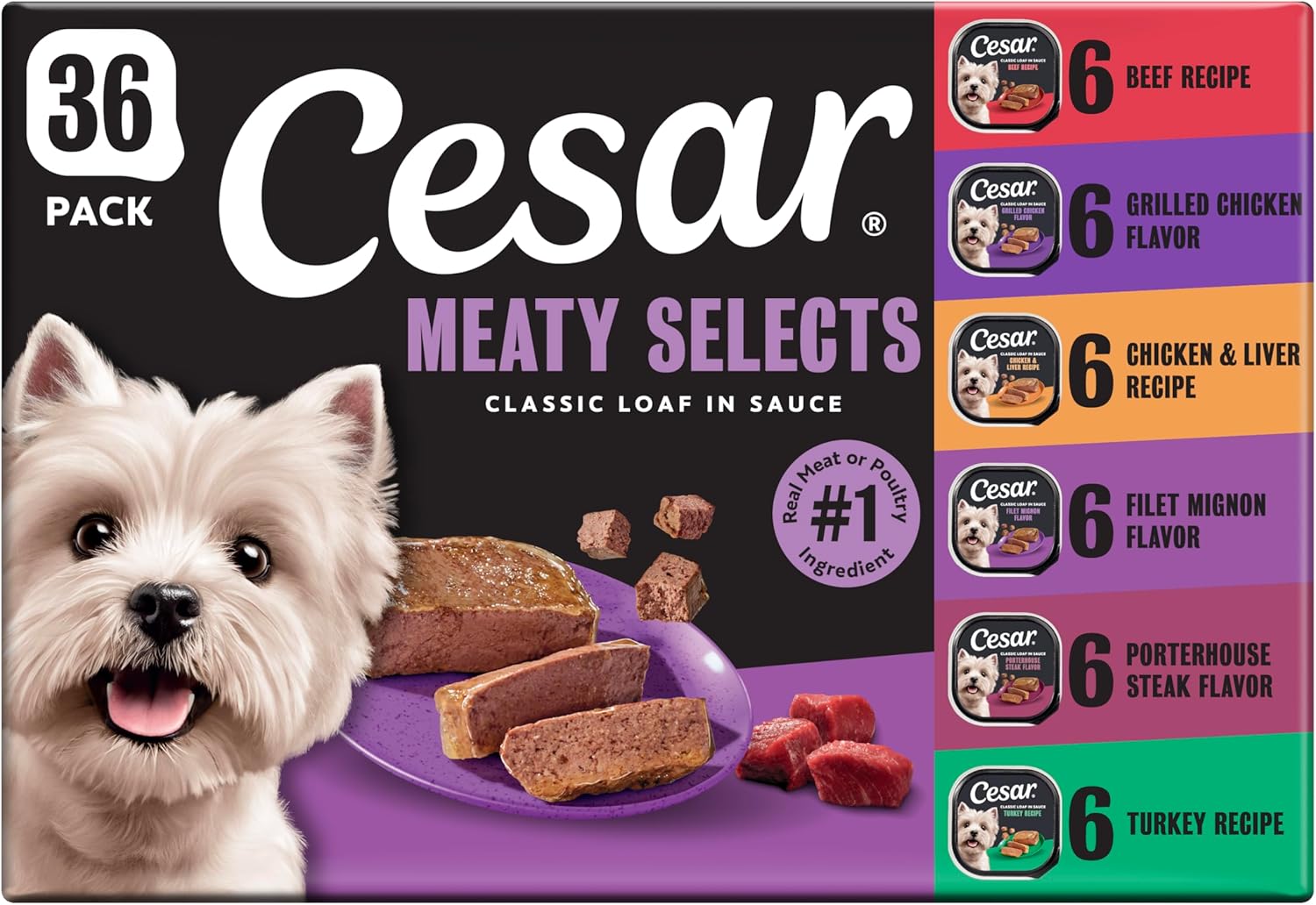
Cesar Classic Loaf in Sauce 36ct
Best Variety-Pack Wet Food Brand
| Unit Count | 36 Count |
|---|---|
| Item Form | Wet |
| Target Species | Dog |
| Breed Recommendation | Small Breeds |
This 36-count pack of Cesar Classic Loaf in Sauce delivers single-serve wet trays with real meat as the first ingredient and a soft loaf texture in a savory sauce. Each tray is designed as a complete, balanced meal for adult dogs or as a topper to add moisture and aroma to dry food, and the peel-away sealed trays make portioning and storage straightforward. The recipes are slow-cooked and marketed as easy to digest, with no artificial flavors and grain-free formulation claims. For multi-dog households the bulk pack reduces shopping frequency and keeps a steady supply on hand, and the variety pack includes several flavors that help with picky eaters. Limitations include small single-serve tray size intended for small breeds so larger dogs will require multiple trays per meal, and the trays must be refrigerated after opening and used quickly. Nutrition follows standard wet-dog-food conventions rather than prescription formulations, so owners with special medical needs should consult their veterinarian.
Best for: Households with multiple dogs or owners who want to buy wet food in bulk to reduce shopping frequency and ensure consistent single-serve portions at mealtimes.
Less Ideal for: Owners who feed large-breed dogs exclusively or who need veterinary prescription diets should consider larger-portion cans or therapeutic formulas instead.
- Large 36-count pack keeps a steady supply for multi-dog households or to cut shopping trips
- Single-serve peel-away trays make portioning and travel convenient
- Real meat listed as the first ingredient and slow-cooked recipes for palatability
- Grain-free formulation and no artificial flavors for dogs with routine sensitivities
- Multiple flavors in the Classic line help satisfy picky eaters
- Trays are small and intended for small-breed servings so larger dogs need several trays per meal
- Once opened trays require refrigeration and short use window
Verdict: The best variety-pack wet food brand is ideal for owners who want multiple flavors and textures to find what their dog prefers or to rotate diets for interest.
Choosing the Right Wet Dog Food Avoid: Key Factors to Consider
Ingredient Transparency
Clear ingredient lists let you know what your dog is actually eating. Brands that use vague terms like "meat by-products" or "animal digest" make it difficult to assess protein quality and potential allergen sources. Ingredient transparency also helps you avoid hidden fillers, excessive carbohydrate sources, and low-value protein meals.
When ingredient origins are unspecified, it is harder to evaluate risks such as contamination or inconsistent nutrient levels. Look for wet foods that list specific meat sources and avoid ambiguous descriptors that mask high-ingredient variability across batches.
Named Meat Content Versus Generic Meals
The proportion and type of meat protein determine amino acid completeness and digestibility. Wet foods that prioritize named whole meats are generally easier to evaluate than those relying heavily on generic 'meat meal' or unspecified animal by-products. Those generic ingredients can vary widely in quality and may indicate less nutritious formulations.
Higher-quality meat sources also contribute to palatability without relying on excessive fat or artificial flavor enhancers. For dogs with sensitivities, knowing the specific meat source reduces the risk of triggering food intolerances.
Guaranteed Analysis and Nutritional Completeness
Guaranteed analysis gives you the crude protein, fat, fiber, and moisture percentages, but the numbers matter more when converted to a dry-matter basis. Some wet formulas appear protein-rich on an as-fed basis because of moisture content; converting to dry-matter reveals true nutrient density.
Complete and balanced labeling for life stage (puppy, adult, senior) and adherence to established feeding guidelines are important. Foods that omit life-stage information or lack adequate nutrient guarantees can fail to meet your dog's requirements over time.
Additives, Preservatives, and Fillers
Artificial colors, unspecified preservatives, and high levels of simple carbohydrates can contribute to digestive upset and long-term health concerns. Some wet foods include unnecessary thickeners or sweeteners to improve texture and taste, which may not add nutritional value and can cause adverse reactions in sensitive dogs.
Identify formulas that rely on whole-food thickeners and natural preservatives, and be wary of unnamed chemical additives or long preservative lists that are hard to evaluate from a safety perspective.
Manufacturing Consistency and Packaging Safety
How a wet food is processed and packaged affects shelf life and safety once opened. Canning, pouches, and trays have different exposure risks after opening; inadequate sealing or confusing storage instructions increase the chance of spoilage and bacterial growth.
Labels that omit clear storage guidance or show inconsistent batch information make tracking quality issues harder. Reliable manufacturing practices and clear packaging instructions support safe feeding routines and reduce waste.
Allergen and Sensitivity Considerations
Dogs commonly react to certain protein sources, grains, or additives. Wet foods that do not clearly list potential allergens or that use multiple animal proteins increase the difficulty of diagnosing food sensitivities.
If your dog has known intolerances, you need formulas with single, named protein sources and minimal extra ingredients. Clear labeling of potential cross-contact or shared facilities is also useful for sensitive animals.
How Can I Tell if a Wet Food Ingredient List Is Misleading?
Start by scanning for vague terms such as "meat meal," "meat by-products," or "animal digest." Those phrases can mask a wide range of tissues and processing methods, which affects digestibility and nutrient consistency. Prefer lists that specify the actual animal source and where possible, which cut or part is used.
Check the ingredient order. Ingredients are listed by weight as formulated, and moisture in wet food skews listed order. Convert to dry-matter thinking to understand true protein priority rather than assuming the first-listed item on a moist formula makes it the largest nutrient contributor.
- Look for named meats like chicken, beef, or salmon rather than generic 'meat' labels
- Watch for long lists of additives and chemical names that add little nutritional benefit
- Use guaranteed analysis to compare actual protein and fat levels after moisture adjustment
What Packaging and Storage Practices Keep Wet Food Safe?
After opening, wet food should be refrigerated and used within the timeframe specified by the manufacturer. If the label lacks clear guidance, treat the opened product as perishable and plan to refrigerate and use it within a couple of days. Always use clean utensils and store leftovers in sealed containers to prevent contamination.
Canned food generally has longer unopened shelf life, while pouches and trays can be more convenient but sometimes have shorter exposed-life once opened. Discard any wet food that shows an off smell, mold, or unusual texture changes.
- Refrigerate opened wet food and follow label discard timelines
- Avoid feeding food that smells sour or shows visual spoilage
- Use clean bowls and utensils to minimize bacterial transfer
Which Ingredients Most Often Cause Digestive Issues?
Common culprits include artificial colors, flavor enhancers, and certain thickeners or gums. Dogs with sensitive stomachs may react to high levels of simple carbohydrates or to products with multiple unnamed protein sources. Foods with a long list of chemical-sounding additives are more likely to cause intermittent digestive upset in sensitive animals.
If your dog experiences loose stools or vomiting after a diet change, consider switching to a formula with minimal, named ingredients and a single protein source to isolate the trigger. Gradual transitions also reduce the chance of shocking the digestive system.
- Artificial dyes and flavors
- Unspecified meat by-products
- High sugar or starch content from added sweeteners
When Should I Consult My Veterinarian About Diet-related Problems?
Consult your veterinarian if digestive symptoms are persistent or severe, such as ongoing diarrhea, repeated vomiting, weight loss, or signs of systemic illness. Sudden changes in appetite combined with lethargy or behavioral shifts warrant prompt veterinary attention rather than a simple diet swap.
Your vet can recommend diagnostic steps like elimination trials or allergy testing and can advise on nutritionally complete therapeutic diets if necessary.
- Persistent diarrhea or vomiting lasting more than 48 hours
- Rapid weight loss or failure to gain expected weight
- Lethargy, loss of appetite, or other systemic signs
How to Transition to a New Wet Food Safely
Switch gradually over 7 to 10 days by mixing increasing proportions of the new food into the current diet. A slow transition helps the gut microbiome adapt and reduces the risk of digestive upset. Monitor stool consistency and appetite during the transition and pause or slow the change if problems appear.
Keep portion sizes consistent to avoid overfeeding during the change and ensure your dog receives the appropriate daily calories for their size and activity level.
- Start with 10 to 25 percent new food and increase gradually
- Observe stool and appetite daily and adjust pace if needed
- Consult your veterinarian for dogs with prior sensitivities
Is 'Complete and Balanced' Labeling Reliable for Wet Foods?
Labels claiming a formula is complete and balanced should reference recognized standards and a life stage. Such statements indicate the product meets minimum nutrient profiles when fed as directed. However, verify that a guaranteed analysis and feeding guidelines are present to confirm the label is meaningful.
Some products may technically meet baseline standards but do so with low-quality ingredient mixes or by relying on nutrient fortification rather than whole-food nutrition. Use ingredient quality and named protein sources alongside 'complete and balanced' claims when choosing a formula.
- Check for life-stage designation and a full guaranteed analysis
- Consider ingredient quality in addition to nutrient guarantees
- Be cautious if the label omits feeding instructions or nutrient percentages
How We Chose the Best Wet Dog Food Avoid
We selected the seven brands on this list by screening widely available wet dog foods for clear, objective issues that matter to dog health. Primary filters included ingredient transparency, meat-protein sourcing, guaranteed nutrient analysis, and the presence of potentially problematic additives. We prioritized products that showed consistent labeling gaps or formulation choices that commonly correlate with digestive complaints or nutritional imbalance. Evaluation criteria used were ingredient sourcing clarity, percent crude protein and fat on an as-fed and dry-matter basis, named meat versus generic meat meal, use of artificial colors or flavorings, and presence of high-risk fillers or sugar sources. We also considered packaging and storage guidance that could affect food safety once opened. Excluded from this list were single-batch recalls and one-off manufacturing errors; our focus was on recurring formulation or labeling issues rather than isolated incidents. We did not include fresh or home-cooked diets because their sourcing and preparation differ from commercial wet foods. The result is a practical list that flags wet food brands with repeatable concerns worth avoiding.
Our full evaluation process is outlined in our review methodology.
FAQ
Can vague ingredient terms on wet food labels cause health problems?
Vague terms can make it hard to assess protein quality and allergen risk, which may contribute to inconsistent nutrition or digestive reactions in some dogs. They do not automatically cause illness, but they reduce transparency about what you are feeding.
How long can opened wet food sit at room temperature?
Most opened wet food should not remain at room temperature for more than two hours to limit bacterial growth. Refrigerate leftovers promptly and follow any discard timelines on the packaging.
Are preservatives in wet food always harmful?
Not always. Some preservatives are safe and approved for pet foods, but long lists of synthetic additives or unspecified preservative names can be a red flag for ingredient quality. Natural preservative systems and minimal additive lists are preferable for sensitive dogs.
Is higher moisture content a problem in wet foods?
High moisture is normal in wet foods and useful for hydration, but it can dilute nutrient density. Compare nutrient values on a dry-matter basis to understand true protein and fat levels rather than assuming moisture equates to lower quality.
What signs indicate my dog reacted poorly to a wet food?
Look for persistent diarrhea, vomiting, changes in appetite, skin irritation, or energy level shifts after introducing a new formula. If symptoms persist, stop the food and consult your veterinarian for guidance.
Final Verdict
Prioritize transparency and named meat sources when avoiding problematic wet dog food brands. Pay attention to guaranteed analysis, storage instructions, and additive lists to reduce the risk of digestive issues or nutritional imbalance. Balancing ingredient quality with clear labeling will guide you to safer choices. If in doubt, choose formulas with straightforward, minimal ingredient lists and consult your veterinarian for dogs with special dietary needs.

