

When your puppy is teething, the right chew toys make daily life easier for both of you. Teething toys help relieve sore gums, redirect mouthing behavior, and protect household items from chewing. Picking the right options matters because puppies have different jaw strength, chewing styles, and sensitivity during different teething stages. This guide highlights seven top chew toys chosen for teething dogs and explains the evaluation criteria we used, including material safety, durability, and chewing satisfaction. Use the shortlist to find toys that comfort your puppy and stand up to frequent use.
Top Picks at a Glance
| Best Overall Chew Toy The go-to, well-rounded choice that suits most chewers | Benebone Wishbone Medium |  |
| Best Budget Chew Toy A low-cost option that still stands up to regular chewing | Nylabone Puppy Chew Teething Ring Bone X-Small |  |
| Best Durable Chew Toy Built for heavy chewers with tougher construction and materials | Carllg Corn Chew Toy |  |
| Best Dental Chew Toy Designed to clean teeth and massage gums during chewing | KONG Ring Small/Medium |  |
| Best Interactive Chew Toy Engaging designs that dispense treats or require problem solving | Pupstages Dental Links Toy |  |
| Best Compact Chew Toy Smaller, portable options suited for travel and small breeds | KONG Puppy Stuff'N Small |  |
Benebone Wishbone Medium
Best Overall Chew Toy

| Pet Toy Type | Chew Toy |
|---|---|
| Breed Recommendation | Medium Breeds |
| Scent Name | Bacon |
| Material Type | Nylon |
The Benebone Wishbone is a hard nylon chew toy shaped for a dog-friendly grip and infused with real bacon flavor to keep dogs interested. It is intended for heavy or aggressive chewers who need a long-lasting object to gnaw on; dogs grab the curved wishbone with a paw and chew the thicker sections. The toy's dense nylon construction and patented curved shape make it durable and resistant to shredding compared with softer rubber toys, and the bacon infusion adds an appealing scent without edible crumbs. Important practical points: it is very hard, so it can wear down a dog's teeth over time and is not appropriate for dogs with weak or damaged teeth, and owners should inspect the toy regularly and replace it at the first sign of large chunks or deep cracks. The Wishbone is made in the USA and is available in a medium size suited to many mid-size breeds, offering a straightforward, durable option for supervised, long-term chewing sessions.
Best for: Buyers who prioritize longevity and need a chew toy that withstands heavy, repeated chewing and keeps dogs engaged.
Less Ideal for: Owners seeking soft, gentle toys for puppies, dogs with dental issues, or unsupervised chew-and-swallow play should consider softer or edible alternatives.
- Very durable nylon construction resists tearing and shredding by strong chewers
- Curved wishbone shape is easy for dogs to grip and chew
- Real bacon flavoring increases engagement without loose edible pieces
- Made in the USA with a heavy-duty design intended for long-lasting use
- Extremely hard material can risk dental wear for some dogs
- Not water resistant and not intended for water play
Verdict: The best overall chew toy balances safety, durability, engagement, and value so most dog owners can rely on it for regular teething and play sessions.
Nylabone Puppy Chew Teething Ring Bone X-Small
Best Budget Chew Toy

| Pet Toy Type | Chew Toy |
|---|---|
| Breed Recommendation | Small |
| Recommended Uses For Product | Anxiety Relief |
| Scent Name | Chicken |
| Material Type | Polyurethane |
This Nylabone Puppy Chew Teething Ring is a small, flavored polyurethane chew aimed at teething puppies and indoor use. It has ridges and nubs that massage sore gums and help clean teeth, and the toy can be chilled for extra teething relief. The soft material is intended for non-aggressive, young chewers and is lightweight and easy for tiny mouths to carry and chew during training or downtime. Practical benefits include a washable, freezer-safe design and an all-over chicken flavor that encourages puppies to chew this instead of furniture. Limitations are that the material is not meant for powerful chewers or older dogs with adult teeth, and it will wear faster under heavy chewing, so frequent inspection and replacement are necessary. For its price and focus on teething relief, it is a convenient, low-risk option to introduce healthy chewing habits.
Best for: Puppy owners seeking an inexpensive, soothing teething aid to redirect mouthing and establish healthy chewing habits during the teething phase.
Less Ideal for: Owners of strong chewers or dogs that already have adult teeth who need a heavy-duty, long-lasting chew toy.
- Soft, textured surface soothes gums and supports teething comfort
- Freezer-friendly design for chilled pain relief
- Chicken flavor infused throughout to encourage chewing
- Washable and lightweight for easy handling and cleaning
- Not durable enough for aggressive or adult chewers
Verdict: The best budget chew toy gives owners an affordable, safe, and reasonably durable option for dogs who need something to chew without a big investment.
Carllg Corn Chew Toy
Best Durable Chew Toy

| Material Type | Thermoplastic Rubber |
|---|---|
| Pet Toy Type | Chew Toy |
| Recommended Uses For Product | Chewing, Exercise, Playing, Teething, Training |
| Water Resistance Level | Water Resistant |
This corn-shaped chew toy is built from thermoplastic rubber with a zigzag molar texture intended to help scrape tartar while dogs chew, and it includes a squeaker to keep interest during play. It is marketed as heavy duty and water resistant, so it can be used indoors or outdoors and for chewing, exercise, teething, and training. In real-world use the textured surface gives teeth multiple contact points for gnawing and the TPR material stands up better to persistent chewing than thin vinyl toys, making it a reasonable option for dogs that destroy softer toys quickly. The squeaker is a good attention grabber but may stop working faster than the rest of the toy if chewed directly. Size comes in small, medium, and large which helps match the toy to a teething pup or a stronger-jawed adult dog, though no dog toy is truly indestructible so very aggressive chewers may still eventually damage it. For puppies in the teething stage the texured shape and resilient material offer both relief and longer play sessions compared with standard plush toys.
Best for: Buyers looking for a tougher-than-plush chew toy for teething puppies or adult dogs who need a long-lasting, textured toy to chew and play with.
Less Ideal for: Owners of extremely powerful, determined chewers who require specialized ultra-hard toys or supervision-tested indestructible options should consider alternatives.
- Thermoplastic rubber construction resists deformation from prolonged chewing
- Textured zigzag surface can help clean teeth and stimulate chewing
- Available in multiple sizes to fit different dogs
- Water resistant for indoor and outdoor use
- Squeaker may fail if targeted by persistent chewing
- Not guaranteed indestructible for the strongest chewers
Verdict: The best durable chew toy is made from robust, chew-resistant materials intended for strong-jawed dogs and longer lifespans under aggressive use.
KONG Ring Small/Medium
Best Dental Chew Toy

| Pet Toy Type | Chew Toy |
|---|---|
| Breed Recommendation | Small/Medium |
| Indoor Outdoor Usage | Indoor, Outdoor |
| Material Type | rubber |
| Scent Name | Unscented |
The KONG Ring is a durable natural rubber chew designed to keep small and medium dogs engaged while supporting oral activity. It is typically used as a solo chew or toss toy during supervised play; dogs gnaw the textured ring to satisfy chewing drives and the raised nubs help massage gums. Made from KONG natural red rubber the toy is built for long-lasting sessions and is lightweight enough to carry or fetch indoors and outdoors. Practical benefits include enrichment for teething pups, a shape that encourages repetitive chewing, and a firm but slightly yielding rubber that resists quick shredding. Important limitations are that it is not indestructible so very aggressive chewers may damage it over time and it is not water resistant for prolonged wet use. Follow safety guidance and supervise play, replacing the ring if chunks or deep cuts appear.
Best for: Buyers looking to reduce teething discomfort and promote healthier chewing habits in small to medium puppies through a durable, textured toy.
Less Ideal for: Owners of large breed or highly aggressive chewers who need heavy-duty or specifically indestructible chew solutions should consider alternative products.
- Durable natural rubber construction for extended chew sessions
- Textured surface and nubs that help massage gums during chewing
- Lightweight and portable for indoor and outdoor play
- Designed specifically for small to medium breed chewing behavior
- Not fully resistant to very aggressive or power chewers
- Not intended for continuous exposure to water
Verdict: The best dental chew toy promotes oral health with textures and shapes that help scrape plaque, reduce tartar, and soothe gums while the dog chews.
Pupstages Dental Links Toy
Best Interactive Chew Toy

| Pet Toy Type | Chew Toy |
|---|---|
| Breed Recommendation | Small |
| Recommended Uses For Product | Anxiety Relief, Chewing, Playing, Teething |
| Material Type | Synthetic Rubber |
| Indoor Outdoor Usage | Indoor, Outdoor |
The Pupstages Dental Links is a lightweight three-ring chew made for teething puppies and small-breed dogs up to about 30 pounds. Each ring has textured surfaces and an integrated woven rope section so pups can gnaw, tug, and carry while the different textures help scrape soft plaque and massage sore gums during teething. Made from Orka synthetic rubber, the rings are durable for moderate chewers and float for water play, and the floppy linked shape makes it easy to toss and play tug with a handler. Because it is not an indestructible toy, supervision is recommended and the manufacturer advises replacing it once pieces become small or frayed. The toy is unscented, compact, and portable, making it convenient for indoor play, training sessions, or short trips to the park, but very determined heavy chewers will wear it faster than tougher, single-piece rubber toys.
Best for: Owners prioritizing puppy oral care and gentle teething relief who want a toy that combines multiple textures to help scrape plaque and soothe gums during supervised play.
Less Ideal for: People with powerful chewers or dogs that destroy toys quickly should choose a heavier-duty single-piece chew designed for aggressive gnawing instead.
- Textured rings and woven rope combine to help massage gums and clean teeth during teething
- Lightweight and portable for supervised indoor or outdoor play
- Orka synthetic rubber construction floats for pool or beach play
- Floppy linked shape is easy to toss, tug, and carry, encouraging interactive play
- Not intended for heavy or aggressive chewers and can fray or break with excessive chewing
- Not water resistant in the sense of being chew-proof; pieces can detach if overly chewed
Verdict: The best interactive chew toy combines chewing with mental stimulation or treat-dispensing features to keep curious dogs occupied for longer periods.
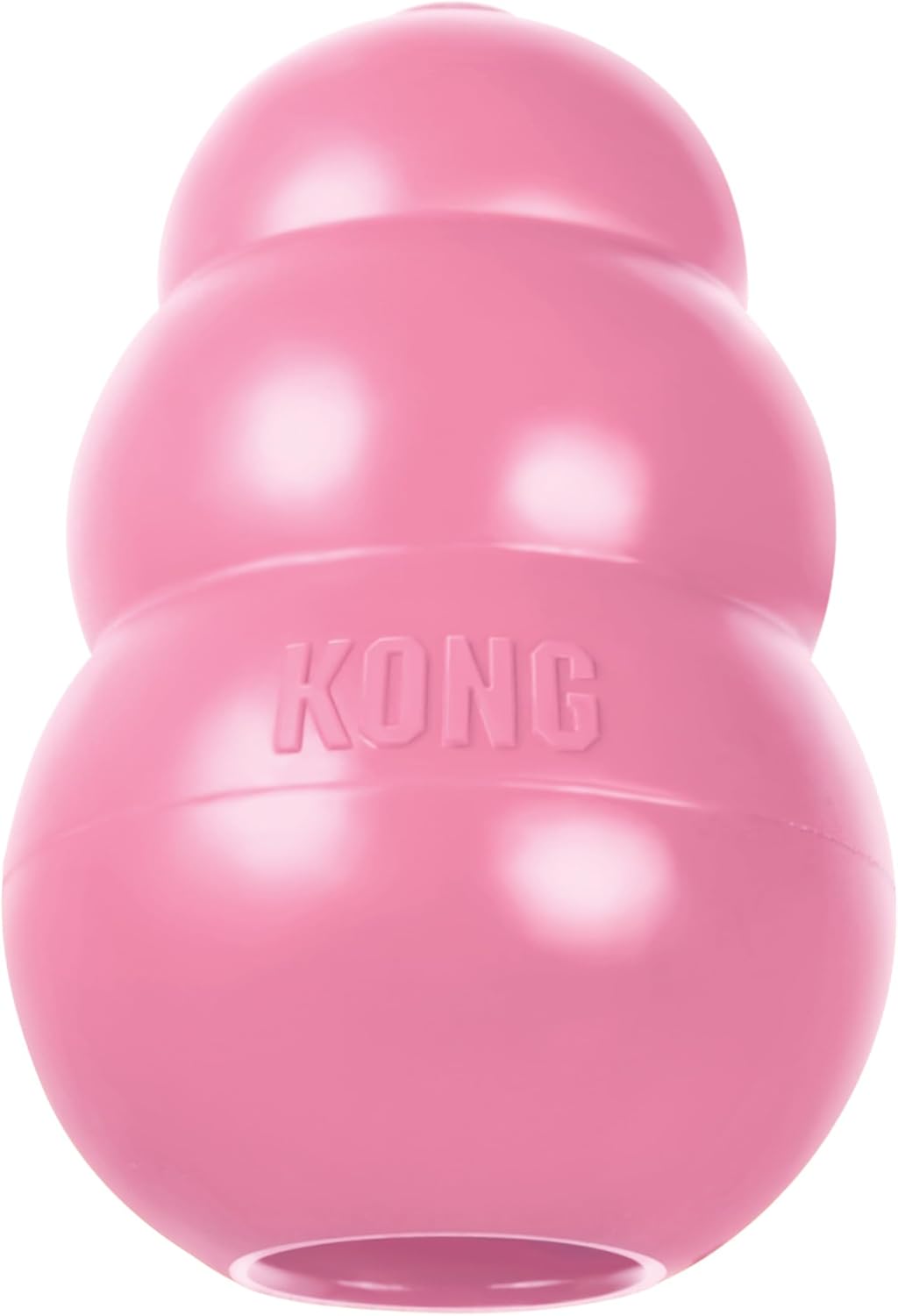
KONG Puppy Stuff'N Small
Best Compact Chew Toy
| Pet Toy Type | Chew Toy |
|---|---|
| Breed Recommendation | Small |
| Recommended Uses For Product | Chewing |
| Indoor Outdoor Usage | Indoor |
| Material Type | Rubber |
The KONG Puppy Stuff'N is a soft natural rubber chew toy made specifically for small puppies to soothe baby teeth and encourage interactive play. Its hollow center accepts kibble, Easy Treat, or paste to turn short chewing sessions into longer enrichment activities, which helps with crate training and boredom. The rubber compound is gentler than adult KONG formulas, so it cushions puppies' developing teeth while still offering a resilient, erratic bounce that makes fetch more engaging. It is intended for supervised indoor chewing and is not water resistant, so cleaning is straightforward but requires attention to any stuck debris in the cavity. The toy is lightweight and shaped for easy pickup by small mouths, but it is not aimed at power chewers and should be retired if damaged. Supervision is advised and larger or older dogs should use a firmer KONG line for heavy chewing.
Best for: Buyers who want a gentle, enrichment-focused teething toy that soothes puppy gums while doubling as a treat-stuffer and play fetch toy.
Less Ideal for: Do not choose this for older dogs or power chewers who need a firmer, more durable chew option.
- Soft, puppy-specific natural rubber formula gentle on baby teeth
- Hollow center for stuffing treats to extend play and aid training
- Erratic bounce suitable for fetch and interactive play
- Lightweight shape sized for small puppy mouths
- Made with materials sourced and assembled to KONG quality standards
- Not designed for power chewers or aggressive chewing
- Not water resistant which can complicate deep cleaning if heavily soiled
Verdict: The best compact chew toy is sized for easy transport and small mouths, making it ideal for travel, crates, and smaller or teething puppies.
Choosing the Right Chew Toy Teething Dog: Key Factors to Consider
Material Safety and Non-toxic Composition
Puppy mouths are sensitive and often ingest small particles while chewing. Choosing toys made from non-toxic, BPA-free, phthalate-free materials reduces the risk of chemical exposure. Look for smooth, seamless construction that avoids glued-on parts or paint that can flake off.
Materials that are stated as food-grade or veterinary-safe are preferable because they are manufactured to higher safety standards. Soft but resilient materials minimize the chance of chipping or tearing, which can create small pieces that a puppy could swallow. When in doubt, choose simpler designs without removable components.
Appropriate Hardness and Texture
Teething puppies need toys that balance softness for sensitive gums with enough resistance to provide satisfaction during chewing. Extremely hard toys can stress developing teeth and jaw joints, while overly soft toys may quickly break apart. Select options that provide varied textures—ridges, nubs, and grooves—to massage gums and help dislodge debris.
Textures also help keep a puppy engaged; alternating surfaces can be more stimulating than a single smooth finish. Consider your puppy's breed and bite force when evaluating hardness. Smaller breeds typically need gentler materials than breeds with stronger bites.
Size and Shape for Safety
A toy should be large enough that it cannot be swallowed or lodged in a puppy's throat, yet small enough for the puppy to comfortably grip and carry. Shapes that allow secure gripping reduce the temptation to tear off edges. Avoid toys with long strings, small detachable parts, or hollow chambers that can collapse and trap teeth.
Ergonomic shapes—rings, elongated chews, or handles—help puppies target pressure to sore areas while reducing the chance of accidental ingestion. If you have a mixed-age household, store appropriately sized toys separately to prevent access by smaller dogs.
Durability Versus Intended Lifespan
Teething toys are meant to be used frequently and often aggressively. Durable construction lowers the frequency of replacement and reduces the risk of ingestion of fragments. That said, no toy is indestructible; understand that intended lifespan varies by puppy and chewing intensity. Inspect toys regularly for signs of wear such as deep gouges, loose parts, or thinning areas and retire them when they show damage.
Durability considerations also include how the toy ages after cleaning and exposure to saliva. Materials that quickly soften, crack, or develop rough edges become safety hazards. Choose toys where the manufacturer provides clear guidance on expected durability and replacement cues.
Ease of Cleaning and Hygiene
Puppies put toys in their mouths repeatedly, so hygiene matters to prevent bacterial buildup. Toys that are easy to rinse, wipe, or that can go in the dishwasher make routine cleaning simpler. Avoid porous materials that trap moisture and odors, which can harbor mold or bacteria.
Routine cleaning also prolongs the life of the toy and helps you spot wear early. If a toy has internal crevices, check whether it can be disassembled for a thorough wash or whether it is sealed to prevent moisture ingress.
Engagement and Enrichment Value
A good teething toy not only soothes but also encourages play and mental stimulation, which reduces destructive chewing. Toys that accept treats, have variable textures, or make low-level noises can sustain a puppy's interest longer than a plain object. Consider rotating toys to maintain novelty and encourage repeated use.
Engagement value also affects how quickly a toy will be used and worn. Balancing stimulation with durability ensures the toy remains useful throughout the teething phase without becoming a hazard.
How Can I Tell if a Chew Toy Is Safe for a Teething Puppy?
Check the product labeling for safety certifications and material information. Safe choices specify non-toxic, food-grade materials and avoid small detachable parts. Inspect construction for smooth seams and no sharp edges before the puppy uses the toy.
Size matters: the toy should be too large to swallow and shaped so the puppy cannot trap its nose or throat. If you spot loose components, soft spots, or flaking surfaces, do not let your puppy use the toy until it is repaired or replaced.
- Look for seamless designs and solid construction
- Avoid toys with beads, buttons, or glued-on pieces
- Match toy size to puppy mouth size and breed bite strength
When Should I Introduce Different Textures During Teething?
Introduce softer, gentler textures as the first teeth emerge to reduce discomfort. As your puppy tolerates chewing, gradually add firmer textures that provide more resistance and friction for gum relief. Monitor the puppy's reaction; if a toy causes visible discomfort, switch back to a softer option.
Rotating textures keeps interest high and helps different parts of the mouth get massaged. Offer chilled or frozen-safe toys occasionally to soothe inflamed gums, but do not leave frozen items unsupervised if they become brittle.
- Start soft, progress to firmer textures as tolerance increases
- Use chilled toys for short periods to ease inflammation
- Rotate textures to maintain engagement and balanced wear
How Do I Clean and Maintain Chew Toys Safely?
Rinse toys after heavy use and perform a full wash regularly according to the manufacturer's guidance. Non-porous materials usually tolerate soap and warm water or a dishwasher cycle, while some rubber or fabric toys may need hand washing and thorough drying.
Inspect toys each time you clean them. Remove and discard any toy showing deep cuts, missing chunks, or frayed fabric. Storing toys in a dry, ventilated space helps prevent mold and unpleasant odors.
- Follow cleaning instructions on the label
- Air-dry toys completely before returning them to the puppy
- Replace toys at first sign of structural damage
Can Teething Toys Double as Training or Enrichment Tools?
Many teething toys are versatile enough to be part of training and enrichment routines. Toys designed to hold treats or dispense kibble reward calm chewing and encourage problem-solving. Using these toys during supervised play teaches bite inhibition and creates positive associations with appropriate chewing.
Keep sessions short and positive, and avoid using treat-filled toys as the sole reward. Balancing interactive play with chew-only sessions preserves the toy's novelty and reinforces desired behaviors.
- Use treat-holding toys for supervised enrichment
- Incorporate chewing into calm training routines
- Limit access to maintain toy novelty and effectiveness
What Signs Indicate a Toy Should Be Retired Immediately?
Retire any toy that has pieces missing, a compromised shell, deep gouges, or exposed stiff cores that could cut gums or be swallowed. Also remove toys that have developed sharp edges after use or cleaning. If the toy deforms or becomes brittle, it is no longer safe.
Observe your puppy while chewing; if the dog repeatedly bites a toy into smaller pieces or swallows fragments, discontinue that toy and choose a sturdier alternative. Regular inspection is the best preventive measure.
- Missing parts, swallowed fragments, deep cuts, or sharp edges
- Deformation, brittleness, or exposed inner materials
- Repeated destructive chewing despite supervision
How We Chose the Best Chew Toy Teething Dog
We focused on features that matter for puppies going through teething and for owners who want safe, long-lasting solutions. Our selection criteria prioritized material safety, assessing non-toxic construction and smooth edges to protect tender gums. Durability and wear resistance were next: we looked for toys that tolerate repeated chewing without shredding or creating small pieces that could be swallowed. Texture and gum relief were important too; choices had to offer varied surfaces for massaging sore gums and encouraging chewing without causing irritation. Size and shape were evaluated to ensure toys fit puppy mouths safely and reduce choking risk. We also considered ease of cleaning, selecting materials that can be rinsed or wiped clean to minimize bacterial buildup. Finally, engagement value—how likely a puppy is to use the toy consistently—was part of the mix, favoring options that support play and chewing. Exclusions: we did not include novelty items designed for adult heavy chewers or items lacking basic safety features such as non-toxicity or seamless construction.
Our full evaluation process is outlined in our review methodology.
FAQ
Are frozen chew toys safe for teething puppies?
Frozen chew toys can soothe inflamed gums and reduce pain when used briefly. Ensure the toy is designed to withstand freezing and is large enough not to present a choking hazard. Supervise use and avoid leaving frozen toys unattended because extreme cold can make some materials brittle.
How often should I replace teething toys?
Replace toys as soon as you notice deep wear, fraying, or missing pieces. Frequency depends on your puppy's chewing intensity, but regular inspection once a week is a good practice. Safer replacement beats the risk of ingestion.
Can all puppies use the same chew toy sizes?
Not always. Size should match mouth size and jaw strength more than age. Small breeds need smaller, softer options while larger breeds often require sturdier, larger toys. Choosing the right size reduces choking risk and improves chewing satisfaction.
Should teething toys be used for unsupervised play?
Some teething toys are safe for unsupervised short-term use, but always follow manufacturer guidelines and inspect toys regularly. Avoid leaving any toy with detachable pieces or fabric parts unsupervised, and remove damaged toys immediately.
Do treat-dispensing toys help with teething?
Treat-dispensing toys can distract and encourage sustained chewing, which helps redirect discomfort. Use them in moderation and choose toys that are easy to clean and strong enough to resist tearing. Supervise initial sessions to ensure the puppy does not chew off small parts.
Final Verdict
Prioritize safety, material suitability, and the right balance of texture and durability when choosing chew toys for teething dogs. Regular inspection and cleaning are essential to prevent hazards, and rotating toys helps maintain interest while providing varied gum relief. Focus on toys that are non-toxic, appropriately sized, and designed to soothe rather than challenge developing teeth. With those priorities in mind, you can choose options that comfort your puppy through teething while minimizing risk and keeping playtime productive.

