

Finding the right treats for an English bulldog puppy matters more than you might think. Puppies need rewards that reinforce training while supporting sensitive digestion and steady calorie intake during growth. The wrong treat can cause digestive upset, excessive weight gain, or fail as a training motivator. This guide shortlists the top treats we recommend for English bulldog puppies, focused on texture, ingredient safety, and ease of use during sessions. Below you will find the key criteria we used to evaluate options and practical advice for introducing treats safely.
Top Picks at a Glance
| Best Overall Treat A well‑rounded pick that suits most English Bulldog puppies | Pupford Freeze Dried Training Treats 4 oz |  |
| Best Budget Treat A low-cost option that still delivers decent nutrition and taste | Blue Buffalo Baby BLUE Training Treats 4 oz |  |
| Best Soft Treat Gentle, easy-to-chew bites made for young or sensitive pups | Bil-Jac Little-Jacs Soft Training Treats 16oz |  |
| Best Training Treat Small, low-mess bites designed for frequent reinforcement and learning | Zuke's Mini Naturals Beef 6 oz |  |
| Best High-Protein Treat Higher-protein options for active growth and muscular development needs | The Honest Kitchen Meaty Littles Puppy Treats |  |
| Best Grain-Free Treat A grain-free formulation for pups with grain sensitivities or preferences | Buddy Biscuits Softies Beef 5 oz |  |
| Best Premium Treat A higher-end option with superior ingredients and careful sourcing | Pupford Cheese Crunchies 7 oz |  |
Pupford Freeze Dried Training Treats 4 oz
Best Overall Treat

| Flavor | Beef |
|---|---|
| Item Form | Pellet |
| Unit Count | 4 Ounce |
| Ingredients | Beef Liver, Beef Heart, Mixed Tocopherols (Natural Antioxidant) |
These freeze-dried beef liver treats are made from just a few natural ingredients and are built for everyday training. The pellets are bite-sized and lightweight so you can give multiple rewards in a short session without overfeeding, and the dry texture keeps hands and treat pouches clean during walks, classes, or clicker work. Because they are essentially meat, they are highly motivating for most dogs and work well for shaping behaviors, recall practice, and reward-based training. The simple ingredient list and low calorie profile also make them a reasonable choice for dogs with sensitive stomachs or owners tracking intake. Limitations include the small 4 ounce pouch, which will be used up quickly with frequent sessions, and the single-flavor profile may not suit dogs that need stronger variety to stay interested long term.
Best for: Trainers who want a simple, highly motivating everyday reward that stays mess free and supports frequent, low-calorie reinforcement.
Less Ideal for: People looking for large bulk quantities or multiple flavor mixes for long-term variety should consider larger or multi-flavor packs.
- Single-ingredient, natural meat formula that boosts motivation
- Freeze-dried, low-odor pellets that do not make hands or pockets messy
- Small, bite-sized pieces suitable for rapid repetition during training
- Low calorie so you can reward frequently without large calorie load
- Small 4 oz pouch can be depleted quickly with heavy training use
- Only one flavor option in this listing limits variety for picky dogs
Verdict: The best overall treat balances texture, palatability, appropriate puppy-safe ingredients, and portion control to work for everyday rewards and bonding with an English Bulldog puppy.
Blue Buffalo Baby BLUE Training Treats 4 oz
Best Budget Treat
| Flavor | Chicken |
|---|---|
| Age Range Description | Puppy |
| Item Form | Semi Moist |
| Unit Count | 4 Ounce |
| Allergen Information | Corn-Free, Soy Free, Wheat Free |
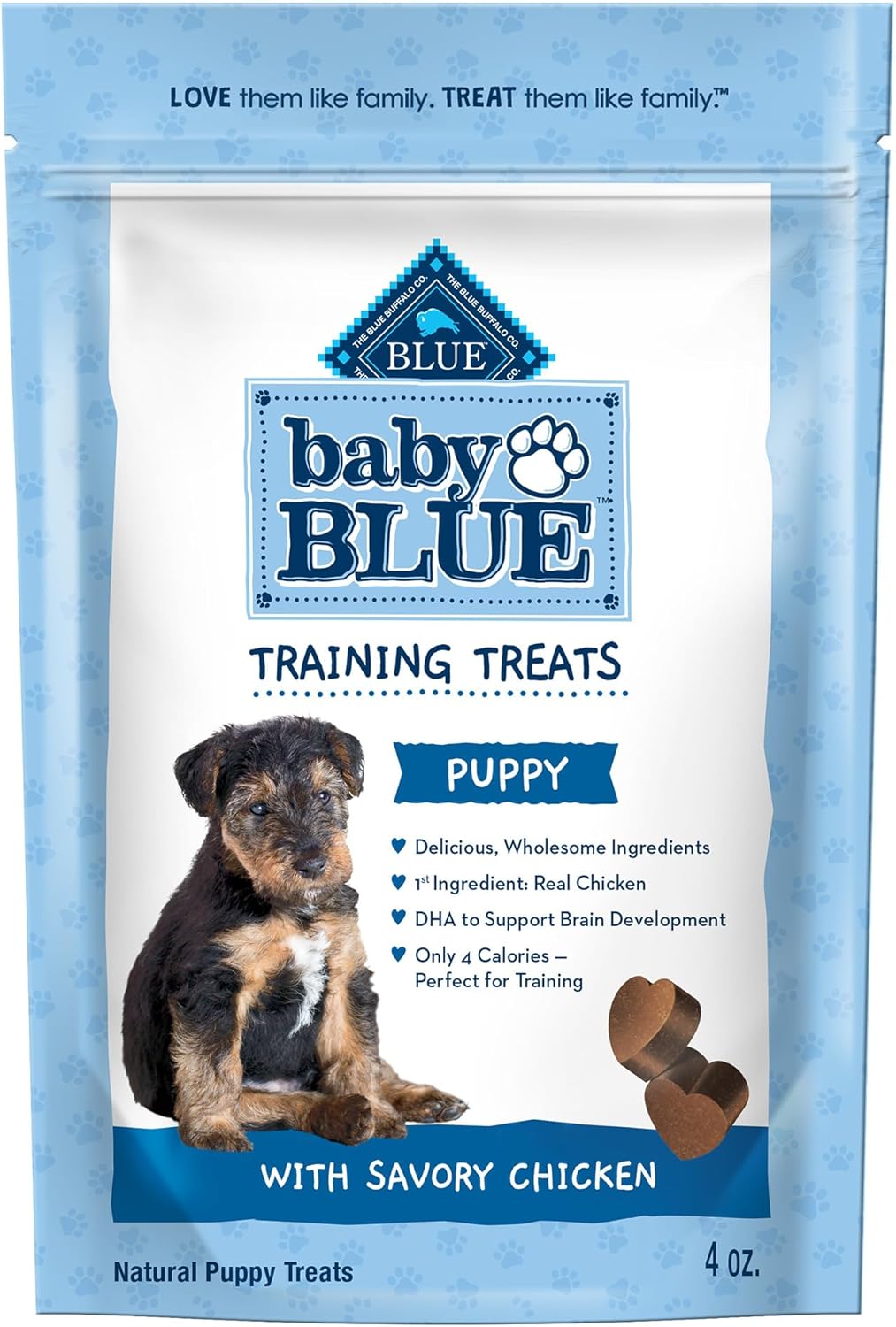
These Baby BLUE Savory Chicken training treats are soft, bite-sized morsels designed for puppy training and intermittent rewards. Made with real chicken as the first ingredient and a semi-moist texture, they are easy to break or feed quickly during multi-step training sessions. The formula includes DHA for cognitive development and omega fatty acids to support skin and coat, while LifeSource-inspired nutrients and no corn, wheat, or soy aim to reduce common allergens. In practice the treats are highly palatable to most puppies and the small pieces minimize interruptions during repetitious drills. The 4-ounce bag is convenient for short outings or a training class, but frequent trainers may find the pack small and need to replenish often. Nutritional specs show modest protein and fat levels appropriate for treats rather than meal replacement, so they work best as rewards rather than primary food. Overall these treats balance taste and puppy-friendly texture, though the small package size limits how long one bag lasts for heavy training schedules.
Best for: Puppy owners focused on efficient, frequent reward-based training who want a tasty, soft treat that is easy to portion and gentle on young digestive systems.
Less Ideal for: People who run long, intensive daily training sessions or need bulk packaging for many repetitions should consider larger multi-pack options.
- Real chicken listed as the first ingredient for strong palatability
- Soft, semi-moist texture is easy to break and quick to deliver during training
- Includes DHA and omega fatty acids to support cognitive development and skin and coat
- Free of corn, wheat, soy and artificial colors or preservatives
- Small 4-oz bag may not be economical for heavy daily trainers
- Treat nutrient levels are modest so they should not replace regular food
Verdict: The best budget treat gives owners an affordable reward option that still provides reasonable ingredient quality and puppy-safe sizing for frequent training sessions.
Bil-Jac Little-Jacs Soft Training Treats 16oz
Best Soft Treat

| Flavor | Liver |
|---|---|
| Unit Count | 16 Ounce |
| Item Form | Chunk |
| Calorie Count | < 3 kcals / treat |
Bil-Jac Little-Jacs are soft, bite-sized liver treats designed specifically for training and frequent rewarding. Packaged in a 16-ounce bag, each morsel is made with real chicken liver as the primary ingredient and contains under 3 calories per treat, which makes them suitable for repeated use during short training sessions. The soft, chewy texture resists crumbling in a pocket and is easy for puppies, seniors, or dogs with sensitive teeth to chew. They are marketed as limited-ingredient, with no poultry by-product meals and added preservatives for shelf stability, so they hold up through multiple training sessions without becoming messy. The strong liver aroma and flavor make them highly motivating for many dogs, though dogs with dietary sensitivities to the listed preservatives or grains should be checked against the ingredient list. The bag format gives plenty of treats for longer courses of training, but portion control is still needed to avoid overfeeding across the day. Overall these treats excel as a moist, low-calorie training reward for dogs that need an easy-to-chew option.
Best for: Dog owners running frequent short training sessions who need a moist, highly palatable reward that is easy for puppies, seniors, or dogs with sensitive teeth to eat.
Less Ideal for: Owners seeking a preservative-free or grain-free treat option for dogs with specific food allergies should look for specialized formulations instead.
- Very low calorie per treat for frequent rewarding (<3 kcals)
- Soft, moist texture that is easy for puppies and senior dogs to chew
- Real chicken liver listed as the first ingredient for strong palatability
- Bagged 16 oz size provides a large supply for extended training sessions
- Contains preservatives and grain ingredients that may not suit dogs with specific allergies
- Strong liver aroma may be too intense for some handlers to carry in pockets
Verdict: The best soft treat is tender and chewy to protect developing teeth and make fast, reliable rewards during training for English Bulldog puppies.
Zuke's Mini Naturals Beef 6 oz
Best Training Treat
| Flavor | Beef |
|---|---|
| Unit Count | 6 Ounce |
| Item Form | Treats |
| Target Species | Dog |
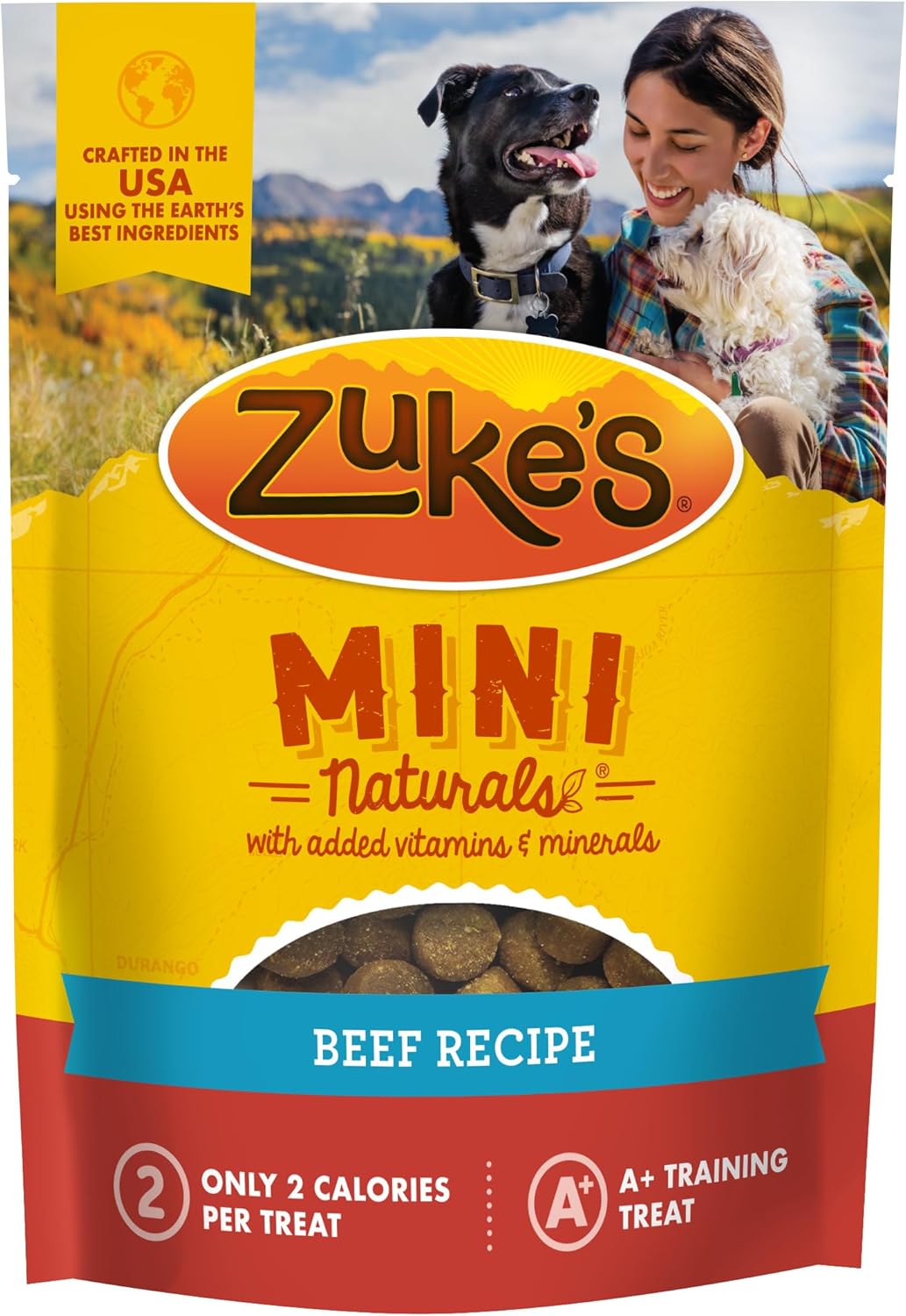
Zuke's Mini Naturals Beef are bite-sized, soft training treats made with real beef as the first ingredient and a few simple additions like cherries and oats. They are designed for frequent rewards during sessions or outings: each treat has about 2 calories, a chewy texture that dogs find easy to eat quickly, and a resealable pouch for on-the-go use. The formula avoids corn, wheat, and soy and lists added vitamins and minerals, which supports using many small rewards without heavily increasing daily calories. Practical strengths are the palatable beef-forward flavor, small portion size for repetitive training, and the convenient pouch. Limitations include a simple ingredient list that contains glycerin and cane sugar, so owners aiming for ultra-low-sugar or single-ingredient options may prefer alternatives, and the 6 oz pouch is modest in volume if you train frequently and need bulk. For routine clicker work, leash training, or high-repetition reward drills these treats deliver tasty, low-calorie reinforcement in a portable package.
Best for: Owners who need many low-calorie, tasty rewards for frequent training sessions and value portability and straightforward ingredients.
Less Ideal for: People seeking single-ingredient, no-sugar treats or bulk packaging for extremely high-volume training should consider other options.
- Real beef listed as the first ingredient for strong palatability
- About 2 calories per treat, suitable for high-frequency training
- Soft, chewy texture dogs can eat quickly during sessions
- Resealable 6 oz pouch keeps treats fresh and is easy to carry
- Contains cane sugar and glycerin, so not a single-ingredient or no-sugar option
- 6 oz pouch may be small for owners who train very frequently or need bulk supplies
Verdict: The best training treat is compact, highly palatable, and low-calorie so owners can give many repetitions during sessions without overfeeding their puppy.
The Honest Kitchen Meaty Littles Puppy Treats
Best High-Protein Treat

| Flavor | Lamb & Salmon |
|---|---|
| Age Range Description | Puppy |
| Item Form | Chewable |
| Unit Count | 4 Ounce |
| Specific Uses For Product | Training |
These Meaty Littles are bite-sized, soft jerky treats made from human-grade lamb and salmon and designed specifically for puppy training and everyday rewarding. They function as low-calorie, high-protein rewards you can hand out repeatedly during short training sessions or use as enrichment on walks because each piece is small and tender enough that you do not need to break it. Key features include added DHA from salmon for brain development, pumpkin for digestion, vitamin E for immune support, and omegas for skin and coat health, along with a limited-ingredient recipe free from corn, wheat, soy, meat meals, and artificial preservatives. The resealable 4 oz bag and chewy texture make them convenient for a training pouch and appealing to picky puppies that prefer meaty flavors. On the downside the package is small for frequent treating and the premium, human-grade sourcing means this is pricier than standard training bites, so it is best used as a high-value reward rather than an everyday bulk treat. For owners prioritizing ingredient quality and flavor, these perform very well in real-world training use.
Best for: Puppy owners who want a gourmet, ingredient-forward training treat and are focused on targeted nutrition and flavor to motivate picky or developing puppies.
Less Ideal for: Buyers who need large quantities for frequent mass-rewarding or who prioritize lowest cost per treat should consider more economical training bite options.
- Human-grade lamb and salmon recipe for strong savory flavor
- Formulated with DHA, pumpkin, vitamin E and omegas for targeted puppy nutrition
- Soft, bite-sized pieces suitable for fast training rewards without breaking
- Limited-ingredient formula without corn, wheat, soy, meat meals, or artificial preservatives
- Resealable 4 oz bag is convenient for training pouches and travel
- Small 4 oz package may run out quickly during heavy training sessions
- Premium human-grade sourcing makes it more expensive than standard training treats
Verdict: The best high-protein treat provides elevated protein from quality sources to support healthy growth and energy for active English Bulldog puppies.
Buddy Biscuits Softies Beef 5 oz
Best Grain-Free Treat

| Flavor | Beef |
|---|---|
| Unit Count | 5 Ounce |
| Item Form | Chewy |
| Age Range Description | All Life Stages |
| Allergen Information | Beef, Soy Free, Sulphites Free, Wheat Free |
Buddy Biscuits Softies are bite-sized, oven-baked, grain-free chewy treats made with real beef and a short ingredient list aimed at dogs with grain sensitivities or owners who prefer grain-free snacks. They are sold in a 5 oz pouch and are soft enough for puppies and senior dogs, which makes them convenient for training sessions or as a small reward between meals. The ingredient panel relies on alternative starches like pea flour, chickpea and tapioca rather than corn or wheat, and the formula avoids artificial colors, flavors, soy and sulphites. Practical benefits include high palatability for picky eaters, easy portion control from the small shapes, and suitability for mixed-age households. Limitations are the small pouch size if you plan to treat frequently, and some dogs with sensitivities to pulse-based ingredients may still react to pea or chickpea. For an English Bulldog puppy these treats are useful for training and rewards because they are soft and easy to chew, but monitor portioning and any ingredient sensitivities.
Best for: Owners looking for a soft, grain-free training treat for a puppy who needs easy-to-chew rewards and simpler ingredient lists.
Less Ideal for: Owners whose dogs react to pulse-based ingredients or who need large bulk quantities for heavy daily rewarding should consider other options.
- Grain-free recipe using beef and alternative starches instead of corn or wheat
- Soft, chewy texture that is easy for puppies and senior dogs to chew
- Short, recognizable ingredient list with no artificial colors or flavors
- Small, bite-sized pieces that work well for training and portion control
- Small 5 oz pouch may run out quickly with frequent training
- Contains pulse ingredients like pea flour and chickpea that can trigger sensitivities in some dogs
Verdict: The best grain-free treat avoids common cereal grains and focuses on alternative carbohydrate or meat-based ingredients for puppies with grain sensitivities or owner preference.
Pupford Cheese Crunchies 7 oz
Best Premium Treat

| Flavor | Cheddar |
|---|---|
| Unit Count | 7 Ounce |
| Item Form | Chunk |
| Age Range Description | All Life Stages |
Pupford Cheese Crunchies are bite-sized, freeze-dried cheddar treats designed as high-value rewards for training or quick snacks. Each piece is made from a single ingredient, cheddar cheese, which keeps the ingredient list simple and makes the treats easy to break into smaller pieces for repetitive training sessions. The freeze-drying process produces a crunchy texture that dogs find motivating while concentrating protein, calcium, vitamin B12, and vitamin A compared with many baked biscuits. In real use they work well for short training bursts and as an occasional supplement to a balanced diet, but because they are cheese-based they are calorie-dense and should be portioned for small breeds like Pomeranian puppies. The bag format is convenient for pocket storage but does not list resealable features in the product details, so transferring to an airtight container after opening preserves freshness. These Crunchies are a solid choice when you want an unprocessed, recognizable treat ingredient that most pups find irresistible.
Best for: Owners who prioritize minimally processed, recognizable ingredients and need high-value training rewards suitable for very small breed puppies.
Less Ideal for: People looking for low-calorie daily treats or owners whose dogs are lactose intolerant or on a veterinary elimination diet should consider other options.
- Single-ingredient formula (cheddar) that is easy to understand and trust
- Freeze-dried crunch provides high-value texture for training rewards
- Contains concentrated nutrients like protein and calcium from real cheese
- Bite-sized chunks that are easy to break into smaller pieces for small dogs
- Calorie-dense cheese treats require strict portion control for small or young dogs
- No explicit resealable packaging indicated, so freshness depends on storage
Verdict: The best premium treat offers top-tier ingredient quality, thoughtful sourcing, and exceptional palatability for owners willing to invest more in their puppy's snacks.
Choosing the Right Treat English Bulldog Puppy: Key Factors to Consider
Ingredient Quality and Transparency
Puppies have different nutrient needs and less mature digestive systems, so ingredient quality matters. Look for treats that list real protein sources near the top of the ingredient list and avoid vague terms that hide fillers. Whole-food ingredients and recognizable components reduce the chance of unexpected allergens or problematic additives.
Transparency about sourcing and processing is also useful. When manufacturers explain where proteins and major ingredients come from and note basic testing or safety standards, you can make a more informed choice. For puppies, fewer novel or exotic ingredients often reduces digestive upset.
Protein Source and Digestibility
Protein is important for growth, but not all proteins digest the same. Choose treats with easily digestible protein sources appropriate for puppies, since inefficient proteins can cause loose stools or gas. Single-protein or limited-protein formulas make it easier to identify and eliminate a trigger if your puppy shows sensitivity.
Also consider whether the protein is processed in a way that retains nutrient value. Highly rendered meals can be calorically dense but less digestible, while fresh or gently processed proteins are typically easier on a puppy's stomach.
Size, Texture, and Training Usability
Effective training treats are small, soft or easily breakable, and deliver quick reward without distracting the puppy for long periods. English bulldog puppies often have short muzzles and a tendency to gulp, so low-choking-risk textures and appropriately sized pieces are essential.
Think about how you plan to train: frequent short sessions require tiny, low-calorie bites so you can offer many repetitions without exceeding daily calorie targets. Treats that crumble or can be folded into smaller pieces increase flexibility during training.
Calorie Content and Growth Management
Puppy growth must be managed to avoid excessive weight gain, which is especially important for short-faced, stocky breeds. Treats should have clear calorie information per serving so you can factor them into daily intake. High-calorie treats are best saved for occasional rewards rather than continuous training.
Using low-calorie but palatable treats allows more repetitions and consistent reinforcement during learning without jeopardizing healthy weight trajectories. If a treat has concentrated calories, use it sparingly or break it into multiple smaller pieces.
Allergen and Sensitivity Considerations
Some puppies show sensitivities to common ingredients like beef, dairy, wheat, or chicken. Choosing limited-ingredient treats or rotating single-protein options can help identify tolerances while minimizing exposure to common allergens. For a puppy with known sensitivities, select treats formulated for hypoallergenic or limited-ingredient feeding.
Monitoring stool quality and coat condition after introducing a new treat helps detect adverse reactions early. If problems occur, stop the treat and work with your veterinarian to identify safe alternatives.
Preservatives, Additives, and Safety
Avoid treats with unnecessary artificial preservatives, colors, or flavorings that can irritate sensitive puppies. Natural preservation methods or minimal additive lists are preferable. In addition, consider whether the treat requires refrigeration, which can affect shelf life and daily convenience.
Safety also includes manufacturing practices. Products with clear quality control statements, such as adherence to basic safety standards or third-party testing notes, reduce the risk of contamination that could harm a vulnerable puppy.
How Many Treats Should I Feed During a Training Session?
For short, frequent training sessions with an English bulldog puppy, aim for many small rewards rather than a few large ones. Use tiny pieces or breakable treats to keep each reinforcement low in calories while maintaining motivation.
Track total treat calories across the day and deduct treat calories from daily feeding portions when needed. For puppies, six to ten quick-reward treats per 10-minute session is common, but adjust based on treat size, calorie density, and your veterinarian's feeding guidance.
- Prefer treats you can break into pea-sized pieces for rapid rewards.
- Limit long chewing treats during intensive training to avoid distraction.
How to Introduce a New Treat Safely
Introduce a new treat gradually over three to five days and watch for digestive signs such as loose stools, vomiting, or decreased appetite. Offer the new treat in small quantities and alongside familiar food or rewards so you can gauge acceptance.
If you notice any adverse reactions, stop the treat and consult your veterinarian. For puppies with known sensitivities, trial one new protein at a time and keep a simple log of any symptoms to identify triggers.
- Start with one or two small pieces per day during the trial period.
- Check stool firmness and energy levels after each introduction.
Are Soft Treats Better for Short-muzzled Puppies?
Soft treats are often a better fit for short-muzzled breeds because they are easier to pick up and less likely to cause choking. A pliable texture also allows you to break treats into smaller portions for training without crumbling into hazardous fragments.
However, very sticky treats can adhere to the roof of the mouth or dental crevices. Choose soft treats that hold together well and can be swallowed quickly to reduce any risk during fast-paced training sessions.
- Avoid hard, brittle treats that require vigorous chewing.
- Prefer moist or tender textures that can be portioned easily.
How to Factor Treats Into Daily Calories and Meals
Calculate treat calories as part of your puppy's total daily caloric allowance. Treats used for training can add up quickly, so reduce meal portions slightly on days with heavy training to maintain a healthy growth rate.
Use low-calorie treats for high-frequency training and reserve higher-value, calorie-dense treats for occasional special rewards or longer training milestones. Keep a simple daily log for a few weeks to ensure your puppy's weight remains on a steady, healthy curve.
- Consult your veterinarian for a target daily calorie range based on age, current weight, and body condition.
- Weigh treats or check package calorie labeling to make accurate adjustments.
What to Do if Your Puppy Refuses a Treat
A refusal can mean the treat lacks appeal, the puppy is full, or there is an underlying health issue. Try a small, more aromatic option or warm the treat briefly to enhance aroma if it is safe to do so. Offer the treat immediately after a desired behavior to strengthen the association.
If refusal persists across multiple trial treats, assess appetite, recent health changes, or teething discomfort. Persistent loss of appetite warrants a veterinary check to rule out illness or dental pain.
- Rotate occasional flavors to maintain novelty during training.
- Avoid forcing treats; use praise and petting as alternative rewards when appropriate.
How We Chose the Best Treat English Bulldog Puppy
We prioritized practical, puppy-specific criteria to form a list of treats that suit English bulldog puppies. Key evaluation factors included nutrient profile, ingredient transparency, and formulation for sensitive digestion. We also looked at texture and size to ensure treats work well for short, frequent training sessions and do not require prolonged chewing that could stress developing jaws. Safety filters excluded treats with common high-risk additives for puppies and those with unclear sourcing or inadequate labeling. We favored treats with balanced caloric content so they can be used frequently without disrupting puppy growth. Additional considerations included single-protein or limited-ingredient options for dogs with food sensitivities, and manufacturing quality attributes that reduce contamination risk. Products were excluded if they were designed primarily for adult dogs, intended as meal replacements, or relied on excessive sugars or unsafe flavorings. The final shortlist reflects those treats that most consistently meet nutritional, safety, and practical training needs for English bulldog puppies.
Our full evaluation process is outlined in our review methodology.
FAQ
Can I use human food as treats for an English bulldog puppy?
Some human foods are safe in tiny amounts, such as plain cooked lean meats or small pieces of carrot. Avoid toxic foods like chocolate, onions, grapes, and anything seasoned with garlic, salt, or xylitol. Always introduce human foods sparingly and consult your veterinarian if unsure.
When should I stop using training treats?
Many dogs transition from food rewards to intermittent reinforcement as training progresses. Continue using treats for new behaviors or proofing skills, but gradually mix in praise, play, or reduced-frequency treats so your puppy does not rely solely on food for motivation.
Are dental or hard chews appropriate for young puppies?
Hard chews are usually not recommended for very young puppies because they can damage developing teeth or pose a choking hazard. Wait until the veterinarian confirms dental maturity and choose appropriately sized, puppy-safe chews that are gentle on the mouth.
How do I choose treats if my puppy has a sensitive stomach?
Select limited-ingredient treats with single, easily digestible proteins and avoid common irritants like dairy, wheat, and artificial additives. Introduce new treats slowly and monitor stool consistency. If digestive issues continue, consult your veterinarian for tailored dietary recommendations.
Is freeze-dried meat a good option for puppies?
Freeze-dried meat can be highly palatable and convenient, making it useful for high-value rewards. Because it is concentrated, be mindful of portion size and calorie density. Ensure the product is formulated for puppies or used sparingly as part of a balanced feeding plan.
Final Verdict
Prioritize digestible proteins, manageable calorie content, and a soft, training-friendly texture when choosing treats for an English bulldog puppy. Focus on treats that are easy to portion so you can reward many small repetitions without compromising growth or digestion. Balance palatability with ingredient transparency and monitor how your puppy responds. By using small, low-calorie rewards and introducing new options slowly, you can reinforce training effectively while protecting your puppy's health and steady development.

