

Choosing the right interactive puzzle toy for your dog can make daily enrichment easy and effective. The right toy reduces boredom, provides mental stimulation, and can help slow down fast eaters while keeping playtime satisfying. This guide covers seven shortlisted interactive puzzle toys that represent the best balance of durability, safety, and engagement for a variety of dog sizes and skill levels. We evaluated each option on how challenging it is, how durable and safe the construction is, and how easy it is to clean. Read on for practical buying guidance and tips to match a puzzle toy to your dog.
Top Picks at a Glance
| Best Overall Interactive Puzzle Toy A well-rounded pick that suits most dogs and households | Outward Hound Dog Tornado |  |
| Best Budget Interactive Puzzle Toy A low-cost option that still offers reliable play and value | Joansan Dog Puzzle Toy Small |  |
| Best Premium Interactive Puzzle Toy A higher-end choice with advanced features and long-lasting materials | Aluckmao Dog Puzzle Toy Large |  |
| Best Durable Interactive Puzzle Toy Built to withstand rough play and tougher chewers over time | QWYXZZ Chew Puzzle Toy 2-Pack |  |
| Best Portable Interactive Puzzle Toy Compact, lightweight, and easy to take on trips or outings | AWOOF Snuffle Mat Large |  |
| Best Adjustable-Difficulty Interactive Puzzle Toy Features multiple settings so you can change challenge levels | BSISUERM Dog Treat Puzzle Toy |  |
| Best Treat-Dispensing Interactive Puzzle Toy Designed to deliver treats for motivated, food-driven engagement | Outward Hound Snoop Treat Dispenser |  |
Outward Hound Dog Tornado
Best Overall Interactive Puzzle Toy

| Pet Toy Type | Puzzle |
|---|---|
| Recommended Uses For Product | Indoor, Mental Health, Playing, Training |
| Additional Features | Lightweight, Portable |
| Material Type | Plastic |
The Outward Hound Dog Tornado is a Level 2 intermediate puzzle that uses three stacked, rotatable tiers with 12 treat compartments to get dogs thinking and foraging. Dogs use their nose and paws to spin the layers and lift bone-shaped covers to reveal treats, and the included covers let owners increase difficulty as their pet improves. It doubles as a slow feeder for kibble or treats, is made from food-safe plastic, and is lightweight and portable for easy setup around the house. Practical benefits include sustained engagement for bored or energetic dogs, configurable challenge levels for training progression, and easy cleaning because the plastic parts are simple to wipe down. Important limitations are that it is not chewproof so it requires supervision during use and small dogs or determined chewers may dislodge pieces, and the intermediate difficulty may be too easy for highly trained problem solvers or too hard for novices without guided introduction.
Best for: Owners who prioritize boosting their dog’s cognitive engagement through hands-on problem solving and want a toy that can be made harder as the dog learns.
Less Ideal for: People looking for an indestructible chew toy or an unsupervised long-term play solution should consider more durable alternatives.
- Three-tier design with 12 treat compartments offers layered, progressive challenges
- Includes bone covers to adjust difficulty and increase problem-solving time
- Can be used as a slow feeder to stretch mealtime and reduce fast eating
- Made from food-safe plastic and is lightweight for easy handling and cleaning
- Not designed for aggressive chewers and requires supervision to prevent damage
- Plastic pieces and covers can be dislodged by determined dogs
Verdict: The best overall interactive puzzle toy balances engagement, durability, cleaning ease, and suitable difficulty for a wide range of dogs and owners.
Joansan Dog Puzzle Toy Small
Best Budget Interactive Puzzle Toy
| Pet Toy Type | Puzzle |
|---|---|
| Breed Recommendation | Small dogs, media dogs |
| Recommended Uses For Product | Training |
| Material Type | Plastic |
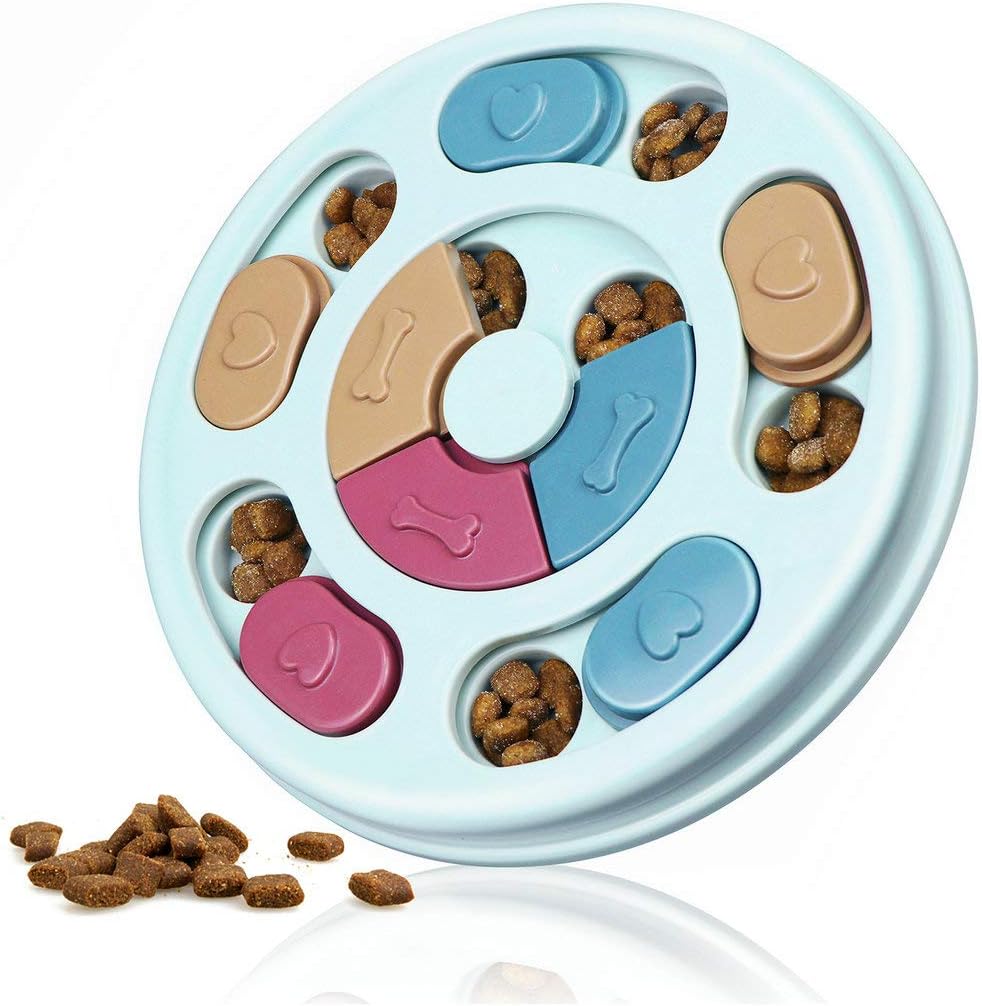
This plastic sliding-puzzle treats toy gives small dogs a nose-and-paw challenge that rewards problem solving with food. The board uses movable sliders and multiple holes where you hide kibble or small treats, so puppies learn to nudge pieces to reveal rewards and slow down fast eaters. It is lightweight, water resistant, and advertised as easy to wash, which makes it convenient for daily use and messy treat sessions. The toy is intended for supervised mental exercise and training rather than heavy chewing, and the seller warns to remove it if damaged and not allow it as a chew toy. You can adjust a screw on the back to change slider tension and raise difficulty as your puppy improves. Limitations are that it is plastic and not meant to withstand strong chewers, and very food-motivated pups may figure the puzzles out quickly, which reduces long-term novelty. For short interactive training sessions and to slow feeding while boosting problem solving, this puzzle performs well for toy breeds.
Best for: Buyers looking to give a toy poodle puppy short, focused mental workouts and slow-feed sessions using a portable treat-dispensing puzzle.
Less Ideal for: Owners who need a chew-proof or long-lasting durable toy for aggressive chewers should choose a sturdier option made for chewing.
- Provides nose-and-paw puzzle play with multiple treat compartments
- Double duty as a slow feeder to reduce gulping
- Adjustable slider tension lets you increase difficulty as puppy learns
- Lightweight, water resistant and easy to clean for everyday use
- Made of plastic and not intended for heavy chewers
- Can lose novelty for very food-savvy puppies once solved
Verdict: The best budget interactive puzzle toy gives good enrichment and basic durability at a low price for owners who want engagement without a big investment.
Aluckmao Dog Puzzle Toy Large
Best Premium Interactive Puzzle Toy

| Pet Toy Type | Puzzle |
|---|---|
| Breed Recommendation | Medium to Large Breed Sizes |
| Recommended Uses For Product | Mental Stimulation & Brain Training & Slows Eating |
| Additional Features | Large Size & Adjustable Difficulty Levels |
| Material Type | Food-grade material |
The Aluckmao Dog Puzzle Toy Large is a weighted, oversized puzzle feeder that converts meals and treats into stepwise challenges to engage a dog's problem solving. It is used by hiding kibble or small treats in wide, deep compartments and arranging removable sliding and round pieces to set beginner through advanced difficulty levels. The large surface and weighted base keep the unit from sliding while dogs sniff, paw, and slide components, and the adjustable parts let owners increase complexity as their dog improves. Its food‑grade material and water resistance make it simple to wipe clean after use, and the roomy compartments accept most dry kibble sizes so it works as both a slow feeder and an enrichment game. Important limits are that it is intended for supervised play and not as a chew toy, and very determined chewers may damage removable pieces if left unattended. Overall it is a durable, feature‑rich option for owners who want a long‑term interactive feeding solution rather than a simple slow bowl.
Best for: Owners who prioritize a sturdier, longer‑lasting puzzle feeder and want adjustable difficulty to keep medium to large dogs mentally challenged and slow down mealtimes.
Less Ideal for: People living in very small homes or those who need an unsupervised chew-safe toy for heavy chewers should consider alternatives.
- Adjustable difficulty with removable sliding and round components for progressive training
- Large, deep compartments accept most dry kibble and larger treats
- Weighted, non slip design reduces movement during play
- Food grade, water resistant material that wipes clean easily
- Not designed for unsupervised heavy chewing which can damage removable pieces
- Larger footprint may be bulky for small living spaces
Verdict: The best premium interactive puzzle toy is for owners willing to pay more for superior construction, thoughtful features, and longer-lasting enrichment.
QWYXZZ Chew Puzzle Toy 2-Pack
Best Durable Interactive Puzzle Toy

| Pet Toy Type | Chew Toy |
|---|---|
| Unit Count | 2 Count |
| Water Resistance Level | Waterproof |
| Breed Recommendation | Small and Medium Dogs |
These toys combine chew resistance with interactive features to keep active dogs engaged. Each plush is double-layered with reinforced seams and a non-stuffed design, so there is less mess and fewer choking hazards when a dog chews aggressively. The toys include two squeakers plus crinkle paper to attract attention, textured surfaces that help massage gums, and hidden treat pockets for sniffing and foraging games. A long tug rope lets you add tug play and makes the pieces easier to grab during fetch. Because the exterior is waterproof and rinses clean, they work indoors or outside and are simple to maintain. They are aimed at small to medium breeds but the listing also notes suitability for larger dogs, so expect variable longevity with very powerful chewers; supervision is recommended during initial use. If your dog is a determined destructive chewer that rips fabric or targets seams, these are a sturdier plush option but not an indestructible chew toy.
Best for: Buyers who want a plush puzzle toy that stands up better than typical stuffed toys and offers treat hiding, squeaks, and tug options to entertain dogs that play hard.
Less Ideal for: Owners whose dogs consistently destroy fabric toys quickly or require purpose-built indestructible chews should choose a heavy-duty rubber or nylon chew instead.
- Reinforced double-layer plush and strengthened seams reduce tearing risk
- Stuffing-free design eliminates loose fill and lowers choking/mess hazards
- Dual squeakers plus crinkle paper provide multi-sensory engagement
- Hidden treat pockets add puzzle and foraging play
- Waterproof exterior rinses clean for easy maintenance and indoor/outdoor use
- Not guaranteed for heavy, power chewers who can destroy fabric and seams
- Listing targets small and medium breeds so durability with very large dogs may vary
Verdict: The best durable interactive puzzle toy is designed for dogs that play hard or chew aggressively, offering reinforced materials and construction that resist damage.
AWOOF Snuffle Mat Large
Best Portable Interactive Puzzle Toy
| Pet Toy Type | Treat Dispenser Toy |
|---|---|
| Indoor Outdoor Usage | Indoor, Outdoor |
| Material Type | Cloth |
| Size | Large |
| Additional Features | Portable |
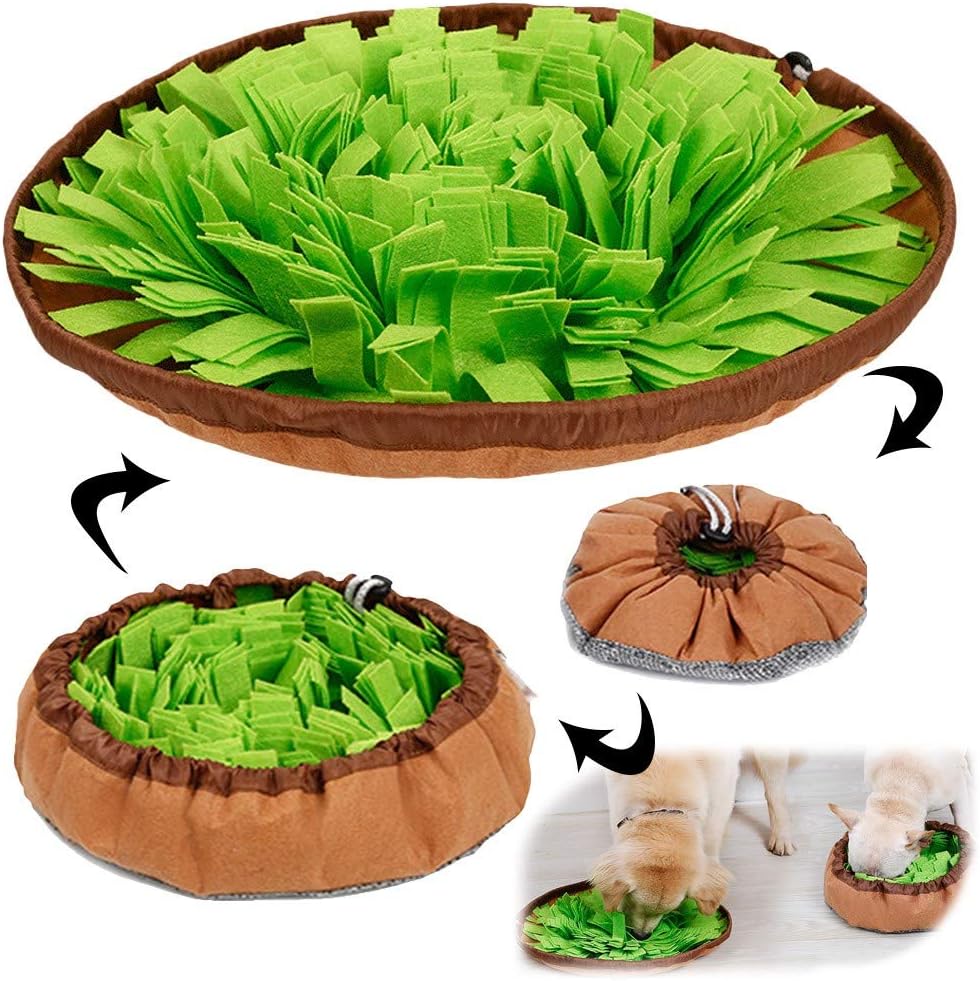
The AWOOF Snuffle Mat is a portable treat-dispensing mat that turns snack time into an interactive foraging game. Made from layered felt cloth, it has pockets and folds to hide kibble or small treats so pets must sniff and root to retrieve them, which helps reduce boredom and expend mental energy. The mat's non-slip fabric bottom keeps it in place during use, and its soft construction lets you fold or roll it into a shallow bowl for travel or storage. It is machine washable for routine cleaning, though frequent washing may dull the fabric over time. Size marked Large suits bigger dogs or multi-pet households but the shallow depth and cloth material mean very determined chewers can damage it, so supervise heavy chewers. Lightweight and easy to pack, this mat works well for short trips, campground days, or indoor enrichment sessions where a simple, low-profile puzzle is needed.
Best for: Buyers who want a lightweight, easy-to-pack enrichment toy to keep dogs mentally engaged on trips and during short outdoor outings.
Less Ideal for: Avoid this mat if you need a heavy-duty chew-resistant puzzle or plan to use the toy in wet, muddy conditions where a washable rubber option would be better.
- Portable and folds into a compact bowl shape for travel
- Non-slip bottom keeps the mat steady during foraging sessions
- Machine washable for easy cleaning
- Large size provides more hiding spots for extended engagement
- Cloth construction is not suited for strong chewers who may tear the mat
- Not water resistant so it should be kept dry and cleaned before damp storage
Verdict: The best portable interactive puzzle toy fits travel and outings, packing down small and remaining engaging without adding bulk to your gear.
BSISUERM Dog Treat Puzzle Toy
Best Adjustable-Difficulty Interactive Puzzle Toy

| Pet Toy Type | Treat Dispenser Toy |
|---|---|
| Indoor Outdoor Usage | Indoor |
| Material Type | Acrylonitrile Butadiene Styrene |
| Recommended Uses For Product | Anxiety Relief, Boredom Buster, Exercise, Playing, Training, Treat Dispensing |
| Size | 6.1*3.44*3.44in/15.5*8.7*8.7cm |
This treat-dispensing puzzle toy is a rolling barbell made from ABS plastic with two adjustable dispensing spheres that release kibble when the dog pushes or chases it. You fill the transparent chambers with dry food or small treats, set the opening size to change how often pieces drop out, and let the dog nudge or roll the toy to earn rewards. The adjustable switches let you ramp difficulty as your dog learns, stretching a short snack into prolonged play that can reduce boredom and slow fast eaters. The unit disassembles so compartments can be cleaned by hand or dishwasher, and the smooth curved surface keeps rolling quieter and safer for paws. Note that this is not designed as a chew toy, so determined chewers may damage it, and the plastic construction feels lightweight rather than indestructible for aggressive players.
Best for: Owners who want a single toy they can make easier or harder as their dog learns, especially people seeking to stretch treats into longer, mentally engaging play sessions.
Less Ideal for: Households with strong chewers who destroy toys quickly or owners wanting a durable chew-resistant feeder should look for heavy-duty alternatives.
- Adjustable treat openings to increase or decrease challenge
- Transparent chambers let you see remaining kibble and adjust feeding
- Disassemblable parts are dishwasher-safe for easy cleaning
- Smooth, curved ABS surface rolls quietly and is safer for paws
- Designed to slow feeding and extend playtime for mental stimulation
- Not intended as a chew toy and can break if bitten
- Plastic construction may not withstand heavy, aggressive chewers
Verdict: The best adjustable-difficulty interactive puzzle toy lets owners increase or decrease complexity as a dog learns, keeping play stimulating over time.
Outward Hound Snoop Treat Dispenser
Best Treat-Dispensing Interactive Puzzle Toy

| Pet Toy Type | Treat Dispenser Toy |
|---|---|
| Indoor Outdoor Usage | Indoor, Outdoor |
| Material Type | Plastic |
| Scent Name | Mint |
| Dog Breed Size | Large |
The Outward Hound Snoop is a translucent, squishy treat-dispensing toy designed to occupy food-motivated dogs with a simple puzzle: load treats into a deep crevice and let your dog sniff, paw, and nudge them out. It is made from Orbee-Tuff TPE, a BPA-, lead- and phthalate-free material that is resilient to regular treat play and infused with mint oil to help freshen breath. Typical use is short supervised sessions indoors or outdoors to provide mental stimulation, encourage slower eating, and reduce boredom. The toy is lightweight and water resistant, so it is easy to clean by shaking with warm soapy water and air drying. It is not intended as a heavy-duty chew toy, so owners should inspect it regularly and remove it if damaged. Larger dogs who are rough with toys may wear it down faster than gentler players, but for most food-driven dogs this delivers repeatable, easy-to-set-up engagement and a controllable treat release that prolongs play.
Best for: Food-motivated dogs that benefit from paced treat release and short supervised puzzle sessions to build problem-solving and reduce fast-eating.
Less Ideal for: Owners of powerful chewers who leave toys unsupervised should choose a heavy-duty chew-focused option instead.
- Simple fill-and-play design that rewards problem-solving and slows treat consumption
- Made from Orbee-Tuff TPE that is free from BPA, lead, and phthalates
- Mint-infused material helps freshen breath during play
- Lightweight and water resistant for easy cleaning and indoor or outdoor use
- Not intended for unsupervised heavy chewers and can be damaged by aggressive biting
Verdict: The best treat-dispensing interactive puzzle toy is ideal for food-motivated dogs, offering controlled reward release to encourage problem-solving and lengthen play sessions.
Choosing the Right Interactive Puzzle Toy Dog: Key Factors to Consider
Stimulation and Puzzle Complexity
A puzzle toy should match your dog's cognitive abilities and keep them engaged without causing frustration. Complexity matters because dogs learn; a toy that is too easy becomes boring quickly while one that is too hard may lead to avoidance. Look for toys with multiple difficulty levels or adjustable features so you can raise the challenge as your dog improves.
Different puzzle mechanics—sliding, flipping, lifting, or hidden compartments—engage different behaviors. Rotate mechanics and toy types to maintain interest. For multi-dog households, choose puzzles that offer parallel engagement or multiple compartments so more than one dog can interact without constant guarding or conflict.
Durability and Build Quality
Materials and construction determine how long a puzzle toy lasts under regular use. Hard plastics, thick rubber, and sturdy fastenings resist cracking and separation; softer fabrics and thin plastic parts are better for gentle chewers only. Consider your dog's bite force and play style when choosing durability levels.
Reinforced seams and integrated parts reduce the risk of pieces breaking off and becoming hazards. For dogs that mouth or chew aggressively, prioritize single-piece molded designs or toys with replaceable, robust components to minimize risk and extend service life.
Safety and Non-toxic Materials
Safety should be a top priority for any dog toy. Ensure materials are non-toxic and free from harmful additives. Avoid toys with small detachable parts that can be swallowed or choked on. Secure lids, plugs, and internal compartments are important to prevent access to inner structures or loose components.
Also consider edges and finishes; rounded, smooth surfaces reduce the risk of cuts to gums or paws. For food-dispensing puzzles, verify there is a way to supervise access and remove treats if the dog becomes overly frustrated or aggressive while working the puzzle.
Cleanability and Hygiene
Puzzle toys that hold food will get messy and can develop odors quickly if not cleaned properly. Designs that open fully, disassemble easily, or are dishwasher-safe make maintenance simpler and more hygienic. Hard-to-reach crevices trap food residue and bacteria, so prefer toys with straightforward cleaning paths or removable liners.
Consider how often you will clean the toy. If you plan to use it daily with wet food or soft treats, choose toys rated for frequent washing. Materials that resist staining and odor absorption are especially useful for long-term freshness and pet health.
Size and Portion Control
Match the toy size to your dog's physical size and feeding needs. A puzzle that is too small can be a choking risk for larger dogs, while an oversized toy may be impractical for small breeds. Consider how much treat or kibble the toy holds and whether that aligns with your dog's dietary plan.
Portion control features, such as measured compartments or slow-release mechanisms, help prevent overeating during play. If you use the toy as a meal replacement, ensure it can accommodate an appropriate portion and that the difficulty level lets your dog work for the whole meal without excessive time or frustration.
Versatility and Replay Value
Good interactive toys offer varied ways to play so dogs do not lose interest. Look for modular designs, multiple puzzle types in one unit, or interchangeable components to refresh the challenge. Toys that support a range of treats and textures—kibble, freeze-dried pieces, or soft treats—allow you to change rewards and maintain motivation.
Long-term value comes from toys that scale with your dog's skill level or support multiple dogs. Consider whether the toy can be used in training, enrichment sessions, or calm-down periods to increase overall utility.
How Do I Match a Puzzle Toy to My Dog's Skill Level?
Start by observing how your dog approaches problem-solving during play. Dogs that paw, nudge, or nose objects tend to do well with sliding or flipping mechanics, while dogs that use their paws less may respond better to toys that release treats when pushed or rolled. Begin with simpler challenges and increase difficulty as they succeed.
Introduce a new puzzle in a calm setting and supervise the first sessions. Offer encouragement and show how a few initial moves lead to a treat. If your dog loses interest quickly, reduce the difficulty or use higher-value rewards. Track progress and rotate through toys to avoid plateauing.
- Watch for signs of frustration such as repeated, unsuccessful actions or avoidance.
- Use high-value treats initially to teach the mechanics, then transition to everyday kibble.
- Increase challenge gradually by adding barriers, covering compartments, or using less obvious reward locations.
What Are Safe Cleaning Routines for Food-dispensing Puzzles?
Wash removable parts after every use when using wet or sticky treats. Rinse hard plastic components with warm soapy water and allow them to dry completely before reassembling. For toys rated dishwasher-safe, place components on the top rack to avoid warping.
For fabric or foam elements, follow the manufacturer's care instructions; many can be hand-washed and air-dried. Regularly inspect seams and inner linings for trapped food or mold and replace parts if they show wear that compromises cleanliness.
- Empty all compartments and brush out trapped crumbs before washing.
- Sanitize occasionally with a pet-safe disinfectant if odors persist.
- Air-dry thoroughly to prevent mildew inside sealed cavities.
Can Puzzle Toys Help with Separation Anxiety or Boredom?
Interactive puzzle toys can reduce boredom and occupy a dog for extended periods, which may indirectly ease mild separation anxiety by providing a positive, distracting activity. They work best when combined with a gradual desensitization plan and other enrichment, such as exercise and predictable routines.
For dogs with strong anxiety, puzzles are a supportive tool rather than a complete solution. Use toys as part of a broader behavior plan and monitor whether the dog becomes calmer after puzzle sessions. If the dog shows escalating stress while using the toy, consult a behavior specialist or trainer for targeted strategies.
- Pair puzzle time with calm departures and arrivals to build positive associations.
- Keep initial sessions short and gradually increase duration to build tolerance.
- Rotate toys to maintain novelty and reduce dependence on a single object for comfort.
Which Treat Types Work Best for Interactive Puzzle Toys?
Different puzzles pair better with specific treat textures. Hard kibble and small crunchy treats are good for small compartments and rolling mechanisms, while soft or mashed treats can be used for scent-based puzzles or to smear into crevices. Freeze-dried pieces combine high value with minimal mess for many designs.
Consider calorie content and adjust meal portions when using meal-filled puzzles. Test a few treat types to see which ones motivate your dog most and how easily they are released by the toy. Avoid oily or overly sticky treats that will clog openings and increase cleaning demands.
- Use regular kibble for daily use and higher-value treats for training or new puzzles.
- Pre-portion treats to control calorie intake during longer enrichment sessions.
- Avoid treats that leave large residues in crevices to reduce odor and bacterial growth.
How to Supervise and Rotate Puzzle Toys Safely
Supervise initial interactions with any new puzzle toy until you are confident your dog uses it safely. Look for signs of chewing that could lead to breakage and remove the toy if parts start to come loose. For heavy chewers, limit unsupervised access and opt for higher-durability designs.
Rotate a selection of toys on a schedule to keep interest high and reduce wear on any single item. Cycling toys also allows you to clean and dry pieces between uses and provides variety that supports sustained engagement.
- Keep a log of toy condition and retire items at the first sign of structural compromise.
- Offer one or two puzzles at a time to prevent overwhelm and encourage deeper engagement.
- Store toys in a clean, dry place between uses to preserve materials and prevent pests.
How We Chose the Best Interactive Puzzle Toy Dog
We focused on criteria that matter most for interactive puzzle toys for dogs: stimulation value, durability, safety, ease of cleaning, and adaptability to different skill levels. Stimulation value measures how well a toy encourages problem solving, varied interactions, and sustained engagement without repetitive, trivial actions. Durability assesses materials and construction against typical chewing and pawing; toys that hold up to moderate bite force and hard play were prioritized. Safety covers non-toxic materials, secure fastenings, and the absence of small parts that could be a choking hazard. Ease of cleaning was weighed heavily because food residue and odors reduce a toy's useful life; designs that allow thorough cleaning or are dishwasher-safe scored higher. Adaptability refers to adjustable difficulty or modular pieces that keep a toy useful as a dog learns. We excluded toys that rely primarily on batteries or complex electronics when simpler mechanical designs offered equal stimulation and durability. Final selections were those that balanced these dimensions without sacrificing core safety or maintainability.
Our full evaluation process is outlined in our review methodology.
FAQ
How often should i let my dog use a puzzle toy?
Frequency depends on your dog's energy level and the toy type. Many dogs can use a puzzle for 10 to 30 minutes once or twice daily. Short, frequent sessions help maintain interest without causing frustration, while longer sessions can be used for meal replacement if the toy is designed for that purpose.
Are puzzle toys suitable for puppies?
Puppies can benefit from puzzle toys if the difficulty and materials match their size and chewing habits. Choose beginner-level puzzles with soft, safe materials and supervise closely to prevent ingestion of small parts. Gradually increase complexity as coordination and focus improve.
What if my dog destroys a puzzle toy quickly?
If a toy is destroyed quickly, switch to a higher-durability design and limit unsupervised access. Inspect the dog for any pieces ingested and remove or replace toys that show signs of structural failure. Heavy chewers may need enrichment alternatives like durable chews or supervised puzzle play.
Can puzzle toys replace daily exercise?
Puzzle toys provide important mental stimulation but do not replace physical exercise. Use them to complement walks, play sessions, and training. Combining mental and physical activity is the best approach for overall well-being.
How do i introduce a new puzzle toy to a dog that ignores it?
Start by demonstrating the reward mechanism and seeding the toy with high-value treats. Guide your dog through the first few steps and praise successful actions. If the dog still ignores it, try a different treat type or reduce the difficulty to show quick wins and build interest.
Final Verdict
When choosing an interactive puzzle toy for dogs, prioritize safety, durability, and an appropriate level of mental challenge. Match the toy to your dog's size, chewing strength, and motivation, and favor designs that are easy to clean and adjustable in difficulty. Expect tradeoffs between complexity and ease of use: more challenging toys often require closer supervision and longer training. For most owners, a couple of well-chosen puzzles that cover beginner and intermediate challenges will provide the best long-term value and enrichment. Focus on materials you can maintain and mechanics your dog enjoys, and rotate toys to sustain interest and learning.

