

Finding the right bark collar for a small dog matters more than simply stopping noise. Small breeds have different neck sizes, skin sensitivity, and behavioral triggers, so an effective collar balances correction, comfort, and precise sensitivity. This guide presents seven top-recommended small-dog bark collars that are appropriate for lighter necks and finer settings. We shortlisted options that emphasize adjustable sensitivity, low-impact correction modes, and secure, size-appropriate fit. Read on to see which features matter most and how the shortlisted collars were evaluated before the product list.
Top Picks at a Glance
| Best Overall Bark Collar for Small Dogs The best all-around choice for small-breed bark control | ELECANE Tiny Bark Collar Small |  |
| Best Budget Bark Collar for Small Dogs A low-cost option that still controls barking reliably | Honeynet Q10 Dog Bark Collar |  |
| Best Premium Bark Collar Higher-end features and build quality for committed owners | PetSafe NanoBark 2.0 Bark Collar Small |  |
| Best Waterproof Bark Collar Water-resistant design for outdoor play and wet conditions | OTK Dog Bark Collar 2-Pack |  |
| Best Long‑Battery Bark Collar Extended run time between charges for less maintenance | Kollgux Bark Collar TC-013 |  |
| Best Gentle-Setting Bark Collar Lower-intensity or vibration-first options for sensitive dogs | ELECANE Mini Bark Collar OB11 Small |  |
| Best Compact Bark Collar Small, lightweight design made to fit tiny necks comfortably | MariMoki Ultra-Small Bark Collar |  |
ELECANE Tiny Bark Collar Small
Best Overall Bark Collar for Small Dogs
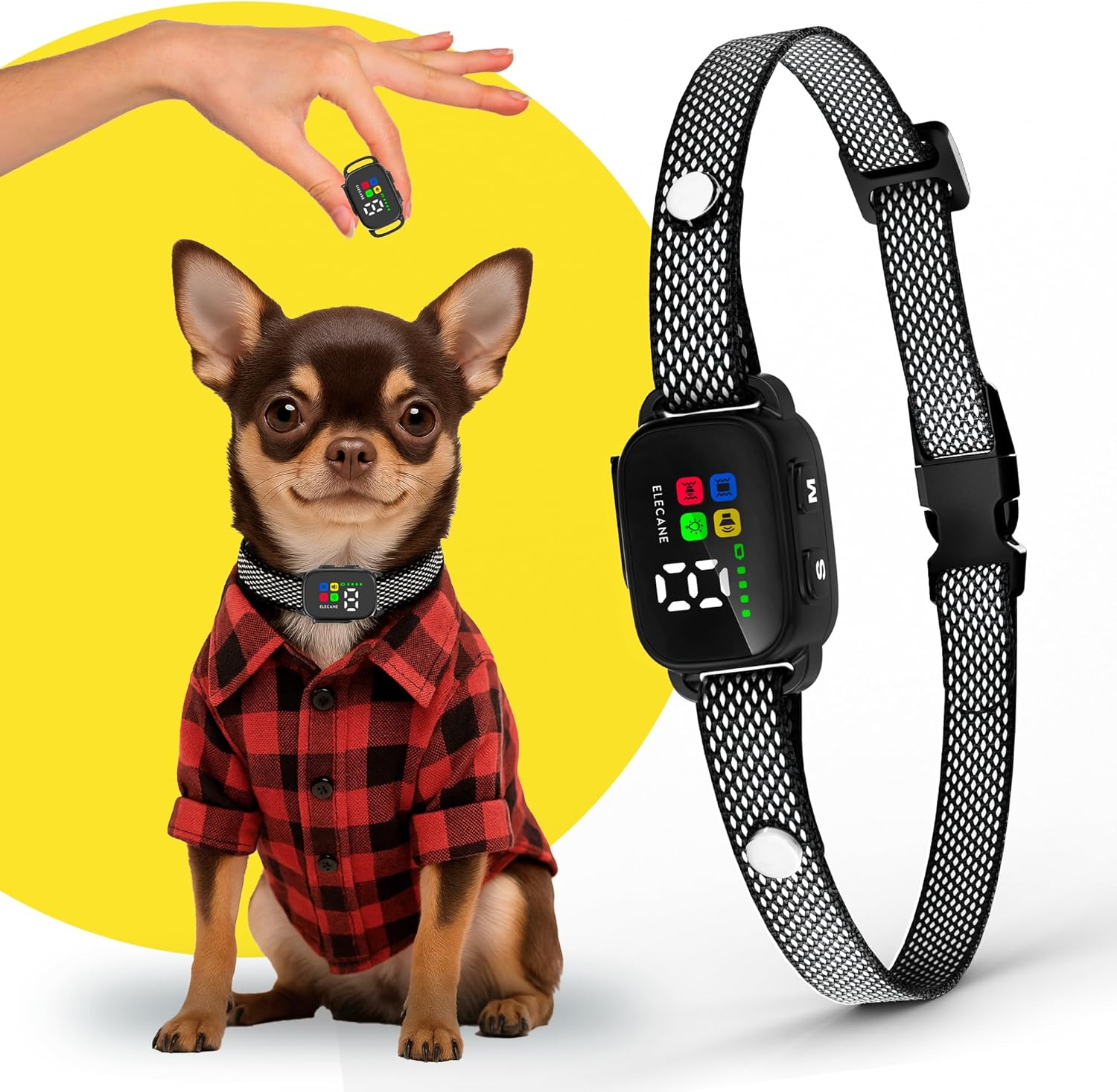
| Dog weight recommendation | 5-15 lbs |
|---|---|
| Neck size fit | 6-20 inches |
| Training modes | 3 Modes |
| Sensitivity levels | 7 levels |
| Water resistance | IP67 |
The ELECANE Tiny Bark Collar is a compact, rechargeable anti-bark device made for small breeds and puppies, using beeps and vibrations instead of electric shocks. It is typically worn like a regular collar and is aimed at everyday bark management—daytime training sessions and continuous wear for behavior reinforcement. The collar offers seven sensitivity levels and three training modes so you can tune detection to your dog's voice and environment, and a chip-based false-alarm filter helps reduce reactions to background noise. Its clear LED display and lightweight nylon strap make it simple to adjust and comfortable for tiny necks, while IP67 water resistance means it stands up to rain and outdoor play. Charging is fast and convenient via USB. Limitations include the reliance on vibration/sound only, which may be less effective on highly distracted or very stubborn dogs, and the provided strap and buckle style may need swapping for specialty harness setups. Read the instructions to set sensitivity and mode for best results with puppies and tiny breeds.
Best for: Owners of small-breed dogs or puppies who prioritize a humane, lightweight collar that is easy to fit and adjust for daily bark management.
Less Ideal for: People who need strong aversive correction for chronic, high-intensity barking or handlers who require collar integration with nonstandard harness systems.
- No-shock correction using sound and vibration for humane training
- Seven sensitivity levels and three modes for fine tuning detection
- Lightweight, compact design suited to small dogs and puppies
- USB rechargeable with quick charge time
- IP67 water resistance for outdoor use
- May be less effective on very stubborn dogs compared with stronger correction methods
- Strap uses a buckle style that might not suit all harness or collar setups
Verdict: The best overall bark collar for small dogs, balancing effective correction, gentle settings, fit for smaller necks, and reliable day-to-day performance.
Honeynet Q10 Dog Bark Collar
Best Budget Bark Collar for Small Dogs

| Power source | Rechargeable battery |
|---|---|
| Sensitivity levels | 8 levels |
| Modes | 4 working modes |
| Waterproof rating | IP67 |
| Strap length | 27 inches |
The Honeynet Q10 is a straightforward rechargeable bark collar that detects barking and applies one of three correction options to deter the behavior. It offers 8 sensitivity levels and four working modes so you can tune detection to a small dog's voice and reduce false triggers, and the unit includes a visible color display that shows status and battery level. The collar charges in about two hours and the company claims 15 to 20 days of run time on a full charge, which makes it convenient for busy owners. IP67 waterproofing means it can be worn for outdoor play or light swimming without worry, and the included silicone conductive contacts and adjustable 27 inch strap aim to fit a wide range of neck sizes. The device also has a built-in protect mode that pauses corrections after repeated activations to avoid overstimulation. This is a budget-focused option, so it lacks advanced remote controls or app integration and some users may need time to find the right sensitivity setting for very small or soft-voiced dogs.
Best for: Owners who want a low-cost, no-frills electronic collar that reduces barking and can be tuned to a small dog’s voice rather than a feature-packed training system.
Less Ideal for: People who need app control, multi-dog management, or a collar specifically tailored for very young puppies or dogs under six months of age.
- Adjustable 8-level sensitivity to better match small dog vocal patterns
- Rechargeable battery with roughly 15–20 days claimed runtime per charge
- IP67 waterproof rating suitable for outdoor use and light swimming
- Protect mode that temporarily stops corrections after repeated activations to prevent overstimulation
- No remote control or smartphone app for distance or multi-dog management
- May require careful sensitivity tuning for very small or soft-barked dogs
Verdict: The best budget bark collar for small dogs that provides straightforward, effective bark reduction and a comfortable fit without extra bells and whistles.
PetSafe NanoBark 2.0 Bark Collar Small
Best Premium Bark Collar

| Fits neck size | 4–15 inches |
|---|---|
| Correction levels | 10 auto-adjusting levels |
| Battery life | Up to 7 days per charge |
| Waterproof | Yes |
| Included components | Charging Cable, Test light tool |
The PetSafe NanoBark 2.0 is a slim, low-profile bark collar built specifically for small breeds with necks 4 to 15 inches. It detects and responds only to the voice of the dog wearing it using PetSafe's Perfect Bark detection, and applies one of 10 auto-adjusting static correction levels that alternate with Variable Pulse technology to reduce desensitization. Typical use involves fitting the lightweight collar snugly and letting it run in automatic mode so it escalates correction until barking stops, while the rechargeable battery provides up to seven days between charges. The waterproof housing and durable strap let small, active dogs wear it during outdoor play and in wet conditions. Limitations include the use of static correction, which some owners may prefer to avoid, and the collar's fit and correction style are tailored to small breeds so it is not appropriate for larger dogs; effectiveness also depends on consistent, humane introduction and proper fit. The unit ships with a charging cable and a test light tool to verify contact and operation before regular use.
Best for: Owners of small-breed dogs who prioritize a purpose-built, feature-rich collar with precise bark detection and a long-lasting rechargeable battery for regular training sessions.
Less Ideal for: People who want non-static correction methods or need a solution for medium and large dogs should consider different products.
- Compact, lightweight design sized for small breeds
- Perfect Bark detection reduces false triggers from other dogs or background noise
- Ten auto-adjusting static levels with Variable Pulse to help prevent desensitization
- Rechargeable battery lasting up to 7 days per charge
- Waterproof construction suitable for rain and puddles
- Uses static correction only, which some owners may find harsh or unsuitable
- Fit range limited to necks 4–15 inches so not for larger dogs
Verdict: The best premium bark collar for owners who want advanced features, durable materials, and finer control over correction modes and sensitivity.
OTK Dog Bark Collar 2-Pack
Best Waterproof Bark Collar
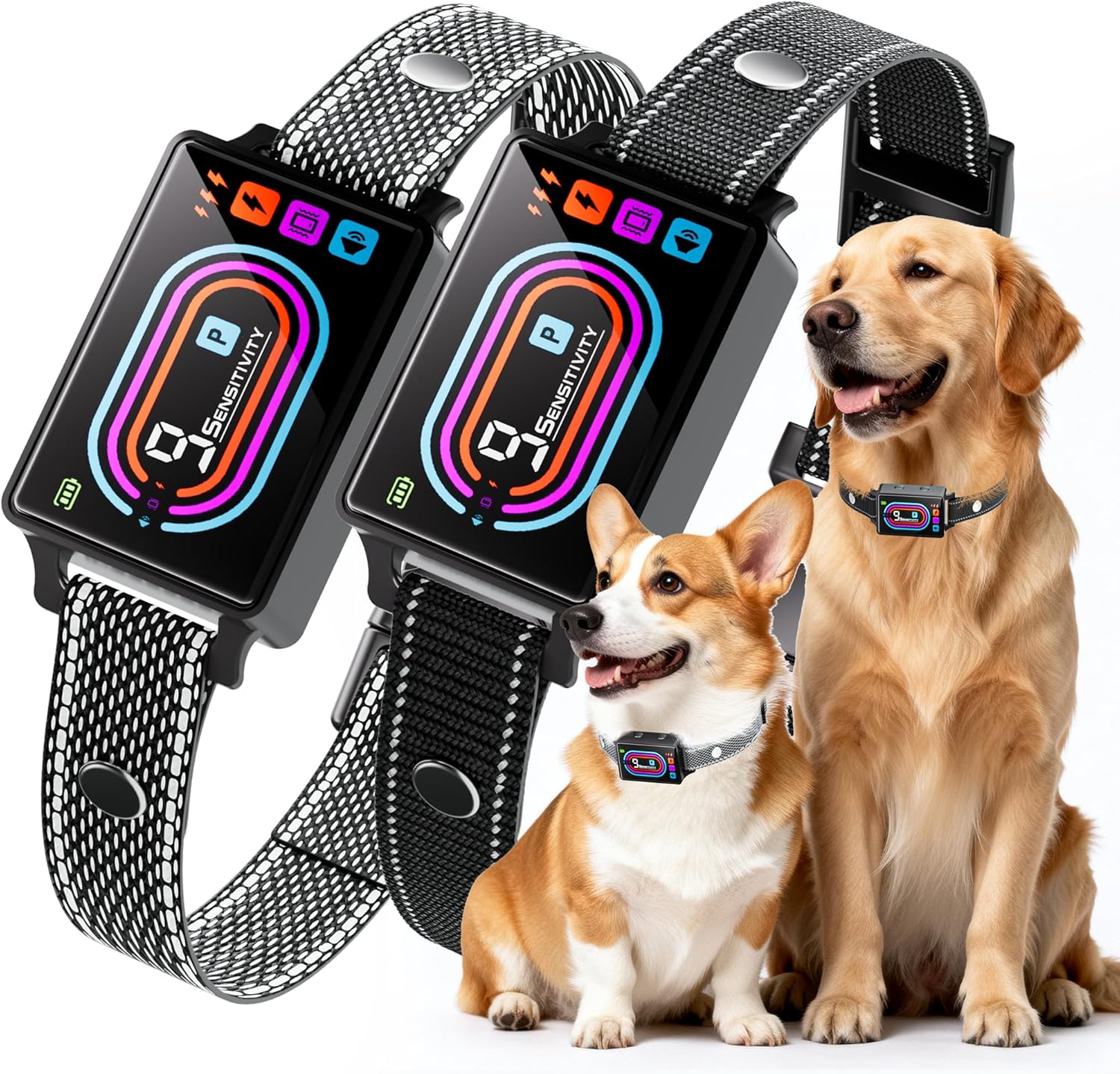
| Correction modes | Beep, Vibration, Shock |
|---|---|
| Sensitivity levels | 9 levels |
| Training modes | 5 modes |
| Waterproof rating | IPX7 |
| Unit count | 2 Count |
This two-pack of OTK bark collars is built to curb unwanted barking with three correction types — audible beep, vibration, and a safe static option — plus nine sensitivity levels and five training mode combinations so you can match intensity to a small dog's temperament. The unit is typically used worn on the neck during walks, outdoor play, or at home; its IPX7 waterproof rating and nylon strap mean it stands up to rain, splashes, and wet conditions without needing extra protection. The collars include a safety mode that disables shock for five minutes after repeated activations to reduce overstimulation, and they recharge fast in about 1.5 hours with a battery life the manufacturer rates at 15–20 days per charge, which is convenient for regular outdoor use. The kit ships with two collars, spare probe covers, charging cables, and test units so you can set up and maintain both collars easily. Limitations to note are that the strap must be trimmed to fit very small necks and sealed to prevent fraying, and some owners may prefer a dedicated small-dog model with slimmer hardware for the tiniest breeds.
Best for: Owners of small dogs who need a reliable, weatherproof bark-control solution for outdoor time and want adjustable, humane correction options they can tune over multiple sessions.
Less Ideal for: Pet owners seeking an ultra-slim collar specifically designed for toy breeds or people who do not want any static-based correction at all.
- IPX7 waterproofing suitable for rain, splashes, and wet outdoor use
- Multiple correction options and 9 sensitivity levels for tailored training
- Safety Mode that temporarily disables shock after repeated activations
- Quick recharge and long run time enabling days of regular use on one charge
- Includes two collars plus spare probe covers and test units for immediate setup
- Requires trimming and sealing the nylon strap to fit very small-necked dogs
- Hardware and collar bulk may be large for the smallest toy breeds
Verdict: The best waterproof bark collar for small dogs that spend time outdoors or around water and need reliable performance when wet.
Kollgux Bark Collar TC-013
Best Long‑Battery Bark Collar

| Suitable dog weight | 5–150 lbs |
|---|---|
| Feedback modes | Beep, Vibration, Beep+Vibration, Static Stimulation |
| Waterproof rating | IP67 |
| Recharge | USB-C, ~2 hours |
This Kollgux bark collar is a rechargeable training collar that detects barking automatically and delivers one of four feedback types: beep, vibration, beep plus vibration, or adjustable static stimulation. It is used as an everyday bark management tool worn like a regular collar, with soft silicone contact covers and an ergonomic shape for comfort and reflective accents for low-light visibility. The clear digital display and LED battery indicator make it easy to check and change settings, while seven sensitivity levels let you tune detection to reduce false triggers. IP67 waterproofing and a USB‑C recharge that takes about two hours add practical durability for outdoor use. The stated benefit here is the long battery life and automatic sleep mode that together minimize recharging; the collar claims up to 20 days standby depending on use, which fits the goal of low‑maintenance operation during multi-day outings. Limitations to note are that static stimulation requires careful introduction and that effectiveness depends on consistent fit and correct sensitivity setting for small dogs.
Best for: Owners who want a low‑maintenance bark training collar that stays usable across long outings and multi-day trips with minimal recharging and easy on-collar controls.
Less Ideal for: People seeking a purely remote- or vibration-only solution without any static stimulation option or those who prefer professional trainer-led behavior programs instead of collar-based feedback.
- Multiple feedback modes including beep, vibration, combined, and adjustable static allow tailoring to individual dogs
- Adjustable sensitivity with seven levels helps reduce false triggers from non-bark sounds
- Long standby battery with USB‑C recharge and about 2 hours charging time supports multi-day use
- IP67 waterproofing and reflective accents make it suitable for outdoor wear in varied conditions
- Static stimulation option requires careful, gradual introduction and monitoring
- Standby time varies with usage so active training sessions will reduce the quoted 20‑day figure
Verdict: The best long-battery bark collar for owners who prefer minimal charging and consistent operation during long outings or multi-day use.
ELECANE Mini Bark Collar OB11 Small
Best Gentle-Setting Bark Collar
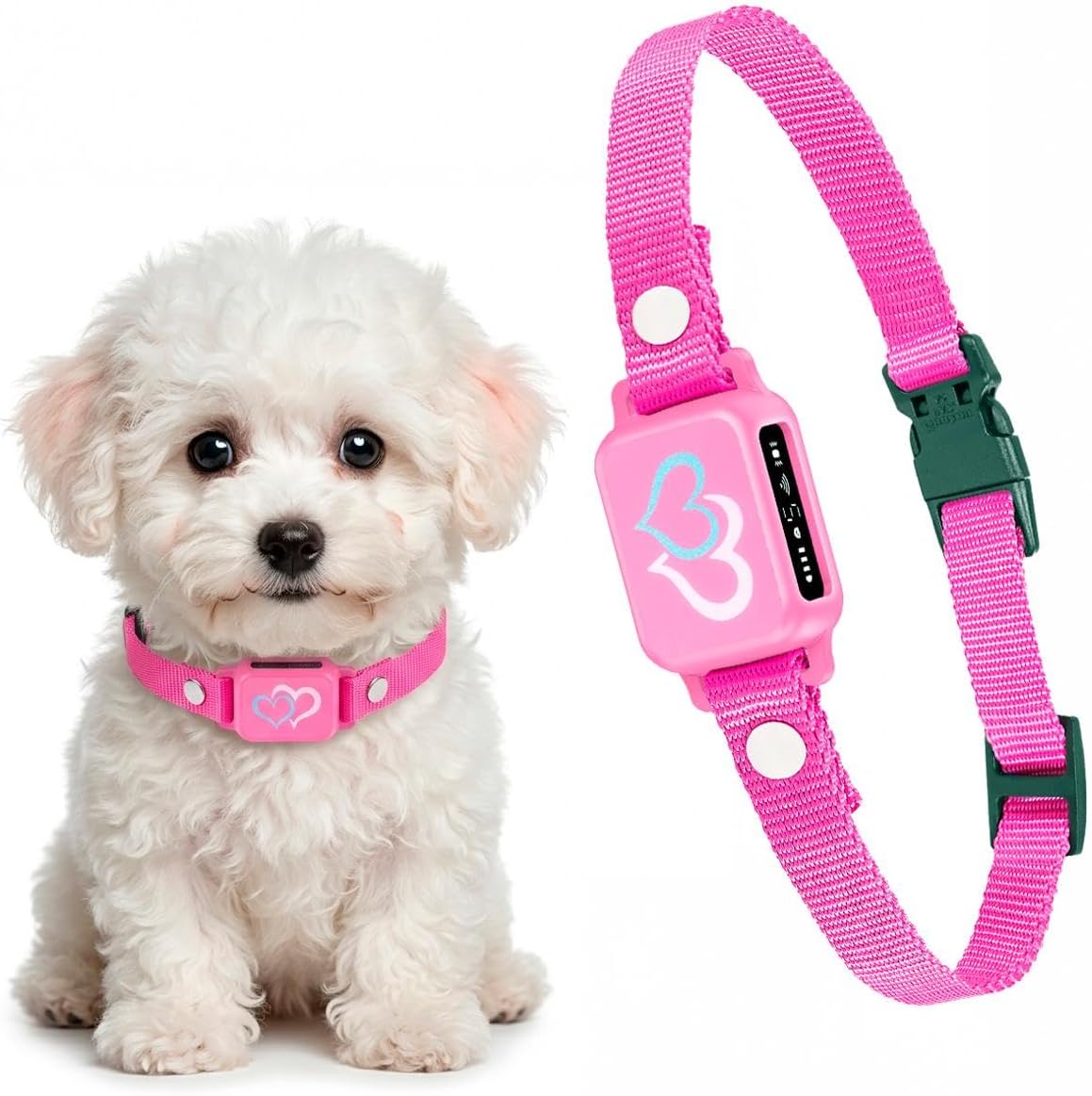
| Dog Weight Range | 5-15 lb |
|---|---|
| Training Modes | Beep / Vibration / Beep+Vibration |
| Mic Sensitivity Levels | 1-5 |
| Charging Type | Magnetic |
| Waterproof Rating | IP67 |
The ELECANE Mini Bark Collar OB11 is a lightweight, no-shock training collar designed for small dogs and puppies. It detects barking and responds with selectable beep, vibration, or combined beep-plus-vibration modes, using an onboard sound-recognition chip to limit false triggers and deliver feedback within about 0.1 seconds. The unit is ultra-compact with a magnetic charger that reaches full charge in roughly 1.5 to 2 hours and claims up to 20 days of standby battery life, which makes it convenient for daily walks and multiple outings between charges. Its IP67 waterproof rating and nylon strap mean it stands up to rain and puddles and stays comfortable for tiny breeds. Setup is straightforward and the five sensitivity levels let you tune response for dogs that are easily startled or who need softer, progressive corrections. Limitations include the absence of an independent remote for remote corrections and reliance on the built-in microphone which may require sensitivity adjustment in noisy environments; buyers should also follow the instructions carefully to ensure correct fit and safe use on very small puppies.
Best for: Buyers who prioritize gentle, low-intensity corrections for easily startled small dogs and want a compact, comfortable collar that automatically responds to barking.
Less Ideal for: Owners who need remote-triggered corrections, multi-dog centralized control, or who prefer aversive stimulation methods for very stubborn barkers should consider other options.
- No-shock training modes (beep, vibration, beep+vibration) suitable for gentle correction
- Advanced sound-recognition chip reduces false triggers from other noises
- Very light and compact design made for small dogs and puppies
- Fast magnetic charging with long standby battery life
- IP67 waterproof rating allows use in wet conditions
- No separate handheld remote for manual or distance corrections
- Microphone-based detection can need sensitivity tuning in noisy settings
Verdict: The best gentle-setting bark collar for small dogs that are easily startled or require softer, progressive corrections like vibration or low-intensity stimulation.
MariMoki Ultra-Small Bark Collar
Best Compact Bark Collar

| Breed Recommendation | Chihuahua |
|---|---|
| Dog Breed Size | Extra Small |
| Water Resistance | IPX7 waterproof |
| Training Modes | Vibration, Sound, Optional Static |
| Sensitivity Levels | 5 levels |
This compact bark collar is designed for very small dogs and focuses on being lightweight and unobtrusive while still offering multiple training options. The unit provides three training modes: adjustable vibration (0–9 levels), a sound mode, and an optional static function that can be switched off, letting owners tailor intensity to their dog. It includes a bark-tracking feature that logs barking activity and five sensitivity levels plus anti-false-trigger technology to reduce responses to environmental noise. The nylon strap and low-profile buckle keep the collar secure without excessive bulk and the rechargeable design and included charging cable simplify use. Practical benefits include easier long-term wear for tiny breeds and more precise detection to avoid accidental corrections. Limitations are the focus on extra-small dogs only, so it is not suitable for larger breeds, and the presence of an optional static mode means careful supervision and gradual introduction are required for humane training. IPX7 waterproofing and the collar's compact size make it a convenient option for everyday use on small dogs.
Best for: Buyers who need a truly lightweight, low-profile training collar for tiny dogs and prioritize comfort and accurate bark detection over raw power.
Less Ideal for: Owners looking for a heavy-duty collar for medium or large dogs or those who want a passive-only solution without any static or vibration options.
- Very small, lightweight form factor suited for extra-small breeds
- Multiple modes including vibration and sound plus an optional static function for flexible training
- Bark tracking records barking activity for behavior monitoring
- Five sensitivity levels with anti-false-trigger tech reduces mistakes from ambient noise
- Rechargeable battery and included charging cable for convenient upkeep
- Optional static mode requires cautious use and is not necessary for all dogs
- Designed specifically for extra-small dogs so not appropriate for larger breeds
Verdict: The best compact bark collar for small dogs needing a lightweight, unobtrusive unit that stays secure without overwhelming their neck size.
Choosing the Right Dog Bark Collar Small Dog: Key Factors to Consider
Size and Fit
A small-dog collar must fit snugly without slipping or pinching. Measure your dog's neck and choose an adjustable strap with fine increments so you can achieve a secure, comfortable fit. Poor fit reduces sensor contact and can cause false activations or failed correction.
Strap width and buckle type matter for small necks; wide, heavy hardware can be uncomfortable and may overload a tiny frame. Look for lightweight materials and low-profile sensors that maintain contact without digging into fur or skin.
Sensitivity and Detection Accuracy
Sensitivity determines how loud a bark must be before the collar responds. For small breeds, choose collars that offer low-threshold settings or multiple sensitivity steps so the device can distinguish between a yelp, play noise, and an actual bark. Accurate detection reduces false positives and prevents unnecessary corrections.
Some collars use vibration or sound-based detection in addition to microphone thresholds to improve reliability. Pay attention to whether the device allows separate sensitivity adjustment for short, high-pitched barks common in small dogs.
Correction Modes and Intensity Range
Small dogs usually need gentler correction options. Collars that offer multiple modes such as vibration, beep, or low-level static allow you to start with the least intrusive method and escalate only if needed. The availability of very low intensity settings is crucial to avoid causing distress or injury.
An automatic safety cutoff is important so the device stops after repeated activations. Also consider whether the collar allows you to disable static output entirely and rely on non-stimulative cues when training or managing sensitive animals.
Comfort and Skin Safety
Materials that contact the neck should be soft, hypoallergenic, and breathable to prevent irritation. For short-coated small breeds, smooth electrode surfaces and rounded edges reduce the risk of rubbing. Regularly checking the skin under the collar and adjusting fit to allow one to two fingers of space helps prevent inflammation.
Designs that distribute pressure evenly and avoid sharp points are better for daily wear. If your dog has known skin sensitivities, prioritize collars with alternative correction modes to minimize direct skin stimulation.
Battery Life and Charging Convenience
Smaller collars often have smaller batteries, so expect shorter runtime compared with larger models. Consider how long a single charge lasts under typical use and whether the device supports quick charging or a removable battery. Consistent power is important so the collar reacts when you need it to.
Indicator lights or app-based battery readouts help you avoid surprises. For multi-dog households, shorter charging cycles and fast top-ups increase practical usability and reduce the chance one dog is left without a working collar.
Ease of Use and Controls
Controls should be simple to operate, with clear markings for power, mode selection, and sensitivity adjustments. For small collars, compact buttons are fine as long as they are accessible and not easily pressed accidentally. If an app is available, check that the interface is straightforward and that wireless pairing is reliable.
Instruction clarity and an easily reachable manual control help when you need to make quick adjustments during walks or training sessions. A learning curve that is too steep reduces the likelihood of consistent, correct use.
How Low Should Sensitivity Be for a Small Dog?
Small dogs often produce higher-pitched but lower-volume barks than larger breeds. You want a collar that allows very low sensitivity settings so the microphone does not register every noise or excited chirp as a bark. Lower thresholds help the device ignore ambient sounds and household noises while still detecting true barking patterns.
Practical testing at home before regular use helps: set the collar to the lowest sensitivity, observe whether it responds to typical barks, and slowly increase sensitivity only if genuine barks are missed. If possible, choose a collar that lets you fine-tune sensitivity in small increments for precise control.
- Start at the lowest setting and adjust in small steps.
- Watch for false activations during play or when guests arrive.
- Prefer collars with separate settings for short versus prolonged barking.
Are Vibration or Sound-only Modes Better than Static?
Many owners of small dogs prefer vibration or audible tones because they are less invasive than static stimulation. These modes can be effective when used consistently alongside positive training methods and often carry less risk of stress or skin irritation for small breeds.
However, effectiveness varies by individual dog. Vibration works well for dogs that respond to a tactile cue, while sound modes may startle some animals into stopping. Choose a collar that offers multiple modes so you can trial the least intrusive option before considering stronger interventions.
- Use vibration for a clear, non-painful tactile cue.
- Try audible tones first for dogs sensitive to touch.
- Escalate only if gentler modes do not alter behavior.
How to Check Collar Fit and Maintain Skin Health
Check fit daily by ensuring the collar sits flat and you can slide one to two fingers between the strap and the neck. Inspect the skin beneath the contact points for redness or hair loss, especially during the first few weeks of use. Rotate placement slightly if you notice any irritation and give the skin time to recover between extended wear sessions.
Clean contact points regularly following the manufacturer instructions and avoid leaving the collar on 24/7 unless the device is explicitly designed for continuous wear. Frequent short monitoring sessions help you balance training effectiveness with comfort and skin safety.
- Inspect skin under electrodes every few days.
- Clean metal or plastic contacts to prevent buildup.
- Limit continuous wear until you confirm tolerance.
Can a Bark Collar Be Used During Walks and Outdoor Time?
Yes, but prefer collars with reliable water resistance and secure straps for outdoor use. Small dogs can get excited on walks, triggering false activations from wind or leash noise if the device is overly sensitive. Test the collar in a quiet outdoor area first and adjust sensitivity to account for ambient conditions.
Also consider whether the collar is comfortable under a harness or if it will interfere with leash attachment. Some owners find it easier to use the collar at home for training and switch to a harness-only approach for certain walks to avoid redundant pressure on the neck.
- Confirm water resistance before using in light rain.
- Test in a low-distraction outdoor area before full use.
- Adjust sensitivity for wind and surrounding noise.
When Should You Avoid Using an Automated Bark Collar?
Automated bark collars are not appropriate for dogs who bark due to medical issues, severe anxiety, or respiratory difficulties. If barking is a symptom of pain or a health condition, consult a veterinarian before using any corrective device. Collars should also be avoided for very young puppies while they are still developing physically and behaviorally.
If a dog shows signs of increased fear, aggression, or stress after introduction of a collar, discontinue use and pursue alternative training approaches. Behavioral problems that require long-term modification often respond better to behavior modification plans guided by a professional trainer rather than automated correction alone.
- Do not use on puppies or dogs with health issues without professional advice.
- Stop use if the collar increases fear or aggressive reactions.
- Use as part of a broader, humane training plan when appropriate.
How to Introduce a Collar to a Small Dog Gently
Introduce the collar slowly and positively. Allow your dog to sniff and inspect the device while offering treats and praise. Put the collar on for brief supervised sessions at first, gradually increasing wear time as the dog shows comfort.
Combine collar introduction with basic training cues so the dog learns the association between the collar's feedback and desired behavior. Consistent, calm handling reduces stress and improves the likelihood that the collar will become a useful training aid without creating negative associations.
- Use short, supervised sessions at first.
- Pair collar cues with treats and verbal praise.
- Increase duration only after the dog shows relaxed behavior.
How We Chose the Best Dog Bark Collar Small Dog
We evaluated available small-dog bark collars using criteria that reflect size-specific safety and real-world usability. Primary factors included adjustable sensitivity and correction intensity, because small dogs need lower thresholds and gentler responses to avoid overcorrection. Fit and strap design were assessed to ensure secure contact without chafing or excessive pressure on smaller necks. Battery life and charging type were considered to minimize downtime while keeping the collar compact. We also prioritized versatility of correction modes, such as vibration or sound alternatives to static stimulation, since owners of small dogs often prefer non-stimulative options. Durability of materials and water resistance were reviewed to ensure the collars hold up during walks and light outdoor use. We excluded heavy-duty or full-size models that are clearly designed for large breeds, and we did not include wearable devices that rely solely on remote training without automated bark detection. Excluded products were those without clear adjustable sensitivity for low-decibel barks, collars with bulky hardware unsuited to small necks, or units that lacked documented safety cutoffs. The final short list balances safety, fit, ease of use, and reliable bark-detection for smaller dogs.
Our full evaluation process is outlined in our review methodology.
FAQ
Will a smaller collar apply less static than a larger one?
Smaller collars are often designed with lower-intensity settings appropriate for small dogs, but intensity depends on the device's design rather than size alone. Choose units that explicitly list low-intensity steps and include non-static modes if you want gentler options.
How long should I leave a bark collar on my small dog each day?
Limit initial wear to short supervised periods and gradually increase based on tolerance. Unless a collar is specified for continuous use, avoid leaving it on 24/7 to reduce the risk of skin irritation and to monitor for any behavioral changes.
Can bark collars detect high-pitched small-breed barks reliably?
Some collars are better tuned for high-frequency, low-volume barks and offer sensitivity adjustments for that purpose. Look for devices that advertise adjustable thresholds or multiple detection modes to improve responsiveness to small-breed vocal patterns.
Are vibration modes effective for stubborn barkers?
Vibration can be effective for many dogs but less so for individuals that ignore tactile cues. It is often a kinder first choice and works best when used consistently with reward-based training. If vibration alone does not change behavior, consider escalating to other non-harmful modes before stronger interventions.
How do I know if the collar is causing skin irritation?
Check the skin under the contact points regularly for redness, hair loss, swelling, or sores. Mild redness may resolve with rest and adjustment, but persistent irritation or broken skin requires discontinuing use and consulting a veterinarian.
Final Verdict
For small dogs, prioritize collars with precise sensitivity control, gentle correction modes, and a secure, low-profile fit. Comfort and skin safety should guide your choice, and non-static options give you a kinder starting point. Balance battery life and ease of use against the need for low-intensity settings. If you are unsure, start with the least intrusive mode and short supervised sessions to see how your dog responds. Opt for devices that allow gradual adjustment and have built-in safety features so you can manage barking effectively without compromising your pet's wellbeing.

