

If your dog struggles with loose stool, frequent gas, or food-related tummy upset, choosing the right grain-free dry dog food for sensitive stomachs can make a real difference in daily comfort. You want a formula that minimizes common dietary triggers while still delivering complete nutrition, steady energy, and palatable flavor. This guide highlights seven shortlisted grain-free dry foods chosen for their suitability for sensitive digestion and explains the criteria we used to evaluate them. Below you will find practical notes on ingredients, digestibility, and feeding considerations to help you pick the best option for your dog. Use the evaluation points to compare how each formula addresses common stomach sensitivities before deciding which to try first.
Top Picks at a Glance
| Best Overall Grain-Free Dry Food for Sensitive Stomachs A balanced, gentle formula that suits most sensitive dogs' needs | Hill's Science Diet Sensitive Stomach & Skin |  |
| Best Budget Grain-Free Dry Food for Sensitive Stomachs A lower-cost option formulated to be gentle on sensitive tummies | Nature's Recipe Grain Free Salmon 4 lb |  |
| Best Premium Grain-Free Dry Food A higher-end formula with advanced ingredients and production standards | ACANA Singles Lamb & Apple 22.5 lb |  |
| Best Limited-Ingredient Grain-Free Dry Food A simplified recipe with fewer proteins and carbohydrates to reduce triggers | Natural Balance Limited Ingredient Salmon & Sweet Potato |  |
| Best High-Protein Grain-Free Dry Food A protein-forward formula for active dogs needing muscle support | VICTOR Hi-Pro Plus Dry Dog Food 30 lb |  |
| Best Large-Value Grain-Free Dry Food Bigger bag sizes or value packs that lower per-serving cost | Amazon Basics Dry Dog Food Salmon 24 lb |  |
| Best Small-Batch Grain-Free Dry Food Smaller production runs with careful sourcing and quality control | Open Farm Grain Free Salmon Kibble 4 lb |  |
Hill's Science Diet Sensitive Stomach & Skin
Best Overall Grain-Free Dry Food for Sensitive Stomachs
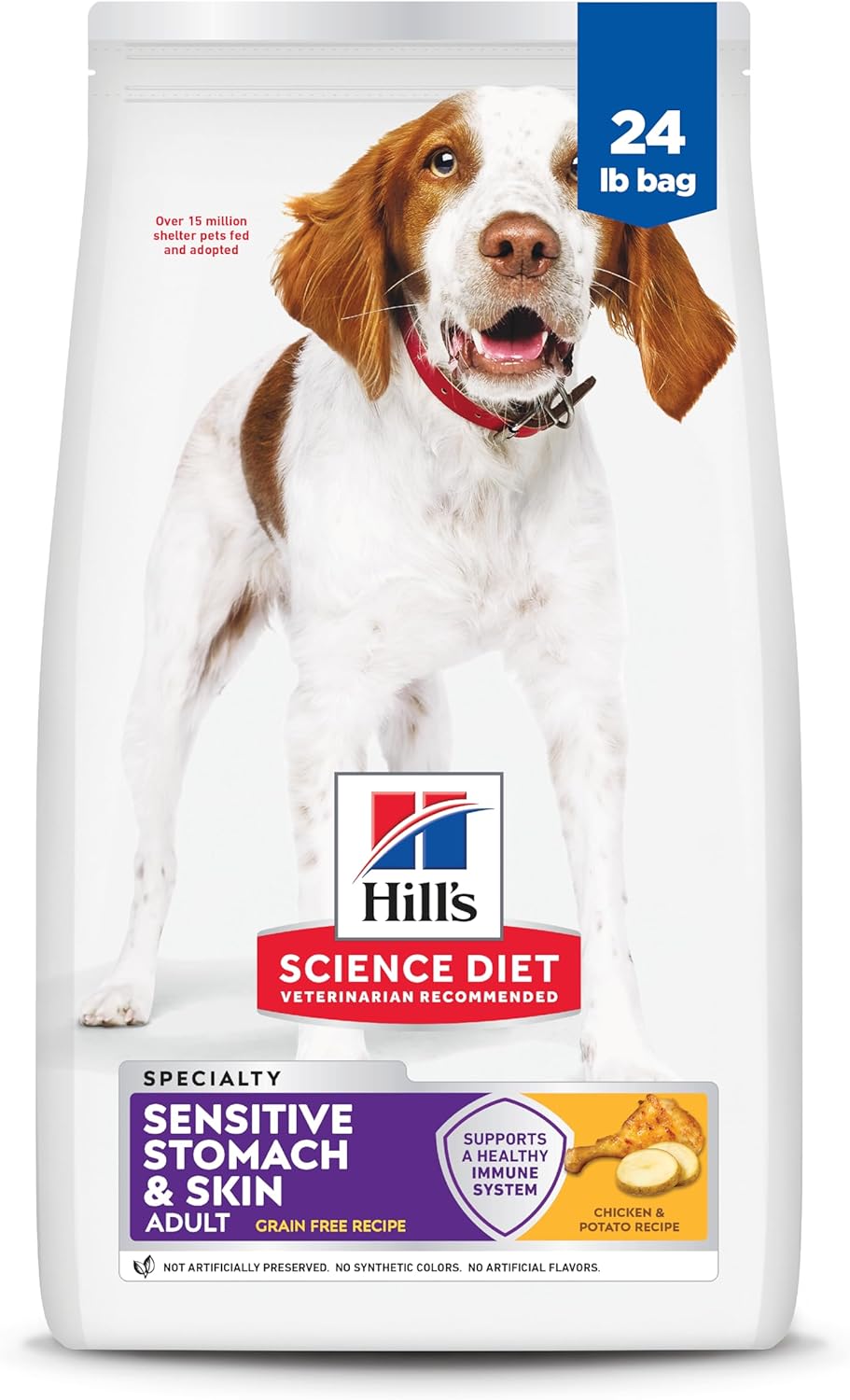
| Flavor | Grain Free Chicken & Potato |
|---|---|
| Age Range Description | Adult 1-6 |
| Item Form | Pellet |
| Specific Uses For Product | Stomach & Skin Sensitivity Support |
| Unit Count | 384 Ounce |
Hill's Science Diet Sensitive Stomach & Skin Grain Free Chicken & Potato is a daily dry dog food aimed at adult dogs with occasional digestive upset and skin sensitivities. It uses chicken as the first ingredient with potatoes and peas as grain-free carbohydrate sources and includes prebiotic fiber to support a balanced gut microbiome. The formula adds vitamin E and omega fatty acids to help nourish skin and coat, plus clinically proven antioxidants such as vitamins C and E to support immune health. In practice this is fed like any kibble with a gradual transition over a week recommended and fresh water available; the pellet form makes portioning straightforward. Strengths include a veterinarian-backed formulation and ingredients chosen for digestibility and skin support. Limitations are that it is a premium, single-recipe bag that may not suit dogs with specific protein intolerances and that grain-free diets are not necessary for every dog, so veterinary guidance is wise for chronic issues. The product is made for everyday feeding to adult dogs with sensitivity concerns rather than short-term elimination trials.
Best for: Buyers seeking an everyday grain-free kibble that prioritizes digestive gentleness and skin support for adult dogs and who value a veterinarian-developed formula.
Less Ideal for: Owners looking to identify a specific elimination-diet protein or those who prefer grain-inclusive prescriptions for chronic gastrointestinal disorders should consider alternatives or veterinary guidance.
- Formulated with highly digestible ingredients and added prebiotic fiber to support gut health
- Includes vitamin E and omega fatty acids to promote skin and coat nourishment
- Clinically proven antioxidants (vitamins C and E) to support immune health
- Chicken as the first ingredient for familiar animal protein source
- Made in the USA and developed by a veterinarian-recommended brand
- Single protein focus may limit options for dogs with chicken-specific allergies
- Grain-free formulation may not be necessary for all dogs and should be chosen with veterinary input
Verdict: The best overall grain-free dry food for sensitive stomachs, balancing easily digestible ingredients, palatability, digestive support, and consistent results for most dogs with sensitivities.
Nature's Recipe Grain Free Salmon 4 lb
Best Budget Grain-Free Dry Food for Sensitive Stomachs

| Flavor | Salmon |
|---|---|
| Life stage | Adult |
| Unit Count | 64 Ounce |
| Special Ingredients | grain-free |
| Breed Recommendation | All Breed Sizes |
Nature's Recipe Grain Free Salmon, Sweet Potato & Pumpkin is a 4 lb dry dog food built around real salmon as the top ingredient and carbohydrate sources chosen for digestibility. It is typically fed as a regular adult diet and can be used as the sole kibble or mixed with wet food; the package is resealable for everyday use. Key features include salmon and salmon meal for animal protein, grain-free carbohydrate sources like sweet potato and pumpkin to supply fiber, and added vitamins and minerals intended to support immune and digestive health. In practice this formula offers an accessible grain-free option for dogs with suspected grain sensitivities and for owners prioritizing skin and coat support from omega-rich fish ingredients. Limits to consider are that grain-free does not guarantee relief for all gastrointestinal or skin issues and ingredient-sensitive dogs may still react to novel proteins or peas, and the 4 lb bag may require frequent repurchasing for larger dogs or multi-dog households.
Best for: Owners who prefer grain-free formulas to address suspected grain-related sensitivities and want a salmon-based recipe aimed at supporting digestion and skin and coat health.
Less Ideal for: Owners seeking large-bag, economy feeding solutions or those whose dogs have known sensitivities to fish, peas, or other included ingredients should consider alternatives.
- Real salmon is listed as the number one ingredient for animal-based protein
- Grain-free carbohydrate sources like sweet potato and pumpkin provide digestible fiber
- Includes added vitamins and minerals aimed at digestive and immune support
- Resealable 4 lb bag is convenient for daily feeding and freshness
- Grain-free formulation still contains legumes and novel ingredients that can trigger sensitivities in some dogs
- Small 4 lb bag may be inconvenient or less economical for large dogs or households with multiple dogs
Verdict: The best budget grain-free dry food for sensitive stomachs for owners seeking a cost-conscious choice that still prioritizes digestible ingredients and basic stomach-soothing nutrition.
ACANA Singles Lamb & Apple 22.5 lb
Best Premium Grain-Free Dry Food
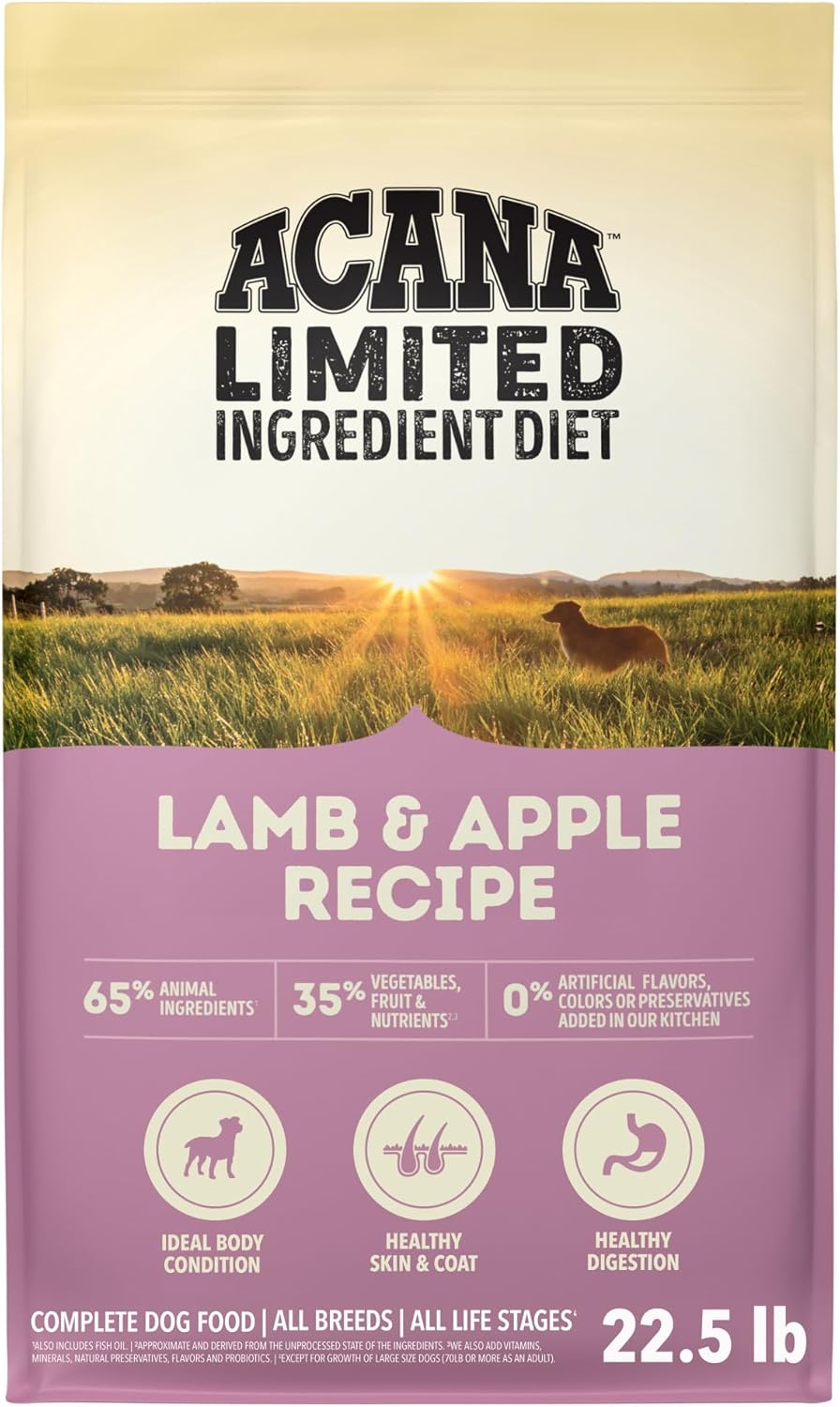
| Flavor | Lamb & Apple Recipe |
|---|---|
| Item Form | Dry Kibble |
| Age Range Description | All Life Stages |
| Animal Food Diet Type | Limited Ingredient |
| Unit Count | 360 Ounce |
ACANA Singles Lamb & Apple is a large-bag, grain-free kibble built around lamb, lamb meal and lamb liver with fruits and vegetables like apple, sweet potato and pumpkin. It is intended for dogs with food sensitivities and all life stages, delivering a high-protein profile derived from 65 percent animal ingredients plus a freeze-dried coating for added palatability. The formula includes fiber, prebiotics and probiotics to support gut health and omega fatty acids for skin and coat. In practice the 22.5 lb bag suits households that feed multiple dogs or prefer less frequent shopping, and the nutrient-dense recipe can help maintain weight while offering limited ingredients to narrow potential allergens. Expect premium ingredients and a focus on digestibility, but note this is a grain-free diet which some vets may not recommend for every dog and the bagged format requires proper storage to retain freshness over long use. Feeding guidance and adjustment for individual needs are required to avoid overfeeding.
Best for: Buyers who need a cost-efficient, bulk-sized grain-free food that prioritizes digestibility and limited ingredients for dogs with food sensitivities.
Less Ideal for: Owners looking for grain-inclusive maintenance formulas or those advised by their veterinarian against grain-free diets should consider other options.
- Large 22.5 lb bag suitable for multi-dog homes or infrequent repurchasing
- Grain-free, limited-ingredient recipe focused on lamb to reduce common grain-related sensitivities
- Includes prebiotics, probiotics and fiber to support digestion
- High proportion of animal ingredients for a protein-forward formulation
- Added omega-3 and omega-6 to support skin and coat health
- Grain-free diet may not be appropriate for every dog and should be discussed with a veterinarian
- Large bag requires airtight storage to preserve freshness once opened
Verdict: The best premium grain-free dry food for owners willing to pay more for superior ingredient sourcing, specialized digestive support, and advanced nutritional profiles.
Natural Balance Limited Ingredient Salmon & Sweet Potato
Best Limited-Ingredient Grain-Free Dry Food

| Flavor | Salmon & Sweet Potato |
|---|---|
| Item Form | Pellet |
| Animal Food Diet Type | Limited Ingredient |
| Unit Count | 64 Ounce |
| Breed Recommendation | Small Breeds |
This Natural Balance Limited Ingredient Salmon & Sweet Potato recipe is a grain-free dry food designed for small-breed adult dogs and dogs with simplified dietary needs. It uses salmon and salmon meal as the primary animal proteins and a short ingredient list intended to reduce exposure to common irritants like corn, wheat, and soy. In everyday use it serves as a complete daily feed for small dogs and can also be used during an elimination trial because the formula focuses on a single animal protein and limited carbohydrate sources such as sweet potato and potato. Practical benefits include ingredients chosen to support digestion and skin and coat health, added vitamins and minerals for balanced nutrition, and convenient bagged packaging for daily feeding. Limitations to note are that this is a small-breed formula so kibble size and nutrient balance are aimed at smaller dogs, and while the ingredient list is simplified it still contains items like yeast, canola oil, and mixed tocopherols that some owners may avoid during strict elimination diets.
Best for: Owners of Miniature Schnauzers who suspect ingredient sensitivities and want a short, single-protein diet tailored to small-breed needs and easy use during an elimination trial.
Less Ideal for: Families needing a truly novel-protein or prescription hypoallergenic formula for medically diagnosed food allergies, or owners of medium and large breeds seeking a different nutrient profile.
- Single primary animal protein (salmon) which simplifies ingredient exposure during elimination trials.
- Grain-free formula with no corn, wheat, or soy listed to reduce common dietary irritants.
- Formulated for small breeds with nutrients to support skin, coat, and digestive health.
- Includes added vitamins, minerals, and salmon meal for balanced daily nutrition.
- Formulated specifically for small breeds, so nutrient profile and kibble size may not suit larger dogs.
- Contains multiple non-protein ingredients (dried yeast, canola oil, mixed tocopherols) that could still trigger sensitivities in highly reactive dogs.
Verdict: The best limited-ingredient grain-free dry food for dogs whose sensitivities respond to fewer, clearly labeled components and who need minimal-ingredient diets to identify triggers.
VICTOR Hi-Pro Plus Dry Dog Food 30 lb
Best High-Protein Grain-Free Dry Food

| Protein | 30% (approx) |
|---|---|
| Fat | 20% (approx) |
| Life Stage | All Life Stages (except growth of large size dogs 70 lb+ adult) |
| Form | Kibble |
| Unit Count | 480 Ounce |
VICTOR Hi-Pro Plus is a nutrient-dense dry kibble aimed at active dogs, puppies, and breeding females that need extra calories and protein. The formula delivers about 30% protein and 20% fat from a blend of beef, chicken, pork, and fish meals, and includes the brand's VPRO blend of vitamins, minerals, prebiotics and probiotics for digestion and immunity. In practice this food is used as an everyday maintenance or growth diet for puppies and high-energy dogs, or as a feeding option during pregnancy and lactation when caloric needs rise. The presence of hip and joint supplements and added DHA from fish meal supports development in growing dogs, while gluten-free grains provide about 10% of protein contribution. Buyers should note the product statement that it meets AAFCO profiles for all life stages except growth of very large breed dogs over 70 lb adult size, so portioning and long-term calcium-phosphorus balance should be monitored for giant-breed puppies. The bag is made and sourced in the U.S., and the dense nutrient profile makes it practical for owners needing a concentrated, high-protein puppy feeding without switching between puppy and performance formulas.
Best for: Puppy owners who need a concentrated, high-protein kibble to support active growth, reproduction, or high energy demands and who prioritize complete nutrition in a single bag.
Less Ideal for: Owners of giant-breed puppies that require explicitly balanced large-breed growth formulas or caretakers seeking a grain-free recipe for allergy elimination should look elsewhere.
- High protein (about 30%) and high fat (about 20%) to support energy and lean-tissue development
- Multi-meat protein sources (beef, chicken, pork, fish) for amino acid variety
- Includes VPRO blend with vitamins, minerals, prebiotics and probiotics for digestion and immune support
- Formulated for all life stages which simplifies feeding for households with mixed ages (except very large-breed growth)
- Made in the USA with regionally sourced ingredients
- Not recommended for growth of very large breed dogs (70 lb adult or more) per manufacturer guidance
- Contains gluten-free grains so it is not grain-free for owners seeking that profile
Verdict: The best high-protein grain-free dry food for active or lean dogs that benefit from higher protein levels while still requiring grain-free, sensitive-stomach-friendly ingredients.
Amazon Basics Dry Dog Food Salmon 24 lb
Best Large-Value Grain-Free Dry Food

| Flavor | Salmon & Sweet Potato |
|---|---|
| Age Range Description | All Life Stages |
| Item Form | Pellet |
| Package Size Name | 24 lb |
| Special Ingredients | Salmon |
This 24 lb grain-free dry food uses sustainably-raised salmon as the primary protein and is formulated to support digestion and overall health with added probiotics and sweet potato as an alternative carbohydrate. It is typically used as a daily maintenance diet for adult dogs and can be transitioned gradually over 7 to 14 days for sensitive stomachs. Notable features include salmon-first ingredient, multiple fermentation-derived probiotic strains, and veterinarian-formulated nutrient inclusion such as taurine and added vitamins and minerals. In real-world feeding that means a protein-forward kibble that can support muscle maintenance and a digestive-friendly formula for dogs that tolerate grain-free diets. On the trade-off side, this is a grain-free veterinary-style diet that may not suit owners who prefer whole-grain formulas or need a prescription therapeutic diet, and dogs with certain sensitivities could react to some ingredients handled in the facility. Packaging is a large bulk bag suitable for multi-dog households or frequent feeders, but proper storage is recommended to preserve freshness between uses.
Best for: Value-focused owners of large, active breeds seeking an affordable, protein-forward maintenance kibble that supports digestion and overall health without premium pricing.
Less Ideal for: Owners who need a prescription therapeutic diet, prefer grain-containing whole-grain recipes, or who must avoid cross-contamination from facilities handling other ingredients.
- Salmon is the first ingredient, providing a strong animal protein source
- Grain-free formula with no artificial colors, flavors, or chemical preservatives
- Includes multiple probiotic strains to support digestive health
- Formulated with added vitamins, minerals, and taurine for complete nutrition
- Grain-free formulation may not be ideal for dogs that do better on whole grains
Verdict: The best large-value grain-free dry food for multi-dog households or budget-conscious owners who want sensitive-stomach formulations available in economical larger formats.
Open Farm Grain Free Salmon Kibble 4 lb
Best Small-Batch Grain-Free Dry Food

| Flavor | Wild-Caught Salmon |
|---|---|
| Age Range Description | All Life Stages |
| Item Form | Pellet |
| Unit Count | 64 Ounce |
This 4 lb bag of Open Farm Grain Free Wild-Caught Salmon kibble is a protein-forward, grain-free dry food aimed at dogs with sensitive skin or stomachs. It uses wild-caught salmon as the primary protein and includes legumes, fish meals, pumpkin and coconut oil to boost digestibility and omega-3 support for skin and coat. The formula lists probiotics, vitamins and a mix of superfoods like apples and cranberries, and claims traceable, third-party-sourced ingredients and Ocean Wise approval for the salmon. In practice it works as a daily complete diet for puppies through seniors, and the salmon-forward flavor profile should appeal to picky eaters or dogs with fish preferences. Buyers should note it is grain-free and relies on legumes and peas as carbohydrate sources, which some dogs tolerate differently than whole grains, and the 4 lb size may be small for multi-dog households. Packaging and ingredient transparency are strong selling points for owners prioritizing sourcing and skin and coat benefits, but monitor stool quality when switching since reactions to new carbohydrate sources can occur.
Best for: Owners who prioritize premium sourcing and a fish-based, grain-free formula for dogs with sensitive skin or digestion and who want transparent, traceable ingredients.
Less Ideal for: Households needing large bags for multiple or high-calorie dogs, or owners who prefer grain-inclusive diets as a first-line option for digestive tolerance.
- Uses wild-caught salmon as primary protein for omega-3 support
- Formulated for all life stages so it can be fed to puppies through seniors
- Non-GMO fruits and vegetables and third-party traceability for ingredient transparency
- Contains pumpkin, coconut oil and added vitamins to support digestion and skin and coat health
- Grain-free recipe uses peas and legumes as main carbs which can upset some dogs' digestion
- 4 lb bag size may require more frequent repurchasing for larger or multiple dogs
Verdict: The best small-batch grain-free dry food for owners who prioritize meticulous ingredient sourcing and tighter quality control that can benefit dogs with finicky digestion.
Choosing the Right Grain Free Dry Dog Food Sensitive Stomach: Key Factors to Consider
Protein Source and Digestibility
The type and number of protein sources directly affect how well a dog digests a meal. Single-source or novel proteins reduce the chance of immune-related reactions, while hydrolyzed proteins are broken down into smaller fragments that are easier to tolerate for dogs with food sensitivities. High-quality animal proteins generally offer better amino acid profiles and are digested more completely, which reduces undigested residue in the gut that can cause loose stool.
When evaluating formulas, look for identifiable proteins listed first and avoid vague terms like meat meal without specification. Digestibility also depends on processing: minimally processed, well-formulated kibbles are often easier on the gut than highly variable mixes. For many dogs, a gradual transition to a new protein helps the microbiome adapt and limits temporary gastrointestinal upset.
Carbohydrate Choices and Fiber Balance
Carbohydrates provide energy but can also influence stool quality and gas production. Grain-free recipes often rely on tubers, legumes, or starches. Some dogs tolerate these alternatives well, while others may react to certain legumes or high-fermentable fibers. Soluble fibers, such as beet pulp or chicory-derived inulin in moderate amounts, help regulate watery stool by absorbing water and feeding beneficial bacteria.
Total fiber should be balanced: too little fiber can leave stools loose, while too much fermentable fiber can increase gas and discomfort. Consider formulas with a mix of soluble and insoluble fibers and watch for how your dog responds over a two- to four-week trial period.
Fat Quality and Level
Fat is a concentrated source of energy and is necessary for nutrient absorption, but the type and amount of fat affect digestive tolerance. Highly digestible fats like fish oil and high-quality animal fats are usually well tolerated and supply omega fatty acids that support skin and coat health. However, excessive fat levels can trigger pancreatitis or cause greasy, loose stools, especially in dogs prone to fat sensitivity.
Look for clear labeling of fat sources and moderate guaranteed fat content appropriate for your dog's age and activity level. For dogs with recurring digestive flare-ups, formulas with slightly reduced fat or easier-to-digest fat blends can be helpful.
Added Digestive Support
Formulas that include probiotics, prebiotics, or digestive enzymes can help stabilize the gut microbiome and improve nutrient absorption. Probiotics introduce beneficial bacterial strains that can reduce diarrhea frequency and support recovery from digestive upsets. Prebiotic fibers like fructooligosaccharides feed those beneficial microbes, promoting long-term gut health.
Digestive enzymes can assist with breaking down proteins, fats, and carbohydrates, reducing the workload on a compromised gut. When considering these additives, prioritize guaranteed live probiotic counts at the time of manufacture or stable strains designed for kibble and check storage recommendations to preserve potency.
Ingredient Transparency and Labeling
Clear, specific ingredient lists make it easier to identify potential triggers and evaluate the overall formulation. Recipes that list precise protein sources, named oils, and defined carbohydrate ingredients allow you to match a diet to your dog's known sensitivities. Avoid formulas with vague descriptors, long proprietary blends, or extensive use of artificial colors and flavors that can mask inferior ingredients.
Label transparency also helps when coordinating with a veterinarian for elimination trials or allergy testing. A fully declared ingredient statement simplifies tracking reactions and making an informed switch if needed.
Kibble Size and Texture
Kibble size and texture affect how easily your dog chews and digests food. Dogs with dental issues or older dogs may struggle with large, hard kibble, which can lead to gulping and increased air intake, worsening gas. Smaller, easily fractured kibbles encourage proper chewing and saliva mixing, which aids digestion.
Texture also influences palatability and how quickly a dog consumes meals. Fast eating can contribute to regurgitation or vomiting in some sensitive dogs, so consider whether the formula's shape and density support slower eating or if a feeding tool is needed to pace intake.
How Long Should I Trial a New Grain-free Formula?
Allow at least two to four weeks when switching to a new grain-free dry dog food for sensitive stomachs. Many digestive improvements or mild adverse reactions appear within the first week, but the gut microbiome and stool consistency often need several weeks to stabilize.
Introduce the new formula gradually over 7 to 10 days by mixing increasing proportions of the new food with the old. Monitor stool quality, appetite, energy level, and any signs of skin irritation. If severe vomiting or worsening diarrhea occurs, stop the trial and consult your veterinarian.
- Start with a 25/75 new-to-old ratio and increase every two to three days if tolerated.
- Track stool consistency with a simple scale to notice subtle changes.
- Keep feeding amounts consistent by weight; don't increase portions during the transition.
Can Probiotics and Enzymes Replace a Diet Change?
Probiotics and digestive enzymes can improve digestion and reduce intermittent upset but are not a guaranteed substitute for an appropriate base diet. Supplements may help manage symptoms during a transition or support recovery from short-term disturbances, yet persistent intolerances often require changing the primary formula to remove the offending ingredient.
Use supplements as part of a broader strategy: pair them with a diet that already limits known triggers and provides balanced nutrition. Always verify strain stability and dosing recommendations for probiotics, and consult your veterinarian before adding multiple supplements.
- Supplements can be helpful adjuncts but usually do not cure true food allergies.
- Choose products with documented strains and clear dosing information.
What Feeding Strategies Reduce Stomach Upset?
Small, frequent meals reduce the digestive load compared with one large feeding. Splitting daily calories into two or three portions helps steady energy levels and eases intestinal processing for dogs with sensitive stomachs. Slow-feeding bowls or puzzle feeders also reduce gulping and help prevent air-swallowing that causes gas.
Consistent feeding times and avoiding table scraps or sudden treats cut down on unpredictable ingredients that can provoke symptoms. If you use treats for training, select ones made from the same primary protein or simple ingredients to avoid mixed exposures.
- Feed smaller portions more often for dogs with chronic sensitivity.
- Use measured cups and a feeding schedule to maintain consistency.
How to Read Labels for Hidden Triggers
Scan the ingredient list for specific protein and carbohydrate names rather than vague terms. Watch for multiple protein sources early in the list if you are testing for protein-specific sensitivities. Also check the guaranteed analysis for crude fiber and fat levels that may influence stool consistency.
Look beyond the top five ingredients: some additives and preservatives appear later but can still trigger reactions in sensitive animals. Natural preservatives like mixed tocopherols are generally more benign than unidentified chemical preservatives. If in doubt, compile a short list of ingredients to avoid and compare it against the full label before purchasing.
- Avoid formulas with artificial colors or flavors if your dog shows unexplained irritation.
- Keep a written ingredient log during elimination trials to identify correlations.
When to Consult a Veterinarian or a Nutritionist
Seek professional advice if digestive issues are persistent, worsening, or accompanied by lethargy, weight loss, blood in stool, or repeated vomiting. A veterinarian can rule out medical causes such as parasites, inflammatory bowel disease, or metabolic disorders that mimic food sensitivity.
A veterinary nutritionist can help design a targeted elimination diet or recommend therapeutic formulas when a straightforward ingredient switch does not resolve symptoms. Use professional guidance for complex cases, puppies, senior dogs, or animals with concurrent health conditions.
- Schedule a vet visit if symptoms persist beyond a reasonable trial period or are severe.
- Request diagnostics when non-dietary causes are possible.
Managing Transitions Between Similar Grain-free Formulas
Even switching between two grain-free dry foods can cause transient stomach upset due to different protein sources, fiber blends, or fat levels. Use a conservative transition over 10 to 14 days when swapping formulas, and prioritize one change at a time rather than introducing new treats or supplements simultaneously.
If you are rotating proteins to avoid long-term sensitivity, document each rotation and watch for patterns tied to specific ingredients. Rotational feeding can work for some dogs but requires careful observation and consistency.
- Limit changes to one variable at a time: protein, then fiber, then fat, for example.
- Keep a food diary to identify recurring triggers across rotations.
How We Chose the Best Grain Free Dry Dog Food Sensitive Stomach
We started by focusing on formulas specifically formulated for sensitive digestion and removed any recipes with known common irritants or unnecessary additives. Our editorial filters prioritized nutrient completeness, ingredient transparency, and formulations that emphasize hydrolyzed or single-source proteins when aimed at food sensitivities. We evaluated fiber type and level, looking for soluble fibers and moderate total fiber that support healthy stool without causing gas. Fat quality and inclusion of omega fatty acids were examined because excess or unstable fats can worsen digestive upset. We also considered carbohydrate sources, favoring easily digestible root vegetables and legumes where appropriate instead of fillers that commonly trigger intolerance. Other dimensions that mattered were kibble size and texture for ease of chewing, presence of probiotics or prebiotic fibers, and whether the formula used limited-ingredient approaches that reduce potential allergens. We excluded novelty recipes with insufficient ingredient transparency and any formulas lacking guaranteed analysis for essential nutrients. Final selections reflect a balance of digestibility, nutrient adequacy, and real-world practicality for owners managing sensitive stomachs.
Our full evaluation process is outlined in our review methodology.
FAQ
Is grain-free always better for dogs with sensitive stomachs?
Not always. Grain-free recipes remove certain common grain ingredients but substitute other carbohydrate sources that can still cause issues for some dogs. The overall ingredient profile and how your dog responds matter more than the grain-free label alone.
How quickly should I expect improvement after switching foods?
You may see initial improvement in stool consistency within a few days, but allow two to four weeks to fully evaluate a new formula. The microbiome and digestive function can take time to adapt.
Are limited-ingredient diets the same as grain-free diets?
They are related but different. Limited-ingredient diets simplify the formula by reducing the number of protein and carbohydrate sources to lower exposure to potential triggers, whereas grain-free refers only to the absence of cereal grains and does not guarantee fewer ingredients.
Should I use a probiotic with a sensitive-stomach diet?
Often probiotic supplementation helps, especially during transitions or after bouts of diarrhea. Choose stable strains and follow dosing guidance, and view probiotics as supportive rather than a standalone solution.
What if my dog gets worse on a grain-free formula?
Stop the diet and consult your veterinarian. Worsening symptoms can indicate intolerance to a substituted ingredient, a need for a different protein, or a non-dietary medical issue that requires diagnosis.
Final Verdict
When selecting grain-free dry dog food for sensitive stomachs, prioritize easily digestible proteins, balanced soluble fiber, and moderate fat levels. Ingredient transparency and supportive additives like probiotics can smooth transitions and improve stool quality, but they do not replace a carefully chosen base formula. Weigh tradeoffs between limited-ingredient simplicity and the nutrient profile your dog needs, and allow a proper trial period while monitoring stool, energy, and skin condition. If problems persist or are severe, consult a veterinarian to determine whether a therapeutic approach or targeted elimination is needed. With thoughtful selection and monitoring, you can find a grain-free dry food that reduces digestive upset and supports daily well-being.

