

Getting the right treats for a young dog makes training faster and less frustrating. With puppies, factors like low calories, soft texture, and clear ingredients matter because they affect motivation, digestion, and how often you can reward good behavior. This guide shortlists the top healthy puppy treats for training, focusing on options that make reinforcement frequent, simple, and safe. We evaluated each candidate for ingredient transparency, portion control, and how well the treat holds up during repeated sessions. Read on to see compact picks and what to watch for when you pick training rewards.
Top Picks at a Glance
| Best Overall Healthy Puppy Treat A well-rounded pick that balances nutrition, texture, and training value | Pupford Freeze Dried Training Treats 4 oz |  |
| Best Budget Healthy Puppy Treat An affordable option that still meets basic nutritional and training needs | Blue Buffalo Baby BLUE Training Treats 4 oz |  |
| Best Premium Healthy Puppy Treat A higher-end choice with superior ingredients and thoughtful sourcing | Stewart Freeze Dried Beef Liver 21 oz |  |
| Best High-Protein Healthy Puppy Treat Treats formulated with elevated protein to support growing muscles and energy | Vital Essentials Beef Liver Treats 2.1 oz |  |
| Best Low-Calorie Healthy Puppy Treat Lower-calorie treats for frequent rewards without adding excess daily calories | Fruitables Skinny Minis Pumpkin & Berry 5 oz |  |
| Best Soft-Texture Healthy Puppy Treat Soft, easily chewed treats that are gentle on puppy teeth and gums | Buddy Biscuits Trainers 10 oz |  |
| Best Training-Sized Healthy Puppy Treat Small, portion-controlled bites designed specifically for frequent training repetition | Zuke's Mini Naturals Chicken 6 oz |  |
Pupford Freeze Dried Training Treats 4 oz
Best Overall Healthy Puppy Treat

| Flavor | Beef |
|---|---|
| Item Form | Pellet |
| Unit Count | 4 Ounce |
| Ingredients | Beef Liver, Beef Heart, Mixed Tocopherols (Natural Antioxidant) |
These freeze-dried beef liver treats are made from just a few natural ingredients and are built for everyday training. The pellets are bite-sized and lightweight so you can give multiple rewards in a short session without overfeeding, and the dry texture keeps hands and treat pouches clean during walks, classes, or clicker work. Because they are essentially meat, they are highly motivating for most dogs and work well for shaping behaviors, recall practice, and reward-based training. The simple ingredient list and low calorie profile also make them a reasonable choice for dogs with sensitive stomachs or owners tracking intake. Limitations include the small 4 ounce pouch, which will be used up quickly with frequent sessions, and the single-flavor profile may not suit dogs that need stronger variety to stay interested long term.
Best for: Trainers who want a simple, highly motivating everyday reward that stays mess free and supports frequent, low-calorie reinforcement.
Less Ideal for: People looking for large bulk quantities or multiple flavor mixes for long-term variety should consider larger or multi-flavor packs.
- Single-ingredient, natural meat formula that boosts motivation
- Freeze-dried, low-odor pellets that do not make hands or pockets messy
- Small, bite-sized pieces suitable for rapid repetition during training
- Low calorie so you can reward frequently without large calorie load
- Small 4 oz pouch can be depleted quickly with heavy training use
- Only one flavor option in this listing limits variety for picky dogs
Verdict: The best overall healthy puppy treat balances wholesome ingredients, appealing taste, and a texture suitable for frequent training rewards while supporting growth needs.
Blue Buffalo Baby BLUE Training Treats 4 oz
Best Budget Healthy Puppy Treat
| Flavor | Chicken |
|---|---|
| Age Range Description | Puppy |
| Item Form | Semi Moist |
| Unit Count | 4 Ounce |
| Allergen Information | Corn-Free, Soy Free, Wheat Free |
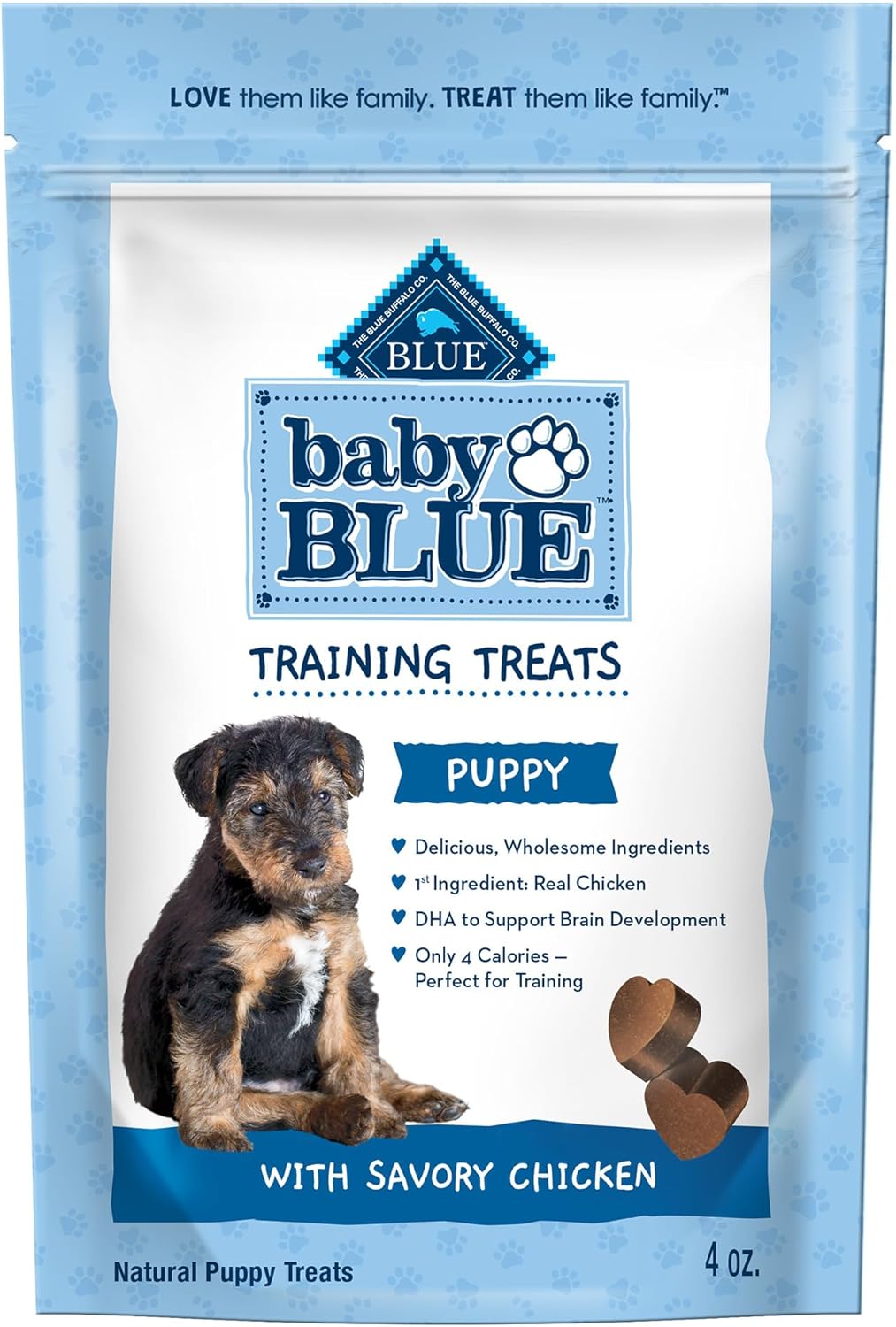
These Baby BLUE Savory Chicken training treats are soft, bite-sized morsels designed for puppy training and intermittent rewards. Made with real chicken as the first ingredient and a semi-moist texture, they are easy to break or feed quickly during multi-step training sessions. The formula includes DHA for cognitive development and omega fatty acids to support skin and coat, while LifeSource-inspired nutrients and no corn, wheat, or soy aim to reduce common allergens. In practice the treats are highly palatable to most puppies and the small pieces minimize interruptions during repetitious drills. The 4-ounce bag is convenient for short outings or a training class, but frequent trainers may find the pack small and need to replenish often. Nutritional specs show modest protein and fat levels appropriate for treats rather than meal replacement, so they work best as rewards rather than primary food. Overall these treats balance taste and puppy-friendly texture, though the small package size limits how long one bag lasts for heavy training schedules.
Best for: Puppy owners focused on efficient, frequent reward-based training who want a tasty, soft treat that is easy to portion and gentle on young digestive systems.
Less Ideal for: People who run long, intensive daily training sessions or need bulk packaging for many repetitions should consider larger multi-pack options.
- Real chicken listed as the first ingredient for strong palatability
- Soft, semi-moist texture is easy to break and quick to deliver during training
- Includes DHA and omega fatty acids to support cognitive development and skin and coat
- Free of corn, wheat, soy and artificial colors or preservatives
- Small 4-oz bag may not be economical for heavy daily trainers
- Treat nutrient levels are modest so they should not replace regular food
Verdict: The best budget healthy puppy treat delivers good ingredient quality and rewarding taste at a low price for owners who train frequently on a budget.
Stewart Freeze Dried Beef Liver 21 oz
Best Premium Healthy Puppy Treat

| Unit Count | 21 Ounce |
|---|---|
| Item Form | Freeze Dried |
| Flavor | Beef Liver |
| Target Species | Dog |
| Pet Type | Cat, Dog |
Stewart Freeze-Dried Beef Liver is a single-ingredient, high-protein treat packaged in a resealable 21 oz tub that works as both training rewards and meal toppers. The freeze-drying process preserves flavor and nutrients while keeping pieces lightweight and shelf-stable, and the tub contains up to several hundred morsels depending on piece size. Because it is 100% beef liver with no grains, fillers, artificial colors, or flavors, it is easy to portion for training sessions and is suitable for pets with common sensitivities. The tub format is convenient to store and the powder from crumbs mixes well into kibble as a topper. Limitations are that pure liver is calorie-dense and strong-smelling, so portion control is important and some households may find the odor noticeable; also this is not a balanced complete meal on its own but a supplement or treat. For buyers prioritizing premium single-ingredient nutrition and professional-trainer style rewards, this product delivers concentrated real-food appeal.
Best for: Owners who prioritize high-quality, single-ingredient treats and want a professional-style, nutrient-dense reward or topper for training and meal enrichment.
Less Ideal for: People looking for a complete daily food, very low-calorie treats, or subtle-smelling snacks for sensitive noses should consider other options.
- Single ingredient 100% beef liver for simple, recognizable nutrition
- Freeze-dried to lock in flavor and nutrients while remaining shelf-stable
- Resealable 21 oz tub provides a large quantity suitable for frequent training
- Grain-free, gluten-free, and free of artificial colors and flavors
- Very calorie-dense and strong-smelling, requiring strict portion control
- Not a complete balanced food and meant only as a treat or topper
Verdict: The best premium healthy puppy treat is for owners willing to pay more for premium proteins, limited ingredients, and artisanal or human-grade sourcing with careful formulation.
Vital Essentials Beef Liver Treats 2.1 oz
Best High-Protein Healthy Puppy Treat

| Item Form | Freeze Dried |
|---|---|
| Flavor | Beef |
| Special Ingredients | 100% Raw Freeze Dried Beef |
| Unit Count | 2.1 Ounce |
| Allergen Information | Grain-Free, Corn-Free, Gluten Free, Soy Free, Wheat Free |
These bite-sized freeze-dried beef liver treats deliver strong aroma and concentrated meat flavor that keeps dogs focused during training sessions. Each piece is made from 100% beef liver with no fillers or artificial additives, making them an easy single-ingredient reward for dogs with sensitivities. The freeze-drying process preserves nutrients and creates a lightweight, shelf-stable snack that is simple to carry and portion into multiple tiny rewards during repetition-heavy sessions. Because they are dense in protein and low in calories per piece, you can reward frequently without overfeeding, and the texture provides enough interest for picky eaters. Limitations include the small 2.1 ounce bag size, which may run out fast for heavy trainers, and the strong smell that some owners may find intense when opened. These treats are best used as high-value training rewards, meal toppers for picky dogs, or short-session incentives.
Best for: Trainers and pet owners who need a reliably enticing, single-ingredient reward for repeated short training intervals or to motivate picky eaters.
Less Ideal for: People who give large-volume treats during long training sessions, those who prefer low-odor rewards, or households needing bulk quantities for multiple dogs.
- Single-ingredient formula (100% beef liver) suitable for dogs with food sensitivities
- Freeze-dried to retain aroma, flavor, and nutrients for strong training appeal
- Small, bite-sized pieces that are easy to portion for frequent reinforcement
- Shelf-stable and lightweight for easy storage and on-the-go training
- Small 2.1 oz bag may be insufficient for frequent trainers or multi-dog households
- Very strong aroma that can be off-putting to some owners
Verdict: The best high-protein healthy puppy treat is ideal for active puppies and training sessions, offering a higher protein content that supports development and recovery.
Fruitables Skinny Minis Pumpkin & Berry 5 oz
Best Low-Calorie Healthy Puppy Treat
| Flavor | Pumpkin |
|---|---|
| Item Form | Stick |
| Unit Count | 5 Ounce |
| Specific Uses For Product | Training |
| Allergen Information | Abalone Free |
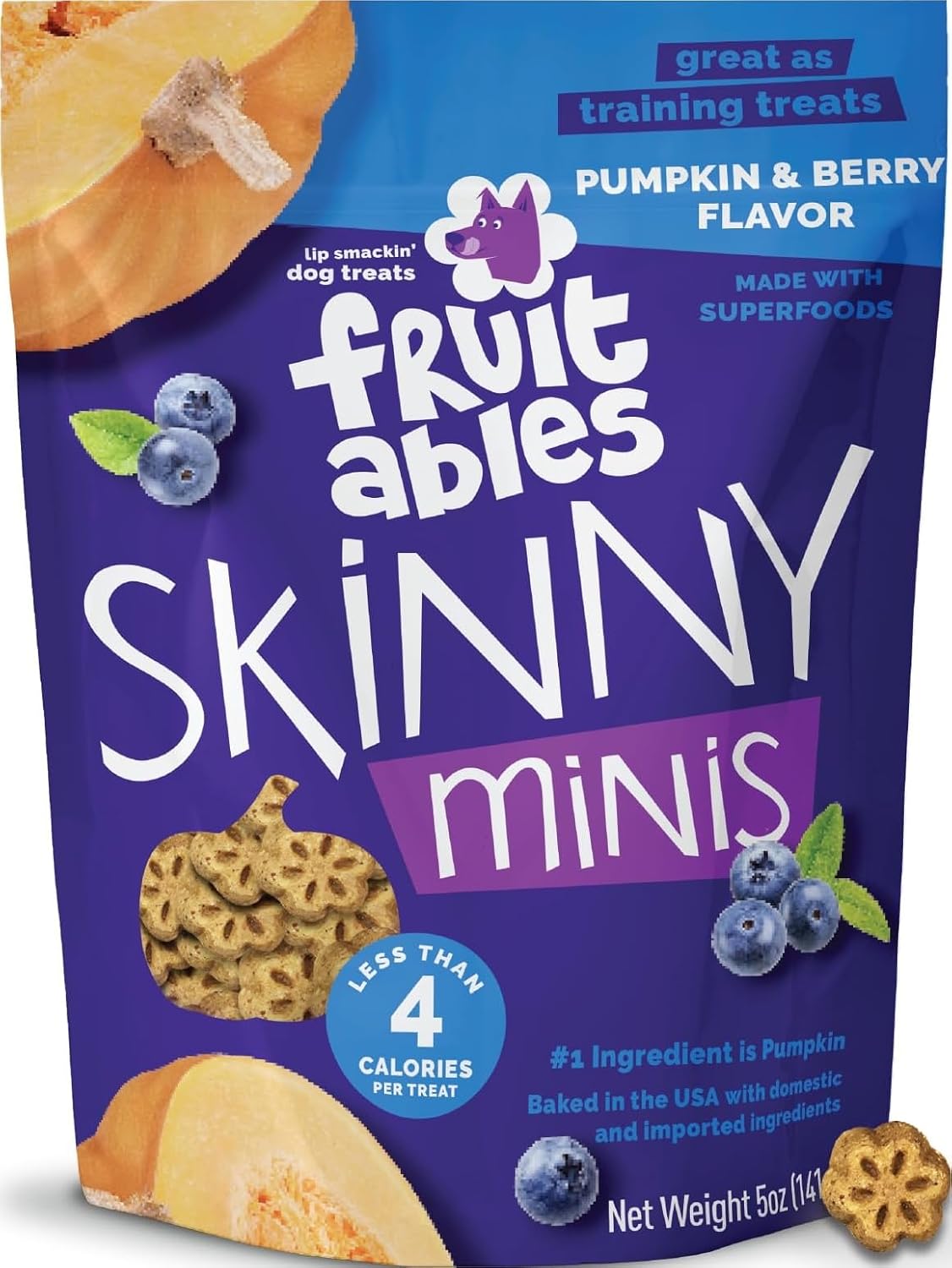
Fruitables Skinny Minis are soft, chewy training treats designed for frequent rewards without piling on calories. Each mini is under 4 calories and comes in a small, bite-sized stick form that is easy to break into multiple pieces for rapid reinforcement during puppy sessions. The recipe leans on pumpkin, blueberries, chickpeas, and other vegetable-sourced ingredients rather than wheat, corn, or soy, which can help with ingredient sensitivities and digestion for some dogs. Because they are soft, they work well for puppies and smaller mouths and for indoor training where mess and dry crumbs are a concern. The bag is a single 5 ounce package that is convenient to toss in a treat pouch but is smaller than bulk training tubs, so you may go through multiple bags during intensive training. Also these are formulated as supplemental treats rather than a complete food, so caloric accounting still matters for fast-gaining puppies. For owners who want a tasty, low-calorie, soft treat to reward often, these hit the mark; heavy trainers who prefer larger bulk packs may need to replenish more often.
Best for: Puppy owners who need a flavorful, low-calorie soft treat to reward frequently during training while watching daily calorie intake.
Less Ideal for: Owners who want large bulk quantities for high-volume training sessions or those looking for a complete meal replacement rather than supplemental treats.
- Very low calories per piece (under 4 calories) suitable for frequent rewards
- Soft, chewy texture that is gentle for puppies and small dogs
- Made without wheat, corn, or soy which may suit dogs with common sensitivities
- Contains pumpkin and fruit ingredients aimed at supporting digestion and palatability
- Small 5 ounce bag may require frequent repurchasing during intensive training
- Not marketed as a complete food so must be used as supplemental treats only
Verdict: The best low-calorie healthy puppy treat lets owners reward often during training while minimizing extra calories to help maintain a healthy weight.
Buddy Biscuits Trainers 10 oz
Best Soft-Texture Healthy Puppy Treat
| Flavor | Chicken |
|---|---|
| Item Form | Semi-Moist |
| Unit Count | 10 Ounce |
| Number of Items | 1 |
| Target Species | Dog |
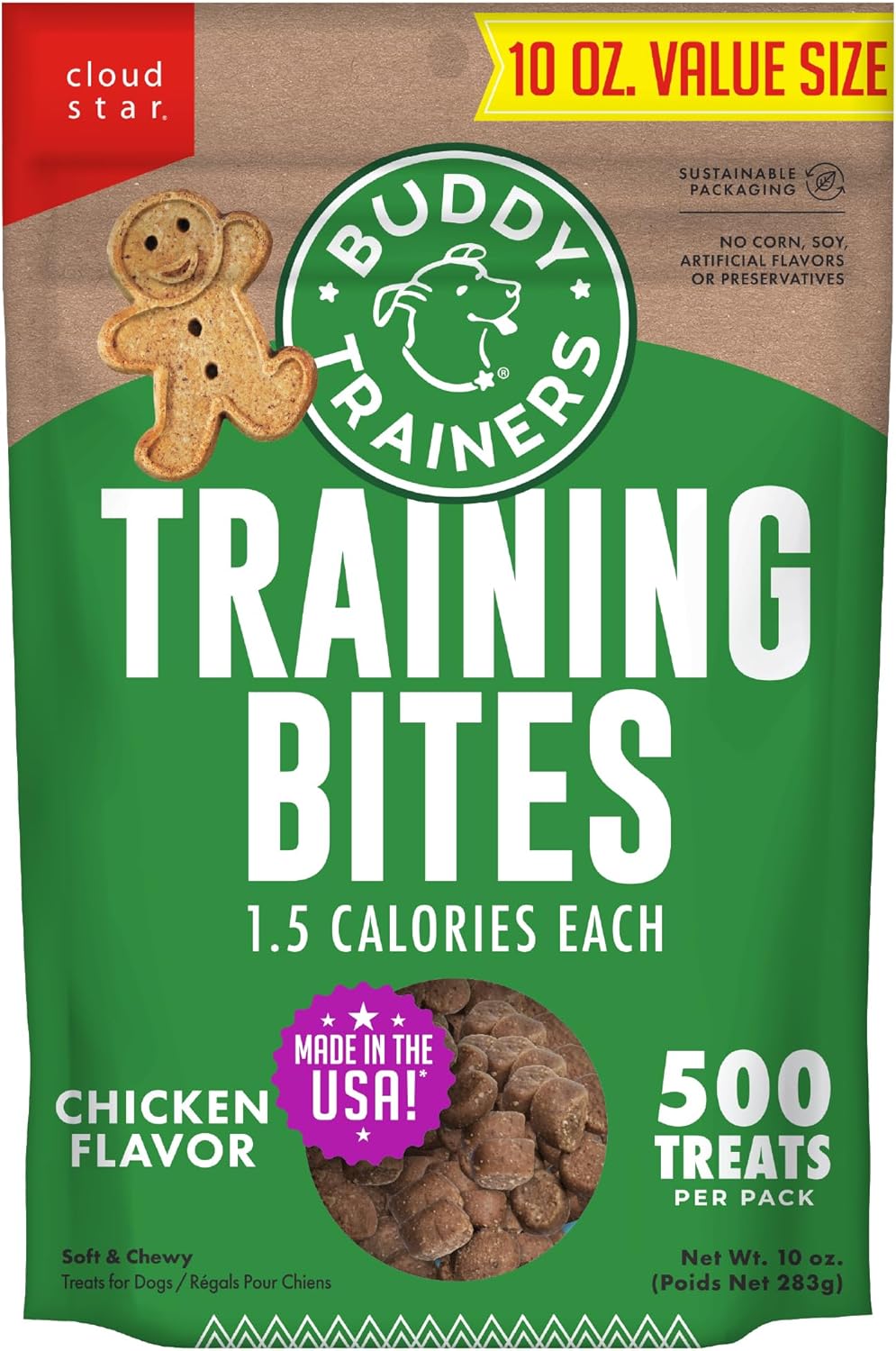
Buddy Biscuits Trainers are bite-sized, soft-and-chewy training treats designed for frequent rewards during sessions. Each piece is oven-baked, pork liver–forward in flavor with chicken listed in the ingredient mix, and formulated to be low calorie so you can give multiple rewards without adding much to daily intake. The pouch contains roughly 500 tiny pieces and the texture is tender enough to break or mash for very small mouths, which makes them practical for clicker work, recall drills, and high-reward repetitions. They are free of corn and artificial flavors and are made in the USA, which will matter to buyers prioritizing simpler ingredient lists. One practical limitation is the pouch format: once opened the treats can dry out over time unless resealed, and the ingredient list does include several starches and glycerin so they are not strictly single-ingredient treats. For owners who need a soft, strongly scented, low-calorie bite to keep puppy attention, these perform well.
Best for: Puppy owners who need a tender, highly palatable reward for high-frequency training sessions and who prioritize low-calorie, easy-to-break treats.
Less Ideal for: Buyers seeking single-ingredient or dehydrated whole-protein treats for strict elimination diets should consider alternatives tailored to those needs.
- Very low calorie per piece (about 1.5 calories) so you can reward frequently
- Soft, easy-to-break texture suitable for small puppy mouths
- Strong meaty aroma and flavor from pork liver and chicken keeps pups motivated
- Large count (about 500 treats) lets you train longer between purchases
- Made in USA with no corn and no artificial flavors or preservatives listed
- Pouch can allow treats to dry out if not tightly resealed
- Contains multiple starches and glycerin rather than being a single-ingredient option
Verdict: The best soft-texture healthy puppy treat is formulated to be tender and easily broken for small mouths, making it perfect for young puppies and quick rewards.
Zuke's Mini Naturals Chicken 6 oz
Best Training-Sized Healthy Puppy Treat

| Flavor | Chicken |
|---|---|
| Unit Count | 6 Ounce |
| Form | Treats |
| Breed Recommendation | Small Breeds |
| Calories per treat | ~2 kcal |
Zuke's Mini Naturals are tiny, soft chicken-flavored treats designed for training and on-the-go rewards. Each pouch contains low-calorie bites (about 2 calories each) that are easy to break apart or feed whole during repeated reinforcement, and the soft, chewy texture makes them quick to consume so training sessions stay focused. The recipe lists real chicken, fruits like cherries, and whole grains, and the treats are free from corn, wheat, soy, artificial colors, and flavors, which supports using them as frequent rewards without adding much daily calories. The resealable pouch is convenient for hikes and clicker sessions, and the formulation is aimed at small breeds and puppies but works for any dog that prefers a soft, high-value bite. Limitations to note are the ingredient list includes glycerin and cane sugar, so owners managing strict low-sugar or therapeutic veterinary diets should check with their veterinarian before regular use. The pouch size is small, so high-frequency trainers may need multiple pouches or larger quantities for extended sessions outdoors.
Best for: Puppy and small-breed owners who need tiny, low-calorie, high-value rewards for frequent training sessions and on-the-go reinforcement.
Less Ideal for: Owners seeking zero-sugar or prescription therapeutic treats for medical diets should choose veterinarian-approved alternatives.
- Very low calories per treat (~2 kcal) suitable for frequent rewards
- Soft, small bites that dogs can eat instantly during training
- Made with real chicken and added fruits and vitamins
- Resealable pouch makes treats portable and keeps them fresh
- Small 6 oz pouch may run out quickly during long or intensive training sessions
- Contains cane sugar and glycerin which may not suit strict low-sugar or veterinary-restricted diets
Verdict: The best training-sized healthy puppy treat offers tiny, low-calorie pieces that are easy to handle and dispense repeatedly during training sessions without overfeeding.
Choosing the Right Healthy Puppy Treat Training: Key Factors to Consider
Calorie Density and Portion Control
Puppies have limited daily calorie budgets, and using treats for frequent reinforcement can quickly add excess calories. Low-calorie treats let you reward good behavior multiple times without overfeeding. Also look for treats that are small or easy to break into uniform pieces so you can give consistent portions during a session.
Packaging that supports single-portion dispensing or reseals to keep treats fresh helps maintain portion control across the day. Consider how many treats equal one tablespoon or one calorie so you can fit training rewards into the puppy's overall feeding plan.
Texture and Breakability
Training benefits from rapid rewards that do not interrupt the flow of the session. Soft or easily breakable treats allow you to dole out tiny pieces quickly, while very hard or long-lasting chews are ill-suited to repetitive reinforcement. For very young puppies with small mouths and developing teeth, softness is also more comfortable and reduces the risk of tooth damage.
Balance softness with durability: treats should not disintegrate into a messy paste, but they should be easy to portion by hand. Consider whether the treat leaves crumbs that distract the puppy or soil training surfaces.
Ingredient Quality and Digestibility
Simple, recognizable ingredients reduce the chance of allergic reactions and digestive upset in sensitive puppies. Look for treats that list a primary protein source and avoid long lists of additives, artificial colors, or unnecessary fillers. Digestibility matters because a treat that triggers loose stools or vomiting will quickly sabotage training progress.
If your puppy has known sensitivities, prioritize single-protein treats or options labeled for sensitive digestion. Always introduce new treats gradually and monitor stool quality and appetite for a few days.
Palatability and Motivation
No matter how healthy a treat is, it must motivate the puppy to perform the desired behavior. Palatability depends on flavor, aroma, and texture. Higher-value treats or those with strong savory scents can be reserved for challenging training tasks or high-distraction environments, while milder treats work well for routine reinforcement.
Consider having two tiers of rewards: a basic low-calorie option for frequent reinforcement and a higher-value treat for shaping difficult behaviors or competing with environmental distractions.
Size and Portability
Training often happens on walks, at the park, or during quick sessions around the house. Compact treats that pack easily into a treat pouch or pocket make it simple to reward behaviors on the go. Small size also supports giving many repetitions without fuss.
Also assess whether the packaging is resealable and whether the treats stay fresh after opening. Track how many treats fit into your usual pouch so you can plan training sessions without running out mid-session.
Safety and Choking Risk
Puppies explore with their mouths, and some treat formats pose choking hazards. Avoid large, rigid pieces that a puppy could swallow whole. Soft, compressible treats are generally safer for small mouths, while very crumbly treats can create inhalation risks if they break into large chunks unexpectedly.
Supervise training sessions, especially with very young puppies, and remove any leftover large pieces from the area. Choose treats with clear size guidance for small breeds and puppies to minimize risk.
How Small Should Training Treats Be for a Puppy?
For most puppies, pieces no larger than a pea or a small fingernail are ideal. Tiny portions let you reward many repetitions without adding significant calories. If a treat is too big, break it into several uniform pieces before the session so the puppy learns to expect frequent, quick rewards.
Adjust portion size by the puppy's age and breed. Very small-breed puppies require smaller bits than medium or large breeds. During high-intensity or multi-step training, reduce portion size further so you can give multiple rewards for incremental progress.
- Aim for treats under 3 calories each when possible.
- Break larger treats into consistent small pieces before training.
- Use higher-value larger pieces sparingly for difficult tasks.
When Should I Use Higher-value Treats Versus Low-calorie Rewards?
Reserve higher-value treats for situations where the puppy faces distractions, difficulty, or when you are shaping a new behavior. These treats should be more enticing in aroma and flavor to compete with outside stimuli and help the puppy focus on the task.
Use low-calorie, lower-value treats for routine reinforcement of known behaviors, repetition drills, and maintenance work. That approach preserves the higher-value items for moments when you really need greater motivation without blowing the daily calorie limit.
- High-value: new skills, busy environments, distance work.
- Low-value: repetition, maintenance, quick indoor drills.
Are Homemade Treats a Good Option for Training?
Homemade treats can be excellent if they are simple to prepare and portionable. Recipes based on lean proteins, pureed vegetables, or single-ingredient freeze-dried pieces give control over ingredients and calories. The downside is variability: homemade batches can differ in moisture and density, which affects calories per piece and breakability.
If you use homemade treats, weigh or measure a typical portion and test how easily you can break them into small pieces during a session. Store batches in airtight containers and label with batch date to ensure freshness.
- Test portion size before relying on homemade treats for long sessions.
- Keep recipes simple to reduce digestive upset.
- Freeze portions for longer storage and easy grab-and-go use.
How to Transition a Puppy to a New Training Treat
Introduce the new treat gradually by mixing it with the existing reward over several sessions. Start with a high ratio of the old treat and slowly increase the share of the new option so the puppy accepts the change without reluctance. Monitor for any digestive signs such as loose stools or reduced appetite.
If the puppy seems uninterested in the new treat, try warming a small piece in your hand to intensify aroma or breaking it into even smaller pieces to increase frequency of rewards. Always keep training sessions short and positive while the puppy adapts to a new reward.
- Mix new treat with old for 5 to 7 sessions.
- Watch stool and appetite during the transition.
- Use high-value pieces sparingly if acceptance lags.
What to Look for on the Ingredient Label
Prioritize clear, short ingredient lists and identifiable primary proteins. Avoid treats that rely heavily on vague terms or lengthy additive lists. Look for limited fillers and no unnecessary artificial colors or flavors, as those provide no nutritional benefit and can irritate sensitive puppies.
Check the guaranteed analysis for protein, fat, and fiber when available. Higher protein can boost palatability, while moderate fat keeps calories manageable. If you are managing a dietary sensitivity, choose treats that declare absence of common allergens or have single-source proteins.
- Primary protein listed first.
- No artificial colors or unnecessary preservatives.
- Guaranteed analysis present for macronutrient guidance.
How to Store Training Treats for Freshness and Portioning
Keep treats in airtight containers or resealable packaging to preserve texture and aroma. Moisture or prolonged air exposure can make soft treats dry out and harden, which reduces their usefulness for quick training rewards. For single-day sessions, pre-portion treats into small zip bags or a treat dispenser to avoid opening the main container repeatedly.
Rotate stock and discard treats after the recommended storage time on the package. If you make homemade treats, freeze small portions and thaw as needed to maintain consistent texture and freshness.
- Use resealable containers to limit air exposure.
- Pre-portion into daily servings for consistent training.
- Freeze homemade batches in individual portions.
How We Chose the Best Healthy Puppy Treat Training
We focused on attributes that matter most when using treats as the primary training reinforcement for young dogs. Our selection prioritized products with straightforward, limited-ingredient lists to reduce the chance of digestive upset or food sensitivities. Calorie density and portion size were weighted heavily because puppies need frequent rewards without excess daily calories. Texture and palatability were assessed for training use; softer, easily broken treats enable fast, continuous reinforcement and reduce interruption during sessions. We also considered manufacturing transparency, such as clear nutrition facts and ingredient sourcing, along with packaging that helps maintain freshness and portion control. We excluded treats formulated primarily as long-lasting chews, dental sticks, or meal replacements because those are not practical for rapid-reward training. Treats requiring preparation at home were only considered if they delivered consistent nutrient profiles and were realistic for everyday training scenarios. In short, items on this list passed filters for ingredient simplicity, low calorie-per-treat, suitable texture for puppies, and practical portioning.
Our full evaluation process is outlined in our review methodology.
FAQ
How many treats can I give my puppy during a 10-minute training session?
Often you can give 10 to 20 tiny pieces during a 10-minute session depending on the calorie content of each piece. Count treats toward the puppy's daily calories and prefer very small portions for extended sessions.
Are soft treats better than crunchy ones for young puppies?
Soft treats are usually more suitable because they are easier to chew and break into small pieces. Crunchy treats can be acceptable if they break cleanly into appropriate-sized bits without creating large fragments.
Can I use human food as training treats?
Some human foods like plain cooked chicken or small bits of carrot can work but choose only safe, easily digestible options and keep portions tiny. Avoid anything seasoned, fatty, or containing toxic ingredients for dogs.
What if my puppy refuses a treat during training?
Try increasing palatability by switching to a different protein, warming the treat to boost aroma, or using a higher-value option temporarily. If refusal continues, check for recent changes in appetite or health and adjust session timing.
How do I prevent treats from becoming the only thing my puppy responds to?
Gradually phase in variable reinforcement schedules and mix in non-food rewards such as praise or a brief play break. Once a behavior is established, reduce the frequency of treats while maintaining occasional high-value rewards to preserve the behavior.
Final Verdict
When choosing training treats for puppies, prioritize small size, low calories, and textures that are easy to break. Ingredient simplicity and digestibility reduce the risk of stomach upset, while palatability ensures the puppy stays motivated. Balance a low-value everyday treat with a higher-value option for difficult tasks, and always factor treats into the puppy's daily calorie allowance. With these priorities in mind, you can select training rewards that speed learning without compromising health.

