

Finding the right puppy treat toy matters because these toys do more than entertain: they teach bite inhibition, reward good behavior, and keep energetic puppies occupied safely. A well-chosen treat toy can reduce destructive chewing, support crate or alone-time training, and provide mental stimulation during growth stages. This guide highlights seven top picks shortlisted for play value, durability, and ease of cleaning. Below you will find the evaluation criteria used, practical buying considerations, and answers to common questions to help you pick the best puppy treat toy for your household and training goals. Read on for quick, actionable advice before the product listings.
Top Picks at a Glance
| Best Overall Puppy Treat Toy The top all-around treat toy that suits most puppies | PETSTA Level2 UFO Puzzle Toy |  |
| Best Budget Puppy Treat Toy An affordable treat toy that still entertains and endures | ZHIERDE Treat Dispensing Ball Small |  |
| Best Premium Puppy Treat Toy A higher-end treat toy with superior materials and features | Outward Hound Nina Ottosson Dog Brick |  |
| Best Durable Puppy Treat Toy Built to withstand chewing and rough, enthusiastic play | KONG Puppy Chew Toy Medium |  |
| Best Slow-Dispensing Puppy Treat Toy Designed to stretch treat time and slow fast eaters down | BSISUERM Dog Treat Puzzle Toy |  |
| Best Compact Puppy Treat Toy Smaller footprint toys for travel, crates, and tiny spaces | Outward Hound Lil' Snoop 3.9" |  |
| Best Easy-Clean Puppy Treat Toy Simple to disassemble and clean after muddy, messy play | WOOF Pupsicle Small |  |
PETSTA Level2 UFO Puzzle Toy
Best Overall Puppy Treat Toy

| Pet Toy Type | Puzzle |
|---|---|
| Indoor Outdoor Usage | Indoor |
| Material Type | Polypropylene |
| Dog Breed Size | Large |
The PETSTA Level2 UFO Puzzle Toy is a hands-on enrichment toy that combines sliding puzzles and hidden treat chambers to extend sniffing and foraging play. Dogs push and spin the built-in sliders and press the central squeak button to reveal treats from 16 holes, which encourages problem solving and slows eating sessions to 20 minutes or more for many pets. The toy is lightweight, portable, and made from polypropylene with non-removable components so pieces do not fall off during play, and rubber feet help keep it from sliding across the floor. It is dishwasher safe, making cleanup easy after messy kibble or wet treats. Limitations include its plastic construction, which is not designed for aggressive chewers, and the Level 2 difficulty may be too easy for very advanced puzzle dogs or too hard initially for some puppies without guidance. For owners who supervise short training sessions or want a durable, low-maintenance enrichment option, this toy gives clear, repeatable challenges that reward scent-driven behavior.
Best for: Owners who want a repeatable, scent-driven challenge to keep their dog mentally engaged during supervised play or training sessions.
Less Ideal for: People seeking an unbreakable chew toy for powerful chewers or those who need entirely hands-off unsupervised toys for destructive dogs.
- Combines sliding puzzles and treat dispensing to promote problem solving
- Central squeak and 16-hole design extend engagement and slow feeding
- Non-removable parts reduce small-piece hazards during play
- Rubber anti-slip pads help keep the toy stationary while the pet works
- Dishwasher-safe plastic for easy cleaning after use
- Not intended for aggressive chewers and may be damaged by heavy biting
- Single material plastic construction offers limited durability compared with heavy-duty chew toys
Verdict: The best overall puppy treat toy balances engagement, safety, ease of use, and durability to work well for most young dogs and households.
ZHIERDE Treat Dispensing Ball Small
Best Budget Puppy Treat Toy
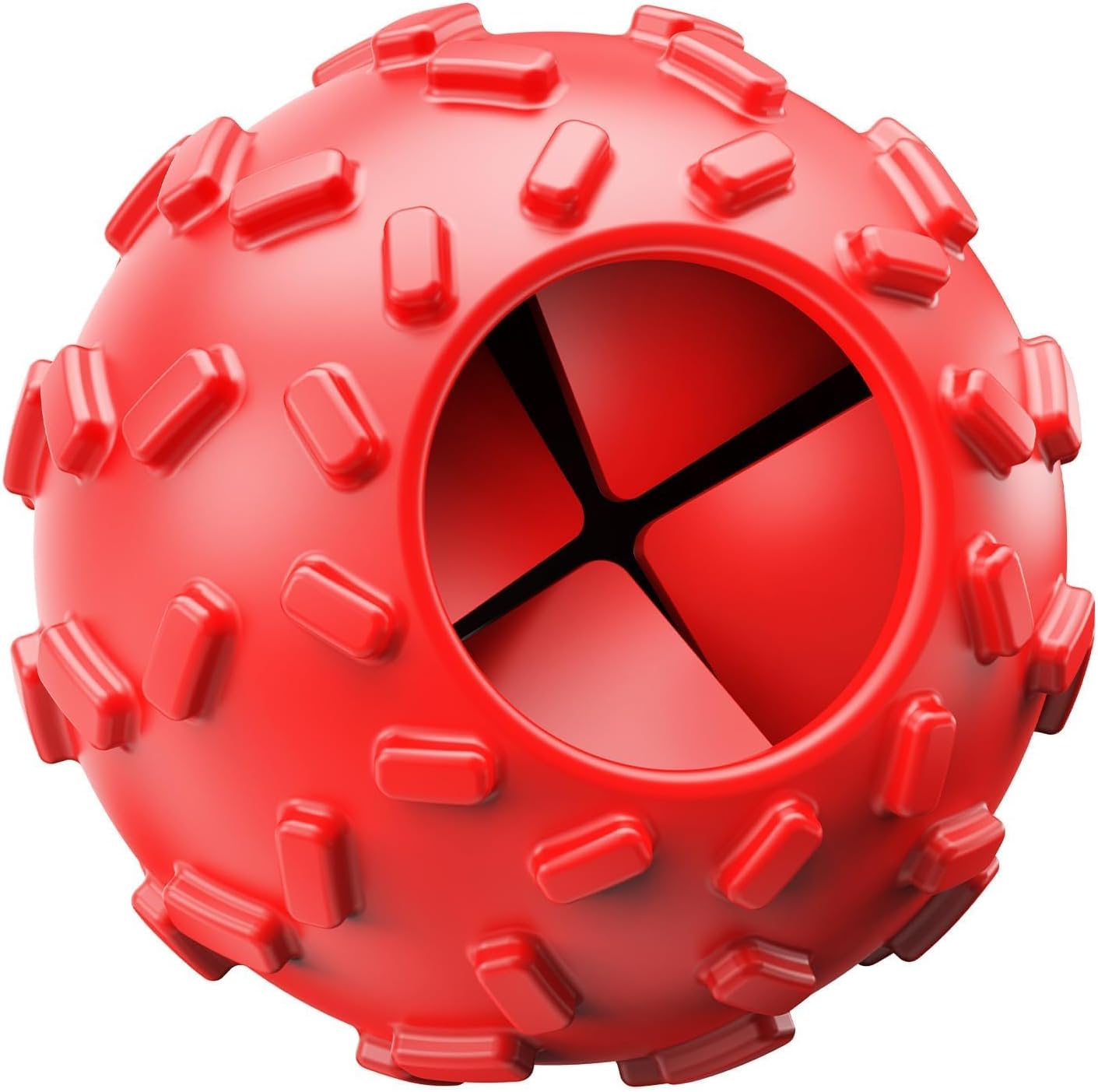
| Material Type | Natural Rubber |
|---|---|
| Pet Toy Type | Treat Dispenser Toy |
| Breed Recommendation | Small |
| Indoor Outdoor Usage | Indoor, Outdoor |
This compact treat-dispensing ball turns snacks into an interactive puzzle that keeps small dogs and puppies occupied. Fill the hollow core with kibble or small treats, then let the dog nudge, roll, and paw the ball to release rewards; flexible inner flaps can be trimmed to slow or speed dispensing so the challenge grows with the dog. The textured natural rubber surface gives grip for rolling and fetch, floats for water play, and is easy to rinse clean after use. Its small 2.7-inch size and 3.2-ounce weight make it easy to stash in a travel bag or crate and suitable for apartment play without taking much space. It is not intended for aggressive chewers or continuous heavy gnawing, so expect limited lifespan if a dog chews destructively. Scented options add extra interest but do not change function. For short supervised solo sessions, training, or slow-feeding enrichment, this ball is a practical, portable solution.
Best for: Owners who need a compact, travel-friendly enrichment toy to occupy small dogs or puppies in crates, apartments, or on the go and prioritize portability and adjustable challenge over chew resistance.
Less Ideal for: Households with powerful chewers or dogs that destroy toys quickly should choose a heavier-duty chew toy instead.
- Small, lightweight and highly portable for travel or crate use
- Adjustable inner flaps let you control treat flow for longer-lasting engagement
- Made from natural rubber with a textured surface for grip and easy rinsing
- Floats for versatile indoor, outdoor, or water play
- Not meant for aggressive chewers so durability is limited under heavy chewing
- Small opening limits treat size to kibble or small treats only
Verdict: The best budget puppy treat toy gives good play and treat-dispensing value for owners wanting a low-cost option without sacrificing basic safety or durability.
Outward Hound Nina Ottosson Dog Brick
Best Premium Puppy Treat Toy

| Pet Toy Type | Puzzle |
|---|---|
| Recommended Uses For Product | Indoor, Mental Health, Playing, Training |
| Additional Features | Lightweight, Portable |
| Water Resistance Level | Not Water Resistant |
| Material Type | Plastic |
The Outward Hound Nina Ottosson Dog Brick is a Level 2 interactive puzzle that challenges dogs to lift lids, slide red sliders, and remove bone covers to find hidden treats or kibble. Designed for supervised indoor play, it has multiple treat compartments and several ways to increase or decrease difficulty so you can match the puzzle to your dog's skill level. The plastic construction is lightweight and portable, and the food-safe materials are BPA, PVC, lead, and phthalate-free, making it simple to fill, clean, and reuse. It also doubles as a slow feeder for dogs that bolt their food, turning mealtime into an enrichment session. Limitations include the plastic pieces which are not chew-proof, so the toy requires supervision and is unsuitable for heavy chewers who may disassemble components. For many owners the adjustable challenge, clear learning curve for dogs, and moderate treat capacity make this one of the most versatile puzzle toys available.
Best for: Owners who want a single, versatile puzzle that provides adjustable mental stimulation and can double as a slow feeder during supervised indoor play.
Less Ideal for: Dogs that are aggressive chewers or owners who need an unsupervised, indestructible toy should consider more rugged options.
- Adjustable difficulty with lids, sliders, and removable covers to tailor challenge level
- Multiple treat compartments that also allow use as a slow feeder
- Made from food-safe materials and easy to clean
- Lightweight and portable for indoor supervised play
- Plastic construction is not chew-proof and requires supervision to prevent damage
Verdict: The best premium puppy treat toy is aimed at owners willing to pay more for top-tier build quality, advanced features, and long-term durability.
KONG Puppy Chew Toy Medium
Best Durable Puppy Treat Toy

| Pet Toy Type | Chew Toy |
|---|---|
| Breed Recommendation | Medium |
| Indoor Outdoor Usage | Indoor |
| Material Type | Rubber |
| Unit Count | 1 Count |
The KONG Puppy Medium is a hollow, natural rubber chew toy designed for growing pups: its softer puppy-specific formula is gentle on baby teeth while still offering chew enrichment and an unpredictable bounce for fetch. You can stuff the cavity with kibble, Easy Treat, peanut butter, or snacks to increase engagement, slow eating, and make crate or alone-time training easier. The toy's breathable hollow interior and round shape make it simple to fill and retrieve, and the rubber material provides some give so it is comfortable for teething mouths. It is intended for supervised play and is not marketed as indestructible, so very powerful chewers may outgrow the puppy formula and need a firmer KONG Extreme or a larger size. The Puppy KONG is widely available in single-count packs, lightweight for small mouths, and recommended by trainers for enrichment and basic chewing needs rather than heavy-duty destruction resistance.
Best for: Buyers who want a puppy-focused treat toy to soothe teething and extend supervised play or crate training with treat stuffing and fetch games.
Less Ideal for: Owners of aggressive or power-chewing puppies who need an extra-tough, long-lasting chew should choose a firmer, heavy-duty chew line instead.
- Puppy-specific soft natural rubber formula that is gentle on baby teeth
- Hollow interior accepts kibble or treat pastes to extend play and training
- Erratic bounce makes fetch and interactive play more engaging
- Breathable design and rounded shape are easy for puppies to pick up and carry
- Not intended for power chewers or destructive adult dogs
- Not water resistant and may show wear faster than firmer KONG models
Verdict: The best durable puppy treat toy is made for puppies who chew aggressively and need a tougher, longer-lasting option that resists tearing and damage.
BSISUERM Dog Treat Puzzle Toy
Best Slow-Dispensing Puppy Treat Toy

| Pet Toy Type | Treat Dispenser Toy |
|---|---|
| Indoor Outdoor Usage | Indoor |
| Material Type | Acrylonitrile Butadiene Styrene |
| Recommended Uses For Product | Anxiety Relief, Boredom Buster, Exercise, Playing, Training, Treat Dispensing |
| Size | 6.1*3.44*3.44in/15.5*8.7*8.7cm |
This treat-dispensing puzzle toy is a rolling barbell made from ABS plastic with two adjustable dispensing spheres that release kibble when the dog pushes or chases it. You fill the transparent chambers with dry food or small treats, set the opening size to change how often pieces drop out, and let the dog nudge or roll the toy to earn rewards. The adjustable switches let you ramp difficulty as your dog learns, stretching a short snack into prolonged play that can reduce boredom and slow fast eaters. The unit disassembles so compartments can be cleaned by hand or dishwasher, and the smooth curved surface keeps rolling quieter and safer for paws. Note that this is not designed as a chew toy, so determined chewers may damage it, and the plastic construction feels lightweight rather than indestructible for aggressive players.
Best for: Owners who want a single toy they can make easier or harder as their dog learns, especially people seeking to stretch treats into longer, mentally engaging play sessions.
Less Ideal for: Households with strong chewers who destroy toys quickly or owners wanting a durable chew-resistant feeder should look for heavy-duty alternatives.
- Adjustable treat openings to increase or decrease challenge
- Transparent chambers let you see remaining kibble and adjust feeding
- Disassemblable parts are dishwasher-safe for easy cleaning
- Smooth, curved ABS surface rolls quietly and is safer for paws
- Designed to slow feeding and extend playtime for mental stimulation
- Not intended as a chew toy and can break if bitten
- Plastic construction may not withstand heavy, aggressive chewers
Verdict: The best slow-dispensing puppy treat toy helps extend play and slow consumption by releasing treats gradually, which is ideal for training and mental stimulation.
Outward Hound Lil' Snoop 3.9"
Best Compact Puppy Treat Toy

| Pet Toy Type | Treat Dispenser Toy |
|---|---|
| Breed Recommendation | Small-Medium Breeds |
| Indoor Outdoor Usage | Indoor, Outdoor |
| Water Resistance Level | Water Resistant |
The Lil' Snoop is a compact treat-dispensing ball made for small dogs and puppies that encourages foraging and slows fast eaters. You fill the translucent, squishy cavity with kibble or small treats, close it, and let your pup nudge and paw to release rewards; the toy's size and 1/4-cup capacity make it easy to use in crates, carriers, or small living rooms. It is made from a flexible Orbee-Tuff TPE-like material that the brand describes as durable for treat play and is mint-scented to help freshen breath. Cleaning is straightforward — fill with warm soapy water, shake, rinse, and air dry. Important limitations are that it is not intended as a chew toy and should be used under supervision, and very determined chewers may still damage it. For casual puzzle play, slow feeding, and short supervised sessions in confined spaces, the Lil' Snoop makes treat time more engaging without taking up much room.
Best for: Puppy and small-dog owners who need a compact, portable treat toy for crates, travel, or small living spaces and want to add short supervised enrichment sessions.
Less Ideal for: Owners of aggressive chewers or dogs that play destructively should choose a sturdier, chew-specific toy instead.
- Sized for puppies and small dogs so it fits in crates and small spaces
- Treat-dispensing design encourages mental stimulation and slows fast eaters
- Mint-infused material helps freshen breath during play
- Translucent, squishy construction makes it easy to see and retrieve treats
- Simple cleaning method with warm soapy water
- Not a chew toy and requires supervision during use
- May be damaged by heavy or persistent chewers
Verdict: The best compact puppy treat toy fits easily in crates, bags, and small living spaces while still providing engaging treat-dispensing play for puppies.
WOOF Pupsicle Small
Best Easy-Clean Puppy Treat Toy

| Pet Toy Type | Treat Dispenser Toy |
|---|---|
| Indoor Outdoor Usage | Indoor |
| Additional Features | Mess Proof |
| Material Type | Rubber |
The WOOF Pupsicle is a small treat-dispensing puzzle toy designed to keep puppies and small dogs occupied while being simple to clean. The toy unscrews in the middle so you can pack it with long-lasting treats or pre-frozen mixes, then rinse both halves and the silicone treat tray after use. Its rubber construction is non-toxic and water resistant, and the top slots prevent drool pooling while the weighted base helps it stay upright during play. The included food-grade silicone treat tray makes it easy to prepare custom fillings like yogurt or broth and is straightforward to wash. In practice the Pupsicle provides 20 to 30 minutes of licking or chewing enrichment depending on the filling and dog, and its mess-proof design keeps most residue contained. Limitations are that it is sized for small dogs and puppies so larger chewers will need a bigger model, and natural rubber while durable for normal play is not a heavy-duty chew material for persistent strong chewers.
Best for: Buyers who want a hygienic, low-mess treat toy they can refill with homemade or frozen mixes and clean quickly between uses for frequent daily enrichment.
Less Ideal for: People with large dogs or powerful chewers seeking a rugged, heavy-duty chew toy should consider sturdier, larger options.
- Unscrews in the middle for fast filling and easy cleaning
- Includes food-grade silicone treat tray for homemade refills
- Slots and weighted base reduce drool pooling and tipping
- Made from non-toxic, BPA- and phthalate-free rubber and water resistant
- Small size is intended for puppies and small adult dogs, not larger breeds
- Natural rubber is not designed for heavy, persistent chewers
Verdict: The best easy-clean puppy treat toy is for owners who prioritize hygiene and convenience, offering parts that are quick to rinse, wipe, or dishwasher-safe for regular maintenance.
Choosing the Right Puppy Treat Toy: Key Factors to Consider
Durability and Material Safety
Puppies are in a constant mouthing phase, so the toy material must resist tearing while remaining nonabrasive to developing teeth. Look for materials labeled as non-toxic and free of known hazards, and prefer simplified designs without fragile attachments.
Durability affects long-term value but also safety: brittle plastics or loosely attached parts can break into small pieces that pose ingestion risks. Consider whether the toy is appropriate for your puppy's current chewing strength and how that will change as their teeth and jaw grow.
Treat-dispensing Mechanism
How the toy releases treats determines engagement and training utility. Adjustable openings or variable difficulty levels let you increase challenge as your puppy learns, which extends the toy's usefulness beyond the first few uses.
Mechanisms that jam easily or require precise treat shapes reduce practical use. Choose toys that accept a range of kibble sizes or small soft treats and that consistently reward effort without frustration.
Cleanability and Hygiene
Puppy treats, saliva, and food residue build up quickly, so easy cleaning prevents odors and bacterial growth. Dishwasher-safe parts or simple, non-porous surfaces make daily maintenance practical.
Toys with multiple small crevices or absorbent fabrics can harbor grime and are harder to sanitize. Regular cleaning also preserves the materials and helps you detect damage early, reducing safety risks.
Size and Choking Risk
Toy size should match your puppy's mouth and breed tendencies. A toy that is too small can be a choking hazard, while an oversized toy may be impossible to manipulate and quickly abandoned. Check that openings and detachable parts are large enough to avoid accidental ingestion.
Consider growth: what fits a 10-week-old puppy may be unsafe when they put more force behind a bite. Choose options that remain safe across expected growth stages or plan to rotate toys as your puppy matures.
Engagement and Mental Stimulation
A good treat toy encourages problem-solving and sustained play without becoming frustratingly difficult. Look for toys that offer variable challenges, sensory interest through texture or sound, and a satisfying reward schedule that reinforces repeated interaction.
Sustained mental engagement reduces boredom-related behaviors like chewing furniture and excessive barking. Rotate toys and adjust difficulty to keep novelty high and learning progressive.
Ease of Use for Owners
Practical considerations such as how easy it is to load treats, store the toy, and supervise play affect daily use. Toys that are fiddly to fill or require special tools tend to be used less frequently, reducing their training benefit.
Also consider whether parts can be replaced or if the whole toy becomes unusable after minor damage. Owner-friendly designs encourage consistent use, which improves training outcomes.
How Do I Choose the Right Treat Size and Type for a Puppy Treat Toy?
Treat toy performance depends largely on treat shape and softness. Many toys work best with small, easily crushable treats or a few pieces of kibble. If treats are too large or hard, they can jam dispensing openings and frustrate your puppy.
Match treat size to the toy's opening and choose softer options for very young puppies or for toys that require gnawing. For high-value training, use soft, aromatic treats that motivate quick engagement, but reserve them for short sessions to avoid overfeeding.
- Test a few kibble sizes before committing to one type.
- Use softer treats for teething puppies to avoid dental discomfort.
- Measure treat calories into your puppy's daily allotment to prevent weight gain.
When Should I Introduce Treat Toys to a Puppy?
Introduce simple treat toys as soon as your puppy is comfortable eating from your hands and shows interest in toys, usually around eight weeks. Start with low-difficulty toys so the puppy experiences quick wins and forms a positive association.
Supervise early sessions to ensure safe use and to teach how the toy works. Gradually increase difficulty and vary the types of toys to build problem-solving skills and keep playtime interesting.
- Begin with short supervised sessions of five to ten minutes.
- Use treat toys during crate training or alone-time to promote calm behavior.
- Rotate toys weekly to maintain novelty.
How to Use a Treat Toy for Training and Behavior Management
Treat toys can be powerful training aids when used deliberately. Use them for impulse-control exercises by asking for a sit or wait before allowing the puppy access. For separation training, give a treat toy during short absences to build positive alone-time associations.
Avoid using treat toys only as a distraction from unwanted behaviors without addressing the root cause. Combine interactive sessions with basic obedience training and structured play to teach desired behaviors and limits.
- Pair toy use with simple cues like sit or stay.
- Limit treat-toy sessions to reinforce good behavior rather than as constant background entertainment.
- Increase challenge as your puppy masters tasks to maintain learning momentum.
What Are Safe Supervision Practices for Treat Toy Play?
Always supervise initial interactions to check for small-part hazards, tearing, or inappropriate use. Place a time limit on unsupervised sessions until you are confident the toy holds up to your puppy's chewing style.
If a toy shows signs of damage, remove it immediately and replace it with an intact option. Keep a rotation of backup toys so you can swap out damaged items without interrupting training routines.
- Inspect toys weekly for cracking, tears, or loose pieces.
- Store treat toys out of reach when not in use to prolong life and maintain novelty.
Can Treat Toys Help with Teething Discomfort?
Yes. Many treat toys are designed to be gently chewed and can soothe sore gums while providing a positive outlet for mouthing. Look for slightly textured, pliable surfaces that massage gums without being abrasive.
Offer chilled but not frozen treat toys for added relief during peak teething. Avoid extremely hard materials that could damage developing teeth or cause pain.
- Rotate chilled toys in short sessions to avoid cold sensitivity.
- Combine treat toys with safe chew items specifically marketed for teething if additional relief is needed.
How to Keep Treat Toys Interesting Over Time
To prevent boredom, vary the treats, change the toy's difficulty, and rotate toys. Hiding the toy for a day or two and reintroducing it can renew interest. Introducing novelty through food puzzles or stuffing treats differently also helps.
Monitor which play styles your puppy prefers—rolling, nosing, or chewing—and choose toys that play to those strengths to keep interaction long-term.
- Alter the challenge by changing treat size or packing density.
- Combine treat toys with short training sessions to create a richer reward experience.
How We Chose the Best Puppy Treat Toy
We focused on product attributes that matter most for puppies and for owners prioritizing safe, effective reward-based play. Primary evaluation criteria included chew resistance for puppy teeth, treat-dispensing reliability, cleaning and hygiene, safety of materials, and suitability for different developmental stages. We also assessed how well designs supported training goals such as independent play, recall reinforcement, and boredom-busting activity. To keep the list useful for everyday owners, we excluded items designed only for adult dogs or heavy chewers beyond typical puppy strength, and we did not consider toys that rely on complex electronics or single-use components. Products that performed poorly on sanitation, presented small-part hazards, or used uncertain materials were filtered out. Final selections balanced engagement, manageable durability, and practicality for routine training and play sessions.
Our full evaluation process is outlined in our review methodology.
FAQ
Are treat toys safe for teething puppies?
Often yes, when you choose pliable, nonabrasive materials intended for young dogs. Avoid very hard toys and inspect items frequently for damage that could create sharp edges or loose pieces.
How often should I give my puppy a treat toy?
It depends on training goals and calorie limits. Short supervised sessions once or twice daily work well for training and enrichment, while longer sessions can be used occasionally for separation practice.
What if my puppy loses interest quickly?
Rotate toys, vary the treat type, or increase the challenge to rekindle engagement. Short supervised play paired with praise or training can rebuild interest in a toy.
Can I put wet or sticky treats in a treat toy?
Sometimes, but choose toys easy to clean and avoid overly sticky fillings that are hard to remove. Use wet fillings sparingly and wash the toy promptly to prevent odor and bacterial buildup.
How do I choose a treat toy for a small-breed puppy?
Pick toys sized for small mouths with appropriately sized openings and soft materials. Ensure there are no small detachable parts and that the toy offers a manageable level of challenge for their jaw strength.
Final Verdict
Focus on safety, appropriate challenge, and practicality when choosing a puppy treat toy. Prioritize non-toxic, easy-to-clean materials and a dispensing mechanism that matches your puppy's current skill level. Balance durability with gentleness for developing teeth and plan to rotate or upgrade toys as your puppy matures. Ultimately, the best choice supports training goals while providing engaging, supervised enrichment. Use the factors discussed to weigh tradeoffs and select a toy that fits your household routines and your puppy's chewing style.

