

Feeding a Golden retriever puppy the right diet matters more than many owners realize. Puppies of this breed grow quickly and have specific needs for protein, joint-supporting nutrients, and controlled calories to promote healthy bone development. The right puppy food helps maintain steady weight gain, supports developing joints, and supplies the energy a playful pup needs without excess that stresses growing bones. This guide shortlists the top puppy foods selected for Golden retriever growth patterns and common nutritional priorities. We evaluated options across digestion, protein quality, and targeted nutrients so you can pick a formula that fits your puppy's growth stage and activity level. Read on to see the criteria we used and practical buying advice before the product list.
Top Picks at a Glance
| Best Overall Puppy Food for Golden Retrievers A balanced, top pick tailored to growing Golden Retriever puppies | Royal Canin Golden Retriever Puppy 30 lb |  |
| Best Budget Puppy Food for Golden Retrievers A low-cost option that still meets essential puppy nutrition needs | Purina ONE Plus Healthy Puppy Dry Food 8 lb |  |
| Best Premium Puppy Food Higher-end formulas with elevated ingredients and manufacturing standards | Fromm Large Breed Puppy Gold 30 lb |  |
| Best High-Protein Puppy Food Formulas with elevated protein to support muscle and growth | Solid Gold Large Breed Bison Puppy Food 22 lb |  |
| Best Limited-Ingredient Puppy Food Simpler recipes with fewer ingredients for sensitive pups | Purina Pro Plan Puppy Sensitive Salmon 4 lb |  |
| Best Small-Bag Puppy Food Smaller package sizes useful for trying new formulas or travel | The Honest Kitchen Whole Grain Puppy Clusters 4 lb |  |
| Best Large-Bag Puppy Food Big bags that save money per pound for frequent feeders | Purina Pro Plan Large Breed Puppy Chicken & Rice 34 lb |  |
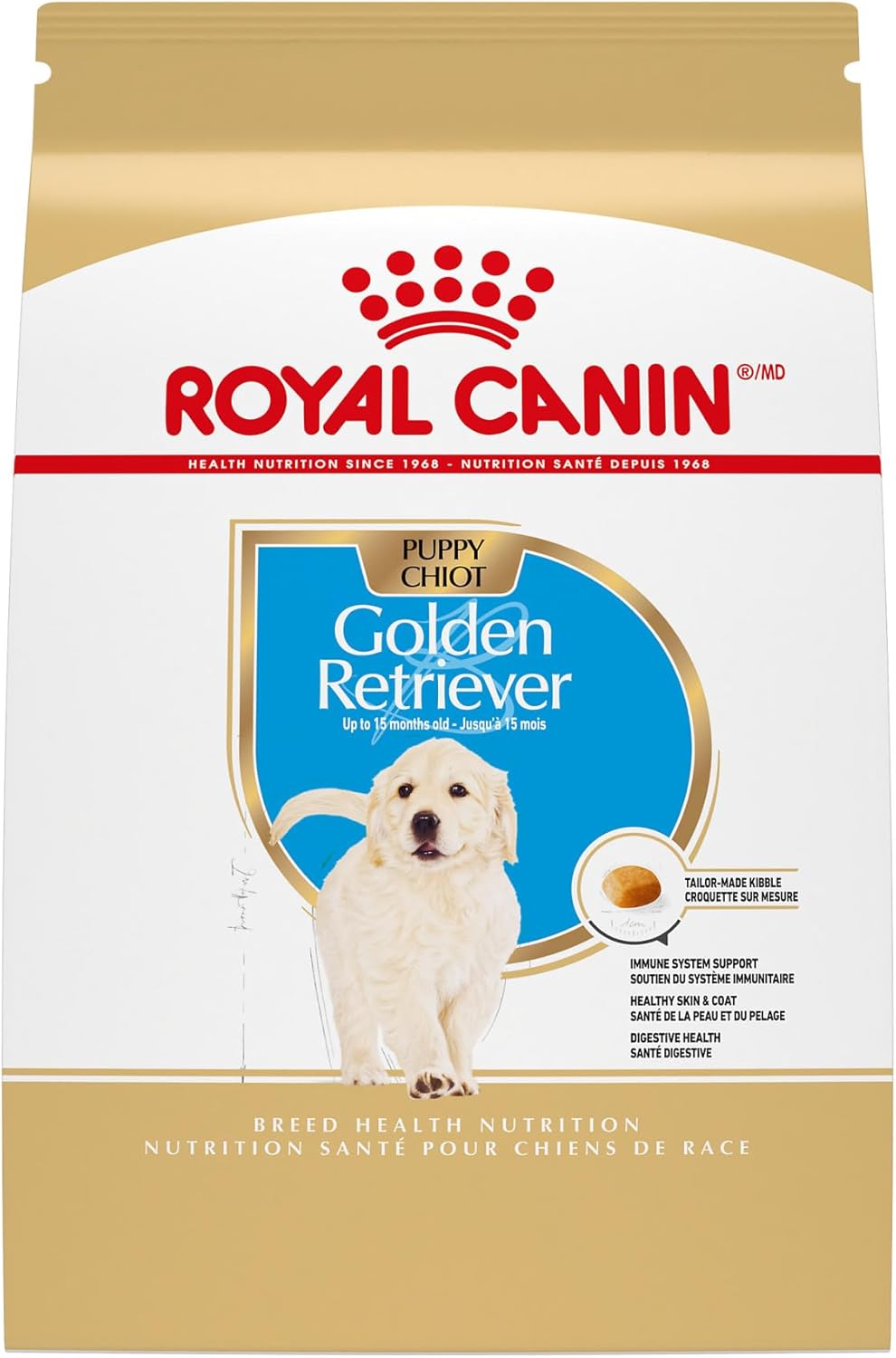
Royal Canin Golden Retriever Puppy 30 lb
Best Overall Puppy Food for Golden Retrievers
| Flavor | Chicken |
|---|---|
| Age Range Description | Puppy |
| Breed Recommendation | Golden Retriever |
| Dog Breed Size | Large |
| Item Form | Pellet |
Royal Canin Golden Retriever Puppy is a breed-specific dry kibble designed for Golden Retriever puppies from 8 weeks to 15 months. The formula uses a specialized kibble shape made to fit a Golden Retriever puppy's straight muzzle and scissor bite, encouraging chewing and easing intake, while protein, prebiotics, and added antioxidants support digestion and immune development. Omega fatty acids including EPA and DHA plus targeted nutrients like glucosamine and chondroitin support skin, coat condition and joint development in a large-breed growth phase. In daily use it functions as a complete feeding solution for breeders and owners who want a tailored, science-backed diet rather than a generic puppy food. Practical benefits include consistent stool quality from prebiotics and high-quality proteins and easier feeding thanks to the breed-tailored kibble geometry. Limitations to note are the inclusion of some common cereal ingredients and chicken by-product meal in the ingredient list, which may concern owners preferring grain-free or novel-protein formulas, and that this is a large 30 lb bag intended for multi-month feeding rather than trial-sized sampling.
Best for: Owners who want a puppy food specifically formulated for Golden Retrievers and prioritize tailored nutrition to support growth, digestion, immune health, and coat condition.
Less Ideal for: People seeking grain-free diets, novel-protein recipes for food sensitivities, or those who prefer to trial a small bag before committing to a large quantity.
- Breed-specific kibble shape and texture tailored for Golden Retriever puppy bite
- Formulated to support immune development with antioxidants and vitamin E
- Contains prebiotics and high-quality proteins to promote digestive health and stool quality
- Includes EPA and DHA plus skin-and-coat nutrients to support coat condition
- Large 30 lb bag suitable for ongoing feeding of a growing large-breed puppy
- Contains grain ingredients and chicken by-product meal that some buyers avoid
- Large bag size is not convenient for first-time testing or small households
Verdict: The best overall puppy food for Golden Retrievers that balances breed-appropriate nutrients, digestibility, and growth-stage calorie needs for healthy development.
Purina ONE Plus Healthy Puppy Dry Food 8 lb
Best Budget Puppy Food for Golden Retrievers

| Flavor | Chicken |
|---|---|
| Age Range Description | Puppy |
| Item Form | Blended, Kibble, Crunchy, Morsels |
| Animal Food Ingredient Claim | No Artificial Colors, No Artificial Flavors |
| Unit Count | 128 Ounce |
Purina ONE +Plus Healthy Puppy is a high-protein dry kibble formulated for puppies and reproducing females, with real chicken listed first and added DHA to support vision and brain development. It is fed as a complete diet for growth, typically offered in multiple small meals for young puppies and transitioned gradually over 7 to 10 days from a previous food. Notable features include crunchy kibble with meaty morsels, a blend of four antioxidant sources for immune support, natural sources of glucosamine for joint support, and added vitamins and minerals for bone and heart development. The formula emphasizes digestibility and targeted nutrients such as omega-6 fatty acids for skin and coat and calcium for teeth. Practical benefits are straightforward: familiar ingredient sourcing, broad breed suitability, and clear feeding guidance from Purina that makes portioning and transition easier. Limitations to consider are the inclusion of some common cereal and by-product ingredients rather than an all-meat formula and that kibble texture and shape may not suit extremely small toy-breed puppies without monitoring portion size and chewing ability.
Best for: Buyers seeking a balanced, growth-focused puppy formula that covers core developmental needs without specialty ingredient claims and who want a broadly suitable, easy-to-feed dry food.
Less Ideal for: Owners specifically looking for grain-free, single-protein, or limited-ingredient formulas for food-sensitive puppies should consider alternatives tailored to those needs.
- Real chicken is the first ingredient to provide high-quality protein for growth
- Contains DHA and antioxidants to support brain, vision, and immune development
- Includes natural glucosamine and calcium to support joints and bone/teeth development
- Formulated for digestive tolerability and made without artificial flavors or preservatives
- Clear feeding instructions and broad suitability for all breed sizes
- Contains grain ingredients and chicken by-product meal rather than an all-first-meat-only ingredient list
- Kibble size and texture may require adjustment for very small toy-breed puppies
Verdict: The best budget puppy food for Golden Retrievers that delivers adequate protein, calories, and basic nutrient balance at a lower price for cost-conscious owners.
Fromm Large Breed Puppy Gold 30 lb
Best Premium Puppy Food

| Flavor | Chicken |
|---|---|
| Age Range Description | Puppy |
| Breed Recommendation | Large Breeds |
| Unit Count | 480 Ounce |
| Special Ingredients | Chicken, Chicken Meal |
Fromm Large Breed Puppy Gold is a dry kibble formulated specifically for puppies expected to mature above 50 pounds, using chicken, chicken meal and other animal proteins as leading ingredients. It is intended for daily feeding to support growth and development and includes added probiotics and salmon oil to aid digestion and support coat health. The recipe uses whole grains and a mix of proteins (chicken, duck, lamb) for palatability and balanced amino acids, and the manufacturer highlights formulation to meet AAFCO profiles for growth and gestation/lactation. Practical benefits for large‑breed pups include a recipe designed to manage slower, steadier growth with nutrient levels tuned for large breeds, plus probiotic support for sensitive stomachs. Limitations to note are that the bag lists whole grains and multiple protein sources rather than a single limited ingredient, which may not suit puppies with specific grain or protein sensitivities, and bag handling and storage are typical concerns with a 30 lb size for smaller households.
Best for: Buyers seeking a nutritionally complete large-breed puppy formula that emphasizes controlled growth and digestive support for growing giant or large-breed puppies.
Less Ideal for: Owners who need a grain-free or single-protein limited ingredient diet, or who prefer smaller bag sizes for storage and freshness.
- Formulated specifically for large breed puppies to support steady, size-appropriate growth
- High-quality animal proteins listed first for amino acid and muscle support
- Includes probiotics to aid digestion and salmon oil to support skin and coat
- Made to meet AAFCO nutrient profiles for growth and gestation/lactation
- Contains multiple grains and proteins so not ideal for limited-ingredient or grain-free elimination diets
- 30 lb bag may be bulky for small households to store and keep fresh
Verdict: The best premium puppy food for owners willing to invest in higher-quality ingredients, enhanced nutrient profiles, and stricter sourcing or formulation standards.
Solid Gold Large Breed Bison Puppy Food 22 lb
Best High-Protein Puppy Food

| Flavor | Large Breed Puppy Bison |
|---|---|
| Item Form | Kibble |
| Special Ingredients | bison, superfoods, probiotics, DHA |
| Age Range Description | Puppy |
| Allergen Information | Wheat Free |
Solid Gold Large Breed Bison Puppy Food is a dry kibble aimed at supporting growth, digestion, and development in large-breed puppies. The formula lists pasture-raised bison as the first ingredient and includes added蛋 DHA, omega-rich oils, and calcium for bone and brain development, while whole grains and fiber sources plus probiotics help stool quality and gut health. In practice you would feed measured portions from the bag as a complete meal for active puppies such as golden retrievers, pairing it with fresh water and adjusting serving size as they grow. Notable practical benefits include a protein-forward recipe to support muscle growth, probiotics for sensitive stomachs, and whole-food additions like blueberries and pumpkin for micronutrients. Limitations are that the kibble is a large-breed-specific formula so it may not suit small-breed puppies or adult maintenance diets, and some dogs with grain-free preferences might avoid the brown rice and barley. Packaging is a standard bag format that requires dry, cool storage to keep probiotics viable.
Best for: Buyers of large-breed puppies who want a protein-dense dry food that supports robust muscle and bone development while prioritizing digestive health.
Less Ideal for: Owners seeking a grain-free formula, small-breed puppy recipes, or a long-term adult maintenance diet should consider other options.
- Real pasture-raised bison as first ingredient for high-quality protein
- Includes DHA and calcium targeted to large-breed puppy development
- Contains probiotics and prebiotic fiber for digestive support
- Whole grains and superfoods provide additional vitamins and antioxidants
- Contains grains so not suitable for grain-free feeding plans
- Formulated specifically for large-breed puppies, not for small breeds or adult dogs
Verdict: The best high-protein puppy food for puppies that need extra protein for robust growth, active play, or lean-muscle development.
Purina Pro Plan Puppy Sensitive Salmon 4 lb
Best Limited-Ingredient Puppy Food

| Flavor | Salmon & Rice |
|---|---|
| Item Form | Dry |
| Manufacturer recommended age | 1 month and up |
| Unit Count | 64 Ounce |
Purina Pro Plan Sensitive Skin & Stomach Puppy Salmon & Rice is a dry puppy formula designed to support digestive health and skin development in young dogs. It uses real salmon as the first ingredient and includes rice and other easily digestible carbohydrates to help maintain stool quality, while added live probiotics and natural prebiotic fiber promote healthy gut bacteria. The formula also supplies DHA from fish oil for brain and vision development, omega-6 fatty acids and vitamin A for skin and coat, and a blend of vitamins and minerals for overall growth. In everyday use you would feed smaller, frequent meals for young puppies and follow the gradual transition guidance to avoid upset tummies. Practical strengths are the focus on digestive tolerance and targeted nutrients for growth, but the 4 lb bag size means more frequent repurchase for multi-puppy households and the recipe is not grain-free. For buyers prioritizing a high-fiber, probiotic-supported puppy diet that still delivers complete growth nutrition, this is a reliable option.
Best for: Pet owners who want a balanced, growth-focused puppy food that emphasizes digestive tolerance and gut support for everyday feeding.
Less Ideal for: Owners specifically seeking grain-free or limited-ingredient elimination diets should consider alternative formulas designed for those needs.
- Real salmon as the first ingredient for animal protein and omega fatty acids
- Guaranteed live probiotics plus natural prebiotic fiber to support digestion
- Includes DHA from fish oil to support brain and vision development
- Formulated to nourish skin and coat with omega-6s and vitamin A
- 4 lb bag may require frequent replacement for larger or multiple puppies
- Contains grains so not suitable for owners seeking grain-free recipes
Verdict: The best limited-ingredient puppy food for puppies with ingredient sensitivities or digestive issues who benefit from a shorter, more transparent ingredient list.
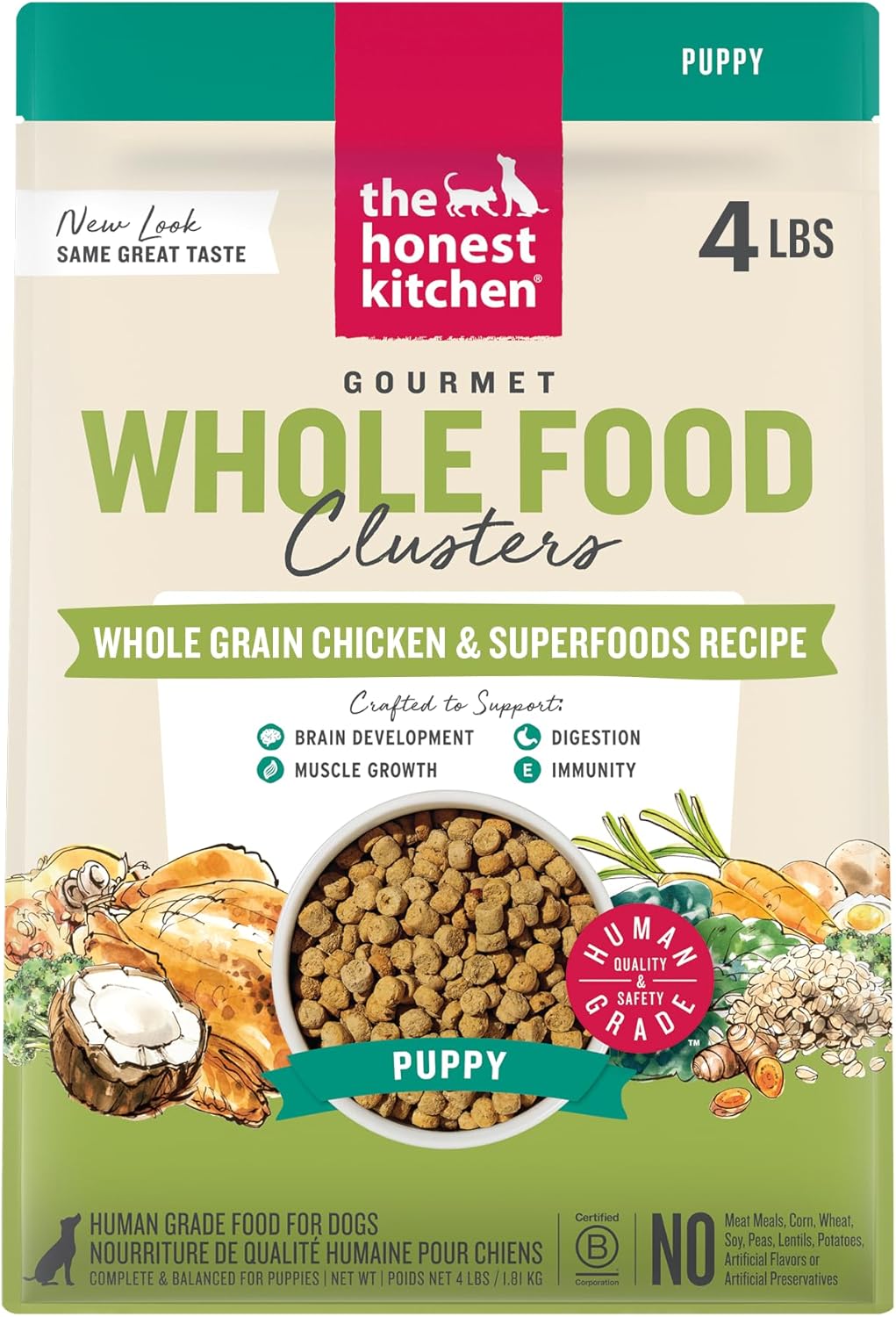
The Honest Kitchen Whole Grain Puppy Clusters 4 lb
Best Small-Bag Puppy Food
| Flavor | Chicken & Superfoods |
|---|---|
| Age Range Description | Puppy |
| Item Form | Dry |
| Unit Count | 64 Ounce |
| Animal Food Ingredient Claim | Human-Grade |
The Honest Kitchen Whole Grain Chicken Puppy Clusters are bite-sized, cold-pressed clusters made to human-grade standards and formulated for puppy growth needs. They use cage-free chicken as the first ingredient along with whole grains, vegetables, DHA-rich fish oil, and added probiotics, so the kibble doubles as a complete meal, a topper, or convenient training rewards. The cold-press and roast process preserves flavor and nutrients compared with high-heat extrusion, and the clusters are small enough for puppies and easy to portion as you test or rotate formulas. Practical benefits include recognizable ingredients, extra probiotics for digestion, and DHA to support brain and eye development during early growth. The 4 lb bag size fits the pick intent well for trying a new recipe or rotating diets without committing to a large open bag. Limitations are that the smaller bag means more frequent repurchasing for larger litters or fast-growing large-breed puppies, and puppies with grain sensitivities will need a grain-free alternative.
Best for: Owners who want a small-bag, high-quality puppy formula to try, rotate, or use as a topper while avoiding long-term storage of open bags.
Less Ideal for: Households with multiple large-breed puppies that consume a lot of food or owners needing a grain-free formula for a sensitive pup.
- Human-grade ingredients with cage-free chicken as the first ingredient
- Cold-pressed clusters that preserve flavor and nutrients
- Added DHA and extra probiotics to support brain development and digestion
- Bite-sized clusters suitable for feeding, topping, or using as training treats
- 4 lb bag requires frequent repurchase for larger or fast-growing puppies
Verdict: The best small-bag puppy food for owners who want to test a formula, rotate diets, or avoid long-term storage of open food bags.
Purina Pro Plan Large Breed Puppy Chicken & Rice 34 lb
Best Large-Bag Puppy Food

| Weight | 34 lb |
|---|---|
| Flavor | Chicken & Rice |
| Breed recommendation | Large Breeds |
| Item form | Dry |
| Animal food nutrient content claim | High Protein |
Purina Pro Plan Large Breed Puppy Chicken & Rice is a high-protein dry formula designed to support growth and development in puppies expected to exceed 50 pounds as adults. It is typically fed as a staple kibble for large-breed puppies and can be served moistened for weaning puppies or dry for older pups. The formula lists real chicken first, includes DHA from fish oil to support brain and vision development, and delivers added vitamins and omega-6s for skin and coat health. Glucosamine-containing ingredients and targeted nutrients aim to support bone and joint development in fast-growing large-breed dogs. In practical use the 34 lb bag reduces the need for frequent repurchasing and simplifies feeding schedules for multi-puppy or high-consumption households. Potential limitations are that it is a calorie-dense, large-breed puppy formula so portion control is important to avoid overfeeding, and some ingredient choices include grain and by-product meals which some buyers avoid. Feed according to the bag chart and consult your veterinarian when transitioning or adjusting amounts for ideal growth.
Best for: Buyers with large-breed puppies who need a vet-backed, growth-focused formula supplied in large bags to cut repurchase frequency and lower cost per serving.
Less Ideal for: Owners who prefer grain-free or limited-ingredient diets, or those who want boutique single-protein formulations should consider alternatives.
- Large 34 lb bag reduces frequency of reorders for busy households
- Real chicken listed as the first ingredient for protein-focused growth
- Contains DHA from fish oil to support brain and vision development
- Includes glucosamine sources and nutrients targeted for bone and joint development
- Contains grain and poultry by-product meal which some owners prefer to avoid
- Calorie-dense formulation requires careful portion control to prevent excess growth
Verdict: The best large-bag puppy food for households that go through puppy food quickly and want lower cost per serving and fewer reorders.
Choosing the Right Puppy Food Golden Retriever: Key Factors to Consider
Protein Quality and Amount
Protein supplies the building blocks for muscle and tissue during rapid puppy growth. Look for named animal proteins high on the ingredient list and complete amino acid profiles that support lean mass rather than fat. Protein percentage should be appropriate for a large-breed puppy; too low can hinder development, while excessively high levels combined with surplus calories can lead to abnormal growth.
Digestible protein sources help ensure pups absorb necessary amino acids rather than passing unutilized material that can strain digestion. For Golden retriever puppies, consistent protein quality also supports immune development and energy for play and training.
Calorie Density and Growth Management
Calorie density determines how much food a puppy needs per meal and influences the rate of weight gain. Large-breed puppies are prone to too-rapid growth if calorie intake is excessive, which increases the risk of joint and bone problems. Choose formulas designed for large-breed growth that provide moderate calorie density and clear feeding guidelines by weight and age.
Controlled energy intake paired with proper portioning helps maintain steady linear growth and reduces stress on developing joints. Consider your puppy's activity level when adjusting portions and monitor weight and body condition regularly.
Joint and Bone-support Nutrients
Golden retrievers are predisposed to hip and elbow issues, so early nutritional support for joints is important. Key nutrients include balanced calcium and phosphorus ratios for skeletal growth, glucosamine and chondroitin for cartilage support, and long-chain omega-3 fatty acids for joint and joint capsule health. These components do not prevent genetic conditions but can support healthier development and mobility when combined with proper growth rate.
Pay attention to guaranteed analyses and supplement inclusion. Over-supplementing calcium, in particular, can be harmful, so rely on formulations intended for large-breed puppies rather than free-form additions without veterinary guidance.
Digestibility and Gastrointestinal Tolerance
Puppies often have sensitive stomachs while their digestive systems mature. Highly digestible formulas with quality protein sources, moderate fiber, and gentle carbohydrates reduce gas, loose stools, and nutrient loss. Better digestibility means a puppy absorbs more nutrients from smaller portions, which helps manage calorie intake while meeting growth needs.
If your puppy has a known sensitivity, look for limited-ingredient or novel-protein formulations, and introduce new food gradually over several days to monitor tolerance.
Omega Fatty Acids and Skin Coat Condition
A healthy coat and skin indicate overall nutritional status and inflammatory balance. Omega-3 fatty acids, particularly EPA and DHA, support skin health, cognitive development, and joint function. They also help reduce skin inflammation that can make puppies uncomfortable and distract from training.
Formulas with added fish oil or other omega-3 sources are useful, especially if your puppy shows dry skin or a dull coat. Expect improvements with consistent feeding over several weeks rather than immediate changes.
Kibble Size, Texture, and Palatability
Kibble shape and size affect how easily a Golden retriever puppy can pick up and chew food, which influences feeding speed and dental development. Appropriately sized pieces encourage chewing rather than gulping, reducing choking risk and helping maintain oral health. Texture and palatability also matter for picky eaters and for pairing with wet toppers or training treats.
Choose a kibble your puppy can manage comfortably, and consider moistening dry food briefly during transitions. Consistent acceptance over time matters more than novelty flavors.
How Much Should My Golden Retriever Puppy Eat Each Day?
Daily feeding amounts depend on age, current weight, and activity level. Most large-breed puppy formulas include feeding tables that suggest portions by weight and age; use those as a starting point and adjust based on body condition and growth rate.
Monitor your puppy's body condition score: you should be able to feel ribs with a light covering and see a visible waist behind the ribs when viewed from above. If the puppy is gaining too quickly or becoming round, reduce portions slightly and recheck weekly.
- Weigh and measure your puppy regularly to track growth.
- Split daily portions into three to four meals for young puppies to stabilize energy and digestion.
- Adjust portions for very active or very sedentary pups under veterinary guidance.
When Should I Transition From Puppy to Adult Food?
Large-breed dogs generally transition later than small breeds because their skeletal growth continues for a longer period. Many veterinarians recommend keeping Golden retriever puppies on a large-breed puppy formula until around 12 to 18 months, depending on growth and maturity.
Watch for slowed growth and a more adult body condition as cues that a transition is appropriate. Make any dietary change gradually over 7 to 10 days to minimize gastrointestinal upset.
- Consult your veterinarian if your puppy has special growth concerns before changing formulas.
- Phase in adult food by increasing the new food by about 25% every two to three days.
What if My Puppy Is a Picky Eater?
Picky eating can reflect teething, stress, boredom, or sensitivity to an ingredient. Start by ruling out medical causes with a vet if appetite changes are dramatic or persistent. For modest pickiness, try warming the food slightly or offering a high-quality topper for a short transition period.
Avoid continually supplementing with table scraps or high-calorie toppers that can unbalance the diet and encourage poor habits. Instead, use palatability boosters sparingly while you determine whether a different balanced formula is necessary.
- Introduce new foods gradually and keep meal times consistent.
- Use short training sessions and schedule regular meal windows rather than free feeding to encourage appetite.
How to Handle Food Allergies or Sensitivities
Food allergies in puppies are less common than other causes of skin and digestive issues but they do occur. Typical signs include chronic itching, recurrent ear infections, or persistent loose stools. If you suspect a food sensitivity, document symptoms and consult your veterinarian before changing formulas.
A supervised elimination trial with a limited-ingredient or novel-protein formula can help identify the trigger. Make changes one at a time and allow several weeks for improvement before drawing conclusions.
- Work with your vet to rule out parasites, environmental allergies, and infections before assuming a food allergy.
- Keep a feeding and symptom diary to track improvements during trials.
Can Supplements Help My Puppy's Joint Health?
Nutritional supplements like glucosamine and omega-3s are commonly added to puppy formulas to support joint tissues. While supplements can complement a balanced diet, they are not substitutes for a formula designed for large-breed growth and should be used with veterinary guidance.
If your puppy has an early orthopedic concern or a family history of joint disease, consult your veterinarian before adding supplements so doses and interactions are appropriate for the pup's age and weight.
- Avoid free-form calcium supplementation unless prescribed by a vet.
- Track any changes when starting a supplement and report adverse reactions promptly.
Feeding Routines That Support Training and Behavior
Structured feeding supports housetraining, obedience, and consistent energy levels. Use meal times as predictable events and leverage measured kibble for portion control during training sessions. For intense training days, distribute calories across meals and rewards to prevent overfeeding.
Avoid using the main meal solely as a training reward; reserve some kibble for practice to keep training positive without disrupting dietary balance.
- Use a consistent schedule: morning, midday, late afternoon, and evening for young puppies.
- Keep high-value treats for special training and use portioned kibble for routine rewards.
How We Chose the Best Puppy Food Golden Retriever
We focused on criteria that matter specifically for Golden retriever puppies and the nutritional challenges they present. First, we prioritized protein quality and quantity that supports lean muscle growth while avoiding excessive calories that can accelerate bone growth. Second, we looked at joint-support nutrients such as controlled levels of calcium and phosphorus, glucosamine, and omega-3 fatty acids, because early joint health influences long-term mobility. Third, digestibility mattered: formulas with highly digestible proteins and measured fiber levels help maintain stool quality and nutrient absorption. Fourth, ingredient transparency and absence of fillers that provide little nutritional value were considered to ensure consistent nutrient delivery. Fifth, formulas that offer appropriate calorie density and portion guidance for large-breed puppies were favored to reduce the risk of rapid weight gain. We excluded foods intended for adult maintenance or small-breed puppies and any formulas lacking clear nutrient profiles for large-breed growth. Our picks prioritize balanced growth, joint development, and gastrointestinal tolerance rather than marketing claims. The result is a focused shortlist built from these product-specific filters so you can compare formulas that meet the real needs of Golden retriever puppies.
Our full evaluation process is outlined in our review methodology.
FAQ
How much protein does a Golden retriever puppy need?
Large-breed puppies generally need moderate to high-quality protein to support muscle growth. Exact targets vary by formula, but focus on named animal proteins and overall digestibility rather than a single percentage number.
Is grain-free puppy food better for Golden retrievers?
Grain-free is not inherently better and is only necessary if your puppy has a diagnosed sensitivity. Many balanced formulas with grains provide appropriate nutrients and digestibility for growth.
Can I mix wet food with dry puppy food?
Yes. Mixing a little wet food can improve palatability and hydration, especially during transitions. Make sure the combined feeding still meets calorie and nutrient targets and introduce changes gradually.
When should I be concerned about my puppy's weight?
Be concerned if weight gain is very rapid, the puppy appears round rather than lean, or mobility seems impaired. Consult your veterinarian for an assessment and adjust feeding to slow growth if advised.
Are puppy formulas for large breeds different from regular puppy food?
Yes. Large-breed puppy formulas are formulated with controlled calorie density and balanced calcium and phosphorus ratios to manage growth rate. These differences help reduce stress on developing joints compared with generic puppy formulas.
Final Verdict
Prioritize steady growth, joint-support nutrients, and digestibility when choosing food for a Golden retriever puppy. Balance protein quality with controlled calories and appropriate calcium levels to support skeletal development while reducing the risk of rapid weight gain. Monitor body condition regularly and adjust portions or formula based on growth, activity, and veterinary advice. With attention to these tradeoffs you can choose a puppy food that supports healthy development and long-term mobility.

