

Finding the right food for a small-breed puppy with a sensitive stomach is one of the most important choices you will make for early health and growth. Puppies have higher calorie and nutrient needs per pound than adult dogs, and small breeds can be particularly prone to digestive upset. The wrong formula can cause soft stools, gas, or irregular appetite, while the right one supports steady weight gain, healthy stool, and energy for play. This guide shortlists seven top puppy foods tailored for small breeds with sensitive stomachs. We evaluated ingredient clarity, protein sources, digestibility, and formulation details that matter for small puppies. Read on to see how each option addresses gentle digestion, nutrient density, and practical feeding considerations before you decide which one to try first.
Top Picks at a Glance
| Best Overall Puppy Food for Small Breeds with Sensitive Stomachs A balanced, well-tolerated formula for most small puppies | Hill's Science Diet Puppy Sensitive Stomach & Skin |  |
| Best Budget Puppy Food for Small Breeds with Sensitive Stomachs A low-cost formula that still prioritizes easy digestion | Nutrish Puppy Chicken & Brown Rice 5 lb |  |
| Best Small-Kibble Puppy Food Kibble sized and shaped for tiny jaws and chewing comfort | Royal Canin X-Small Puppy Dry Food 3 lb |  |
| Best Limited-Ingredient Puppy Food A shorter ingredient list to reduce common allergens and triggers | Natural Balance Limited Ingredient Salmon & Sweet Potato |  |
| Best Probiotic-Enriched Puppy Food Formulas with added probiotics and digestive-support nutrients | Bil-Jac Small Breed Puppy Food 6 lb |  |
| Best High-Protein Puppy Food Higher protein levels to support growth and lean muscle development | Nutro Ultra High Protein Puppy Food 3.5 lb |  |
| Best Premium Puppy Food Higher-end formulas emphasizing quality ingredients and formulation care | Merrick Lil' Plates Puppy Food 12 lb |  |
Hill's Science Diet Puppy Sensitive Stomach & Skin
Best Overall Puppy Food for Small Breeds with Sensitive Stomachs

| Flavor | Salmon & Brown Rice |
|---|---|
| Age Range Description | Puppy |
| Item Form | Dry Food |
| Unit Count | 64 Ounce |
| Animal Food Diet Type | Limited Ingredient |
Hill's Science Diet Puppy Sensitive Stomach & Skin is a dry puppy formula designed to reduce digestive upsets while supporting skin and coat during growth. It is used as an everyday puppy food or as a transitional diet when pups have mild stomach sensitivity; feeding instructions on the bag guide gradual switching. The recipe lists salmon as the first ingredient and includes prebiotic fiber to support a balanced gut microbiome, plus DHA from fish oil for brain and eye development and vitamin E and omega fatty acids for skin health. Practical benefits include easier digestion for sensitive puppies, nutrients targeted at immune and cognitive development, and a single-source fish protein focus that can simplify ingredient tracking. Limitations are that it is a dry kibble so dogs that require wet food or very limited-ingredient veterinary prescriptions may need other options, and the formula still contains multiple grains and added ingredients that some owners avoiding certain grains or novel-protein approaches might not prefer.
Best for: Buyers who prioritize a vet-recommended, digestive-friendly everyday puppy food that also supports skin and coat health for growing dogs.
Less Ideal for: Owners seeking a strict novel-protein, grain-free, or veterinary-prescription elimination diet should consider specialized formulas instead.
- Prebiotic fiber to support gut microbiome and help reduce occasional digestive upset
- Salmon is the first ingredient, providing a high-quality fish protein and DHA for development
- Added vitamin E and omega fatty acids to nourish skin and promote a healthy coat
- Clinically proven antioxidants including vitamins C and E to support immune health
- Contains multiple grains and shared protein sources, so not a novel-protein or grain-free prescription option
- Dry kibble format may not suit puppies needing canned diets or strict veterinary therapeutic feeds
Verdict: The best overall pick for small-breed puppies with sensitive stomachs, offering balanced nutrition, gentle ingredients, and consistent digestibility for everyday growth and health.
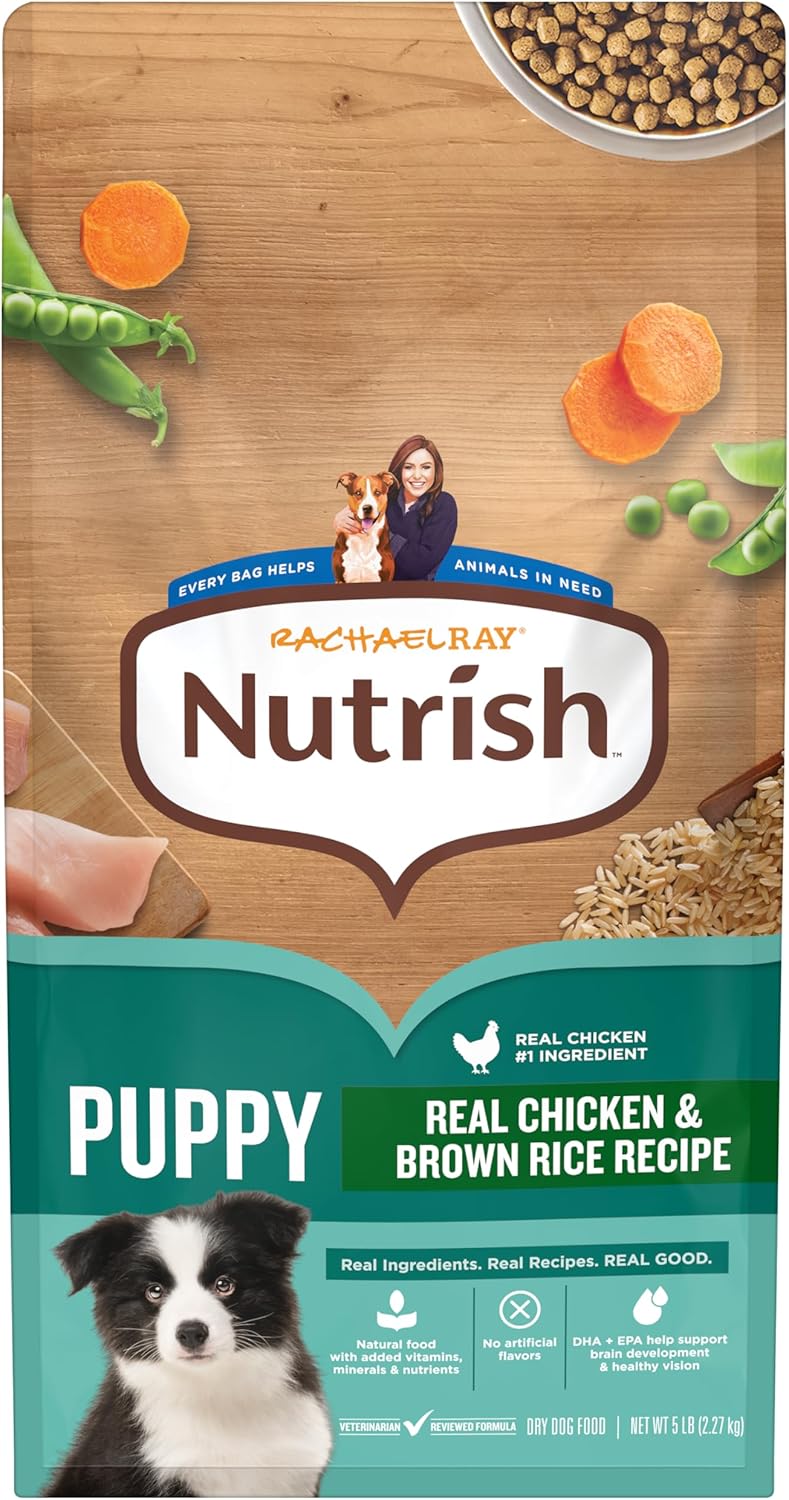
Nutrish Puppy Chicken & Brown Rice 5 lb
Best Budget Puppy Food for Small Breeds with Sensitive Stomachs
| Flavor | Chicken |
|---|---|
| Age Range Description | Puppy |
| Item Form | Chunk |
| Unit Count | 80 Ounce |
This 5 lb bag of Rachael Ray Nutrish Puppy Chicken & Brown Rice is a straightforward, budget-minded dry food formulated for growing puppies. It uses real chicken as the number one ingredient, plus chicken meal and brown rice to provide a familiar protein-and-grain base, and includes DHA and EPA from fish oil for brain and vision support. The kibble is intended for daily feeding and can be moistened for younger pups; feeding charts on the bag guide portion sizes by age and weight. The recipe is free of added artificial colors and flavors and is made in the USA with globally sourced ingredients, which helps reassure buyers focused on basic ingredient standards. On the downside the formula contains common fillers like corn and soybean meal and includes multiple grain ingredients, so it is not suited to owners seeking grain-free or hyper-premium limited-ingredient diets. For budget-conscious puppy owners who want a complete, vet-reviewed staple with developmental nutrients, this delivers reliable nutrition without specialty pricing.
Best for: Puppy owners on a tight budget who still want a complete, vet-reviewed dry food with developmental nutrients and recognizable primary ingredients.
Less Ideal for: Owners seeking grain-free, limited-ingredient, or premium boutique puppy formulas should consider alternatives with different ingredient profiles.
- Real chicken listed as the first ingredient for primary animal protein
- Includes DHA and EPA (menhaden fish oil) to support brain and vision development
- Veterinarian-reviewed formula and feeding guide tailored for growing puppies
- No added artificial colors or flavors and made in the USA
- Contains grain and common plant-based fillers such as corn and soybean meal
- Smaller 5 lb bag requires more frequent repurchasing for multi-puppy households
Verdict: The best budget option for owners seeking an affordable puppy food that still focuses on gentle ingredients and reliable digestibility for small-breed puppies.
Royal Canin X-Small Puppy Dry Food 3 lb
Best Small-Kibble Puppy Food

| Age Range | Puppy 2 to 10 months |
|---|---|
| Breed Size Recommendation | X-Small / Small breeds |
| Item Form | Kibble |
| Flavor | Chicken & Vegetable |
| Unit Count | 48 Ounce |
Royal Canin X-Small Puppy is a dry kibble made specifically for extra-small breed puppies, with a crunchy, tiny kibble designed to be easy for very small mouths to pick up and chew. It is intended for puppies 2 to 10 months with an expected adult weight under about 8 pounds and is used as a daily complete diet or mixed with Royal Canin wet puppy formulas for texture variety. The formula highlights DHA and omega-3s for brain development, antioxidants for immune support, and a blend of prebiotics and digestible proteins to promote gut health. Practical benefits include portion-sized nutrition tailored to high energy needs during growth and a kibble texture that can help dental health by encouraging chewing. Limitations are that it is sized and balanced for extra-small breeds only, so growing puppies expected to exceed the target adult weight will need a different formula, and the ingredient list includes grains and by-product meal which some buyers may avoid. The 3 lb bag is convenient for trialing a Westie puppy but may require more frequent repurchase than larger bags for multi-puppy households.
Best for: Owners of West Highland Terrier puppies and other very small-mouthed breeds who prioritize kibble size and targeted growth-stage nutrition to make feeding and chewing comfortable.
Less Ideal for: Owners whose puppies are expected to exceed the formula's target adult weight or buyers seeking grain-free or novel-protein ingredient lists should consider alternative formulations.
- Kibble sized and shaped for very small mouths to make eating easier for Westie puppies
- Contains DHA and omega-3 fatty acids to support brain development
- Includes prebiotics and highly digestible proteins to promote healthy digestion
- Antioxidants like vitamins E and C to support immune system development
- Available in a 3 lb bag that is practical for testing or small-breed households
- Formulation uses poultry by-product meal and grains, which some owners prefer to avoid
- Sized specifically for extra-small breeds so not suitable if the puppy will grow beyond the target adult weight
Verdict: The best small-kibble puppy food for small-breed pups who need appropriately sized pieces to encourage proper chewing and reduce gagging or choking risk.
Natural Balance Limited Ingredient Salmon & Sweet Potato
Best Limited-Ingredient Puppy Food

| Flavor | Salmon & Sweet Potato |
|---|---|
| Item Form | Pellet |
| Animal Food Diet Type | Limited Ingredient |
| Unit Count | 64 Ounce |
| Breed Recommendation | Small Breeds |
This Natural Balance Limited Ingredient Salmon & Sweet Potato recipe is a grain-free dry food designed for small-breed adult dogs and dogs with simplified dietary needs. It uses salmon and salmon meal as the primary animal proteins and a short ingredient list intended to reduce exposure to common irritants like corn, wheat, and soy. In everyday use it serves as a complete daily feed for small dogs and can also be used during an elimination trial because the formula focuses on a single animal protein and limited carbohydrate sources such as sweet potato and potato. Practical benefits include ingredients chosen to support digestion and skin and coat health, added vitamins and minerals for balanced nutrition, and convenient bagged packaging for daily feeding. Limitations to note are that this is a small-breed formula so kibble size and nutrient balance are aimed at smaller dogs, and while the ingredient list is simplified it still contains items like yeast, canola oil, and mixed tocopherols that some owners may avoid during strict elimination diets.
Best for: Owners of Miniature Schnauzers who suspect ingredient sensitivities and want a short, single-protein diet tailored to small-breed needs and easy use during an elimination trial.
Less Ideal for: Families needing a truly novel-protein or prescription hypoallergenic formula for medically diagnosed food allergies, or owners of medium and large breeds seeking a different nutrient profile.
- Single primary animal protein (salmon) which simplifies ingredient exposure during elimination trials.
- Grain-free formula with no corn, wheat, or soy listed to reduce common dietary irritants.
- Formulated for small breeds with nutrients to support skin, coat, and digestive health.
- Includes added vitamins, minerals, and salmon meal for balanced daily nutrition.
- Formulated specifically for small breeds, so nutrient profile and kibble size may not suit larger dogs.
- Contains multiple non-protein ingredients (dried yeast, canola oil, mixed tocopherols) that could still trigger sensitivities in highly reactive dogs.
Verdict: The best limited-ingredient puppy food for owners wanting a simplified formula to identify and avoid likely dietary triggers while still meeting growth needs.
Bil-Jac Small Breed Puppy Food 6 lb
Best Probiotic-Enriched Puppy Food

| Flavor | Chicken |
|---|---|
| Age Range Description | Puppy |
| Specific Uses For Product | Skin and Coat Health |
| Special Ingredients | grain-free |
| Package Size Name | 6 lb |
Bil-Jac Small Breed Puppy Food is a dry kibble made specifically for small-breed puppies and formulated to support rapid early growth while being easy to chew. The recipe lists fresh chicken as the first ingredient and the brand notes that 5 pounds of fresh chicken go into each 6-pound bag, which translates to higher animal-protein content for developing muscles. Oatmeal and yams provide gentle, digestible fiber and the formula includes three strains of canine-specific probiotics and vitamins C and E to support digestion and immune development. The bites are described as small, soft, and porous, helping tiny teeth pick them up and transition from weaning to solid food. Practical benefits include concentrated nutrition for high-energy little breeds and ingredients aimed at soothing sensitive stomachs. Limitations are that the formula contains some ingredients like corn meal and chicken by-products, and it uses mixed preservatives such as BHA, which some buyers prefer to avoid. For puppies with veterinarian-directed dietary needs, consult your vet before switching.
Best for: Buyers seeking a growth-focused, easy-to-chew kibble for small-breed puppies that need concentrated nutrition and gentle fiber for sensitive stomachs.
Less Ideal for: Owners who require a strictly whole-meat or preservative-free diet for medical reasons or who prefer grain-free formulations should consider alternatives.
- Fresh chicken listed as primary ingredient and concentrated protein for growth
- Small, soft porous bites designed for tiny mouths and easy chewing
- Contains three strains of canine-specific probiotics to support digestion
- Includes vitamin C and E for immune support and omega fatty acids for coat health
- Contains corn meal and chicken by-products rather than exclusively whole-muscle meat
- Uses mixed preservatives including BHA which some buyers avoid
Verdict: The best probiotic-enriched puppy food for puppies that benefit from extra gut support to promote regular digestion and recover more quickly from stomach upsets.
Nutro Ultra High Protein Puppy Food 3.5 lb
Best High-Protein Puppy Food

| Flavor | Chicken, Lamb & Salmon |
|---|---|
| Age Range Description | Puppy |
| Item Form | Dry Kibble |
| Unit Count | 56 Ounce |
| Special Ingredients | Chicken, Lamb, Salmon |
Nutro Ultra High Protein Puppy Food is a kibble-style puppy diet built around chicken as the first ingredient plus lamb and salmon meals to boost protein and flavor. It is intended for daily feeding of growing puppies and includes DHA for brain and eye development, omega fatty acids for skin and coat support, and a 14-superfood medley of whole grains, seeds, and fruits. Typical use is straightforward: follow the provided feeding chart for age and weight, offer measured meals to support growth, and monitor body condition as activity levels change. The higher protein and trio of animal proteins deliver calorie density and amino acids useful for active breeds, while added antioxidants and vitamins support immune and developmental needs. Limitations include a relatively small 3.5 lb bag size that may require frequent repurchasing for medium or large litters, and the formula contains grains which some owners avoid on elimination diets. Ingredient transparency and an emphasis on real proteins make this a sensible choice for owners prioritizing protein-rich, nutritionally-complete puppy food.
Best for: Owners of active, fast-growing puppies who want a protein-forward, nutritionally complete kibble to support lean mass and developmental needs.
Less Ideal for: Owners who require grain-free or strict limited-ingredient diets, or those who need larger bulk bag sizes to feed multiple puppies without frequent repurchasing.
- Real animal proteins listed first with a protein trio (chicken, lamb, salmon) for amino acid variety
- Formulated with DHA to support brain and eye development in puppies
- Includes omega 3 and 6 sources to help skin and coat condition
- Contains a blend of 14 superfoods and added antioxidants for immune and overall health
- Small 3.5 lb bag may not be practical for larger or multi-dog households
- Contains grains, so it is not suitable for owners seeking grain-free or limited-ingredient diets
Verdict: The best high-protein puppy food for active small-breed puppies needing extra protein to support healthy growth, muscle development, and energy demands.
Merrick Lil' Plates Puppy Food 12 lb
Best Premium Puppy Food

| Flavor | Chicken |
|---|---|
| Age Range Description | Puppy |
| Item Form | Kibble |
| Package Size Name | 12 Pound |
Merrick Lil' Plates Puppy Real Chicken & Sweet Potato is a small-breed dry puppy food built around deboned chicken and a grain-free carbohydrate blend, with smaller kibble pieces sized for tiny mouths. It is typically used as a staple diet for small-breed puppies and includes DHA for brain development, higher protein for lean muscle growth, and added glucosamine and chondroitin to support developing hips and joints. The recipe also features omega-3 and omega-6 fatty acids for skin and coat, plus probiotics to aid digestion and naturally sourced vitamins and minerals. Practical benefits include factory-quality sourcing in USA facilities, no corn/wheat/soy, and no artificial colors, flavors, or preservatives, which suits owners prioritizing ingredient quality and long-term developmental support. Important limitations are that it is grain free and labeled as a veterinary diet but may not be necessary for every puppy and some dogs with specific allergies or sensitivities may require an elimination diet; also the 12 lb bag is optimized for small breeds so larger puppies will outgrow this size quickly.
Best for: Owners of small-breed puppies who prioritize high-quality, nutrient-dense ingredients and want a formula focused on long-term development, digestion, and joint support.
Less Ideal for: Owners looking for budget basic puppy kibble, those who prefer grain-inclusive diets, or households feeding larger-breed puppies that will quickly outgrow a small-breed formula.
- Real deboned chicken is the first ingredient for high-quality animal protein
- Smaller kibble size tailored to small breed puppy mouths
- Includes DHA, probiotics, and added vitamins and minerals to support brain, digestive, and overall development
- Added glucosamine and chondroitin plus omegas to support hip, joint, skin, and coat health
- Made in USA facilities and free from corn, wheat, soy, and artificial colors or flavors
- Grain-free formula may not be necessary or ideal for all puppies
- Positioned as a premium/veterinary diet which may be more costly than standard puppy formulas
- 12 lb bag is focused on small breeds and may be inconvenient for owners of larger growing puppies
Verdict: The best premium puppy food for owners willing to invest in top-tier ingredients, rigorous formulation, and additional functional benefits aimed at long-term health and digestion.
Choosing the Right Puppy Food Small Breed Sensitive Stomach: Key Factors to Consider
Ingredient Clarity and Single-source Proteins
Clearly identified protein sources reduce the risk of unexpected allergens and make it easier to troubleshoot digestive issues. A single or limited number of named proteins helps you isolate triggers if an upset occurs. For small-breed puppies, choose formulas where the primary protein is a named meat or fish rather than vague terms that can mask mixed sources.
Named proteins also help ensure amino acid balance for growth. While high-quality protein is essential, extremely novel proteins may be harder for some puppies to tolerate. When introducing a new formula, a single-source protein can simplify transitions and elimination trials.
Digestibility and Carbohydrate Choice
Highly digestible carbohydrates and moderate fiber levels support consistent stools and reduce gas. Ingredients like cooked rice, sweet potato, and certain easily digestible grains are gentler than high-fiber whole grains for puppies with sensitive stomachs. Look for formulas that balance soluble and insoluble fibers so digestion is regulated without accelerating transit time.
Avoid diets that list many complex carbohydrate fillers, as these can vary in digestibility and contribute to loose stools. Digestibility also depends on processing; properly cooked and extruded kibbles designed for puppies are easier to digest than poorly processed ingredients.
Probiotics, Prebiotics, and Digestive Aids
Formulas that include probiotics or prebiotics can help stabilize the gut microbiome and reduce digestive upset during diet transitions. Probiotics deliver live beneficial bacteria that support digestion and immune function, while prebiotic fibers feed those bacteria. Ingredients such as fructooligosaccharides or chicory root are common prebiotics that promote healthy fermentation.
Digestive enzymes may also be included to help young puppies break down nutrients more efficiently. While these additions are not guaranteed fixes for every pup, they can reduce the frequency of loose stools and support recovery after minor gastrointestinal disturbances.
Calorie Density and Nutrient Concentration
Small-breed puppies require more calories per pound than larger puppies because of higher metabolic rates. A calorie-dense formula lets you meet energy needs in smaller portions, which helps prevent overfeeding and digestive overload. Check the guaranteed analysis and kcal per cup when evaluating options to ensure you can feed appropriate portion sizes for tiny mouths.
Concentrated nutrients also matter for growth-stage demands. Formulas should provide puppy-appropriate levels of calcium, phosphorus, and essential fatty acids without excessive mineral content that can stress growing bones when fed in incorrect amounts.
Kibble Size and Texture
Kibble size and shape affect how easily a small puppy can pick up, chew, and swallow food. Oversized pieces encourage gulping and may lead to choking or digestive distress. Softer textures or smaller, flatter kibbles are generally easier for small mouths and developing teeth.
Texture also influences palatability and saliva production, which can change digestion. Consider formulas designed specifically for small-breed puppies to avoid mechanical feeding problems that could contribute to coughing or irregular eating habits.
Transition Strategy and Feeding Tolerance
How you introduce a new food is as important as the formulation itself. Gradual transitions over 7 to 10 days reduce the chance of upsetting a sensitive stomach. Start with a small swap of the new formula mixed into the current food and increase steadily, watching stool quality and appetite.
Have a fallback plan if the puppy shows persistent loose stools or vomiting: briefly pause the transition and consult your veterinarian. Also consider how flexible the diet is for future adjustments, such as switching protein sources if an intolerance emerges.
How Quickly Should I Switch a Small-breed Puppy to a New Formula?
Switch new foods slowly to minimize digestive upset. A 7- to 10-day transition is standard: start with 10 percent new food mixed with 90 percent current food and incrementally raise the proportion of the new formula each day while monitoring stools and appetite.
If your puppy shows vomiting, poor appetite, or watery stools, slow the transition or pause for a day before resuming more gradually. For very sensitive pups, extend the process to two weeks and consider mixing in a small amount of plain cooked rice or pumpkin to stabilize stools under veterinary guidance.
- Day 1–2: 10 percent new, 90 percent old
- Day 3–4: 25 percent new, 75 percent old
- Day 5–7: 50–75 percent new, then fully switch if tolerated
What Protein Sources Are Easiest on Sensitive Stomachs?
Commonly well-tolerated proteins include cooked poultry and certain fish because they are familiar and digestible for many puppies. Limited-ingredient diets that use a single named protein can make it easier to pinpoint intolerances. Novel proteins can work for some pups but may be riskier if you do not already know whether the puppy tolerates them.
If you suspect a protein intolerance, try a diet with one clearly listed protein and monitor for improvements. Work with your veterinarian for elimination trials if digestive problems persist despite dietary changes.
- Choose named meats rather than vague terms
- Consider limited-ingredient formulas for testing intolerances
How Much Should I Feed a Small-breed Puppy with a Sensitive Stomach?
Feeding amounts depend on the puppy's weight, age, and the formula's calorie density. Small-breed puppies often do better with multiple small meals per day to avoid overloading their digestive tract and to maintain energy levels. Three to four meals daily is common for very young small breeds, tapering to two or three as they mature.
Follow the feeding guidelines on the formula as a starting point, then adjust by monitoring body condition and stool quality. If stools become loose or the puppy seems uncomfortable after meals, reduce portion size slightly and increase meal frequency.
- Feed smaller, more frequent meals
- Adjust portions based on body condition and stool consistency
When Should I Consult a Veterinarian About Digestive Symptoms?
Consult your veterinarian if vomiting, persistent diarrhea, gas, or loss of appetite lasts more than 24 to 48 hours, if the puppy becomes lethargic, or if there is blood in the stool. Small-breed puppies can dehydrate quickly, so early veterinary attention is important for serious or prolonged symptoms.
Also seek veterinary advice before starting long-term elimination diets or if you are considering prescription formulas for medical conditions. A professional assessment can rule out parasites, infections, or metabolic issues that mimic dietary intolerance.
- Persistent symptoms beyond 24–48 hours warrant contact
- Get immediate care for blood in stool, severe vomiting, or collapse
Are Wet Foods or Homemade Diets Better for Sensitive Small-breed Puppies?
Wet foods can be easier to chew and sometimes easier to digest because of higher moisture content, but not all wet formulas are created for sensitive digestion. Homemade diets offer control over ingredients but must be carefully balanced to meet puppy growth needs and typically require veterinary or nutritionist guidance to avoid nutrient gaps.
If you consider a homemade diet, work with a veterinary nutritionist to ensure appropriate calcium, phosphorus, and essential fatty acid levels. For many owners, a commercially formulated puppy diet designed for small breeds is a safer, nutritionally complete choice that reduces the risk of deficiencies.
- Wet food: easier chewing, possibly gentler digestion
- Homemade diets: require professional balancing for growth
How Do Probiotics and Fiber Affect Stool Quality in Puppies?
Probiotics can help stabilize gut flora and shorten the duration of diarrhea in some cases, while soluble fiber moderates water content in the bowel and supports regular stools. Prebiotic fibers feed beneficial bacteria and promote a healthier digestive environment over time.
Not every pup responds the same way, so consider formulas that include mild amounts of these ingredients and monitor the puppy's response. If adding a separate probiotic supplement, choose one formulated for puppies and follow dosing guidance.
- Probiotics may reduce frequency of loose stools
- Soluble fiber helps normalize stool moisture and consistency
How We Chose the Best Puppy Food Small Breed Sensitive Stomach
We applied a focused set of editorial filters to identify puppy foods suitable for small breeds with sensitive stomachs. Our process prioritized ingredient transparency and digestibility, looking for clearly listed protein sources, minimal use of common irritants, and the presence of highly digestible carbohydrate or fiber sources. We also considered nutrient concentration and calorie density because small breeds need more calories per pound in smaller feeding volumes, plus appropriate calcium and phosphorus ratios for healthy growth. Digestive support features were a key criterion: prebiotics, moderately soluble fiber, and probiotic inclusion were weighted when present. We assessed formula form and kibble size for small jaws and examined available macronutrient profiles to avoid excessive fat or protein that can stress immature digestive systems. Safety and quality of manufacturing were considered through available sourcing and formulation transparency. We excluded foods lacking clear ingredient lists, those that used multiple ambiguous meat-byproducts, and formulas designed for adult or large-breed growth stages. The final shortlist balances gentle digestion with complete nutrition for growing small-breed puppies.
Our full evaluation process is outlined in our review methodology.
FAQ
Can food allergies cause chronic diarrhea in small-breed puppies?
Food allergies or intolerances can cause chronic or recurring diarrhea in some puppies, but they are only one possible cause. Parasites, infections, and immature digestive systems are common contributors. Work with your veterinarian to rule out medical causes before attributing symptoms to food alone.
Is grain-free food better for a puppy with a sensitive stomach?
Grain-free diets are not inherently gentler; tolerance depends on the puppy. Some pups do well without grains, while others digest certain grains like rice or oats more easily. Focus on ingredient digestibility and overall nutrient balance rather than grain presence alone.
How long should I wait to judge whether a new formula works?
Allow at least two weeks for digestion and stool quality to stabilize after a full switch, with careful monitoring during the transition. Some improvements appear within a few days, but durable results often take up to a couple of weeks.
Are probiotic supplements safe for small-breed puppies?
Many probiotic supplements formulated for puppies are safe when dosed correctly and can support gut health. Always choose products specifically labeled for puppies and consult your veterinarian, especially for very young or medically fragile pups.
Should I expect smaller kibbles to improve digestion?
Smaller kibbles make eating easier for tiny mouths and may reduce gulping, which can indirectly improve digestion by promoting slower, more thorough chewing. Kibble size does not change ingredient digestibility but helps with mechanical handling during feeding.
Final Verdict
Prioritize digestibility, ingredient clarity, and appropriate calorie density when choosing a puppy food for a small breed with a sensitive stomach. Look for clearly named proteins, moderate fiber and digestible carbohydrate sources, and formulas intended for small-breed growth to meet nutrient needs in smaller portions. Introduce any new food gradually and monitor stool quality and energy levels. Ultimately, balance gentle ingredients with complete nutrition and a feeding routine that reduces digestive stress. If digestive issues persist despite careful selection and gradual transitions, consult your veterinarian for targeted testing and guidance.

