

Picking the right dry dog food can noticeably improve your dog's skin comfort and the shine and strength of their coat. Dogs with dull fur, flaky skin, or frequent itching often respond when their diet supplies the right balance of protein, essential fatty acids, and digestible ingredients. This guide shortlists the top dry foods focused specifically on skin and coat health and explains the nutritional features that matter most. Below you will find the seven best dry options chosen for their nutrient profiles and ingredient quality. Read on to see how we evaluated each choice and which factors to weigh based on your dog's age, coat type, and sensitivities.
Top Picks at a Glance
| Best Overall Dry Food for Healthy Skin and Coat A balanced, everyday dry food that supports skin and coat health | Blue Buffalo Life Protection Formula Chicken 5 lb |  |
| Best Budget Dry Food for Healthy Skin and Coat A low-cost dry food that still prioritizes basic skin and coat nutrients | Jinx Grain Free Dry Dog Food Salmon 4lb |  |
| Best Premium Dry Food A higher-end formula with superior ingredients and manufacturing standards | Royal Canin Medium Sensitive Skin Care Dry Dog Food 17 lb |  |
| Best High-Protein Dry Food A protein-forward formula for active dogs or lean-muscle maintenance | Wellness CORE+ Salmon & Rice 4 lb |  |
| Best Grain-Free Dry Food A grain-free recipe that uses alternative carbohydrate sources for sensitive dogs | Blue Buffalo Wilderness Salmon 24 lb |  |
| Best Limited-Ingredient Dry Food A simple-ingredient formula focused on fewer proteins and carbs to reduce reactions | Nutro Limited Ingredient Diet Salmon & Lentils |  |
| Best Small-Breed Dry Food Smaller kibble and calorie density tailored for small dogs' needs | Hill's Science Diet Sensitive Stomach & Skin Small |  |
Blue Buffalo Life Protection Formula Chicken 5 lb
Best Overall Dry Food for Healthy Skin and Coat

| Flavor | Chicken & Brown Rice |
|---|---|
| Item Form | Dry Kibble |
| Recommended Age | Adult |
| Crude Protein | 24% min |
| Crude Fat | 14% min |
Blue Buffalo Life Protection Formula Chicken & Brown Rice is a 5 lb adult dry kibble built around real chicken as the first ingredient and whole grains like brown rice, oatmeal, and barley for energy and digestion. It is used as a daily maintenance diet and includes Blue's LifeSource Bits, which are a blend of antioxidants, vitamins, and minerals intended to support immune health, plus natural prebiotic fiber for stool quality and glucoseamine for joint support. Typical feeding is by weight-based cup measures, so it fits standard home feeding routines and switching between bag sizes is straightforward. Practical benefits include recognizable meat-first ingredients, grain-based carbohydrates for steady energy, and added nutrients for skin, coat, and joint care. Limitations are that it is a conventional grain-inclusive formula rather than grain-free or limited-ingredient for dogs with specific intolerances, and some sensitive dogs may do better on specialized veterinary diets. For owners seeking a reliable everyday adult formula that balances ingredient quality and cost, this is a sensible choice.
Best for: Owners who need an economical, everyday adult dog food that still prioritizes real meat first and basic functional extras like immune and joint support.
Less Ideal for: Avoid this if your dog requires a veterinary-prescribed therapeutic diet or has confirmed grain or multiple ingredient allergies that need an elimination formula.
- Real deboned chicken listed as the first ingredient for meat-forward protein
- Includes LifeSource Bits with added antioxidants, vitamins, and minerals for immune support
- Contains natural prebiotic fiber to help digestion and stool quality
- Added glucosamine to support joint health and mobility
- Contains grains so it is not suited for owners specifically seeking grain-free diets
- Not formulated as a veterinary or elimination diet for dogs with diagnosed food allergies
Verdict: The best overall dry food for healthy skin and coat, offering a complete nutrient profile, skin-focused ingredients like omega fatty acids, and broad palatability for most dogs.
Jinx Grain Free Dry Dog Food Salmon 4lb
Best Budget Dry Food for Healthy Skin and Coat

| Flavor | Salmon |
|---|---|
| Age Range Description | All Life Stages |
| Item Form | Kibble |
| Special Ingredients | Carrot, Probiotic, Sweet Potato |
| Unit Count | 64 Ounce |
Jinx Grain Free Dry Dog Food is a 4 pound, grain-free kibble built around real Atlantic salmon as the first ingredient and formulated for puppies through seniors. It is typically fed as a daily complete diet and works as a single food or mixed with toppers; feeding guidelines on the bag let you divide daily rations into two meals. Notable features include live patented probiotics, fiber-rich sweet potato and functional superfoods like carrots and flaxseed for skin, coat, and digestive support. The recipe lists salmon and fish meal for animal protein and a mix of legumes and grains alternatives for carbohydrate and fiber sources. Practical benefits include high protein for muscle support, omega fatty acids for coat health, and formulas intended for all life stages so you can use the same bag across ages. Limitations to consider are the presence of legumes and peas which some dogs find less digestible or may trigger sensitivities, and the bag size is small for multi-dog households so purchases will be more frequent for larger dogs.
Best for: Buyers who must keep monthly food costs low but want a grain-free, salmon-forward formula that supports coat and digestive health across life stages.
Less Ideal for: Owners seeking limited-ingredient or novel-protein diets for dogs with diagnosed food sensitivities should consider specialist therapeutic or single-protein formulas instead.
- Real salmon as the first ingredient for high-quality animal protein
- Formulated for all life stages so one recipe fits puppies through seniors
- Includes live patented probiotics to support digestion
- Omega-3 and omega-6 sources for skin and coat health
- Grain-free recipe with added superfoods and no corn, wheat, or soy
- Small 4 lb bag requires more frequent repurchase for medium or large dogs
- Contains legumes and peas which may not suit dogs with certain sensitivities
Verdict: The best budget dry food for healthy skin and coat that provides essential fatty acids and protein at an affordable price without excessive fillers.
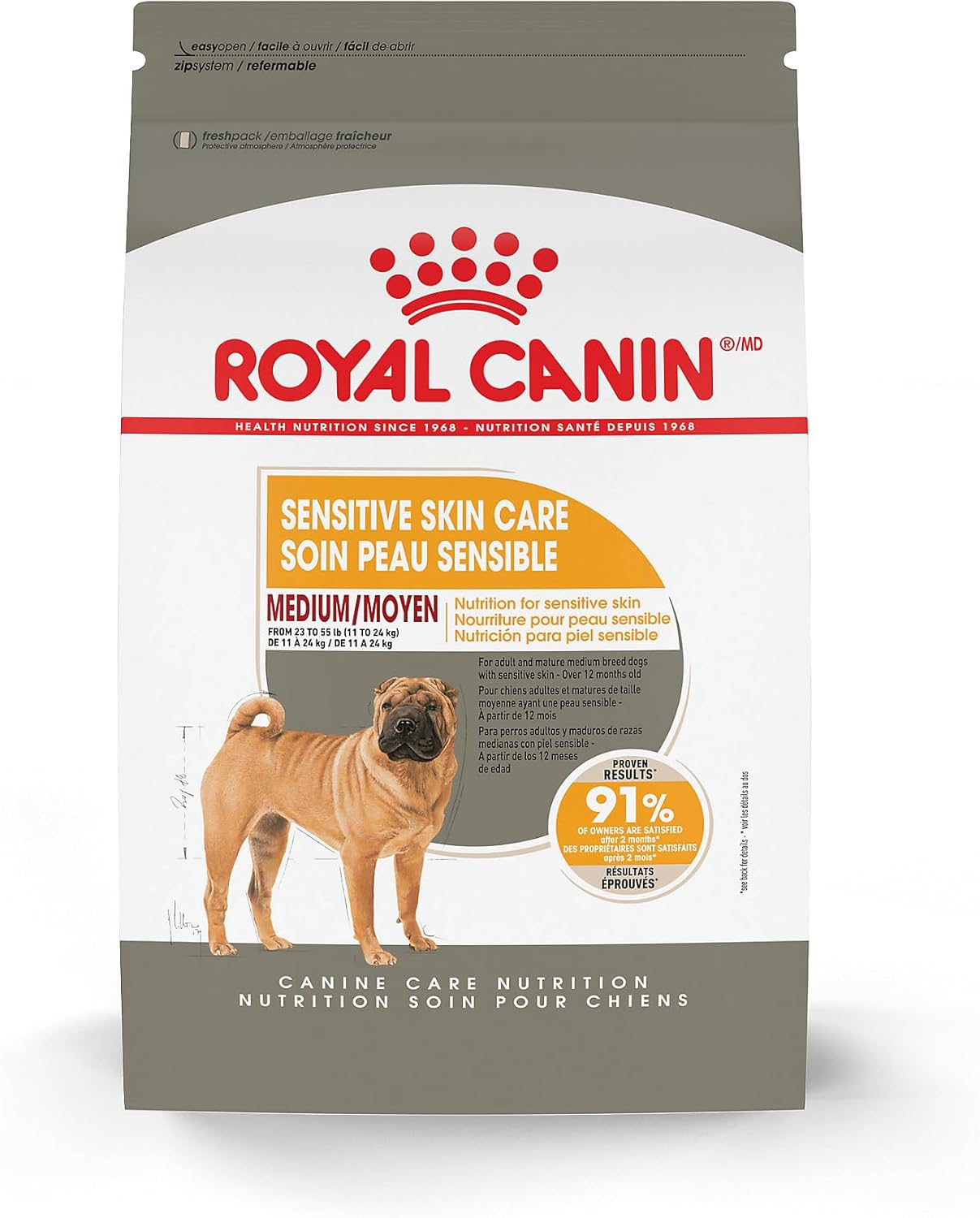
Royal Canin Medium Sensitive Skin Care Dry Dog Food 17 lb
Best Premium Dry Food
| Flavor | Vegetable |
|---|---|
| Age Range | Adult |
| Breed Recommendation | Medium Breeds |
| Product Benefits | Improves skin health with regular use |
| Animal Food Diet Type | Veterinary Diet |
Royal Canin Medium Sensitive Skin Care is a veterinary-grade dry formula aimed at adult medium dogs with sensitive skin and dry coats. It is typically fed as a maintenance diet and can be mixed with the matching wet formula for texture variety. The recipe highlights concentrated skin-support nutrients, including omega-3 and omega-6 fatty acids (EPA, DHA and GLA) and added protein sources intended to nourish skin and promote a healthier coat. Practical benefits include a textured kibble that complements dry feeding routines and a formulation developed by nutritionists and veterinarians to target common dermatological issues. Because it is positioned as a veterinary diet, buyers should expect an ingredient list that focuses on function rather than boutique proteins, and some dogs with ingredient sensitivities may need a stepwise transition. The bag size and nutrient concentration make it convenient for owners who want a long-running, targeted feeding plan, while those prioritizing novel-protein recipes or grain-free options should consider other lines.
Best for: Owners seeking a research-backed, veterinary-formulated dry diet to address persistent skin and coat issues and willing to prioritize targeted nutrition over novel ingredients.
Less Ideal for: Owners specifically looking for grain-free, limited-ingredient, or novel-protein recipes for known food allergies should look at alternative specialty formulas.
- Formulated by vets and nutritionists specifically for sensitive skin care
- Includes EPA, DHA and GLA omega fatty acids to help nourish skin and coat
- Developed as a veterinary diet with targeted nutrient profile for measurable skin improvements
- Large 17 lb bag reduces purchase frequency for medium-breed households
- Contains common grains and multiple ingredient sources that may not suit dogs needing novel-protein diets
- Not marketed as grain-free or limited-ingredient for dogs with food intolerances
Verdict: The best premium dry food for owners who want higher-quality proteins, concentrated skin-support nutrients, and rigorous quality control regardless of price.
Wellness CORE+ Salmon & Rice 4 lb
Best High-Protein Dry Food

| Flavor | Salmon & Rice |
|---|---|
| Age Range Description | Adult |
| Item Form | Kibble |
| Unit Count | 64 Ounce |
| Specific Uses For Product | Sensitive Skin, Sensitive Stomach |
Wellness CORE+ Sensitive Skin & Stomach Salmon & Rice pairs high-protein kibble with 100% raw freeze-dried salmon pieces to boost palatability and protein density while remaining chicken free. It is fed as a complete adult dry diet and is intended for everyday meals, combining probiotics, balanced fiber, and guaranteed glucosamine to support digestion, joint health, and skin and coat condition. The recipe lists salmon and herring meal as primary proteins and adds salmon oil and flaxseed for omega fatty acids, plus multiple probiotic fermentation products to help sensitive stomachs. Practical benefits include higher protein for active or muscle-maintenance needs, taste variety from freeze-dried inclusions, and formulation choices that avoid common triggers like chicken, wheat, corn, and soy. Limitations are that the formula is calorie-dense so portion control is important for less active dogs, and dogs with specific protein intolerances to fish or related ingredients will need a different base protein; it is also a dry-only format so owners seeking wet or fresh options will need to combine products. Overall it is a sensible high-protein, skin- and stomach-focused dry food for dogs that tolerate fish-based diets.
Best for: Buyers who need a fish-based, high-protein dry food that is formulated to be gentle on digestion and supportive of skin and coat health for adult dogs.
Less Ideal for: Owners looking for low-calorie weight-loss diets, dogs with fish-specific allergies, or those who need a wet/fresh food as the primary diet.
- High protein first ingredients (salmon and herring meal) support muscle and energy needs.
- Freeze-dried raw salmon pieces increase palatability and add concentrated protein.
- Includes probiotics and balanced fiber aimed at digestive support for sensitive stomachs.
- Added omega sources (salmon oil, flaxseed) promote skin and coat health.
- Formulated without chicken, wheat, corn, soy, artificial colors, or preservatives.
- Calorie-dense formula requires careful portioning for inactive or weight-sensitive dogs.
- Fish-based proteins make it unsuitable for dogs with fish allergies or intolerances.
Verdict: The best high-protein dry food for dogs needing extra amino acids to support skin repair and overall condition while maintaining healthy body composition.
Blue Buffalo Wilderness Salmon 24 lb
Best Grain-Free Dry Food

| Flavor | Salmon |
|---|---|
| Age Range Description | Adult |
| Item Form | Dry |
| Special Ingredients | grain free |
| Crude Protein | 34.0% min |
Blue Buffalo Wilderness Salmon is a grain-free adult dry formula built around real salmon as the first ingredient and a 34% minimum crude protein guarantee to support lean muscle. It is typically fed as a daily maintenance diet for adult dogs that need higher animal-protein content without common grains; the bag includes feeding guidelines by weight so you can transition and portion accurately. Notable features include added Omega-3 and Omega-6 sources for skin and coat support, LifeSource Bits that provide a targeted mix of vitamins and antioxidants, and supplemental glucosamine for joint support. Ingredient-wise the recipe replaces grains with peas, tapioca, and sweet potatoes while including fish meal, flaxseed, and fruits and vegetables for micronutrients. Practical benefits are higher protein for active or muscular dogs and a formulation that avoids corn, wheat, soy, and poultry by-product meals. Important limitations are that grain-free formulas are not necessary for all dogs and some pets with specific sensitivities may still react to legumes or fish proteins, so a vet consultation is advised for dogs with digestive or allergy concerns.
Best for: Owners seeking a grain-free adult diet that prioritizes high animal-protein from fish and complementary nutrients for coat and muscle support.
Less Ideal for: Owners who prefer grain-inclusive diets or who have dogs with known pea or fish allergies should consider other formulas tailored to those needs.
- Real salmon is the first ingredient providing a high-quality animal protein source
- Grain-free carbohydrate mix (peas, tapioca, sweet potatoes) for owners avoiding corn, wheat, and soy
- 34% crude protein and added glucosamine to support lean muscle and joint health
- Includes Omega-3 and Omega-6 sources plus LifeSource Bits for antioxidant and skin/coat support
- Uses legumes and fish meal which can be problematic for dogs with sensitivities to those ingredients
- Grain-free diets are not necessary for every dog and may require veterinary guidance for long-term feeding
Verdict: The best grain-free dry food for owners preferring grain alternatives or addressing grain sensitivities while still delivering nutrients that support skin and coat health.
Nutro Limited Ingredient Diet Salmon & Lentils
Best Limited-Ingredient Dry Food

| Flavor | Salmon |
|---|---|
| Item Form | Dry Kibble |
| Age Range Description | Adult |
| Animal Food Diet Type | Limited Ingredient |
| Allergen Information | Corn-Free, Non-GMO, Soy Free, Wheat Free |
This Nutro Limited Ingredient Diet uses salmon as a single animal protein and a short ingredient list intended to reduce dietary triggers for dogs with food sensitivities. It is fed as a daily dry kibble and is meant to be transitioned over several days; the recipe advertises 10 key ingredients or less and omits chicken, beef, dairy protein, corn, wheat, and soy. Practical benefits include added omega 3 and 6 fatty acids for skin and coat, natural fiber for digestion, and antioxidants like vitamin E and selenium for immune support. The salmon-and-lentils formula can work well for dogs that react to common proteins because it relies on a novel protein plus legumes and potatoes for carbohydrate and fiber. Limitations are that lentils and chickpeas are present, which some sensitive dogs cannot tolerate, and the bagged kibble format still requires monitoring for portion control and weight management. For a French bulldog with a sensitive stomach, this provides a straightforward novel-protein option but owners should confirm individual tolerances and consult their veterinarian for chronic issues.
Best for: Owners looking for a novel-protein dry food to help a French bulldog with suspected reactions to common proteins and who prefer a limited-ingredient, everyday diet.
Less Ideal for: Dogs with legume-specific allergies or owners who need a grain-inclusive formula tailored for grain-tolerant dogs seeking alternative carbohydrate sources.
- Uses salmon as a single primary animal protein to reduce exposure to common triggers
- Short ingredient philosophy with 10 key ingredients or less
- Includes omega 3 and 6 fatty acids to support skin and coat health
- Provides natural fiber and added antioxidants to aid digestion and immunity
- Contains legumes (lentils, chickpeas) which some dogs with sensitivities may not tolerate
- Kibble form requires careful portioning for dogs prone to weight gain
Verdict: The best limited-ingredient dry food for dogs with suspected food sensitivities, offering a shorter ingredient list that makes it easier to identify and avoid triggers while supporting skin health.
Hill's Science Diet Sensitive Stomach & Skin Small
Best Small-Breed Dry Food

| Flavor | Chicken |
|---|---|
| Age Range Description | Adult 1-6 |
| Item Form | Dry Food |
| Unit Count | 64 Ounce |
| Specific Uses For Product | Small & Mini Breeds Stomach & Skin Sensitivity support |
Hill's Science Diet Sensitive Stomach & Skin Small is a dry adult dog food made for small and mini breeds that struggle with occasional digestive upsets and skin issues. The formula relies on highly digestible ingredients and added prebiotic fiber to support gut bacteria and improve nutrient absorption, while vitamin E and omega-6 fatty acids help nourish skin and coat. It is typically used as a daily staple or as a transition diet when a dog shows signs of mild stomach sensitivity; the package includes feeding guidelines and the brand recommends a 7-day gradual switch. Practical benefits include easily digestible proteins, a recipe designed to minimize digestive stress, and clinically supported antioxidants for immune support. Limitations are that this is a veterinary-style formulation focused on sensitivity rather than weight management or specialized allergen-free recipes, and some dogs with strict ingredient sensitivities may still react to chicken or grain ingredients in the mix.
Best for: Owners of Shih Tzu seeking a day-to-day dry formula to reduce occasional digestive upsets and improve skin condition while keeping feeding simple and vet-backed.
Less Ideal for: Owners who need a strict limited-ingredient, grain-free, or novel-protein prescription for confirmed food allergies should consider alternative specialized diets.
- Formulated with prebiotic fiber to support a balanced gut microbiome
- Highly digestible recipe intended to reduce stomach upset in sensitive dogs
- Includes vitamin E and omega-6 fatty acids to support skin and coat health
- Contains clinically proven antioxidants (vitamins C and E) for immune support
- Contains chicken and grains which may not suit dogs with specific protein or grain allergies
- Focused on sensitivity support rather than hypoallergenic or limited-ingredient nutrition
Verdict: The best small-breed dry food for owners of petite dogs who need appropriately sized kibble and balanced nutrients that support skin and coat condition in smaller bodies.
Choosing the Right Dry Dog Food Healthy Skin Coat: Key Factors to Consider
Omega Fatty Acid Profile
The balance and concentration of omega-3 and omega-6 fatty acids are central to skin and coat outcomes. Omega-3s such as EPA and DHA reduce inflammation that contributes to itching and redness, while omega-6s like linoleic acid support barrier function and coat sheen. Look for named sources (for example, fish oil, algal oil, or flaxseed) and check that the formula lists sufficient levels relative to caloric density.
Fat quality affects how quickly improvements appear and how durable they are. Highly refined or oxidized fats are less effective, so diets that highlight stable, tested sources and include antioxidant vitamins help preserve fatty acid efficacy during storage and digestion.
Protein Quality and Digestibility
Skin and fur are built from amino acids, so the primary protein source and its digestibility matter a great deal. High-quality, identifiable animal proteins provide the full range of essential amino acids needed for hair growth and skin repair. Digestibility influences whether those amino acids are actually absorbed rather than passing through unused.
Formulas that specify whole meat, named meals from known animals, or a combination of animal and complementary plant proteins typically perform better than ones using vague "meat" or "meat by-product" listings. For dogs with sensitivities, single-source or limited-ingredient options make it easier to identify triggers while still supplying necessary amino acids.
Allergen and Irritant Management
Many skin problems are exacerbated by food sensitivities. Ingredients such as beef, dairy, soy, wheat, and certain additives can be common culprits. Choosing a formula that minimizes known allergens or uses alternative protein sources can reduce flare-ups for sensitive dogs.
Manufacturers that limit artificial colors, flavors, and unnecessary chemical preservatives reduce the chance of dietary irritation. Rotational feeding and elimination trials are still often needed to identify individual triggers, but starting with a cleaner ingredient panel simplifies that process.
Vitamins, Minerals, and Micronutrient Support
Beyond fats and protein, specific micronutrients play targeted roles in skin and coat health. Vitamin E protects skin lipids from oxidative damage, zinc supports skin repair and immune function, and biotin contributes to hair strength. A balanced mineral-vitamin profile helps the body use fatty acids and amino acids effectively.
Look for formulas that list these micronutrients in their guaranteed analysis or supplement facts. Excessive supplementation is not better; proper levels tuned for the dog's life stage are more important than large, unspecified quantities.
Digestive Support and Microbiome Considerations
Gut health influences skin through immune and inflammatory pathways, so ingredients that support digestion can indirectly improve the coat. Soluble and insoluble fibers, prebiotics, and probiotics can help maintain a balanced microbiome and regular stool quality, which reduces systemic inflammation that can worsen skin issues.
Highly digestible carbohydrate choices and moderate fiber content help nutrient absorption of fatty acids and amino acids. Pet owners should watch for abrupt formula changes that can disrupt stool consistency and indirectly affect skin condition.
Formula Concentration and Feeding Practicality
Nutrient concentration determines how much food you need to feed to achieve targeted nutrient intakes. A calorie-dense kibble with higher fat and protein concentrations can deliver the same skin-supporting nutrients in smaller portions, which matters for portion control and palatability.
Practical considerations such as kibble size, storage stability of fats, and clarity of feeding guidelines influence long-term compliance. Formulas that remain stable on the shelf and in the bowl help ensure consistent intake of beneficial nutrients over time.
How Quickly Can Diet Changes Improve Skin and Coat?
Visible improvements in skin and coat usually take time because hair growth cycles and skin repair are gradual processes. Many owners see initial reductions in itchiness or flaking within two to four weeks, but measurable coat quality and full hair regrowth often require eight to twelve weeks of consistent feeding with a targeted formula.
Expect variation by individual: dogs with acute inflammatory responses may show faster relief when omega-3 levels are increased, while long-term deficiencies or hormonal issues can take longer or require veterinary input. Consistency is crucial—intermittent feeding or frequent brand switching delays results.
- Initial itch or flake improvement: 2–4 weeks
- Noticeable coat sheen and strength: 6–12 weeks
- Full regrowth for heavy shedding or patchy loss: several months
Can a Single Diet Address Both Dry Skin and Oily Coat?
Some diets are formulated to balance skin sebum production while supplying enough fatty acids to prevent dryness. Choosing the right ratio of omega-3 to omega-6, plus a digestible protein base, helps normalize skin oil production. However, because oily coat conditions can be driven by endocrine or topical issues, diet alone may not solve every case.
If your dog has persistently greasy fur despite dietary adjustments, investigate bathing routine, topical treatments, and possible medical causes in parallel with nutritional changes.
- Diet can help balance sebum, but may not fully correct non-nutritional causes
- Combine diet changes with appropriate grooming and veterinary checks if oiliness persists
Which Ingredients Often Indicate Filler Carbohydrates Rather than Skin Support?
High proportions of low-cost, highly processed starches can dilute the concentration of skin-supporting nutrients. Ingredients such as generic cereal grains listed high on the ingredient panel, unnamed carbohydrate blends, or multiple consecutive starches signal a formula where beneficial fats and proteins may be less concentrated per calorie.
Instead, look for named whole grains or alternative carbohydrate sources that provide fiber and micronutrients rather than empty calories. Better carbohydrate choices support digestion and help ensure the dog gets sufficient essential fats and amino acids per serving.
- Watch for long lists of anonymous carbohydrates near the top of the ingredient list
- Prefer named grains or wholesome alternatives that contribute fiber and nutrients
How to Manage Feeding Transitions to Protect Skin Health
Introduce a new dry food gradually over seven to ten days by mixing it with the current food in increasing proportions. Rapid switches can upset digestion and temporarily worsen flaking or itchiness, masking the benefits of the new formula.
Monitor stool quality and skin condition during the transition. If gastrointestinal upset occurs beyond a brief adjustment period, pause or slow the transition and consult your veterinarian for guidance on alternative strategies.
- Start with 10% new food and increase by 10–15% every 2–3 days
- Track stool consistency and skin response during the change
- Consider a slightly longer transition for dogs with sensitive stomachs
What Role Does Life Stage and Coat Type Play in Choosing a Formula?
Puppies, adults, and seniors have different metabolic and nutrient needs that change how they use fats and proteins for skin and coat maintenance. Puppy formulas emphasize growth and may include higher calorie levels and different micronutrient balances, while senior formulas sometimes reduce calories but retain targeted skin support to counter age-related coat thinning.
Coat type matters too. Double-coated breeds or dogs with long hair may need formulas with higher omega content and more protein to support heavy fiber and faster hair turnover, while short-coated breeds may benefit from balanced maintenance blends. Match the formula to both life stage and coat characteristics for best results.
- Choose life-stage appropriate formulas for growth, maintenance, or senior care
- Increase omega support for heavy-shedding or long-haired breeds when needed
How We Chose the Best Dry Dog Food Healthy Skin Coat
We used a nutrition-first approach to narrow down the list of dry foods that support healthy skin and coats. Our evaluation prioritized measurable diet features known to affect skin and fur, including levels and quality of omega-3 and omega-6 fatty acids, the primary protein source and its digestibility, and the presence of supportive vitamins and minerals such as vitamin E, zinc, and biotin. We also considered ingredient transparency, presence of common irritants, and whether formulas included complementary prebiotic or probiotic support for skin-linked gut health. For practicality, we filtered for widely available kibble formulations across life stages and coat needs. We excluded products that relied heavily on unspecified meat meals, contained excessive filler carbohydrates, or used unconventional protein sources that lack broad digestibility data. We did not include prescription-only diets or therapeutic formulas requiring veterinary supervision. The final picks reflect a balance of nutrient composition, ingredient clarity, and formulas appropriate for routine feeding to support skin and coat over time.
Our full evaluation process is outlined in our review methodology.
FAQ
How much omega-3 should be in a dry dog food for skin benefits?
Effective omega-3 amounts vary by dog size and formula concentration, but diets that list fish oil or other EPA/DHA sources and provide a clear omega-3 content are preferable. Often a supplemental omega-3 is used alongside diet for targeted increases, but many well-formulated dry foods include therapeutic levels suitable for maintenance.
Is grain-free better for dogs with flaky skin?
Grain-free diets can help some dogs with grain sensitivities, but they are not universally superior for skin health. What matters more is the overall ingredient quality, protein source, and fatty acid content. If you suspect a grain allergy, an elimination trial with veterinary guidance is the safest approach.
Can supplements replace a specialty dry food for coat health?
Supplements such as fish oil can boost omega-3 intake, but they work best when paired with a balanced base diet. A complete dry food formulated for skin and coat ensures consistent delivery of protein, vitamins, and minerals that supplements alone might not provide.
Will switching foods stop seasonal shedding and dander?
Diet changes can reduce shedding related to poor nutrition or deficiencies, and improving skin condition can lower visible dander. Seasonal shedding is largely hormonal and environmental, so while nutrition helps, it may not eliminate normal seasonal coat changes.
How soon should I consult a veterinarian if skin problems persist after diet changes?
If you do not see improvement in itchiness or flaking within six to eight weeks of a consistent dietary change, or if symptoms worsen, consult a veterinarian. Persistent or severe skin issues can indicate allergies, infections, or endocrine disorders that need professional diagnosis and treatment.
Final Verdict
Prioritize formulas that combine high-quality, digestible protein with a thoughtful balance of omega-3 and omega-6 fatty acids, plus targeted micronutrients like vitamin E, zinc, and biotin. Pay attention to ingredient clarity, avoid excessive filler carbohydrates, and choose life-stage appropriate formulations to match your dog's coat and metabolic needs. Expect gradual improvements and monitor progress over several weeks. When in doubt, focus on consistent nutrition and controlled transitions; if skin problems persist, seek veterinary advice to rule out non-dietary causes.

