

If you have a small dog that needs to lose weight, choosing the right food is one of the fastest ways to support steady, healthy progress. Small breeds burn energy differently than larger dogs, so weight-control diets designed for smaller mouths and metabolisms help control calories without leaving your dog constantly hungry. This guide presents seven top-rated weight-management dog foods shortlisted for overweight small dogs and explains the practical tradeoffs to expect. We evaluated items for calorie density, macronutrient balance, fiber and protein content, and ingredient quality so you can pick an option that fits your feeding routine and your vet's recommendations. Read on to find a food that matches your small dog's appetite, activity level, and health needs.
Top Picks at a Glance
| Best Overall Food for Overweight Small Dogs A balanced, vet-friendly formula tuned for small dogs losing weight | Hill's Science Diet Perfect Weight Small Bites |  |
| Best Budget Food for Overweight Small Dogs Low-cost options that still address weight control and basic nutrition | Nutrish Healthy Weight Turkey 4.5 lb |  |
| Best Low-Calorie Food Formulas specifically reduced in calories to support weight loss | Hill's Science Diet Light Small Bites |  |
| Best High-Protein Food Higher-protein recipes to preserve lean mass during dieting | Wellness CORE Healthy Weight Small Breed 4 lb |  |
| Best High-Fiber Food Fiber-forward formulas to increase fullness and stabilize digestion | Purina ONE Healthy Weight Dry Dog Food 8 lb |  |
| Best Grain-Free Food Grain-free recipes for dogs with grain sensitivities or owner preference | ORIJEN Small Breed Dry Dog Food 4 lb |  |
| Best Premium Food Higher-end formulations with superior ingredients and manufacturing | Eukanuba WM Weight Management Small Breed |  |
Hill's Science Diet Perfect Weight Small Bites
Best Overall Food for Overweight Small Dogs

| Flavor | Chicken |
|---|---|
| Age Range Description | Adult 1-6 |
| Specific Uses For Product | Weight Management |
| Unit Count | 64 Ounce |
Hill's Science Diet Adult Perfect Weight Small Bites is a dry dog food formulated to help adult dogs lose excess weight and maintain lean muscle. It is typically fed as a daily staple with portion control guided by the package feeding chart and veterinary advice, and new dogs should be transitioned over seven days. The recipe emphasizes protein for muscle support and higher fiber to promote fullness while lowering calorie density, and Hill's cites clinically visible results in about 10 weeks. Practical benefits include small kibble sized for small-mouthed breeds, a formula that includes L-carnitine and targeted nutrients for metabolism and muscle maintenance, and recognizable ingredients such as chicken and whole grains. Limitations are that it is a non-therapeutic diet intended for general weight management rather than a veterinary prescription for complex metabolic or medical conditions, and owners should monitor weight and adjust portions because individual calorie needs vary. For chihuahuas with medical weight issues, consult your veterinarian before switching foods.
Best for: Owners of overweight chihuahuas who want a ready-to-feed, vet-recommended weight management formula that balances reduced calories with protein to protect lean mass during gradual weight loss.
Less Ideal for: Dogs with diagnosed metabolic disorders or medical needs that require a veterinary prescription diet, and owners seeking grain-free or novel-protein formulas should consider alternatives.
- Formulated for weight management with clinically tested results in about 10 weeks
- Small kibble suited to small-mouthed breeds like chihuahuas
- Includes protein and L-carnitine to help preserve lean muscle during weight loss
- Higher fiber formulation to increase satiety between meals
- Not a prescription veterinary diet for dogs with medical conditions affecting weight
- Contains grains and some plant proteins that may not suit dogs with specific ingredient sensitivities
Verdict: The best overall choice for overweight small dogs that balances calorie control, essential nutrients, and small-breed kibble size to support safe, sustainable weight loss.
Nutrish Healthy Weight Turkey 4.5 lb
Best Budget Food for Overweight Small Dogs

| Flavor | Turkey |
|---|---|
| Item Form | Chunk |
| Specific Uses For Product | Weight Management |
| Special Ingredients | Real Turkey, L-Carnitine, Venison |
This Nutrish Healthy Weight recipe is a dry adult dog food that targets weight control by using real turkey as the primary ingredient and added L-carnitine to support metabolism. It is designed for twice-daily feeding with a measured portion guide and includes brown rice, venison, and fiber-containing ingredients like dried beet pulp and peas to help dogs feel satisfied on fewer calories. The formula is veterinarian reviewed and made without artificial flavors, and the ingredient list shows a mix of animal meals and plant sources that supply protein, fiber, and essential vitamins and minerals. For bulldogs, the controlled-calorie approach and L-carnitine can help with weight management when combined with portion control and regular activity, though owners should monitor for grains and soy that some dogs tolerate differently. The 4.5 lb bag is convenient for trying the diet or for smaller households, but active or larger bulldogs will require larger bags and careful portion adjustment to meet energy needs.
Best for: Bulldog owners focused on reducing or maintaining body weight who prioritize a controlled-calorie commercial diet with fiber and metabolism-supporting nutrients and who will combine feeding with portion control and activity.
Less Ideal for: Owners seeking grain-free formulas or those whose bulldogs have known soy or grain allergies should consider alternative limited-ingredient or grain-free weight-control diets.
- Real turkey listed as the first ingredient for recognizable animal protein
- Formulated with L-carnitine to support healthy weight and metabolism
- Includes fiber sources such as dried beet pulp and peas to promote satiety
- Veterinarian reviewed formula with added vitamins and minerals for complete nutrition
- Contains grains and soybean meal, which may not suit dogs with specific grain or soy sensitivities
- Small 4.5 lb bag size may require frequent repurchase for larger bulldogs or multi-dog households
Verdict: The best budget pick for owners who need an affordable weight-management formula that still provides reasonable protein, lower calories, and necessary vitamins for small dogs.
Hill's Science Diet Light Small Bites
Best Low-Calorie Food

| Flavor | Chicken & Barley |
|---|---|
| Age Range | Adult 1-6 |
| Specific Uses For Product | Weight Management |
| Unit Count | 80 Ounce |
Hill's Science Diet Light Small Bites is a veterinarian-developed dry formula aimed at adult dogs that need help maintaining a healthy weight. The recipe uses real chicken and concentrated protein sources to support lean muscle while L-carnitine and reduced calorie density help with weight control during everyday feeding. The small kibble size suits dogs that prefer or need smaller bites and the formula includes prebiotic fibers and antioxidants to support digestion and immune health. Practical benefits include a clear feeding guide on the bag, no artificial colors or flavors, and a nutrient profile backed by the brand's clinical nutrition research. Limitations to consider are that it is positioned as a weight-management product rather than a therapeutic diet for specific medical conditions, and dogs with specific ingredient sensitivities should check the full ingredient list since it contains common grains and chicken derivatives. For most owners looking for a reliable, palatable low-calorie option that can be used long term under routine veterinary guidance, this performs well.
Best for: Dog owners seeking a dependable, everyday low-calorie dry food to help their adult pets maintain or reach a healthy weight while keeping a balanced nutrient profile and palatable ingredients.
Less Ideal for: Owners whose dogs require grain-free formulas, have known allergies to chicken or chicken products, or need a veterinarian-prescribed therapeutic diet for specific medical conditions.
- Formulated specifically for weight management with lower calories and L-carnitine to support lean muscle
- Small kibble size that is easy for adult dogs to chew and helps with portion control
- Includes prebiotic fibers and antioxidants to support digestion and immune health
- Made with real chicken and no artificial colors or flavors
- Backed by Hill's nutrition research and veterinarian recommendation
- Contains grains and chicken meal which may not suit dogs with grain or chicken sensitivities
- Not a prescription therapeutic diet for medically complex weight issues
Verdict: The best low-calorie food for pet owners prioritizing strict calorie reduction to help overweight small dogs lose weight without sacrificing essential nutrition.
Wellness CORE Healthy Weight Small Breed 4 lb
Best High-Protein Food

| Flavor | Turkey |
|---|---|
| Age Range Description | Adult |
| Item Form | Dry |
| Unit Count | 4 Pounds |
Wellness CORE Healthy Weight Small Breed is a grain-free dry kibble designed to help active or weight-sensitive small dogs maintain lean mass while feeling satisfied. It uses deboned turkey as the first ingredient plus turkey and chicken meals to deliver a high-protein profile, and smaller kibble sized for small mouths. The formula includes glucosamine and chondroitin sourced from chicken meal to support joint health, added omega fatty acids for skin and coat, and fermentable fibers plus probiotics for digestive support. Practical benefits include reduced calorie density and higher fiber to help with weight management without leaving dogs hungry, and nutrient-dense ingredients like fruits and vegetables for micronutrients. Limitations are that it is grain-free and manufactured in a facility that also processes grains, which may matter for dogs with strict grain-free or specific allergen histories, and it is sold in relatively small bag sizes that may be less economical for multi-dog households. Feeding requires following the package transition and portion guidelines to achieve weight-loss or maintenance goals.
Best for: Buyers who prioritize higher animal protein and a lower-calorie, nutrient-dense diet to help active or underweight-recovering small dogs keep lean mass while managing weight.
Less Ideal for: Owners seeking large economical bag sizes for multiple dogs or those who require guaranteed grain-free production without shared-facility processing should consider other options.
- High meat-first protein blend with deboned turkey and poultry meals to support lean mass and activity
- Smaller kibble size tailored to small-breed mouths for easier chewing
- Includes glucosamine and chondroitin for joint support and omega fatty acids for skin and coat
- Formulated with added fiber and probiotics to help digestive health and satiety
- No corn, wheat, soy, artificial colors, or preservatives listed
- Grain-free formulation and shared-facility manufacture may not suit dogs with strict grain-related sensitivities
- Available bag sizes are small which can be less cost-effective for households with multiple dogs
Verdict: The best high-protein food for overweight small dogs that need extra protein to maintain muscle while burning fat during a weight-loss plan.
Purina ONE Healthy Weight Dry Dog Food 8 lb
Best High-Fiber Food
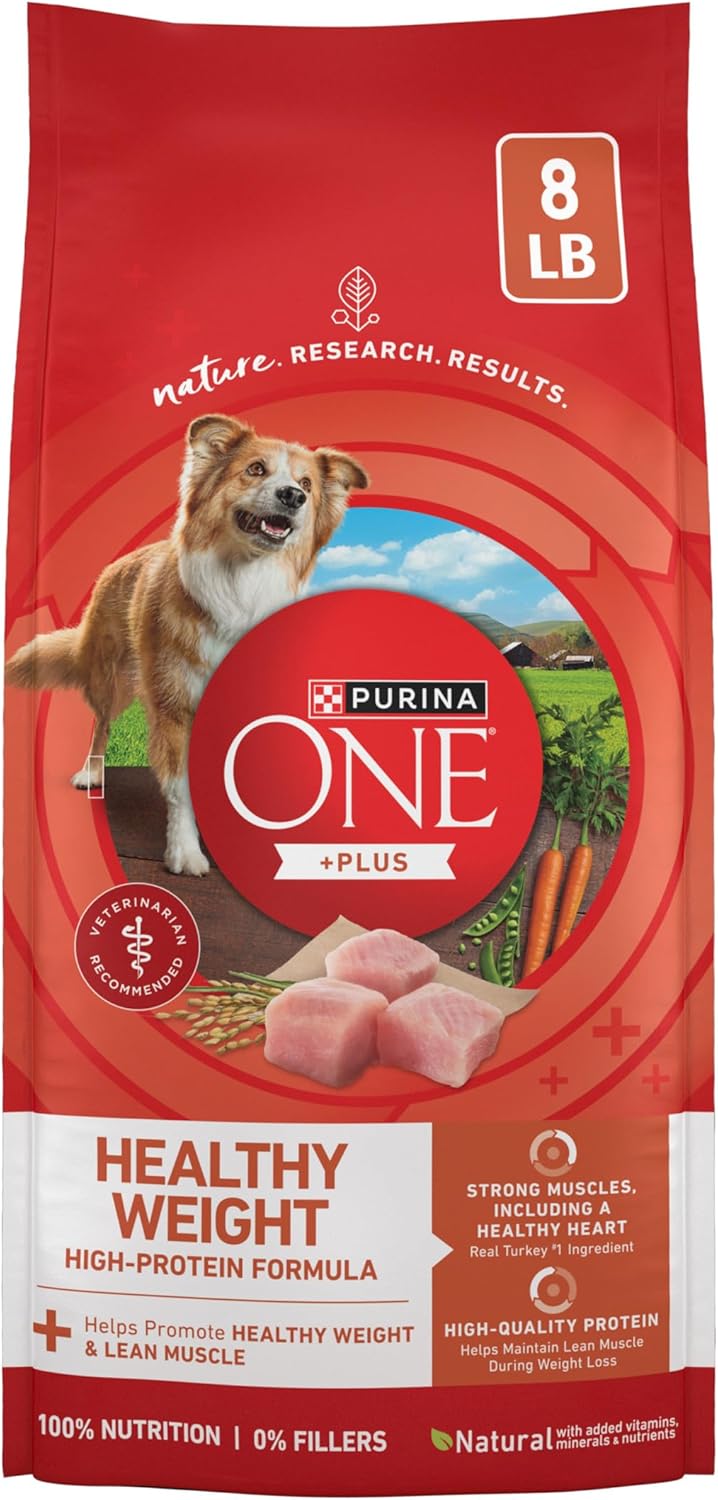
| Flavor | Turkey |
|---|---|
| Age Range Description | Adult |
| Item Form | Blended, Semi-Moist, Kibble, Crunchy |
| Unit Count | 128 Ounce |
Purina ONE +Plus Healthy Weight is a high-protein dry dog food designed to help adult dogs lose or maintain weight while supporting lean muscle. It is fed as a complete daily diet and uses real turkey as the primary ingredient, supplemented with added fiber to promote fullness and multiple antioxidant sources for immune support. The formula also includes natural sources of glucosamine to help joint health and omega-6 fatty acids for skin and coat. In practice this kibble suits dogs that need a calorie-reduced but protein-forward diet and owners can swap it into regular feeding routines using the package feeding guide. Limitations to be aware of are the inclusion of common grains and by-product meal ingredients, which may not suit dogs with specific grain or novel-protein sensitivities, and that weight loss still requires portion control and increased activity rather than food change alone.
Best for: Buyers who prioritize a lower-calorie, higher-protein everyday dry food to help adult dogs lose weight or maintain a lean condition while keeping balanced nutrition.
Less Ideal for: Pets with grain intolerances, novel-protein requirements, or medically complex weight-loss needs that require a prescription diet should consider alternative formulations.
- Real turkey listed as the first ingredient for higher-quality animal protein
- Higher protein plus added fiber to support lean muscle and promote fullness
- Includes antioxidants and omega-6s to support immune function and skin and coat health
- Contains natural sources of glucosamine for joint support
- Contains common grains and some by-product meals which may not be suitable for dogs with ingredient sensitivities
- Not a veterinary prescription diet so dogs with complex metabolic or medical needs may need a clinician-recommended formula
Verdict: The best high-fiber food for small dogs who benefit from added bulk and slower digestion to reduce hunger and support healthier portion control.
ORIJEN Small Breed Dry Dog Food 4 lb
Best Grain-Free Food

| Flavor | Grain Free Small Breed Dog Recipe |
|---|---|
| Item Form | Dry Kibble |
| Age Range Description | All Life Stages |
| Unit Count | 64 Ounce |
ORIJEN Small Breed is a premium, grain-free dry dog food designed specifically for small dogs and all life stages. It delivers a very high proportion of animal ingredients, with the first five components listed as fresh or raw poultry and fish and an overall WholePrey approach that includes meats, organs, and bones to supply naturally occurring nutrients. The kibble is shaped for small mouths and is coated with freeze-dried bits for added flavor, making it suitable for picky eaters. Typical use is twice-daily feeding adjusted to activity and body condition, and the formulation emphasizes protein density to support lean muscle, skin and coat health, and digestive balance. Practical benefits include limited reliance on synthetic additives, a broad spectrum of animal-sourced nutrients, and ingredient sourcing from reputable regions. Important limitations are that it is grain-free which may not be necessary for every dog, and the richer formula can require careful portion control during transitions to avoid digestive upset or excess calories in less active pets.
Best for: Owners who prioritize premium animal proteins, carefully sourced ingredients, and advanced nutrition to support long-term health and coat condition in small-breed dogs.
Less Ideal for: Owners looking for a low-calorie, grain-inclusive diet or those whose dogs have no specific need for a high-protein, grain-free formula.
- Very high animal-ingredient content with whole meats and organs for nutrient density
- Kibble shape and size tailored for small-breed mouths
- Includes freeze-dried coating to boost palatability for picky eaters
- Formulated for all life stages supporting skin, coat, and digestive health
- Grain-free, protein-rich formula may be more than some small dogs need calorie- and digestion-wise
Verdict: The best grain-free food for owners seeking a weight-management formula without grains while still delivering controlled calories and balanced nutrients for small dogs.
Eukanuba WM Weight Management Small Breed
Best Premium Food

| Flavor | Chicken |
|---|---|
| Age Range | Adult |
| Specific Uses For Product | Weight Management |
| Breed Recommendation | Small Breeds |
Eukanuba WM Weight Management Small Breed is a dry kibble designed to help adult small dogs maintain a lean, active body while still delivering complete nutrition. The formula uses real chicken as the primary ingredient and adds L-carnitine plus a reduced-fat recipe to encourage fat metabolism, while an adapted carbohydrate blend helps control caloric density. It also includes over 50% more glucosamine and chondroitin sulfate compared with Eukanuba Adult Small Breed to support joint health, and DHA plus antioxidants to support brain function. In practice this feeds like a standard small-breed kibble but with a focus on lower fat and targeted nutrients for lean muscle and joint support, so it can be used as a full-time diet or mixed during a transition. Important limitations are that the ingredient list includes common grains and chicken by-product meal rather than single-source novel proteins, and owners should follow the recommended transition schedule and portion control to see weight-loss results.
Best for: Owners willing to invest in a scientifically formulated small-breed diet that prioritizes lower fat, joint support, and cognitive nutrients while managing body condition.
Less Ideal for: Owners looking for grain-free, novel-protein, or limited-ingredient diets for food sensitivities should consider alternative formulas.
- Real chicken listed as the first ingredient
- Formulated with L-carnitine and 41% less fat to support weight management
- Added glucosamine and chondroitin sulfate for joint support
- Includes DHA and antioxidants for brain and overall health support
- Uses chicken by-product meal and common grains rather than single-source novel proteins
- Not a grain-free or limited-ingredient formula
Verdict: The best premium food for owners willing to invest in top-quality ingredients, advanced formulations, and strict quality control to support healthy, sustained weight loss in small dogs.
Choosing the Right Dog Food Overweight Small Dog: Key Factors to Consider
Calorie Density and Portion Accuracy
Calories per cup matter more for small dogs because small errors in portioning create proportionally larger calorie swings. Lower calorie density makes it easier to feed a satisfying volume while still creating a moderate daily calorie deficit for weight loss. Accurate feeding cups and clear portion charts help you avoid overfeeding.
Ask how easy the formula is to measure precisely and whether the manufacturer lists calories per cup and per kilogram. If calorie density is high, you will need to reduce portion sizes carefully, which can increase the risk of underfeeding essential nutrients unless the food is formulated for weight management.
Protein Level for Lean Mass Preservation
Higher protein supports maintenance of muscle while your dog loses fat, which helps preserve resting metabolic rate and physical function. For small overweight dogs, aim for a formula that provides above-average protein relative to calorie content so each reduced-calorie meal still supplies adequate amino acids.
Consider whether the protein sources are named and digestible rather than vague meat byproducts. Quality protein also helps with satiety, which reduces begging and the likelihood of supplementing dinners with extra treats that undermine weight goals.
Fiber and Volume for Satiety
Fiber increases meal volume and slows gastric emptying, helping small dogs feel fuller on fewer calories. Soluble fibers form a gel-like matrix that can be more effective at prolonging fullness, while insoluble fibers add bulk. A balanced mix supports digestive health and regular stools during a diet change.
Too much indigestible fiber can lower nutrient absorption or cause loose stools, so look for moderate fiber levels and gradual transition strategies included on feeding instructions to reduce gastrointestinal upset.
Kibble Size and Texture for Small Mouths
Small breeds may struggle with large kibble shapes, leading to slow eaters or dogs that pick out soft bits and leave harder pieces uneaten. Kibble sized for small mouths encourages consistent intake and prevents selective feeding that can throw off calorie counts. Texture also affects palatability and ease of chewing, particularly for older small dogs with dental wear.
Check whether the formula lists kibble dimensions or markets itself for small breeds. If you use a mix of wet and dry food, ensure both components are portioned to maintain the planned calorie intake.
Micronutrient Balance and Veterinary Oversight
During weight loss, micronutrient needs do not scale down perfectly with calories. A proper weight-management food ensures vitamins, minerals, and essential fatty acids remain at levels that meet nutrient requirements within reduced-calorie servings. Formulas that reference AAFCO profiles or veterinary formulation guidelines provide more confidence in nutritional completeness.
For dogs with concurrent health issues such as pancreatitis, hypothyroidism, or joint disease, you should consult a veterinarian before choosing a weight-management diet. Some clinical conditions require specialized nutrient adjustments beyond standard weight-loss formulas.
Transition Guidance and Feeding Support
Successful weight-loss feeding plans rely on clear instructions for transitioning and for establishing daily calorie targets. Look for foods that provide step-by-step transition schedules, portion calculators, and guidance on how to incorporate treats without exceeding daily calorie goals. Good labels and feeding charts reduce guesswork and help you track progress.
Ongoing support resources such as veterinary dietitian input, online calculators, or printable charts can make adherence easier and reduce the temptation to give unmeasured extras that stall weight loss.
How Much Should I Feed My Overweight Small Dog Each Day?
Daily feeding amounts depend on your dog's ideal weight, current activity level, and the calorie density of the food. Start by determining an appropriate target weight with your veterinarian, then calculate a 10 to 20 percent calorie reduction from maintenance energy needs to encourage gradual, sustainable loss.
Use the calorie-per-cup information on the label and the manufacturer's feeding chart only as a starting point. Weigh portions with a kitchen scale for accuracy and split daily rations into two or more meals to maintain stable energy and reduce begging.
- Aim for slow loss: 0.5 to 2 percent of body weight per week is generally safe for small breeds.
- Adjust portions every 2 to 4 weeks based on measured weight change and body condition.
- Limit treats to a small percentage of daily calories and choose low-calorie, high-fiber snack options.
What Role Do Treats and Supplements Play During Weight Loss?
Treats and supplements can derail a calorie plan quickly because they are easy to overgive. Instead of removing treats entirely, plan them into the daily calorie allocation and choose lower-calorie options or break treats into tiny training pieces.
Supplements like fish oil or joint-support nutrients can be useful for specific health needs but should be added with awareness of their calorie or fat contributions. Always account for supplemental calories in the daily total and consult a veterinarian before starting any new supplement.
- Use training treats that are low-calorie or use pieces of your dog's regular kibble to avoid extra calories.
- Record all snacks and table scraps to maintain an accurate calorie ledger for the day.
How to Switch Foods Safely Without Upsetting Digestion
A gradual transition over 7 to 10 days reduces the risk of loose stools and refusal to eat. Start with mostly the old food and slowly increase the proportion of the new weight-management formula each day.
Watch for signs of intolerance such as diarrhea, vomiting, or decreased appetite. If these occur, slow the transition further or consult your veterinarian. Hydration and consistent meal times also help the gut adapt more smoothly.
- Day 1–3: 25 percent new, 75 percent old.
- Day 4–6: 50 percent new, 50 percent old.
- Day 7–9: 75 percent new, 25 percent old, then full switch if tolerated.
What Feeding Strategies Help Maintain Muscle While Losing Fat?
Distribute protein evenly across meals to give muscles a steady supply of amino acids and reduce catabolism. Maintain a moderate exercise routine that includes short walks and gentle play to preserve muscle mass and support mobility.
Consider feeding multiple small meals if your dog tolerates it; this can stabilize blood sugar and reduce the risk of muscle breakdown during calorie restriction.
- Pair higher-protein meals with regular, low-impact activity.
- Monitor body condition score rather than just the scale to track muscle retention.
Managing Picky Eating During a Diet Plan
Small dogs can be selective, and appetite changes are common during a diet. Prioritize palatability within the bounds of a weight-control formula by warming food slightly or offering it with a small amount of low-calorie broth to increase aroma.
If your dog consistently refuses a weight-management food, try a different formula with similar nutrient goals rather than adding high-calorie toppers. Persistent poor appetite should prompt a veterinary visit to rule out underlying medical causes.
- Avoid frequent flavor changes that encourage selective appetite.
- Evaluate dental health if your dog has trouble chewing; soft or moistened food may help.
How We Chose the Best Dog Food Overweight Small Dog
We applied a practical, health-first editorial filter to narrow the field to foods suited for overweight small dogs. First, we prioritized calorie density appropriate for small-breed metabolisms and portion sizes that facilitate accurate feeding without rounding errors. Second, we favored formulas with higher protein and moderate-to-high fiber to support lean mass and satiety, while avoiding extreme carbohydrate loading. Third, ingredient transparency and the presence of recognizable, whole-food sources for primary nutrients were required to reduce the risk of unnecessary fillers. Additional criteria included appropriate kibble size or formulation for small mouths, clear feeding guidance to support portion control, and availability of veterinary-support or clinically informed weight-management formulations. We excluded products lacking clear nutrition panels, items designed only for adult maintenance without weight guidance, and novelty treats or supplements masquerading as meal replacements. The final list reflects diets that balance caloric control, nutrient adequacy, and practical feeding for small-breed weight loss.
Our full evaluation process is outlined in our review methodology.
FAQ
How quickly should a small dog lose weight safely?
Small dogs typically should lose weight slowly, often around 0.5 to 2 percent of body weight per week. Faster loss can risk muscle loss and metabolic issues, so aim for gradual reduction and consult your veterinarian if progress is unusually rapid or stalled.
Can I use a regular adult formula at a reduced portion instead of a weight-management food?
You can reduce portions of a maintenance formula, but weight-management foods are formulated to concentrate essential nutrients so your dog still gets adequate vitamins, minerals, and protein at lower calorie intakes. If you choose a maintenance food, discuss micronutrient adequacy with your veterinarian.
Should I change my small dog's exercise routine during a diet?
Maintain or slightly increase regular low-impact activity to support calorie burn and preserve muscle. Short walks, play sessions, and gentle strength-building activities are appropriate, but avoid sudden intense exercise changes without veterinary approval.
How do I handle treats and table scraps while my dog is losing weight?
Treats and scraps should be counted toward daily calories. Choose low-calorie training treats or use small portions of the dog's kibble for rewards. Limit table scraps entirely or keep them to rare, measured exceptions to avoid undermining progress.
When should I involve my veterinarian in a weight-loss plan?
Involve your veterinarian before starting a formal weight-loss plan, especially if your dog has health issues, is older, or has lost appetite. A vet can determine an ideal target weight, screen for underlying causes of weight gain, and recommend appropriate formulas or monitoring intervals.
Final Verdict
For overweight small dogs, prioritize a food that balances lower calorie density with higher protein and moderate fiber to support satiety and preserve lean mass. Focus on accurate portioning, gradual weight targets, and feeding routines that fit your dog's preference and dental needs. Successful weight loss is a team process involving portion control, appropriate activity, and regular monitoring. Choose a complete formula designed for weight management or one that meets the same nutrient principles, and adjust based on measured progress and veterinary guidance so you can reach and maintain a healthy weight confidently.

