

If you want to make dental care easier, the right treats can cut down on plaque, freshen breath, and encourage healthier gums. Picking the best treats for dog teeth cleaning matters because they are often the most consistent, owner-friendly way to reinforce oral hygiene between toothbrushing sessions. This guide covers seven shortlisted options that perform well for mechanical scrubbing, ingredient safety, and palatability. Below you will find clear evaluation points we used to narrow the list and practical guidance for choosing treats that suit your dog's size and dental needs.
Top Picks at a Glance
| Best Overall Treat A top all-around choice for effective daily dental care | Greenies Regular Dental Dog Treats 36 Count |  |
| Best Budget Treat An affordable option that still helps scrub teeth and freshen breath | Pedigree Dentastix Small & Toy 24ct |  |
| Best Long-Lasting Treat Durable chews that keep dogs engaged and clean longer | Nylabone Nutri Dent Dental Chews 40 Count |  |
| Best Soft Treat Gentle, easy-to-chew treats for seniors and small dogs | Tartar Shield Soft Rawhide Chews Small |  |
| Best Low-Calorie Treat Lower-calorie options that support dental care without weight gain | Minties FreshBites Dental Chews 50 Count |  |
| Best Breath-Freshening Treat Treats formulated to reduce bad breath and leave mouth fresher | Dentalife Purina Daily Dental Chews Large |  |
| Best Premium Treat A higher-end pick with superior ingredients and manufacturing quality | Yummy Combs Dog Dental Treats Small |  |
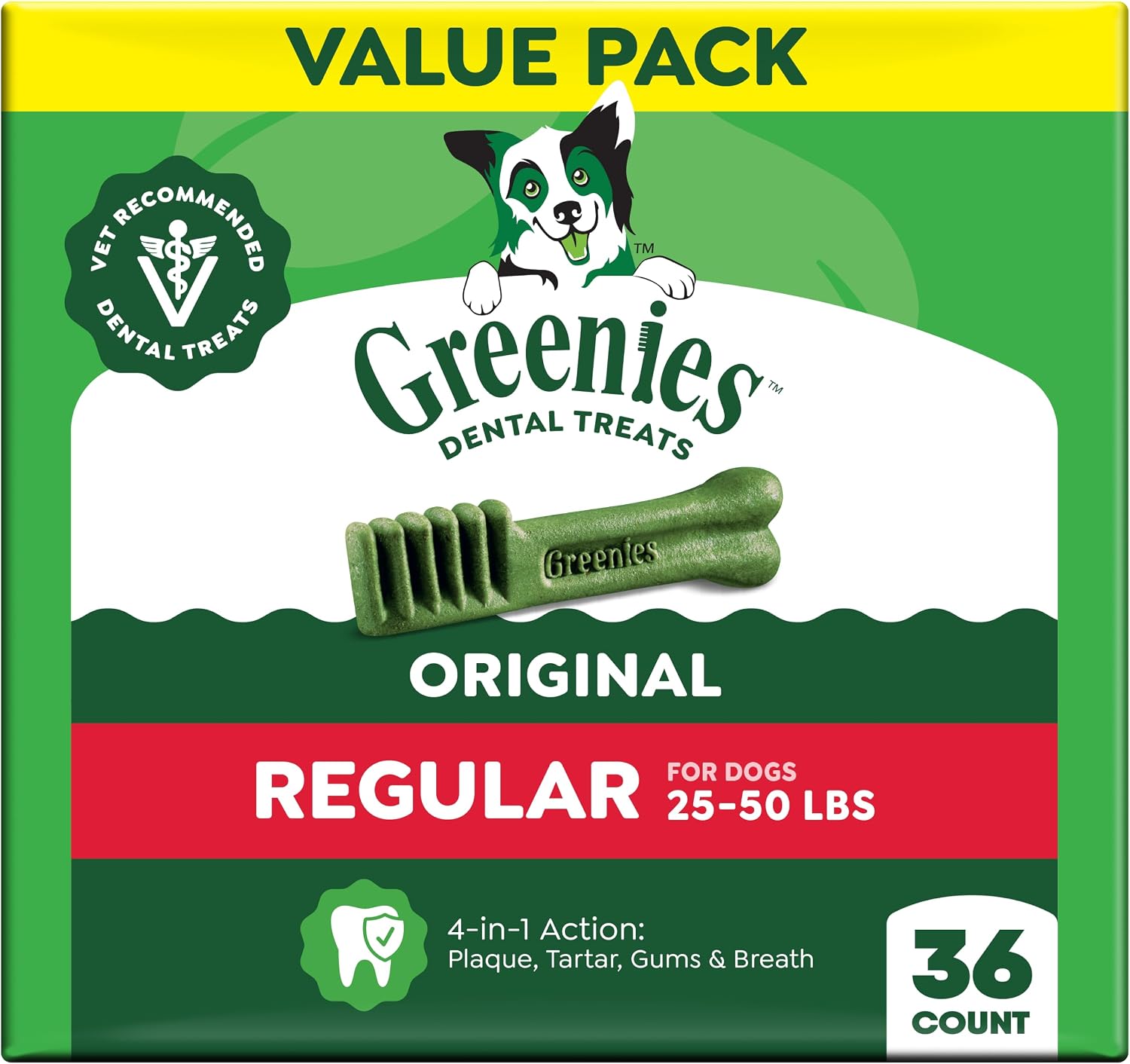
Greenies Regular Dental Dog Treats 36 Count
Best Overall Treat
| Flavor | Original |
|---|---|
| Item Form | Bone |
| Unit Count | 36 Count |
| Breed Recommendation | Medium Breeds |
| Allergen Information | Rawhide-Free |
Greenies Regular Dental Dog Treats are chewy dental chews made for dogs around 25–50 lb to support daily oral care. Designed with a toothbrush-like shape and flexible texture, the chews scrub down to the gumline while remaining bendable so they are less likely to snap; the manufacturer cites reductions in tartar and plaque when used daily. Owners typically give one chew per day as a treat or part of a dental routine, and the pouch packaging is convenient for storage. The treats are rawhide-free, made with common pantry ingredients plus added vitamins and minerals, and are veterinarian-recommended and VOHC-accepted as an option for plaque and tartar control. Expect good palatability — most dogs find the original chicken flavor tasty — but these are a daily edible product so supervision is recommended to ensure adequate chewing. They are sized for medium breeds, so buyers with very small or very large dogs should pick the appropriate size variant.
Best for: Dog owners who want a convenient, veterinarian-recommended daily chew that most medium-breed dogs will eat and that supports routine plaque and tartar control.
Less Ideal for: Owners of toy or giant breeds, or dogs with specific grain or ingredient sensitivities, should choose a size or formula made for those needs instead.
- Toothbrush-shaped chewy texture that helps clean to the gumline
- Vet-recommended formula accepted by VOHC for plaque and tartar control
- Rawhide-free and bendable texture reduces risk of snapping
- Formulated with added vitamins and minerals and common ingredients familiar to pet owners
- Single-daily-use and pouch packaging make them easy to include in a routine
- Sized specifically for medium dogs so this package is not ideal for very small or very large breeds
- Contains wheat and other common allergens that may not suit dogs with ingredient sensitivities
Verdict: The best overall treat for dog teeth cleaning balances plaque-scraping texture, palatability, safety, and ingredients to work for most dogs and everyday use.
Pedigree Dentastix Small & Toy 24ct
Best Budget Treat

| Flavor | Bacon & Chicken |
|---|---|
| Item Form | Bone |
| Target Species | Dog |
| Breed Recommendation | Small Breeds |
| Unit Count | 5.08 Ounce |
Pedigree Dentastix Small & Toy are daily dental chews sized for dogs 7 to 22 lb that use an X-shaped, chewy design to mechanically scrape plaque while the dog chews. They are intended to be given once per day as part of a regular oral care routine and are VOHC accepted for tartar control, which supports their claimed cleaning benefit. The treats come in a dual bacon and chicken flavor most small dogs find palatable and are developed with Waltham Science input. Practical benefits include easy daily dosing, tangible plaque-scraping action from the X-shape, and formulation without added sugar. Important limitations are that the product is a treat rather than a substitute for brushing and it is sized and dosed only for adult small breeds, so it is not appropriate for puppies or very small dogs under the recommended weight. Ingredient list includes common grains and preservatives, so owners seeking grain-free or limited-ingredient options will want alternatives. For buyers prioritizing a low-cost daily dental aid, these deliver decent cleaning performance and wide availability.
Best for: Budget-conscious owners of adult small or toy breeds who want an affordable, daily dental treat that provides measurable plaque and tartar control as part of a regular oral care routine.
Less Ideal for: Owners seeking grain-free or limited-ingredient treats, or those who need a chew sized for puppies, very small dogs under 7 lb, or larger breeds.
- X-shape and chewy texture designed to scrape plaque from hard-to-reach tooth surfaces
- VOHC accepted for tartar control, supporting its dental benefit claims
- Formulated with no added sugar and flavored with real chicken for palatability
- Convenient once-a-day dosing sized specifically for small and toy adult dogs
- Contains grains, artificial colors, and preservatives that some owners avoid
- Not suitable for puppies or dogs under the recommended weight range
Verdict: The best budget treat delivers decent dental benefit and acceptable ingredients at a low price for owners who prioritize cost without sacrificing basic cleaning performance.
Nylabone Nutri Dent Dental Chews 40 Count
Best Long-Lasting Treat

| Flavor | Filet Mignon |
|---|---|
| Item Form | Chewable |
| Specific Uses For Product | Dental Care |
| Unit Count | 40 Count |
| Breed Recommendation | Medium Breeds |
Nylabone Nutri Dent dental chews are edible chew treats meant to be given as a daily supplement to a medium dog's routine for dental care and breath control. Each chew is textured with 360-degree scrubbing nubs and a multi-textured design so chewing helps mechanically dislodge plaque and tartar while releasing a filet mignon flavor dogs like. The recipe emphasizes limited, easily digestible ingredients and no artificial colors or preservatives, and the bag contains 40 chews sized for medium breeds. In practice these treats work best as a supervised reward or finishing chew rather than a replacement for brushing, and they are intended for dogs with permanent teeth. They are softer and more edible than hard rubber chews, so they will not withstand heavy, aggressive chewers as long as durable chew toys, but they do occupy many dogs for a moderate-length session and contribute to fresher breath. Follow package directions, supervise chewing, and provide water when offering these treats.
Best for: Owners seeking an edible daily dental chew that freshens breath and gives medium dogs a satisfying, moderate-length chewing session as part of a hygiene routine.
Less Ideal for: Dogs that are heavy, aggressive chewers or owners who need a fully indestructible, long-lasting chew toy should look at more durable non-edible options.
- 360-degree textured nubs help mechanically clean teeth from multiple angles
- Limited-ingredient, easily digestible formula with no artificial colors or preservatives
- Made in the USA and available in a 40-count bulk pack for frequent use
- Filet mignon flavor tends to be highly palatable for many dogs
- Not as long-lasting for aggressive or power chewers compared with durable chew toys
- Contains wheat starch and other ingredients some dogs may be sensitive to
Verdict: The best long-lasting treat is designed to withstand extended chewing so it mechanically reduces plaque and tartar while occupying dogs for longer sessions.
Tartar Shield Soft Rawhide Chews Small
Best Soft Treat

| Intended size | Small dogs under 35 lbs |
|---|---|
| Count | 12 ct |
| Country of origin | Made in USA |
Tartar Shield Soft Rawhide Chews are daily dental treats for small dogs that combine a soft, chewy texture with clinically proven anti-tartar actives. Each chew is formulated with sodium tripolyphosphate and cetyl pyridinium chloride to help reduce plaque and tartar buildup and is intended to be given once per day as a snack rather than a meal. The soft rawhide texture makes these easier on older teeth, puppies with developing jaws, or dogs with dental sensitivity compared with hard chews, while the bacon flavor increases acceptance. They are portioned for dogs under 35 pounds and the package directions note toy breeds may need half chews, so dosing is straightforward. Limitations include that these are still rawhide-based treats so supervision is advised, and they are not a replacement for brushing or professional dental care. For owners seeking a veterinarian-backed, easy-to-feed daily chew that balances gentleness with measurable tartar control, these work well.
Best for: Careful owners of small or aging dogs who want an easy-to-feed, vet-backed daily dental chew to help reduce tartar without hard crunching.
Less Ideal for: Owners who avoid rawhide products, have dogs with known rawhide allergies, or who need a complete substitute for professional dental cleaning should consider alternatives.
- Soft texture easier on sensitive teeth and small jaws
- Contains clinically tested oral actives (sodium tripolyphosphate and cetyl pyridinium chloride) for tartar reduction
- VOHC accepted and vet-recommended formula
- Bacon flavor improves palatability for picky dogs
- Made from rawhide so requires supervision and may not suit dogs with rawhide sensitivities or strict diets
- Intended as a daily treat not a substitute for brushing or veterinary dental care
Verdict: The best soft treat is formulated to be easy on teeth and jaws while still offering mild abrasive action for dogs with dental sensitivity, small jaws, or older teeth.
Minties FreshBites Dental Chews 50 Count
Best Low-Calorie Treat

| Flavor | Mint |
|---|---|
| Item Form | Stick |
| Age Range Description | Adult |
| Unit Count | 5 Ounce |
Minties FreshBites are soft, chewy dental sticks formulated to freshen breath and assist with plaque removal while keeping calories very low. Each chew contains natural breath fresheners—alfalfa, peppermint, fennel, dill, and parsley—plus a chicken flavor that makes them appealing to most adult dogs. The texture softens as dogs chew, which helps the treat reach teeth surfaces and crevices for mechanical cleaning during regular use. At about 7.5 calories per piece and made without wheat, corn, soy, salt, or artificial dyes, these treats are suited to frequent rewarding or post-meal breath touch-ups without adding much to daily caloric intake. Practical benefits include gentle digestion for sensitive tummies and an easy single-bag grab-and-go format for training or between-meal treats. Limitations are that soft chews are less abrasive than hard dental chews or toothbrushes, so they should complement rather than replace brushing or professional cleanings, and a small bag size means frequent repurchasing for multi-dog households.
Best for: Buyers who prioritize keeping their dog’s daily calories low while still offering frequent breath-freshening rewards and gentle dental support.
Less Ideal for: Owners seeking the most abrasive, plaque-scraping option or a long-lasting chew for heavy chewers should choose firmer dental chews or consider regular brushing and professional cleanings instead.
- Very low calorie at ~7.5 calories per treat so you can reward often
- Contains five natural breath fresheners to help neutralize odors
- Soft, chewy texture that reaches crevices as it softens during chewing
- Formulated without wheat, corn, soy, salt, or artificial dyes for sensitive stomachs
- Soft texture is less mechanically abrasive than hard chews or brushing
- Single 5-ounce bag provides a limited unit count for frequent treaters
Verdict: The best low-calorie treat provides teeth-cleaning benefits and breath improvement while keeping calories minimal for dogs on restricted diets or weight-concerned owners.
Dentalife Purina Daily Dental Chews Large
Best Breath-Freshening Treat

| Unit Count | 18 Count |
|---|---|
| Flavor | Chicken |
| Breed Recommendation | Large Breeds |
| Item Form | Stick |
DentaLife Daily Oral Care chews are designed as a once-daily dental treat for large adult dogs that targets tartar and bad breath. The porous, chewy texture with eight ridges and thousands of air pockets is intended to scrub teeth and reach the gumline while a chicken-flavored recipe keeps most dogs interested. VOHC acceptance and manufacturer testing claim an average 57% reduction in tartar, which makes these chews a practical addition to an oral care routine alongside brushing. They come in a resealable pouch to help preserve freshness and are labeled for dogs 40+ pounds. Ingredients include common cereal-based binders, preservatives, and a chicken by-product meal, so owners wanting limited-ingredient or grain-free options will need alternatives. Also these are treats, not meal replacements, and caloric intake should be managed so they do not exceed daily treat allowances. For breath control and tartar reduction without daily brushing, these chews offer an easy, vet-accepted supplement to dental care but should be used as directed.
Best for: Buyers who want a simple, once-daily treat that actively targets bad breath and tartar for large adult dogs and prefer a vet-accepted supplement to brushing.
Less Ideal for: Owners seeking grain-free, single-protein, or puppy-safe dental treats should consider other specialized options.
- Porous, ridged design reaches teeth and gumline for mechanical cleaning
- VOHC accepted and manufacturer-tested to reduce tartar
- Resealable pouch helps keep chews fresh between uses
- Chicken flavor encourages acceptance by picky large dogs
- Contains grain and common preservatives so not suitable for grain-free or limited-ingredient diets
- Sized and formulated specifically for large dogs, not appropriate for small breeds
Verdict: The best breath-freshening treat focuses on ingredients and textures that neutralize odors and leave a noticeably fresher mouth after chewing.
Yummy Combs Dog Dental Treats Small
Best Premium Treat

| Flavor | Small |
|---|---|
| Item Form | Chunk |
| Unit Count | 24 Ounce |
| Number of Items | 42 |
Yummy Combs are honeycomb-shaped dental treats that combine a high-protein recipe with a textured design meant to clean teeth as the dog chews. Designed for daily use, the deep honeycomb pockets surround each tooth to floss and scrub down to the gum line, which the brand says produces better cleaning than a toothbrush or standard dental stick. The formula lists 44% animal protein plus ingredients like salmon oil, glucosamine, and chondroitin, so the treats also aim to support coat and joint health while being grain-free and free of artificial colors. They are portioned for small dogs (pack labeled Small, 42-count, 24 oz) and the bag recommends one treat per day. Practical benefits include vet-approved safety testing, a design that discourages gulping, and a slippery coating intended to let small pieces pass safely if chewed off. Limitations are that efficacy will depend on chewing behavior and supervision, and owners of dogs that inhale treats or gulp may still need to split or closely monitor portions; dosing guidance is one-per-day which may not suit highly tartar-prone dogs without additional dental care.
Best for: Owners seeking a premium daily dental treat with a high-protein, vet-tested formula and textured design to improve oral hygiene as part of a regular home care routine.
Less Ideal for: Owners who need an intensive therapeutic dental product for severe periodontal disease or who have dogs that consistently swallow treats without chewing should look for alternative solutions or veterinary dental care.
- Honeycomb shape provides 360-degree scrubbing and flossing action around teeth
- High animal protein content (44%) with added functional ingredients like glucosamine and salmon oil
- Grain-free recipe with no artificial colors, aimed at cleaner ingredient profile
- Vet-tested design that discourages gulping and is portioned for small breeds
- Single daily-treat dosing may be insufficient for dogs with heavy tartar buildup
- Cleaning performance depends on chewing style and cannot replace professional dental scaling if needed
Verdict: The best premium treat offers top-tier ingredients, proven dental efficacy, and superior production standards for owners willing to pay more for enhanced safety and results.
Choosing the Right Treat Dog Teeth Cleaning: Key Factors to Consider
Texture and Abrasion
Texture determines how well a treat can mechanically scrape plaque from teeth. A treat with a porous, ridged, or firm surface helps dislodge tartar with each chew, while a completely soft or gummy treat will not provide meaningful abrasion.
Consider how aggressive the texture is relative to your dog's dental condition. Very hard treats can risk fractured teeth in dogs with existing dental disease, whereas treats that are too soft will wear down without cleaning. Aim for a middle ground where the treat is firm enough to scrub but has some give to avoid excessive force.
Size and Shape
Treats should match your dog's mouth size and chewing style. Small, thin shapes suit toy and small-breed mouths and let smaller dogs get the necessary contact with tooth surfaces. Larger breeds often need bigger, chunkier treats that present more chewing surface and prevent accidental swallowing.
Shape matters because ridges, grooves, or hollow centers can increase contact with teeth. Long, chewable sticks offer extended contact time while bite-sized chews are easier to use as frequent rewards. Choose a shape that promotes lateral chewing across different tooth surfaces rather than one that encourages gulping.
Ingredient Safety and Digestibility
Ingredients affect both oral benefits and overall health. Look for limited, recognizable ingredients and avoid unnecessary fillers, artificial colors, and certain preservatives that can trigger sensitivities. Digestibility matters because treats used daily should not cause gastrointestinal upset or contribute to food intolerance symptoms.
Protein sources, vegetable binders, and natural flavorings are common, but some dogs require novel proteins or grain-free options for known sensitivities. Check for clear labeling on potential allergens and choose options with transparent sourcing and manufacturing information when possible.
Calorie Count and Feeding Frequency
Treats given for dental care are typically used more often than occasional rewards, so calories add up. Consider the treat's caloric density and adjust daily food portions to keep daily energy intake balanced.
Feeding guidelines should be explicit so you can plan frequency without overfeeding. Low-calorie dental treats or portion-controlled sizes allow for more frequent use, which increases the cumulative cleaning effect while limiting weight gain risk.
Safety and Choking Risk
Choking is a real hazard, especially with firm or brittle treats. Avoid hard lumps or rigid shapes that can break into sharp fragments. For power chewers or dogs that gulp, opt for treats designed to soften with chewing or that are large enough to discourage swallowing whole.
Supervise the first few sessions with any new treat to observe chewing patterns and breakage. Also consider any dental conditions; fractured or loose teeth require veterinary guidance before introducing new chew items.
Palatability and Training Value
If the treat is unappealing, dogs will not chew it long enough for dental benefits. Taste and aroma should be balanced with functional properties. Highly palatable treats that also encourage sustained chewing maximize cleaning time and owner compliance.
Training value is useful when you want to blend dental care with behavior work. Small, tasty pieces are helpful for reinforcing good habits, while longer chews work as a dedicated dental reward after brushing or a dental check.
How Often Should I Give Dental Treats to My Dog?
Frequency depends on the treat type, caloric content, and your dog's overall dental health. Some low-calorie daily chews are formulated for once-daily use, providing a routine abrasive action each day. Longer-lasting chews may be given less frequently, for example a few times per week, to prevent excess calorie intake while still offering sustained tooth contact.
If your dog is overweight or on a restricted diet, consult your veterinarian about portion adjustments before adding daily dental treats. Also factor in other treats and table scraps so the total daily calorie budget remains appropriate.
- Use low-calorie daily chews for everyday maintenance.
- Reserve denser, long-lasting chews for occasional deep-clean sessions.
- Adjust feeding amounts in your dog's meal plan to account for treat calories.
What to Do if Your Dog Prefers Soft Treats
Some dogs will ignore firm dental chews and favor soft treats. In that case, introduce texture gradually: offer a slightly firmer treat in small portions and pair it with positive reinforcement to encourage sustained chewing. You can also use soft treats to reward following a brushing session to build a routine around oral care.
If your dog consistently refuses functional chews, focus on alternative approaches like more frequent toothbrushing, dental wipes, or veterinary dental cleanings to maintain oral health.
- Combine soft treats with brushing to reinforce positive behavior.
- Try varied shapes and flavors to find a texture your dog will accept.
- If refusal persists, consult your veterinarian for alternative dental strategies.
How to Introduce a New Dental Treat Safely
Start with supervised sessions and follow the manufacturer's feeding guidance for your dog's weight and age. Offer a single piece and watch how the dog chews and whether they break the treat into large pieces. If breakage is excessive, discontinue and try a different texture or larger size.
Introduce new treats alongside regular dental care, not as a replacement for professional advice. If your dog has existing dental issues, get veterinary clearance first so a professional can assess whether a chew is appropriate.
- Begin with short supervised sessions.
- Observe for aggressive chewing or fragmenting.
- Pause use and seek veterinary input if your dog has dental disease.
Can Treats Replace Toothbrushing?
Treats do not replace toothbrushing. Brushing mechanically cleans all tooth surfaces, especially the inner sides and gumline where tartar commonly builds. Dental treats can reduce surface plaque and freshen breath, but they are best used as a complement to regular brushing and professional cleanings.
Use treats to maintain oral hygiene between brushings and to reinforce positive habits, while still scheduling periodic veterinary dental checkups and cleaning when indicated.
- Treats are a supportive tool, not a substitute for brushing.
- Combine both for the best daily maintenance.
- Keep up with regular veterinary dental assessments.
How We Chose the Best Treat Dog Teeth Cleaning
We selected products using a practical, safety-first framework focused on outcomes owners care about: mechanical plaque removal, ingredient transparency, and day-to-day suitability. Our evaluation looked at chew texture and shape to judge how effectively a treat can abrade plaque without risking dental damage. Ingredient quality and absence of high-risk additives were weighed to reduce digestive upset and allergic reactions. We also considered portion size and caloric density so treats can be used regularly without disrupting weight management. We excluded any items not specifically marketed or formulated to assist with dental cleaning, as well as treats lacking ingredient lists or clear feeding guidelines. Products that relied solely on breath-masking agents without mechanical action were deprioritized. Final selections balanced cleaning potential, safety, and likely acceptance by dogs across sizes.
Our full evaluation process is outlined in our review methodology.
FAQ
are dental treats safe for puppies?
Puppies can benefit from specially formulated dental treats, but choose age-appropriate textures and sizes. Very hard chews are not suitable for developing teeth, so opt for softer dental options designed for growth stages and follow feeding guidance.
do dental treats really reduce tartar?
Dental treats can reduce surface plaque through abrasive action and enzyme additives in some formulas, which helps slow tartar buildup. Their effectiveness varies by texture, frequency of use, and individual dog chewing behavior, so results are often incremental rather than complete removal.
what if my dog has missing or loose teeth?
If your dog has missing, loose, or fractured teeth, avoid firm or brittle dental chews that could cause pain or further damage. Consult your veterinarian before introducing any new chew and follow their recommendations for softer alternatives or dental treatment.
are natural or limited-ingredient treats better for dental health?
Natural or limited-ingredient treats can reduce the risk of allergies and digestive upset, which helps when treats are used frequently. Ingredient choice does not directly determine mechanical cleaning ability, but safer, digestible formulations make daily use more practical.
how long does it take to see breath improvement?
Some improvement in breath can occur within a few days if tartar formation was minimal and the dog chews consistently. For more persistent odor linked to periodontal disease, noticeable change may take longer and veterinary treatment may be necessary.
Final Verdict
Prioritize treats that balance effective texture with ingredient safety and appropriate portioning. Match size and shape to your dog's chewing style and supervise the first uses to ensure safe breakage patterns. Use dental treats as a regular maintenance tool alongside toothbrushing and veterinary dental checks. By focusing on texture, digestibility, and feeding frequency, you can choose treats that support oral health without creating new risks or calorie problems.

