

If you own a labrador, you know mental stimulation matters as much as walks and training. labs are intelligent, energetic, and prone to boredom that can turn into destructive chewing or attention-seeking. Choosing the right puzzle toy helps keep your dog engaged, encourages problem-solving, and can reduce excess energy when you cannot be directly interactive. This guide presents seven shortlisted puzzle toys that work well for labradors. We evaluated options for durability, toy design, and the type of cognitive challenge they provide. Read on to find the styles and features that match your dog's play style and training goals.
Top Picks at a Glance
| Best Overall Puzzle Toy A versatile pick that balances challenge, durability, and fun | Outward Hound Nina Ottosson Dog Brick |  |
| Best Budget Puzzle Toy An affordable option that still entertains and dispenses treats | Joansan Dog Puzzle Toy Small |  |
| Best Premium Puzzle Toy Higher-end materials and more complex play features for long-term use | KADTC XL Dog Puzzle Toy |  |
| Best Durable Puzzle Toy Built tougher to withstand strong chewers like energetic Labradors | West Paw Qwizl Dog Puzzle Toy Large |  |
| Best Adjustable Puzzle Toy Difficulty settings you can change as your dog learns and improves | KADTC Slow Feeder Dog Bowl |  |
| Best Compact Puzzle Toy Smaller form factor for easy storage and travel with your dog | Outward Hound Snoop Treat Dispenser |  |
| Best High-Capacity Puzzle Toy Holds more treats or kibble for longer play sessions | KADTC All-in-One Dog Puzzle Toy XL |  |
Outward Hound Nina Ottosson Dog Brick
Best Overall Puzzle Toy

| Pet Toy Type | Puzzle |
|---|---|
| Recommended Uses For Product | Indoor, Mental Health, Playing, Training |
| Additional Features | Lightweight, Portable |
| Water Resistance Level | Not Water Resistant |
| Material Type | Plastic |
The Outward Hound Nina Ottosson Dog Brick is a Level 2 interactive puzzle that challenges dogs to lift lids, slide red sliders, and remove bone covers to find hidden treats or kibble. Designed for supervised indoor play, it has multiple treat compartments and several ways to increase or decrease difficulty so you can match the puzzle to your dog's skill level. The plastic construction is lightweight and portable, and the food-safe materials are BPA, PVC, lead, and phthalate-free, making it simple to fill, clean, and reuse. It also doubles as a slow feeder for dogs that bolt their food, turning mealtime into an enrichment session. Limitations include the plastic pieces which are not chew-proof, so the toy requires supervision and is unsuitable for heavy chewers who may disassemble components. For many owners the adjustable challenge, clear learning curve for dogs, and moderate treat capacity make this one of the most versatile puzzle toys available.
Best for: Owners who want a single, versatile puzzle that provides adjustable mental stimulation and can double as a slow feeder during supervised indoor play.
Less Ideal for: Dogs that are aggressive chewers or owners who need an unsupervised, indestructible toy should consider more rugged options.
- Adjustable difficulty with lids, sliders, and removable covers to tailor challenge level
- Multiple treat compartments that also allow use as a slow feeder
- Made from food-safe materials and easy to clean
- Lightweight and portable for indoor supervised play
- Plastic construction is not chew-proof and requires supervision to prevent damage
Verdict: The best overall puzzle toy delivers the right mix of engaging mechanics, durability for active chewers, and easy refillability for most Labrador owners.
Joansan Dog Puzzle Toy Small
Best Budget Puzzle Toy
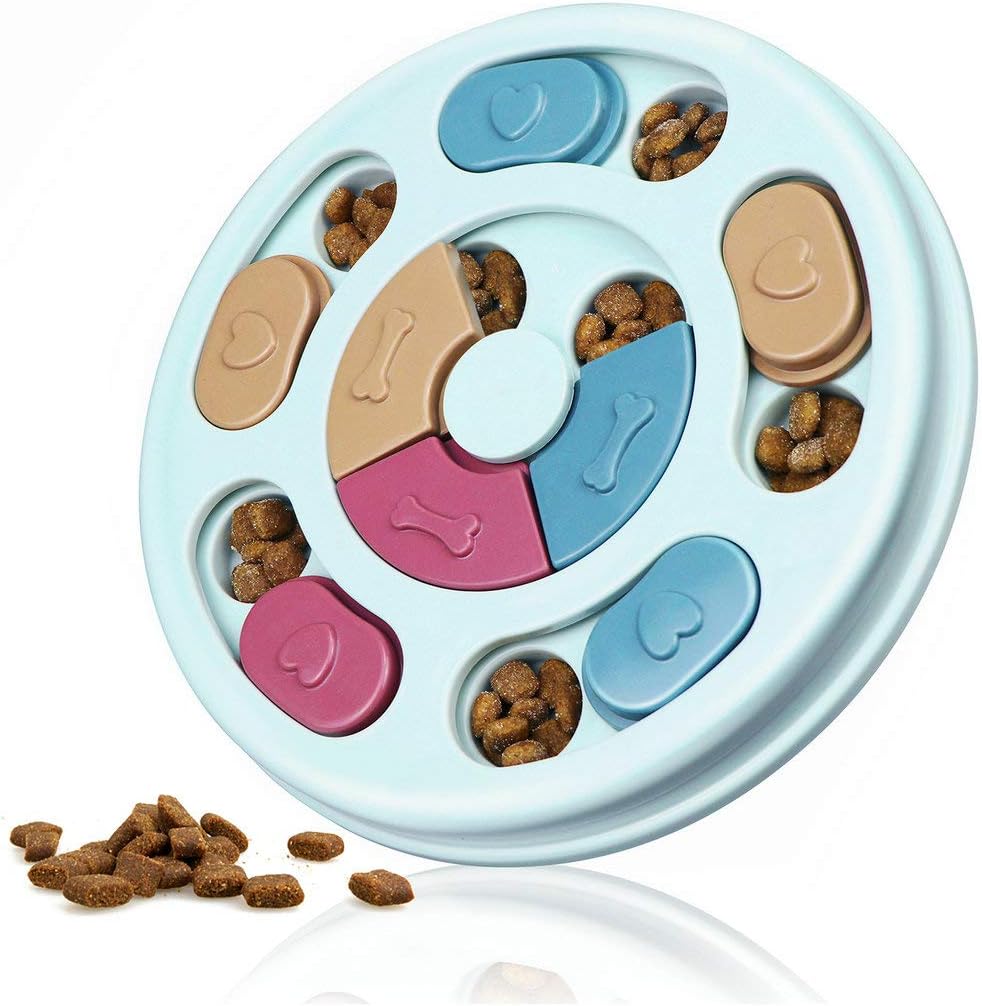
| Pet Toy Type | Puzzle |
|---|---|
| Breed Recommendation | Small dogs, media dogs |
| Recommended Uses For Product | Training |
| Material Type | Plastic |
This plastic sliding-puzzle treats toy gives small dogs a nose-and-paw challenge that rewards problem solving with food. The board uses movable sliders and multiple holes where you hide kibble or small treats, so puppies learn to nudge pieces to reveal rewards and slow down fast eaters. It is lightweight, water resistant, and advertised as easy to wash, which makes it convenient for daily use and messy treat sessions. The toy is intended for supervised mental exercise and training rather than heavy chewing, and the seller warns to remove it if damaged and not allow it as a chew toy. You can adjust a screw on the back to change slider tension and raise difficulty as your puppy improves. Limitations are that it is plastic and not meant to withstand strong chewers, and very food-motivated pups may figure the puzzles out quickly, which reduces long-term novelty. For short interactive training sessions and to slow feeding while boosting problem solving, this puzzle performs well for toy breeds.
Best for: Buyers looking to give a toy poodle puppy short, focused mental workouts and slow-feed sessions using a portable treat-dispensing puzzle.
Less Ideal for: Owners who need a chew-proof or long-lasting durable toy for aggressive chewers should choose a sturdier option made for chewing.
- Provides nose-and-paw puzzle play with multiple treat compartments
- Double duty as a slow feeder to reduce gulping
- Adjustable slider tension lets you increase difficulty as puppy learns
- Lightweight, water resistant and easy to clean for everyday use
- Made of plastic and not intended for heavy chewers
- Can lose novelty for very food-savvy puppies once solved
Verdict: The best budget puzzle toy gives reliable mental stimulation and treat-dispensing value for owners who need a low-cost, everyday enrichment option.
KADTC XL Dog Puzzle Toy
Best Premium Puzzle Toy

| Material Type | Acrylonitrile Butadiene Styrene |
|---|---|
| Pet Toy Type | Puzzle |
| Indoor Outdoor Usage | Indoor, Outdoor |
| Size | Extra Large |
The KADTC XL Dog Puzzle Toy is a heavyweight plastic brain game that combines 18 treat cups, two sliding covers, and movable path blockers so you can scale difficulty from easy to very challenging. Typical use is filling the small cups with kibble or treats and arranging blockers to create new routes; dogs must sniff, paw, and slide pieces to access food which slows eating and provides sustained mental work. The board is made from food-grade ABS, dishwasher safe, and includes four non-slip pads and an almost 4 pound mass that helps it stay put during active play. Notable features are the modular "level 1 to infinite" design that keeps the puzzle fresh as a dog improves, integrated pieces that do not detach, and water resistance for easy cleanup. Limitations are that it is intended for pawing and nudging rather than chewing, so it should be put away if a dog is destructive, and the plastic construction, while durable, can still show teeth marks with heavy chewers. Also, its extra-large footprint requires floor space and may not fit tight living areas.
Best for: Buyers who prioritize a long-lasting, sophisticated enrichment toy and want a single puzzle that can be stepped up over time for sustained mental challenge.
Less Ideal for: Households where dogs are aggressive chewers or where floor space is extremely limited should consider smaller or chew-proof alternatives.
- Modular level system lets you increase difficulty as a dog learns
- Large number of treat cups (18) and sliding covers for extended play
- Food-grade ABS is dishwasher safe and free of BPA, PVC, and phthalates
- Heavy, non-slip base and pads keep the board steady during use
- All pieces remain attached to the board so nothing is lost after play
- Not designed as a chew toy and should be removed from heavy chewers
- Extra-large footprint needs dedicated floor space
Verdict: The best premium puzzle toy is for owners willing to pay more for superior build quality, multi-stage challenges, and longer-lasting engagement.
West Paw Qwizl Dog Puzzle Toy Large
Best Durable Puzzle Toy

| Pet Toy Type | Puzzle |
|---|---|
| Breed Recommendation | All Breed Sizes |
| Water Resistance Level | Water Resistant |
| Additional Features | Portable |
| Material Type | Plastic |
The West Paw Qwizl is a treat-dispensing puzzle toy made from the brand's tough Zogoflex material that encourages problem solving and independent play. Dogs hold the grooved, bone-shaped toy with their paws and work treats out through side vents that release aroma and small access points, which makes bully sticks, dental chews, and similar treats last longer. It is dishwasher-safe on the top rack, floats for water play, and is marketed as non-toxic and recyclable. In practice the Qwizl is great for extending chew sessions and slowing fast eaters while keeping active chewers engaged mentally. It is portable and water resistant for outdoor use, but very determined power chewers may eventually puncture or shred any soft plastic product over time. The toy is sized and styled for larger dogs and is backed by a manufacturer durability guarantee, though buyers should still supervise initial use with strong chewers and rotate toys to maintain interest.
Best for: Buyers who prioritize a chew-resistant treat-dispensing toy that adds mental enrichment and works well for longer supervised play sessions with medium to large dogs.
Less Ideal for: Owners seeking an indestructible solution for extreme, nonstop power chewers or those who need multi-stage puzzles that can be progressively adjusted.
- Made from durable Zogoflex material that is non-toxic and recyclable
- Treat-dispensing design extends life of bully sticks and dental chews and promotes mental stimulation
- Dishwasher-safe top rack and floats for easy cleaning and water play
- Paw-friendly grooves and vents make it easy for dogs to grip and manipulate independently
- Not indestructible for extreme power chewers who can eventually puncture or shred plastic toys
- Single-piece plastic design offers limited variation in challenge compared with multi-part puzzle toys
Verdict: The best durable puzzle toy is designed to tolerate heavy chewing and rough play while still offering an engaging puzzle experience for large, active dogs.
KADTC Slow Feeder Dog Bowl
Best Adjustable Puzzle Toy

| Capacity | 1.1 pounds |
|---|---|
| Material Type | Polypropylene |
| Operation Mode | Manual |
| Age Range Description | All Life Stages |
This KADTC slow feeder turns mealtime into a paced, interactive task by requiring dogs to paw a clear rotating top so kibble drops from an outer chamber into a central bowl. You set the difficulty by widening or narrowing the outlet, which can stretch a fast 30-second gulp into a 5–60 minute meal depending on kibble size and setting. The wide low profile works for small to large breeds and the 4-cup outer chamber is large enough to replace a regular dinner bowl for most dogs. Rubber feet and included stick-on grip pads help prevent sliding, and the whole polypropylene unit is dishwasher safe and free of BPA, PVC, and phthalates. It needs no batteries and is simple to teach by demonstrating the spin once or twice. Limitations include that wet or sticky foods will not work and it is a feeder not a chew toy, so supervision is advised with heavy chewers or very destructive dogs.
Best for: Owners who prioritize reliably slowing fast eaters while also wanting a durable, easy-to-clean feeder that adds simple mental stimulation at mealtimes.
Less Ideal for: People who feed wet or sticky diets, or households with dogs that destroy toys and will chew plastic feeders should look for sturdier alternatives or supervised use.
- Adjustable outlet creates a wide range of difficulty to slow eating from 5 to 60 minutes
- Large 4-cup outer chamber holds a full meal for most dogs so it can replace a regular bowl
- Dishwasher-safe, food-grade polypropylene with no BPA, PVC, or phthalates
- Rubber feet and included adhesive grip pads reduce sliding on hard floors and carpet
- Not suitable for wet, sticky, or very large kibble that will not drop through
- Not intended as a chew toy so very aggressive chewers need supervision or removal after meals
Verdict: The best adjustable puzzle toy lets owners increase or decrease challenge levels so Labradors can progress without getting bored or frustrated.
Outward Hound Snoop Treat Dispenser
Best Compact Puzzle Toy

| Pet Toy Type | Treat Dispenser Toy |
|---|---|
| Recommended Uses For Product | Boredom Buster, Brain Game, Mental Stimulation, Playing, Treat Dispensing |
| Indoor Outdoor Usage | Indoor, Outdoor |
| Material Type | Plastic |
| Scent Name | Mint |
The Outward Hound Snoop is an interactive treat-dispensing toy that hides treats in a deep crevice so dogs must sniff, nudge, and paw to extract rewards. Made from Orbee-Tuff TPE, it is squishy yet durable for supervised play and is infused with mint oil to help freshen breath while dogs work for treats. Use it as a boredom buster, a brain game, or to slow down fast treat eaters by loading small kibble or treats into the cavity; for extra challenge you can insert a 2.5" Orbee Nook ball. It cleans easily with warm soapy water and air drying, and is water resistant for indoor or outdoor sessions. Important limitations are that it is not a chew toy and should not be left with unsupervised or aggressive chewers, and really heavy chewers may damage it over time. For owners focused on mental enrichment, it delivers engaging, repeatable play in a compact package.
Best for: Owners who want to reduce boredom with puzzle-style, treat-reward play and prioritize mental stimulation over rough chewing durability.
Less Ideal for: Pet owners seeking a heavy-duty chew toy or those who need unsupervised toys for strong, destructive chewers should look elsewhere.
- Interactive treat-dispensing design promotes sniffing and problem solving
- Made from Orbee-Tuff TPE that is BPA, lead, and phthalate-free
- Mint-infused material helps freshen breath during play
- Compatible with an Orbee Nook for added challenge and longer play
- Easy to clean with warm water and soap and air dry
- Not intended as a chew toy and requires supervision during use
- May not withstand determined or heavy chewers over time
Verdict: The best compact puzzle toy is a space‑saving, portable option that still provides meaningful mental stimulation for Labradors on the go or in smaller homes.
KADTC All-in-One Dog Puzzle Toy XL
Best High-Capacity Puzzle Toy

| Pet Toy Type | Puzzle |
|---|---|
| Additional Features | Six Gameplay – Five Difficulty Levels |
| Water Resistance Level | Waterproof |
| Material Type | Acrylonitrile Butadiene Styrene |
| Breed Recommendation | All Breed Sizes |
The KADTC All-in-One Dog Puzzle Toy is an extra-large, modular slow-feeding puzzle that turns kibble and small treats into multi-step challenges. It ships ready to use and includes six gameplay configurations with five difficulty settings so you can start simple and increase complexity as your dog learns. Built from food-grade ABS and marketed as waterproof and scratch-resistant, the toy is designed for frequent interactive sessions where dogs paw, nudge, spin, slide, and search to uncover rewards. The XL play surface gives plenty of room for single or supervised multi-dog use, and the built-in pieces remove loose parts that can get lost. Practical benefits include longer replay value compared with single-mode toys, help slowing fast eaters when used for meals, and an approachable learning curve for puppies and novice players. Important limitations: it is meant for supervised puzzle play rather than chewing, and very determined chewers could damage plastic over time despite the durable construction.
Best for: Owners who prioritize a long-lasting, high-engagement enrichment toy and are willing to invest in a premium, multi-level puzzle to keep curious or food-motivated dogs mentally stimulated.
Less Ideal for: People who need an indestructible chew toy for heavy chewers or those who prefer single-purpose, low-complexity feeders.
- Multiple gameplay modes and five adjustable difficulty levels keep the challenge fresh as dogs improve
- Extra-large board provides ample play area for small to large breeds and supervised multi-dog turns
- Made from food-grade ABS with certifications for safety, marketed as durable and scratch-resistant
- Ready to use out of the box with built-in pieces so there are no small parts to lose
- Can be used with kibble or small treats to convert feeding into enrichment and slow down fast eaters
- Not designed for unsupervised chewing so it may not suit strong chewers
- Plastic construction can still wear or crack over long-term heavy use by determined dogs
Verdict: The best high-capacity puzzle toy stores more food or treats to extend playtime and reward-seeking for hungry or very active Labradors.
Choosing the Right Puzzle Toy Labrador: Key Factors to Consider
Durability and Material Strength
Durability is essential because labradors are medium-large dogs with strong jaws. A toy that fails quickly creates a safety hazard and loses value quickly.
Choose materials rated for heavy chewing that do not splinter or shred into small pieces. Reinforced seams and thicker sections around contact points increase useful life. Also consider whether the material tolerates repeated washing without weakening.
Type and Complexity of Challenge
Different puzzle designs deliver different cognitive work. Simple hide-and-find compartments suit beginners or short attention spans, while multi-step puzzles require learning sequences and can sustain interest for longer.
Think about whether you want a toy that the dog can solve repeatedly with minor variation or one that you can increase in difficulty. A mix of mechanics, such as sliding, lifting, and retrieval tasks, tends to engage a labrador's problem-solving instincts more effectively than one single trick.
Size and Ergonomics
Size must match a labrador's mouth and play style. A toy that is too small risks being swallowed or chewed apart, while an overly large toy may be awkward to manipulate.
Look for shapes a labrador can pick up, nose, paw, and carry comfortably. Ergonomic edges and textured grips help the dog move parts with nose and paws rather than relying solely on teeth, which can extend play and reduce destructive chewing.
Safety and Non-toxic Construction
Safety goes beyond durability. Materials should be non-toxic and free of loose pieces that can become choking hazards. Avoid toys with small decorative parts or poorly attached elements.
Check that moving components are secured to prevent detachment. Toys designed for food dispensing should have compartments that close securely so treats do not spill and encourage frantic behavior that could lead to accidental ingestion of broken pieces.
Cleanability and Maintenance
Labradors often slobber and carry toys outdoors, so easy cleaning matters for hygiene and longevity. Toys that disassemble or have smooth, non-porous surfaces are easier to sanitize.
Dishwasher-safe components or designs that rinse clean remove food residue and bacteria. Also consider whether replacement parts are available for high-wear pieces so the overall product lasts longer without full replacement.
Adaptability to Training and Enrichment
A puzzle toy that integrates with training provides more value. Toys that can be refilled with different treats, adjusted in difficulty, or used in search-and-seek exercises extend functionality.
Think about whether the toy fits into reward-based training, impulse-control work, or slower feeding practices. Features that let you control the challenge level are especially useful when introducing the toy to a new dog or when using it for graduated enrichment sessions.
How Do I Introduce a Puzzle Toy to a Labrador?
Start slow and make the first sessions clearly rewarding. Show the dog the treat, then demonstrate how the toy releases the treat by nudging or moving it yourself. Allow easy wins at first so the dog associates the toy with success and food.
Keep sessions short and positive. Gradually increase difficulty once the dog masters the initial task. Supervise early attempts to ensure the dog uses nose and paws rather than frantic chewing, and be ready to swap to an easier puzzle if frustration appears.
- Begin with visible treats and obvious openings.
- Praise and reward interim steps, not just the final reward.
- End on a success to build positive association.
What Treats and Fillings Work Best in Puzzle Toys?
Choose treats sized to the puzzle compartments and that do not quickly crumble into dust. Firmer, chewy treats or small healthy kibble pieces are often ideal because they release predictably and do not clog mechanisms.
For longer engagement, mix drier kibble with a small amount of canned food or a soft topper. Freezeable fillings can turn a quick puzzle into a longer-lasting slow feeder on warm days.
- Use treats that match compartment size to avoid jamming.
- Rotate fillings to keep novelty high.
- Consider any dietary restrictions or allergies.
How to Balance Chew Time and Cognitive Play
Labradors benefit from both physical chewing and mental challenge. Too much emphasis on hard chew toys can reinforce jaw-only play, while only cognitive puzzles may not satisfy the need to gnaw. Use a routine that alternates structured puzzle sessions with supervised chew time.
If your lab has a strong chewing drive, choose puzzles with sturdier outer shells and avoid soft, destructible interiors. Monitor wear and retire toys when edges become frayed or small pieces appear.
- Rotate toys to keep interest and preserve durability.
- Use puzzle sessions after exercise to lower frantic behavior.
- Inspect toys regularly for damage.
Can Puzzle Toys Help with Separation Anxiety or Boredom?
Puzzle toys can reduce boredom by providing a focused task and reward. For dogs with mild separation-related pacing or destructive behaviors, a well-chosen puzzle can occupy attention during short absences. However, puzzles are not a substitute for training or behavioral interventions for serious anxiety.
Start with short absences paired with a puzzle to gauge the dog's reaction. If the dog destroys the toy or shows high stress while interacting, consult a trainer for structured desensitization and other strategies.
- Use puzzle toys as one tool within a broader behavioral plan.
- Introduce toys during calm, supervised moments before using them alone.
- Avoid puzzles with easily detachable parts if the dog shows anxiety-driven destruction.
Cleaning and Hygienic Tips for Long-lasting Use
Rinse or wash toys after each messy session to prevent mold and bacteria buildup. Disassemble components when possible to access hidden crevices. For porous materials, more frequent replacement may be necessary because saliva and food residue can penetrate surfaces.
Air-dry toys completely before reassembly and storage. Store puzzle toys in a dry, ventilated area to prevent mildew. Keep an eye on rubberized parts that can degrade over time and replace them when they lose elasticity.
- Dishwasher-safe parts are convenient for thorough cleaning.
- Wipe or rinse between uses if full washing is not practical.
- Rotate and rest toys to allow complete drying.
How We Chose the Best Puzzle Toy Labrador
We prioritized selection criteria that reflect what matters to labradors and their owners. Durability was a primary filter because labradors often apply strong chewing force; we favored toys made from robust materials and designs that resist ripping or crushing. Cognitive design was next: we looked for toys that offer layered challenges, variable difficulty, or progressive problem-solving to keep an intelligent dog engaged beyond a few minutes. Safety and non-toxic materials were required; toys had to avoid small parts that could break off and present a choking hazard. Ease of cleaning was important for hygiene, with many heavy-saliva breeds needing toys that rinse or wash easily. Finally, versatility and refillability were considered so the toy can be used with different treats or integrated into training routines. We excluded flimsy or single-function items, toys clearly intended only for very gentle chewers, and products lacking basic safety information. The final list emphasizes long-term engagement, structural resilience, and practical usability for busy owners and active labradors.
Our full evaluation process is outlined in our review methodology.
FAQ
How often should my labrador play with a puzzle toy?
Often depends on your dog's energy and daily routine. Many owners use short puzzle sessions once or twice a day, especially after exercise or before leaving the house. Start with 10 to 20 minutes and adjust based on interest and fatigue.
Are puzzle toys safe for young puppies and senior labradors?
Puppies and seniors may need different difficulty levels and softer materials. Choose age-appropriate puzzles that avoid small parts and match the dog's current chewing strength. Supervise initial use to ensure the toy suits their abilities.
What signs indicate a puzzle toy is not right for my dog?
Signs include destructive chewing of the toy, repeated frustration without progress, or avoidance. If the dog becomes overly aroused or tries to swallow parts, switch to a sturdier or simpler option and reassess supervision needs.
Can I make my own puzzle toys at home?
Yes. Simple DIY puzzles using muffin tins, folded towels, or cardboard boxes can provide enrichment. Ensure homemade versions have no small pieces that can be chewed off and use sturdy construction suitable for a labrador's strength.
How do I increase the difficulty once my lab masters a toy?
Increase challenge by hiding treats deeper, reducing scent cues, using smaller rewards, or combining mechanisms so the dog must complete multiple steps. Gradually raise difficulty so the dog experiences success and stays motivated.
Final Verdict
Prioritize a balance of durability and engaging challenge when choosing puzzle toys for labradors. Focus on sturdy construction, age-appropriate difficulty, and designs that invite nose-and-paw work rather than pure chewing. Cleaning and safe materials keep toys hygienic and long-lasting. Tradeoffs are inevitable: the toughest toys may offer simpler puzzles, while the most clever designs can be less resistant to aggressive chewing. Choose based on your dog's play style and rotate multiple types so your lab gets both cognitive stimulation and appropriate chewing outlets. With the right approach you can reduce boredom, support training, and make alone time more productive.

