

Picking the right allergenic dog treat matters when your dog has food sensitivities or a reactive stomach. The wrong treat can trigger itching, digestive upset, or ongoing inflammation, while a carefully chosen option lets you reward good behavior without added risk. This guide covers seven shortlisted allergenic treats that prioritize minimal, transparent ingredients and hypoallergenic formulas. We evaluated each option for ingredient simplicity, sourcing transparency, and digestibility to help you find treats that work for training, enrichment, or everyday rewards. Read on to see which features matter most and how to match a treat to your dog's specific sensitivities.
Top Picks at a Glance
| Best Overall Allergenic Treat A well-balanced pick that suits most dogs with sensitivities | Hill's Prescription Diet Hypoallergenic Crunchy Treats |  |
| Best Budget Allergenic Treat An affordable option that still minimizes common trigger ingredients | Blue Buffalo Basics Salmon Biscuits 6 oz |  |
| Best Premium Allergenic Treat Higher-end ingredients and careful sourcing for picky or reactive dogs | JustFoodForDogs JustChicken Treats 18 oz |  |
| Best Limited-Ingredient Allergenic Treat Straightforward recipes with very few components to limit reactions | ACANA Singles Beef & Pumpkin Treats 3.25 oz |  |
| Best High-Protein Allergenic Treat Protein-forward treats that avoid common allergenic sources | Vital Essentials Freeze Dried Salmon Treats 2.5 oz |  |
| Best Soft Training Allergenic Treat Tender, small treats made for quick rewards during training sessions | Smart Cookie Rabbit & Pumpkin Treats 5 oz |  |
| Best Long-Lasting Allergenic Treat Durable chew-style treats that keep dogs occupied longer safely | Himalayan Dog Chew Yogurt Sticks |  |
Hill's Prescription Diet Hypoallergenic Crunchy Treats
Best Overall Allergenic Treat

| Flavor | Hypoallergenic Crunchy |
|---|---|
| Item Form | Treats |
| Age Range Description | Adult |
| Unit Count | 12 Ounce |
These crunchy bone-shaped treats are a veterinary diet snack intended for dogs with food sensitivities and related skin conditions. They use hydrolyzed chicken liver as the protein source, which reduces the chance of triggering adverse reactions, and include omega-3 and -6 fatty acids plus antioxidants to help support skin barrier function and coat health. The kibble-style pieces are bite-sized for easy training rewards and snacking, and the bagged packaging makes everyday portioning straightforward. They are explicitly formulated to complement several Prescription Diet foods and carry feeding directions so owners can integrate them into a therapeutic feeding plan. Limitations are that these are a specialized veterinary product so they are intended as an occasional treat rather than a complete food, and the ingredient list still contains chicken-derived hydrolyzed protein and corn starch, which some owners may wish to avoid depending on their pet's specific sensitivities. Follow a veterinarian's guidance when introducing them to a puppy under a therapeutic feeding regimen.
Best for: Puppy owners seeking a dependable hypoallergenic training treat that fits into a veterinary feeding plan and prioritizes skin and coat support.
Less Ideal for: Owners who need a fully grain-free or completely chicken-free elimination treat should consider alternative products or consult their veterinarian.
- Hydrolyzed protein formulation designed to reduce allergic reactions
- Contains omega-3 and omega-6 fatty acids to support skin and coat health
- Crunchy, bite-sized pieces suitable for training and everyday rewards
- Formulated to complement Prescription Diet therapeutic foods
- Intended as a treat complement to a veterinary diet rather than a complete food
- Contains chicken-derived hydrolyzed protein and corn starch which may not suit all elimination diets
Verdict: The best overall allergenic treat balances limited offending ingredients, palatability, and ingredient transparency for owners wanting a reliable daily snack for sensitive dogs.
Blue Buffalo Basics Salmon Biscuits 6 oz
Best Budget Allergenic Treat

| Flavor | Salmon & Potato |
|---|---|
| Item Form | Dry |
| Target Species | Dog |
| Unit Count | 6 Ounce |
Blue Buffalo Basics Salmon & Potato Crunchy Dog Biscuits are oven-baked, limited-ingredient treats that use salmon as the first ingredient and avoid common allergens like corn, wheat, soy, dairy, and poultry by-product meals. They are typically given as training rewards, occasional snacks, or supplemental treats for dogs with food sensitivities and contain flaxseed for omega fatty acids to support skin and coat health. Because the recipe focuses on digestible ingredients such as brown rice, oatmeal, and potato, these biscuits are gentler on sensitive stomachs than many conventional treats. The 6-ounce bag is small and convenient for testing a dog's tolerance before buying larger quantities, and the crunchy texture provides a satisfying bite for most dogs. Trade-offs are the limited bag size and that these are a supplemental snack rather than a complete food, so owners should monitor quantity for dogs on restricted diets. For the price point, they deliver an allergen-conscious ingredient list and straightforward benefits without specialty processing or novel protein complexity.
Best for: Buyers seeking an affordable, limited-ingredient treat to avoid common allergens and test a dog’s tolerance to a salmon-based snack.
Less Ideal for: Owners who want large bulk packages or a treat formulated as a complete meal replacement should look elsewhere.
- Real salmon listed as the first ingredient for a novel protein option
- Formulated without corn, wheat, soy, dairy, eggs, or poultry by-product meals
- Limited-ingredient recipe with digestible grains and potato to reduce stomach upset
- Contains flaxseed for omega fatty acids that support skin and coat health
- Small 6-ounce bag may require frequent repurchasing for regular treat users
- Intended as intermittent supplemental feeding rather than a nutritionally complete product
Verdict: The best budget allergenic treat gives owners a low-cost way to feed treats that avoid common allergens while still offering acceptable taste and ingredient quality.
JustFoodForDogs JustChicken Treats 18 oz
Best Premium Allergenic Treat

| Flavor | Chicken |
|---|---|
| Item Form | Treats |
| Unit Count | 18 Ounce |
| Special Ingredients | Chicken Breast |
| Allergen Information | Preservative-Free |
These JustFoodForDogs JustChicken treats are single-ingredient chicken breast jerky made in small batches in the U.S. and designed as a high-value training snack or everyday reward. They are chewy with a semi-crisp texture that is easy to portion, and the package is a resealable bag that helps keep portions fresh when refrigerated after opening. Because the treats contain only chicken breast with no added preservatives, fillers, grains, or hormones, they are a straightforward option for dogs with food sensitivities or owners who prefer transparent ingredient lists. Practical benefits include low calories for frequent reinforcement, human-grade sourcing that simplifies vet conversations, and suitability across life stages from puppy to senior. Limitations are that a single-protein format may not satisfy dogs needing variety and that per-ounce cost is higher than multi-ingredient commercial treats, so they are best used as premium rewards rather than bulk snacks.
Best for: Buyers prioritizing ingredient transparency and minimal irritants who want a high-value, low-calorie treat for training or sensitive-stomach dogs.
Less Ideal for: Owners looking for budget bulk treats or those who need multi-protein variety for picky eaters should consider other options.
- Single-ingredient chicken breast with no additives or preservatives
- 100% human-grade ingredients for clear sourcing and quality
- Low-calorie, easy-to-portion pieces suited to training or frequent rewards
- Resealable bag suitable for refrigerating after opening to maintain freshness
- Premium single-ingredient formulation is more expensive per ounce than standard treats
- Limited flavor/profile options since product is one protein only
Verdict: The best premium allergenic treat is for owners willing to pay more for superior ingredient sourcing, stricter quality control, and formulations aimed at minimizing adverse reactions.
ACANA Singles Beef & Pumpkin Treats 3.25 oz
Best Limited-Ingredient Allergenic Treat

| Flavor | Beef & Pumpkin Formula |
|---|---|
| Item Form | Freeze Dried |
| Unit Count | 3.25 Ounce |
| Specific Uses For Product | Appetite Stimulation, Training |
| Age Range Description | All Life Stages |
ACANA Singles Beef & Pumpkin are freeze-dried training treats built around a very short ingredient list: beef liver, beef, and whole pumpkin with minimal natural preservatives. Each bite is high in protein, low in calories (about 4 calories per treat), and designed to be highly palatable for picky dogs or those on restricted diets. The freeze-drying process preserves flavor and nutrients while keeping pieces lightweight and easy to break into smaller rewards during training sessions. The bag is labeled for all life stages and intended as a supplemental treat rather than a complete food, and directions advise feeding limits based on body weight. On the limitation side, the product is a single-animal-source beef recipe, so it is not suitable for dogs with beef-specific allergies and the small bag means you may need to repurchase frequently for heavy trainers. Overall, these treats deliver a simple, recognizable ingredient profile and convenient portioning that make them a practical choice when you want to minimize ingredient exposure during rewarding or training.
Best for: Buyers who prioritize a minimal, easy-to-read ingredient list to limit potential dietary triggers and who need a palatable, high-protein training reward.
Less Ideal for: Owners seeking a novel-protein treat for dogs with beef-specific sensitivities or those wanting larger bulk packs for heavy daily training.
- Very short ingredient list (beef liver, beef, whole pumpkin) reduces unknowns for sensitive dogs
- Freeze-dried form locks in flavor and nutrients while making treats easy to break into training-sized pieces
- Low calorie per treat (~4 calories) suitable for frequent reward-based training
- Grain-free and free of common fillers listed (corn, wheat, soy, potato)
- Contains beef so not suitable for dogs with beef allergies
- Small 3.25 oz bag may require frequent repurchasing for active trainers
Verdict: The best limited-ingredient allergenic treat is intended for dogs whose owners want minimal, easily identifiable ingredients to reduce the chance of dietary reactions.
Vital Essentials Freeze Dried Salmon Treats 2.5 oz
Best High-Protein Allergenic Treat

| Flavor | Salmon |
|---|---|
| Item Form | Freeze Dried |
| Unit Count | 2.5 Ounce |
| Special Ingredients | 100% Raw Freeze Dried Salmon |
| Allergen Information | Grain-Free, Corn-Free, Soy Free |
These Vital Essentials freeze-dried salmon bites are single-ingredient, high-protein treats made from 100% raw salmon and a small amount of mixed tocopherols as a preservative. They are bite-sized and crunchy, which makes them convenient for frequent rewards during training or as meal toppers to entice picky eaters. The freeze-drying process preserves aroma and nutrients while keeping the treats shelf stable and easy to carry without refrigeration. Because they contain only salmon, they suit dogs that need a limited-ingredient or hypoallergenic option and work well for active dogs that benefit from extra animal protein between meals. The small bag size is handy for on-the-go sessions but means you may go through them quickly with heavy use, and calorie control still matters despite pieces being low in calories. Also these treats are not intended to be complete meals so they should be given as supplements or rewards only.
Best for: Owners seeking a high-protein, limited-ingredient treat for active dogs or sensitive stomachs who want a portable, training-friendly reward.
Less Ideal for: Owners looking for bulk, low-cost training rewards or a treat that can substitute for regular meals should consider other options.
- Single-ingredient salmon formula reduces exposure to common allergens
- High protein and low carb for active or working dogs
- Freeze-dried to preserve nutrients, flavor, and shelf stability
- Small, bite-sized pieces ideal for frequent training rewards
- Small 2.5 oz bag may require frequent repurchasing for regular trainers
- Not intended as a complete or balanced diet so cannot replace meals
Verdict: The best high-protein allergenic treat suits active dogs and owners seeking extra protein from hypoallergenic sources without introducing common trigger ingredients.
Smart Cookie Rabbit & Pumpkin Treats 5 oz
Best Soft Training Allergenic Treat
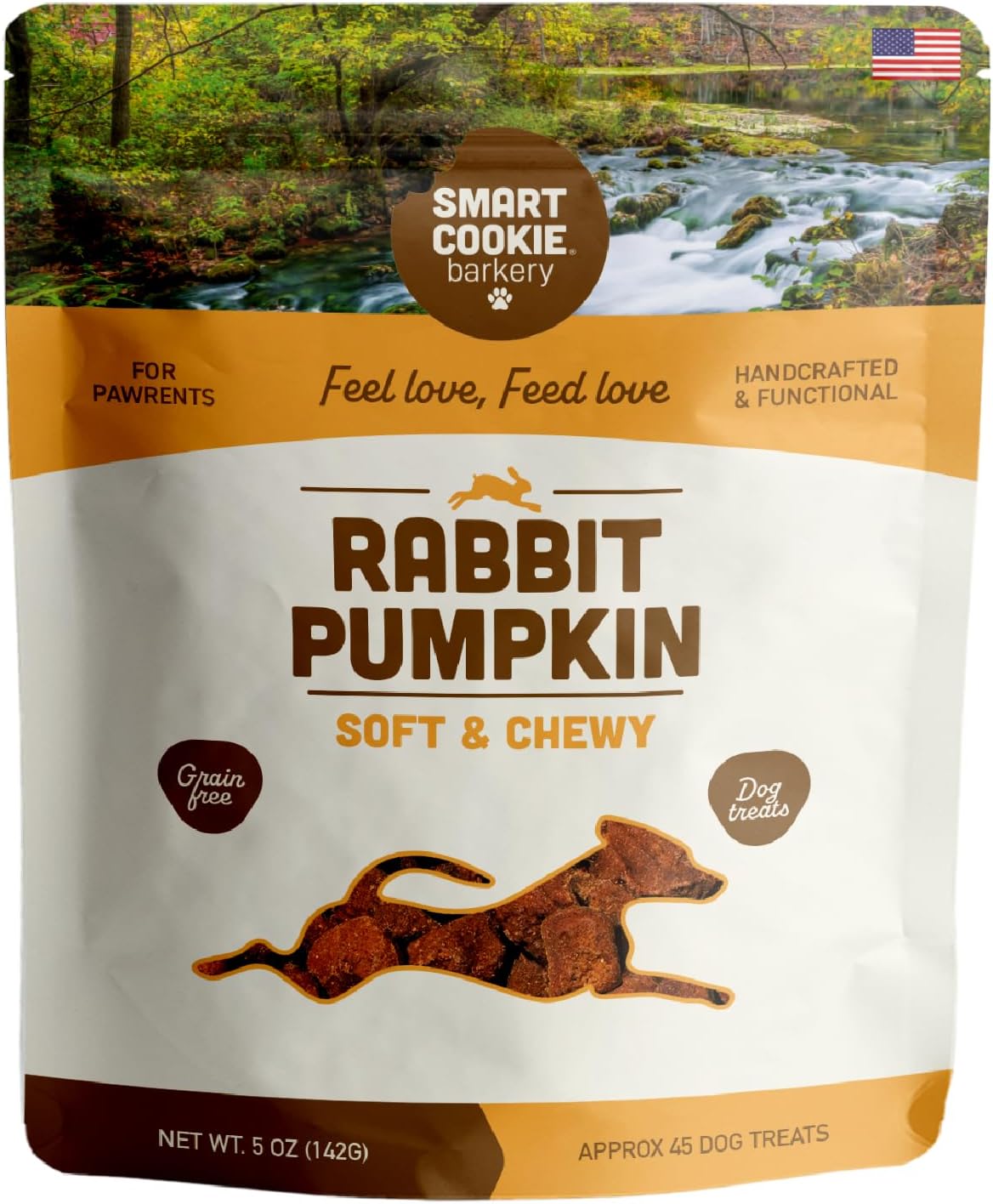
| Flavor | Rabbit and Pumpkin |
|---|---|
| Unit Count | 5 Ounce |
| Item Form | Chunk |
| Allergen Information | Gluten Free, Soy Free, Wheat Free |
| Animal Food Diet Type | Limited Ingredient |
These Smart Cookie Rabbit & Pumpkin treats are a soft, single-protein snack aimed at dogs with sensitivities. Each bite is made primarily from dehydrated rabbit, pumpkin and lentils with minimal extra ingredients and natural preservatives, which keeps the ingredient list short and easier to digest for allergy-prone pups. The treats are soft and chewy, tear easily into smaller pieces for training or for puppies and seniors, and the resealable pouch helps keep them fresh. At roughly 7 calories per treat and about 45 pieces per 5 oz bag, they work well for repeated rewards without adding many calories. The limited formula and grain free, gluten free labeling make it a sensible choice when avoiding common triggers like chicken, beef, wheat and soy. Drawbacks are the small package size for frequent trainers and the single flavor profile that may not interest very picky dogs used to beef or chicken tastes. For dogs truly sensitive to common proteins this product provides a straightforward, low-ingredient option but you may need to buy multiple pouches if you use them heavily.
Best for: Dog owners prioritizing minimal, single-protein recipes for pets with food sensitivities or digestive issues who want a soft, low-calorie training reward.
Less Ideal for: Owners who need large bulk packs for high-volume training sessions or who want multiple protein options in one purchase.
- Single novel protein (rabbit) reduces exposure to common allergy triggers
- Short ingredient list with pumpkin for digestive fiber
- Soft, tearable texture suitable for puppies, seniors, and training
- Grain free, gluten free, and no artificial colors or flavors
- Resealable 5 oz pouch keeps treats fresh
- Small 5 oz pouch may require frequent repurchase for heavy training use
- Single flavor/protein may not entice dogs accustomed to common meats
Verdict: The best soft training allergenic treat is ideal for repetitive rewarding because it’s easy to chew, low-mess, and formulated to avoid typical allergens.
Himalayan Dog Chew Yogurt Sticks
Best Long-Lasting Allergenic Treat

| Flavor | Yogurt |
|---|---|
| Item Form | Stick |
| Unit Count | 4.8 Ounce |
| Age Range Description | All Life Stages |
| Allergen Information | Corn-Free, Gluten Free, Grain-Free, Lactose Free, Soy Free |
Himalayan Dog Chew Yogurt Sticks are soft-density snack sticks intended as occasional treats or rewards that emphasize digestive support and limited allergens. Each pouch contains several individually sized sticks made from yogurt, coconut, real peanuts and bacon and is formulated with added prebiotics and probiotics to support gut health. The texture is softer than hard yak chews so these work well for puppies (over 12 weeks), seniors, and dogs that prefer or need an easier-to-chew option while still providing some chewing engagement. The product is free of corn, wheat, soy, gluten and lactose and contains no artificial flavors or preservatives, which reduces the chance of triggering common food sensitivities. Practical benefits include being easily digestible, supporting skin and coat health, and coming in a resealable pouch to keep sticks fresher between uses. Limitations are that these are single-sitting treats rather than very long-lasting chews for heavy chewers, and owners should supervise and remove small pieces to avoid choking hazards.
Best for: Owners who want an occasional, lower-risk treat that occupies their dog briefly while minimizing common food allergens and supporting digestive health.
Less Ideal for: Dogs that need a very long-lasting chew or aggressive chewers looking for extended single-session occupancy should choose a firmer, longer-lasting chew instead.
- Limited-ingredient formula reduces common allergens like corn, soy, gluten and lactose
- Contains prebiotics and probiotics to support digestive health
- Soft density suitable for puppies, seniors, and dogs with weaker teeth
- Resealable pouch helps preserve freshness between uses
- Not a very long-lasting chew for aggressive or heavy chewers
- Portion count varies by weight so exact number of sticks per pouch can differ
Verdict: The best long-lasting allergenic treat is for pet owners who want a durable, lower-frequency snack that occupies dogs while still using ingredients less likely to cause sensitivities.
Choosing the Right Allergenic Dog Treat: Key Factors to Consider
Ingredient Simplicity
A short, transparent ingredient list reduces the chance of hidden allergens. Look for treats that list one or two whole-food ingredients up front and avoid vague terms like "natural flavors" or "digestive blends."
Simplicity matters because complex recipes increase the number of potential triggers. If you are narrowing down options for an elimination approach, choose treats with fewer components so you can better isolate the cause of a reaction.
Single Protein or Novel Protein
Using a single, novel protein can limit immune exposure and make it easier to identify and manage sensitivities. Proteins like venison, rabbit, or hydrolyzed options are often used for this purpose.
When a treat relies on a single protein source, you reduce the variables in your dog's diet. That makes trial periods and long-term feeding decisions clearer and safer for dogs prone to protein-triggered allergies.
Avoidance of Common Allergens
Common dog allergens include wheat, soy, corn, and dairy. Treats formulated without these ingredients lower the baseline risk for many dogs with adverse food reactions.
Beyond grains and dairy, watch for additives such as artificial colors, flavors, and certain preservatives that can irritate sensitive dogs. Choosing formulas that explicitly exclude common triggers helps minimize flare-ups.
Digestibility and Nutrient Balance
A treat that is easy on the digestive system reduces the chance of gastrointestinal upset. Look for recipes with moderate fat levels, digestible carbohydrate sources, and, where possible, probiotic or fiber inclusions that support gut health.
Guaranteed analysis values for protein and fat give clues about richness; very high-fat treats can cause loose stool in sensitive dogs, while extremely dry or hard textures can be difficult for some pets to chew.
Manufacturing and Cross-contact Controls
How a treat is made matters for allergy management. Facilities that implement allergen controls, dedicated production lines, or clear cleaning protocols reduce the risk of cross-contact with other proteins or ingredients.
Packaging statements about allergen handling and third-party audits increase confidence. If a manufacturer cannot provide basic information about cross-contact prevention, factor that uncertainty into your choice.
Texture, Size, and Training Suitability
Treat texture and size affect both how you use the treat and how your dog tolerates it. Soft, small treats are ideal for high-reward training because they can be eaten quickly, while firmer treats may be better for enrichment or dental benefit.
Consider your dog's chewing ability and the training context when choosing a treat. A sensitive dog with dental issues may need softer options to avoid discomfort that could be mistaken for a food reaction.
How Do I Introduce Allergenic Treats Safely?
Start slowly when you add a new allergenic treat to your dog's routine. Offer a small amount for several days and watch for changes in skin condition, stool quality, energy, or digestion.
Keep other dietary variables steady during the trial—no new foods, supplements, or table scraps—so you can better attribute any reaction to the treat itself. If mild symptoms appear, pause the treat and consult your veterinarian before resuming.
- Introduce one new treat every 7 to 10 days during testing
- Record any signs such as itching, redness, vomiting, or loose stool
- Use a maintenance baseline diet to isolate variables during trials
What Labeling Terms Indicate a Treat Is Suitable for Sensitive Dogs?
Look for explicit phrases such as "limited-ingredient," "single protein," or "hypoallergenic" on packaging, but read beyond marketing. The ingredient list and guaranteed analysis are the most reliable sources of truth.
Also watch for clear allergen statements and absence of common triggers like wheat, soy, and dairy. If a product claims to be hypoallergenic, check whether the manufacturer explains what that means in practice.
- Short ingredient lists are preferable
- Avoid vague descriptors without supporting ingredient detail
- Check for allergen-free or free-from claims backed by ingredient transparency
Are Home-baked Allergenic Treats a Better Option?
Home baking gives you complete control over ingredients, which can be helpful for dogs with complex sensitivities. You can select a single protein and trusted carbohydrate source and avoid preservatives and additives.
However, homemade treats still require careful formulation to ensure proper digestibility and appropriate fat content. If you choose this route, use simple recipes and consult feeding guidelines to match your dog's size and caloric needs.
- Use single-protein recipes to simplify allergen identification
- Keep added fats moderate to avoid digestive upset
- Store homemade treats properly to prevent spoilage
How to Use Allergenic Treats in Training and Enrichment
Match treat size and tenderness to the activity. For high-repetition training, use very small, soft pieces so your dog can eat quickly and stay engaged. Reserve denser or longer-lasting treats for enrichment or as a special reward.
Because allergenic treats often have limited ingredients, they can be used frequently if you confirm tolerance. Rotate the context in which you offer them to avoid excess calories and maintain their effectiveness as rewards.
- Soft, low-calorie pieces for training sessions
- Larger or chewier pieces for puzzle toys and longer engagement
- Monitor daily treat calories relative to total diet
When Should I Consult a Veterinarian About Treat Reactions?
Consult your veterinarian promptly if your dog shows persistent vomiting, diarrhea, significant lethargy, or severe skin reactions after trying a new treat. These signs can indicate a serious intolerance or allergic response.
For intermittent or mild symptoms, document occurrences and discuss them at the next routine visit. Your veterinarian can recommend diagnostic steps such as elimination diets, allergy testing, or targeted nutritional adjustments.
- Seek immediate care for breathing difficulty, facial swelling, or collapse
- Document timing and symptom patterns for veterinary evaluation
- Consider allergy testing for recurring or unexplained reactions
How We Chose the Best Allergenic Dog Treat
We started with products that explicitly focus on allergenic concerns, then narrowed the list using evidence-based, dog-centered filters. Key evaluation criteria included ingredient transparency, the presence of common allergens, protein and carbohydrate sources, texture and size for training or dental needs, and manufacturer quality control practices. We prioritized treats with short ingredient lists and limited or single protein sources, and we favored recipes that avoid common triggers such as wheat, dairy, soy, and certain artificial additives. We also considered digestibility indicators like guaranteed analysis for crude protein and fat, plus whether the formula included probiotics or other gut-supporting elements. Safety practices were important: clear allergen labeling, third-party testing information, and production in facilities with documented cross-contact controls strengthened a product's ranking. Exclusions: products that use complex multi-protein blends, undisclosed ingredient origins, or unverified allergen controls were removed from consideration. The result is a focused list of treats that meet practical needs for owners managing canine food sensitivities.
Our full evaluation process is outlined in our review methodology.
FAQ
Can dogs with food allergies still have treats?
Often yes. Many dogs with food allergies tolerate treats that use a different single protein or limited ingredients. Introduce new treats slowly and monitor for reactions; tailored selection and portion control usually let affected dogs enjoy occasional treats.
How long should I test a new treat before deciding it causes a reaction?
Testing for 7 to 14 days while keeping the rest of the diet constant gives a reasonable window to spot common reactions. Some immune responses take longer, so if symptoms persist or recur, consult a veterinarian for further guidance.
Are grain-free treats always better for allergic dogs?
Not necessarily. Grains are common triggers for some dogs, but many affected dogs react to proteins or additives rather than grain. Evaluate the whole ingredient list rather than assuming grain-free equals hypoallergenic.
Is a novel protein always the best choice for sensitive dogs?
Novel proteins can reduce exposure to previously encountered allergens, but they are not a guaranteed solution. Long-term use can still lead to sensitization, so rotate carefully and monitor tolerance over time.
How should I balance treat calories with daily food for a dog on a restricted diet?
Track treat calories and subtract them from the daily allowance to maintain healthy weight and nutrient balance. Use low-calorie, high-value pieces for training and reserve higher-calorie treats for occasional rewards.
Final Verdict
Choose allergenic dog treats based on ingredient transparency, a single or novel protein where appropriate, and clearly documented manufacturing controls. Prioritize digestibility and portion size to prevent digestive upset while still supporting training and enrichment goals. Be ready to trial products slowly and keep a consistent baseline diet during testing so you can spot reactions quickly. With careful selection and monitoring, most dogs with sensitivities can enjoy occasional treats without worsening symptoms.

