

If barking is disrupting your home or walks, the right no bark collar can help reduce excessive noise while supporting calm behavior. You want a tool that matches your dog's size, temperament, and sensitivity so corrections are effective without causing distress or injury. This guide covers seven top-performing no bark collars shortlisted for reliability, humane correction options, and fit quality. We evaluated each option against practical criteria readers care about: correction method, adjustability, and comfort. Read on to find a no bark collar suited to your dog's needs and the situations where it will be most useful.
Top Picks at a Glance
| Best Overall No Bark Collar A reliable, balanced choice for most dog owners and households | FAFAFROG Bark Collar S1 |  |
| Best Budget No Bark Collar An inexpensive option that still reduces nuisance barking effectively | Honeynet Q10 Bark Collar |  |
| Best Premium No Bark Collar Higher-end materials and advanced features for long-term use | Garmin BarkLimiter Deluxe |  |
| Best Rechargeable No Bark Collar Built-in battery and USB charging for fewer battery replacements | Oliry S1 P Bark Collar |  |
| Best Waterproof No Bark Collar Water-resistant design suitable for rainy walks and outdoor play | Zellar Dog Bark Collar BR02 |  |
| Best Heavy-Duty No Bark Collar Rugged construction and durable hardware for strong, active dogs | Dogtra YS600 No Bark Collar |  |
| Best Gentle No Bark Collar Lower-intensity or alternative modes designed for sensitive dogs | Dogtra iQ VIBE No Bark Collar |  |
FAFAFROG Bark Collar S1
Best Overall No Bark Collar

| Battery | Rechargeable, magnetic cable |
|---|---|
| Modes | 4 working modes |
| Sensitivity levels | 5 adjustable levels |
| Waterproof rating | IP67 |
The FAFAFROG S1 is a rechargeable bark collar designed to reduce nuisance barking with five sensitivity levels and four correction modes including beep and vibration, plus an automatic smart detection chip that helps distinguish sustained barking from other noise. Setup is straightforward: charge the unit, fit the adjustable 27-inch strap, and select sensitivity and mode via the onboard controls and clear color display. Practical benefits include the IP67 waterproof rating for outdoor use, a fast magnetic charging cable that yields roughly 15 to 20 days per full charge, and a protect mode that pauses after repeated activations to avoid overstimulation. The collar ships with spare silicone covers and metal prongs for maintenance and suits a wide range of breeds from small to large once they are at least six months old. Limits to expect are that correction is limited to beep and vibration rather than static stimulation for owners who prefer that option, and like any bark-detection device it may need sensitivity adjustment to avoid false triggers in noisy environments.
Best for: Buyers looking for an easy-to-set-up, humane bark-control collar that balances reliable detection, comfortable wear, and outdoor durability for everyday training.
Less Ideal for: People who want static stimulation or who need a collar tuned for very small puppies under six months should consider other training tools.
- Adjustable five-level sensitivity helps tune detection to your dog and environment
- Multiple correction modes including beep and vibration provide humane, non-shock options
- IP67 waterproof rating allows training during rain, swimming, or outdoor play
- Fast magnetic charging delivers about 15–20 days of operation from a two-hour charge
- No static/shock option for owners seeking that type of correction
- May require tuning to avoid false triggers in noisy or multi-dog environments
Verdict: The best overall no bark collar that balances humane correction modes, dependable performance, comfort, and easy setup for everyday use.
Honeynet Q10 Bark Collar
Best Budget No Bark Collar

| Rechargeable | Yes |
|---|---|
| Sensitivity levels | 8 levels |
| Working modes | 4 modes |
| Waterproof rating | IP67 |
| Strap length | 27 inches |
The Honeynet Q10 is a simple rechargeable bark collar aimed at stopping unwanted barking with minimal fuss. It detects barking using a smart recognition chip and offers 8 sensitivity levels plus four working modes including beep and vibration, so you can step corrections up or down while you assess your dog's response. Setup is straightforward: fit the adjustable 27-inch strap, choose a sensitivity and mode, and charge the internal battery for roughly two hours for up to 15 to 20 days of typical use. The collar includes a short protection pause after repeated activations to prevent continuous correction, and the IP67 rating makes it usable in rain or around water. Practical limits are its basic correction options with no remote or advanced training features and a single 9V battery listed as included, so long-term running costs depend on replacement power if you do not use the rechargeable cable. The Q10 is most useful for owners who want a no-frills, weatherproof deterrent that is easy to operate and durable enough for everyday outdoor use.
Best for: Owners who want an inexpensive, easy-to-use bark deterrent that reliably reduces barking with straightforward controls and weatherproof construction.
Less Ideal for: Owners seeking a full training system with remote control, leash training features, or multiple correction modalities should consider more advanced models.
- Adjustable 8-level sensitivity and multiple modes let you match correction to your dog’s bark.
- Rechargeable with roughly 2-hour full charge for 15–20 days of typical use.
- IP67 waterproof rating for outdoor, wet-weather, or swimming use.
- Protect mode automatically pauses after repeated activations to reduce over-correction.
- No remote control or advanced training features for behavior shaping beyond basic corrections.
- Correction options are limited to beep/vibration/auto correction without graduated stimulation types.
Verdict: The best budget no bark collar for owners who want an affordable, straightforward device that reliably deters barking without extra features.
Garmin BarkLimiter Deluxe
Best Premium No Bark Collar
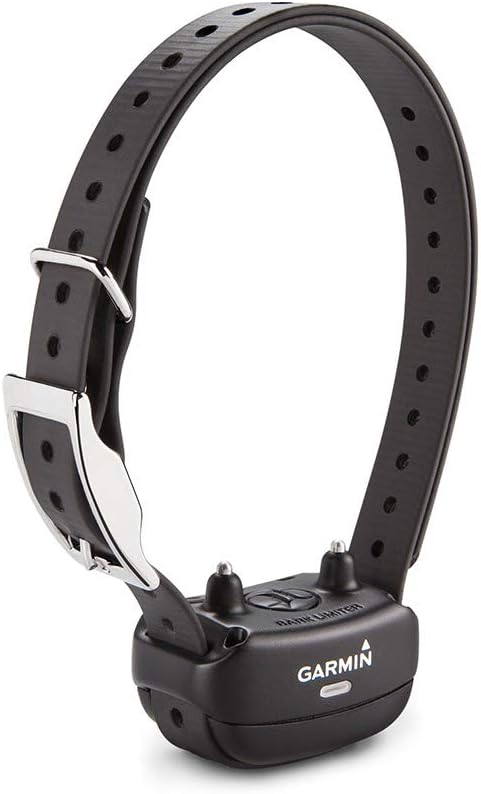
| Brand Name | Garmin |
|---|---|
| Material Type | Stainless Steel |
| Age Range Description | All life stages |
| Model Number | 010-01070-10 |
| Included Components | Bark |
The Garmin BarkLimiter Deluxe is a compact, rechargeable no-bark collar that detects barking using acceleration sensors and applies automatic or manual corrections to reduce nuisance barking. It is typically worn around the dog's neck and works out of the box with an Auto Rise mode that programs stimulation level based on the dog's barking pattern, plus selectable vibration and manual correction options with seven intensity levels. Notable features include Advanced Bark Correction Technology to limit false triggers from external noise, a built-in bark odometer to track barking over time, and stainless steel contact points intended to work through different coat types. Practical benefits are easy setup, a long rechargeable battery life that Garmin rates up to three months per charge, and a durable build that suits steady daily use. Important limitations are that it uses static stimulation as the primary correction method which may not suit all training philosophies, and it requires proper fit and monitoring to avoid discomfort; very small dogs or extremely sensitive animals might need gentler alternatives. Familiarity with corrective collars and consistent training practices will improve results.
Best for: Buyers who want a well-built, premium bark collar with refined detection and adjustable correction options and plan to use it as part of a consistent training routine.
Less Ideal for: Owners seeking fully force-free or purely behavioral solutions without any electronic stimulation, or those with very small or highly sensitive dogs who need gentler interventions.
- Sensor-based bark detection reduces false corrections from ambient noise
- Auto Rise feature that automatically sets stimulation based on the dog’s barking behavior
- Multiple correction modes including vibration and seven manual stimulation levels
- Rechargeable battery with long run time per charge
- Stainless steel contact points designed to fit all coat thicknesses
- Primary correction is static stimulation which may be unsuitable for very sensitive dogs or owners who prefer non-stimulus methods
- Requires correct fit and supervision to ensure effective and humane use
Verdict: The best premium no bark collar for buyers who prioritize superior build quality, refined correction options, and longer-lasting components.
Oliry S1 P Bark Collar
Best Rechargeable No Bark Collar

| Training modes | 5 modes |
|---|---|
| Sensitivity levels | 5 levels |
| Battery charge time | 2 hours |
| Runtime | up to 18 days |
| Waterproof rating | IP67 |
The Oliry S1 P is a rechargeable no-bark collar that uses an AI chip and voiceprint recognition to detect and respond to barking in around 0.01 seconds. It offers five training modes (beep, vibration, combined, static combinations and a boosted static mode) and five sensitivity levels so you can tailor corrections to your dog and environment. The collar includes an LCD that shows battery level, mode, and sensitivity, and its Type-C rechargeable battery reaches full charge in about two hours and claims up to 18 days of typical use. Practical touches include an IP67 waterproof housing for outdoor use, removable metal contact pins with silicone covers for comfort, and a safety mode that pauses after repeated triggers. The system is versatile across small to large dogs and is straightforward to fit and operate, but users should expect basic buckle closure hardware and to spend time finding the right sensitivity and mode for consistent results with different breeds and voice profiles.
Best for: Owners who want a rechargeable, low-maintenance anti-bark solution that offers quick detection and multiple adjustable modes for personalized training.
Less Ideal for: People who prefer non-correction training methods or want a bark solution for puppies under six months should consider alternative approaches.
- Fast AI bark recognition with 0.01s response reduces false triggers from ambient noise
- Five training modes and five sensitivity levels allow precise, personalized correction
- Type-C rechargeable battery charges in about 2 hours and supports up to 18 days per charge
- IP67 waterproof construction permits outdoor use in wet conditions
- LCD display clearly shows battery, mode, and sensitivity for easy monitoring
- Correction relies on static/vibration which may require trial and adjustment to suit individual dogs
Verdict: The best rechargeable no bark collar for owners who prefer a convenient, rechargeable unit with consistent runtime and no disposable batteries.
Zellar Dog Bark Collar BR02
Best Waterproof No Bark Collar

| Battery life | Up to 15 days |
|---|---|
| Charge time | 2 hours |
| Waterproof rating | IP67 |
| Training modes | 5 modes (beep, vibration, combined, etc.) |
| Included components | Charging Cable, Metal Prongs, Silicone Covers, Test Board |
The Zellar BR02 is a rechargeable bark collar designed to reduce unwanted barking with five training modes including beep, vibration, and combined corrections plus a smart protection mode that limits repeated corrections. It uses AI-driven detection and anti-interference tech to distinguish your dog's bark from other noises, which helps cut down on false triggers during walks or in noisy outdoor settings. A built-in bark counter logs barking frequency so you can monitor progress and adjust sensitivity and modes over time. The unit is lightweight and ships with a nylon strap, metal contact prongs, silicone covers, and a USB charging cable, and its IP67 waterproof rating and 15-day battery life make it suitable for dogs that spend time in rain or near water. Important limitations are that the collar relies on contact prongs for correction so it must be fitted correctly to work, and very small or very sensitive dogs may need the lowest settings or alternative non-contact training methods.
Best for: Outdoor-active dog owners who need a durable, water-resistant anti-bark device that reliably differentiates real barks from environmental noise and records progress.
Less Ideal for: Owners seeking a completely non-contact training method or those with very small toy breeds that cannot tolerate contact-prong corrections should consider alternatives.
- AI bark recognition and anti-interference tech reduces false triggers from ambient noise
- IP67 waterproofing for reliable performance in rain, splashes, or snow
- Long battery life up to 15 days and quick 2-hour USB recharge
- Multiple training modes plus automatic safety pause to prevent over-correction
- Includes strap, metal prongs, silicone protective covers, and test board for setup
- Requires proper contact fit against skin so effectiveness depends on correct sizing and placement
- Correction is contact-prong based which may not suit very small or extremely sensitive dogs
Verdict: The best waterproof no bark collar for dogs that spend time outdoors or around water and need reliable performance when wet.
Dogtra YS600 No Bark Collar
Best Heavy-Duty No Bark Collar

| Item model number | YS600 |
|---|---|
| Batteries | 1 Lithium Polymer (included) |
| Waterproof Resistance Level | IPX9K |
| Intensity Levels | 1-10 |
| Size | 35 lbs & Up |
The Dogtra YS600 is a heavy-duty no-bark collar built for robust, active dogs that need a durable correction tool. It uses an accelerometer bark sensor to reduce false triggers from outside noise and offers 10 correction levels so you can dial in the intensity that matches your dog's temperament. The unit includes a High Performance Pager vibration that can be used alone or with static correction to give a less intrusive alert. Its IPX9K waterproof rating and rechargeable battery let it handle wet conditions and frequent outdoor use, and the persistent bark indicator helps you see when excessive barking occurred while the unit was off. The collar is compact and lighter than previous high-output models, but it is intended for dogs 35 pounds and up and requires a snug fit for reliable detection. Owners should follow fit and skin-care guidance since prolonged wear in one spot can irritate skin. For active dogs that need a rugged, weatherproof bark control device, the YS600 provides a practical, trainer-focused solution.
Best for: Owners of strong, active dogs who want a rugged, weatherproof no-bark solution that lets them adjust correction intensity and rely on a durable, trainer-oriented device.
Less Ideal for: People with very small or toy-breed dogs or owners who need a purely vibration-only device without static correction should consider different models.
- Accelerometer bark sensor reduces false corrections from ambient noise
- IPX9K waterproof rating suitable for heavy outdoor and wet use
- Ten intensity levels let you finely adjust correction strength
- Rechargeable battery and compact, lighter high-output design
- Persistent bark indicator records excessive barking between uses
- Designed for dogs 35 lb and up, so not suitable for smaller breeds
- Requires a snug fit and occasional repositioning to avoid skin irritation
Verdict: The best heavy-duty no bark collar for owners of robust or very active dogs who need a tough, long-lasting correction device.
Dogtra iQ VIBE No Bark Collar
Best Gentle No Bark Collar

| Intended For | Barking, whining, and howling |
|---|---|
| Output Level | Vibration only, no static |
| Waterproof Resistance Level | IPX9K waterproof |
| Dog Size | For dogs 10 lbs and up |
| Intensity Levels | 3 vibration levels |
The Dogtra iQ VIBE is a compact, vibration-only no-bark collar designed for sensitive or low-threshold dogs. It detects barking with a built-in sound recognition sensor and responds with one of three high-performance pager vibration durations rather than static stimulation. The receiver is waterproof to IPX9K standards and rechargeable with a rapid two-hour charge, making it suited to outdoor use and frequent wear. Practical benefits include a very small, contact-free receiver that is marketed for dogs starting at 10 pounds, an automatic safety delay that spaces corrections by four seconds to avoid continuous stimulation, and vibration intensity that the brand says is stronger than a phone vibration to ensure dogs notice it. Limitations are that it provides only vibration so it may not deter louder or highly motivated barkers as effectively as collars with multiple correction modes, and some users report mixed effectiveness across different dogs. The iQ VIBE fits owners who want a lower-intensity, humane-first option and who value waterproofing and a compact rechargeable unit more than multi-mode corrections.
Best for: Owners who prioritize a low-intensity, humane bark-control method for small to medium dogs and want a compact, waterproof, rechargeable device that automatically responds to barking.
Less Ideal for: Owners whose dogs ignore vibration or who need stronger or multi-mode corrections for persistent or loud barkers should consider alternatives with more intensity options.
- Vibration-only correction offers a humane, low-intensity alternative to static stimulation
- Sound recognition sensor helps distinguish dog barks from ambient noise
- IPX9K waterproof receiver suitable for rain and wet environments
- Rechargeable battery with a two-hour rapid charge for frequent use
- Ultra-compact, contact-free receiver intended for small dogs 10 lb and up
- Limited to vibration corrections which may be less effective on persistent or high-drive barkers
- No adjustable static or tone modes for customized multi-mode training
Verdict: The best gentle no bark collar for owners seeking low-intensity stimulation or humane alternatives that reduce barking without harsh corrections.
Choosing the Right No Bark Dog Collar: Key Factors to Consider
Correction Method and Intensity Levels
No bark collars use different correction approaches such as vibration, sound, static stimulation, or spray. The method you choose should match your dog's sensitivity and training history. Vibration and ultrasonic modes are generally less intrusive and can be effective for many dogs, while graduated static stimulation offers more control but requires careful adjustment.
Intensity or sensitivity settings determine how a collar responds to barking and how strong the correction feels. Look for collars with multiple intensity levels and the ability to separate sensitivity from stimulus strength. This lets you raise detection threshold to avoid false activations while keeping the correction mild. A collar that lacks fine control can either fail to curb barking or risk causing discomfort.
Fit, Contact Points, and Size Range
A proper fit is essential for reliable detection and comfort. Many no bark collars require direct contact between sensors or contact probes and the dog's skin; loose fit causes missed activations and excessive adjustment attempts. Check for collars that accommodate the neck circumference of your dog and offer enough adjustment to sit snugly without pinching.
Consider whether the collar pads or probes are replaceable and the material next to the skin. Softer contact surfaces reduce chafing during longer wear. For dogs with thick fur or heavy ruffs, choose a collar designed to maintain contact against the skin rather than relying only on fur compression.
Safety Features and Automatic Shutoff
Safety features protect dogs from continuous or excessive stimulation. Important protections include automatic shutoff after several consecutive activations, progressive correction that limits intensity over time, and vibration-only fallback modes. These reduce the risk of overstimulation if a dog enters a barking episode.
Also review whether the collar has certifications or user guidance on safe usage durations. Collars that allow accidental constant activation or lack automatic timeouts increase the risk of stress. Owners should prefer devices with clearly documented safety cutoffs and straightforward user controls to prevent misuse.
Durability and Weather Resistance
No bark collars are worn daily and exposed to saliva, dirt, and the elements. Water-resistant or waterproof designs are more practical for walking in rain or if the dog likes to swim. Corrosion-resistant contact points and robust buckles improve longevity.
Evaluate construction quality, warranty terms, and whether replacement parts such as straps, pads, or probes are available. A well-built collar reduces the likelihood of failure at a critical moment and limits ongoing maintenance costs.
Battery Life and Charging Convenience
Battery performance affects how often you need to recharge or replace cells. Rechargeable lithium batteries are common and practical, but runtime varies widely depending on correction mode and the unit's standby efficiency. Longer battery life reduces interruptions during training and avoids gaps in behavior management.
Consider how the collar charges and whether it can be used while charging. Indicator lights that show remaining battery or quick-charge options add convenience. Replaceable batteries may be preferable for extended remote use where recharging is impractical.
Adjustability for Individual Dogs and Training Plans
No bark collars should support gradual training progressions. Adjustable sensitivity, variable correction levels, and multiple modes (for example, vibration only, sound, or progressive stimulation) let you tailor the device to your dog and the training plan. This is important because dogs react differently to correction types and intensity.
Collars that include a remote or smartphone app for remote control provide extra flexibility during training sessions. Documented guidance for stepwise adjustments helps owners avoid sudden jumps in intensity that can undermine training or cause distress.
How Do Different Correction Modes Feel to a Dog?
Correction modes are designed to deliver feedback rather than pain. Vibration produces a tactile cue that many dogs interpret as attention or a nudge. Ultrasonic or sound-based modes rely on an audible signal the dog hears more distinctly than people in many cases. Static stimulation provides a brief mild shock that some dogs learn to avoid quickly when calibrated low and applied sparingly.
The important point is to start with the least intrusive mode and increase only if the dog does not respond. Observe your dog's body language closely during initial sessions and reduce intensity if you see signs of fear or avoidance.
- Vibration: gentle, often effective for attention-based correction
- Sound/ultrasonic: non-contact, may not work for hearing-impaired dogs
- Static: adjustable levels offer control but require cautious use
- Spray: scent or air burst can interrupt barking without electrical stimulation
Will a No Bark Collar Interfere with Other Training?
A collar used thoughtfully can complement positive reinforcement training by interrupting excessive barking while you reinforce quiet behavior with treats and attention. It should not replace basic obedience work or socialization. Use the collar as a temporary management tool while teaching an alternate, rewarded behavior such as 'quiet' or 'settle.'
Avoid relying solely on the device to solve underlying causes of barking such as anxiety, boredom, or medical issues. In those cases, behavioral training or veterinary advice may be necessary alongside any collar-based approach.
- Use corrections as an interrupt, then reward the calm response
- Pair collar use with training sessions that teach an alternative behavior
- Monitor for signs of stress and reduce reliance on the collar if needed
How to Fit a No Bark Collar Properly
Place the collar high on the neck, just below the jawline, where the dog naturally carries weight and where contact sensors reach the skin. The fit should be snug enough that you can fit one to two fingers under the strap—tight enough to maintain contact but loose enough to avoid constriction.
Check contact point placement weekly and after grooming changes. If your dog has a thick coat, part the fur to ensure the probes touch skin reliably. Replace or adjust pads if you notice red spots or hair loss where the collar rests.
- Fit location: high on the neck below the jawline
- Tightness: one to two fingers between strap and skin
- Maintenance: check contact points after grooming or activity
Managing False Activations and Sensitivity Calibration
False activations occur when the collar misreads ambient noise, other dogs, or the dog's vocalizations such as play-barks. Start with the lowest sensitivity that still detects normal barking and test in the environment where the problem occurs. Increase sensitivity in small steps only when necessary.
Some collars include directional microphones or algorithms that reduce triggers from distant noises. If false positives persist, reposition the collar slightly or switch to a mode that reacts only to sustained barking rather than single barks.
- Start low and increase sensitivity gradually
- Test outdoors and indoors to find consistent settings
- Use modes that require sustained barking for activation if available
When to Consult a Trainer or Veterinarian
If barking is sudden, extreme, or accompanied by other behavioral changes, consult a veterinarian to rule out medical causes. A certified trainer or behaviorist can help diagnose triggers and develop a training plan that pairs collar use with behavior modification.
Seek professional help if your dog shows signs of fear, aggression, or persistent stress when a collar is used. Experts can recommend alternative techniques and guide safe, effective collar introduction when appropriate.
- Consult a vet for sudden or dramatic changes in barking
- Use a trainer for complex behavior patterns or severe cases
- Stop or pause collar use if the dog displays stress signals and seek guidance
How We Chose the Best No Bark Dog Collar
We focused on practical, humane effectiveness and real-world usability when selecting the seven no bark collars featured here. Our editorial filters prioritized correction method clarity, adjustable fit ranges suitable for common dog sizes, and documented safety features such as automatic shutoff or graduated responses. We also looked for collars with durable construction and water resistance so they hold up to daily wear and outdoor conditions. Ease of setup and user-friendly controls were important—owners should be able to fine-tune sensitivity and intensity without confusion. Battery life and rechargeability were included as objective criteria because consistent operation affects real use. We excluded devices lacking clear safety features, collars intended only for training professionals, and units with fixed, nonadjustable fit that risk poor contact or irritation. The final list balances humane correction options, reliable fit, and features that make wearing the collar manageable for both dog and owner.
Our full evaluation process is outlined in our review methodology.
FAQ
Are no bark collars safe for puppies?
Puppies are more sensitive and still learning vocal control, so many trainers recommend delaying collar use until basic obedience is established and the puppy is physically larger. If used, select a vibration or sound-only mode, start at the lowest settings, and limit wear time. A professional trainer can advise age-appropriate alternatives.
How long should a dog wear a no bark collar each day?
Wear time depends on the training plan and the dog's tolerance. Short, supervised sessions reduce the risk of irritation; many owners use collars during problem periods such as alone time or specific outings. Avoid continuous 24/7 wear and check the skin daily for signs of chafing.
Will a no bark collar damage my dog's fur or skin?
When fitted correctly and used as directed, most collars do not cause lasting damage. However, poor fit, excessive intensity, or prolonged wear can cause rubbing or hair loss. Regularly inspect the contact area and adjust fit or padding to prevent issues.
Can no bark collars be used for dogs with medical conditions?
It depends on the condition. Dogs with neurological or heart issues, severe anxiety, or hearing impairments may react unpredictably to corrections. Consult your veterinarian before use to ensure the device is safe given your dog's health profile.
Do no bark collars work on all types of barking?
They can reduce many forms of nuisance barking but are less effective for barking driven by medical discomfort or high anxiety without behavior modification. For vocalization tied to boredom or attention-seeking, collars are more effective when combined with training and exercise increases.
Final Verdict
Choose a no bark collar that matches your dog's sensitivity and the primary cause of barking. Prioritize adjustable correction modes, a secure and comfortable fit, and built-in safety features such as automatic shutoff. Combine collar use with positive reinforcement training and rule out medical or behavioral causes for barking. By balancing humane correction with gradual training, you can reduce excessive noise while supporting your dog's wellbeing. Start conservatively, monitor response closely, and adjust your approach based on results and professional advice when needed.

