

If you live with shedding pets, a robot vacuum with self-emptying capability can cut the time you spend scooping hair from bins and brushes. The right model makes daily maintenance essentially unattended while keeping carpets and hard floors cleaner between deeper cleans. This guide focuses on top self-emptying robot vacuums suited specifically for handling pet hair, highlighting models that balance strong suction, tangle-resistant brushes, and generous bin systems. Below you will find our shortlisted picks and the evaluation criteria used to compare them, plus practical advice on choosing the right unit for your home and pets.
Top Picks at a Glance
| Best Overall Robot Vacuum Top all-around self-emptying pick that handles pet hair reliably | roborock Q7 M5+ Robot Vacuum |  |
| Best Budget Robot Vacuum An affordable self-emptying option that still tames pet hair | ILIFE A30s Plus Robot Vacuum |  |
| Best Premium Robot Vacuum Higher-end self-emptying model with top performance and features | roborock Saros 20 Flow |  |
| Best Compact Robot Vacuum Smaller-radius, low-profile self-emptying unit for tight spaces | eufy C10 Robot Vacuum |  |
| Best High-Capacity Robot Vacuum Larger dustbin or base for fewer emptying cycles with pets | Bagotte BL20pro Robot Vacuum |  |
| Best HEPA-Filter Robot Vacuum Enhanced filtration to capture pet dander and fine allergens effectively | Shark AV2501AE Robot Vacuum |  |
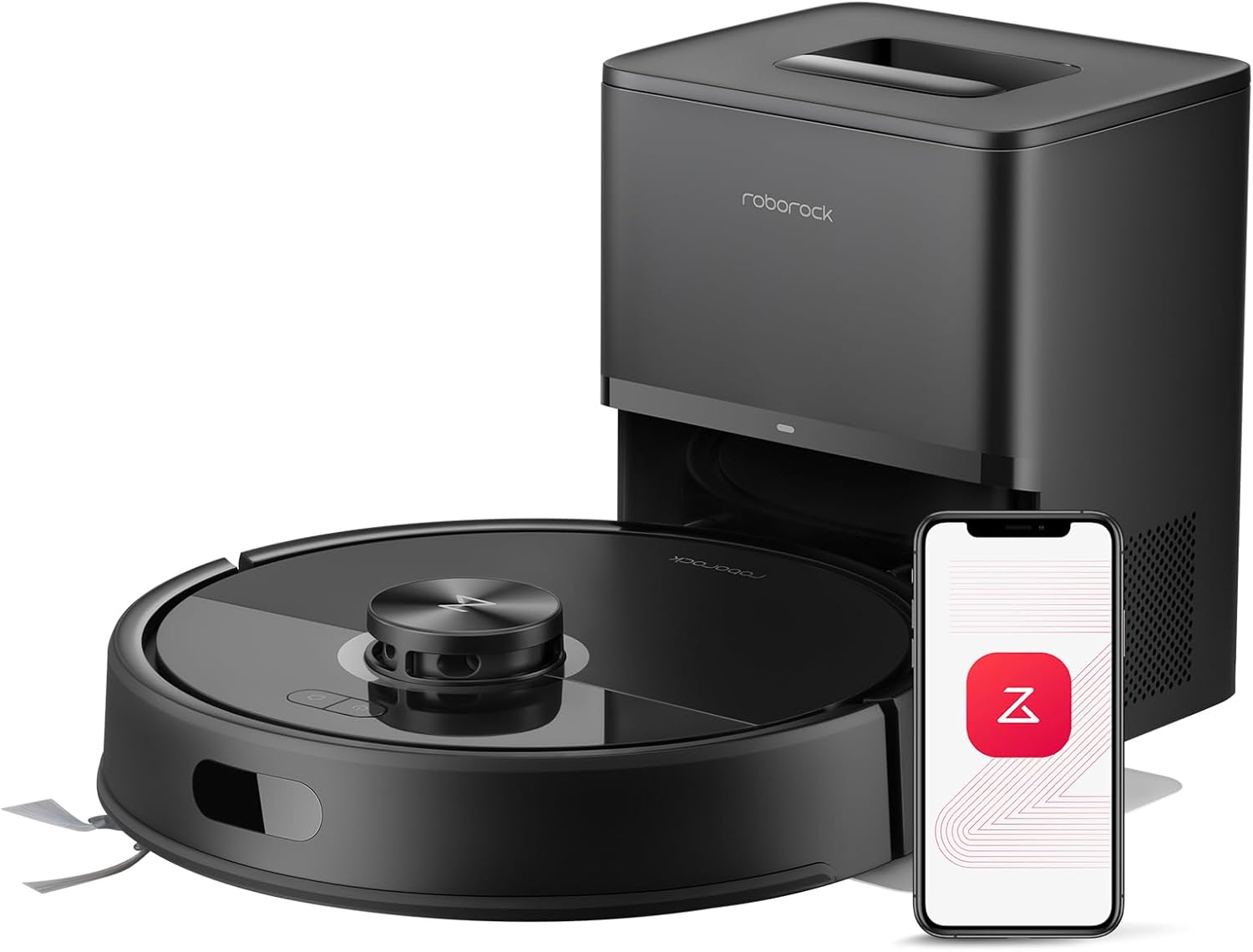
roborock Q7 M5+ Robot Vacuum
Best Overall Robot Vacuum
| Maximum Suction | 10000Pa |
|---|---|
| Capacity | 2.7 liters |
| Battery Life | 150 minutes |
| Filter Type | Cartridge |
| Noise Level | 65 db |
The roborock Q7 M5+ combines powerful suction, smart navigation, and a large auto-empty dock to keep pet hair and debris under control with minimal intervention. It uses PreciSense LiDAR and multi-level mapping to plan efficient cleaning routes and the app lets you schedule jobs, set no-go zones, and run spot cleans from your phone. The 10000 Pa HyperForce suction plus a dual anti-tangle brush system is designed to pull hair out of carpet and along edges while reducing brush maintenance, and the electronic mop with adjustable water flow handles light mopping tasks between full cleans. The RockDock Plus dust bag holds 2.7 liters for roughly 7 to 9 weeks of hands-free emptying in many homes, which significantly cuts down how often you need to touch the robot. Expect typical limitations of a combo unit: the mop is for surface cleaning rather than deep scrubbing, noise around 65 dB, and occasional edge debris that may need a manual pass. For pet households that want a mostly autonomous solution, the Q7 M5+ balances cleaning power, mapping, and low-maintenance operation effectively.
Best for: Buyers who want a mostly autonomous, low-maintenance robot that reliably handles pet hair across mixed floors and reduces how often you must empty or tangle-clean the unit.
Less Ideal for: People who need deep wet cleaning or near-silent operation should consider specialized mops or quieter non-combo vacuums instead.
- Strong 10000 Pa suction lifts pet hair and deep debris from carpets and hard floors
- Dual anti-tangle main and side brush design reduces hair wrap and brush cleaning
- 2.7L sealed dust bag in auto-empty dock provides up to 7–9 weeks of hands-free emptying
- PreciSense LiDAR navigation with multi-level mapping enables efficient room-by-room cleaning
- App and voice control let you schedule cleanings, set no-go zones, and start spot cleans remotely
- Mopping is electronic surface mopping rather than heavy scrubbing so it does not replace a dedicated mop system
- Noise level around 65 dB may be noticeable during high-suction runs
Verdict: The best overall robot vacuum for pet owners who want a dependable self-emptying machine that balances suction, navigation, cleaning coverage, and maintenance ease.
ILIFE A30s Plus Robot Vacuum
Best Budget Robot Vacuum

| Battery Life | 150 minutes |
|---|---|
| Suction | 10000Pa (max) |
| Capacity | 200 ml |
| Filter Type | Cartridge |
| Control Method | App, Remote, Voice |
The ILIFE A30s Plus is a vacuum-only robot with a self-emptying station that keeps the onboard dustbin cleared between runs, which is handy for homes with pets. It uses LiDAR mapping to build floor plans and plan efficient routes, and offers app, voice, or remote control plus scheduling and no-go zones for simple daily management. The unit provides four suction levels with a 10,000Pa maximum for spot and carpet boost cleaning, while dual anti-tangle brushes and a 2-in-1 roller help pick up pet hair with less wrapping on the brush. Runtime is rated up to 150 minutes and the robot will auto-recharge and resume, so it can cover larger areas across multiple charge cycles. Practical downsides include a relatively loud reported noise level and a modest 200 ml onboard dust capacity (mitigated by the 2.2L self-empty station included in the kit), and it is vacuum-only with no mopping function. For pet owners who want lower-effort hair pickup with strong suction and mapping at a budget-friendly point, this model balances performance and upkeep well.
Best for: Pet owners who want a lower-cost self-emptying robot that still delivers strong suction and simple, low-effort daily hair pickup using mapping and scheduled runs.
Less Ideal for: Buyers who need a mop-and-vacuum combo or who prioritize the quietest possible operation should consider other models.
- Self-emptying station reduces how often you touch the dustbin
- LiDAR mapping and no-go zones let you tailor cleaning paths and avoid problem areas
- High max suction (up to 10,000Pa) and carpet boost for deeper cleaning of pet hair
- Dual anti-tangle brush design and 2-in-1 roller help limit hair wrap and reach floor gaps
- Multiple control options: app, voice assistants, and included remote for easy scheduling
- Onboard dustbin is small at 200 ml and depends on the self-empty base for low-maintenance use
- Noise level is relatively high compared with quieter, premium models
Verdict: The best budget robot vacuum for pet owners who need a lower-cost self-emptying model that still offers good suction and simple upkeep for daily hair pickup.
roborock Saros 20 Flow
Best Premium Robot Vacuum

| Suction power | 36,000 Pa |
|---|---|
| Battery life | 301 minutes |
| Obstacle recognition | Identifies 300+ types |
| Filter type | Washable Filter |
| Noise level | 66.6 db |
The roborock Saros 20 Flow is a premium robot vacuum and mop designed to handle mixed floors and heavy pet hair with minimal intervention. It pairs a 36,000 Pa HyperForce suction motor and a Dual Zero-Tangle System to pull hair and debris from carpets and hard floors while minimizing brush snags. Navigation relies on AI RGB recognition and RetractSense navigation that identifies 300+ obstacle types and adapts cleaning paths room to room, and AdaptiLift Traverse 3.0 helps it cross double-layer thresholds between rooms. The SpiraFlow 2.0 pressurized self-cleaning roller mop plus the RockDock base use warm water, pressurized washing, and warm-air drying so the mop is cleaned and dried automatically, reducing the hands-on maintenance that usually comes with combo machines. App, voice, and remote controls let you schedule, set no-go zones, and fine-tune water flow for different floor types. Trade-offs are its size and weight compared with slim models and a noise level around 66.6 dB during operation, so it is less discreet in small spaces or for noise-sensitive homes.
Best for: Buyers who prioritize top-tier cleaning performance and low-maintenance mopping in a single robot and are willing to spend more for advanced navigation and automated dock care.
Less Ideal for: People who need an ultra-compact or very quiet robot for small apartments or who prefer the lightest possible device for frequent manual relocation.
- Very strong 36,000 Pa suction for deep pickup of dust and pet hair
- AI obstacle recognition that classifies 300+ objects for fewer bumps and smarter paths
- SpiraFlow 2.0 pressurized self-cleaning roller mop for consistent wet cleaning
- RockDock automated hot-water wash and warm-air dry reduces manual mop maintenance
- App, voice, and remote control with floor recognition and no-go zone support
- Relatively large and heavy compared with ultra-slim robot vacuums
- Reported operational noise around 66.6 dB which can be noticeable during use
Verdict: The best premium robot vacuum for buyers willing to pay more for superior navigation, stronger suction, advanced mapping, and extras that reduce hands-on maintenance.
eufy C10 Robot Vacuum
Best Compact Robot Vacuum

| Battery Life | 120 minutes |
|---|---|
| Capacity | 3 liters |
| Filter Type | Washable |
| Power Source | Battery Powered |
| Controller Type | App Control |
The eufy C10 is a compact robot vacuum built to get into low-clearance areas while handling pet hair and everyday debris. It uses LiDAR navigation to map rooms and plan efficient paths, and its 2.85-inch ultra-slim profile lets it slip under sofas and beds where taller vacuums miss spots. The C10 pairs a 4,000 Pa suction motor with a rolling brush and an extendable CornerRover side brush to pull hair from corners and edges, and its Pro-Detangle comb on the roller reduces hair wrap for lower maintenance. Cleanings are managed from the app with scheduled runs and no-go zones, and the included auto-empty station holds about 3 liters so you only need to replace the dust bag roughly every 60 days. Practical drawbacks are that the app requires 2.4 GHz Wi-Fi and the station can be noticeably louder during dust collection, so placement matters if you prefer quiet bedrooms. For small to medium homes with low furniture and pets, the C10 offers targeted cleaning where a slim profile matters most.
Best for: Buyers who need a robot vacuum that can reach under low furniture and reliably handle pet hair while minimizing daily maintenance will appreciate this model.
Less Ideal for: Homes that require near-silent night cleaning or that only have 5 GHz Wi-Fi may want a different model or placement options.
- Ultra-slim 2.85-inch profile reaches under low furniture
- Self-emptying 3 liter station reduces how often you handle dust
- 4,000 Pa suction plus CornerRover side brush targets pet hair in corners and edges
- LiDAR navigation with mapping enables systematic cleaning and no-go zones
- Pro-Detangle roller reduces hair tangles and maintenance time
- Dust-collection cycle at the station can be noticeably loud
- App control requires 2.4 GHz Wi-Fi and does not support 5 GHz
Verdict: The best compact robot vacuum for homes where slim design and tight-turn maneuverability are needed to reach under furniture while still handling pet hair.
Bagotte BL20pro Robot Vacuum
Best High-Capacity Robot Vacuum

| Suction | 10000Pa |
|---|---|
| Navigation | LiDAR 360° mapping |
| Capacity | 3 liters |
| Battery Life | 160 minutes |
| Control | App, Button, Voice |
The Bagotte BL20pro is a self-emptying robot vacuum and mop built around high suction and precise LiDAR navigation. It maps rooms in 360 degrees, lets you set no-go zones and schedules in the companion app, and navigates in efficient zig-zag patterns while switching between vacuuming and mopping. The unit advertises up to 10000Pa suction and supports auto carpet boost for deeper cleaning, which helps lift pet hair from low to mid-pile carpets and hard floors. Its notable practical benefit is the 3 liter self-emptying base that claims up to 90 days between bag changes, reducing hands-on maintenance for heavy-shedding households. Battery life is listed at 160 minutes, allowing extended runs before recharge, and the machine is controllable by app or voice assistants. Trade-offs to consider are the reliance on 2.4 GHz Wi-Fi for smart features and that peak suction figures and multi-surface performance will vary with flooring and hair load; occasional manual maintenance of brushes and filters is still required. For users wanting a high-capacity, mostly hands-off pet hair solution, the BL20pro focuses on convenience and scheduling rather than silent operation or ultra-compact profile.
Best for: Buyers with heavy-shedding pets who prioritize long intervals between emptying and want a largely hands-off cleaning routine for mixed hard floors and low- to mid-pile carpets.
Less Ideal for: People who need a very compact robot for tight clearance areas or who require ultra-quiet operation and granular multi-floor height compatibility.
- Large 3 liter self-emptying bin reduces how often the base needs attention
- LiDAR 360° mapping provides accurate room maps and reliable navigation
- High advertised suction (10000Pa) and carpet auto boost for stronger pickup on rugs
- Long runtime (160 minutes) suitable for bigger homes or longer jobs
- App control plus voice assistant compatibility for easy scheduling and no-go zones
- Smart features require 2.4 GHz Wi-Fi which limits network options
- Actual suction and run performance depend on flooring type and debris load, so results may vary
Verdict: The best high-capacity robot vacuum for households with heavy shedding that want a self-emptying system with a bigger collection bin to reduce how often the base needs emptying.
Shark AV2501AE Robot Vacuum
Best HEPA-Filter Robot Vacuum

| Filter Type | HEPA |
|---|---|
| Battery Life | 120 minutes |
| Other Special Features of the Product | Bagless, LiDAR Navigation |
| Compatible Devices | Amazon Echo, Google Home |
| Capacity | 2 months |
The Shark AV2501AE is a LiDAR-guided robot vacuum that combines Matrix Clean Navigation with a 60-day capacity bagless self-empty base and true HEPA filtration to reduce airborne allergens. It maps rooms precisely and runs methodically in a grid pattern, taking multiple passes to pick up pet hair, dust, and debris on carpets and hard floors, and returns to the base to empty its dustbin automatically. App and voice controls let you schedule cleans, start on-demand runs, and integrate with Alexa or Google Assistant, while up to 120 minutes of runtime plus recharge-and-resume helps it cover larger homes. The self-cleaning brushroll and strong suction improve pickup of pet hair, and the HEPA system traps fine dander and dust down to common allergen sizes. Trade-offs include a relatively large footprint and heavier unit compared with compact robot models, and more complex navigation hardware that may require occasional maintenance of sensors and brushes. For allergy-conscious pet households the AV2501AE delivers consistent, low-touch cleaning and effective allergen containment.
Best for: Owners prioritizing allergy management who want a low-maintenance, self-emptying robot that captures pet dander and reduces airborne allergens with minimal daily intervention.
Less Ideal for: People who need a very small, lightweight robot for tight spaces or those who prefer a simpler, no-mapping basic model.
- True HEPA filtration and self-emptying base that holds up to 60 days of debris for reduced allergen exposure
- LiDAR-based Precision Home Mapping and Matrix Clean Navigation for thorough, methodical cleaning across rooms
- Up to 120 minutes runtime with recharge-and-resume for whole-home coverage
- App and voice control support for scheduling and hands-free operation
- Self-cleaning brushroll and strong suction designed to capture pet hair and dander
- Larger and heavier than compact robot models which may limit portability
- More complex sensors and moving parts require occasional maintenance to keep peak performance
Verdict: The best HEPA-filter robot vacuum for allergy-conscious pet owners who need a self-emptying model that traps fine pet dander and helps improve indoor air quality.
Choosing the Right Robot Vacuum Pet Hair Self Emptying: Key Factors to Consider
Suction Power and Airflow
Strong suction and consistent airflow are essential for lifting embedded pet hair from carpets and picking up loose fur on hard floors. Measured suction alone can be misleading; look for units that sustain airflow under load so hair does not simply pile up around the intake.
Higher suction helps on medium to high-pile rugs, but it also increases the chance of hair wrapping around rollers unless the brush design mitigates that. Consider how suction interacts with brush choice and cleaning frequency when prioritizing this factor.
Brush Design and Tangle Resistance
Brushes determine how effectively hair is pulled from fibers and transferred into the suction path. Combination brush rolls with rubber fins or folding blades tend to be easier to clear than dense bristle-only rolls because hair does not entangle as tightly.
Some designs use a brushless or single-rubber roller to reduce wrapping entirely. For homes with long-haired pets, choose a system that either minimizes entanglement or allows screw-free removal for quick cleaning. Brush placement also matters; side brushes should be sturdy enough to sweep hair toward the intake without flinging it under furniture.
Self-emptying Base Capacity and Sealing
The whole point of a self-emptying robot is low maintenance, so the base station must hold a meaningful volume of hair and dust before it needs attention. Larger capacity bins reduce how often you manually empty the base, which is especially helpful in multi-pet households.
Equally important is how well the base seals during emptying and storage; a poorly sealed dust bag or cylinder can release fine dander back into the room. Look for designs that compress debris and use HEPA or sealed bag systems to limit airborne allergen exposure.
Navigation and Obstacle Handling
Good navigation matters in homes with pet bowls, toys, beds, and low-lying furniture. A robot that maps efficiently will revisit pet-prone zones and avoid getting trapped under couches or tangled on leash ends.
Advanced navigation also enables scheduled spot cleaning where pets rest. If a unit frequently stalls or misses areas, hair accumulates in untended spots and the benefits of a self-emptying system are reduced.
Filtration and Allergen Control
Pet hair often carries dander that affects allergy sufferers. A high-quality filter rated to capture fine particles will reduce airborne irritants when the robot runs and when the base is emptied.
Consider how easy it is to access and replace filters; reusable filters that require washing are convenient but must dry fully before reuse to avoid mildew. Sealed pathways between the brush, dustbin, and base help direct particles into the containment system rather than leaking them back into the air.
Maintenance Effort and Parts Accessibility
Even self-emptying systems need periodic maintenance: clearing hair from brush bearings, emptying the base, and inspecting sensors and wheels. Evaluate how the robot exposes common wear parts and whether tools are required for routine cleaning.
Simple snap-out brush assemblies and accessible dust traps reduce the time spent on upkeep. Also check whether replacement filters and brush parts are modular so you can swap them quickly when they wear down, which preserves performance longer in high-hair environments.
How Often Will I Need to Empty the Base with Multiple Shedding Pets?
Base capacity, how much hair your pets shed, and cleaning frequency all affect how often the base needs emptying. In multi-pet homes, a larger sealed dust bag or high-capacity canister typically stretches the interval between manual emptying to several weeks rather than days.
If your pets shed heavily, expect to check the base on a weekly basis at first to judge how quickly it fills. Some bases compress debris or use replaceable bags which can be easier to handle and less messy when they need to be emptied.
- Light shedders: base may last multiple weeks.
- Heavy shedders: check weekly until you establish a pattern.
- Look for compressed-bag designs to reduce trips to the trash.
Can a Self-emptying Robot Handle Long Pet Hair Without Constant Brush Cleaning?
Long hair increases the likelihood of tangles around the roller and bearings. Robots with rubberized rollers or anti-tangle geometries reduce wrap and often only need occasional trimming of hair near brush ends. Brushless intake systems eliminate wrapping but can trade off some agitation on deep carpets.
Choose a machine that balances an anti-tangle brush design with easy access for periodic cleaning. Maintenance-friendly access points and tool-free brush removal make short, infrequent cleanups much easier.
- Rubber or combo rollers minimize hair wrapping.
- Brushless systems require different maintenance but may be gentler on long hair.
- Tool-free parts speed up routine detangling.
Best Scheduling and Placement Strategies for Pet Zones
Set schedules to run when pets are most active in different areas so hair does not pile up in the evening. Using multiple daily short runs can prevent large hair buildups and keeps floors consistently cleaner.
Place the base in a ventilated, accessible spot where the robot can return easily and where emptying the bag or canister is convenient. Avoid cramped closets that may cause the robot to struggle to dock when returning to recharge and empty.
- Run short daily cycles in high-traffic pet rooms.
- Place the base near a central area with good Wi-Fi and ventilation.
- Avoid tight docking spaces that could block automatic emptying.
Maintaining Air Quality While Emptying Hair-filled Bases
Even sealed bases release some dust when you manually empty or replace bags. Use bases with HEPA-grade filtration or tightly sealed bags to reduce airborne dander during disposal. Empty the base outdoors or near a trash receptacle if you are particularly sensitive to allergens.
Regular filter replacement and cleaning of the base interior will also reduce dust release over time. Some bases include disposable bags that capture fine particulate better than open canisters and make disposal less dusty.
- Prefer sealed bag systems or HEPA filtration for allergy control.
- Perform base emptying near ventilation or outdoors if needed.
- Replace or clean filters on schedule to maintain performance.
When Should I Opt for Higher Suction Over Gentler Cleaning Modes?
Use higher suction settings when dealing with embedded fur on carpets and rugs to pull hair from fibers. On delicate rugs, fragile furniture legs, or when pets are nearby, a gentler mode reduces noise and risk of snagging.
Consider whether the robot automatically adjusts suction based on surface type. Automatic boost on carpets offers a good compromise, allowing strong suction where needed while preserving battery on hard floors.
- Boost suction for thick carpets and mats.
- Use gentle modes for hard floors and when pets are sleeping nearby.
- Automatic surface-sensing balances power and runtime.
How We Chose the Best Robot Vacuum Pet Hair Self Emptying
We focused on features that directly affect pet hair pickup and long-term convenience. Key criteria included suction power and air flow, brush design and tangle resistance, the capacity and sealing of the self-emptying base, navigation accuracy around pet resting spots, and runtime plus recharge behavior when handling hair-laden debris. We also considered filter type and accessibility for cleaning, since trapped hair can reduce airflow over time. To keep recommendations practical we filtered out units that lacked a dedicated self-emptying base, had very low suction ratings, or used brush systems that are known to tangle easily with pet hair. We prioritized verified specifications and product documentation over speculative claims. Units that required frequent manual intervention to clear hair from rollers or inlets were excluded. The resulting shortlist emphasizes durable brush mechanisms, efficient dust transfer into the base, and simple user maintenance steps that limit hair buildup.
Our full evaluation process is outlined in our review methodology.
FAQ
Will a self-emptying robot stop hair from clogging the base?
Self-emptying bases are designed to transfer most debris into a larger container, but hair can still accumulate in the robot's brush area or the transfer channel. Regular inspection of the brush and periodic cleaning of the base inlet will keep the system working reliably.
How long do filters typically last when used in a home with pets?
Filter life depends on shedding levels and how often the robot runs. In heavier-shedding homes, expect to replace or deep-clean filters more often, perhaps every 2 to 6 months, and inspect them monthly for clogging that reduces airflow.
Can a self-emptying robot pick up pet litter as well as hair?
Many self-emptying robots can handle small amounts of litter, especially finer types, but gritty litter can wear brushes and may reduce sealing effectiveness in the base. Sweep larger clumps first and monitor how the robot handles litter before relying on it as the sole cleanup method.
Is noise from the base a concern during automatic emptying?
Base stations typically produce a louder, short burst of noise during automatic emptying. Noise levels vary by model and should be considered if you intend to run emptying cycles overnight or while pets are resting nearby.
How do I prevent the robot from getting stuck on pet beds and toys?
Keep pet toys and low-profile beds out of the robot's common pathways or create virtual no-go zones if the robot supports mapping. Regularly inspect areas where pets rest and clear loose objects that could trap the robot.
Final Verdict
When choosing a self-emptying robot vacuum for pet hair, prioritize sustained suction, an anti-tangle brush system, and a well-sealed high-capacity base. Those three elements together determine how much hands-on maintenance you will actually avoid. Balance filtration and ease of access for routine cleaning against navigation capabilities based on your home layout. Focus on the tradeoffs that matter most to you—less frequent emptying, minimal brush detangling, or superior allergen control—to pick the solution that best fits your household.

