

If your dog is dealing with mange, the right shampoo can reduce irritation, remove debris, and support recovery between veterinary visits. You need a product that targets mites or soothes the inflamed skin barrier without causing more dryness or allergic reaction. This guide compares seven shortlisted mange shampoos to help you find options that balance effectiveness with gentleness. We evaluated products for mite-control ingredients, skin-friendly formulations, and ease of use. Read on to see the top picks and what matters when choosing a mange shampoo dog owners can trust.
Top Picks at a Glance
| Best Overall Mange Shampoo The all-around top choice for typical mange treatment needs | Veterinary Formula Antiseptic Antifungal Shampoo 16 oz |  |
| Best Budget Mange Shampoo An affordable formulation that still treats mange symptoms reliably | Veterinary Formula Antiparasitic Shampoo 16 fl oz |  |
| Best Medicated Mange Shampoo Contains veterinarian-grade active ingredients for stronger parasite control | Douxo S3 PYO Medicated Shampoo 6.7 fl oz |  |
| Best Gentle Mange Shampoo Formulated for dogs with sensitive or easily irritated skin | Douxo SPA Itch Soothing Shampoo 16 fl oz |  |
| Best Concentrated Mange Shampoo Lower-dose formula that stretches further for long-term use | Healthy Paw Life Lime Sulfur Dip 1 Gallon |  |
| Best Odor-Control Mange Shampoo Neutralizes pet odors while treating mange-related skin issues | Ring Out Shampoo 32 oz |  |
| Best Premium Mange Shampoo A higher-end option emphasizing advanced ingredients and formulation | Dechra Miconahex+Triz Shampoo 16 oz |  |
Veterinary Formula Antiseptic Antifungal Shampoo 16 oz
Best Overall Mange Shampoo

| Unit Count | 16 Fluid Ounces |
|---|---|
| Target Species | Dog |
| Pet Type | Cat, Dog |
| Scent Name | Citrus |
| Item Form | Liquid |
This Veterinary Formula Clinical Care Antiseptic & Antifungal Shampoo is a medicated topical wash for dogs and cats that targets fungal and bacterial skin problems and soothes irritated skin. It is typically used by wetting the coat, massaging to a lather, and leaving the product on for 5 to 10 minutes before rinsing to allow active ingredients like ketoconazole and benzethonium chloride to work. The formula is pH-balanced for pet skin and free of parabens, dyes, soaps, and harsh sulfates, and it includes aloe vera and lanolin to help moisturize and calm inflamed areas. Practical benefits include a clear application routine that can be used twice weekly until symptoms improve, a citrus/grapefruit-like scent, and suitability for both dogs and cats 12 weeks and older. Limitations are that it is a topical treatment best for fungal or antiseptic needs rather than all causes of mange, so persistent or severe mite infestations still warrant veterinary diagnosis and possibly systemic medication; users should also follow the 5 to 10 minute contact time and avoid letting pets lick the product during treatment.
Best for: Buyers seeking a medicated topical shampoo that soothes irritated, scaly, or greasy skin and can be used regularly as part of a skin-treatment regimen for most dogs and household pets.
Less Ideal for: Owners who need a dedicated miticide for severe or confirmed mite infestations or who prefer oral or injectable treatments should consult a veterinarian for alternatives.
- Medicated actives (ketoconazole and antiseptic agent) address fungal and bacterial skin issues
- pH-balanced, soap-free formula reduces risk of further irritation
- Contains soothing ingredients like aloe vera and lanolin to help restore moisture
- Clear directions for use with recommended 5–10 minute contact time and repeat dosing guidance
- Suitable for both dogs and cats 12 weeks and older
- Not a specific miticide for all types of mange so may not eliminate certain mite infestations on its own
- Requires leaving shampoo on for several minutes, which can be difficult with uncooperative pets
Verdict: The best overall mange shampoo balances effective mite control, skin-soothing ingredients, ease of use, and safety for most dogs and households.
Veterinary Formula Antiparasitic Shampoo 16 fl oz
Best Budget Mange Shampoo

| Liquid Volume | 16.01 fluid ounces |
|---|---|
| Item Form | Shampoo |
| Target Species | Dog |
| Scent Name | Coconut |
This Veterinary Formula Clinical Care shampoo uses coal tar, salicylic acid, and micronized sulfur plus colloidal oatmeal and allantoin to treat seborrhea, mange, and other parasitic-related scaling while providing gentle hydration. It is used like a typical medicated wash: spot test, lather over the coat, leave on for roughly 10 to 15 minutes, then rinse; repeat two to three times weekly initially and taper as the skin improves. The active ingredients promote shedding of dead skin and reduce odor-causing buildup, so you may notice increased flaking during the first few washes that should resolve with brushing. The formula is pH-balanced for dogs and avoids parabens, dyes, and soap, but it has a strong medicinal scent typical of coal tar products. This makes it a practical, low-cost option for owners needing an effective topical treatment for mites or seborrheic conditions, though persistent or severe cases should still be evaluated by a veterinarian.
Best for: Dog owners needing an affordable, medicated topical wash to control mites or seborrheic symptoms who prioritize symptom relief over fragrance or premium ingredients.
Less Ideal for: Owners seeking a fragrance-forward or all-natural cosmetic shampoo, or those treating severe infestations that require prescription systemic therapy instead of topical washes.
- Contains coal tar, salicylic acid, and micronized sulfur for targeted antiparasitic and antiseborrheic action
- Includes colloidal oatmeal and allantoin to help hydrate and soothe irritated skin
- pH-balanced for dogs and free of parabens, dyes, and soap
- Clear directions for use with recommended contact time to improve effectiveness
- Strong medicinal scent that some owners may find unpleasant
- Not safe for cats and should be used only on dogs
Verdict: The best budget mange shampoo provides reliable mite relief and symptom improvement while keeping costs low for owners on a tight cleaning and treatment budget.
Douxo S3 PYO Medicated Shampoo 6.7 fl oz
Best Medicated Mange Shampoo

| Active ingredients | Chlorhexidine, Ophytrium |
|---|---|
| Liquid Volume | 6.7 fluid ounces |
| Target Species | Dog, Cat |
| Scent Name | Coconut, Vanilla |
The Douxo S3 PYO Medicated Shampoo is an antiseptic cleansing shampoo that uses chlorhexidine plus ophytrium to target bacterial and yeast issues while supporting skin hydration. It is used by wetting the coat, massaging the shampoo into affected areas, leaving it on for 5 to 10 minutes, then rinsing; dosing guidance is one pump per 4 pounds with a doubled amount for long or thick fur. The formula is free from soaps, sulfates, parabens, colorants, nanoparticles, and phthalates and is hypoallergenic, which reduces irritation risk for sensitive skin. In practice it provides a vet-strength topical option for pets with recurring infections and can be paired with the brand's mousse or wipes for leave-on follow-up. It is not an acaricide specifically labeled to kill mange mites, so for confirmed mite infestations a veterinarian may recommend a dedicated miticide or systemic therapy alongside topical care. The bottle size is convenient for spot treatment or short courses, but frequent or long-term treatment for widespread mange may require larger volumes or veterinary-prescribed products.
Best for: Buyers seeking a clinic-grade topical shampoo to manage bacterial or yeast skin infections and soothe irritated skin, and who plan to follow veterinary guidance for use as part of a treatment regimen.
Less Ideal for: Owners who need a product specifically proven to eliminate mange mites or those treating large, heavily infested animals without veterinary-prescribed miticides should consider alternatives.
- Contains 3% chlorhexidine for antiseptic action against bacteria and yeast
- Includes 0.5% ophytrium to soothe and help hydrate irritated skin
- Hypoallergenic formula free of soaps, sulfates, parabens, colorants, nanoparticles, and phthalates
- Clear dosing and directions for targeted application and leave-on contact time
- Not specifically labeled or proven as a miticide for killing mange mites
- Small 6.7 fl oz bottle may not be sufficient for large dogs or extended full-body treatment
Verdict: The best medicated mange shampoo contains proven active ingredients intended to kill mites and reduce infestations for dogs needing targeted medicinal treatment.
Douxo SPA Itch Soothing Shampoo 16 fl oz
Best Gentle Mange Shampoo

| Unit Count | 16 Fluid Ounces |
|---|---|
| Item Form | Gel |
| Target Species | Dog |
| Scent Name | Coconut, Vanilla |
This Douxo SPA Itch Soothing Shampoo is a mild, gel-formula cleanser designed for dogs with sensitive or irritated skin. You wet the coat, massage the shampoo into trouble spots, leave it on for about five minutes, then rinse to remove dirt while the Fumaria officinalis extract works to calm skin. The formula is 97% natural origin and excludes harsh ingredients such as sulfates, parabens, colorants, silicones and phthalates, which makes it suitable for dogs that react to stronger medicated shampoos. In practice it gently hydrates and detangles the coat and leaves a subtle coconut-vanilla scent, and pairing it with the brand conditioner or topical products lets you build a fuller skin-care routine. It is not presented as a targeted miticide, so for moderate to severe mite infestations you will still need veterinary-prescribed medicated treatments rather than this gentle, supportive shampoo.
Best for: Dog owners seeking a gentle, soothing shampoo to support sensitive or allergy-prone skin and reduce dryness as part of a skin-care routine.
Less Ideal for: Owners needing an aggressive, veterinary-strength miticide or rapid treatment for established mange should choose prescription medicated products instead.
- Gentle, skin-friendly formula with 97% natural origin ingredients
- Free from sulfates, parabens, colorants, silicones and phthalates
- Soothes and hydrates mildly irritated or itchy skin with plant extract
- Leaves coat soft and pleasantly scented after use
- Not formulated or labeled as a primary miticide for clearing active mange infestations
Verdict: The best gentle mange shampoo soothes irritated skin and reduces dryness while providing mite control for dogs with sensitive or allergy-prone skin.
Healthy Paw Life Lime Sulfur Dip 1 Gallon
Best Concentrated Mange Shampoo

| Unit Count | 256 Fluid Ounces |
|---|---|
| Liquid Volume | 1 gallons |
| Scent Name | Lavender |
| Target Species | Dog |
| Item Form | Lotion |
This product combines a concentrated lime sulfur dip with a sulfur, salicylic acid and oatmeal shampoo to address a range of dermatologic problems in dogs. It is designed to be diluted (manufacturer notes 4 oz per gallon) and applied as a dip or lathered as a shampoo, so it is intended for repeated therapeutic use under direction of a veterinarian. The formulation targets non-specific dermatoses, mange, ringworm and yeast-related scaling while also deodorizing with a lavender scent. Practical benefits include a very large 1 gallon size that yields many treatments, proven antiparasitic and antiseborrheic actives, and the addition of oatmeal to soothe irritated skin. Important limitations are that concentrated lime sulfur must be mixed and used carefully per instructions and veterinary guidance, it can have a strong odor and handling considerations for sensitive pets, and it is a medicated product not suited for routine cosmetic baths without dilution and vet advice.
Best for: Buyers who need a concentrated, treatment-grade shampoo to tackle persistent parasitic or seborrheic skin issues and want a single product that stretches across multiple treatments under veterinary oversight.
Less Ideal for: Pet owners looking for a gentle, leave-on or daily cosmetic shampoo for routine cleaning should choose a milder, ready-to-use product instead.
- Very large 1 gallon concentrate provides many diluted treatments
- Contains sulfur and salicylic acid, ingredients commonly used against mange, ringworm and seborrhea
- Includes oatmeal to help soothe irritated, scaling skin
- Lavender scent and deodorizing effect help freshen pets after treatment
- Requires dilution and careful handling as a therapeutic dip rather than a ready-to-use bath product
- Strong medicinal odor and active ingredients may be irritating to very sensitive animals or handlers
Verdict: The best concentrated mange shampoo is a higher-strength concentrate that offers more washes per bottle while maintaining effectiveness for ongoing treatment plans.
Ring Out Shampoo 32 oz
Best Odor-Control Mange Shampoo

| Liquid Volume | 32 fluid ounces |
|---|---|
| Scent Name | Tea Tree |
| Material Type Free | Sulfate Free |
| Target Species | Dog |
Ring Out Shampoo is a concentrated, low-sudsing liquid shampoo designed for use on dogs and a wide range of livestock to clean skin and help control ringworm, mange, dermatitis, and other topical pathogens. It is typically used by wetting the coat, applying generously, scrubbing to work the lather into skin folds, then rinsing and repeating as needed; the brand recommends daily washes for 3–4 days when treating infected animals. Notable features include a tea tree essential oil scent, sulfate-free formula, and a pH-optimized, food-grade ProH technology that the listing says is non-toxic and non-staining. In practical use this shampoo doubles as both a general cleanser and an antiseptic wash that can also be used on equipment and bedding to reduce reinfection. Limitations are that it is marketed broadly for many species and conditions, so for severe or persistent mange you should consult a veterinarian for targeted miticidal therapy, and the product description does not list specific active miticide concentrations or clinical study data for mite eradication.
Best for: Buyers who need a multiuse, deodorizing antiseptic shampoo to clean infected or odor-prone coats and reduce environmental contamination during at-home mange or fungal care.
Less Ideal for: Owners seeking a guaranteed, single-product cure for heavy mite infestations or who require veterinarian-prescribed miticidal treatments should use veterinary medications instead.
- Low-sudsing, pH-optimized formula suitable for sensitive skin
- Contains tea tree essential oil and claims antiseptic properties useful against fungi and bacteria
- Sulfate-free and described as non-toxic and non-staining for use on animals and surfaces
- Can be used across multiple species and on equipment to help control spread of infection
- No specific active miticide concentration or clinical data provided for killing mange mites
- Intended as a topical cleansing/treatment adjunct rather than a standalone prescribed miticide
Verdict: The best odor-control mange shampoo combines effective mite-fighting ingredients with deodorizing agents to remove the characteristic smells that often accompany skin infections.
Dechra Miconahex+Triz Shampoo 16 oz
Best Premium Mange Shampoo
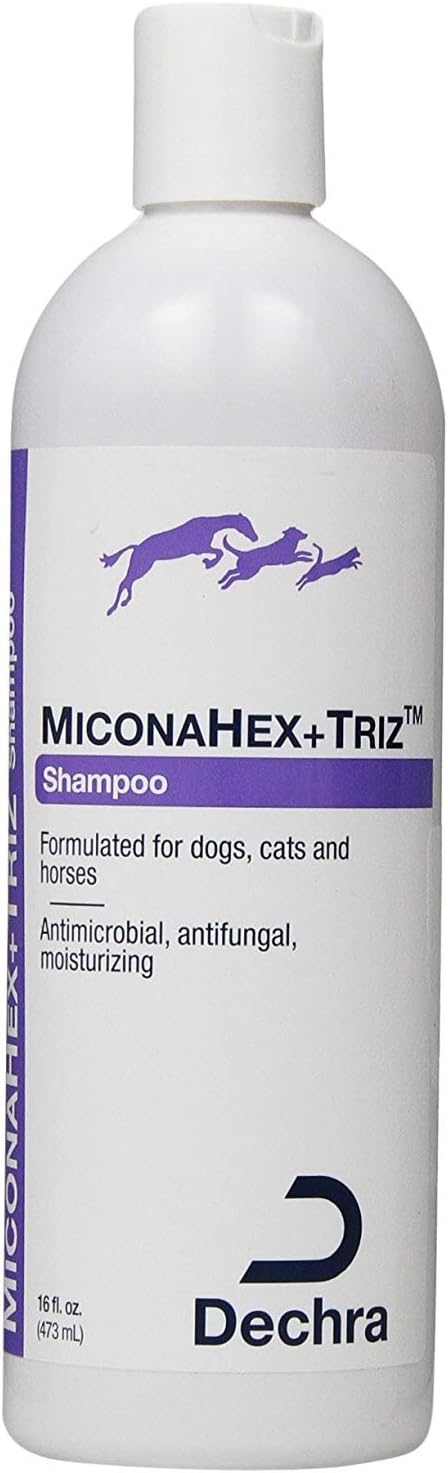
| Active ingredients | 2% Chlorhexidine Gluconate, 2% Miconazole Nitrate |
|---|---|
| Volume | 16 fluid ounces |
| Scent | Unscented |
| Special ingredients | ceramides |
Dechra MiconaHex+Triz Shampoo is a veterinary-strength medicated shampoo designed to treat fungal and bacterial skin infections while supporting skin barrier repair. It is typically used in short therapeutic courses applied to wet fur, massaged to produce lather, left on per veterinary directions, then rinsed; the formulation contains 2% miconazole and 2% chlorhexidine plus TrizEDTA to enhance antimicrobial activity. The shampoo also lists ceramides and moisturizing benefits, so it helps soothe and restore dry, damaged skin and may continue antimicrobial activity after rinsing. It is unscented and labeled for use on dogs, cats, and horses, which makes it versatile for multi-species households or veterinary clinics. Important limitations are that this is a medicated product intended for animals with conditions responsive to its active ingredients, so you should use it under veterinary guidance and stop if irritation develops, and it contains some plant oils and surfactants that could bother very sensitive animals.
Best for: Owners seeking a premium, clinic-grade shampoo that combines potent antimicrobial actives with ingredients to soothe and restore damaged skin for pets with mite- or infection-related skin problems.
Less Ideal for: Pet owners looking for a regular, gentle everyday shampoo or fragranced grooming product should choose a non-medicated option instead.
- Includes 2% miconazole and 2% chlorhexidine for broad antifungal and antibacterial activity
- TrizEDTA potentiates disinfectant effect and helps target Pseudomonas
- Contains ceramides and moisturizing agents to support barrier repair
- Unscented/fragrance-free formulation suitable for scent-sensitive pets
- Labeled for use on dogs, cats, and horses so it is versatile in multi-pet settings
- Medicated formula should be used under veterinary direction and is not for routine cosmetic bathing
- Contains surfactants and botanical oils that may irritate a small number of very sensitive animals
Verdict: The best premium mange shampoo is for owners who want top-tier formulations that pair potent mite control with superior soothing, conditioning, and skin-recovery ingredients.
Choosing the Right Mange Shampoo Dog: Key Factors to Consider
Active Ingredient and Mite Control
The active ingredient determines whether a shampoo has direct activity against the parasites that cause mange. Look for actives that are known to reduce mite load when used at recommended contact times and concentrations. Some ingredients are insecticidal or acaricidal and require correct dilution or repeated baths to be effective. Without an appropriate active, a shampoo may only clean the coat and not reduce the underlying mite population.
Also consider how the active interacts with sensitive skin. Strong acaricides can be effective but more likely to sting or dry fragile skin, especially if the skin is already inflamed. A balanced choice pairs a mite-active ingredient with a formulation that minimizes additional irritation.
Skin-soothing and Barrier Support
Mange damages the skin barrier and produces inflammation, itch, and secondary infection risk. Shampoos that include soothing agents such as colloidal oatmeal, aloe, panthenol, or ceramides help calm itching and support barrier repair. Restorative lipids and fatty acids help restore the skin's natural defenses, reducing transepidermal water loss and making subsequent treatments less irritating.
Prioritizing barrier-supporting ingredients speeds comfort and can reduce the total number of medicated baths needed. That matters for dogs with chronic issues or those with areas of broken skin where harsh cleansers would be counterproductive.
pH and Irritation Potential
Dog skin has a different pH than human skin, and shampoos formulated for the correct pH are less likely to cause stinging or disrupt the barrier further. Avoid products with high concentrations of harsh detergents, artificial fragrances, or alcohol-based solvents when skin is compromised. Even if an active ingredient is appropriate, an alkaline or overly stripping base can delay healing and increase discomfort.
Check labels for low-irritant claims, fragrance-free formulations, or specific notes about suitability for sensitive or inflamed skin. These cues help you choose a product that treats the condition without adding new problems.
Contact Time and Application Instructions
Efficacy for mite-directed shampoos often depends on leaving the lather on the animal for a specific period. Short contact times or improper rinsing reduce effectiveness. Look for clear manufacturer instructions about dilution, recommended dwell time, and how often to repeat baths.
Application practicality also matters: some products require multiple steps, such as pre-wetting with a degreasing rinse or following with a conditioner. If a shampoo's routine is too complex, owners may underapply it, reducing treatment success. Simpler, well-documented protocols increase the chance of proper use.
Safety for Puppies, Seniors, and Compromised Animals
Age and health status influence tolerance to medicated shampoos. Puppies and senior dogs can have thinner skin, altered metabolism, or underlying health issues that change how they respond to active ingredients. Some mite-active compounds carry age or weight restrictions, or cautionary notes for pregnant or nursing animals.
Choose products with explicit guidance on safe use across life stages, or follow a veterinarian's direction if you have a very young, elderly, or systemically ill pet. Safety labeling and veterinary compatibility information help avoid adverse reactions.
Residue, Odor Control, and Coat Condition
After treatment, you want a coat that is not left greasy, sticky, or heavily scented. Residue can trap debris and interfere with follow-up topical therapies. Good rinsing behavior prevents buildup and reduces the chance of secondary skin problems. Odor control is also a consideration because mange-affected skin can have strong smells from secondary bacterial or yeast issues; a balanced formula reduces odor without masking problems with heavy perfumes.
Additionally, maintaining coat condition—softness and detangling—makes follow-up grooming easier and helps owners maintain consistent treatment schedules.
How Often Should I Bathe a Dog with Mange?
Frequency depends on the active ingredient, the severity of the infestation, and your veterinarian's plan. Many mite-directed shampoos are used every few days initially, then tapered as the skin recovers and mite counts drop. Follow the labeled schedule for repeat baths because too-frequent washing with drying agents can worsen the barrier.
If the skin is very inflamed or there are open sores, a vet may recommend less frequent medicated bathing combined with other systemic or topical treatments. Monitor the dog's comfort and skin condition and adjust frequency under professional guidance.
- Follow labeled contact time and repeat intervals
- Avoid daily medicated baths unless explicitly instructed
- Combine bathing with barrier-supporting products when appropriate
Can I Use a Regular Dog Shampoo After Medicated Baths?
Using a gentle, pH-appropriate shampoo between medicated baths is often acceptable and can help remove buildup without interfering with treatment. Choose a formulation labeled for sensitive skin and free of heavy fragrances. Avoid products with strong detergents that strip lipids and undo barrier repair.
If your treatment plan includes topical parasiticides applied after bathing, check whether residual ingredients from a follow-up shampoo could reduce their efficacy. When in doubt, consult your veterinarian about sequencing.
- Use gentle, fragrance-free maintenance shampoos
- Ensure rinsing is thorough to avoid residue interactions
- Coordinate with any spot-on or leave-on topical treatments
What About Aloe, Oatmeal, and Other Soothing Additives?
Soothing additives are helpful for itch and inflammation and can make medicated baths more tolerable. Colloidal oatmeal, aloe vera, and panthenol are commonly included to calm skin and support hydration. These ingredients do not typically replace mite-active agents but make recovery more comfortable.
Be mindful of potential sensitivities. Even generally soothing ingredients can cause reactions in a small number of animals, so watch for increased redness or irritation after first use and discontinue if problems arise.
- Look for clinical-grade colloidal oatmeal or medical aloe
- Soothing agents are adjuncts, not replacements for mite actives
- Patch-test if the dog has a history of topical sensitivities
How to Apply a Medicated Shampoo Effectively
Start with a thorough wetting of the coat using lukewarm water. Apply the shampoo starting at the neck and work back toward the tail, lathering thoroughly to reach the skin. Massage gently to loosen crusts and scale but avoid aggressive scrubbing on open sores.
Maintain the labeled contact time before rinsing. Use a gentle, thorough rinse to remove all residues, then towel-dry. If instructions call for a second application, repeat the same steps. Proper application maximizes the active ingredient's exposure to mites and improves treatment outcomes.
- Wet coat completely before applying
- Massage into the skin rather than just the haircoat
- Observe and follow the labeled dwell time exactly
When Should I Contact My Veterinarian?
Contact your veterinarian if the dog's condition worsens after starting a shampoo, such as increased redness, swelling, worsening odor, or spreading lesions. Also seek guidance if there is no improvement after the expected treatment course or if the animal becomes systemically unwell with fever, lethargy, or loss of appetite.
If the dog has extensive open sores, is very young, elderly, pregnant, or has other health problems, consult a vet before beginning any medicated bathing regimen so they can recommend safe alternatives or adjunctive therapies.
- Worsening skin condition or new systemic signs
- No measurable improvement after a full treatment cycle
- Preexisting health conditions that could affect treatment safety
How We Chose the Best Mange Shampoo Dog
We evaluated shampoos using criteria that matter for treating mange and for preserving skin health during recovery. First, we focused on active ingredient profile and demonstrated activity against common mange mites, paying attention to concentrations that are typically recommended by veterinary sources. Second, we assessed formulation safety, looking for pH-balanced, fragrance-light, and hypoallergenic bases that minimize irritation on compromised skin. Third, we considered complementary soothing and restorative ingredients such as colloidal oatmeal, aloe, ceramides, and fatty acids that support the skin barrier. Fourth, we examined application practicality: latherability, recommended contact time, and whether shampoos rinse out cleanly without residue. Finally, packaging and dosing clarity were included because accurate dilution and contact time affect outcomes. We excluded products lacking clear active-ingredient information, those formulated primarily for cosmetic use without mite-directed actives, and any items intended only for topical spot treatments rather than whole-body bathing. The listed items met a balance of mite activity, skin safety, and user-friendly application.
Our full evaluation process is outlined in our review methodology.
FAQ
Will a medicated shampoo cure mange on its own?
A medicated shampoo can reduce mite numbers and relieve symptoms, but cures often require a comprehensive plan. Many cases benefit from repeated baths, topical or systemic therapies, and addressing underlying conditions that predispose the dog to mite infestation.
Is it safe to bathe a dog with open sores?
Gentle bathing may be advised to remove crusts and debris, but aggressive scrubbing or harsh actives can delay healing. Consult a veterinarian for guidance and choose a low-irritant, soothing formulation if bathing is recommended.
How long before i should expect to see improvement?
Some dogs show reduced itching and less scale after the first few treatments, but overall recovery can take several weeks depending on severity and treatment consistency. Persistent or worsening signs warrant veterinary reassessment.
Can I use human anti-itch shampoos on my dog?
Human shampoos have different pH and ingredient profiles and can irritate dog skin. Use products formulated for canine skin or those labeled specifically safe for dogs, especially when treating compromised skin.
Do soothing ingredients interfere with mite actives?
Soothing ingredients generally do not reduce the effectiveness of mite-active agents and can make medicated baths more tolerable. Confirm application order and rinse recommendations on the product label to avoid unintended interactions.
Final Verdict
When treating mange with a shampoo, prioritize products that combine proven mite activity with gentle, skin-friendly formulations. Focus on actives that address the parasite plus ingredients that soothe and repair the barrier to reduce itch and speed recovery. Balance contact time and application practicality so you can follow the regimen consistently. Ultimately, coordinate bathing with your veterinarian, especially for severe cases, young or senior dogs, or when secondary infections are present. A considered choice that weighs efficacy, safety, and tolerability will give the best chance of clearing mites while protecting the skin.

