

When you share your home with a dog that chews aggressively, the right bed matters for both safety and longevity. A purpose-built aggressive chewer dog bed combines chew-resistant materials, reinforced seams, and durable covers so you do not replace bedding every few weeks. This guide shortlists the top options for heavy chewers, focusing on how each design handles sustained chewing, padding that remains comfortable under duress, and covers that can be cleaned without losing protection. Below are our top picks and clear criteria to help you choose the best bed for your dog and living situation.
Top Picks at a Glance
| Best Overall Aggressive Chewer Bed A reliable all-around choice balancing durability, comfort, and price | K9 Ballistics Chew Proof Armored Crate Bed Large |  |
| Best Budget Aggressive Chewer Bed A low-cost option that still resists chewing and wears well | HOMBYS Indestructible Dog Bed 35 x 22 |  |
| Best Premium Aggressive Chewer Bed Higher-end materials and construction for long-term durability and comfort | Senneny Elevated Dog Bed Medium |  |
| Best Heavy-Duty Aggressive Chewer Bed Built with reinforced seams and rugged materials for tough chewers | Couzssyhi Chew Resistant Dog Bed Large |  |
| Best Large Aggressive Chewer Bed Extra-size options that accommodate big dogs and sprawling sleepers | Sytopia Chew Proof Dog Bed XL |  |
| Best Compact Aggressive Chewer Bed Smaller footprint beds for apartments, crates, and tight spaces | HOMBYS Chew Proof Dog Mat 23 x 17 |  |
K9 Ballistics Chew Proof Armored Crate Bed Large
Best Overall Aggressive Chewer Bed

| Size | Large (41" L x 27" W x 1" H) |
|---|---|
| Material Type | Ripstop Ballistic Polyester |
| Fill Material | Polyester Fiber |
| Recommended Uses For Product | Indoor, Outdoor |
| Other Special Features of the Product | Easy to Clean, Non Skid Bottom, Orthopedic |
This armored crate bed pairs a solid aluminum frame with a ripstop ballistic fabric sling to create a chew-resistant sleeping surface for large dogs. It is sized for standard wire crates and can be used as a flat crate pad or converted into a raised bed by attaching the included legs. The padded center contains polyester fiberfill about 1.5 inches thick, so the bed offers more cushioning than a typical cot-style sling and can support joints when elevated. The ballistic fabric resists punctures, sheds fur and dirt, and is easy to spot-clean, while rubber corner pads and capped feet keep the pad from sliding or scratching floors. Practical limits are its weight and bulk for travel and the fact that it is sized specifically for wire crates rather than universal crate trays or small carriers. Expect strong durability and few frills beyond its sturdy, utilitarian design.
Best for: Owners who prioritize indestructible, long-lasting bedding and are willing to spend more for premium materials and reinforced construction for heavy chewers.
Less Ideal for: People who need a lightweight, travel-friendly bed or who use non-wire crates or carriers where this pad will not fit properly.
- All-aluminum frame protects corners and edges from chewing
- Ripstop ballistic polyester sling resists punctures, dirt, and fur
- Padded polyester fiberfill center adds plush comfort without extra inserts
- Includes legs to convert pad into a raised, orthopedic-style bed
- Non-skid rubber corner pads and capped feet prevent sliding and floor damage
- Designed to fit standard wire crates only, not universal tray shapes
- Spot clean only; cover is not fully machine washable
Verdict: The best overall aggressive chewer bed for most owners, offering the right mix of chew-resistant construction, comfortable support, and practical maintenance features.
HOMBYS Indestructible Dog Bed 35 x 22
Best Budget Aggressive Chewer Bed
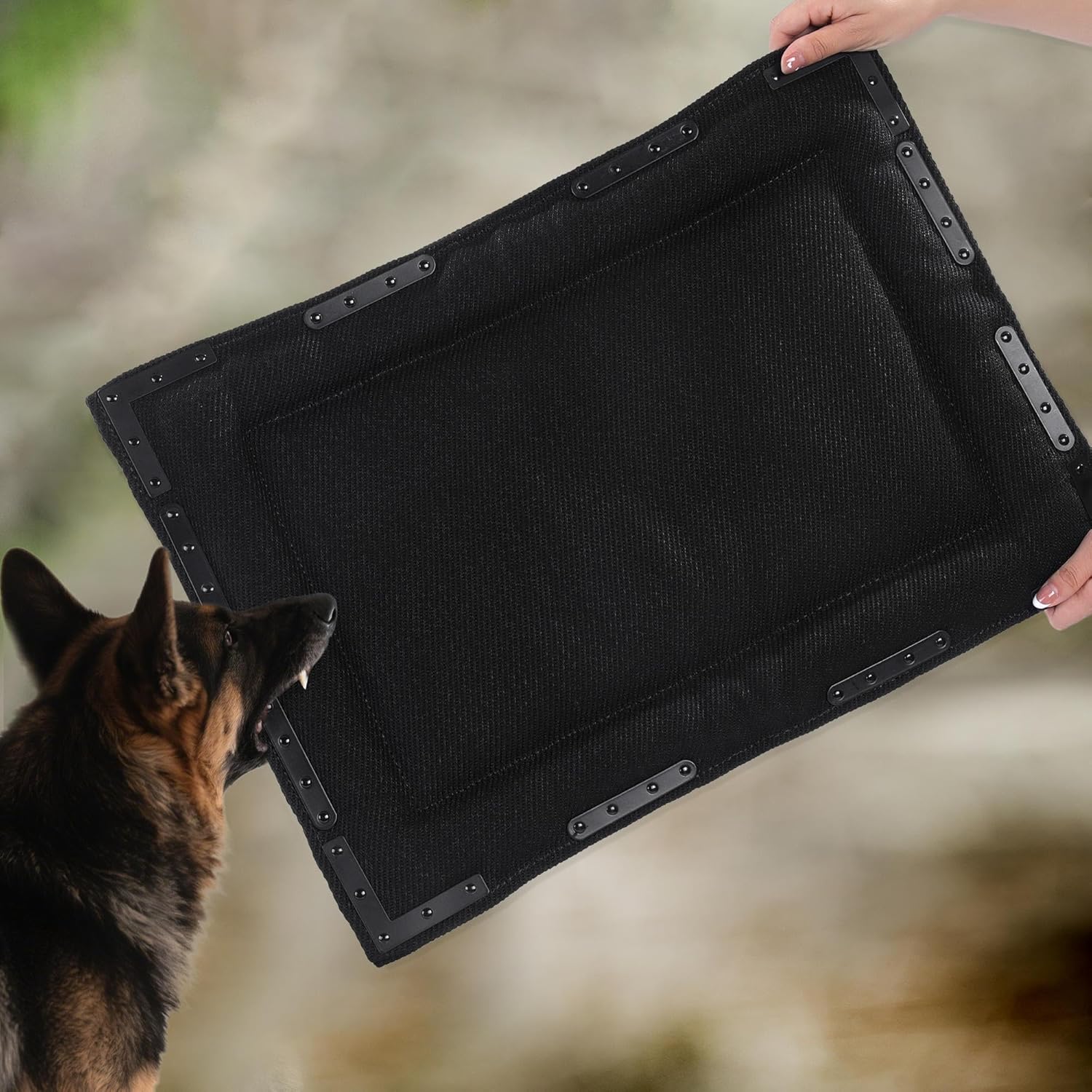
| Material Type | Polyester |
|---|---|
| Fill Material | Polyester Fiber |
| Thickness | 0.8" |
| Suitable For | Indoor, Outdoor |
| Breed Recommendation | Medium |
This HOMBYS indestructible dog bed is a low-profile kennel mat built for aggressive chewers and medium crates. Reinforced with 14 metal rivets around the edges and a tear-resistant polyester cover, it aims to prevent ripping and digging while a 0.8" polyester fiber fill provides basic cushioning. The rectangular mat is waterproof and treated to resist odors, so it wipes clean or can be hosed off for messy outdoor or travel use, though the manufacturer advises hand washing rather than machine laundering. At 35" x 22", it fits most medium crates and folds flat for storage or transport. Practical benefits include the rugged edge reinforcement, easy-clean surface, and a thin profile that still gives some padding without taking up crate space. Trade-offs are the relatively thin padding compared with thicker beds and the recommended hand wash care, which may be inconvenient for some owners. For a budget-focused, chew-resistant crate mat it delivers the core durability and cleanability most buyers need.
Best for: Owners who need an inexpensive, crate-friendly mat that prioritizes chew resistance and easy cleaning over plush cushioning.
Less Ideal for: People seeking a thick, orthopedic or luxury dog bed for prolonged lounging should consider a more heavily padded alternative.
- Edge reinforcement with 14 metal rivets for added tear resistance
- Chew-resistant polyester cover and industrial-strength fabric
- Waterproof coating and odor-resistant finish for easy cleanup
- Folds flat for travel and fits standard medium crates
- Padding is only 0.8 inches thick, offering limited cushioning for long naps
- Manufacturer recommends hand washing rather than machine laundering
Verdict: The best budget aggressive chewer bed for buyers who need basic chew resistance and acceptable comfort without spending much.
Senneny Elevated Dog Bed Medium
Best Premium Aggressive Chewer Bed

| Material Type | Polyester |
|---|---|
| Cover Material | Oxford cloth |
| Recommended Uses For Product | Indoor, Outdoor |
| Other Special Features of the Product | Chew Resistant |
| Breed Recommendation | Medium |
This elevated dog bed is aimed at active dogs that need a tougher sleep surface for indoor or outdoor use. The fabric is 900D Oxford cloth stretched and locked inside a widened aluminum frame so there are no exposed fabric edges for chewers to catch, and metal joints replace plastic to improve longevity. Non-slip silicone feet and a reinforced frame reduce wobble, and the raised design keeps dogs off damp or hot ground while increasing airflow. The fabric is water-resistant and wipes clean, and a light 400 g polyfill adds modest cushioning without turning the bed into a heavy mattress. Assembly is straightforward with the included Allen wrench and a few bolts. Limitations include the modest padding for dogs that need serious joint support and the reliance on bolts for assembly which can loosen over time if not checked, but for outdoor use and tough chewers the construction and materials focus on durability and low maintenance.
Best for: Owners who keep dogs outdoors or take them camping and prioritize a rugged, low-maintenance bed that resists chewing and weather exposure.
Less Ideal for: Owners seeking a plush, heavily padded orthopedic mattress for senior or arthritic dogs should consider a thicker, softer bed instead.
- 900D Oxford fabric locked inside the frame prevents exposed edges and improves chew resistance
- Widened heavy-duty aluminum frame and all-metal joints provide stable, wobble-free support
- Non-slip silicone feet keep the bed in place on a variety of surfaces
- Water-resistant fabric wipes clean for easy outdoor maintenance
- Only light polyfill cushioning may not suit dogs needing significant joint support
- Bolted assembly can require periodic tightening for long-term stability
Verdict: The best premium aggressive chewer bed for owners willing to pay more for superior, long-lasting materials, reinforced build, and enhanced comfort features.
Couzssyhi Chew Resistant Dog Bed Large
Best Heavy-Duty Aggressive Chewer Bed

| Size | Large (28"x41") |
|---|---|
| Fill Material | Foam, Polypropylene (PP) |
| Special Features | Chew Resistant, Orthopedic, Scratch Resistant, Washable, Water Resistant |
| Recommended Uses | Indoor |
This Couzssyhi dog bed pairs a 3-inch high-density foam base with plush bolsters and a chew-resistant outer cover to create a durable yet comfortable sleeping surface for large dogs. It is typically used in crates, kennels, or placed on the floor where aggressive chewers need a tougher option than a standard bed. The thick foam offers firm, even support that helps distribute pressure across joints and maintains shape over time while the surrounding bolsters provide head and neck support for dogs that like to curl or lean. The cover includes a water-resistant layer and is machine washable, making routine cleaning straightforward after spills or accidents. Practical benefits include the combination of chew-resistant fabric and orthopedic support, plus easy care for busy households. Important limitations are that truly determined chewers can eventually damage any bed and the firm foam may feel too supportive for dogs that prefer very soft, sinking surfaces.
Best for: Owners who want a long-lasting bed that balances rugged construction with real orthopedic support and easy home care for large dogs.
Less Ideal for: Buyers who need an ultra-plush, cloud-like bed for small breeds or owners seeking a lightweight travel mattress should look elsewhere.
- Durable chew-resistant cover designed to withstand biting and scratching from energetic dogs
- 3-inch high-density foam base provides firm, orthopedic-style support for joints and hips
- Plush bolster edges give head and neck support for dogs that like to curl or lean
- Water-resistant layer and machine-washable cover simplify cleaning after accidents
- Firm high-density foam may be too supportive for dogs that prefer very soft beds
- Not guaranteed indestructible for highly determined or extreme chewers
Verdict: The best heavy-duty aggressive chewer bed for dogs that regularly destroy ordinary beds, featuring industrial-grade fabrics, extra-strong seams, and robust padding.
Sytopia Chew Proof Dog Bed XL
Best Large Aggressive Chewer Bed

| Size | XL |
|---|---|
| Material Type | Polyester |
| Fill Material | Polyester Fiber |
| Special Features | Non Skid Bottom, Washable, Water Resistant, Waterproof |
| Recommended Uses For Product | Indoor |
The Sytopia Chew Proof Dog Bed XL is an indoor rectangular bed aimed at larger dogs that need joint support and protection from moisture and chewing. It pairs a thick orthopedic polyester fill with three raised bolsters so dogs have a headrest and back support while they stretch out. A built-in waterproof liner and a removable zip-off polyester cover make cleanup straightforward since the cover is machine washable and the liner blocks spills from reaching the fill. The product lists non skid backing and water resistant to waterproof performance, which helps keep the bed in place and usable on porches, vehicle floors, or camping sites. The listing emphasizes chew resistance and shows heavy-duty styling, but buyers should note the product weight and materials are typical polyester construction rather than heavy ballistic fabrics, so truly determined chewers may eventually breach it. For large breeds or older dogs with sore joints this bed offers cushioned support, easy maintenance, and bolstered edges for added comfort, while offering reasonable protection against accidents and damp conditions.
Best for: Buyers who need a generously sized, supportive bed for large dogs that also want easy cleanup and some protection against moisture and mild chewing.
Less Ideal for: Owners of dogs that are known to violently destroy bedding or require industrial-strength chewproof materials should consider purpose-built heavy-duty chew beds made from ballistic fabrics or welded constructions.
- Orthopedic polyester fill provides pressure relief for hips and joints
- Built-in waterproof liner prevents spills from reaching the filling
- Removable zip-off cover is machine washable for easy cleaning
- Three-sided bolsters give head and back support for dogs that like to curl or lean
- Non-skid bottom helps keep the bed in place on smooth floors
- Chew resistance appears moderate and may not withstand extremely determined or powerful chewers
- Construction uses polyester fabrics rather than heavy-duty ballistic materials
Verdict: The best large aggressive chewer bed for bigger breeds or dogs that stretch out, combining generous dimensions with reinforced, chew-resistant construction.
HOMBYS Chew Proof Dog Mat 23 x 17
Best Compact Aggressive Chewer Bed

| Material Type | 60% Cotton with 40% Nylon |
|---|---|
| Fill Material | Polyester Fiber |
| Recommended Uses For Product | Indoor, Outdoor, Car |
| Machine Washable | No (hand wash only) |
This HOMBYS chew-proof dog mat is a low-cost, durable crate pad built around a firm, no-frills design. The surface combines cotton/nylon fabric with a polyester fill and 12 metal rivets at the edges to resist tearing from teething puppies and determined chewers, and the waterproof top wipes clean for quick maintenance. It is firmer than an orthopedic bed, so it sits flat in crates and is less enticing for chew-prone dogs, and its light weight and foldability make it easy to move between crate, car, or camping. Care is hand-wash only because the rivets can damage machines, and the manufacturer notes it is not 100 percent chew-proof against truly aggressive dogs. For buyers prioritizing a budget-resistant pad rather than plush comfort, this mat offers sensible protection and portability, but shoppers wanting soft, cushiony support or a machine-washable option should consider alternatives.
Best for: Owners on a tight budget who need a tough, portable crate pad that tolerates light-to-moderate chewing and is easy to move between home and travel.
Less Ideal for: People who want plush orthopedic comfort or full machine-washable beds, or owners of dogs that regularly destroy heavy-duty products.
- Reinforced with 12 metal rivets to strengthen edge seams against chewing
- Durable, scratch-resistant and waterproof surface that wipes clean
- Firm profile that fits crates and reduces chewing temptation
- Lightweight and foldable for travel and easy storage
- Not fully chew-proof against very aggressive chewers
- Hand wash only; rivets can damage washing machines
Verdict: The best compact aggressive chewer bed for owners with limited space or crate setups who still need a chew-resistant, comfortable resting spot for their dog.
Choosing the Right Aggressive Chewer Dog Bed: Key Factors to Consider
Material Durability
Tough outer materials are the first line of defense against an aggressive chewer. Fabrics rated for abrasion resistance, tightly woven textiles, ballistic nylon, or heavy-duty canvas resist tooth penetration longer than standard upholstery fabrics. Multiple layers with a sacrificial tough outer shell over a reinforced inner liner reduce the chance that a determined bite will reach inner foam.
Also consider material composition for safety. Synthetic fibers often withstand tearing better than natural ones, and coatings can add bite resistance. If a bed uses a coated fabric, check that the coating is well bonded and that seams are reinforced to prevent a chewer from finding an entry point along a stitch line.
Seam and Closure Reinforcement
Seams are a common failure point when dogs chew bedding. Strong beds use heavy-duty thread, bar-tacked stress points, and protected zipper channels so a dog cannot easily unzip or rip a seam. A hidden or reinforced zipper with an overlapping flap or internal locking system keeps the closure from becoming an easy target.
Look for double-stitched seams and additional reinforcement at corners and where the fabric meets the zipper. Even with tough fabric, weak stitching will let a persistent chewer access stuffing or foam, so construction quality matters as much as outer material strength.
Padding Type and Resilience
Padding affects comfort and how a bed holds up once a dog starts chewing. High-density foam resists compression and continues to support joints after surface damage better than low-density foam or loose fiber fills. Some beds use a combination of a firm base foam with a softer top layer to balance support and comfort while maintaining structural integrity under stress.
Consider whether padding is encased in its own puncture-resistant liner. Enclosed foam that cannot be pulled apart reduces the risk of ingestion of stuffing and keeps the bed functional even if the outer cover is compromised.
Cleanability and Maintenance
Aggressive chewers often cause messes in addition to damage, so you need a bed that is easy to clean. Removable, machine-washable covers are ideal, but evaluate how the cover is attached and whether washing could reduce chew resistance. Stain-resistant finishes and wipeable outer surfaces allow spot cleaning without removing the cover.
Also consider whether the bed allows for repairs. Beds with removable covers and replaceable inner liners or foam make it easier to fix localized damage without discarding the entire bed. Hardware like zippers should be both durable and protectable to stay functional through repeated cleaning.
Safety and Ingestion Risk
When a dog chews aggressively, small torn pieces can become choking hazards or cause intestinal blockage. Choose beds with tightly bound edges, minimal loose trim or decorative pieces, and inner liners that keep small fragments contained. Non-toxic materials and flame-retardant treatments should be disclosed and safe for pets.
Avoid beds with buttons, loose cords, or exposed foam chunks that a dog can swallow. Even with robust construction, supervise your dog until you are confident the chosen bed can withstand their chewing behavior over time.
Size, Weight, and Placement
A bed that is too small encourages restless chewing as a dog tries to make it fit their preferred sleeping position. Choose a size that lets your dog stretch out comfortably so they are less likely to turn the bed into a chew target. Heavier beds are harder for a dog to drag around and chew from all sides, but weight must be balanced with your ability to move and clean the bed.
Also consider where you plan to place the bed. A bed intended for outdoor or garage use should prioritize weather resistance and waterproofing, while an indoor bed might prioritize soft top layers combined with a chew-resistant underside.
How Do Chew-resistant Covers Actually Work?
Chew-resistant covers rely on material strength, layered construction, and closure protection rather than a single invulnerable fabric. A common approach uses a tough outer shell to absorb initial bites, an intermediate abrasion-resistant layer to stop tearing, and an inner liner that prevents access to padding. Reinforced stitching and protected zippers close the usual escape routes dogs find when tearing bedding.
Understanding these layers helps set realistic expectations. No cover is completely chew-proof for every dog, but multi-layer systems and smart closures significantly increase the time it takes for a determined chewer to penetrate the bed.
- Outer shell: absorbs bites and resists puncture
- Intermediate layer: prevents fabric tear propagation
- Inner liner: keeps stuffing contained if outer layers fail
- Protected closures: zippers or fasteners hidden behind flaps
Can Reinforced Beds Still Be Comfortable for Sleep?
Yes. Many designs combine dense support foam for structure with a softer top layer to create a comfortable resting surface. The key is balancing firmness for durability with enough cushioning for joint support. Some beds use a firm base foam and a quilted or plush top panel so dogs get comfort without exposing fragile materials.
Look for beds that specify foam density and layering so you can assess whether the construction will suit an older dog with joint needs or a young active dog that prefers a softer surface.
- Two-layer foam: firm base + soft top
- Quilted panels: add softness without sacrificing protection
- Encased foam: reduces loose filling and ingestion risk
What Should I Do if My Dog Starts Tearing the Bed?
Addressing chewing quickly reduces the chance of ingestion and repeated destruction. Remove access to the damaged bed until you can inspect it. If the cover is removable and intact, repair or replace the inner liner and continue supervised use. For small tears, heavy-duty fabric adhesive or a patch on the inside layer can extend the bed's life.
If damage is severe or foam is exposed, replace the padding or the entire bed. Also evaluate why chewing started: boredom, anxiety, dental discomfort, or insufficient exercise. Fixing the underlying cause reduces recurrence and preserves your next bed.
- Inspect for exposed foam and swallowed pieces
- Patch or sew small tears from inside when possible
- Supervise reuse and remove the bed if chewing resumes
- Address behavioral causes with play, exercise, or vet advice
Is a Heavier Bed Better for a Chewer?
Heavier beds are generally harder for dogs to move and dismember, so weight can be an advantage. Bulkier foam and integrated support cores add mass that discourages dragging and flipping. However, very heavy beds may be impractical if you need to move them frequently for cleaning or travel.
Consider a compromise: choose a bed with a substantial base or non-skid bottom that stays put during use but still has a removable cover for maintenance. Weight is one of several factors that reduce destructive behavior rather than a standalone solution.
- Non-skid bottoms help keep the bed in place
- Integrated base layers add weight without compromising comfort
- Balance weight with the need for portability and cleaning
How to Test a Bed's Chew Resistance at Home
You can check basic chew resistance without encouraging destructive behavior. Inspect the fabric weave, try applying firm pressure with a fingernail to see if it snags, and examine seams and zipper protection. A gentle tug test along seams and around closures can reveal weak points that a dog might exploit.
Do not conduct forceful tests that create damage. Instead, prioritize visual inspection and the presence of multi-layer construction, heavy-duty stitching, and covered closures as indicators of a bed likely to stand up to heavy chewers.
- Visual weave and material quality inspection
- Gently test seams and closures for reinforcement
- Check for inner liners and encased foam
How We Chose the Best Aggressive Chewer Dog Bed
To identify beds suitable for aggressive chewers we focused on performance attributes rather than brand recognition. Main evaluation criteria included material toughness, construction and seam reinforcement, cover attachment and closure systems, and the maintainability of the bed after damage or mess. We also evaluated padding resilience for long-term comfort, safety features such as non-toxic materials and bite-resistant layers, and practical factors like machine-washability and available sizes that fit common dog breeds. We excluded beds that rely solely on thin fabric or lightweight foam with no reinforced layers. Products with vague material specs or unrepairable single-layer designs were removed. The shortlist favors beds with documented abrasion or puncture resistance, robust zipper/closure protection, multi-layer shells, and user-focused elements such as removable covers and repair-friendly construction. Where applicable we noted how design choices trade off chew resistance versus comfort and weight.
Our full evaluation process is outlined in our review methodology.
FAQ
How long will a chew-resistant bed last with a determined chewer?
Lifespan varies widely based on the dog's chewing intensity and the bed's construction. Well-built beds with reinforced layers and protected closures can last months to years under moderate chewing, while no bed is truly indestructible for every dog. Regular inspection and quick repair of small damage extend usable life.
Are chew-resistant beds machine-washable?
Many chew-resistant beds offer removable, machine-washable covers, but the manufacturer should specify care instructions. Some heavy-duty fabrics may need cold washes or gentle cycles, and reinforced zippers can usually withstand normal washing when secured and protected.
Can I repair a torn bed instead of replacing it?
Small tears can often be repaired with internal patches, heavy-duty thread, or fabric adhesive applied from the inside to maintain protection. For extensive damage or exposed foam, replacing padding or the bed is safer. Repairability depends on whether the cover and inner liners are accessible and designed for maintenance.
Should I prioritize chew resistance or orthopedic support for an older dog?
Balance is important. For older dogs with joint issues, prioritize supportive, high-density foam that reduces pressure on joints, then select a design that also has reinforced covers and seams. If chew risk is high, choose a bed with an encased supportive core so comfort is preserved even if the outer layer is damaged.
What size bed should I choose for a heavy chewer?
Select a bed that allows your dog to stretch out comfortably so they are less likely to fidget and chew. A slightly larger bed also spreads wear over a bigger area. Consider the bed's weight and placement; heavier, larger beds are harder to drag and may suffer less perimeter chewing.
Final Verdict
When buying a bed for an aggressive chewer, prioritize durable materials, reinforced seams, and protective closures while balancing comfort needs like supportive foam. Expect tradeoffs: the toughest fabrics can be firmer to the touch, and added reinforcement can increase weight. Focus on multi-layer construction and encased padding to reduce ingestion risk and preserve support. Choose a bed that matches your dog's size and chewing intensity, and plan for regular inspection and possible repairs. With the right combination of toughness and cushioning you can provide safe, long-lasting rest for a heavy chewer while minimizing frequent replacements.

