

If you need firm, consistent corrections during training, an automatic shock collar dog owners can trust makes routine behavior work faster and clearer. The right collar delivers repeatable stimulus, configurable intensity, and dependable triggering so you and your dog spend less time repeating commands and more time reinforcing good behavior. This guide shortlists the top automatic shock collars on performance, safety, and ease of use. We evaluated each pick for control precision, adjustable settings, and how straightforward the collar is to fit and operate. Read on to compare features that matter most for training and daily reliability.
Top Picks at a Glance
| Best Overall Automatic Shock Collar An all-around top pick that balances performance and safety | Nikketta RS3 Dog Training Collar |  |
| Best Budget Automatic Shock Collar A low-cost option that covers essential training features | Ketwini Dog Training Collar RS11-N |  |
| Best Premium Automatic Shock Collar Higher-end build, more features, and refined control options | Garmin BarkLimiter Deluxe |  |
| Best Compact Automatic Shock Collar A smaller, lightweight collar suited for small dogs or travel | MariMoki Ultra-Small Bark Collar |  |
| Best Heavy-Duty Automatic Shock Collar Built tougher for large dogs and demanding outdoor use | DeeWaves Shock Collar 2 Dogs |  |
| Best Long-Range Automatic Shock Collar Extended control distance for off-leash training and recall | My Pet Command Long Range Training Collar |  |
| Best Waterproof Automatic Shock Collar Water-resistant design for wet conditions and easy cleaning | Bousnic RS2 Dog Training Collar |  |
Nikketta RS3 Dog Training Collar
Best Overall Automatic Shock Collar

| Control range | 4500FT |
|---|---|
| Waterproof rating | IP67 (collar only) |
| Shock levels | 99 levels |
| Vibration levels | 16 levels |
| Beep levels | 8 levels |
The Nikketta RS3 is a rechargeable electronic training collar system that pairs a handheld remote with a collar receiver to deliver beep, vibration, and static stimulation for training and behavior correction. It is typically used for off-leash recall, boundary work, and correcting unwanted behaviors during walks or field work, with controls accessible on the remote and a keypad lock to prevent accidental inputs. Notable features include an adjustable multi-level beep (8 levels), vibration (16 levels) and shock (up to 99 levels), an integrated LED flashlight on the receiver for night visibility, IP67 waterproofing for the collar, and a two-way battery status display that shows charge for both remote and collar. The 4500 ft range and fast USB charging make it practical for working German Shepherds that need distance and endurance, and the included long prongs accommodate thick coats. Limitations to consider are that the remote is not waterproof and the high maximum stimulation requires careful, gradual introduction to avoid over-correction.
Best for: Owners who want a rechargeable training system that supports long-range off-leash work and reliable battery monitoring for active breeds that train outdoors.
Less Ideal for: People who need a fully waterproof remote or those who prefer force-free methods without static stimulation.
- Rechargeable batteries with fast USB charging and long standby runtimes for remote and collar
- Very long 4500 ft control range suitable for open areas
- Multi-mode correction with adjustable levels for beep, vibration, and shock
- IP67 waterproof receiver lets dogs work in rain or near water
- Two-way battery status monitor displays charge for both remote and collar
- Remote transmitter is not waterproof
- High maximum shock level requires cautious, responsible use
Verdict: The best overall automatic shock collar that balances reliable correction range, adjustable stimulation levels, comfort, and durable construction for most pet owners.
Ketwini Dog Training Collar RS11-N
Best Budget Automatic Shock Collar

| Remote range | 4200FT |
|---|---|
| Waterproof rating | IP67 |
| Dog size | 10-150 lbs |
| Modes | Beep, Vibration, Shock, Ultrasonic |
| Channels | Dual-channel |
The Ketwini RS11-N is a budget-focused remote training collar that packs a long advertised range and several correction options into a compact package. It provides four modes — beep, vibration, shock and an ultrasonic deterrent — with stepped intensity levels so you can start low and increase as needed; contact prongs are removable if you prefer vibration/ultrasonic-only corrections. The remote supports two channels for controlling two receivers and has a safety lock and memory function to prevent accidental activations and retain settings between sessions. Practical benefits include an IP67 waterproof receiver for wet-weather use, fast charging and long standby claims for low maintenance, and an adjustable strap that fits most dogs in the 10–150 lb range. As a budget product, expect less refined ergonomics and a simpler build versus higher-end systems, and some buyers report variability in range and button feel during active use. For straightforward long-distance recall and behavior work where cost matters, this collar delivers strong basic capability with sensible safety controls.
Best for: Buyers who need an inexpensive collar that still offers long range and multiple manual correction options for outdoor training and basic behavior control.
Less Ideal for: Owners seeking the most refined ergonomics, premium materials, or professional-grade consistency at extreme ranges should consider higher-end systems.
- Long remote range up to 4200 ft suitable for open-area training
- Multiple correction modes (beep, vibration, shock, ultrasonic) with adjustable intensity levels
- IP67 waterproof receiver for reliable use in rain or wet conditions
- Dual-channel remote and memory function to control two dogs and retain settings
- Shock mode includes high intensity levels intended only for extreme situations which may be more than needed for routine training
- As a budget model, build quality and user interface are simpler compared with premium units
Verdict: The best budget automatic shock collar for owners who need basic correction and useful features at a lower price without unnecessary extras.
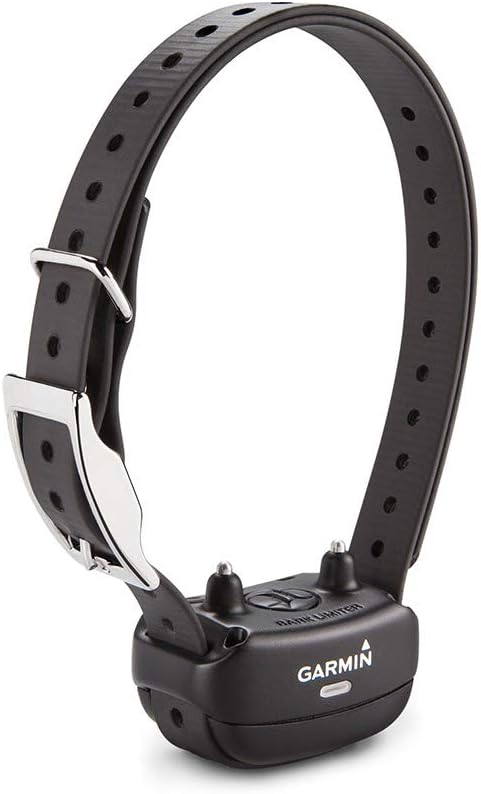
Garmin BarkLimiter Deluxe
Best Premium Automatic Shock Collar
| Included Components | Bark |
|---|---|
| Breed Recommendation | All Breed Sizes |
| Material Type | Stainless Steel |
| Warranty Description | 1 year |
The Garmin BarkLimiter Deluxe is a compact, rechargeable bark-control collar that uses motion-based sensors to identify barking and deliver correction automatically or by manual selection. It is typically worn on the dog's neck and used to reduce nuisance barking at home or in the yard; the unit offers an Auto Rise setting that programs stimulation intensity based on each dog's barking, plus vibration and manual stimulation options. Notable features include advanced bark-differentiation to reduce false triggers, a bark odometer that tracks barking events, integrated stainless steel contact points sized to work across coat types, and a long-lasting rechargeable battery rated up to three months per charge. In practice the device is easy to fit with a buckle closure and stays lightweight for daily wear, and the rechargeable design avoids frequent battery swaps. Limitations are that effective and humane use requires correct fit and gradual training, and the collar focuses solely on bark correction rather than broader training functions or multi-dog remote control capabilities.
Best for: Owners who prioritize a refined, durable bark-specific solution and are willing to invest in a premium, rechargeable collar with advanced false-trigger protection.
Less Ideal for: Owners seeking a multifunction remote training system, multi-dog controller, or a collar that focuses on obedience beyond barking should consider other training tools.
- Advanced bark identification reduces false corrections from non-bark noises
- Auto Rise feature automatically adjusts stimulation level to the dog’s barking pattern
- Rechargeable lithium-ion battery with long run time up to three months per charge
- Stainless steel contact points designed to work across coat types and integrated for durability
- Bark odometer provides measurable feedback on effectiveness
- Device is single-purpose for barking correction and lacks broader remote-training features
- Needs correct fit and responsible, gradual use to avoid overcorrection
Verdict: The best premium automatic shock collar for owners willing to pay more for advanced controls, stronger materials, and enhanced comfort or safety features.
MariMoki Ultra-Small Bark Collar
Best Compact Automatic Shock Collar

| Breed Recommendation | Chihuahua |
|---|---|
| Dog Breed Size | Extra Small |
| Water Resistance | IPX7 waterproof |
| Training Modes | Vibration, Sound, Optional Static |
| Sensitivity Levels | 5 levels |
This compact bark collar is designed for very small dogs and focuses on being lightweight and unobtrusive while still offering multiple training options. The unit provides three training modes: adjustable vibration (0–9 levels), a sound mode, and an optional static function that can be switched off, letting owners tailor intensity to their dog. It includes a bark-tracking feature that logs barking activity and five sensitivity levels plus anti-false-trigger technology to reduce responses to environmental noise. The nylon strap and low-profile buckle keep the collar secure without excessive bulk and the rechargeable design and included charging cable simplify use. Practical benefits include easier long-term wear for tiny breeds and more precise detection to avoid accidental corrections. Limitations are the focus on extra-small dogs only, so it is not suitable for larger breeds, and the presence of an optional static mode means careful supervision and gradual introduction are required for humane training. IPX7 waterproofing and the collar's compact size make it a convenient option for everyday use on small dogs.
Best for: Buyers who need a truly lightweight, low-profile training collar for tiny dogs and prioritize comfort and accurate bark detection over raw power.
Less Ideal for: Owners looking for a heavy-duty collar for medium or large dogs or those who want a passive-only solution without any static or vibration options.
- Very small, lightweight form factor suited for extra-small breeds
- Multiple modes including vibration and sound plus an optional static function for flexible training
- Bark tracking records barking activity for behavior monitoring
- Five sensitivity levels with anti-false-trigger tech reduces mistakes from ambient noise
- Rechargeable battery and included charging cable for convenient upkeep
- Optional static mode requires cautious use and is not necessary for all dogs
- Designed specifically for extra-small dogs so not appropriate for larger breeds
Verdict: The best compact automatic shock collar for pet owners who need a lightweight, low-profile unit that fits small necks and travels easily.
DeeWaves Shock Collar 2 Dogs
Best Heavy-Duty Automatic Shock Collar

| Range | 5,249 ft |
|---|---|
| Dog weight | 5–150 lbs |
| Channels | 2 (dual-channel remote) |
| Waterproof rating | IPX7 |
| Charging | Type-C, 2–3 hours |
This DeeWaves kit is built for long-distance training and controlling two dogs from a single remote. The dual-channel remote lets you switch between two receivers for simultaneous training, and the stated maximum range of 5,249 feet is useful for open areas like fields, beaches, or large yards. It offers four modes — beep, vibration, momentary shock and continuous shock with 0–99 intensity levels — plus removable prongs and spring plates to adapt for coat length and comfort. Practical touches include an LCD on the remote with lockable shock level, reflective straps, an LED locator light on receivers, Type-C fast charging and IPX7 waterproofing for use in rain or water. Battery life claims are strong, with multi-day use per charge and long standby. Important limitations are that real-world range will be lower in wooded or built-up areas and that the shock option requires careful, responsible use starting at low intensity; interpreting the many accessories and switching prongs adds some setup time. For trainers who need reliable long-range control over two dogs, this kit covers the essentials well.
Best for: Owners who need dependable remote reach to manage two dogs at distance, such as on farms, large properties, or open recreation areas, and who prioritize range and multi-dog control.
Less Ideal for: People who train only indoors or in small yards where extreme range is unnecessary, or owners unwilling to invest time in learning intensity settings and proper, humane use.
- Very long stated remote range (up to 5,249 ft) for open-area training
- Dual-channel remote controls two receivers without extra transmitters
- Multiple stimulation modes plus removable prongs and spring plates for coat and comfort adjustments
- IPX7 waterproof receivers and remote suitable for wet or snowy conditions
- Type-C fast charging with long claimed runtime and standby
- Maximum range is idealized and will be reduced by obstacles or interference
- Shock mode requires cautious use and a learning curve to find effective, humane intensity
Verdict: The best heavy-duty automatic shock collar for owners of large or strong dogs who need robust construction, higher durability, and dependable performance outdoors.
My Pet Command Long Range Training Collar
Best Long-Range Automatic Shock Collar

| Range | Up to 1 mile / 5280 ft (dependent on terrain) |
|---|---|
| Correction levels | 100 levels (shock), plus vibration and tone |
| Waterproof rating | IPX7 (up to 1 meter) |
| Included components | 1 remote, 1 collar, 3 prong sets, contact spring, silicone covers, USB cable |
This My Pet Command kit is a full-featured long-range training collar designed for off-leash work and field use. The handheld remote pairs to the included collar and offers tone, vibration, and up to 100 levels of electrostatic stimulation with momentary and continuous options so you can tailor corrections to your dog. The unit includes three prong lengths, a contact spring for stubborn dogs, and conductive and non-conductive silicone covers so the collar can be converted to no-shock mode for conditioning. A bright LED beacon activated from the remote helps you locate your dog in low light and the remote and collar are rated waterproof to 1 meter, which is useful when training around water or in rain. The pack supports pairing a second collar to the same remote for dual-dog control and includes a belt clip, lanyard, and USB charging cable for convenience. Important limits are that advertised range is dependent on terrain and environment, and electrostatic stimulation requires careful, responsible use and veterinary guidance for sensitive dogs.
Best for: Owners who do off-leash training, field work, or hunting and need dependable long-range communication and adjustable corrections to manage dogs at distance.
Less Ideal for: People looking for a purely positive reinforcement or remote treat-based trainer, or owners of dogs with medical or behavioral sensitivities where stimulation is contraindicated.
- Long advertised range up to 1 mile in open terrain for distance work
- Multiple correction modes (tone, vibration, momentary and continuous stimulation) for flexible training
- Includes three prong sizes, contact spring, and conductive/non-conductive silicone covers to fit different coats and training needs
- Waterproof collar and remote (IPX7) suitable for wet conditions and outdoor use
- Remote-activated LED beacon and ability to pair a second collar for multi-dog control
- Actual effective range will vary with terrain and obstacles and may be much shorter than the maximum
- Uses electrostatic stimulation which requires careful setup and supervision and is not appropriate for all dogs
Verdict: The best long-range automatic shock collar for owners who require reliable correction and communication at greater distances during off-leash training or field work.
Bousnic RS2 Dog Training Collar
Best Waterproof Automatic Shock Collar

| Remote range | 3300 Feet |
|---|---|
| Waterproof rating | IP67 |
| Suitable dog weight | 5-120lbs |
| Training modes | Beep, Vibration, Shock |
| Battery | Rechargeable (receiver ~15 days, remote ~1 month) |
The Bousnic RS2 is a rechargeable e-collar built for everyday home and outdoor training, offering beep, vibration, and adjustable static stimulation across multiple levels. It is typically used with the handheld remote to reinforce recall, boundary, and obedience commands at distances up to about 3300 feet, and the dual-channel remote can control two receivers for training two dogs. Notable features include an IP67 waterproof receiver for wet conditions, a wide shock level range and many vibration/beep intensities for fine-tuning, and long battery life that the brand claims can keep the receiver running for up to two weeks and the remote for over a month. In practice the long range and robust battery make it convenient for off-leash work at parks or on hikes, while the many levels let an experienced trainer step intensity up or down for different dogs. Limitations include the need to keep the remote dry and the lack of automatic bark-detection or fence features, so it requires manual operation and consistent handler timing to be effective.
Best for: Owners who want a single, versatile Bousnic collar for both yard and off-leash outdoor training and value long battery life and range for typical home and recreational use.
Less Ideal for: People who need an automatic bark collar, a wireless containment system, or a fully waterproof remote should consider other solutions.
- Long 3300 ft remote range suitable for off-leash training
- Three modes (beep, vibration, adjustable shock) provide flexible correction options
- IP67 waterproof receiver lets the collar be used in rain or mud
- Rechargeable units with extended battery life for the receiver and remote
- Dual-channel remote supports training two dogs from one transmitter
- Remote is not waterproof and must be kept dry
- No automatic bark detection or wireless fence function
- Large number of shock levels may require careful adjustment to avoid overcorrection
Verdict: The best waterproof automatic shock collar for households and owners who need a collar that withstands rain, splashes, and easy maintenance without performance loss.
Choosing the Right Automatic Shock Collar Dog: Key Factors to Consider
Stimulation Control and Settings
How precisely you can control intensity matters because dogs vary widely in sensitivity. Multiple intensity levels let you start low and increase only as needed, reducing stress and the risk of overcorrection. Different stimulus types, such as continuous pulse, momentary pulse, or vibration-only modes, give you options for graduated training.
Consistency of stimulus output is important. If a collar's reported level 3 varies between uses, you cannot reliably shadow a training plan. Also consider whether the control is incremental or jumps between widely spaced steps, because smaller steps allow finer adjustments for sensitive or small-breed dogs.
Trigger Reliability and Activation Method
Automatic collars may activate via proximity, motion, or built-in sensors. Reliable triggering prevents false corrections and ensures the collar responds when you expect it to. Look for designs with adjustable sensitivity so you can reduce accidental activations from normal movement or environmental triggers.
Trigger lag is another factor. A noticeable delay between the event and the stimulus reduces the effectiveness of the correction because the timing connection for the dog becomes unclear. Opt for systems known for low-latency responses and predictable activation behavior.
Safety Features and Fail-safes
Effective safety measures reduce the risk of excessive stimulation and unintended continuous activation. Useful safeguards include automatic cutoffs after a set number of pulses, escalation limits that prevent jumping to extreme levels, and warnings or lockouts that require intentional changes in settings.
Materials and electrode design also affect safety. Rounded, smooth contact points and properly spaced electrodes lower skin irritation risk. Water resistance and secure fastening help avoid malfunction in damp conditions, which can otherwise cause unpredictable behavior and safety concerns.
Fit, Comfort, and Contact Reliability
A collar must sit correctly to deliver consistent contact without chafing. Adjustable straps with clear size ranges help you get a snug fit that keeps electrodes touching the skin without pinching. For dogs with dense or long fur, electrode length and shape are important so the stimulation actually reaches the skin rather than being absorbed by hair.
Comfort also affects wear time. Softer strap materials and low-profile housings reduce irritation, which means the dog is less likely to scratch or shake the collar loose. Proper fit reduces false activations caused by movement and improves the predictability of corrections.
Battery Life and Charging Convenience
Long battery life supports consistent training sessions and reduces the chance of losing power mid-training. Consider both on-collar battery life and remote/controller battery performance if the system uses one. Fast, simple charging methods such as magnetic chargers or common USB types are preferable for daily use.
Also note whether the collar provides battery level indicators or low-battery warnings. A sudden drop in power can change stimulus strength or disable safety cutoffs, so predictable power behavior is a key reliability factor.
Durability and Weather Resistance
Collars used outdoors need to withstand moisture, dirt, and rough handling. Water resistance ratings and sealed electronics reduce the risk of failure after exposure to rain or puddles. Robust housings and corrosion-resistant contacts help maintain performance over months of regular use.
Durability also includes strap hardware and buckles. Metal or reinforced plastic fastenings that hold up under daily wear and play prevent unexpected loss and keep the electrodes aligned for reliable corrections.
How Do Automatic Shock Collars Trigger and Can I Control False Activations?
Automatic systems trigger based on built-in sensors, proximity antennas, or motion detection depending on the design. Each method has tradeoffs: sensor-based triggers can be highly specific but need correct placement, while proximity triggers can be broader and risk activation from nearby sources.
To reduce false activations, choose a collar with adjustable sensitivity and user-configurable trigger thresholds. Proper fitting and positioning also help, because loose collars or misaligned electrodes are more likely to misread movement as a trigger.
- Adjust sensitivity before full training sessions and test with short trials.
- Check positioning after a few minutes of activity to ensure consistent contact.
- Prefer systems that allow temporary disablement of automatic modes during grooming or play.
Can Automatic Collars Be Used Safely Around Puppies or Older Dogs?
Puppies and senior dogs have different tolerance and physical vulnerabilities. For young dogs, lower intensity settings and softer modes like vibration are usually better while they learn cues. For older dogs, consider their skin condition, neck mobility, and any medical issues that can make corrections uncomfortable.
Always start at the lowest effective level and monitor the dog's behavior and skin. Short sessions with clear, positive reinforcement minimize stress and allow you to judge whether the automatic correction is appropriate for that individual.
- Limit session length and observe for signs of confusion or stress.
- Check skin under electrodes regularly for irritation.
- Consult a veterinarian if your dog has a neck or skin condition before using corrective stimulation.
What Maintenance Keeps an Automatic Collar Reliable?
Regular cleaning of electrodes and housing prolongs reliable contact and reduces skin irritation. Wipe down contact points after outdoor use and dry the collar thoroughly before storing. Inspect straps and buckles for wear and replace them when they no longer hold tension securely.
Keep firmware or controller software up to date if the system supports updates, and recharge batteries regularly rather than letting them fully deplete. Replace batteries according to manufacturer guidance to avoid unexpected power loss during training.
- Clean electrode contacts weekly during heavy use and after wet outings.
- Store the collar in a dry place and avoid prolonged exposure to direct sunlight.
- Perform a quick function test before each session to confirm triggering and intensity control.
How to Introduce Automatic Correction to Your Dog Effectively?
Introduce the collar gradually. Start with low-intensity, short practice sessions to associate a command with the correction and reward correct responses immediately. Use automatic modes sparingly at first so the dog forms a clear connection between the behavior and the stimulus.
Pair corrections with consistent verbal cues or hand signals and positive reinforcement like treats or praise when the dog responds correctly. Gradual introduction reduces fear and helps the dog learn desired behaviors rather than reacting out of confusion.
- Begin with stationary drills before adding movement or distractions.
- Keep sessions brief and end on a positive note.
- Document settings and the dog's reactions to refine intensity choices over time.
Troubleshooting Common Problems Owners Face
If a collar triggers unexpectedly, first check for loose fit and dirty contacts. Reclean the electrodes and refit the collar snugly. If false activations continue, lower the trigger sensitivity or temporarily disable automatic modes for controlled practice.
When the stimulus seems inconsistent, test battery levels and inspect contact points for corrosion or damage. Replace worn straps and confirm the controller is communicating reliably with the collar if applicable.
- False activations: tighten fit, clean contacts, reduce sensitivity.
- Weak or inconsistent stimulus: check battery and contact integrity.
- Behavioral issues: scale back corrections and reintroduce training gradually.
How We Chose the Best Automatic Shock Collar Dog
We prioritized features and design choices that affect training outcomes and everyday use. Key evaluation criteria included stimulation control accuracy, safety safeguards, trigger reliability, battery life and charge methods, and fitment options for different neck sizes. We also looked at materials and construction for long-term wear, user interface clarity, and how easy it is to change intensity or modes while working with a dog. We excluded products with limited customization of stimulus, unclear safety features, or poor fit options that could not reliably contact the skin. We did not consider models lacking basic water resistance or those with known connectivity instability. Our goal was to surface collars that provide predictable, adjustable corrections while minimizing accidental or excessively strong stimulation. Editorial filters emphasized repeatability and control over gimmicks. We favored collars that let handlers fine-tune pulse, duration, and trigger thresholds, and that include safeguards such as automatic shutoff or progressive stepping. Durability and battery performance rounded out the assessment, since a collar that runs out of power or fails under daily use undermines training consistency.
Our full evaluation process is outlined in our review methodology.
FAQ
Are automatic shock collars humane for training?
Humane use depends on how the collar is set and applied. When used at the lowest effective levels, with appropriate safety limits and paired with positive reinforcement, many handlers find automatic correction can be part of a humane training plan. Avoid prolonged or high-intensity settings and monitor the dog's physical and emotional responses.
How do I know what intensity level is right for my dog?
Start at the lowest level and observe the dog's response during short, controlled trials. Increase gradually only if the dog does not register the stimulus. Look for a consistent, notice-only reaction rather than panic or avoidance, and adjust based on breed, coat thickness, and temperament.
Can the collar hurt my dog's skin?
Skin irritation is possible if contacts are dirty, worn, or left in place without cleaning. Regularly inspect the skin under the electrodes, clean contact points, and ensure a proper fit. Using softer contact materials or vibration modes can reduce irritation risk for sensitive dogs.
Do automatic collars work for all types of unwanted behavior?
They are most effective for behaviors that benefit from immediate, consistent correction tied to a clear trigger. Automatic collars are less helpful for complex anxiety-related or medical behaviors, which usually respond better to behavior modification, environmental changes, or professional guidance.
How often should I use an automatic shock collar during training?
Use short, focused sessions rather than continuous wear. Frequent, brief sessions help form associations without causing undue stress. For many dogs, intermittent practice several times per week combined with positive reinforcement is more effective than constant corrective stimulation.
Final Verdict
Choose a collar that offers precise, adjustable stimulation and reliable trigger behavior while including meaningful safety features. Prioritize fit and contact reliability so the stimulus reaches the skin predictably, and value battery and durability attributes that keep the system dependable during training. Balance effectiveness and welfare by starting low, progressing slowly, and combining corrections with positive reinforcement. Focus on predictable control and safeguards; that approach gives you the best chance of consistent results with minimal stress for your dog.

