

Picking the right beef puppy food matters for early development, growth rate, and long-term health. Puppies need concentrated nutrition, digestible protein, and appropriate calorie density to fuel growth without stressing immature systems. The right beef-based formulas can provide a familiar protein source and strong amino acid support, but not all recipes are equal for puppies. This guide shortlists the top options across common puppy needs—large-breed growth control, sensitive stomachs, and complete daily nutrition. We evaluated digestibility, guaranteed analysis, ingredient sourcing, and feeding guidance to highlight choices that suit different life stages and feeding plans. Read on to see the top picks and the criteria buyers should use when choosing beef puppy food.
Top Picks at a Glance
| Best Overall Beef Puppy Food A balanced, all-around formula suited for most growing puppies | Fromm Heartland Gold Large Breed Puppy Beef |  |
| Best Budget Beef Puppy Food A reliable low-cost formula that covers basic puppy nutrition needs | Pedigree Puppy Dry Dog Food 3.5 lb |  |
| Best Premium Beef Puppy Food Higher-end ingredients and formulations for owners wanting top-tier nutrition | Stella & Chewy's Freeze-Dried Dinner Patties 25 oz |  |
| Best High-Protein Beef Puppy Food A protein-forward recipe to support active growth and muscle development | Bully Max 30/20 Beef 15 lb |  |
| Best Grain-Free Beef Puppy Food A grain-free recipe for owners avoiding grains or following vet guidance | Merrick Grain Free Beef Puppy Food 4 lb |  |
| Best Wet (Canned) Beef Puppy Food Moist canned options that boost palatability and hydration at mealtime | Merrick Puppy Plate Beef 12.7 oz |  |
| Best Limited-Ingredient Beef Puppy Food Simpler recipes for easier digestion and identifying ingredient sensitivities | ACANA Singles Beef & Pumpkin 4.5 lb |  |
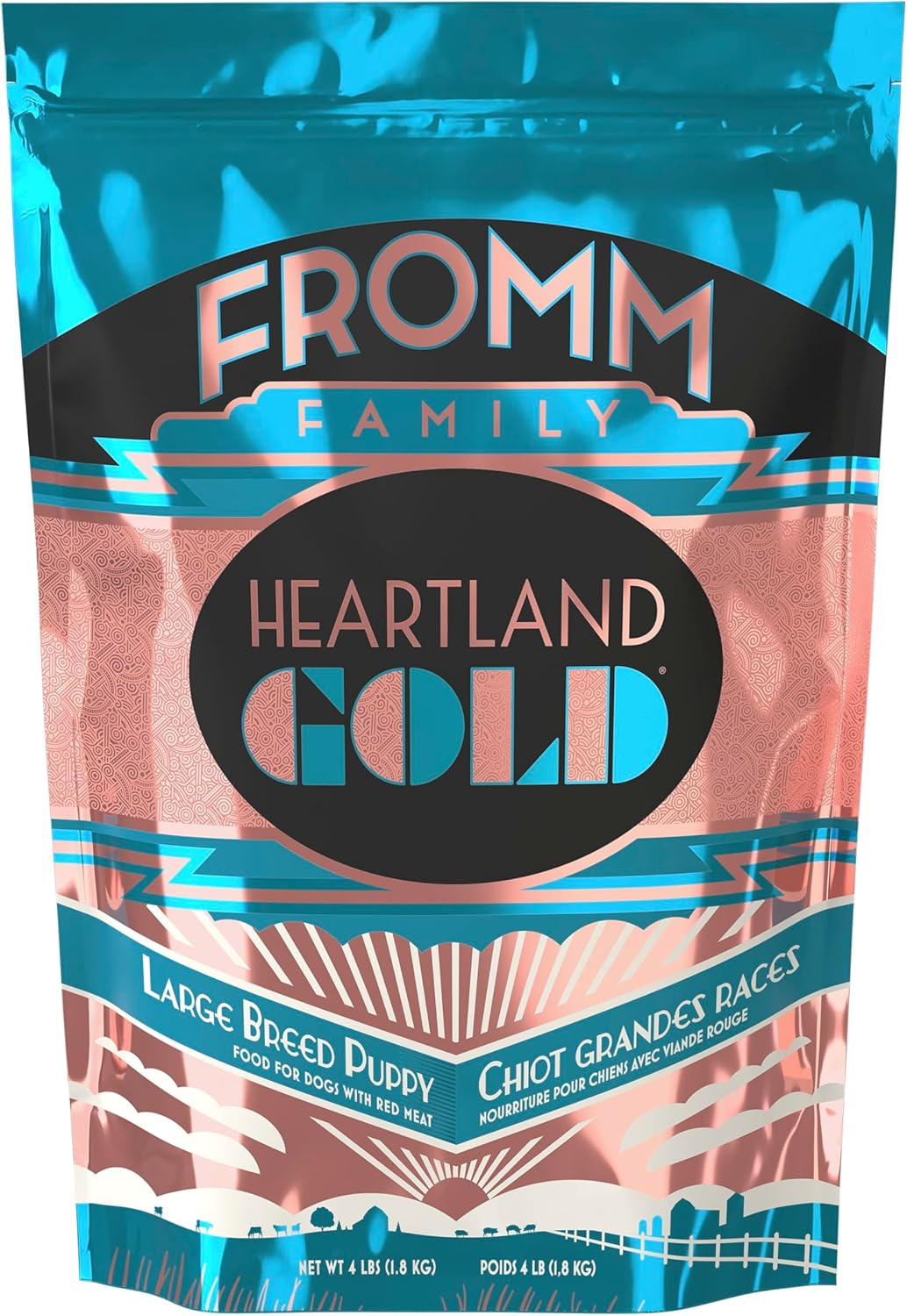
Fromm Heartland Gold Large Breed Puppy Beef
Best Overall Beef Puppy Food
| Flavor | Beef |
|---|---|
| Age Range Description | Puppy |
| Breed Recommendation | Large Breeds |
| Item Form | Pellet |
| Unit Count | 64 Ounce |
Fromm Heartland Gold Large Breed Puppy Beef is a dry kibble formulated specifically for puppies expected to reach 50 pounds or more as adults. It uses beef, pork, and lamb as primary protein sources and is designed with a lower calorie, fat, and mineral profile appropriate for the slower growth curve of large and giant breeds. The recipe is probiotic-enhanced to aid digestion and includes nutrients aimed at brain development, skin and coat health, and overall growth according to AAFCO profiles for gestation/lactation and growth. In use you can feed it daily as a complete diet; the bag includes recommended portions by age and weight to simplify transitions through growth stages. Practical benefits include high palatability from real meat first ingredients and a formulation that reduces excess calcium and calories for large-breed bone and joint health. The main limitations are the single-bag 4 lb size that may be small for continuous feeding of large litters or multiple large puppies and that the flavor profile centers on mixed red meats which may not suit pups with specific protein sensitivities.
Best for: Buyers who need a complete everyday puppy food tailored to the slower growth and joint needs of large or giant breed puppies and who prioritize real meat proteins and digestive support.
Less Ideal for: Owners feeding multiple large puppies at once or caretakers of puppies with single-protein sensitivities should consider larger bag sizes or limited-ingredient formulas.
- Formulated specifically for large and giant breed puppy growth curves
- Real meat (beef, pork, lamb) as leading protein sources for palatability and amino acids
- Enhanced with probiotics to support digestive health
- Balanced nutrients aligned to AAFCO growth profiles for complete daily feeding
- Small 4 lb bag may require frequent repurchasing for large-breed puppies
- Contains multiple animal proteins and common allergens that may not suit sensitive pups
Verdict: The best overall beef puppy food that balances protein, fat, essential nutrients, and digestibility for healthy growth and everyday feeding.
Pedigree Puppy Dry Dog Food 3.5 lb
Best Budget Beef Puppy Food

| Flavor | Steak & Vegetable |
|---|---|
| Age Range Description | Puppy |
| Item Form | Dry Kibble |
| Unit Count | 56 Ounce |
| Target Species | Dog |
Pedigree Puppy Dry Dog Food is a traditional, affordable puppy kibble formulated to support growth and basic developmental needs. It is designed for daily feeding and includes high protein sources, DHA, calcium and phosphorus to support muscle, brain and bone development, plus a mix of vitamins and minerals to support immune health. The bag works well for routine feeding at home and can be served dry or softened with water for younger puppies. Ingredients include animal meals, chicken by-product meal and grains, so digestibility and ingredient quality are typical for value-focused formulas rather than premium grain-free or limited-ingredient diets. Practical benefits are straightforward: widely available, familiar feeding guidelines for different puppy weights, and added micronutrients like DHA. Important limitations are that the formula contains multiple common allergens and colored additives, and it is not aimed at owners seeking grain-free, single-protein, or specialty ingredient lists for sensitive pups.
Best for: Buyers prioritizing low-cost, complete puppy nutrition who want a straightforward, easy-to-feed formula for routine daily meals.
Less Ideal for: Owners of puppies with food sensitivities, those who need grain-free or single-protein diets, or buyers seeking premium ingredient lists and novel proteins.
- Formulated with DHA and minerals to support brain and bone development
- Complete and balanced for daily puppy feeding with established feeding guidelines
- Includes high-protein sources to support muscle growth
- Versatile serving—can be fed dry or softened with water for younger puppies
- Contains multiple common allergens and artificial color additives
- Uses by-product meals and grains rather than premium single-source proteins
Verdict: The best budget beef puppy food that provides necessary calories and nutrients for growth while keeping cost and ingredient complexity low.
Stella & Chewy's Freeze-Dried Dinner Patties 25 oz
Best Premium Beef Puppy Food

| Flavor | Beef |
|---|---|
| Item Form | Freeze Dried Raw Patties |
| Age Range Description | All Life Stages |
| Unit Count | 25 Ounce |
These freeze-dried raw dinner patties are designed to be served as complete meals, crumbled as toppers, or used as high-value training treats, and they can be fed dry or rehydrated. The formula centers on 95% grass-fed beef and organs with added organic fruits and vegetables, probiotics, and omega fatty acids to support digestion, skin, and coat health. Practical benefits include strong palatability for picky eaters, simple feeding options for different routines, and a grain-free ingredient list with no artificial preservatives. The product is made in small batches in the USA and lists clear feeding and rehydration instructions, which helps with portioning across life stages. Limitations to consider are the need to ensure dogs drink enough water when fed dry and that freeze-dried raw diets can be more expensive per serving than standard kibble; some dogs may also require a gradual transition to avoid digestive upset. For owners who prefer raw-style, high-protein meals with convenient freeze-dried handling, these patties are an easy everyday option.
Best for: Pet owners seeking a nutritionally balanced, protein-forward freeze-dried diet that dogs reliably accept and who want a flexible food they can use as meals, toppers, or treats.
Less Ideal for: Owners on a tight budget who need the lowest cost-per-meal or those who cannot reliably provide extra water or rehydration at mealtimes.
- High meat content with 95% grass-fed beef and organs for a protein-forward profile
- Versatile serving: complete meals, toppers, or training treats; can be fed dry or rehydrated
- Includes probiotics and omega fatty acids to support digestion and skin/coat health
- Grain-free recipe with organic fruits and vegetables and no artificial preservatives
- Made in USA in small batches for consistent ingredient sourcing
- Requires ensuring adequate water intake when fed dry or extra step to rehydrate
- Generally higher cost per serving compared with conventional kibble
Verdict: The best premium beef puppy food for owners willing to pay more for superior ingredient quality, targeted nutrients, and careful manufacturing standards.
Bully Max 30/20 Beef 15 lb
Best High-Protein Beef Puppy Food

| Flavor | Beef |
|---|---|
| Protein | 30% |
| Fat | 20% |
| Calories per cup | 530 |
| Package size | 15 Pound |
Bully Max 30/20 Beef is a calorie-dense dry food built to help dogs put on weight and maintain muscle with a 30% protein and 20% fat profile and 530 calories per cup. It is typically used as a primary diet for active, working, or underweight dogs or as a targeted feeding plan for dogs needing extra mass and energy; smaller portions deliver more nutrients per meal compared with lower-calorie kibble. The formula lists beef meal as the lead protein and includes omega fatty acids, probiotics, flaxseed, and a blend of fruits and vegetables for additional micronutrients and gut support. Practical benefits include efficient weight gain and muscle support, strong palatability for picky eaters, and reduced feeding volume because of the high calorie density. Important limitations are that the calorie and protein levels are high for average or sedentary dogs so portion control is essential, and the ingredient list includes plant proteins like soybean and pea components that some owners may wish to avoid. For Staffordshire Bull Terriers that need extra protein to keep a muscular condition, this product delivers targeted nutrition but should be fed according to activity and body-condition goals.
Best for: Owners of Staffordshire Bull Terriers seeking a nutrient-dense, high-protein diet to support muscle maintenance, higher activity levels, or planned weight gain and who are prepared to monitor portions and body condition.
Less Ideal for: Dogs that are sedentary, overweight, or have known sensitivities to legumes or soy should consider lower-calorie or specialized formulas instead.
- High protein (30%) and fat (20%) ratio designed to support muscle growth and energy
- 530 calories per cup provides calorie-dense nutrition so you feed less volume
- Beef meal–forward formula for concentrated animal protein
- Includes probiotics and omega fatty acids to support digestion and coat health
- Formulated for all life stages so it can be used from puppy through adult
- Very calorie-dense, requiring careful portioning for average or less active dogs
- Contains plant protein sources such as soybean and pea ingredients
- Not tailored for dogs with grain or legume sensitivities despite no corn or wheat
Verdict: The best high-protein beef puppy food for puppies that need extra protein for growth, activity, and lean muscle development.
Merrick Grain Free Beef Puppy Food 4 lb
Best Grain-Free Beef Puppy Food

| Flavor | Beef |
|---|---|
| Age Range Description | Puppy |
| Item Form | Stick |
| Special Ingredients | Grain Free |
| Unit Count | 64 Ounce |
Merrick Grain Free Beef + Sweet Potato Puppy Food is a dry formula built around deboned beef and whole-food ingredients like sweet potatoes, peas, apples, and blueberries to provide balanced puppy nutrition without grains. It is used as a daily growth diet for puppies and delivers higher levels of protein plus Omega-3 and Omega-6 fatty acids for skin and coat health and glucosamine and chondroitin to support hip and joint development. The recipe also includes salmon oil, flaxseed, and added vitamins and minerals for overall development and energy needs. Practical benefits include recognizable meat-first ingredients, no corn/wheat/soy fillers, and a flavor profile most puppies accept. Limitations to consider are that it is grain-free and therefore higher in certain carbohydrates from potatoes and peas, which may not suit every puppy or dietary approach, and the product is offered in a relatively small 4 lb bag that may require more frequent repurchasing for larger litters or fast-growing breeds.
Best for: Puppy owners who need or prefer a grain-free beef-based dry formula and want recognizable whole-food ingredients and added joint and skin support during growth.
Less Ideal for: Owners seeking a larger bulk option or those who prefer grain-inclusive puppy diets or veterinary-prescribed limited-ingredient formulations.
- Deboned beef listed as the first ingredient for high-quality animal protein
- Grain-free recipe with whole foods like sweet potatoes, peas, apples, and blueberries
- Includes Omega-3 and Omega-6 sources plus glucosamine and chondroitin for skin, coat, and joint support
- Contains added vitamins, minerals, and taurine for complete growth nutrition
- Sold in a small 4 lb bag which may not be economical for larger or fast-growing puppies
- Grain-free carbohydrate sources like potatoes and peas may not fit every dietary strategy
Verdict: The best grain-free beef puppy food for puppies whose diets require or prefer formulas without wheat, corn, or other grains.
Merrick Puppy Plate Beef 12.7 oz
Best Wet (Canned) Beef Puppy Food

| Flavor | Beef |
|---|---|
| Age Range Description | Puppy |
| Item Form | Bits in Broth |
| Special Ingredients | grain-free |
| Unit Count | 152.4 Ounce |
Merrick Puppy Plate Grain Free Beef is a wet puppy formula built around real deboned beef as the first ingredient and a mix of vegetables and fruits in a gravy, intended as either a standalone meal or a topper for kibble. In practice it delivers a soft, easy-to-eat texture that most puppies find palatable and the higher protein level supports muscle development and energy for growing dogs. The recipe is grain free and formulated with added vitamins and minerals and DHA-supporting ingredients for brain development, which makes it suitable for owners avoiding grains or managing sensitivities. Practical benefits include convenient canned servings, a moisture-rich texture that helps hydration, and straightforward feeding guidance for mixing with dry food. Limitations are that it is a canned option only so it is not shelf-stable once opened and will need refrigeration, and grain-free recipes are not necessary for every puppy so consult a veterinarian for specific dietary needs.
Best for: Puppy owners who want a grain-free wet formula with a real-meat first ingredient to use as a regular meal or as a tasty topper during growth stages.
Less Ideal for: Owners whose puppies require a veterinary-prescribed limited-ingredient diet or who prefer long-term feeding plans that include multiple rotating flavors and sources of protein.
- Real deboned beef listed first for a recognizable animal protein source
- Grain-free formula suitable for puppies with grain sensitivities or owners preferring grain-free diets
- Soft bits in gravy texture that works well as a kibble topper or standalone meal
- Added vitamins and minerals plus ingredients that support brain development
- Crafted in USA facilities
- Once opened cans require refrigeration and have limited leftover shelf life
- Sold in single-flavor packs which may not suit puppies needing rotation or limited-ingredient troubleshooting
Verdict: The best wet beef puppy food for puppies who need more moisture, higher palatability, or a texture change from dry kibble.
ACANA Singles Beef & Pumpkin 4.5 lb
Best Limited-Ingredient Beef Puppy Food

| Flavor | Beef & Pumpkin Recipe |
|---|---|
| Item Form | Dry Kibble |
| Unit Count | 72 Ounce |
| Animal Food Diet Type | Limited Ingredient |
| Breed Recommendation | All Breed Sizes |
ACANA Singles Limited Ingredient Beef & Pumpkin is a premium, grain-free kibble built around ranch-raised beef with pumpkin and sweet potato to support digestive health. It is used as a main diet for adult dogs and marketed for all life stages and breeds, especially dogs with simple-diet needs or mild sensitivities. The formula lists a single primary animal protein source, high overall protein content, freeze-dried beef pieces for palatability, and added vitamins, probiotics, and omega fatty acids for immune and skin support. In practice this means you get a protein-forward recipe that can be easier to rotate into an elimination or simplified feeding plan, with whole-food fibers like pumpkin and sweet potato that help firm stools. The bag is sized for smaller households or trialing at 4.5 pounds, so frequent repurchase may be needed for larger dogs. Also, while grain-free and limited-ingredient, it is produced in a facility that may process grains and includes multiple plant ingredients, so it is not a single-ingredient therapeutic diet and owners with severe allergies should consult their veterinarian before switching.
Best for: Dog owners seeking a premium, limited-ingredient dry food to simplify their pet's diet and support digestion and skin health while keeping ingredient variety low.
Less Ideal for: Owners who need a single-ingredient or prescription therapeutic diet for confirmed severe allergies or who prefer bulk bags to avoid frequent repurchases.
- Single primary animal protein source (beef) which simplifies ingredient exposure
- Includes pumpkin and sweet potato to support digestion and provide fiber
- High protein formulation with added omega-3 and omega-6 for skin and coat health
- Contains freeze-dried beef pieces and natural flavors to improve palatability
- Includes probiotics and added vitamins for immune and digestive support
- Packaged in a relatively small 4.5 lb bag which may require frequent repurchasing for medium and large dogs
- Produced in a facility that also processes grains, so not suitable for dogs with severe grain-allergy concerns
Verdict: The best limited-ingredient beef puppy food for puppies with sensitivities or for owners who want a shorter, simpler ingredient list to minimize triggers.
Choosing the Right Beef Puppy Food: Key Factors to Consider
Protein Source and Quality
Protein drives growth and tissue repair in puppies, so the source and concentration matter. Animal-based proteins such as beef provide essential amino acids that support muscle development and immune function. When assessing beef puppy food, look for named beef sources or concentrated beef meal rather than vague terms that could mask low-quality inputs.
Higher protein percentages support lean mass gains, but the ideal amount depends on breed size and activity level. Extremely high protein without balanced calories or calcium can stress immature kidneys or encourage overly rapid growth in large-breed puppies. Balance protein quality with declared nutrient analysis and feeding recommendations to match your puppy's breed and energy needs.
Digestibility and Stool Quality
A highly digestible formula reduces gastrointestinal upset and helps puppies absorb more nutrients from smaller portions. Ingredients like cooked grains, properly processed beef, and prebiotic fibers can improve nutrient uptake and stool consistency. Poorly digestible diets often lead to diarrhea, loose stools, or inconsistent appetite, which complicates feeding schedules and can cause dehydration.
If your puppy has a sensitive stomach, prioritize formulas with gentle carbohydrates, limited-ingredient recipes, or added digestive supports such as probiotics. Also consider transition guidance on the packaging; a gradual switch schedule reduces the risk of digestive upset when changing foods.
Calcium, Phosphorus, and Growth-rate Control
Puppies require the right balance of calcium and phosphorus to build healthy bones and joints. Too much calcium or an improper ratio can lead to skeletal problems, especially in large-breed puppies. Conversely, inadequate mineral levels can stunt bone development and cause long-term issues.
Look for explicit mineral analysis and statements that the formula is balanced for growth. Large-breed puppies often benefit from controlled-calorie growth formulas that slow growth slightly to reduce joint stress. Pay attention to feeding charts and caloric density so you can manage portion sizes and growth trajectory appropriately for your puppy's expected adult size.
Fat and Calorie Density
Fat supplies concentrated energy and supports brain development, skin, and coat health. For puppies, a higher fat level than adult maintenance diets is typical to meet energy needs. However, very calorie-dense formulas can encourage overly rapid weight gain if portions are not adjusted, which is a particular concern for large-breed puppies.
Review the guaranteed fat percentage and calorie per cup data when available. Choose a formula that matches your puppy's activity level: extremely active puppies need denser energy while more sedentary or growing large-breed pups benefit from moderated calorie density to limit excess weight.
Ingredient Transparency and Safety
Clear labeling about ingredient sources, manufacturing practices, and nutrient guarantees helps you evaluate quality and safety. Look for named beef sources, minimal use of byproducts or vague meat meals, and third-party safety or quality assurances when provided. Transparency also extends to how preservatives are handled and whether the formula contains common allergens or additives.
Safety considerations include processing standards that reduce contamination risk and packaging that preserves freshness. If a formula lacks clarity on ingredients or origin, it adds uncertainty about consistency and overall nutrient delivery.
Feeding Guidance and Life-stage Suitability
Accurate feeding instructions and life-stage labeling simplify portion control during rapid growth phases. Puppy formulas should include day-by-day or weight-based feeding charts and clear transition steps for switching from milk to solid food and later to adult maintenance diets. Misleading life-stage claims or missing feeding guidance can lead to overfeeding or nutrient imbalances.
Also consider how the formula fits with your routine: ease of mixing for wet or dry feeding, kibble size appropriate for the puppy's mouth, and whether the product supports common needs like teething or training treats.
How Quickly Should I Switch My Puppy to a Beef-based Formula?
Transitioning to a beef puppy food should be gradual to avoid digestive upset. Start with a mix of the current food and the new beef formula, increasing the new food over a 7- to 10-day period while monitoring stool quality and appetite.
If your puppy shows signs of intolerance such as persistent loose stools, vomiting, or lethargy, pause the transition and consult your veterinarian. For very young or sensitive puppies, extend the transition to two weeks and introduce small, frequent meals rather than large portions.
- Day 1–3: 25% new food, 75% current food
- Day 4–6: 50% new, 50% current
- Day 7–10: 75% new, 25% current, then full switch if tolerated
What to Do if Your Puppy Has a Sensitive Stomach
If your puppy struggles with frequent diarrhea or vomiting, choose a beef puppy food formulated for sensitive digestion. Look for limited-ingredient formulas, gentle carbohydrate sources, and added probiotics or digestive enzymes.
Also review feeding frequency and portion sizes; smaller, more frequent meals are easier on immature digestive systems. If problems persist despite diet changes, seek veterinary advice to rule out parasites, infections, or food allergies.
- Try limited-ingredient recipes with named proteins
- Introduce probiotics and soluble fiber gradually
- Monitor hydration and stool consistency closely
How to Read the Guaranteed Analysis for Puppy Needs
The guaranteed analysis lists crude protein, crude fat, crude fiber, and moisture. For puppies, prioritize higher protein and moderate to high fat but also check for explicit mineral balances. The listed percentages are on a dry matter or as-fed basis; comparing dry matter values removes moisture differences and gives a clearer comparison.
Also check for statements about vitamins and essential fatty acids that support brain development and coat health. If calorie content is provided, use it to calculate portion sizes and daily intake rather than relying solely on cup measurements.
- Compare protein and fat on a dry matter basis when possible
- Look for calcium and phosphorus statements suited for growth
- Use calorie data to adjust portions by activity and breed
When to Consider Large-breed or Growth-control Formulations
Large-breed puppies have different skeletal development needs and often require slower, more controlled growth. If you expect a large adult size, consider beef puppy foods labeled for large-breed growth control or with moderated calorie density and appropriate mineral ratios.
These formulas aim to reduce rapid weight gain that strains developing joints. Even with a growth-control formula, monitor body condition and weight and follow feeding charts closely to maintain steady, healthy growth.
- Check if the formula specifies large-breed suitability
- Adjust portion sizes based on body condition and growth charts
Practical Feeding Tips for Busy Owners
Prepare measured daily portions in advance to keep feeding consistent and to prevent overfeeding. Use the manufacturer feeding chart as a starting point, but adjust for your puppy's body condition, activity, and growth rate. Keep fresh water available at all times, especially when feeding higher-protein or higher-fat diets.
If you use mixed feeding methods, maintain balance between wet and dry portions to preserve total daily calorie and nutrient targets. Weigh your puppy regularly during growth phases to ensure portions remain appropriate.
- Measure portions by weight when possible for accuracy
- Feed multiple small meals per day for most young puppies
- Document weight and body condition weekly during rapid growth
How We Chose the Best Beef Puppy Food
We used a focused editorial framework to narrow the field to formulas designed specifically for puppies and where beef is a primary protein source. Our filters prioritized complete and balanced nutrition for growth, life-stage formulations, and explicit feeding guidelines suitable for puppies. We excluded adult-only recipes, novelty treats, and any formulas lacking clear nutrient guarantees that meet recognized puppy standards. Key evaluation criteria included protein quality and source, digestibility and ingredient processing, calcium-to-phosphorus ratio and controlled calorie density for healthy growth, safety and ingredient transparency, and formulation features for sensitive stomachs such as limited-ingredient or easily digestible carbohydrates. We also considered practical feeding guidance and packaging that preserves freshness. Products that lacked sufficient nutritional detail, did not specify life-stage suitability, or used unclear ingredient sourcing were removed from consideration.
Our full evaluation process is outlined in our review methodology.
FAQ
Can I feed beef puppy food to very small breed puppies?
Often yes, but ensure the kibble size and caloric density match a small breed puppy's needs. Small breeds commonly require more calories per pound, so choose feeding portions accordingly and confirm the kibble is manageable for a small mouth.
Is beef better than other proteins for puppy growth?
Beef provides a complete amino acid profile and can support growth, but no single protein is universally superior. The overall nutrient balance, digestibility, and mineral ratios matter more than the protein source alone.
How long should a puppy eat a growth formula before switching to adult food?
The switch depends on breed size: small breeds often transition around 9 to 12 months, while large breeds may remain on growth formulas until 12 to 18 months. Follow developmental milestones and veterinary guidance when planning the change.
What signs indicate my puppy is reacting poorly to a beef formula?
Watch for persistent vomiting, diarrhea, reduced appetite, excessive scratching, or lethargy. Mild, brief digestive changes can occur during transitions, but ongoing symptoms warrant pausing the diet and consulting a veterinarian.
Should I look for added probiotics in puppy formulas?
Added probiotics can support gut health and smoother transitions between diets, particularly for puppies with sensitive digestion. They are helpful but not a guaranteed solution; overall ingredient quality and feeding practices remain essential.
Final Verdict
Prioritize digestibility, balanced growth nutrients, and clear feeding guidance when choosing beef puppy food. Match protein and calorie levels to your puppy's breed size and activity to support steady, healthy development while minimizing digestive upset. Balance is the main tradeoff: rich, high-protein formulas fuel rapid growth and activity but require careful portion control, while moderated calorie growth formulas reduce joint risk for larger breeds. Use the factors above to narrow choices and consult your veterinarian for individualized guidance.

