

When you bring a puppy into your home, mental stimulation is as important as physical exercise. The right brain toys help puppies develop problem-solving skills, reduce boredom, and channel energy into constructive play. This guide highlights six top brain toy options shortlisted for puppies and explains the traits that make them effective for different ages and temperaments. You will find practical notes on durability, challenge level, and cleanup so you can match toys to your puppy's stage of learning. Read on for clear buying guidance before the product list.
Top Picks at a Glance
| Best Overall Brain Toy A well-rounded puzzle toy that suits most puppies | Outward Hound Puppy Smart Puzzle |  |
| Best Budget Brain Toy An affordable but effective option for mindful spenders | Outward Hound Treat Tumble Small |  |
| Best Durable Brain Toy Built to withstand heavy mouthing and active puppy play | BSISUERM Dog Treat Puzzle Toy |  |
| Best Interactive Brain Toy Engaging puzzles that encourage problem-solving and owner playtime | VYsTN Fox Interactive Puppy Toy |  |
| Best Compact Brain Toy Small, portable puzzles ideal for travel or limited space | ZHIERDE Treat Dispensing Ball Small |  |
| Best Adjustable-Difficulty Brain Toy Puzzles you can tune as your puppy learns and grows | KADTC Dog Puzzle Toy Level 3 |  |
Outward Hound Puppy Smart Puzzle
Best Overall Brain Toy

| Pet Toy Type | Puzzle |
|---|---|
| Indoor Outdoor Usage | Indoor |
| Additional Features | Lightweight, Portable |
| Material Type | Plastic |
| Size | 1 Count (Pack of 1) |
The Outward Hound Puppy Smart Puzzle is a beginner-level interactive toy that hides treats in nine compartments under movable bone-shaped pieces to teach puppies how to sniff, paw, and nudge to uncover rewards. It is typically used indoors as a short supervised training or enrichment session, either as a standalone boredom buster or as a slow-feeding puzzle at mealtime. The puzzle is made from food-safe composite plastic and is lightweight and portable, which makes it easy to clean and move between rooms. Because it is Level 1, it is simple enough for most puppies to learn quickly while still offering adjustable challenge by varying treats or partially filling compartments. Important limitations are that it is not chew-proof and is intended for supervised use only, so it will not withstand heavy chewers or unsupervised long-term play. For owners looking for a gentle introduction to enrichment games, this puzzle offers immediate engagement and a safe, repeatable activity for mental stimulation.
Best for: Puppy owners who want a safe, easy-to-teach enrichment toy that introduces problem solving and reduces boredom during short supervised sessions.
Less Ideal for: Dogs that are destructive chewers or owners who need an unsupervised, indestructible toy for long unattended play sessions should look elsewhere.
- Designed for beginners with nine treat-hiding compartments that encourage natural foraging behavior
- Food-safe composite materials that are BPA, PVC, lead, and phthalate-free
- Lightweight and portable, making it easy to clean and move around the house
- Can be used with treats or kibble and helps slow fast eaters when used at mealtime
- Not designed for heavy chewers and should be used only under supervision
- Level 1 difficulty may become too easy quickly for highly food-motivated or fast-learning puppies
Verdict: The best overall brain toy balances challenge, safety, and engagement to keep most puppies mentally stimulated and happily occupied.
Outward Hound Treat Tumble Small
Best Budget Brain Toy

| Pet Toy Type | Puzzle |
|---|---|
| Indoor Outdoor Usage | Indoor |
| Breed Recommendation | All Breed Sizes |
| Additional Features | Lightweight, Portable |
The Outward Hound Treat Tumble Small is a simple treat-dispensing puzzle ball designed to give dogs mental stimulation through rolling and nudging to release treats. You fill the two side openings with small or larger treats and adjust difficulty by treat size—smaller treats fall out faster while larger ones slow the reward. Its one-piece plastic sphere is lightweight and portable, intended for supervised indoor play and short training or enrichment sessions. The ball is food-safe and made without BPA, PVC, lead, or phthalates, and it rinses clean easily with soap and water. As a level 1 puzzle it is best suited to puppies or dogs new to enrichment toys; heavier chewers or dogs that prefer destructive play may remove pieces or break it if unsupervised, and the fixed small openings limit treat shapes and sizes. The design is straightforward with minimal parts, so you get easy setup and predictable dispensing rather than adjustable complexity or advanced puzzle mechanics.
Best for: Owners looking for an affordable, no-frills enrichment toy to introduce puppies or beginners to treat puzzles and add short supervised play sessions.
Less Ideal for: Families with power chewers or dogs that need multi-step puzzles and adjustable difficulty should consider more durable or advanced options.
- Simple, intuitive treat-dispensing action that encourages rolling and mental engagement
- Lightweight, portable one-piece design that is easy to fill and clean
- Made from food-safe materials free of BPA, PVC, lead, and phthalates
- Works as a slow-feeder for kibble and doubles as a basic enrichment toy for training
- Level 1 challenge may be too easy for experienced puzzle-savvy dogs
- Not water resistant and not intended for unsupervised chewing by heavy chewers
- Small fixed openings limit the size and shape of treats that will dispense
Verdict: The best budget brain toy gives good mental stimulation and durability at a low price for owners who want value without sacrificing safety.
BSISUERM Dog Treat Puzzle Toy
Best Durable Brain Toy

| Pet Toy Type | Treat Dispenser Toy |
|---|---|
| Indoor Outdoor Usage | Indoor |
| Material Type | Acrylonitrile Butadiene Styrene |
| Recommended Uses For Product | Anxiety Relief, Boredom Buster, Exercise, Playing, Training, Treat Dispensing |
| Size | 6.1*3.44*3.44in/15.5*8.7*8.7cm |
This treat-dispensing puzzle toy is a rolling barbell made from ABS plastic with two adjustable dispensing spheres that release kibble when the dog pushes or chases it. You fill the transparent chambers with dry food or small treats, set the opening size to change how often pieces drop out, and let the dog nudge or roll the toy to earn rewards. The adjustable switches let you ramp difficulty as your dog learns, stretching a short snack into prolonged play that can reduce boredom and slow fast eaters. The unit disassembles so compartments can be cleaned by hand or dishwasher, and the smooth curved surface keeps rolling quieter and safer for paws. Note that this is not designed as a chew toy, so determined chewers may damage it, and the plastic construction feels lightweight rather than indestructible for aggressive players.
Best for: Owners who want a single toy they can make easier or harder as their dog learns, especially people seeking to stretch treats into longer, mentally engaging play sessions.
Less Ideal for: Households with strong chewers who destroy toys quickly or owners wanting a durable chew-resistant feeder should look for heavy-duty alternatives.
- Adjustable treat openings to increase or decrease challenge
- Transparent chambers let you see remaining kibble and adjust feeding
- Disassemblable parts are dishwasher-safe for easy cleaning
- Smooth, curved ABS surface rolls quietly and is safer for paws
- Designed to slow feeding and extend playtime for mental stimulation
- Not intended as a chew toy and can break if bitten
- Plastic construction may not withstand heavy, aggressive chewers
Verdict: The best durable brain toy is made from tough, puppy-safe materials and construction so it holds up to enthusiastic chewing and rough handling.
VYsTN Fox Interactive Puppy Toy
Best Interactive Brain Toy
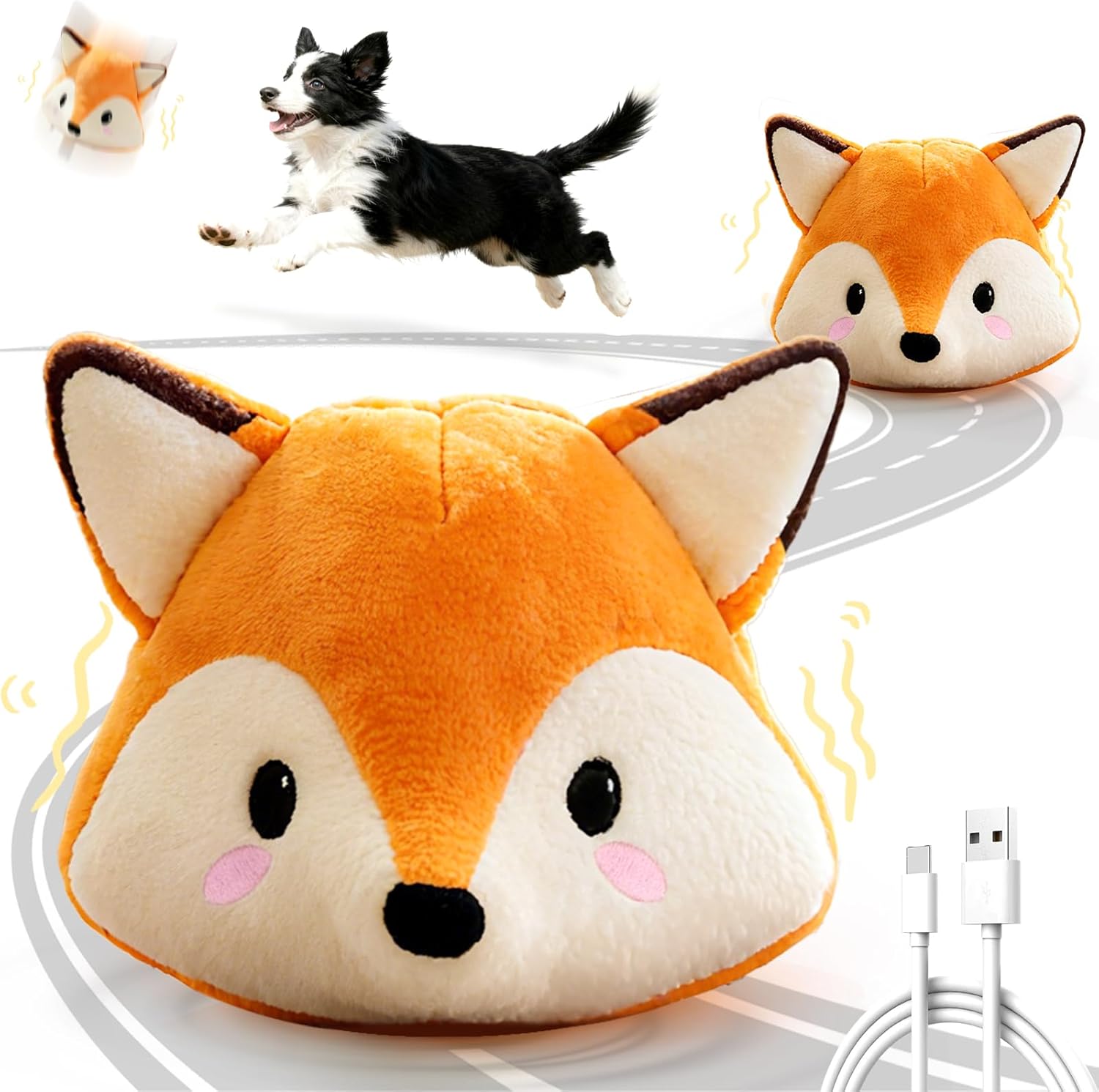
| Rechargeable | USB, up to 3 hours play |
|---|---|
| Material Type | Polyester, plush |
| Water Resistance Level | Not Water Resistant |
| Recommended Uses For Product | Anxiety Relief, Boredom Buster, Exercise, Mental Stimulation |
The VYsTN Fox is a rechargeable interactive plush designed to keep puppies busy by moving, vibrating, and emitting puppy-attracting beeps and barks. You turn it on and the toy unpredictably bounces and rotates across hard floors while pausing briefly so it can echo a human voice, which encourages pets to investigate and chase. It is meant for short supervised play sessions, chase games, and to relieve boredom or mild anxiety rather than for heavy chewing. The plush cover is removable and machine washable and the core electronics are USB rechargeable for about three hours of continuous play per charge. Movement is best on flat hard surfaces and the toy is not water resistant, so indoor use or dry outdoor surfaces work best. The unit is marketed as chew-resistant but not indestructible, so it fits puppies that like chasing and paw play rather than powerful, persistent chewers. The toy is lightweight and sized to avoid getting stuck under furniture, making it practical for daily interactive sessions that help build engagement and problem-solving curiosity in young dogs.
Best for: Puppy owners who want an engaging hands-free toy to build curiosity and encourage multi-step interaction like chase, voice play, and short training sessions.
Less Ideal for: Owners seeking a chew-toy for powerful chewers or for unsupervised rugged play should consider sturdier, chew-focused alternatives.
- Unpredictable motion and sounds that encourage chasing and sustained interest
- USB rechargeable with up to 3 hours of play per charge
- Removable, machine-washable plush cover for easy cleaning
- Lightweight, bounce-and-rotate action that is gentle on teeth and furniture
- Not water resistant so cannot be submerged or used in wet conditions
- Not designed for aggressive or powerful chewers
Verdict: The best interactive brain toy encourages problem-solving and bonding through multi-step puzzles or hands-on play that keeps curious puppies engaged longer.
ZHIERDE Treat Dispensing Ball Small
Best Compact Brain Toy
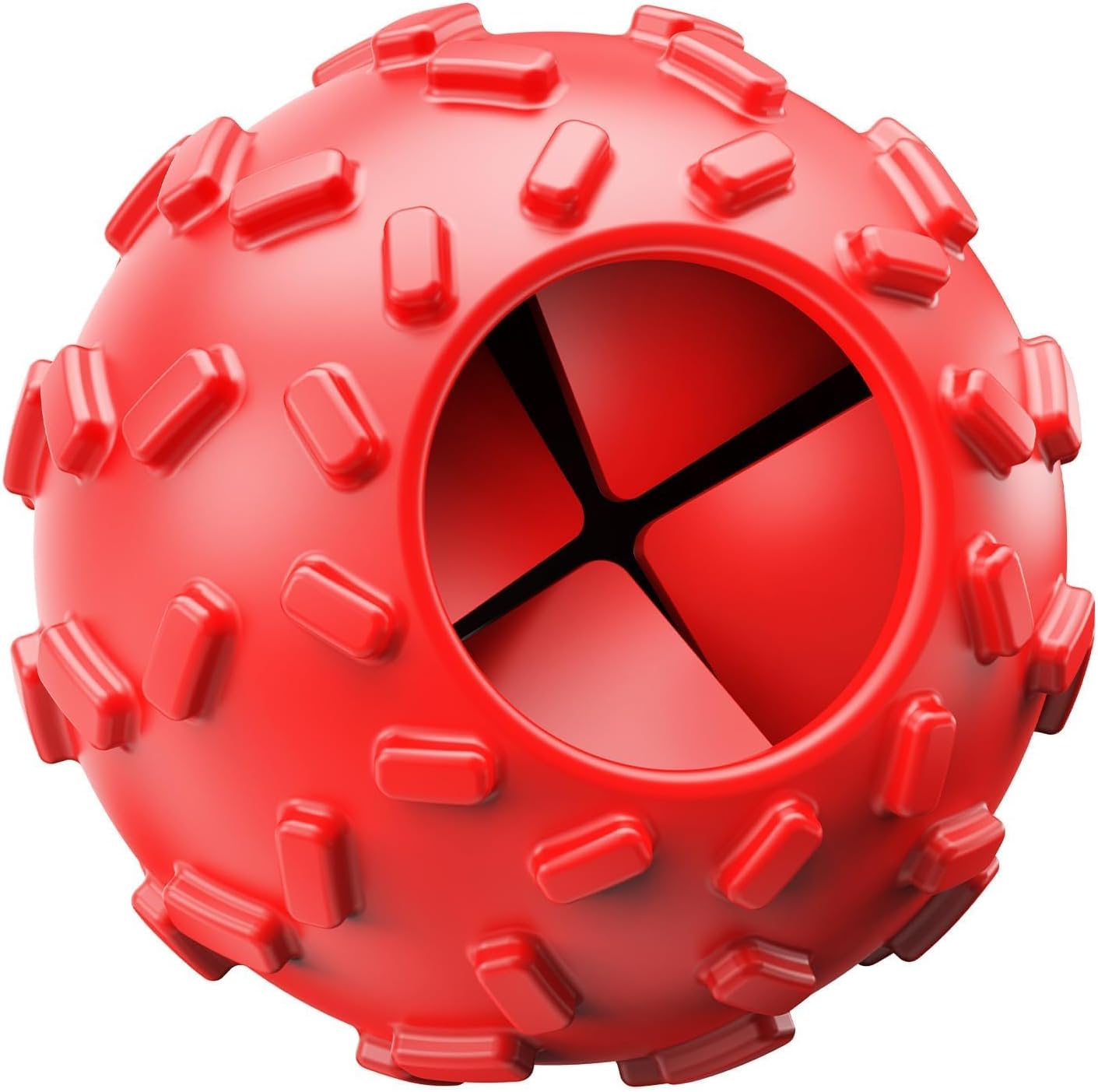
| Material Type | Natural Rubber |
|---|---|
| Pet Toy Type | Treat Dispenser Toy |
| Breed Recommendation | Small |
| Indoor Outdoor Usage | Indoor, Outdoor |
This compact treat-dispensing ball turns snacks into an interactive puzzle that keeps small dogs and puppies occupied. Fill the hollow core with kibble or small treats, then let the dog nudge, roll, and paw the ball to release rewards; flexible inner flaps can be trimmed to slow or speed dispensing so the challenge grows with the dog. The textured natural rubber surface gives grip for rolling and fetch, floats for water play, and is easy to rinse clean after use. Its small 2.7-inch size and 3.2-ounce weight make it easy to stash in a travel bag or crate and suitable for apartment play without taking much space. It is not intended for aggressive chewers or continuous heavy gnawing, so expect limited lifespan if a dog chews destructively. Scented options add extra interest but do not change function. For short supervised solo sessions, training, or slow-feeding enrichment, this ball is a practical, portable solution.
Best for: Owners who need a compact, travel-friendly enrichment toy to occupy small dogs or puppies in crates, apartments, or on the go and prioritize portability and adjustable challenge over chew resistance.
Less Ideal for: Households with powerful chewers or dogs that destroy toys quickly should choose a heavier-duty chew toy instead.
- Small, lightweight and highly portable for travel or crate use
- Adjustable inner flaps let you control treat flow for longer-lasting engagement
- Made from natural rubber with a textured surface for grip and easy rinsing
- Floats for versatile indoor, outdoor, or water play
- Not meant for aggressive chewers so durability is limited under heavy chewing
- Small opening limits treat size to kibble or small treats only
Verdict: The best compact brain toy provides meaningful mental challenges in a small footprint that’s easy to pack and use on the go or in tight spaces.
KADTC Dog Puzzle Toy Level 3
Best Adjustable-Difficulty Brain Toy

| Pet Toy Type | Puzzle |
|---|---|
| Breed Recommendation | All Breed Sizes |
| Indoor Outdoor Usage | Indoor |
| Water Resistance Level | Waterproof |
This KADTC Level 3 puzzle is a premium-feeling brain game and slow feeder that combines adjustable challenge with easy cleanup. The 16.7-inch board holds nine sliding treat discs, four flip-lid cups and four sliding doors plus maze paths so you can dial difficulty from beginner to advanced as a puppy learns. It works as a treat puzzle for short training sessions and as a slow feeder for kibble, encouraging hunting behavior rather than gulping a meal. Food‑grade ABS construction, built-in storage under the board for extra pieces, non‑slip pads, and dishwasher-safe drain holes make it durable and convenient for regular use. For very determined chewers it is a puzzle rather than a chew toy, so supervision is advised and the manufacturer recommends removing it after play. The board typically occupies a pup 10 to 15 minutes on full setup but you can shorten or lengthen sessions by removing or adding pieces and using smellier rewards. Overall it is a thoughtful, well-made option for owners who want a long-lasting, adjustable toy to develop a puppy's problem solving and slow-eating habits.
Best for: Owners who prioritize durability, thoughtful features, and an adjustable challenge while training a puppy’s problem solving and slowing down mealtimes.
Less Ideal for: People wanting a toy that doubles as a chew or heavy-duty gnawing solution should choose a dedicated chew toy instead.
- Adjustable three-level design lets you increase challenge as a puppy learns
- Food-grade ABS construction and dishwasher-safe parts simplify cleaning and durability
- Built-in storage for extra pieces prevents losing components between sessions
- Non-slip pads keep the board steady on hardwood, tile, and carpet
- Not designed as a chew toy so supervised use is required for teething puppies
Verdict: The best adjustable-difficulty brain toy lets owners increase complexity as a puppy improves, extending the toy’s usefulness and preventing boredom.
Choosing the Right Brain Toy Puppy: Key Factors to Consider
Safety and Material Construction
Puppies explore with their mouths, so safe materials are essential. Choose toys made from non-toxic, chew-resistant materials that resist breaking into sharp pieces. Flexible plastics and reinforced rubber blends tend to absorb bite impact better than brittle composites.
Pay attention to how parts are joined. Glued or loosely attached pieces can detach under vigorous chewing, creating choking risks. Prefer molded designs or securely fastened components. Also consider surface texture: smooth surfaces are easier to clean, while textured nubs can trap debris but may soothe teething gums.
Appropriate Difficulty and Progression
A good brain toy offers the right level of challenge for a puppy's short attention span while providing room to increase difficulty. Too easy and the toy becomes boring; too hard and the puppy may give up. Look for toys with adjustable puzzles, removable covers, or multiple compartments so you can scale complexity as the puppy learns.
Progression matters because cognitive gains happen through repeated success and slightly harder tasks. Toys that allow you to increase the reward delay or add obstacles help sustain engagement and teach problem-solving over weeks rather than a single session.
Durability During Teething
Puppy teeth are sharp and chewing is frequent. Durability is not just about longevity but about safety while the puppy gnaws. Select toys designed to withstand repetitive biting without splitting or deforming excessively. Reinforced seams and thicker walls in contact areas will reduce the chance of breakage.
Durability also affects value and the toy's ability to stay useful through the teething phase. If a toy quickly loses shape, it can fail to perform the intended enrichment and may require frequent replacement, which disrupts the training routine.
Ease of Cleaning and Hygiene
Puppies drool, soil toys and carry them everywhere, so hygiene is a practical concern. Choose toys that disassemble for cleaning or are dishwasher-safe to remove food residues and bacteria. Smooth interiors and minimal crevices simplify washing and reduce the risk of smells and mold.
Regular cleaning keeps treats from hardening inside compartments and ensures the toy remains inviting. For toys that use treats, consider how easily you can rinse crumbs and whether any absorbent parts will retain moisture.
Suitability for Size and Play Style
Puppies vary widely in size and play intensity even within the same age range. Match the toy's dimensions and weight to your puppy so it is easy to nudge, pick up, and manipulate. Lightweight puzzle toys work well for very small puppies, while sturdier pieces are better for larger breeds that apply more force.
Also consider play style: some puppies prefer pawing and nosing puzzles, others use their mouths more. Look for a mix of interaction modes—puzzles that can be nosed, nudged, and mouthed—to accommodate different engagement preferences.
Reward Options and Motivation
The type of reward a toy dispenses affects how motivating it is. Treat-dispensing puzzles work well when food is a strong motivator, while toys that allow you to hide a favorite soft chew or kibble pieces can link mental work to satisfying outcomes. Evaluate how easily you can vary rewards to keep the challenge fresh.
Consider whether the toy accepts your puppy's typical kibble size or requires special treats. Flexibility in reward type helps you maintain interest without relying solely on high-value treats, which can be useful during longer training phases.
How Do I Introduce a Brain Toy to a Puppy?
Start slow and make the first sessions short and rewarding. Let the puppy investigate the toy when it is empty so it becomes familiar with the shape and texture. Then add an easy-to-access treat so the puppy experiences quick success and learns the toy is a source of rewards.
Use positive reinforcement: praise or a small treat when the puppy interacts correctly. Gradually increase the challenge only after the puppy reliably solves the simpler version. Supervise early sessions so you can step in if the puppy becomes frustrated or overly focused on chewing rather than solving.
- Offer the toy when the puppy is calm, not exhausted or overstimulated.
- Demonstrate with your hand or a second toy to model how to extract the reward.
- Keep initial play sessions under 10 minutes to match puppy attention span.
What Are Safe Ways to Add Food Rewards?
Choose treats that are small and low-calorie if you plan to use the toy frequently. For very young puppies, soft treats or small pieces of kibble are easier to manipulate and less likely to clog moving parts. Rotate between higher-value and regular rewards so the toy keeps being interesting without adding too many extra calories.
Avoid sticky, gooey fillings that are hard to clean and can promote bacterial growth. If you use wet options like mashed pumpkin or yogurt, ensure the toy can be rinsed thoroughly and dried completely between uses.
- Measure treats to control daily calorie intake.
- Use a variety of textures to sustain interest.
- Prefer dry or firm treats for toys with moving parts.
How Often Should a Puppy Play with Brain Toys?
Short, frequent sessions are more effective than long single sessions. Aim for several 5- to 15-minute interactions throughout the day depending on the puppy's age and energy level. These mini sessions fit into training breaks and help reinforce learning without causing mental fatigue.
Rotate toys to keep novelty high. If the same toy is available all day, a puppy may lose interest quickly. A small rotation of two or three brain toys will sustain engagement and present different problem types to develop varied skills.
- Schedule sessions after light exercise to reduce hyperactivity.
- Use toys during alone time to reduce boredom-related behavior.
- Limit use before bedtime to avoid overstimulation.
Signs a Toy Is Too Easy or Too Hard for Your Puppy
If your puppy solves the puzzle immediately, shows little interest, or drops the toy, it is probably too easy and needs more challenge. Increase difficulty by hiding treats deeper, adding obstacles, or switching to a more complex device.
If the puppy repeatedly paws without progress, becomes frustrated, or resorts to chewing parts aggressively, the toy may be too hard. Backtrack to a simpler setting, provide more guidance, and reward incremental progress to rebuild confidence.
- Adjust difficulty gradually rather than jumping several levels.
- Offer encouragement and occasional easy wins to prevent frustration.
- Replace or retire toys that encourage destructive chewing.
Cleaning Tips for Long-lasting Hygiene
Disassemble toys when possible and wash all removable parts with warm, soapy water. For dishwasher-safe items, use the top rack and a mild cycle. Allow parts to air-dry completely before reassembling to prevent moisture buildup that can promote mold.
Wipe exterior surfaces regularly to remove drool and dirt. For stubborn residue in narrow crevices, use a bottle brush or an interdental brush. Inspect toys after cleaning to ensure no small pieces have loosened during washing.
- Rinse out treat compartments after each use.
- Schedule a deep clean once a week for frequently used toys.
- Replace toys showing cracks or persistent odors.
How We Chose the Best Brain Toy Puppy
We focused on criteria that matter specifically for puppy enrichment to narrow dozens of options to a practical shortlist. Primary evaluation points included challenge progression, safety for chewing puppies, durability against teething, and the toy's ability to maintain interest through varied interactions. We also checked how easy each toy is to clean, whether it supports positive training moments, and how suitable it is across common puppy sizes and ages. We excluded toys intended only for adult dogs, products with loose small parts that pose a swallowing hazard for puppies, and items that require complex assembly or constant supervision. Final selections prioritized toys that offer measurable cognitive engagement, robust construction for teething, clear escalation in difficulty, and straightforward maintenance. Our goal was to surface options that help owners build skills and good habits during the critical early months.
Our full evaluation process is outlined in our review methodology.
FAQ
At what age can a puppy start using brain toys?
Puppies can begin simple brain toy play as soon as they are comfortable with basic handling, often around eight weeks. Start with very easy puzzles and short sessions, and increase challenge as coordination and attention improve.
Can brain toys replace training sessions?
Brain toys are a useful supplement but should not replace formal training. They reinforce problem-solving and focus, but structured training builds obedience, socialization, and specific skills that toys alone cannot teach.
How do I prevent a puppy from chewing apart a puzzle toy?
Choose toys made for teething puppies with reinforced construction and monitor early use. If chewing becomes destructive, remove the toy and redirect with a chew-specific item, then reintroduce the puzzle at lower difficulty while supervising.
Are treat-dispensing toys safe for very small breeds?
Treat-dispensing toys can be safe for small breeds if the toy size and treat openings match the puppy's mouth. Select lightweight, appropriately sized puzzles and avoid small parts that could be swallowed. Supervise initial sessions to ensure compatibility.
How do I keep a puppy interested in the same toy over time?
Rotate rewards, vary the treats used, and change the difficulty level to keep interest high. Putting toys away for a day or two between uses restores novelty, and mixing different toy types encourages varied skills.
Final Verdict
Pick a brain toy that matches your puppy's current skill level and grows with them. Prioritize safe, durable construction for teething, adjustable challenge for steady learning, and ease of cleaning to keep the toy hygienic. Balance short, frequent play sessions with formal training and you will help your puppy build focus, confidence, and good habits without causing frustration. When in doubt, choose a simpler puzzle you can make harder over time rather than an advanced toy the puppy cannot solve. That approach yields consistent progress and a better long-term enrichment routine.

