

Picking the right canned dog food matters because it directly affects your dog's appetite, digestive comfort, and overall nutrient intake. Wet food can be especially helpful for picky eaters, dogs that need extra hydration, and animals with dental sensitivity. This guide shortlists the top options in canned dog food across common needs and life stages, explaining the features that make each type suitable for different dogs. We evaluated candidates for ingredient transparency, nutrient completeness, and production safety so you can focus on options that meet your dog's specific health and taste needs. Read on to find the canned food styles that best match your priorities.
Top Picks at a Glance
| Best Overall Canned Food Brand A well-rounded pick that balances nutrition, taste, and value | Purina ONE Wet Dog Food Variety Pack |  |
| Best Budget Canned Food Brand An affordable choice that still meets basic nutrition needs | Amazon Basics Wet Dog Food Variety Pack |  |
| Best Premium Canned Food Brand Higher-end recipes and ingredients for owners wanting quality | JustFoodForDogs JustFresh Turkey 7 Pack |  |
| Best Grain-Free Canned Food Brand Formulas without grains for dogs with grain sensitivities or preferences | Merrick Grain Free Beef Lamb Bison |  |
| Best High-Protein Canned Food Brand Protein-forward recipes for active, growing, or lean-muscle needs | Purina ONE True Instinct Turkey & Venison 12-Pack |  |
| Best Limited-Ingredient Canned Food Brand Simpler recipes with fewer ingredients for easier tolerance testing | Natural Balance Limited Ingredient Sweet Potato & Salmon |  |
| Best Variety-Pack Canned Food Brand Multiple flavors and recipes to keep picky eaters interested | Cesar Classic Loaf in Sauce 36ct |  |
Purina ONE Wet Dog Food Variety Pack
Best Overall Canned Food Brand

| Flavor | Chicken, Beef |
|---|---|
| Item Form | Ground |
| Age Range Description | Adult |
| Unit Count | 78 Ounce |
| Number of Items | 6 |
Purina ONE Wet Dog Food Variety Pack delivers two classic ground wet formulas—Chicken & Brown Rice and Beef & Brown Rice—sold as a six-can pack for routine feeding or rotation. Each 13 oz can is made with real meat listed first and includes added vitamins, minerals, and antioxidants intended to support immune health and muscle maintenance. The texture is a soft ground entrée that mixes easily with dry kibble or is served on its own at mealtime, and the absence of artificial colors, flavors, and preservatives is a practical benefit for owners prioritizing simpler ingredient lists. The formulas contain grains (brown rice and oatmeal) so they are not grain-free, which suits many dogs but may not fit dogs on specific grain-free prescriptions. Ingredients include meat meals and organ components alongside stabilizers such as carrageenan and guar gum, which improve texture but may concern some purchasers who prefer minimally processed wet food. Packaging in a multipack makes it convenient to test both flavors and rotate meals without buying large single-flavor cases. For everyday feeding, this is a solid, broadly palatable option that balances nutrition, convenience, and familiar ingredients from a major brand.
Best for: Buyers who want a dependable everyday canned food that balances recognizable animal proteins, added nutrients, and easy meal rotation for adult dogs.
Less Ideal for: Owners seeking grain-free diets or minimally processed wet foods without common texturizing agents should consider specialized formulas instead.
- Real meat is listed as the first ingredient for each formula
- Formulated with added vitamins, minerals, and antioxidants to support overall health
- No artificial colors, flavors, or preservatives listed
- Two flavors in one pack make rotating meals easy and reduce flavor fatigue
- Contains carrageenan and other stabilizers that some owners prefer to avoid
- Not a grain-free formula, so it is not suitable for grain-free feeding plans
Verdict: The best overall canned food brand provides balanced complete nutrition, consistent ingredient quality, and broad palatability so most dog owners get reliable everyday meals.
Amazon Basics Wet Dog Food Variety Pack
Best Budget Canned Food Brand
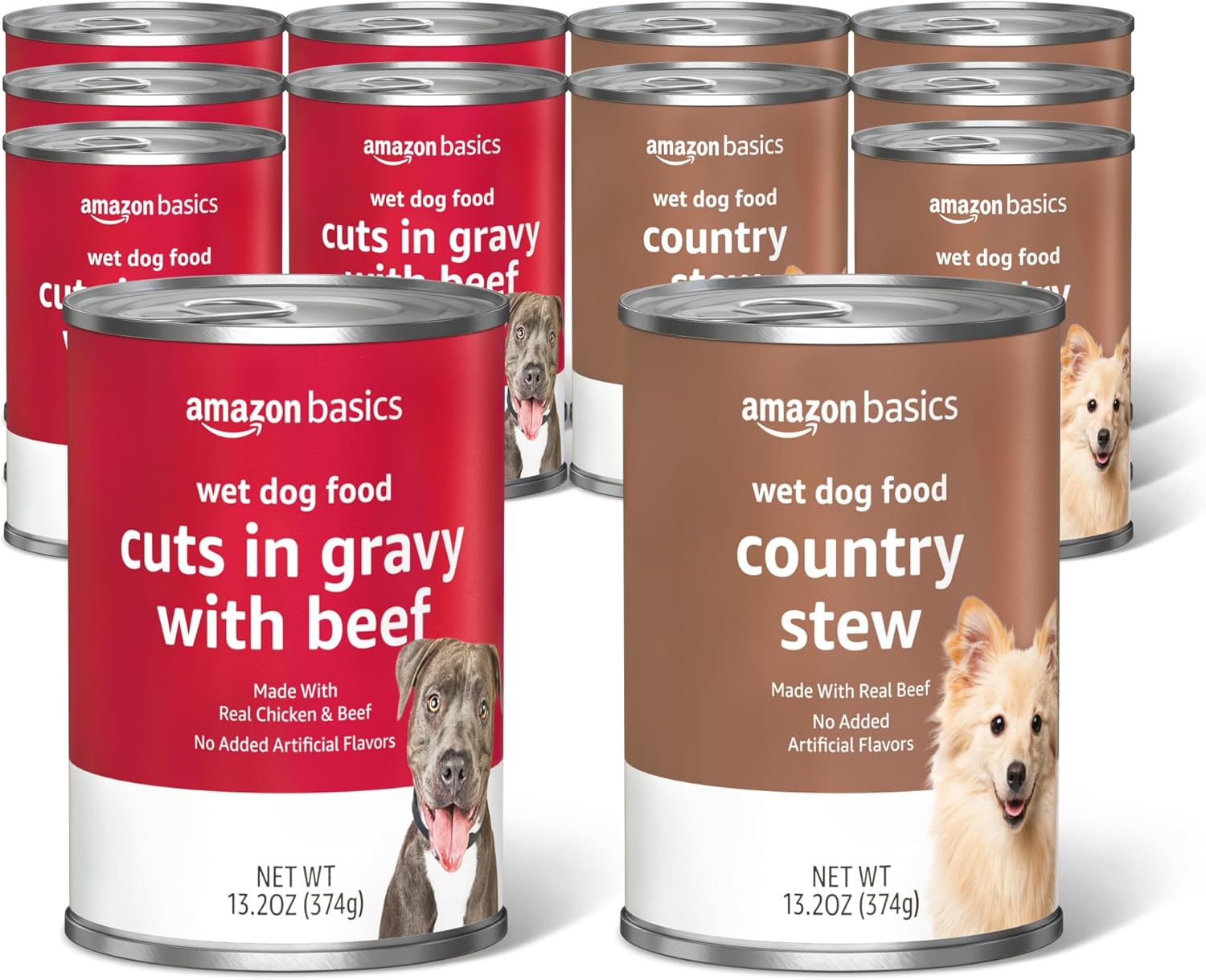
| Flavor | Country Stew and Beef |
|---|---|
| Item Form | Gravy |
| Age Range Description | All Life Stages |
| Unit Count | 158.4 Ounce |
| Number of Items | 12 |
This 12-can Amazon Basics wet dog food pack provides a simple, affordable canned option for everyday feeding. Each 13.2 oz can contains gravy-style cuts with country stew and beef flavors and is formulated for all life stages, making it suitable as a regular meal or mixed with dry food to increase palatability. The ingredient list includes real meat sources like chicken and beef plus added vitamins and minerals to meet basic nutritional needs, and the cans are convenient to store and portion. On the practical side the product is aimed at medium breeds and comes in a large unit count that reduces shopping frequency and per-meal cost. Limitations include a grain-containing recipe and meat by-products rather than single-source novel proteins, so dogs with specific allergies or owners seeking premium ingredient lists may prefer specialty wet diets. This is a straightforward, cost-focused canned food that does what budget buyers expect: consistent meals that cover nutritional basics without premium ingredients.
Best for: Buyers who need an inexpensive, dependable wet food to feed regularly and want complete meals without shopping for specialty formulas.
Less Ideal for: Owners seeking grain-free recipes, single-source novel proteins, or veterinary-prescribed therapeutic diets should look elsewhere.
- Large 12-can pack reduces per-can cost and shopping frequency
- Formulated for all life stages so it can be used as regular meals
- Contains real chicken and beef with added vitamins and minerals for baseline nutrition
- Gravy format improves palatability and mixes well with dry food
- Includes meat by-products and grains rather than single-source premium proteins
- Not formulated for dogs with specific ingredient sensitivities or grain-free needs
Verdict: The best budget canned food brand delivers acceptable complete nutrition and reasonable ingredient quality at a lower price for cost-conscious pet owners.
JustFoodForDogs JustFresh Turkey 7 Pack
Best Premium Canned Food Brand
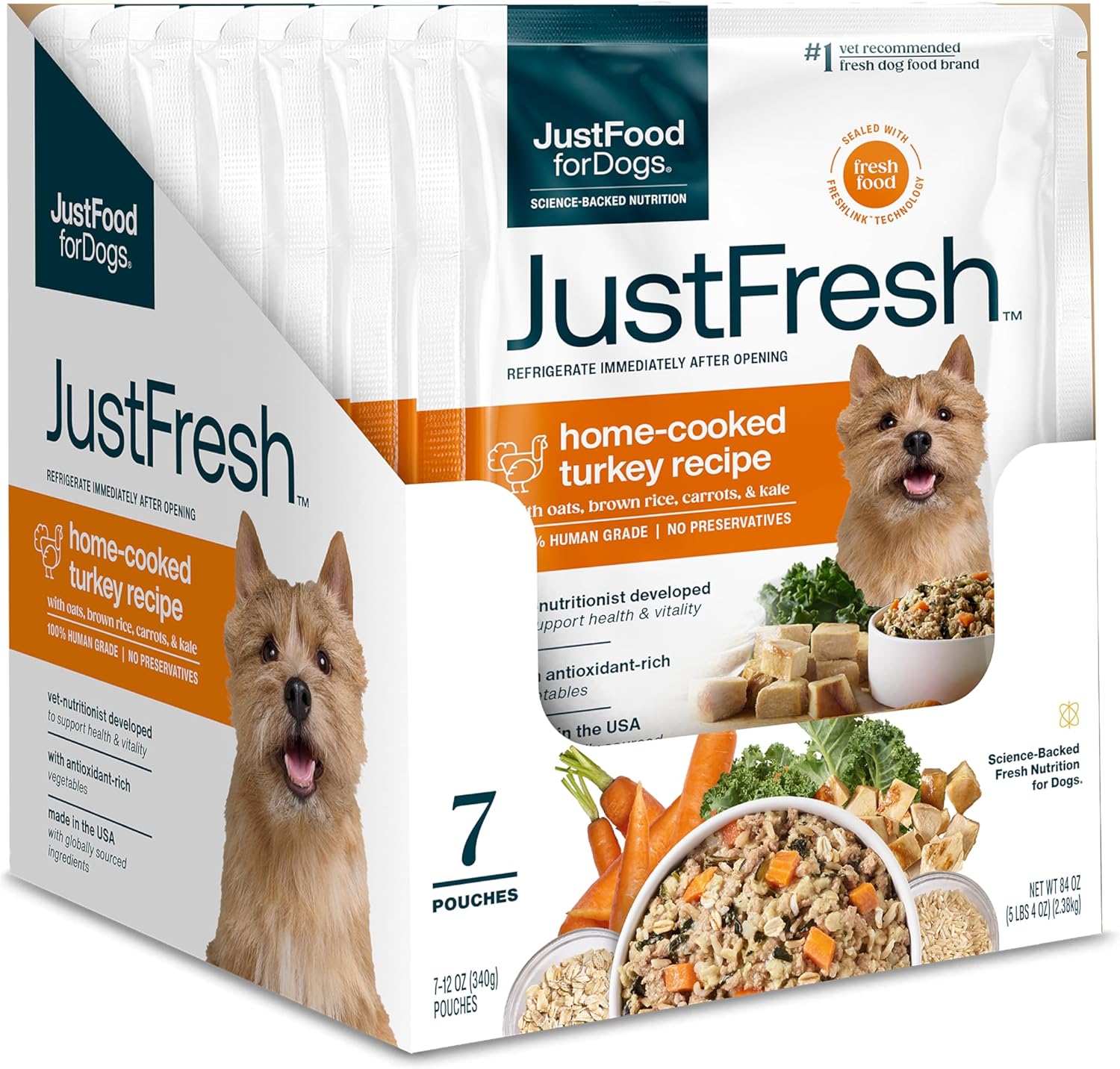
| Flavor | Turkey |
|---|---|
| Item Form | Wet |
| Age Range Description | All Life Stages |
| Unit Count | 84 Ounce |
| Number of Items | 7 |
JustFoodForDogs JustFresh Turkey comes as resealable, shelf-stable pouches designed to be used either as a complete wet meal or a topper to boost flavor and nutrition. The recipe lists human-grade ingredients such as ground turkey, turkey liver, oats, brown rice, kale, and carrots and is developed by veterinary nutritionists to support immune, skin and coat, and weight management goals. Practical features include resealable packaging and pantry stability until opened, with refrigeration recommended after opening and use within 5 to 7 days. Because it is gently cooked and preservative-free, the formula delivers higher moisture and easily digestible nutrients compared with many dry foods, which helps picky eaters and hydration. Limitations are that serving sizes and storage after opening require attention, and the product is sold in multi-pouch packs that may be more expensive than commodity wet cans or bulk kibble for long-term feeding. For owners prioritizing premium ingredients and veterinary-formulated nutrition, this pouch format makes feeding fresh-style meals straightforward.
Best for: Pet owners who prioritize premium, human-grade ingredients and veterinary-formulated recipes and want an easy-to-serve fresh-style wet meal or topper.
Less Ideal for: Owners looking for the lowest-cost bulk feeding option or those who cannot manage refrigerated leftovers after opening.
- Human-grade, limited-ingredient turkey recipe with whole-food components
- Resealable, shelf-stable pouches for pantry storage until opened
- Formulated by veterinary nutritionists to support immune, skin and coat health
- Versatile use as a complete meal or a topper for picky eaters
- Requires refrigeration and prompt use after opening
- Higher cost compared with standard canned or dry dog food
Verdict: The best premium canned food brand focuses on superior ingredient sourcing, richer recipes, and manufacturing standards for owners willing to pay more for higher quality.
Merrick Grain Free Beef Lamb Bison
Best Grain-Free Canned Food Brand

| Flavor | Beef, Lamb & Bison |
|---|---|
| Item Form | Pate |
| Unit Count | 152.4 Ounce |
| Number of Items | 12 |
Merrick Grain Free Real Beef, Lamb and Bison Dinner is a canned pate-style dog food formulated as a complete adult diet or a kibble topper. The recipe lists deboned beef as the first ingredient and emphasizes high animal-protein content, with added vitamins and minerals to meet nutritional needs while avoiding grains, chicken, peas and potatoes. In practice this makes it useful for dogs with grain sensitivities or owners who want a meat-forward wet option to increase moisture and palatability. The pull-tab cans are convenient for daily feeding and portion control, and the pate texture works well for picky eaters and as a topper for dry food. Buyers should note the formula is relatively rich and intended for adult maintenance so adjust portions to body condition, and dogs with specific protein allergies should review the ingredient list. Overall it is a straightforward, meat-focused grain-free canned meal crafted in USA facilities and sized for multi-can households.
Best for: Owners seeking a grain-free, meat-first wet food to add moisture and palatability to adult dogs' diets or to use as a high-protein standalone meal.
Less Ideal for: Those who need a single-source protein or a limited-ingredient prescription diet should consider alternatives tailored to those needs.
- Real deboned beef as the first ingredient for high animal-protein content
- Grain-free recipe suitable for dogs with grain sensitivities
- Soft pate texture that mixes well with kibble or serves as a standalone meal
- Contains added vitamins and minerals for complete adult nutrition
- Rich, meat-forward formula may require portion adjustments to avoid excess calories
- Contains multiple animal proteins which is not ideal for dogs with single-protein sensitivities
Verdict: The best grain-free canned food brand offers nutritionally complete recipes formulated without grains for dogs with grain sensitivities or owners who prefer grain-free diets.
Purina ONE True Instinct Turkey & Venison 12-Pack
Best High-Protein Canned Food Brand

| Flavor | Turkey & Venison |
|---|---|
| Item Form | Chunks, Gravy |
| Age Range Description | Adult |
| Unit Count | 156 Ounce |
| Number of Items | 12 |
Purina ONE True Instinct Turkey & Venison is a high-protein canned dog food presented as tender cuts in gravy and designed for adult dogs. It is typically served as a complete meal or mixed with dry food to boost protein and moisture intake, and the gravy texture encourages picky eaters to finish their bowls. Key features visible on the label include real poultry and venison as primary ingredients, no poultry by-products, added vitamins and minerals, and a formulation that targets muscle and joint support. In practice this makes it useful for active or working dogs and pets recovering from illness that need higher protein and palatable texture. The 13 oz cans in a 12-pack keep meal prep simple but require refrigeration of opened portions and generate more packaging than kibble. Ingredients list includes poultry broth, turkey, chicken and venison, plus common binders and vitamins, so owners tracking specific exclusions should review the full ingredient panel. For owners prioritizing higher protein from recognizable meat sources in a convenient wet format, this is a solid option; for those needing limited-ingredient or novel-protein therapeutic diets, consult your veterinarian first.
Best for: Owners who need a convenient, ready-to-serve wet food to boost daily protein for active, working, or higher-energy adult dogs and who value recognizable meat ingredients and palatability.
Less Ideal for: Owners seeking a single-ingredient or novel-protein elimination diet, or those who must avoid grains or specific additives for medical reasons should consider veterinary-prescribed alternatives.
- High protein formulation with real turkey and venison listed early in the ingredient list
- Tender cuts in gravy texture that increases palatability for picky or low-appetite dogs
- Formulated with added vitamins and minerals to provide complete and balanced adult nutrition
- No poultry by-products and no artificial flavors listed
- Contains common binders and grains such as wheat gluten and soy flour, so not suitable for dogs with those sensitivities
- Wet format requires refrigeration after opening and has more packaging than dry food
Verdict: The best high-protein canned food brand emphasizes higher meat or protein content to support active dogs, growth, or muscle maintenance within a balanced diet.
Natural Balance Limited Ingredient Sweet Potato & Salmon
Best Limited-Ingredient Canned Food Brand

| Flavor | Sweet Potato & Salmon |
|---|---|
| Item Form | Loaf |
| Animal Food Diet Type | Limited Ingredient |
| Package Size Name | Case of 6 – 13 Ounce Cans |
This is a limited-ingredient wet dog food built around salmon protein and sweet potatoes to support dogs with sensitive stomachs and skin. It comes in a loaf-style 13 oz can and is typically fed as a complete meal or as a topper for dry kibble; the product includes feeding guidelines by weight and recommends a gradual transition over 7–10 days. Notable features include a single-animal-protein focus, no corn wheat or soy, and added omega-3 sources to support skin and coat health. Practical benefits are straightforward: fewer ingredients reduce exposure to common irritants, the salmon-first formula supplies essential amino acids for muscle maintenance, and the loaf texture is palatable for many picky eaters. Important limitations are that it is nutrient-dense wet food meant for adult maintenance so portion control is required to avoid overfeeding, and dogs with specific diagnosed allergies should still consult a veterinarian because the ingredient list includes multiple fish sources and potato proteins. Overall this is a sensible limited-ingredient canned option for owners who want a simple, grain-free wet diet focused on digestive and skin support.
Best for: Dog owners seeking a simple, limited-ingredient wet formula to reduce common dietary irritants and support sensitive stomachs or skin.
Less Ideal for: Owners whose dogs have confirmed fish allergies or those wanting a diet formulated for growth, geriatrics, or clinical therapeutic needs without veterinary guidance.
- Single primary animal protein source listed first for focused allergen control
- Grain-free and free of corn wheat and soy to reduce common irritants
- Loaf texture works well as a complete meal or as a kibble topper
- Includes feeding guidelines and clear transition instructions for switching diets
- Contains multiple fish-derived ingredients which may still trigger fish-sensitive dogs
- Wet food requires refrigeration of unused portions and careful portioning to maintain body condition
Verdict: The best limited-ingredient canned food brand uses a short, simple ingredient list to help owners identify and avoid common triggers while still supplying complete nutrition.
Cesar Classic Loaf in Sauce 36ct
Best Variety-Pack Canned Food Brand
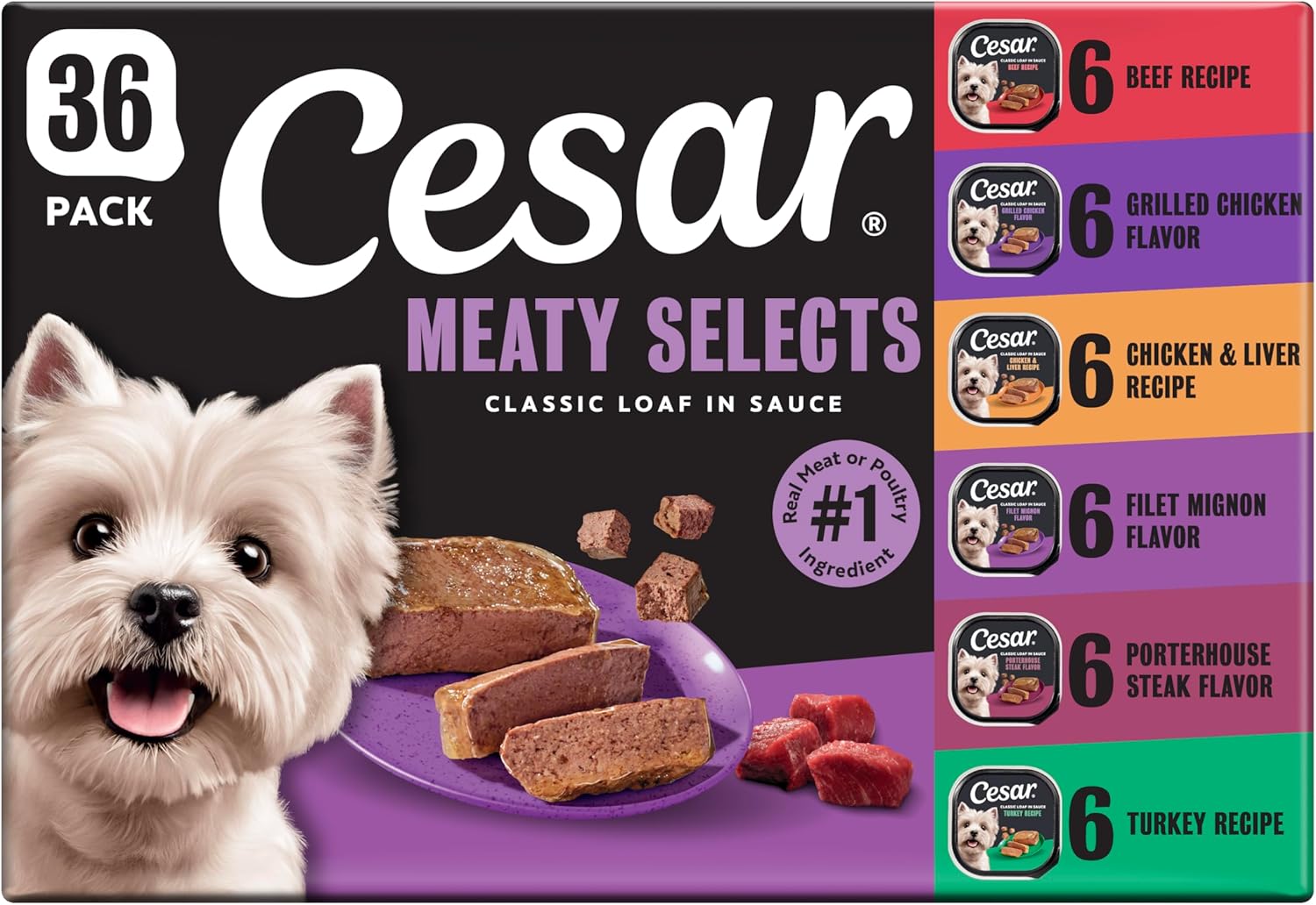
| Unit Count | 36 Count |
|---|---|
| Item Form | Wet |
| Target Species | Dog |
| Breed Recommendation | Small Breeds |
This 36-count pack of Cesar Classic Loaf in Sauce delivers single-serve wet trays with real meat as the first ingredient and a soft loaf texture in a savory sauce. Each tray is designed as a complete, balanced meal for adult dogs or as a topper to add moisture and aroma to dry food, and the peel-away sealed trays make portioning and storage straightforward. The recipes are slow-cooked and marketed as easy to digest, with no artificial flavors and grain-free formulation claims. For multi-dog households the bulk pack reduces shopping frequency and keeps a steady supply on hand, and the variety pack includes several flavors that help with picky eaters. Limitations include small single-serve tray size intended for small breeds so larger dogs will require multiple trays per meal, and the trays must be refrigerated after opening and used quickly. Nutrition follows standard wet-dog-food conventions rather than prescription formulations, so owners with special medical needs should consult their veterinarian.
Best for: Households with multiple dogs or owners who want to buy wet food in bulk to reduce shopping frequency and ensure consistent single-serve portions at mealtimes.
Less Ideal for: Owners who feed large-breed dogs exclusively or who need veterinary prescription diets should consider larger-portion cans or therapeutic formulas instead.
- Large 36-count pack keeps a steady supply for multi-dog households or to cut shopping trips
- Single-serve peel-away trays make portioning and travel convenient
- Real meat listed as the first ingredient and slow-cooked recipes for palatability
- Grain-free formulation and no artificial flavors for dogs with routine sensitivities
- Multiple flavors in the Classic line help satisfy picky eaters
- Trays are small and intended for small-breed servings so larger dogs need several trays per meal
- Once opened trays require refrigeration and short use window
Verdict: The best variety-pack canned food brand offers a range of flavors and protein sources so owners can rotate meals, find preferences, and reduce menu boredom for picky dogs.
Choosing the Right Canned Dog Food: Key Factors to Consider
Ingredient Transparency and Protein Source
Knowing what the primary protein is matters because dogs rely on animal proteins for essential amino acids. Look for named meat or fish sources listed first rather than ambiguous terms. Clear labeling helps you assess allergy risks and the overall protein quality.
Protein source also affects digestibility and palatability. Whole-muscle proteins tend to be easier to digest and more appealing to many dogs than rendered meals. If your dog has known sensitivities, a canned diet with a single, named protein makes rotating or elimination diets simpler.
Guaranteed Nutrient Analysis
A complete canned dog food should provide a balanced profile of protein, fat, fiber, vitamins, and minerals. Check the guaranteed analysis to confirm the product meets life-stage needs, whether for puppy growth, adult maintenance, or senior support.
Fat content influences calorie density and palatability, while fiber and moisture levels affect stool quality and hydration. Consistent nutrient labeling makes it possible to integrate canned food into a full feeding plan without unintentionally over- or under-supplying macro- or micronutrients.
Texture and Palatability
Wet food textures vary from smooth pâtés to chunky stews; the right texture encourages eating and accommodates dental issues. Dogs with missing teeth or tender mouths often prefer softer pâtés, while others enjoy loaf or chunks in gravy.
Palatability is shaped by aroma, fat content, and the balance of ingredients. If your dog is a picky eater or recovering from illness, choosing a highly palatable texture and flavor profile can help maintain caloric intake and body condition.
Dietary Restrictions and Special Formulations
Some dogs need grain-free recipes, limited-ingredient formulas, or higher-calorie mixes for weight gain. Matching the canned food to any medical or allergy-related constraints reduces the risk of adverse reactions and simplifies feeding.
Special formulations may trade off versatility for targeted benefit, so ensure the chosen type aligns with your veterinarian's advice and long-term feeding goals rather than short-term trends.
Sourcing, Manufacturing, and Safety Standards
Where and how the food is made affects quality control and safety. Brands that publish sourcing details and manufacturing controls give better insight into potential contaminant risks and ingredient origin.
Reliable safety practices include standardized testing, traceability, and consistent production audits. Choosing canned food from sources with documented safety systems reduces the chance of ingredient variation or contamination that could affect your dog's health.
Packaging and Shelf Stability
Canned pet food should keep freshness and nutrients until opened. Look for cans that seal properly and have clear best-by information. Packaging also affects portioning and storage; smaller cans are useful for single meals while larger cans can be portioned and refrigerated safely.
After opening, consider how long the food stays usable in the fridge and whether the texture changes over time. Practical packaging choices make daily feeding less wasteful and more convenient.
How Do I Transition My Dog to a New Canned Food Safely?
Switch gradually over 7 to 10 days to reduce digestive upset. Start with about 75 percent of the current diet and 25 percent of the new canned food, then increase the new food by roughly 25 percent every two to three days until the transition is complete.
Watch for signs of loose stool, vomiting, or decreased appetite and slow the transition if any of those occur. For dogs with sensitive stomachs, extend each step to four or five days and keep hydration steady.
- Use measured portions to keep calories consistent during the swap.
- If mixing wet and dry food, ensure total daily calories remain the same.
- Consult your veterinarian before switching dogs with chronic gastrointestinal issues.
Which Canned Food Textures Work Best for Seniors or Dogs with Dental Issues?
Softer pâtés and finely ground loafs are usually best for older dogs or pets with missing teeth because they require minimal chewing. These textures reduce the effort needed to eat and help maintain adequate intake.
Chunky textures in gravy can still be suitable if pieces are small and easy to swallow. Consider warming the food slightly to increase aroma and palatability, but avoid hot temperatures that could scald the mouth.
- Pâté: easiest for chewing and swallowing.
- Loaf: moderate texture, often higher density.
- Chunks in gravy: good for hydration and variety; choose small pieces for dental issues.
Can Canned Food Be Used to Top Dry Kibble or as a Complete Meal?
Canned food can serve both roles depending on the formulation and feeding plan. Many canned recipes are complete and balanced on their own and can be fed as the entire diet. Others are intended as complementary foods meant to add moisture and flavor on top of dry kibble.
If using canned food as a topper, factor the calories it adds to avoid overfeeding. When feeding solely canned food, follow the manufacturer's feeding guidelines or a veterinarian's recommendation to ensure all nutrient needs are met.
- Check the label for completeness to determine if the food can be a sole diet.
- Adjust daily portion sizes when mixing canned and dry foods to maintain ideal weight.
- Monitor stool quality when changing the proportion of wet food in the diet.
How to Read Canned Food Labels to Spot Essential Nutrients
Start with the guaranteed analysis to see crude protein and crude fat percentages; these indicate the basic macronutrient composition. Moisture content affects how calories are concentrated, so a higher moisture level means fewer calories per can compared with dry food.
Look for an ingredient list with named animal proteins near the top and a statement of nutritional adequacy that matches your dog's life stage. Vitamin and mineral premixes are common; ensure the label indicates a complete profile for maintenance or growth as needed.
- Protein and fat percentages help estimate calorie density.
- Moisture lowers calorie concentration compared with dry food.
- Named proteins make allergy or rotation planning easier.
Practical Feeding Tips for Multi-dog Households
When feeding multiple dogs, consider portioning canned food by weight or using measured scoops to keep individual intakes consistent. Dogs with different size, age, or activity levels may need separate feeding stations to prevent one dog from eating another's portion.
Mixing wet and dry food at a shared bowl can create resource guarding or overconsumption. If one dog needs a special canned formula, feed that dog separately or at a different time to avoid cross-eating and ensure nutritional targets are met.
- Label portions for each dog when prepping multiple meals.
- Feed dogs with special dietary needs separately.
- Use timed feeding or supervised mealtimes when possible.
Are There Common Allergens or Ingredients to Avoid?
Common canine allergens include specific protein sources such as beef, chicken, or dairy, but true food allergies are less common than sensitivities. If you suspect an allergy, try a limited-ingredient canned formula with a novel protein and consult your veterinarian for testing or an elimination trial.
Artificial colors and excessive fillers offer little nutritional value and may worsen digestive sensitivity for some dogs. Focus on whole-food ingredients and clear protein sources rather than marketing-driven additions.
- Consider limited-ingredient diets for suspected sensitivities.
- Avoid unnecessary artificial colors or flavors if your dog has a sensitive stomach.
- Work with your veterinarian before making restrictive dietary changes.
How We Chose the Best Canned Dog Food
We focused on criteria that genuinely affect daily feeding outcomes and long-term health for dogs. First, ingredient quality: we prioritized recipes where named animal proteins are the primary ingredients and where nutrient-dense whole foods appear early on the ingredient list. Second, guaranteed nutrient analysis: formulations had to meet standard AAFCO-like adult maintenance or life-stage profiles and list crude protein, fat, fiber, and moisture levels. Third, manufacturing safety and traceability: we gave preference to sources with established safety practices and clear sourcing statements. Fourth, palatability and texture variety: canned food should appeal to appetite and accommodate dogs with chewing or dental issues, so we looked for a range of pâtés, loafs, and chunks in gravy. Fifth, dietary suitability: options covered common special diets such as grain-free, limited-ingredient, and higher-calorie recovery formulas. We excluded overly specialized therapeutic diets reserved for prescription-only use and products lacking clear nutritional labels. The list emphasizes transparency, nutritional completeness, and practical feeding outcomes rather than novelty ingredients or marketing claims.
Our full evaluation process is outlined in our review methodology.
FAQ
How often should I feed canned dog food?
Feeding frequency depends on your dog's age and activity level. Most adult dogs do well on two meals per day, while puppies may need three to four. Adjust portion sizes to maintain healthy weight and consult feeding guidelines on the label.
Is canned food better for hydration than dry kibble?
Canned food contains more moisture than dry kibble, which can help with hydration. It should not replace fresh water, but it can be beneficial for dogs that drink less or need extra fluid intake.
Will canned food help a picky eater?
Many dogs find canned food more palatable due to stronger aroma and higher fat content. Trying different textures and flavors can encourage appetite, especially during short-term appetite loss or pickiness.
Can I mix canned dog food with supplements or medication?
You can usually mix supplements or medication into canned food to encourage ingestion, but check compatibility with your veterinarian. Some medications require fasting or specific administration methods, so follow professional guidance.
How should I store opened canned food?
Transfer unused portions to a sealed container and refrigerate promptly. Most opened cans remain usable in the refrigerator for two to three days; check for off odors or discoloration and discard if it looks or smells spoiled.
Are grain-free canned diets safe for all dogs?
Grain-free recipes can be appropriate for dogs with grain sensitivities, but they are not necessary for all dogs. Discuss long-term use with your veterinarian, especially if your dog has specific cardiac or metabolic concerns.
Final Verdict
Focus on ingredient transparency, appropriate nutrient profiles, and a texture that suits your dog's dental and appetite needs. Balance those priorities with practical concerns such as packaging size and how the food fits into your household feeding routine. Prioritize complete, labeled formulas that match your dog's life stage and any dietary restrictions. When in doubt, choose the option that addresses the most pressing need—improved palatability, digestion, or hydration—and consult your veterinarian for long-term feeding plans.

