

When a dog struggles with constipation, the right canned food can make daily care easier and more comfortable. You want formulas that encourage regular bowel movements without upsetting appetite, especially for older dogs or pets recovering from illness. This guide shortlists the top canned dog foods aimed at easing constipation, focusing on stool consistency, digestibility, and ingredient quality. Below you will find carefully chosen options that prioritize fiber, moisture, and tolerability. We explain the evaluation criteria so you can match a food to your dog's age, health status, and veterinarian recommendations before making a change.
Top Picks at a Glance
| Best Overall Canned Food for Constipation A well-rounded formula that helps relieve and prevent constipation | Hill's Prescription Diet i/d Wet Dog Food |  |
| Best Budget Canned Food for Constipation A lower-cost option that still supports digestive regularity | Whole Paws Turkey Feast 13.2 oz |  |
| Best High-Fiber Canned Food Formulated with extra soluble and insoluble fiber to promote movement | Weruva Awesome Belly Canned Dog Food 6oz |  |
| Best Low-Fat Canned Food Lower fat levels to reduce digestive upset and faster transit | SquarePet VFS Low Fat Formula 13oz |  |
| Best Gentle-Digestive Canned Food Formulas focused on easy-to-digest proteins and soothing fibers | Hill's Science Diet Sensitive Stomach & Skin 12-Pack |  |
| Best Premium Canned Food Higher-end formulations with targeted ingredients for digestive health | Fromm Turkey & Pumpkin Pate |  |
Hill's Prescription Diet i/d Wet Dog Food
Best Overall Canned Food for Constipation

| Flavor | Chicken & Vegetable Stew |
|---|---|
| Item Form | Wet Food |
| Specific Uses For Product | Sensitive Stomach |
| Animal Food Diet Type | Veterinary Diet |
| Unit Count | 132 Ounce |
Hill's Prescription Diet i/d Wet Dog Food is a veterinary diet canned formula intended to help dogs with sensitive stomachs and digestive upsets. It is typically used as a full meal or as a temporary therapeutic switch under veterinary guidance, and the cans provide a high-moisture, highly digestible source of calories and nutrients. Notable features include the ActivBiome+ prebiotic blend to support the gut microbiome, added electrolytes and B vitamins to replace nutrients lost during digestive episodes, and clinically proven antioxidants for immune support. In practice the soft, stew-like texture and elevated moisture make it easier for dogs to pass stools compared with dry diets, and the formulation emphasizes easy nutrient absorption to reduce further irritation. Limitations are that this is a prescription-style veterinary diet intended for dogs with diagnosed digestive issues so buyers should consult their veterinarian before long-term feeding, and the specific fiber content is not listed on the packaging information here so exact fiber grams per serving may need verification for severe chronic constipation cases.
Best for: Buyers seeking a canned therapeutic diet to ease occasional or short-term constipation who prioritize highly digestible, vet-formulated nutrition and moisture content to support bowel regularity.
Less Ideal for: Pet owners looking for a standard over-the-counter maintenance food or those who need precise labeled fiber counts for a strict fiber management plan should consider alternatives or consult a veterinarian.
- Formulated for digestive support with ActivBiome+ prebiotic fibers to promote gut microbiome activity
- High moisture wet recipe that helps soften stools and support hydration
- Includes added electrolytes and B vitamins to replace nutrients lost during digestive upset
- Clinically proven antioxidants and omega fatty acids support immune and skin health
- Intended as a veterinary diet so it is best used under veterinarian direction rather than as an over-the-counter casual food
- Exact fiber amount per serving is not provided in the listed product details, which may matter for strict fiber-targeted plans
Verdict: The best overall canned food for constipation combines balanced fiber, gentle digestibility, and appropriate moisture to ease bowel movements for most dogs.
Whole Paws Turkey Feast 13.2 oz
Best Budget Canned Food for Constipation

| Flavor | Turkey, Sweet Potatoes & Cranberries |
|---|---|
| Item Form | Liquid |
| Age Range Description | All Life Stages |
| Unit Count | 13.2 Fluid Ounces |
| Animal Food Diet Type | Limited Ingredient |
This 13.2-ounce Whole Paws Turkey Feast is a grain-free wet dog food built around real turkey and turkey broth with sweet potato and cranberries for added nutrients and flavor. It is sold in a single large pouch intended for feeding as a meal or mixing with dry food to boost palatability and moisture intake, and the ingredient list includes functional additions like dried egg white, ground flaxseed, blueberries, and a vitamin and mineral premix. Practical benefits include a recognizable meat-first recipe for appetite stimulation, a limited-ingredient, grain-free profile that may suit dogs with simple sensitivities, and a convenient pouch size that reduces waste compared with many single-serve cans. Limitations are that it is a standard wet food formula without specialized veterinary diets, and dogs with specific allergies to listed components still need careful ingredient checks. For routine use it works best as an affordable, nutritious everyday wet option or as a topper to encourage picky eaters to eat more dry kibble.
Best for: Owners who need an affordable daily wet food that prioritizes recognizable meat-first ingredients and simple nutrition to feed or top regular meals.
Less Ideal for: Dogs requiring prescription veterinary diets or those with confirmed allergies to any listed ingredients should avoid this product.
- Real turkey listed first on the ingredient list
- Grain-free, limited-ingredient approach for simpler digestion
- Includes omega and antioxidant sources like ground flaxseed and blueberries
- Large 13.2 fl oz pouch suitable for a full meal or mixing with kibble
- Not a therapeutic or prescription diet for medical conditions
- Contains multiple ingredients (egg, potato, flax) that may still trigger some allergies
Verdict: The best budget canned food for constipation offers cost-conscious pet owners an effective mix of fiber and moisture to help normalize stools without extra frills.
Weruva Awesome Belly Canned Dog Food 6oz
Best High-Fiber Canned Food

| Flavor | Awesome Belly Chicken, White Rice and Pumpkin |
|---|---|
| Item Form | Chunk |
| Specific Uses For Product | Digestive Health |
| Special Ingredients | Pumpkin |
| Unit Count | 48 Ounce |
Weruva Awesome Belly is a wet adult maintenance dog food formulated around pumpkin and inulin to support digestive health and easier stool passage. It is typically fed as a daily wet food or mixed with dry kibble for added moisture and fiber; directions note 1 oz per pound if fed alone. The recipe lists chicken and chicken broth as primary proteins and includes white rice and pumpkin plus added prebiotic inulin and a blend of vitamins and minerals, which together provide soluble fiber and digestive support. It is free of corn, wheat, soy, carrageenan, and artificial colors or flavors, which may benefit dogs with sensitive stomachs. Practical benefits include human-grade ingredient positioning and formulas aimed at easing intermittent constipation or softer stools when used consistently. Limitations are that the cans are 6 oz portions so multiple cans may be needed for larger dogs, and while high in beneficial ingredients for digestion, exact fiber percentage is not listed so veterinarians or owners needing precise fiber targets should verify with the manufacturer or a vet before long-term use.
Best for: Buyers seeking a canned maintenance diet that emphasizes digestive comfort and natural ingredients for dogs with occasional constipation or sensitive stomachs.
Less Ideal for: Owners who need a precisely measured high-fiber therapeutic diet for chronic constipation should consult a veterinarian and consider veterinary-formulated prescription foods instead.
- Formulated with pumpkin and inulin to support digestion and stool quality
- Primary ingredients include real chicken and rice for recognizable protein and carbohydrate sources
- Free from corn, wheat, soy, carrageenan, and artificial colors or flavors
- Designed for daily maintenance with added vitamins and minerals supporting overall nutrition
- Label does not list total dietary fiber percentage, so exact fiber content is unclear
- 6 oz can size may require multiple cans per meal for medium and large dogs
Verdict: The best high-fiber canned food is designed for dogs needing more dietary fiber to bulk and soften stools and support regular bowel movements.
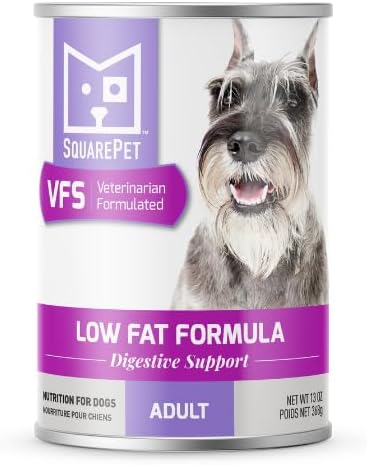
SquarePet VFS Low Fat Formula 13oz
Best Low-Fat Canned Food
| Flavor | Ocean Whitefish |
|---|---|
| Item Form | Chunk |
| Age Range Description | All Life Stages |
| Specific Uses For Product | Weight Management |
| Unit Count | 12 Count |
SquarePet VFS Low Fat Formula is a canned wet dog food formulated to help dogs with fat-sensitive digestion by using naturally lean Pacific whitefish as the primary protein. It is typically used as a complete meal for dogs with sensitive stomachs or as a short-term dietary option while working with a veterinarian. The recipe includes a GI Health blend of dietary fiber and prebiotics to support gut motility and nutrient absorption, plus added DHA and EPA to help maintain skin and coat health. Sold in 13 oz cans and packaged as a 12-count case, it is convenient for households that prefer fewer open cans and larger servings. The formula is made in the USA without artificial ingredients and was developed with input from veterinary nutritionists, which adds confidence for therapeutic use. Limitations include that the product is positioned for digestive support rather than weight loss alone, and caregivers should follow veterinary guidance for transitioning and portioning, since larger cans can lead to waste if not used promptly once opened.
Best for: Owners with multiple dogs or those who prefer larger single-serve cans who need a veterinarian-formulated, low-fat option to manage digestive sensitivity in their dogs.
Less Ideal for: Pet owners who need single-serve portions for tiny dogs or who require a labeled therapeutic weight-loss diet should consider other formats or formulas.
- Low-fat, lean whitefish primary protein suited for dogs with fat intolerance
- Proprietary GI Health blend with dietary fiber and prebiotics to support digestion
- Includes DHA and EPA to support skin and coat health
- Sold as 13 oz cans in a 12-count case for fewer open-can events and bulk serving convenience
- Larger 13 oz can size may require refrigeration and prompt use after opening
- Not marketed specifically as a weight-loss diet so calorie control must be managed with vet input
Verdict: The best low-fat canned food helps dogs with constipation-related digestive sensitivity by reducing fat load while maintaining digestible nutrition.
Hill's Science Diet Sensitive Stomach & Skin 12-Pack
Best Gentle-Digestive Canned Food

| Flavor | Chicken & Vegetables Loaf |
|---|---|
| Item Form | Pate |
| Age Range Description | Adult 1-6 |
| Number of Items | 12 |
| Unit Count | 153.6 Ounce |
Hill's Science Diet Sensitive Stomach & Skin is a wet adult dog food formulated to be gentle on digestion while supporting skin and coat health. It is typically fed as a complete meal or mixed with dry food during a diet transition, and the pate-style chicken and vegetable loaf is made from recognizable ingredients like chicken, turkey giblets and vegetables. The formula emphasizes digestibility through prebiotic fiber and simple carbohydrate sources, which helps maintain gut flora and reduces the chance of digestive upsets for dogs prone to sensitivity. Added vitamin E and omega fatty acids support skin and coat condition, and the inclusion of clinically studied antioxidants aims to help immune health. As a veterinary diet it focuses on nutrition over novelty, so buyers should expect a straightforward ingredient list and consistent texture rather than gourmet variety or novel proteins. The product comes in a 12-pack case sized for regular feeding plans but may be more than needed if you are trying a short-term elimination trial or feeding a very small dog.
Best for: Buyers who need a reliable, veterinarian-formulated wet food that balances digestibility and skin support for dogs with occasional or ongoing stomach and skin sensitivity.
Less Ideal for: Owners conducting a strict elimination trial for suspected protein allergies or those seeking single-can variety and small-sample packs.
- Formulated for sensitive stomachs with prebiotic fiber to support gut bacteria
- Includes vitamin E and omega fatty acids to nourish skin and coat
- Pate texture and familiar protein sources increase palatability for many dogs
- Veterinary diet formulation focused on complete nutrition for adult dogs
- Comes as a 12-pack case which may be excessive for short trials or very small dogs
- Not formulated as a novel-protein diet for dogs with specific protein allergies
Verdict: The best gentle-digestive canned food combines mild proteins, prebiotics or soluble fibers, and higher moisture to soothe the gut and improve stool consistency.
Fromm Turkey & Pumpkin Pate
Best Premium Canned Food

| Flavor | Turkey & Pumpkin |
|---|---|
| Item Form | Pate |
| Age Range Description | All Life Stages |
| Unit Count | 146.4 Ounce |
| Number of Items | 12 |
Fromm Turkey & Pumpkin Pate is a wet dog food sold in a case of twelve cans that pairs minced turkey with pumpkin, carrots, and sweet potatoes in a pâté texture. It is typically used as a meal, meal topper, or hydrating complement to dry food and is formulated for all life stages and breeds. The inclusion of pumpkin and other soluble-fiber sources helps support digestion and can bulk stools, while the pâté texture makes it easy to mix into kibble or serve on its own to stimulate appetite in dogs with soft stool. The recipe is grain-free and packaged without artificial colors, flavors, or preservatives, and the cans are convenient for portion control and warming before serving. Limitations include the product being a case-pack of cans, which may be excessive for single-dog households unless frozen or refrigerated after opening, and the nutritional details and precise soluble fiber content are not listed on the product page so dosing for therapeutic fiber needs requires consultation with a veterinarian.
Best for: Buyers seeking a canned formula with natural fiber sources to help firm stools and support digestion in dogs that need a gentle dietary approach to diarrhea recovery.
Less Ideal for: Owners who need a labeled high-soluble-fiber veterinary therapeutic with exact fiber percentages or those who cannot store multiple unopened cans.
- Contains pumpkin and other fiber-containing ingredients to help bulk and normalize stool
- Pate texture mixes easily with dry food or can be served alone to encourage intake
- No artificial colors, flavors, or preservatives listed
- Sold as a multi-can case for easy long-term stocking and portion control
- Exact fiber content and guaranteed analysis for therapeutic dosing are not provided on the product page
- Case of 12 may be more than needed for small households and requires storage after opening
Verdict: The best premium canned food provides advanced digestive support through higher-quality ingredients, tailored fiber blends, and formulation care for pet owners seeking top-tier results.
Choosing the Right Canned Dog Food Constipation: Key Factors to Consider
Fiber Type and Balance
Not all fiber works the same. Soluble fibers absorb water and form a gel-like material that softens stool and can speed transit for constipated dogs. Insoluble fibers add bulk and can stimulate intestinal movement but may worsen hard stools if there is not enough moisture. A good canned formula balances soluble and insoluble fibers to encourage regular, formed stools.
When evaluating fiber, look beyond total grams and consider sources such as beet pulp, psyllium, or pumpkin that contribute soluble fiber, plus moderate amounts of insoluble fiber from whole grains or vegetables. The balance affects how quickly you see improvement and whether additional hydration or supplements will be necessary.
Moisture Content and Texture
Higher moisture helps soften stool and supports hydration, which is especially important if your dog drinks poorly. Canned foods naturally provide more water than dry kibble, and pâté or gravy textures can further encourage water intake and easier digestion.
Texture also influences palatability and ease of eating. Softer textures may be better for older dogs with dental issues or for pets recovering from gastrointestinal upset. When switching foods to address constipation, choose a texture your dog accepts to avoid reduced intake, which can worsen constipation.
Digestibility of Ingredients
Highly digestible protein and carbohydrate sources reduce the amount of undigested material reaching the colon, which can improve stool consistency and reduce gas or discomfort. Look for recognizable animal proteins listed early in the ingredient panel and limited use of indigestible fillers.
Ingredients that are gentle on the gut — such as cooked lean meats, easily digested grains, or single-source proteins — make it easier for the digestive tract to process food. Low digestibility can prolong constipation or create secondary issues like diarrhea when the gut flora shifts abruptly.
Presence of Prebiotics and Probiotics
Prebiotics and probiotics support a balanced gut microbiome, which influences motility and stool formation. Prebiotics are fermentable fibers that feed beneficial bacteria, while probiotics introduce live strains that may help normalize bowel movements.
Not every dog will respond the same way, but formulas that include clinically studied probiotic strains or well-tolerated prebiotic fibers can reduce trial-and-error when managing chronic or intermittent constipation. Consider combining food-based approaches with veterinarian guidance for persistent cases.
Palatability and Acceptance
Even the most appropriate therapeutic formulation is ineffective if a dog refuses to eat it. Palatability affects how quickly you can transition to a new food and whether supplemental hydration or appetite stimulants will be necessary.
Assessing aroma, texture, and ingredient familiarity helps predict acceptance. For picky eaters or dogs with a reduced appetite, choose canned foods designed for strong palatability that still meet the fiber and moisture goals for constipation management.
Life Stage and Medical Considerations
Puppies, adult dogs, and seniors have different nutritional needs and digestive sensitivities. Older dogs may need gentler, more digestible formulas and additional hydration, while puppies require nutrient-dense foods that still support regular bowel movements. Dogs with underlying medical issues such as hypothyroidism, arthritis, or neurologic disorders may be predisposed to constipation and need tailored nutrition.
Always factor in any ongoing medications or conditions that affect gut motility. When in doubt, coordinate diet changes with a veterinarian, especially for dogs on long-term medication or those with chronic gastrointestinal disease.
How Quickly Can a Diet Change Improve Constipation?
You may see stool changes within a few days when switching to a higher-moisture, fiber-balanced canned food, but every dog responds differently. Initial improvement often occurs in 24 to 72 hours for mild cases, while more persistent constipation can take one to two weeks to show steady progress.
Continue monitoring stool consistency and frequency during the transition and allow time for the gut microbiome to adjust, especially if the formula includes new prebiotics or probiotics. If there is no improvement within a reasonable time frame or if signs worsen, consult your veterinarian.
- Mild cases: 24–72 hours for noticeable softening
- Moderate to chronic: up to 1–2 weeks for consistent improvement
- If worsening occurs, seek veterinary advice
Can I Mix Canned Food with Supplements or Other Foods?
Mixing canned food with fiber supplements, plain canned pumpkin, or added water is a common approach to increase effective fiber and moisture. However, adjust slowly and monitor for side effects such as loose stools or reduced appetite. Small incremental changes help you identify what specifically helps your dog.
If you are adding a probiotic or a fiber supplement, check the product directions and coordinate with your veterinarian so dosages and timing complement the canned diet without causing digestive upset.
- Add water gradually to improve moisture without diluting nutrients excessively
- Start fiber supplements at a low dose and increase slowly
- Record changes in stool to evaluate effectiveness
What Feeding Schedule Supports Regular Bowel Movements?
A consistent feeding schedule helps regulate intestinal motility. Free-feeding makes it harder to predict bowel timing, while two or three scheduled meals per day create a routine for digestion and elimination. Regular exercise after meals can also stimulate intestinal activity.
For dogs with chronic constipation, smaller, more frequent meals may be easier to digest and can promote more regular stool passages. Combine scheduled feeding with consistent potty breaks to reinforce elimination habits.
- Aim for two to three meals daily rather than free-feeding
- Take dogs out after meals to encourage elimination
- Incorporate short walks or gentle activity after eating
When Should I Call the Veterinarian About Constipation?
Contact your veterinarian if your dog shows signs of severe straining, repeated vomiting, lethargy, or if constipation lasts more than 48 to 72 hours despite dietary changes. These can signal an obstruction, severe dehydration, or an underlying medical issue that requires prompt attention.
Also seek veterinary guidance if your dog has other conditions that complicate digestion, such as neurologic disease or is taking medications known to slow gut motility. Early professional assessment prevents complications and ensures appropriate treatment.
- Severe straining or inability to defecate
- Repeated vomiting or signs of pain
- No improvement after 48–72 hours of dietary steps
How to Transition Your Dog to a New Canned Food Safely
Switch gradually over 7 to 10 days, starting with a small proportion of the new food mixed into the old and increasing the new food daily. This reduces the risk of diarrhea or refusal and allows you to monitor stool response as the fiber profile changes.
If your dog has a sensitive stomach, extend the transition to two weeks and introduce any supplements one at a time. Keep portions consistent during the switch to avoid sudden large changes in meal volume that can affect digestion.
- Day 1–3: 25% new food, 75% current food
- Day 4–6: 50/50 mix
- Day 7–10: 75% new, 25% old, then full transition
Managing Constipation in Senior Dogs
Senior dogs often face reduced activity, dental issues, and multiple medications that can contribute to constipation. Choose canned foods that combine gentle, soluble fiber with high moisture and easily chewed textures to reduce the risk of recurrence.
Monitor for subtle signs such as less frequent elimination, straining, or changes in appetite. Regular veterinary checkups and adjustments to diet, exercise, and hydration are central to preventing chronic constipation in older pets.
- Prioritize moisture and palatable soft textures
- Schedule regular short walks to stimulate motility
- Review medications with your veterinarian for constipating side effects
How We Chose the Best Canned Dog Food Constipation
To assemble this list we used a targeted editorial process that prioritized ingredients and digestive outcomes relevant to constipation. We focused on fiber type and amount, soluble versus insoluble balance, and total moisture because these directly affect stool softness and intestinal transit time. Digestibility was a key filter: formulas with highly digestible protein sources and limited hard-to-digest fillers scored higher. We also considered palatability and texture so food changes do not reduce intake, along with the presence of prebiotics or gentle probiotics that support a healthy gut microbiome. Safety and ingredient transparency were required; products with ambiguous labeling or non-specific ingredient lists were excluded. Finally, we checked suitability across life stages and for common sensitivities, favoring options that reduce the need for multiple supplemental interventions. Excluded from consideration were foods aimed primarily at weight loss, therapeutic renal diets, or those with ingredients that commonly irritate digestion. Our final selections reflect a balance between fiber strategy, moisture content, and overall digestibility to address constipation without creating new digestive issues.
Our full evaluation process is outlined in our review methodology.
FAQ
Is canned food better than dry food for dogs with constipation?
Canned food is often better because it provides higher moisture and softer textures, which can soften stool and support hydration. However, the right fiber balance and digestibility matter more than format alone.
How much fiber should a constipated dog get from canned food?
There is no one-size-fits-all amount; look for formulas that combine soluble and insoluble fibers rather than focusing only on total grams. Your veterinarian can recommend a target based on your dog's size, age, and medical history.
Can adding water to canned food help immediately?
Yes, adding a little extra water can temporarily increase stool softness and help rehydrate a dog that drinks poorly. Make changes gradually and monitor stool to avoid making stools too loose.
Are probiotics necessary when switching foods for constipation?
Probiotics can be helpful for some dogs by supporting a balanced gut microbiome, but they are not always required. Consider them when constipation is recurrent or when other signs of dysbiosis, such as loose stools or gas, are present.
What if my dog refuses the new canned food?
Try mixing small amounts of the new food into the current diet and increase slowly, warm the food slightly to enhance aroma, or choose a different texture. If refusal continues, consult your veterinarian to rule out underlying health issues affecting appetite.
Final Verdict
When addressing constipation, prioritize canned foods that combine the right fiber balance with high moisture and easily digestible ingredients. Pay attention to texture and palatability so your dog accepts the change without reduced intake. Expect gradual improvement and be prepared to adjust feeding schedule, add water, or introduce gentle supplements under veterinary guidance. Focus on the tradeoffs between soluble and insoluble fiber, hydration, and digestibility. Use the evaluation criteria in this guide to match a formula to your dog's life stage and medical needs, and consult your veterinarian if constipation persists or if you see signs of pain or systemic illness.

