

If your dog struggles with upset stomachs, choosing the right canned food can make a big difference in daily comfort and nutrient uptake. You want diets that are easy to digest, low in common irritants, and still palatable enough that mealtimes are pleasant. This guide narrows the field to seven carefully shortlisted canned options that suit dogs with sensitive stomachs and highlights why each made the list. We evaluated each choice for ingredient simplicity, digestion support, and overall acceptability so you can pick a dependable everyday canned food. Read on to see which features matter most and which canned formulas are worth trying first.
Top Picks at a Glance
| Best Overall Canned Food for Sensitive Stomachs A balanced, gentle formula that soothes digestion and satisfies dogs | Hill's Science Diet Sensitive Stomach & Skin 12-Pack |  |
| Best Budget Canned Food for Sensitive Stomachs A low-cost, stomach-friendly option that still meets basic nutritional needs | Amazon Basics Wet Dog Food Variety Pack |  |
| Best Limited-Ingredient Canned Food Minimal-ingredient recipes to reduce common triggers and simplify diets | Evanger's Super Duck & Sweet Potato Dinner |  |
| Best Grain-Free Canned Food Recipes formulated without grains for owners avoiding cereal ingredients | Wellness CORE Digestive Health Pate Pack |  |
| Best High-Protein Canned Food Protein-forward recipes for active dogs or those needing more meat | Jinx Grain-Free Paté Variety Pack 12-Pack |  |
| Best Large-Format Canned Food Bigger cans that reduce packaging and are cost-effective for multi-pet homes | A Strong Heart Savory Chicken 22oz |  |
Hill's Science Diet Sensitive Stomach & Skin 12-Pack
Best Overall Canned Food for Sensitive Stomachs
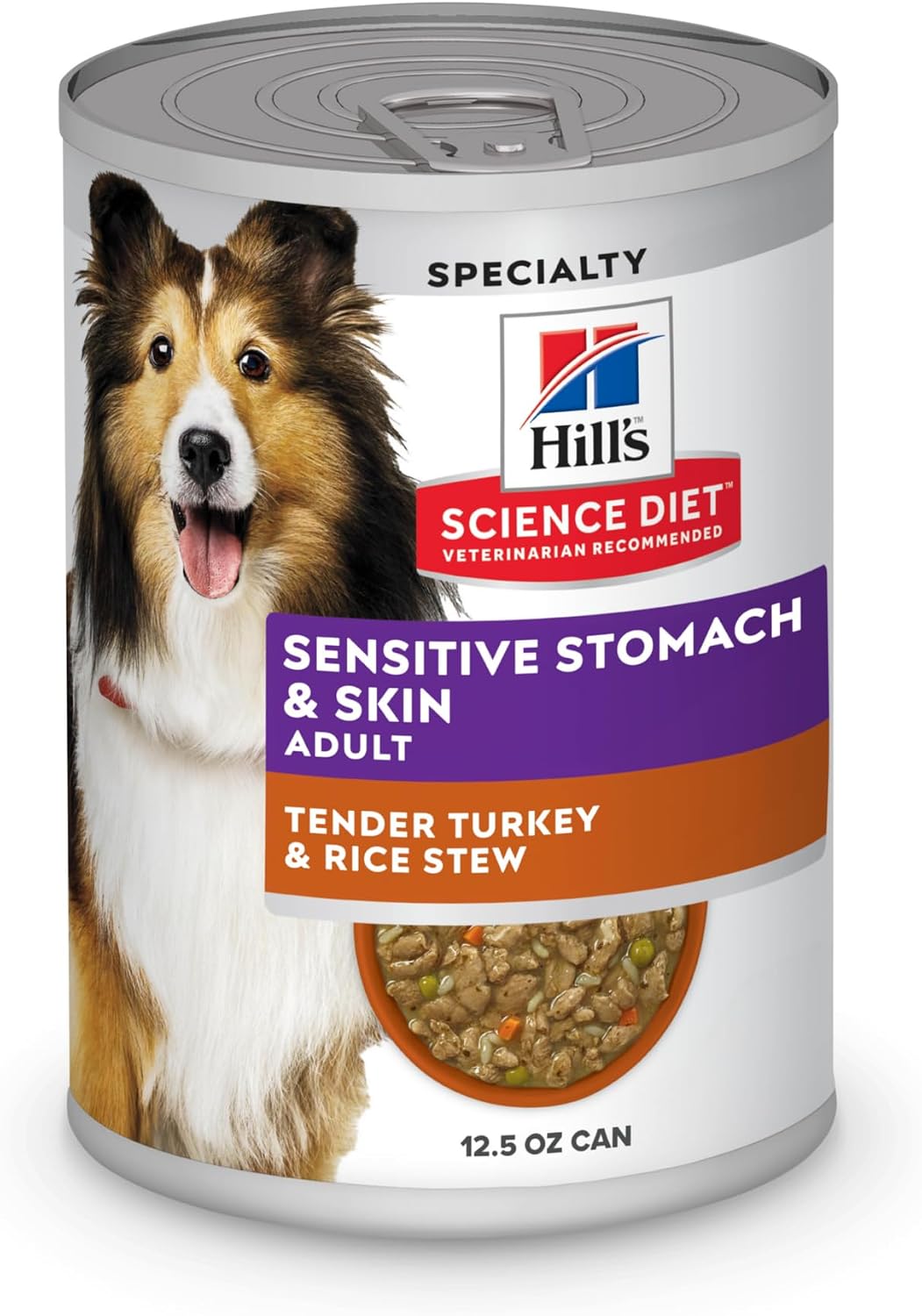
| Flavor | Turkey & Rice Stew |
|---|---|
| Item Form | Wet Food |
| Age Range Description | Adult 1-6 |
| Unit Count | 150 Ounce |
| Number of Items | 12 |
Hill's Science Diet Sensitive Stomach & Skin Turkey & Rice Stew is a wet adult dog food designed to reduce digestive upset while supporting skin and coat health. It is typically fed as a primary meal or mixed with dry food during a transition, and the recipe emphasizes highly digestible ingredients such as turkey, rice and prebiotic fiber to promote a balanced gut microbiome. The formula includes omega-6 fatty acids and vitamin E for skin and coat nourishment and added antioxidants like vitamins C and E to support immune health. Practical benefits include easy acceptance by many dogs, straightforward feeding guidance on the package, and formulation without chicken meat noted as an allergen claim. Trade-offs are that it is a wet, case-packaged food which may be less convenient for free-feeding and requires refrigeration of opened cans, and ingredient lists still contain multiple meat- and broth-based components that could bother dogs with very specific single-protein elimination diets.
Best for: Buyers looking for a vet-formulated wet food to reduce occasional digestive upset and improve skin condition in adult Weimaraners, prioritizing digestibility and skin-support nutrients.
Less Ideal for: Owners who need a strictly single-protein elimination diet or who prefer dry kibble for travel and free-feeding should consider other options.
- Formulated for sensitive stomachs with highly digestible turkey and rice base
- Contains prebiotic fiber to support gut bacteria and digestion
- Includes omega-6 fatty acids and vitamin E to help skin and coat health
- Clinically proven antioxidants (vitamins C and E) to support immune function
- Comes as wet food in a multi-can case which requires refrigeration after opening and may be less convenient than dry food
- Not a single-protein limited-ingredient diet for strict elimination testing
Verdict: The best overall canned food for sensitive stomachs that balances easily digestible ingredients, palatability, and nutritional completeness for everyday feeding.
Amazon Basics Wet Dog Food Variety Pack
Best Budget Canned Food for Sensitive Stomachs

| Flavor | Filet Mignon Flavor and Beef |
|---|---|
| Item Form | Pate |
| Age Range Description | All Life Stages |
| Number of Items | 12 |
| Unit Count | 158.4 Ounce |
This Amazon Basics variety pack delivers a simple, budget-focused wet dog food option that combines filet mignon-flavored pate and beef recipes in 13.2 oz cans sold as a 12-pack. It is formulated for all life stages and marketed as a complete meal, so owners typically use it as a daily wet food or a mixer to moisten dry kibble. The cans list recognizable meat ingredients like chicken and beef and include added vitamins and minerals to meet nutritional needs, while the pate texture makes it easy to portion and appealing to many dogs. Practical benefits include being made in the USA with global sourcing and the convenience of a multipack for regular feeding. Limitations are an ingredient list that includes by-products and additives such as carrageenan and added color, which some owners avoid, and the product targets medium breeds which may affect perceived portion guidance for very small or very large dogs. For budget-minded buyers seeking a complete, easy-to-serve wet food, this pack offers straightforward value with standard canned-food ingredients.
Best for: Cost-conscious dog owners who need a complete, easy-to-serve wet food for everyday feeding or to mix with kibble and prioritize price and convenience over premium ingredient lists.
Less Ideal for: Owners seeking limited-ingredient, grain-free, or premium whole-meat recipes for dogs with sensitive stomachs or specific food sensitivities should consider higher-end alternatives.
- Sold as a 12-can variety pack for consistent supply and convenience
- Formulated for all life stages and labeled as a complete meal
- Made in the USA with globally sourced ingredients
- Pate texture is easy to portion and mixes well with dry food
- Contains meat by-products and added colors rather than only whole-muscle proteins
- Includes stabilizers and thickeners such as carrageenan and sodium tripolyphosphate
Verdict: The best budget canned food for sensitive stomachs that provides gentle ingredients and acceptable nutrition without the higher price of premium specialty formulas.
Evanger's Super Duck & Sweet Potato Dinner
Best Limited-Ingredient Canned Food

| Flavor | Duck & Sweet Potato |
|---|---|
| Item Form | Wet |
| Age Range Description | Adult |
| Unit Count | 150 Ounce |
| Number of Items | 12 |
Evanger's Super Duck & Sweet Potato Dinner is a canned, limited-ingredient wet dog food designed to simplify feeding for dogs with food sensitivities and sensitive stomachs. It uses real duck as the primary protein and farm-grown sweet potatoes for fiber and carbohydrate, and the recipe omits grains, gluten, soy, peas, corn, and artificial preservatives. The product is gently cooked in small batches, which helps retain flavor and makes the texture palatable for picky eaters. You can serve it as a complete meal for adults or as a topper to add moisture and taste to kibble; feeding directions note adjustments for puppies, pregnant or nursing dogs, and lower activity pets. Practical benefits include higher digestibility, a short ingredient profile that makes it easier to run elimination trials, and recyclable BPA-free cans packaged in single-serve portions. Limitations are that the formula is higher in moisture than dry diets so it may not be calorie-dense enough for some active dogs, and dogs with allergies to duck will need an alternative single-protein formula.
Best for: Buyers looking to run elimination trials or simplify their dog’s diet to identify food triggers will appreciate this short, recognizable ingredient list and single-protein focus.
Less Ideal for: Pet owners seeking a high-calorie maintenance diet for very active or working dogs, or those wanting grain-inclusive formulas, should consider other options.
- Limited-ingredient, grain-free formula reduces common dietary irritants
- Real duck primary protein suitable for single-protein trials
- Gently cooked in small batches to preserve flavor and aid digestibility
- BPA-free recyclable cans and single-serve portions for easy feeding and portion control
- Not calorie-dense compared with some dry foods, so may require larger portions for active dogs
- Contains duck so it is not suitable for dogs with duck-specific allergies
Verdict: The best limited-ingredient canned food for pets with suspected food sensitivities who benefit from a short, simple ingredient list to identify and avoid triggers.
Wellness CORE Digestive Health Pate Pack
Best Grain-Free Canned Food

| Flavor | Chicken, Beef |
|---|---|
| Item Form | Wet |
| Special Ingredients | Papaya, Prebiotic, Pumpkin |
| Unit Count | 78 Ounce |
| Number of Items | 6 |
Wellness CORE Digestive Health Pate is a grain-free canned variety pack with smooth chicken and beef pates formulated for adult dogs and all life stages. It is intended as a full meal or a topper to add moisture and flavor, and its ingredient list prioritizes real meat first alongside prebiotic fiber and superfoods like pumpkin and papaya to support gut health. Typical feeding directions are provided by weight, and unopened cans can be served at room temperature while leftovers should be refrigerated. The formula also includes vitamins, minerals, and omega sources aimed at immune and skin and coat support, and it avoids common fillers such as corn, wheat, soy, and artificial colors. Practical benefits include easy-to-serve pate texture for picky eaters and added hydration for dogs that eat mostly dry food. Limitations are that it is a wet-only product so buyers need to plan storage for opened cans and account for portioning, and the pack is marketed for general digestive support rather than as a therapeutic veterinary prescription for severe GI conditions.
Best for: Buyers seeking a grain-free wet formula to soothe sensitive stomachs or add moisture and palatability to meals, especially for picky eaters or dogs that benefit from extra hydration.
Less Ideal for: Owners who need a veterinary-prescribed therapeutic diet for a diagnosed GI disease or those who prefer a long-term dry-only feeding routine without frequent can storage and portioning.
- Grain-free recipes with real meat listed first for digestibility and palatability
- Includes prebiotic fiber and pumpkin and papaya to support digestive health
- Smooth pate texture is easy to mix with dry food or serve alone for picky eaters
- Formulated with vitamins, minerals, and omega sources to support immune and skin and coat health
- No corn, wheat, soy, artificial colors, or poultry by-product meals listed
- Not a veterinary prescription diet for serious digestive disorders
- Wet food requires refrigeration of unused portions and creates more frequent feeding prep
- Pack size requires buyers to manage multiple cans and portions
Verdict: The best grain-free canned food for owners who prefer diets without grains while still providing complete nutrition and digestibility.
Jinx Grain-Free Paté Variety Pack 12-Pack
Best High-Protein Canned Food

| Unit Count | 156 Ounce |
|---|---|
| Number of Items | 12 |
| Item Form | Pate |
| Age Range Description | All Life Stages |
| Animal Food Diet Type | Limited Ingredient |
The Jinx Variety Pack delivers grain-free paté in 13 oz cans intended for puppies through seniors and all breed sizes. Each can is meat-forward with chicken as the primary ingredient and salmon included in some flavors, plus vegetables and bone broth to boost moisture and palatability. It is typically served at room temperature as a complete meal or mixed into dry kibble; leftovers should be refrigerated and used within three days. Notable features include a soft texture that suits picky eaters and dogs with dental issues, inclusion of fruits and vegetables like blueberries, cranberries, pumpkin for added vitamins, and an explicit limited-ingredient, grain-free formulation without corn, wheat, or soy. Practical benefits are easy portioning from cans, variety to reduce flavor fatigue, and recipes geared toward digestive, joint, skin, and immune support. Important limitations are that specific guaranteed analysis numbers (crude protein/fat) are not shown on the listing and the 13 oz can size means storage space is needed for a 12-pack; buyers seeking veterinary prescription diets or precise macro targets may need to check the label before switching.
Best for: Budget-conscious owners who want an affordable grain-free canned option with real-meat ingredients and easy-to-serve texture for mixed feeding or as a main wet meal.
Less Ideal for: Owners who need prescription veterinary diets, tightly controlled macronutrient breakdowns, or single-flavor long-term feeding plans should look elsewhere.
- Grain-free formula that omits corn, wheat, and soy.
- Real meat first ingredient with added bone broth for moisture.
- Soft paté texture suitable for seniors and picky eaters.
- Includes fruits and vegetables for extra vitamins and joint/skin support.
- Sold as a 12-pack so you get several flavors in one purchase.
- Label listing does not show guaranteed analysis percentages on the product page.
- Large 12-pack of 13 oz cans requires significant storage space.
Verdict: The best high-protein canned food for dogs that need extra protein for activity, muscle maintenance, or rebuilding while remaining digestible.
A Strong Heart Savory Chicken 22oz
Best Large-Format Canned Food

| Unit Count | 264 Ounce |
|---|---|
| Number of Items | 12 |
| Flavor | Chicken |
| Item Form | Loaf |
| Container Type | Can |
This 22 oz can of A Strong Heart Savory Chicken is a smooth, easy-to-serve wet loaf built with chicken as the lead ingredient and a full vitamin and mineral profile intended for all life stages. In practice it is spoonable straight from the can and works well as a standalone meal or mixed with dry food to increase palatability and calories per serving. The larger 22 oz can delivers more food per can than standard 13.2 oz formats, which can be convenient for multi-dog households or feeding larger-breed animals that need higher meal volumes. It is labeled gentle on sensitive stomachs and contains no artificial flavors, though the ingredient list includes chicken by-products and several thickeners and additives that some buyers may want to avoid. Feeding directions are provided by weight and it requires refrigeration after opening. For large breed puppies needing extra energy, this product offers an easy way to raise calorie density through larger wet portions, but buyers who require a clearly defined high-calorie or puppy-specific formulation should verify calorie content and growth-stage nutrient targets separately.
Best for: Buyers feeding large-breed puppies or very active growing dogs who need higher meal volume and an easy-to-serve wet option to boost calories and palatability.
Less Ideal for: Owners who require a formula with explicit high-calorie labeling or those seeking recipes with only whole-muscle proteins and minimal additives should consider alternatives.
- Large 22 oz can provides more food per can than standard sizes, reducing can changes for big dogs
- Chicken listed as the first named ingredient for animal protein
- Smooth loaf texture is easy to portion and mix with kibble or supplements
- Complete vitamin and mineral profile intended for all life stages
- Ingredient list includes chicken by-products and several thickeners rather than only whole-muscle meat
- No calorie-per-can or guaranteed analysis prominently listed in the provided details
Verdict: The best large-format canned food for multi-dog households or owners who prefer bulk cans to cut down on cost and packaging while maintaining proper portioning.
Choosing the Right Canned Dog Food Sensitive Stomach: Key Factors to Consider
Protein Source and Digestibility
The type of protein matters because some proteins are easier to digest than others. Single-source proteins and novel proteins can reduce the chance of food-triggered gastrointestinal upset. Highly processed meat meals and unspecified meat byproducts are more likely to contain variable ingredients that can irritate sensitive dogs.
Look for named whole proteins and minimal ingredient lists. The protein source also affects stool quality and nutrient absorption, so choose formulas where the primary protein is appropriate for your dog's history of reactions or intolerances.
Fat Content and Fat Quality
Fat is calorie-dense and can aggravate diarrhea in dogs with compromised gut function. Low-to-moderate fat levels are generally safer for dogs prone to loose stools, while very high-fat formulas may trigger frequent or greasy stools.
Quality of fat matters too; identifiable sources like fish oil or chicken fat offer better nutrient predictability than anonymous lipid blends. Omega fatty acids can support gut lining and skin health, but balance is important to avoid digestive upset.
Fiber Type and Amount
Fiber affects stool consistency and transit time. Soluble fibers, such as beet pulp or certain prebiotic fibers, can help normalize stools by absorbing water and feeding beneficial bacteria. Insoluble fibers speed transit and can be useful for constipation but may worsen diarrhea if overused.
Moderate, digestible fiber levels help maintain steady stool quality in sensitive dogs. Check ingredient lists for named fiber sources and avoid diets with excessive unnamed fillers that can unpredictably affect digestion.
Additives, Preservatives, and Allergens
Artificial colors, flavors, and some chemical preservatives can be triggers for dogs with sensitive systems. Naturally preserved formulas or those using tocopherols tend to be gentler. Common food allergens such as wheat, soy, and certain dairy ingredients can also contribute to GI upset in predisposed dogs.
Choosing canned foods with minimal additives and clearly disclosed preservative systems reduces the chance of unnecessary irritation. If your dog has known food sensitivities, cross-check ingredient lists for those specific items.
Moisture Content and Texture
Canned foods have higher moisture than dry kibble, which can support hydration and easier digestion. The texture—pate versus chunks in gravy—affects how quickly a dog eats and how the stomach handles the meal. Pates are often more homogenous and may be gentler for dogs with delicate mouths or dental issues.
Higher moisture can also slow gastric emptying and help with nutrient absorption, so consider texture preferences alongside digestive benefits when picking a canned formula.
Supplemental Digestive Supports
Formulas that include probiotics, prebiotics, or digestive enzymes can aid dogs with chronic mild intolerance by supporting a stable gut microbiome and improving nutrient breakdown. Not every dog needs these additives, but they can reduce the frequency of soft stools in some cases.
When present, these supports should be backed by clear labeling and sensible dosages. Avoid relying solely on supplemental claims; consider the overall ingredient and nutrient profile when deciding if additional digestive supports are appropriate.
How Quickly Should You Expect Improvement After Switching Foods?
Improvement timelines vary by the cause of digestive sensitivity. For minor dietary intolerance, you may see firmer stools and fewer tummy upsets within three to seven days after switching to a gentler canned formula. For more entrenched issues, such as chronic inflammatory conditions or allergies, it can take several weeks to notice consistent improvement.
When transitioning, change gradually over 7 to 10 days to avoid introducing new digestive stress. If symptoms persist beyond two to three weeks after a careful transition, consult your veterinarian to rule out underlying medical problems that require targeted treatment.
- Expect some adjustment in the first 3–7 days
- Use a 7–10 day gradual transition plan
- Seek veterinary advice if symptoms persist beyond three weeks
What's the Safest Way to Transition a Dog to a New Canned Food?
Switch slowly by incrementally increasing the new food while decreasing the old over one to two weeks. Start with 10–25% new food mixed into 75–90% of the current diet and increase the proportion every two to three days while watching stool quality and appetite.
Keep feeding amounts consistent with the dog's usual caloric intake and avoid extra treats or table scraps during the transition. A measured approach reduces the risk that a sudden ingredient change will trigger vomiting or diarrhea.
- Begin with 10–25% new food
- Increase every 2–3 days over 7–10 days
- Monitor stool consistency and appetite closely
Can Probiotics and Prebiotics in Canned Food Make a Difference?
Probiotics can help re-establish healthy gut bacteria and may reduce episodes of loose stools or gas in dogs with mild chronic sensitivity. Prebiotics feed beneficial microbes and encourage a stable intestinal environment. Together, they can be useful as part of a balanced diet for dogs prone to digestive upsets.
Not every dog will respond the same way, and the strain, dose, and delivery method affect efficacy. Look for formulas that disclose probiotic strains and include realistic colony-forming unit counts, or use a veterinarian-recommended supplement if more targeted support is needed.
- Probiotics support beneficial gut bacteria
- Prebiotics feed those bacteria for longer-term stability
- Effectiveness depends on strain and dose
How to Read Ingredient Lists for Sensitive Stomachs
Scan for named primary proteins early in the list and avoid products that rely heavily on vague terms such as meat meal or meat byproducts. Shorter ingredient lists with identifiable whole-food proteins and limited fillers tend to be easier to evaluate for potential triggers.
Check for common allergens like wheat, corn, soy, and dairy if your dog has a history of reacting to those items. Also watch for unnecessary artificial colors and flavors. When digestive support is a goal, notice any added fibers, probiotic notes, or digestive enzymes.
- Prefer named whole proteins over generic meat meals
- Watch for wheat, soy, corn, and dairy if your dog is reactive
- Note added fibers and probiotic/enzyme inclusions
Feeding Amounts and Frequency for Dogs with Sensitive Stomachs
Smaller, more frequent meals often help dogs with sensitive digestion by reducing the workload on the stomach and improving gastric emptying. Dividing the daily ration into two or three feedings can diminish the risk of post-meal upset and reduce the chance of overeating.
Follow the caloric guidance for your dog's size and activity level, but be prepared to adjust down if your dog experiences softer stools until the digestive system stabilizes. Always monitor weight and body condition and adjust feeding amounts to maintain a healthy weight.
- Consider two to three smaller meals per day
- Adjust portion sizes based on stool quality and weight
- Avoid unplanned treats during recovery from GI upset
When Should You Contact Your Veterinarian?
Contact your veterinarian if you observe persistent vomiting, blood in the stool, rapid weight loss, lethargy, or if diarrhea lasts more than a couple of days despite diet changes. These signs can indicate a medical issue that needs diagnostic testing rather than a simple diet swap.
Also seek professional advice before trying elimination diets or prescription formulas. A vet can help determine whether food intolerance, allergy, infection, or another condition is causing the symptoms and recommend an appropriate plan.
- Get urgent care for vomiting, bloody stool, or rapid weight loss
- Consult your vet if diarrhea continues despite diet changes
- Ask for guidance before beginning elimination diets
How We Chose the Best Canned Dog Food Sensitive Stomach
We prioritized products that address digestive sensitivity while still providing complete nutrition for adult dogs. Our selection criteria focused on ingredient transparency, protein source suitability for sensitive systems, and the presence of supportive components such as prebiotics or gentle fiber sources. We also considered texture and moisture level because softer, higher-moisture canned foods often ease digestion and encourage eating in dogs that are off their feed. Laboratory nutrient completeness and compliance with standard adult dog feeding guidelines were required. We excluded any diets labeled for therapeutic use that require a veterinary prescription or products with proprietary ingredient blends that obscure main protein sources. Palatability reports, typical stool quality outcomes, and ease of digestion rounded out the evaluation. Final inclusions favored formulas that balance gentle digestibility with average nutritional needs for adult dogs rather than niche or breed-specific profiles.
Our full evaluation process is outlined in our review methodology.
FAQ
Is canned food better than kibble for dogs with sensitive stomachs?
Canned food can be easier to digest because of higher moisture and softer texture, which helps some dogs with digestion and hydration. However, individual response varies and some dogs tolerate dry food fine when it is formulated for sensitivity.
How long should I try a new canned formula before deciding it works?
Allow at least two to three weeks for a full assessment after a gradual transition, since it can take time for the gut microbiome and stool consistency to stabilize. If there is no improvement after three weeks, consult your veterinarian.
Can food allergies cause gastrointestinal symptoms in dogs?
Yes, food allergies or intolerances often present with chronic diarrhea, vomiting, or itchy skin. Determining whether food is the cause typically involves an elimination trial guided by a veterinarian rather than guessing based on symptoms alone.
Are grain-free canned foods better for sensitive stomachs?
Grain-free might help dogs allergic to specific grains, but it is not universally better for sensitive stomachs. The overall ingredient quality, fat level, and protein digestibility are more important than whether a formula contains grains.
Should I give my dog probiotic supplements along with a sensitive-stomach canned food?
Probiotic supplements can be helpful for some dogs but are not necessary for every case. If you consider supplementation, choose strains supported by evidence for dogs and consult your veterinarian about dose and duration.
Final Verdict
Choose canned foods that emphasize named, easily digestible proteins, moderate fat, and sensible fiber to support stool quality and reduce the risk of digestive upsets. Prioritize formulas with minimal additives and consider ones that include probiotics or prebiotics if your dog has recurring mild issues. Balance patience with monitoring: introduce new foods gradually, track stool and appetite, and consult your veterinarian if problems continue. With the right priorities, you can find a canned feeding approach that improves comfort and keeps your dog nourished.

