

If you drive with a dog regularly, the right car seat belt can make travel safer and less stressful for both of you. A correctly chosen restraint reduces the risk of distraction, limits roaming inside the vehicle, and helps protect your pet in sudden stops. This guide presents seven top car seat belts for dogs that stood out during our selection process for safety, usability, and comfort. Below you will find the main decision criteria we used plus practical sections that explain fit, installation, and everyday use to help you pick the best option for your dog and vehicle.
Top Picks at a Glance
| Best Overall Car Seat Belt A reliable, well-balanced pick that suits most dog owners | COOYOO Dog Seat Belt |  |
| Best Budget Car Seat Belt A low-cost option that still meets basic safety needs | Ortarco Dog Seat Belt 2-Pack |  |
| Best Heavy-Duty Car Seat Belt Reinforced construction meant for strong pullers and large dogs | Mighty Paw Dog Seat Belt Chewproof |  |
| Best Adjustable Car Seat Belt Wide range of length settings to fit many vehicle setups | Active Pets Dog Seat Belt Adjustable |  |
| Best Compact Car Seat Belt A small, easy-to-store design for travel and short trips | BWOGUE Pet Seat Belt Strap |  |
| Best Quick-Release Car Seat Belt Fast-release buckles for speedy loading and emergency exits | SlowTon Dog Seat Belt |  |
COOYOO Dog Seat Belt
Best Overall Car Seat Belt

| Material Type | Nylon |
|---|---|
| Size | 24-31 inches |
| Closure Type | Clip |
| Dog Breed Size | Large |
| Included Components | 1 |
The COOYOO Dog Seat Belt is a simple, low-cost restraint that connects a dog harness to your car's seat belt buckle. It uses heavy-duty nylon webbing with reinforced stitching and metal hardware, plus an elastic bungee section that softens sudden pulls so the dog can move a little without a hard stop. A swivel clip and 360-degree rotating aluminum alloy clasp help prevent tangles and let a dog sit or lie down comfortably, while an adjustable length (24 to 31 inches) lets you set how much slack the pet has. Installation is straightforward: the tab clicks into most seat belt receptacles (tab width 0.79 inch) and the other end clips to a harness D-ring. Practical benefits are durability for everyday use, reduced rider anxiety from the bungee buffer, and fast, tool-free mounting. Important limitations are that it attaches to a harness rather than replacing one, the tab is not compatible with some specific vehicle models, and very large or extremely active dogs may need a heavier duty, crash-tested restraint for maximum protection.
Best for: Buyers seeking a very affordable, easy-to-install car restraint for routine drives who prioritize basic securement and some shock absorption over crash-level protection.
Less Ideal for: Owners who need a full crash-tested car harness, travel frequently with very large or highly active dogs, or who require guaranteed compatibility with uncommon vehicle buckles should consider other options.
- Elastic bungee buffer reduces shock from sudden stops
- Durable nylon webbing with reinforced stitching and sturdy metal components
- Swivel clip and 360-degree rotating clasp minimize tangling and allow natural movement
- Adjustable length (24–31 inches) fits a range of seating arrangements and dog positions
- Not a harness replacement so must be used with a separate vest harness
- Seat belt tab is 0.79 inch and incompatible with some vehicle buckles
- Not certified as a crash-tested restraint for high-impact protection
Verdict: The best all-around car seat belt that balances safety, comfort, ease of use, and fit for everyday travel with most dogs.
Ortarco Dog Seat Belt 2-Pack
Best Budget Car Seat Belt

| Material Type | Nylon |
|---|---|
| Closure Type | Buckle |
| Weight Range | 10-60 lbs |
| Unit Count | 2 Count |
This two-piece Ortarco dog seat belt set is a simple, budget-friendly restraint for everyday car trips. Each leash-style tether clips to your dog with a 360 degree swivel zinc-alloy snap and secures into a vehicle seat belt buckle or universal anchor, while a short elastic bungee section cushions sudden stops to reduce forward jolt. The nylon webbing and metal hardware feel sturdy for routine use and the length adjusts from about 21 to 30 inches to suit small through large dogs within the listed weight range. It is machine washable and comes in a pack of two so you can outfit multiple seats. The design is practical for on-leash transfers and short drives, but it is not marketed as a crash-tested harness system and lacks a full-body harness that spreads load across the chest and shoulders, so for high-speed collisions or long road trips a dedicated crash-tested harness may be preferable.
Best for: Dog owners who want a low-cost, practical restraint for daily drives and short trips and prioritize basic safety and convenience over certified crash protection.
Less Ideal for: Owners who need a crash-tested or full-body restraint for long highway drives or for dogs that are strong pullers or prone to high-impact incidents.
- Affordable two-pack lets you secure two dogs or have a spare tether
- Elastic bungee section reduces shock from sudden stops
- 360° swivel zinc-alloy snap prevents tangling and provides secure attachment
- Adjustable length (approx. 21–30 inches) fits a range of dog sizes
- Not sold as a certified crash-tested full harness system
- Does not distribute impact forces like a padded full-body vehicle harness
Verdict: The best budget car seat belt for owners who want dependable crash-tested restraint and acceptable durability without a high price tag.
Mighty Paw Dog Seat Belt Chewproof
Best Heavy-Duty Car Seat Belt

| Material Type | Aluminum, stainless steel |
|---|---|
| Size | Chewproof – 32" |
| Closure Type | Buckle |
| Dog Breed Size | Large |
The Mighty Paw Chew-Proof dog seat belt is a tether that clips to your car's LATCH anchor bars and to a dog harness to keep large, active dogs secured during drives. It uses a 2.34 mm braided steel cable (five bundles of seven wires) instead of nylon webbing, and an aviation-grade aluminum carabiner with a swivel to reduce tangling. Installation is tool-free and the latch-style attachment means there is no seat belt buckle for a paw to press, so it can stay connected between trips. In practice the steel cable resists chewing and the heavy-duty carabiner gives a confidence boost for strong pullers, but the product is not crash-test certified and is intended to limit movement rather than replace a certified crash restraint. The fixed-length options mean you should pick the length that lets your dog sit and lie down comfortably, and it must be used with a harness rather than a collar for safety. Regular inspection for wear is recommended because hardware and stitching are the safety-critical points to check before each use.
Best for: Owners of large, powerful dogs who prioritize a bite-resistant tether and heavy-duty hardware to prevent chewing and withstand strong pulls during everyday drives.
Less Ideal for: People who need a crash-tested safety solution or want a universal buckle-in seat belt that works with every vehicle without LATCH anchors.
- Braided steel cable resists chewing better than nylon straps
- Aviation-grade aluminum carabiner with swivel reduces tangles and is force rated
- Attaches to vehicle LATCH anchors so it bypasses the seat belt buckle
- Easy, tool-free installation and can remain attached between trips
- Not crash-test certified so it is not a substitute for a certified crash restraint
- Fixed lengths require choosing the correct size for your dog’s comfort
Verdict: The best heavy-duty car seat belt for owners of large or strong dogs who need extra-strength webbing and hardware to resist wear and force.
Active Pets Dog Seat Belt Adjustable
Best Adjustable Car Seat Belt
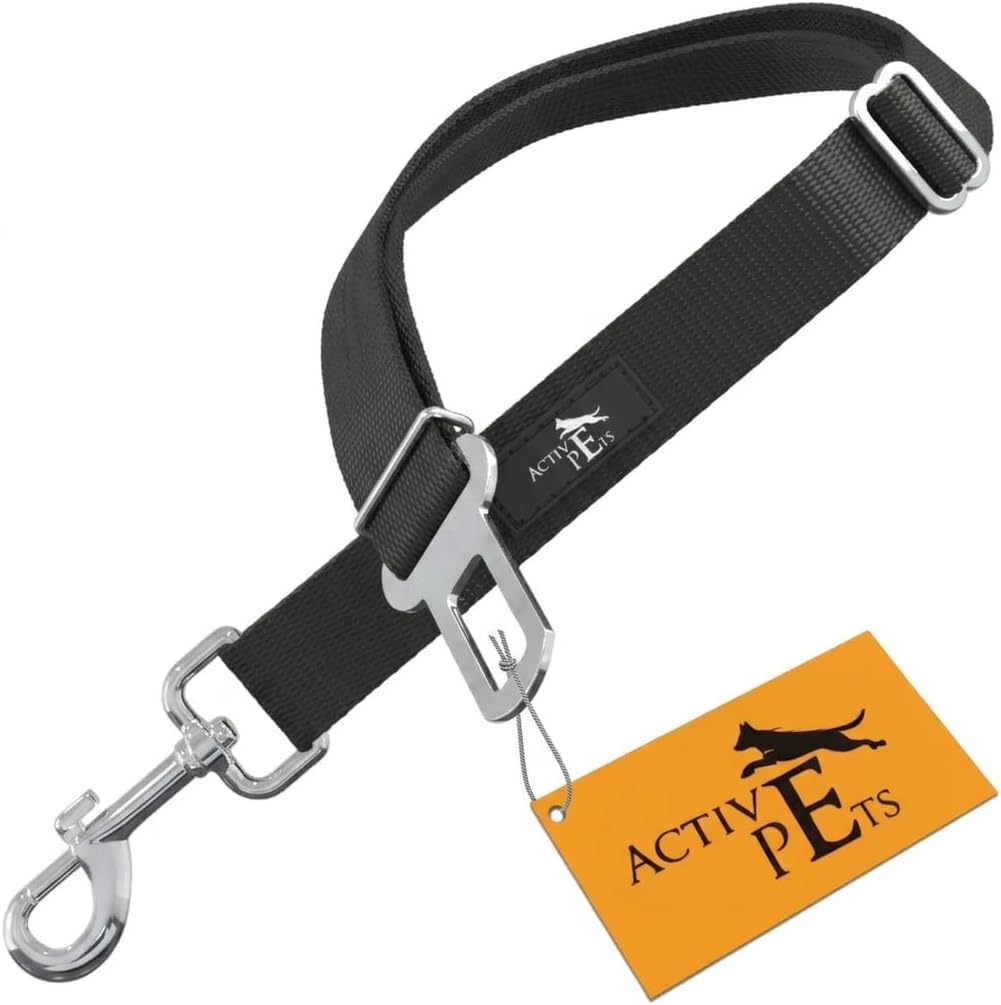
| Material Type | Nylon |
|---|---|
| Closure Type | Clip |
| Adjustable Length | 18 to 24 inches |
| Pet Type | Cat, Dog |
The Active Pets adjustable dog seat belt is a simple tether designed to keep dogs secure in the back seat by clipping into a vehicle seat belt system and attaching to a harness. It adjusts from about 18 to 24 inches so pets can sit, lie down, or stand while remaining restrained, and the 360 degree swivel clasp reduces twisting and tangling during turns. Built from nylon webbing with a zinc alloy clip, the tether feels durable for everyday drives and road trips and installs in seconds without tools by using the car's existing buckle. Practical benefits include limiting sudden lunges between seats and helping position dogs in the back seat for safer rides. Limitations are that it is a single tether rather than a crash-tested restraint system and the manufacturer recommends attaching to a body harness rather than a collar to avoid neck strain in a sudden stop. It also relies on a standard seat belt buckle style, so very old or nonstandard buckles may not be compatible.
Best for: Buyers who need a flexible, easy-to-install car tether that adapts to different dogs and seating positions and prefer a simple solution that works across multiple vehicles.
Less Ideal for: Owners who require a crash-certified restraint system or side-to-side immobilization for high-impact protection should consider purpose-built automotive harnesses instead.
- Adjustable 18–24 inch strap accommodates different seating positions and dog postures
- 360 degree rotating clasp reduces tangling and lets the dog move naturally
- Durable nylon webbing with zinc alloy hardware resists fraying and holds up to routine use
- Quick one-step installation into the vehicle seat belt buckle requires no tools
- Not presented as a crash-tested or certified automotive restraint
- Single tether limits lateral restraint compared with harnesses integrated into vehicle-specific systems
Verdict: The best adjustable car seat belt for pet owners who need flexible length and attachment options to achieve a secure, comfortable fit in varied cars and seating positions.
BWOGUE Pet Seat Belt Strap
Best Compact Car Seat Belt

| Material Type | Nylon |
|---|---|
| Adjustable Length | 18-30 inch |
| Feature | 360° Rotatable Hook |
| Closure Type | Button |
This BWOGUE seat belt strap is a simple, lightweight restraint designed for short trips, rideshares, and rental cars where low bulk and portability matter. The strap connects to a vehicle headrest loop and features a 360 degree swivel zinc-alloy snap so a tethered pet can move without tangling, and the adjustable 18–30 inch length lets you shorten it for cramped back seats or lengthen it for a bit more mobility. Made from narrow nylon webbing with plastic buckles, the strap is compact and folds up small for stashing in a glove box or bag, and it can double as a hand leash when needed. It is intended to be used with a pet harness, not attached to a collar, and the lightweight construction is best for small to medium dogs; it is not a heavy-duty crash-tested harness replacement. If you want a low-profile, portable restraint for occasional travel and easy storage, this does the job well, but those seeking robust crash protection should choose a certified vehicle harness instead.
Best for: Owners who need a low-bulk, portable restraint for occasional trips, rideshares, or rental cars and prefer something compact that stows easily.
Less Ideal for: People who regularly transport large, strong dogs or who require a certified crash-tested vehicle harness for frequent long-distance travel.
- Very compact and lightweight for easy storage and travel
- Adjustable 18–30 inch length suits different seating layouts
- 360° swivel zinc-alloy snap reduces tether tangles
- Can convert to a handheld leash for short-term use
- Simple headrest loop attachment works in most cars
- Not a crash-tested harness or substitute for a vehicle-rated restraint
- Narrow nylon strap and plastic buckles are not ideal for very large or strong dogs
Verdict: The best compact car seat belt for owners who prioritize portability and low bulk for rideshares, rental cars, or occasional travel with a pet.
SlowTon Dog Seat Belt
Best Quick-Release Car Seat Belt

| Material | Nylon with metal hardware |
|---|---|
| Adjustable length | 22–29.5 inches (stretchable) |
| Closure Type | Buckle |
| Reflective | Yes |
The SlowTon Dog Seat Belt is a compact, adjustable safety leash designed to keep dogs restrained in the car while still allowing them to sit, stand, or look out the window. It offers two attachment options: hook to the vehicle latch bar or clip into the seat belt buckle, which makes it useful whether you have a child seat installed or not. The strap includes an internal elastic bungee to absorb sudden jolts and reflective stitching for low-light visibility, and the metal quick-release swivel buckle lets you unclip a dog quickly during loading or an emergency. The nylon webbing and all-metal hardware feel durable for everyday use, and the adjustable length (about 22 to 29.5 inches, stretchable) gives most dogs some freedom without letting them roam the cabin. Limitations are that it is meant to attach to a harness not a collar and it does not replace a crash-tested harness system, so it is best for moderate restraint and convenience rather than maximum crash protection.
Best for: Buyers who prioritize fast, dependable unclipping and easy loading or emergency removal while keeping their dog safely restrained during routine car trips.
Less Ideal for: Owners seeking a full crash-tested restraint system or professional-grade crash protection should consider dedicated vehicle harnesses certified for crash performance.
- Two attachment methods (latch bar or seat belt buckle) for flexible vehicle use
- Quick-release metal swivel buckle for fast unclipping
- Elastic bungee section reduces shock from sudden stops
- Reflective stitching improves visibility in low light
- Durable nylon webbing and metal hardware for everyday reliability
- Not a crash-tested harness alternative and not intended for full crash protection
- Requires a separate harness since it should not be attached to a dog collar
Verdict: The best quick-release car seat belt for owners who need fast, reliable unclipping for calm loading, rapid door exits, or emergency removal.
Choosing the Right Car Seat Belt Dog: Key Factors to Consider
Safety and Crash Performance
A car seat belt dog product should be designed for impact forces and for secure attachment to the vehicle. Look for belts that use reinforced webbing, heavy-duty hardware, and clear guidance on maximum load or testing. Even when formal crash-test data is not available, robust construction and multiple attachment points indicate a focus on safety.
How the belt anchors to the car matters: snap hooks, seat-belt buckle adapters, and tether anchors transfer force differently. A design that minimizes swivel and slippage will better protect your dog in a sudden stop. Prioritizing proven materials and sturdy fasteners reduces the chance of failure when restraint is most needed.
Compatibility with Vehicle Anchorage
Different cars have different anchor setups, so choose a belt that matches how you'll attach it. Some dog seat belts plug directly into a buckle, others loop around a headrest post, and some use the vehicle's lower tether anchor. Confirm that the attachment method works with your seats and that length and hardware clearances won't interfere with seat operation.
A compatible anchor makes installation fast and secure. If your vehicle has limited anchor points or integrated child-seat hardware, pick a belt whose connection style avoids blocking those features and still provides reliable restraint.
Adjustability and Range of Motion
Dogs need enough slack to sit, turn, and lie down comfortably, but not so much that they can jump into the front seat or become entangled. Look for belts with smooth, reliable adjusters and a suitable length range for your dog's size. Some designs include elastic buffers to absorb sudden forces, which can improve comfort without compromising restraint.
Consider how the belt behaves when the dog moves. A well-designed adjuster resists slipping under load and allows you to fine-tune the travel length. For multi-dog households, adjustability simplifies switching between pets of different sizes.
Harness Compatibility and Pet Comfort
Car seat belts for dogs should be used with a body harness rather than a collar to avoid neck injuries. Confirm the belt's connection method works with common harness attachment points. Padded connectors, broad webbing, and swivel clips reduce chafing and twisting, helping nervous or fidgety pets stay calm.
Comfort affects compliance: a dog that feels secure but comfortable is less likely to resist restraint. Materials that wick moisture and avoid abrasive edges will make longer trips more tolerable for sensitive dogs.
Durability and Maintenance
Frequent use and exposure to dirt or moisture demand durable materials that are easy to clean. Choose belts made from UV- and abrasion-resistant webbing with corrosion-resistant metal parts. Reinforced stitching at stress points prevents premature failure.
Consider how the belt will be maintained. Wipe-clean surfaces or removable components that machine-wash safely keep the restraint hygienic without accelerating wear. Long-lasting hardware and replaceable parts extend the useful life of the product.
Ease of Use and Everyday Convenience
A car seat belt dog product should be quick to attach and detach because you will likely use it dozens of times. Intuitive clips, clear orientation indicators, and straightforward length adjustment reduce fumbling during busy routines. Compact storage when not in use is also helpful.
Small design details matter: a tether that stays untangled, a clip that fits easily into the buckle, and a layout that does not block seat functions all make the belt practical for daily travel. Choose a belt that integrates smoothly with your existing pet gear and driving habits.
How Do I Install a Car Seat Belt for a Dog in My Vehicle?
Installation methods vary, but the goal is consistent: secure the belt to a stable anchor point and attach the other end to the dog's harness. If the belt plugs into the seat-belt buckle, insert it until it clicks and confirm it will not disengage under tension. If it uses a tether anchor or headrest loop, follow vehicle manufacturer guidance to ensure the anchor point is rated for restraint use.
Always check for twisting or routing that could allow the belt to slip off an anchor, and ensure the dog has enough room to sit or lie down comfortably. After the first install, test by gently pulling the belt at various angles to confirm secure attachment before every trip.
- Verify the attachment point is sturdy and accessible
- Connect to the dog's harness, not a collar
- Adjust length so the dog can sit and lie down but not reach the driver area
- Do a quick tug test before driving
Which Harness Styles Work Best with Car Seat Belts?
Look for harnesses with a designated back D-ring or dual attachment points for vehicle tethers. A chest-and-back harness distributes forces across the body and reduces neck strain compared with a collar-based connection. Many harnesses include padding and broad straps that fit comfortably under restraint.
Avoid harnesses with flimsy D-rings or thin webbing when using them with a car belt. A robust connection point keeps the restraint effective in sudden stops and helps the belt perform as intended.
- Prefer full-body or back-and-chest harnesses
- Ensure D-rings are metal and well-stitched
- Confirm the harness does not restrict breathing when tightened for travel
How to Choose the Right Length and Adjustability
Measure your dog from collar to rump and consider the space in your vehicle seat. A belt that is too short prevents natural movement and causes stress, while one that is too long allows excessive roaming. Choose a product with a clear length range and a reliable adjuster that will not slip under tension.
If you frequently move dogs between seats or vehicles, favor belts with broader adjustability ranges and quick-release clips so you can adapt quickly without rethreading or complex adjustments.
- Aim for enough slack to sit and turn but not to enter the front seat
- Prefer smooth, lockable adjusters over friction-only buckles
- Consider an elasticized section for added shock absorption
Daily Care and Storage Tips for Car Seat Belts
Wipe down webbing after muddy trips and let it fully dry before storing to prevent mildew. Inspect metal hardware and stitching regularly for signs of corrosion or wear, and retire any belt with frayed webbing or cracked fittings. Keep a small emergency kit in the car with a spare loop or quick-release clip if you travel often.
Store belts coiled to avoid kinking the webbing and keep clips away from sharp objects that could damage hardware. Routine checks will extend the product life and ensure safe performance.
- Clean with mild soap and water; air dry
- Inspect for wear before each long trip
- Keep spare connectors and a small roll of repair tape in the vehicle
What if My Dog Dislikes Being Restrained in the Car?
Many dogs resist restraint initially, so introduce the belt and harness gradually. Start with short sessions while the car is parked, rewarding calm behavior with treats and praise. Gradually increase ride length and only fasten the belt once the dog is relaxed in the harness.
Consistency and positive reinforcement help dogs associate the restraint with safe, calm travel rather than confinement. If anxiety persists, try brief practice drives to pleasant destinations to build positive associations.
- Acclimate at home before on-road use
- Use treats and quiet praise during initial sessions
- Keep early trips short and positive
How We Chose the Best Car Seat Belt Dog
To assemble these seven options we applied a practical editorial filter focused on real-world safety and day-to-day usability. We prioritized crash-rated restraint features and durable hardware, checking for materials and construction that resist wear from regular leash motion and pet movement. Ease of attachment and compatibility with standard vehicle anchor points were key; we favored designs that install quickly without extra tools and that work with common seat belt buckles or anchor hooks. Comfort and adjustability mattered too, because a poorly fitting belt encourages pulling or anxiety. We also evaluated restraint length range and tangle-reduction features, which affect whether a dog can sit, stand, or lie down comfortably. Additional considerations included laundering or wipe-clean maintenance, visible stitching and reinforced seams, and compatibility with common harness types. We excluded single-purpose tethers that do not attach to vehicle restraint points and any items lacking clear safety information. The result is a shortlist of versatile, well-built car seat belts that balance secure restraint with everyday convenience.
Our full evaluation process is outlined in our review methodology.
FAQ
Can I attach a car seat belt to my dog's collar?
You should not attach a car seat belt to a collar because it concentrates force on the neck and can cause injury in a sudden stop. Use a well-fitted body harness with a back D-ring or dual attachment designed for tethers to distribute forces safely.
Are all dog car seat belts universal for every vehicle?
Not always. Attachment styles differ and may not suit every seat or buckle layout. Check that the belt's connection method works with your vehicle anchor points and seat design before relying on it for regular travel.
How do I know if a car seat belt is secure enough?
A secure belt uses heavy-duty webbing, corrosion-resistant hardware, and a reliable attachment to a vehicle anchor. Perform a manual tug test after installation and inspect stitching and connectors regularly. Look for products with clear guidance on intended use and load handling.
Can a car seat belt reduce my dog's anxiety on trips?
A properly fitted restraint can reduce anxiety for some dogs by limiting excessive movement and providing a predictable boundary. Comfort features like padding and a harness connection often help, but behavioral training and gradual acclimation are usually necessary too.
How often should I replace a car seat belt for my dog?
Replace the belt if you see frayed webbing, damaged hardware, or compromised stitching. Even without visible damage, consider replacement if the belt has taken a strong impact or if components no longer operate smoothly. Regular inspection is the best guide.
Final Verdict
Prioritize secure attachment and comfortable fit when choosing a car seat belt dog owners can rely on. Balance safety-related features such as reinforced webbing and solid anchor compatibility with everyday usability like easy adjusters and harness compatibility. Expect some tradeoffs between absolute restraint and freedom of movement; select a belt that provides firm control while allowing your dog to sit or lie down without stress. With careful attention to attachment method, adjustability, and routine inspection, you can choose a restraint that improves travel safety and reduces in-car distractions.

