

When you drive with a small dog, the right car seat belt matters for safety and stress-free travel. A well-chosen restraint limits movement during sudden stops, prevents distracting leaps into the front seat, and makes short errands and long trips calmer for both of you. This guide highlights seven top car seat belts for small dogs that balance dependable restraint, an adjustable fit for petite frames, and easy installation. We shortlisted options that focus on secure attachment, size-appropriate fit, and comfort for dogs that weigh less than medium breeds. Below you will find a clear explanation of the evaluation criteria and practical notes to help you pick the right belt for your small dog and typical driving scenarios.
Top Picks at a Glance
| Best Overall Car Seat Belt for Small Dogs The best all-around safety and comfort choice for most small dogs | Active Pets Dog Seat Belt Adjustable |  |
| Best Budget Car Seat Belt for Small Dogs Affordable, reliable restraint for owners shopping on a tight budget | SunGrow Dog Seat Belt |  |
| Best Premium Car Seat Belt Higher-end materials and features for long-term durability and comfort | KIKI & RIKI Dog Car Seat Belt |  |
| Best Heavy-Duty Car Seat Belt Reinforced construction built to withstand strong tugs and chewing | COOYOO Dog Seat Belt |  |
| Best Adjustable Car Seat Belt Wide range of length and fit options for varied harness sizes | PUEENOD Dog Car Seat Belt 2-Pack |  |
| Best Quick-Release Car Seat Belt Fast-release buckles for easy on/off during stops and trips | ARCA PET Dog Seat Belt ACL002 |  |
| Best Compact Car Seat Belt Lightweight, low-profile design ideal for travel and small vehicles | EzyDog Click Car Restraint |  |
Active Pets Dog Seat Belt Adjustable
Best Overall Car Seat Belt for Small Dogs
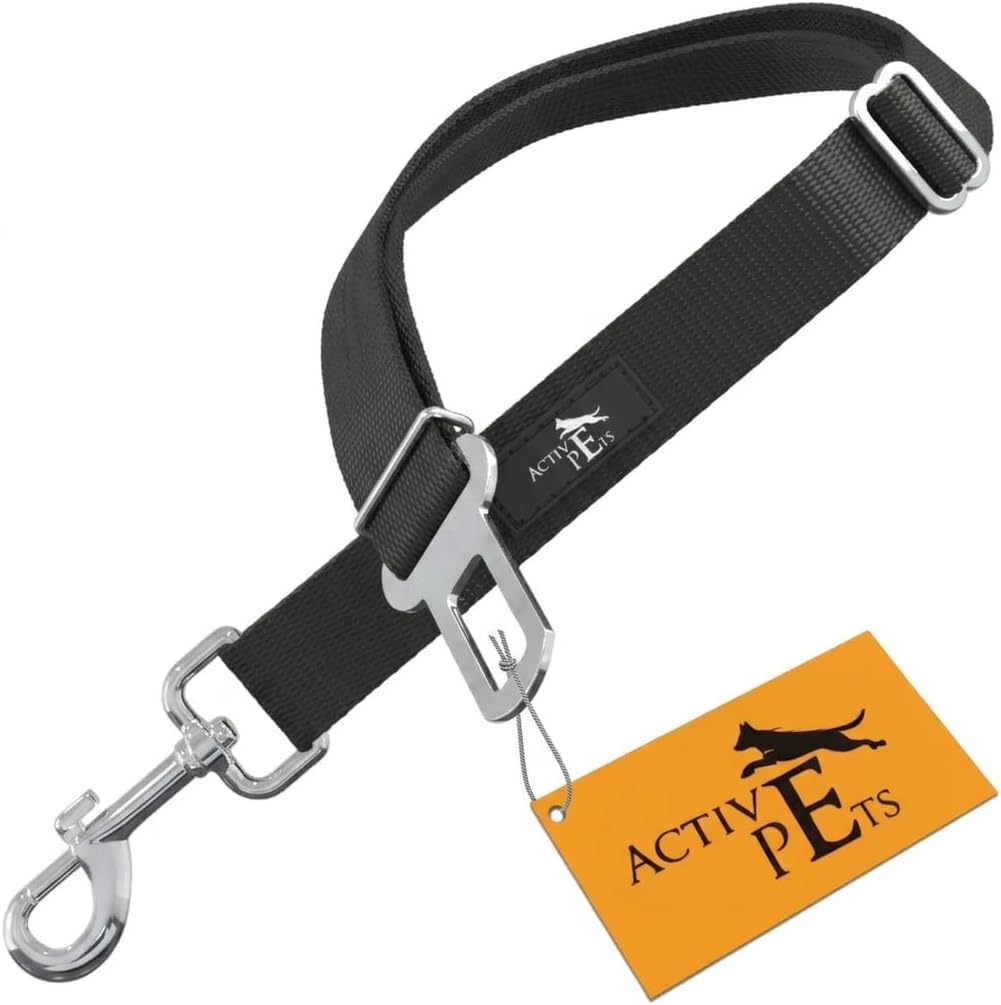
| Material Type | Nylon |
|---|---|
| Closure Type | Clip |
| Adjustable Length | 18 to 24 inches |
| Pet Type | Cat, Dog |
The Active Pets adjustable dog seat belt is a simple tether designed to keep dogs secure in the back seat by clipping into a vehicle seat belt system and attaching to a harness. It adjusts from about 18 to 24 inches so pets can sit, lie down, or stand while remaining restrained, and the 360 degree swivel clasp reduces twisting and tangling during turns. Built from nylon webbing with a zinc alloy clip, the tether feels durable for everyday drives and road trips and installs in seconds without tools by using the car's existing buckle. Practical benefits include limiting sudden lunges between seats and helping position dogs in the back seat for safer rides. Limitations are that it is a single tether rather than a crash-tested restraint system and the manufacturer recommends attaching to a body harness rather than a collar to avoid neck strain in a sudden stop. It also relies on a standard seat belt buckle style, so very old or nonstandard buckles may not be compatible.
Best for: Buyers who need a flexible, easy-to-install car tether that adapts to different dogs and seating positions and prefer a simple solution that works across multiple vehicles.
Less Ideal for: Owners who require a crash-certified restraint system or side-to-side immobilization for high-impact protection should consider purpose-built automotive harnesses instead.
- Adjustable 18–24 inch strap accommodates different seating positions and dog postures
- 360 degree rotating clasp reduces tangling and lets the dog move naturally
- Durable nylon webbing with zinc alloy hardware resists fraying and holds up to routine use
- Quick one-step installation into the vehicle seat belt buckle requires no tools
- Not presented as a crash-tested or certified automotive restraint
- Single tether limits lateral restraint compared with harnesses integrated into vehicle-specific systems
Verdict: The best all-around car seat belt for small dogs that balances reliable restraint, adjustable fit for common harnesses, and comfort for everyday travel.
SunGrow Dog Seat Belt
Best Budget Car Seat Belt for Small Dogs

| Material Type | Nylon |
|---|---|
| Closure Type | Buckle |
| Adjustable Length | 19 – 31 inches |
| Pet Type | Cat, Dog |
The SunGrow Dog Seat Belt is a simple, budget-minded restraint that attaches to a pet harness with a metal clip and locks into a car's seat belt receptacle. It is designed for everyday use on short trips or routine drives, with an adjustable length (about 19 to 31 inches) so owners can limit how much a small dog can move. The nylon webbing and steel clasp feel sturdy for the price and the standard seat belt buckle fits most vehicles made after 1993, so installation is quick and familiar. Practical benefits include hands-free containment, reduced distraction while driving, and protection from sudden stops compared with an unrestrained pet. Expect basic, no-frills construction: there is no padded section or shock-absorbing hardware, and it relies on being clipped to a body harness rather than a collar to avoid neck strain. For buyers who want a low-cost, easy-to-use tether for small dogs, this delivers straightforward safety without premium fittings.
Best for: Buyers looking for a low-cost, functional car tether to keep small dogs contained on everyday drives and short trips without extra bells and whistles.
Less Ideal for: Owners seeking a crash-tested or padded restraint system for high-speed travel or larger, stronger dogs should consider purpose-built safety harnesses instead.
- Very affordable two-pack for basic vehicle restraint
- Adjustable length (19–31 inches) suits a range of small-breed positions
- Standard seat belt buckle works with most cars for easy installation
- Durable nylon webbing and metal clasp appropriate for routine trips
- No padding or shock-absorbing features for impact energy management
- Made for use with a body harness only, not designed to replace a certified crash-tested harness
Verdict: The best low-cost car seat belt for small dogs that provides adequate safety and a secure fit without extra features or higher-end materials.
KIKI & RIKI Dog Car Seat Belt
Best Premium Car Seat Belt

| Material Type | Nylon |
|---|---|
| Size | 14-24 inches |
| Closure Type | Snap |
| Dog Breed Size | All |
The KIKI & RIKI Dog Car Seat Belt is a nylon vehicle tether designed to keep small dogs secure on car trips. It connects to standard seat belt receivers via a universal 0.83 in (21 mm) buckle and adjusts from 14 to 24 inches, letting you set a comfortable range of motion while limiting roaming. Construction emphasizes durability with reinforced stitching and solid metal hardware, and a 360 degree swivel clip reduces tangles so a small dog can turn without twisting the strap. The fabric is machine washable on a gentle cycle, which helps keep the printed pattern looking fresh after regular use. For frequent travelers the strap's adjustability and sturdy hardware feel premium and reliable, though the universal buckle style means it attaches to a seat-belt receptacle rather than clipping into OEM tether anchors, so installation is simple but not an exact replacement for a vehicle-specific harness anchor. Overall it suits daily drives and longer trips where a compact, durable tether and easy cleaning are priorities for small dogs.
Best for: Owners of small dogs who travel frequently and prioritize a well-built, adjustable tether that withstands regular use and stays easy to clean.
Less Ideal for: People seeking a factory-style tether that connects to vehicle anchor points or buyers wanting a full car harness system rather than a seat-belt style restraint.
- Solid metal hardware and reinforced stitching for durability.
- 360 degree swivel clip reduces twisting and improves comfort.
- Adjustable 14–24 inch length fits a wide range of small dog positions.
- Universal buckle connector fits most vehicle seat belt receptacles.
- Machine washable nylon keeps the tether easy to clean.
- Uses a seat-belt style buckle rather than vehicle tether anchors, so it is not a direct harness-to-anchor substitute.
Verdict: The best premium car seat belt for owners who want superior build quality, upgraded hardware, and refined adjustability for frequent travel.
COOYOO Dog Seat Belt
Best Heavy-Duty Car Seat Belt

| Material Type | Nylon |
|---|---|
| Size | 24 to 31 inches |
| Closure Type | Button |
| Dog Breed Size | All |
The COOYOO Dog Seat Belt is a vehicle restraint that clips into a car buckle and attaches to a dog harness to keep a small dog secure while riding. It uses heavy-duty nylon webbing with reinforced stitching plus metal and aluminum-alloy hardware intended to resist pulling and chewing. An elastic bungee section cushions sudden stops and reduces choking risk while still allowing limited movement for sitting or lying down. The clip tab is 0.79 inch wide and the strap adjusts from 24 to 31 inches, which fits most small dogs and lets you set how much slack the pet has. Installation is straightforward: push the tab into the vehicle buckle and clip the swivel hook to a harness D-ring; the 360 degree rotating clasp helps prevent tangles. Limitations to note are the buckle-tab compatibility list the maker provides, and it must be used with a harness rather than a collar to avoid neck injuries. For owners who need a simple, robust restraint that softens jerks while keeping a small dog contained, this seat belt delivers reliable, no-frills performance.
Best for: Pet owners who prioritize extra-strength hardware and a shock-absorbing tether for small dogs that tug or get anxious in cars.
Less Ideal for: People who need a full harness-and-tether system with crash testing or owners whose vehicle buckles are incompatible with the 0.79 inch tab should look at other options.
- Heavy-duty nylon webbing with reinforced stitching for durability against pulling and chewing
- Elastic bungee buffer absorbs sudden movements and reduces strain on the pet
- Aluminum alloy swivel clasp rotates 360 degrees to minimize tangling and allow natural movement
- Adjustable length (24 to 31 inches) fits most small dogs and lets you control slack
- Buckle tab is 0.79 inch and may be incompatible with some vehicle buckles listed by the manufacturer
Verdict: The best heavy-duty car seat belt for pet owners who need extra-strength webbing and hardware to resist pulling, chewing, and rough use.
PUEENOD Dog Car Seat Belt 2-Pack
Best Adjustable Car Seat Belt

| Strap Length | 21-30 inch (adjustable) |
|---|---|
| Strap Width | 1 inch |
| Tab Width | 0.83 inch |
| Material Type | Nylon |
These two-pack dog seat belts are designed to keep small dogs restrained in vehicles while still allowing some movement. Each tether attaches to a dog harness with a 360 degree zinc-alloy swivel snap and clips into a car seat belt buckle or uses the included clip, and the length adjusts between about 21 and 30 inches to suit different harnesses and seating positions. The built-in elastic bungee section softens sudden braking or sharp turns so the dog feels less jerked, and reflective stitching improves low-light visibility for night trips. Construction is straightforward: high-density nylon webbing, an anti-rust hook, and a universal tab that fits most buckles, making installation quick and repeatable. Important limitations are that this is a tether, not a crash-tested harness system, so it is intended to limit roaming and reduce distraction rather than provide full crash protection, and buyers should confirm the 0.83 inch tab fits their vehicle buckle before relying on it.
Best for: Buyers who need a compact, easy-to-adjust tether that works with a range of small-dog harnesses and allows precise length control for different seating positions.
Less Ideal for: Owners seeking a certified crash-protection solution or those who want a restraint that mounts directly to the vehicle anchor points should consider a purpose-built crash-tested harness instead.
- Adjustable length from about 21 to 30 inches for precise fit with different harnesses
- Elastic bungee buffer reduces force from sudden stops and turns
- 360 degree zinc-alloy swivel snap and rust-proof clip improve durability and freedom of movement
- Reflective stitching increases visibility on nighttime outings
- Not a crash-tested full harness system and not intended as a substitute for dedicated crash-rated restraints
- Tab width of 0.83 inch may not fit every vehicle buckle, so compatibility check is required
Verdict: The best adjustable car seat belt for buyers who need precise length control and versatile attachment points to fit different small-dog harnesses.
ARCA PET Dog Seat Belt ACL002
Best Quick-Release Car Seat Belt

| Included Components | Aviation Aluminum Carabiner |
|---|---|
| Material Type | Aluminum |
| Closure Type | Buckle |
| Size | One Size |
This seat belt pairs climbing-grade rope with a lightweight aviation aluminum auto-lock carabiner and a swivel, making it easy to clip in and keep the tether from twisting during rides. It is intended for use with a properly fitted dog harness and attaches via a standard seatbelt buckle or metal hook latch depending on vehicle setup. The reflective rope improves low-light visibility and the dual-attachment options let you secure small dogs in front or back seats. The quick-release carabiner and swivel design support fast, one-handed clipping and unclipping when you need frequent exits, and the rope construction feels supple enough to give the dog limited range of motion while preventing long tangles. Important limits are that it is not chew-proof and it must not be attached to a collar, so pairing it with the right harness is necessary; extremely active chewers or dogs who pull hard may wear the rope faster than a heavy-duty webbing strap. For everyday trips and frequent in-and-out stops with a small dog, it offers an easy, visible, and user-friendly restraint option.
Best for: Buyers who need a fast, one-handed clip-in restraint for frequent short trips with a small dog and who use a properly fitted harness for safety.
Less Ideal for: Do not choose this if your dog is a heavy chewer, frequently lunges in the car, or if you prefer a padded harness-and-tether system with rigid crash testing data.
- Climbing-style rope and high-tensile materials provide strength with a supple feel.
- Aviation-grade aluminum auto-lock carabiner with 360° swivel enables quick one-handed attachment and prevents twisting.
- Reflective rope increases visibility in low-light conditions.
- Dual buckle and metal hook latch give flexible installation options for different vehicle seats.
- Not chew-proof so dogs that chew may damage the rope or hardware.
- Designed to be used only with a harness and not safe to attach to a collar.
Verdict: The best quick-release car seat belt for owners who prioritize fast, one-handed attachment and detachment for frequent exits and entries.
EzyDog Click Car Restraint
Best Compact Car Seat Belt

| Adjustable length | 17.5 – 26 Inches |
|---|---|
| Material | Nylon seat belt webbing |
| Attachment | Seat belt receiver to harness |
| Closure Type | Buckle |
The EzyDog Click is a simple, compact dog seat belt designed for quick, no-fuss use in everyday drives. You insert the Click's male seat belt buckle into your car's receiver, clip the swiveling steel snap hook to a harness, then use the tri-glide adjuster to set length between about 17.5 and 26 inches. Its genuine seat-belt webbing and reinforced stitching give the line a strong 2400 lb breaking strength rating and a lightweight, low-profile form that stows easily in a glovebox or console when not in use. The swiveling clip helps reduce tangles and lets small dogs sit or lie down comfortably while staying restrained. Limitations: it is intended for use with a harness only, is not crash-tested, and the length range offers only modest movement so may feel short on larger or very active dogs. Also the product notes incompatibility with Volvo buckles, so check your vehicle fit before relying on it.
Best for: Buyers who need a minimal, easy-to-store restraint for short drives or small cars and prioritize simplicity and portability over crash-rated protection.
Less Ideal for: People seeking a crash-tested vehicle harness for high-speed impact protection or owners of cars with nonstandard buckles such as some Volvo models should look at different solutions.
- Very compact and easy to store when not in use
- Uses genuine seat belt webbing and reinforced stitching for high breaking strength
- Quick 'click-in' installation into a standard seat belt receiver
- Swiveling steel snap hook reduces tangles and allows natural movement
- Not crash-tested for impact protection
- Designed for harness attachment only and not for use with collars
Verdict: The best compact car seat belt for people who want a minimal, easy-to-store restraint that works well in small cars and on the go.
Choosing the Right Car Seat Belt Small Dog: Key Factors to Consider
Restraint Type and Attachment
Different car seat belts use either a direct buckling mechanism, a tether that attaches to a harness, or a clip that connects to the vehicle seat belt. For small dogs, the attachment method determines how force is distributed during a sudden stop. A tether that connects to a well-fitting harness spreads load across the body rather than the neck, reducing injury risk. Direct buckles that plug into the vehicle seat belt can be simpler to use but must include reliable locking hardware.
Choose an attachment type that pairs with a vehicle-rated harness or anchor point. Verify that the connection uses metal hardware or a proven locking clip rather than thin plastic. The attachment design also affects how quickly you can secure or remove your dog, which matters for frequent short trips.
Adjustability and Length Range
Small dogs come in many shapes, so a belt needs fine-grain adjustability to avoid chafing and to keep slack minimal. A belt that is too long allows the dog to move into unsafe positions; a belt that is too short restricts natural posture and can cause stress. Look for belts with multiple adjustment points and a length range that covers both compact harnesses and slightly larger small-breed chest sizes.
Adjustability matters for different seating configurations: back seat, booster, or carrier. For travel comfort, the ideal belt lets the dog sit upright, lie down, and turn without excess tugging, while still limiting forward motion during sudden braking.
Harness Compatibility and Fit
A car seat belt is safest when used with a properly sized harness rather than attaching to a collar. For small dogs, a harness designed to distribute forces across the chest and shoulders reduces neck strain. Confirm the belt is compatible with harness D-rings or offers a clip sized for small hardware.
Fit checklist: the harness should be snug but not restrictive, with straps that do not press into armpits or restrict breathing. The car belt should attach without requiring oversized clips that could slip off. If your dog already wears a harness regularly, check for matching attachment points to avoid buying extra equipment.
Material Quality and Durability
Webbing, stitching, and metal components determine how well a car seat belt holds up over time. Small dogs may not subject a belt to the same forces as a large dog, but good materials resist fraying, UV exposure, and corrosion from moisture. Reinforced stitching at stress points prevents gradual weakening, and metal clips with solid locking mechanisms offer predictable behavior whenever you buckle in.
Consider also how easily the materials clean. Light-colored webbing can show dirt quickly, so quick-dry and washable fabrics extend the useful life and hygiene of the restraint.
Ease of Installation and Use
Frequent use demands a solution that installs quickly and consistently. Some belts plug directly into the vehicle buckle, others loop through a seat belt or attach to tether anchors. A design that prevents accidental unbuckling and that is intuitive to set up saves time and reduces frustration.
Small hardware and tight clearances can make clipping fiddly, so look for things like quick-release buckles sized for smaller hands, clear adjustment markers, and a single-handed operation where possible. Instruction clarity and visible cues for correct attachment reduce user error during busy trips.
Comfort and Behavioral Impact
The restraint affects how calm or anxious a dog is during travel. Padded webbing, swivel connectors that prevent tangling, and short shock-absorbing sections can make rides less stressful. For small dogs, a seat belt that reduces abrupt jerks and allows comfortable postures reduces motion-related anxiety and improves the owner's ability to focus on driving.
Consider how the belt will interact with car seats, booster cushions, or travel carriers. A comfortable restraint encourages consistent use, which in turn improves safety because the dog is more likely to remain secured on every trip.
How Do I Size a Car Seat Belt for My Small Dog?
Start by measuring your dog's girth at the widest point of the ribcage and note their typical sitting and lying positions. Compare those measurements to the belt's minimum and maximum lengths and add a small allowance for movement. A belt that lists an adjustable range will usually indicate whether the shortest setting still allows natural posture.
If you use a harness, measure the distance from the harness attachment point to the collar area to ensure the tether will not pull the dog into the front seat. When in doubt, choose a belt with a finer adjustment range rather than one with coarse increments.
- Measure girth and note preferred postures.
- Check belt minimum length for sitting comfort.
- Allow a small slack margin for movement without excess.
- Confirm harness attachment distance to avoid forward reach.
Can I Attach a Car Seat Belt to a Collar?
Attaching a vehicle restraint to a collar concentrates force on the neck and is not recommended for sudden stops. For small dogs, the risk of neck injury or choking is higher because collars are not designed for crash forces. A harness with a chest attachment point spreads forces across the body and is the safer option.
If you must use a collar in low-speed or supervised short trips, ensure the collar fits snugly and consider combining the collar with a harness as a backup. The safer practice is always to attach the vehicle tether to a harness designed for restraint.
- Avoid using a collar for vehicle restraint during normal driving.
- Prefer a harness that distributes force across chest and shoulders.
- Use a collar only as a secondary backup, not the primary anchor.
What Features Reduce Tangling and Pulling?
Swivel clips and short tether lengths reduce twisting from movement. A swivel connector at the clip prevents the webbing from coiling as the dog turns, and elasticized sections or short shock-absorbing inserts can smooth sudden movements. For small dogs, lighter gauge hardware helps reduce the tendency for the belt to flip or twist under the dog's weight.
Also consider how the belt routes in the car. Anchoring points near the center of the seat and keeping the tether upward from the harness attachment point minimize lateral tangles and allow more predictable movement paths.
- Choose belts with swivel connectors at the clip.
- Look for short elastic or shock-absorbing sections.
- Route the tether upward to reduce lateral tangles.
- Avoid overly long straps that allow looping.
Are There Special Considerations for Booster Seats or Carriers?
When using a booster or carrier, ensure the belt can attach securely to the harness inside that elevated space and that the tether length prevents the dog from jumping out. Some belts work directly with booster straps, while others require the carrier to have an internal tether anchor. Verify the anchor placement so the dog cannot tip the booster or wriggle into an unsafe angle.
Padding inside boosters can change how the tether sits, so test the combined system in short drives to confirm comfort and restraint. For carriers, check that buckles and clips do not press into the dog when seated.
- Verify internal anchor points in boosters and carriers.
- Test combined setup on short drives before long trips.
- Ensure tether length prevents jumping or tipping.
- Check that padding does not interfere with attachment.
How Should I Maintain and Clean a Car Seat Belt for Longevity?
Regular inspection and cleaning maintain safety and appearance. Wipe metal clips with a damp cloth and mild detergent to remove grime, and scrub webbing gently to remove dirt. Allow all components to fully dry before storing or reinstalling to prevent mildew or corrosion.
Periodically check stitching and webbing for frays or weak spots and test clips for smooth locking action. Replace the belt if hardware shows rust or if the webbing is significantly worn; do not attempt to repair critical load-bearing components with adhesive or tape.
- Clean webbing with mild soap and water and air dry.
- Wipe metal parts dry after exposure to moisture.
- Inspect stitching and webbing monthly with regular use.
- Replace any belt with compromised hardware or severe wear.
What Makes a Car Seat Belt Easy to Use Every Day?
Simplicity of buckling, clear adjustment markings, and compatibility with the vehicle's common anchor points are the biggest ease-of-use factors. A single-handed clip or a plug-in buckle that fits your seat receptacle reduces time securing your dog, which is important for errand-heavy routines.
Storage features like compact folding or included pouches keep the belt tidy when not in use. Also consider whether the belt stays attached to the seat or is quick to detach; both approaches have pros and cons depending on how often you switch between vehicles or seats.
- Prefer single-handed buckles or intuitive clips.
- Look for clear length indicators for repeatable fit.
- Consider storage solutions or integrated pouches.
- Decide whether a permanently-attached or removable option fits your routine.
How We Chose the Best Car Seat Belt Small Dog
To build this list we applied selection filters that reflect real-world use for small dogs. Primary evaluation criteria included restraint reliability, measured by attachment type and rated load limits appropriate for lightweight animals; adjustability and range of fit to accommodate tiny chests and collars without binding; hardware quality, including metal clips, reinforced webbing, and stitching; and compatibility with common vehicle anchor points so installation is straightforward. We also prioritized comfort features such as swivel connectors, padded webbing, and length options that let a dog sit, stand, or lie down without excess slack. Ease of use was assessed by how quickly the belt clips and releases and whether it integrates with standard seat belt buckles or tether anchors. Durability considerations included abrasion resistance and corrosion-resistant hardware for long-term reliability. Exclusions: we did not consider restraints that are explicitly designed only for crates, harnesses lacking vehicle-rated tether points, or products with unclear load ratings. The final picks emphasize a balance of safety, fit for small bodies, and day-to-day convenience.
Our full evaluation process is outlined in our review methodology.
FAQ
How tight should a car seat belt be on a small dog?
The belt should be snug enough to prevent the dog from lunging forward but loose enough for the dog to sit and lie down comfortably. You should be able to fit two fingers between the harness and the dog's body while the tether is at its typical length.
Can a car seat belt protect my small dog in a crash?
A vehicle-rated tether used with a properly fitted harness reduces movement and the risk of ejection, which lowers injury risk in many incidents. No restraint can guarantee full protection in a high-speed collision, but using an appropriate harness and tether significantly improves safety compared with no restraint.
Will my small dog chew through a car seat belt?
Some small dogs will chew straps, especially when anxious. Choose webbing with tight weave and reinforced stitching, and remove access to the belt when unsupervised. Training and providing chew-appropriate distractions help prevent damage during rides.
Can I use a regular leash instead of a car seat belt?
A regular leash is not designed or rated for vehicle forces and should not be used as the primary vehicle restraint. Vehicle tethers and belts have specific hardware and construction to handle sudden loads; a leash may fail under those stresses.
How often should I replace my dog's car seat belt?
Inspect the belt routinely and replace it immediately if you see frayed webbing, compromised stitching, or rusted hardware. With normal use, many belts last multiple years, but heavy use, exposure to moisture, or visible wear should shorten that timeframe.
Final Verdict
Prioritize a restraint that pairs with a properly fitted harness, offers fine adjustability for small frames, and uses robust hardware. Comfort features such as swivel clips and short shock-absorbing sections reduce tangling and make regular use more likely, which in turn improves safety. Balance the tradeoffs between absolute restriction and freedom to move: a too-long belt invites risk, while an overly tight one creates stress. Choose a solution that fits your dog's size and your typical travel style so you can secure them quickly and keep drives calm and safe.

