

When you are raising a puppy, stretching your budget should not mean sacrificing basic nutrition. Picking the right cheap dog food puppy option matters because early growth sets the foundation for long-term health, energy, and digestive stability. In this guide we shortlisted seven vetted options that balance cost with essential nutrients, digestibility, and feeding convenience. We evaluated each choice for factors that matter to puppy owners: complete nutrient profiles, digestibility for sensitive stomachs, and practical feeding characteristics like kibble size and ease of storage. Read on to see the top picks and how to decide which one fits your puppy's needs.
Top Picks at a Glance
| Best Overall Cheap Food for Puppies A balanced, affordable puppy formula that fits most households | Pedigree Puppy Dry Dog Food 3.5 lb |  |
| Best Budget Cheap Food for Puppies The lowest-cost puppy formula that still meets basic needs | Pedigree Puppy Morsels in Sauce Pouch |  |
| Best High-Protein Cheap Food More protein-focused formulas for active or growing puppies | Purina Pro Plan Puppy Small Breed Chicken & Rice |  |
| Best Sensitive-Stomach Cheap Food Gentler recipes formulated for puppies with digestion issues | VICTOR Hi-Pro Plus Puppy Small & Medium |  |
| Best Large-Bag Cheap Food Bulk packaging that stretches your budget for frequent feeders | Diamond Naturals Large Breed Puppy Lamb & Rice 40 lb |  |
| Best Wet/Canned Cheap Food Canned or wet puppy formulas for palatability and added moisture | Amazon Basics Puppy Chopped Ground Dinner |  |
| Best Premium Cheap Food Higher-quality ingredients within an affordable price bracket | Blue Buffalo Life Protection Puppy 5 lb |  |
Pedigree Puppy Dry Dog Food 3.5 lb
Best Overall Cheap Food for Puppies

| Flavor | Steak & Vegetable |
|---|---|
| Age Range Description | Puppy |
| Item Form | Dry Kibble |
| Unit Count | 56 Ounce |
| Target Species | Dog |
Pedigree Puppy Dry Dog Food is a traditional, affordable puppy kibble formulated to support growth and basic developmental needs. It is designed for daily feeding and includes high protein sources, DHA, calcium and phosphorus to support muscle, brain and bone development, plus a mix of vitamins and minerals to support immune health. The bag works well for routine feeding at home and can be served dry or softened with water for younger puppies. Ingredients include animal meals, chicken by-product meal and grains, so digestibility and ingredient quality are typical for value-focused formulas rather than premium grain-free or limited-ingredient diets. Practical benefits are straightforward: widely available, familiar feeding guidelines for different puppy weights, and added micronutrients like DHA. Important limitations are that the formula contains multiple common allergens and colored additives, and it is not aimed at owners seeking grain-free, single-protein, or specialty ingredient lists for sensitive pups.
Best for: Buyers prioritizing low-cost, complete puppy nutrition who want a straightforward, easy-to-feed formula for routine daily meals.
Less Ideal for: Owners of puppies with food sensitivities, those who need grain-free or single-protein diets, or buyers seeking premium ingredient lists and novel proteins.
- Formulated with DHA and minerals to support brain and bone development
- Complete and balanced for daily puppy feeding with established feeding guidelines
- Includes high-protein sources to support muscle growth
- Versatile serving—can be fed dry or softened with water for younger puppies
- Contains multiple common allergens and artificial color additives
- Uses by-product meals and grains rather than premium single-source proteins
Verdict: The best overall cheap food for puppies, offering balanced puppy nutrition, reliable ingredient quality, and broad appeal for everyday feeding.
Pedigree Puppy Morsels in Sauce Pouch
Best Budget Cheap Food for Puppies

| Flavor | Beef |
|---|---|
| Age Range Description | Puppy |
| Item Form | Wet |
| Container Type | Pouch |
| Unit Count | 1 Count |
Pedigree Puppy Morsels in Sauce is a 3.5 oz wet puppy food pouch that serves as aready-to-serve complete meal or a mixer/topper for dry kibble. The recipe is slow cooked with real beef and chicken and delivered as soft morsels in a flavorful sauce, which makes it easy to portion and typically appealing to picky eaters. It includes DHA for brain development and added calcium for teeth and bone support, and the manufacturer highlights its use for digestive health and skin and coat support. Practical uses include single-meal servings for small puppies, mixing into dry food to boost palatability, or using as a topper to increase moisture intake. Limitations are the small single-serve size for larger puppies and the presence of ingredients such as meat by-products and grains, which some owners may prefer to avoid. Ingredients list also shows allergens like fish, gluten, and wheat, so it is not suitable for puppies with those sensitivities. Overall it is a convenient, shelf-stable wet option for everyday feeding or as an occasional enrichment topper.
Best for: Cost-conscious puppy owners who want a convenient, ready-to-serve wet food that provides complete nutrition and mixes easily with dry food to increase palatability.
Less Ideal for: Owners seeking grain-free or limited-ingredient formulas for food-sensitive puppies or those who prefer premium whole-meat only recipes should consider alternatives.
- Complete and balanced for puppies with DHA for brain development
- Versatile use as a complete meal, mixer, or topper
- Slow cooked with real beef and chicken for palatability
- Single-serve pouch reduces leftovers and simplifies portioning
- Contains meat by-products and grain ingredients that some buyers avoid
- Small 3.5 oz pouch may require multiple servings for larger puppies
Verdict: The best budget cheap food for puppies for owners prioritizing the lowest price while still getting complete nutrition and acceptable ingredient standards.
Purina Pro Plan Puppy Small Breed Chicken & Rice
Best High-Protein Cheap Food

| Flavor | Chicken & Rice |
|---|---|
| Age Range Description | Puppy – Small Breed |
| Item Form | Dry |
| Unit Count | 96 Ounce |
This Purina Pro Plan Small Breed Puppy Chicken & Rice formula is a high-protein dry puppy food aimed at active small-breed puppies. It delivers real chicken as the first ingredient, concentrated protein to support growth, and DHA from fish oil to help brain and vision development. The bite-sized kibble is designed for small mouths and the formula includes guaranteed live probiotics to support digestion and immune health, making it practical for everyday feeding and weaning. Typical use is daily meals for small-breed puppies or highly active youngsters that need extra calories and protein; feeding amounts are guided by the chart on the bag. The product focuses on functional nutrition rather than limited-ingredient or grain-free marketing, so buyers get targeted puppy nutrients like antioxidants and added glucosamine sources in a conventional dry food. Limitations to consider are the inclusion of grains and some by-product meal ingredients, which may not suit owners seeking grain-free or single-protein recipes, and the formula is specialized to small breeds rather than larger puppies. For cost-conscious owners wanting a protein-forward puppy diet, this is a straightforward, nutrition-focused option.
Best for: Owners on a budget who need a protein-forward puppy food to support rapid growth and high activity in small-breed puppies and want functional extras like DHA and probiotics.
Less Ideal for: Owners seeking grain-free, single-protein, or large-breed puppy formulas should consider other specialized diets.
- Real chicken is listed as the first ingredient for quality protein
- High protein formulation tailored for active small-breed puppies
- Includes DHA for brain and vision development
- Guaranteed live probiotics to support digestive and immune health
- Bite-sized kibble suited to small mouths and easy chewing
- Contains grains and poultry by-product meal, so not a single-source or grain-free recipe
- Formulated specifically for small breeds and not appropriate for medium or large-breed puppies
Verdict: The best high-protein cheap food for puppy owners who want extra protein to support growth and activity without spending more.
VICTOR Hi-Pro Plus Puppy Small & Medium
Best Sensitive-Stomach Cheap Food

| Flavor | Puppy – Small and Medium Breed |
|---|---|
| Item Form | Pellet |
| Unit Count | 80 Ounce |
| Package Size Name | 5 Pound |
VICTOR Hi-Pro Plus Small & Medium Breed Puppy is a beef-first dry kibble designed to support growth in small and medium breed puppies. It is typically used as a daily feed for weaning puppies through adulthood for those size ranges, with feeding guidelines and transition instructions included. The formula emphasizes high quality protein sources like beef and chicken meal, added DHA for brain and vision development, and prebiotics plus live probiotic strains to support digestion and gut health. The recipe avoids common allergens such as corn, wheat, and soy and includes ancient grains and mineral complexes for bone and coat support. Practical benefits include energy-dense nutrition for active puppies, kibble sized for smaller mouths, and on-package feeding guidance to simplify portioning. Important limitations are that the formula is grain inclusive rather than grain free and it is formulated for small and medium breeds only, so it is not intended for large-breed growth needs or puppies with protein-specific sensitivities. Buyers should also follow the recommended transition period to avoid digestive upset when switching diets.
Best for: Buyers seeking an affordable, digestion-friendly puppy kibble for small to medium breeds that prioritizes high protein and added gut support.
Less Ideal for: Owners of large-breed puppies needing growth-targeted nutrient ratios or those who require a strictly grain-free or novel-protein prescription diet.
- Real beef listed as the first ingredient for high-quality animal protein
- Includes DHA to support brain and vision development in puppies
- Added prebiotics and live probiotics to aid digestion and gut health
- Formulated without corn, wheat, soy, artificial colors, or flavors
- Grain-inclusive formula may not suit owners seeking grain-free diets
- Not formulated for growth of large-breed puppies (70 lb adult or more)
Verdict: The best sensitive-stomach cheap food for puppies that need milder, easily digestible ingredients and simpler formulas to reduce tummy upset.
Diamond Naturals Large Breed Puppy Lamb & Rice 40 lb
Best Large-Bag Cheap Food

| Flavor | Lamb & Rice – Puppy |
|---|---|
| Age Range Description | Puppy |
| Breed Recommendation | Large Breeds |
| Special Ingredients | grain-free |
| Unit Count | 640 Ounce |
Diamond Naturals Large Breed Puppy Lamb & Rice is a large-bag dry kibble formulated to support growth in large-breed puppies. It uses real lamb and lamb meal as primary protein sources and includes DHA from salmon oil for brain and vision development, plus added probiotics for digestive and immune support. The formula lists a mix of whole grains, vegetables, fruits, and a suite of vitamins and minerals intended to balance puppy growth while L-carnitine helps support healthy body condition. In practical use the 40 pound bag reduces repurchase frequency for multi-puppy households or owners who prefer buying in bulk, and the inclusion of probiotics and omega fatty acids addresses common puppy digestive and skin/coat needs. Buyers should note this product is breed-size specific for large puppies and is not grain-free despite a “special ingredients” note; also ingredient lists include multiple meals and grains which some owners may avoid for specific dietary plans. The bag format is standard for dry food and will require appropriate storage to maintain freshness once opened.
Best for: Buyers who need a cost-effective, large package of nutritionally complete food for growing large-breed puppies and who prioritize fewer repurchases and digestive support.
Less Ideal for: Owners feeding small-breed puppies, dogs on grain-free or very limited-ingredient diets, or those who prefer single-protein or novel-protein recipes should look elsewhere.
- Real lamb is the first ingredient for a named animal protein source
- Contains DHA (salmon oil) to support brain and vision development
- Added probiotics to support digestive health and immune function
- Large 40 lb bag reduces repurchase frequency for multi-puppy households
- Not grain-free despite some marketing terms
- Formulated specifically for large-breed puppies so not appropriate for small-breed growth needs
Verdict: The best large-bag cheap food for households wanting lower per-serving cost and fewer purchases by buying in bigger, economy-sized bags.
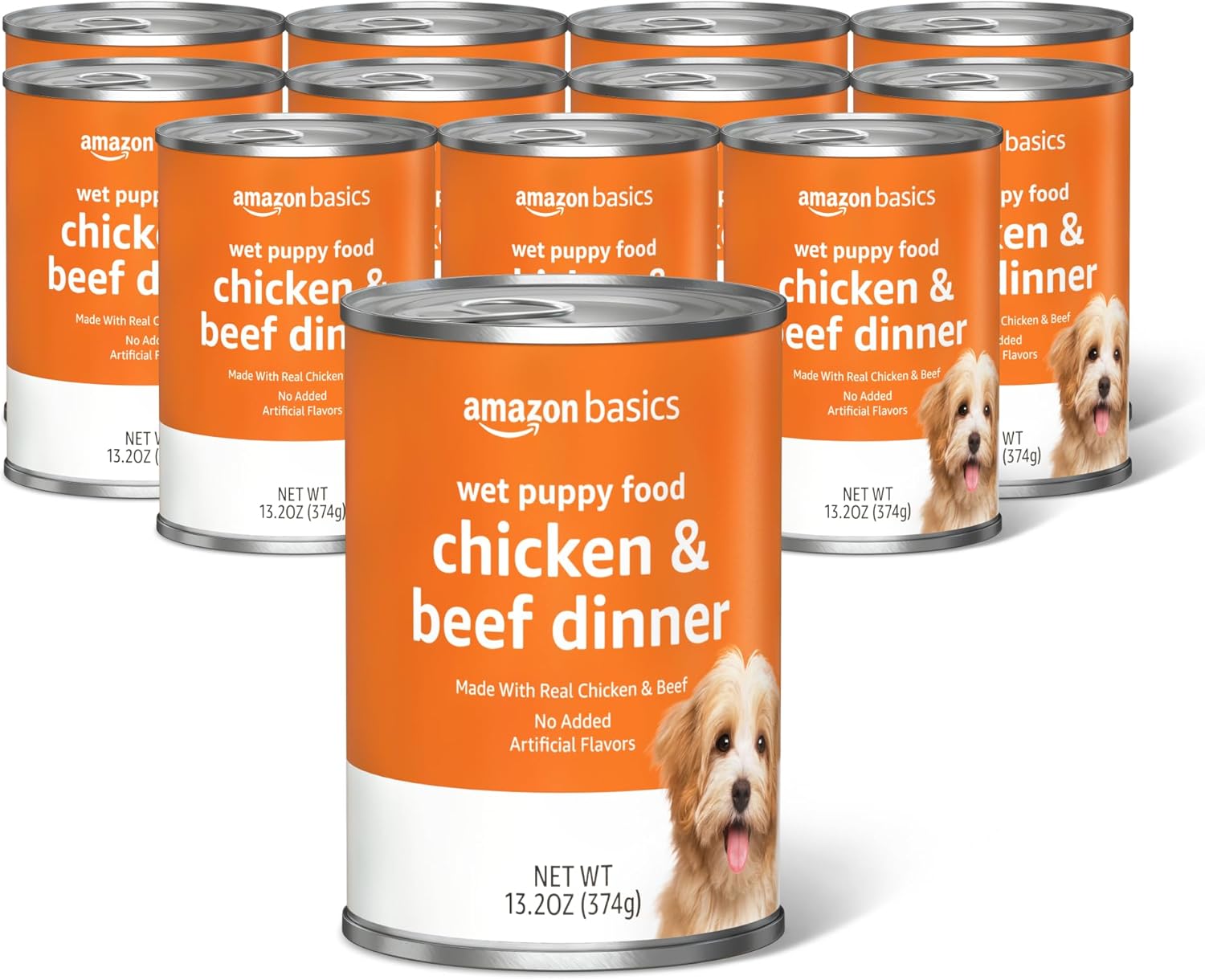
Amazon Basics Puppy Chopped Ground Dinner
Best Wet/Canned Cheap Food
| Flavor | Chicken and Beef |
|---|---|
| Age Range Description | Puppy |
| Item Form | Ground |
| Unit Count | 158.4 Ounce |
| Number of Items | 12 |
This Amazon Basics Puppy Chopped Ground Dinner is a wet puppy formula packaged as a 13.2 oz can sold in a 12-pack and designed for everyday feeding. It mixes real chicken and beef with added vitamins and minerals to support growth and lists directions to store in a cool, dry place. In practice it serves as a straightforward, budget-minded wet food: the ground texture makes it easy to portion or mix with kibble, and the meat-first ingredient listing plus added nutrients cover basic developmental needs. The formula omits wheat, corn, and soy and includes common stabilizers and supplements, so it is suitable for puppies without specific ingredient sensitivities. Limitations include a basic ingredient panel with meat by-products and added color rather than premium single-protein sources, and the product is sold in bulk cans which may be less convenient for multi-puppy households that prefer varied meals. For buyers prioritizing cost and consistent daily nutrition, this delivers acceptable palatability and practical handling, but those seeking grain-free, novel-protein, or premium formulations should consider specialty options.
Best for: Buyers who need an affordable, everyday wet food to feed growing puppies and prioritize consistent nutrition and easy feeding over premium ingredients.
Less Ideal for: Owners seeking limited-ingredient, grain-free, or single-source protein prescriptions for food-sensitive puppies should look elsewhere.
- Formulated specifically for puppies with added vitamins and minerals for growth support
- Real chicken and beef listed among primary ingredients for basic protein content
- Ground texture is easy to portion, mix with kibble, and suitable for young mouths
- Sold in multi-can packs that reduce per-can cost for everyday feeding
- Includes meat by-products and added color rather than only whole-muscle proteins
- Not a specialty or novel-protein formula for dogs with specific allergies or strict dietary needs
Verdict: The best wet/canned cheap food for puppies when owners prefer higher palatability, moisture content, or occasional variety alongside dry meals.
Blue Buffalo Life Protection Puppy 5 lb
Best Premium Cheap Food

| Flavor | Chicken & Brown Rice |
|---|---|
| Age Range Description | Puppy |
| Crude Protein | 27% min |
| Crude Fat | 16% min |
| DHA | 0.1% min |
Blue Buffalo Life Protection Formula Chicken & Brown Rice Puppy is a grain-inclusive dry kibble designed to support healthy growth and development in puppies. It uses real deboned chicken as the first ingredient and adds chicken meal, fish meal, and fish oil to boost protein and omega-3 content, while brown rice, oatmeal, and barley provide digestible carbs for steady energy. The formula includes DHA and ARA to support brain and eye development and LifeSource Bits, a blend of antioxidants, vitamins, and minerals processed at lower temperatures to preserve potency. Practical benefits include joint support from glucosamine and chondroitin, natural prebiotic fiber for digestion, and a recipe free of corn, wheat, soy, and artificial preservatives. As a typical everyday puppy food it balances nutrition and palatability for most breeds, though it is a grain-containing option so it is not suited to owners specifically seeking grain-free diets or limited-ingredient recipes for dogs with complex food sensitivities.
Best for: Puppy owners who want a complete, veterinarian-formulated everyday food that balances growth nutrients, digestibility, and ingredient quality for most breeds.
Less Ideal for: Owners seeking a grain-free formula, a minimal-ingredient diet for diagnosed food allergies, or therapeutic veterinary prescriptions should look elsewhere.
- Real deboned chicken listed first for high-quality animal protein
- Includes DHA and ARA plus choline to support brain and eye development
- LifeSource Bits provide a targeted mix of antioxidants, vitamins, and minerals
- Contains natural prebiotic fiber to support digestion and stool quality
- Formulated without corn, wheat, soy, or artificial flavors and preservatives
- Contains multiple grains so not appropriate for grain-free or strict elimination diets
- Includes a long ingredient list that may be unsuitable for puppies with specific single-ingredient sensitivities
Verdict: The best premium cheap food for shoppers seeking noticeably better ingredients and formulation while still keeping to a tight budget.
Choosing the Right Cheap Dog Food Puppy: Key Factors to Consider
Guaranteed Analysis and Nutrient Balance
Puppies require a different nutrient ratio than adult dogs, with higher protein and calorie needs to support rapid growth. Check the guaranteed analysis for crude protein, crude fat, fiber, and moisture to confirm the formulation suits an active, growing puppy. Adequate protein supports muscle and tissue development while correct fat levels provide concentrated energy for play and learning.
Calorie density matters because puppies eat smaller portions relative to adults; a formula that is too low in calories can leave a pup undernourished unless fed very large volumes. Also look for explicit statements that the food meets AAFCO or equivalent growth standards, which indicate the profile was formulated with growth-phase needs in mind.
Protein Sources and Quality
The type and position of protein sources in the ingredient list influence digestibility and amino acid completeness. Whole animal proteins listed near the top are generally better for growth than vague meat by-products. High-quality animal protein supplies essential amino acids and supports healthy muscle development and immune function.
For puppies with sensitive stomachs, single-source or clearly named proteins can reduce the chance of digestive upset. Consider whether the formulation uses diverse protein sources to supply a broad amino acid profile or relies on plant proteins that may be less bioavailable unless balanced carefully.
Digestibility and Stomach Tolerance
Puppies often have more sensitive digestive systems than adults, so how well a food is tolerated affects stool quality, appetite, and nutrient uptake. Ingredients such as easily digestible grains, cooked animal proteins, and added fiber at moderate levels can help maintain regular stools. Prebiotics and probiotics support healthy gut flora, which is especially important during vaccinations and dietary transitions.
If a puppy has a history of loose stools or vomiting, choosing a formula with a reputation for gentle digestion reduces the likelihood of frequent feeding disruptions and vet visits. Digestibility also ties into cost effectiveness because better absorption means fewer calories are wasted and more nutritional value is delivered per cup.
Kibble Size, Texture, and Feeding Practicality
Puppies of different breeds and ages need appropriately sized kibble to encourage proper chewing and reduce choking risk. Small, uniform kibble pieces are easier for young mouths to manage and help with portion control. Texture affects how readily a puppy will accept the food and can influence dental exposure through light abrasion during chewing.
Practical aspects like resealable packaging, shelf stability, and bulk versus smaller bags impact freshness and waste. Buyers should also consider how the kibble works with common feeding accessories such as slow feeders or measuring devices to ensure consistent, safe meals.
Vitamin and Mineral Support for Growth
Essential micronutrients such as calcium, phosphorus, vitamin A, vitamin D, and certain B vitamins play critical roles in bone formation, neurological development, and energy metabolism. The right balance of calcium and phosphorus is particularly important during rapid skeletal growth to reduce the risk of developmental orthopedic problems.
Look for foods that list a comprehensive vitamin and mineral package and that disclose mineral levels. Fortification matters because even with adequate macronutrients, micronutrient gaps can impair development or immune function. Avoid formulations that lack clear information about these additions.
Ingredient Transparency and Label Clarity
Clear, specific ingredient lists make it easier to assess the true value of a budget puppy food. Vague terms or broad categories hide the primary ingredients and make it difficult to judge protein quality or carbohydrate sources. Transparent labels also help identify potential allergens and assess the presence of beneficial additives like omega-3s for brain and coat development.
For budget-conscious buyers, transparent labeling reduces the risk of unexpected changes in formulation and allows you to compare nutrient density per serving rather than relying on marketing terms alone.
How Much Should I Feed My Puppy on a Budget?
Feeding amounts depend on your puppy's age, current weight, activity level, and the calorie density of the food. Start with the feeding chart on the label as a baseline, then monitor body condition score and growth to adjust portions. Puppies typically need more frequent meals—three to four times per day—until they reach about six months, when you can transition to twice daily.
To keep costs down without underfeeding, focus on calorie density and digestibility. A more calorie-dense, well-digested food can supply necessary energy in smaller volumes, reducing the amount you need to buy. Regularly weigh or measure portions and track your puppy's growth so you are not over- or under-feeding.
- Use the label as a starting point and adjust based on body condition.
- Feed smaller, more frequent meals for young puppies.
- Prefer calorie-dense, digestible formulas to maximize cost efficiency.
Can I Transition My Puppy to a Cheaper Formula Safely?
Yes, but transitions should be gradual to avoid digestive upset. Mix increasing amounts of the new food with the old over 7 to 10 days, watching stool quality and appetite. If your puppy shows persistent loose stools or reduced appetite, slow the transition or consult your veterinarian.
Plan transitions when the puppy is otherwise healthy and not undergoing other stressors like vaccinations or travel. Keep fresh water available at all times, and change only one variable at a time so you can identify the cause of any problems.
- Gradually increase new food over a week to ten days.
- Monitor stool consistency and appetite closely.
- Avoid major dietary changes during health or environmental stressors.
What to Do if Your Puppy Seems Picky or Refuses Cheap Kibble
Puppies may be picky for many reasons: teething discomfort, abrupt flavor changes, or a mismatch between kibble size and mouth. First, confirm there are no health issues causing appetite loss. If the puppy is healthy, try warming the food slightly or adding a small spoon of plain, unsalted yogurt to improve palatability while keeping calories modest.
Avoid repeatedly offering human food or table scraps as a solution because it can create long-term picky habits. Instead, test a different texture or size within the same nutritional category for a short period and observe whether acceptance improves.
- Rule out medical issues before assuming behavioral pickiness.
- Make small, temporary adjustments to texture or temperature to increase acceptance.
- Do not reinforce picky behavior with frequent treats or table scraps.
How to Recognize Nutrient Deficiencies or Growth Issues Early
Watch for poor weight gain, dull coat, frequent loose stools, or persistent lethargy as signs that the current diet may not be meeting the puppy's needs. A healthy puppy should show steady growth, bright eyes, and a shiny coat. If you notice abnormal signs, compare the food's guaranteed analysis and micronutrient information against growth recommendations and consult a veterinarian for targeted testing.
Regular weigh-ins and body condition checks are the most practical early-warning tools. Keep a growth log with weekly weights so you can spot plateaus or sudden changes and act promptly rather than waiting for more serious symptoms to appear.
- Monitor weight and body condition weekly.
- Look for coat quality and energy levels as practical indicators.
- Consult a veterinarian if growth stalls or digestion issues persist.
Is Wet Food or Kibble Better for Cost-conscious Puppy Feeding?
Dry kibble generally stretches farther per dollar and is easier to store, which makes it the typical choice for budget-conscious feeding. Kibble also helps keep teeth cleaner through mild abrasion. Wet food can be more palatable and useful during illness or for very young puppies that need softer food, but it usually increases per-meal cost and requires refrigeration after opening.
A pragmatic approach is to use primarily dry food and reserve wet food for transitional periods, medication administration, or occasional palatability boosts. Combining a small proportion of wet food with kibble can improve acceptance without dramatically increasing cost.
- Kibble is usually more cost-effective and storage-friendly.
- Use wet food sparingly for transitions or picky appetite support.
- Mixing a small amount of wet food with kibble can aid acceptance while controlling costs.
How We Chose the Best Cheap Dog Food Puppy
We prioritized items that deliver complete puppy nutrition while keeping per-serving costs low. Our selection criteria focused on nutrient completeness, protein quality, digestibility, ingredient transparency, and practical features that matter for puppies. Evaluation criteria included guaranteed analysis to confirm appropriate protein, fat, and calorie levels for growth; sources of animal protein and their position in ingredient lists; inclusion of essential vitamins and minerals for bone and brain development; and presence of digestibility aids such as prebiotics, probiotics, or easily digested carbohydrate sources. We also considered kibble size and texture for small mouths, suitability for common life stages within puppyhood, and packaging that protects freshness. Items with ambiguous ingredient labeling, no clear nutrient profile for puppies, or known use-case misalignment were excluded. Our process filtered out options that lack clear formulation for growth or that omit necessary nutrient statements, so the final list reflects affordable choices that still meet baseline puppy dietary needs.
Our full evaluation process is outlined in our review methodology.
FAQ
At what age should a puppy be on a growth-formulated diet?
Puppies should eat a growth-formulated diet from weaning until they reach skeletal maturity, which varies by breed but usually occurs between 9 and 18 months. Smaller breeds mature faster and may transition earlier; large-breed puppies often require specialized growth formulas and a longer growth feeding period.
How often should a young puppy be fed cheap kibble each day?
Feed young puppies three to four times per day until about six months old, then reduce to two meals daily. Frequent meals help stabilize blood sugar and support steady growth while preventing overeating during each sitting.
Are grain-free cheap puppy foods a better choice?
Grain-free is not inherently better for puppies and depends on individual tolerance. Many puppies do fine on grain-inclusive formulas that use digestible grains as energy sources. Choose grain-free only if there is a documented sensitivity and you are confident the formulation still meets complete growth nutrient profiles.
Can supplementing save money on a lower-quality puppy food?
Supplements can address specific deficiencies but they are not a substitute for a complete and balanced growth formula. Relying on supplements to fix an inadequate base diet can be risky because balancing micronutrients correctly is complex. If you consider supplements, consult a veterinarian to avoid creating harmful imbalances.
How long after changing foods should I expect to see stool normalize?
Stool consistency often stabilizes within one to two weeks after a gradual diet transition, but some puppies take longer. If loose stools or other digestive signs persist beyond two weeks, reassess the chosen formula or consult your veterinarian.
Final Verdict
Prioritize complete nutrient profiles, digestibility, and appropriate kibble size when choosing a cheap dog food puppy option. Budget choices can still support healthy growth if they provide adequate protein, correct calcium-to-phosphorus balance, and clear ingredient information. Balance short-term cost against long-term outcomes: a slightly higher-quality staple that supports digestion and steady growth will often be more economical over time than repeatedly switching foods. Focus on the factors covered here to pick an affordable option that meets your puppy's growth needs with confidence.

