

Finding affordable dog food that still delivers high protein can feel like a compromise, but it does not have to be. You want meals that support muscle maintenance, steady energy, and overall health without breaking the budget. This guide narrows the field to a shortlist of budget-friendly, higher-protein dog foods that balance ingredient quality, digestibility, and nutrition. Below you will find the top picks selected for value and protein performance, plus practical advice on reading labels, portioning for different activity levels, and handling transition periods. Use these criteria to pick the right budget protein option for your dog.
Top Picks at a Glance
| Best Overall Cheap High-Protein Food A well-balanced high-protein option that fits most budgets and dogs | Nutrish High Protein Dry Dog Food 4 lb |  |
| Best Budget Cheap High-Protein Food Lowest-cost high-protein pick that still meets basic nutritional needs | Pedigree High Protein Adult Dry Dog Food 3.5 lb |  |
| Best Dry Cheap High-Protein Food A crunchy, shelf-stable formula focused on high protein per serving | VICTOR Hi-Pro Plus Dry Dog Food 5lb |  |
| Best Wet Cheap High-Protein Food Canned or pouch formulas delivering moist high-protein meals | Pedigree High Protein Canned Wet Dog Food 13.2 oz |  |
| Best Large-Bag Cheap High-Protein Food Big-value packaging for multi-dog homes or long-term savings | Diamond Naturals Adult Beef Meal & Rice 40 lb |  |
Nutrish High Protein Dry Dog Food 4 lb
Best Overall Cheap High-Protein Food

| Flavor | Beef, Potato & Peas with Venison & Lamb |
|---|---|
| Protein profile | High Protein (30%) |
| Life stage | All Life Stages |
| Special ingredient claim | grain_free |
| Package size | 4 lb. Bag |
Nutrish High Protein Dry Dog Food is a grain-free kibble built around real beef and formulated to deliver about 30% protein to support lean muscle. It is used as a daily staple meal for adult dogs and can be portioned for two meals per day according to activity level. The recipe blends beef, potato, peas, venison, and lamb plus added vitamins and minerals, and the formula is veterinarian reviewed and free of artificial flavors. Practical benefits include strong palatability for picky eaters, a protein-forward profile that helps active or lean-condition dogs, and nutrition made from recognizable ingredients rather than anonymous byproducts. Limitations are that it is labeled grain-free and therefore may rely more on pulses and potato for carbohydrate, which some dogs with specific sensitivities or weight concerns might not prefer, and the 4 lb carton is a smaller pack that may require more frequent repurchasing for larger dogs. Storage in an airtight container is recommended to keep freshness after opening.
Best for: Buyers who need an affordable daily high-protein formula that feeds well to picky eaters and supports lean-muscle maintenance without premium pricing.
Less Ideal for: Owners seeking a grain-inclusive, lower-pulse carbohydrate formula or those who prefer bulk bag sizes to reduce shopping frequency should consider other options.
- Real beef is the first ingredient for clear animal protein sourcing
- High protein formulation (about 30%) supports lean muscle
- No artificial flavors and preservative-free claim improves ingredient transparency
- Veterinarian-reviewed recipe and added vitamins and minerals for complete nutrition
- Grain-free recipe leans on potatoes and peas which may not suit all dogs
- Small 4 lb bag size means more frequent repurchases for medium and large dogs
Verdict: The best overall cheap high-protein food balances protein content, ingredient quality, digestibility, and cost to suit most pet owners looking for reliable daily nutrition.
Pedigree High Protein Adult Dry Dog Food 3.5 lb
Best Budget Cheap High-Protein Food

| Flavor | Beef & Lamb |
|---|---|
| Age Range Description | Adult |
| Item Form | Dry Kibble |
| Unit Count | 56 Ounce |
| Animal Food Nutrient Content Claim | High Protein |
Pedigree High Protein Adult Dry Dog Food is a compact, higher-protein dry kibble intended for daily feeding of adult dogs. The recipe combines standard kibble with meaty Protein Goodbites made with real beef and lists 27% protein and 12% fat, plus 36 vitamins and minerals to support energy, muscle maintenance, and overall vitality. It includes prebiotic fiber for digestive support and is designed for all breed sizes and everyday feeding. Practically, the 3.5 lb bag is convenient for testing the flavor or for households that buy smaller quantities, and the familiar formulation uses common ingredients such as meat meals, whole grains, and added nutrients. Limitations are its inclusion of common allergens like soy and wheat and the presence of artificial color additives, which some owners prefer to avoid, and the smaller bag size means it is less economical per pound than bulk bags. For owners focused on a straightforward, protein-forward formula at a lower cost, this delivers the basics without specialty claims or premium ingredients.
Best for: Buyers seeking an affordable, higher-protein adult kibble for an Australian Shepherd who need decent everyday nutrition without premium pricing.
Less Ideal for: Owners prioritizing limited-ingredient, grain-free, or hypoallergenic diets for sensitive dogs should consider specialty formulas instead.
- Higher protein formulation (27%) to support active dogs and muscle maintenance
- Includes Protein Goodbites made with real beef for added palatability
- Contains prebiotic fiber and a broad vitamin/mineral mix for digestive and general health support
- Available in a small 3.5 lb bag suitable for trial or smaller households
- Contains common allergens such as soy and wheat
- Includes artificial color additives and some lower-cost ingredient sources
- Smaller bag size is less cost-effective per pound than larger bulk options
Verdict: The best budget cheap high-protein food delivers the highest protein-for-price while still meeting essential nutrient needs for routine feeding on a tight budget.
VICTOR Hi-Pro Plus Dry Dog Food 5lb
Best Dry Cheap High-Protein Food

| Protein | 30% crude protein |
|---|---|
| Fat | 20% crude fat |
| Life Stage | All Life Stages |
| Special Ingredients | Gluten-free |
| Container Type | Bag (5 lb) |
VICTOR Hi-Pro Plus is a nutrient-dense dry dog food aimed at active dogs, growing puppies, and reproductive females that need extra protein and calories. The kibble blends beef, chicken, pork, and fish meals to deliver 30% protein and 20% fat, which supports muscle maintenance and sustained energy for sporting or working dogs. It includes the brand's VPRO Blend of vitamins, minerals, prebiotics and probiotics to aid digestion, immune function, and skin and coat health, and uses gluten-free grains as part of its carbohydrate profile. Buyers will appreciate that the formula is made in the USA and lists a detailed ingredient panel including functional additives such as L-carnitine, selenium yeast, and probiotic fermentation products. Important trade-offs are that the formula is grain-inclusive (10% grain-sourced protein) and is calorie-dense, so portion control is necessary to avoid excess weight gain for less active pets; also the multi-meat meal approach is different from single-source novel-protein diets for dogs with specific protein sensitivities. For owners who need a high-protein performance kibble, this delivers concentrated nutrition in a compact bag.
Best for: Owners who need a concentrated, high-protein kibble to support muscle maintenance, high activity levels, or performance work and who prioritize complete nutrition across life stages.
Less Ideal for: Families seeking a grain-free or single-source novel protein diet for allergy management or owners of relatively sedentary dogs who need lower-calorie maintenance formulas.
- High protein content (30% crude protein) to support muscle maintenance and active metabolism
- Multi-meat meals (beef, chicken, pork, fish) provide concentrated animal-sourced amino acids
- Includes VPRO Blend with vitamins, minerals, prebiotics and probiotics for digestion and immune support
- Formulated for all life stages including puppies and reproductive females for growth and recovery
- Produced in a U.S. facility with transparent ingredient and supplement list
- Grain-inclusive formula may not suit dogs needing grain-free or single-source protein diets
- Calorie-dense formula requires careful portioning for less active or weight-sensitive dogs
Verdict: The best dry cheap high-protein food suits owners who prefer kibble for convenience, dental benefits, and concentrated protein levels at an affordable price.
Pedigree High Protein Canned Wet Dog Food 13.2 oz
Best Wet Cheap High-Protein Food
| Unit Count | 12 Count |
|---|---|
| Item Form | Wet |
| Age Range Description | Adult |
| Flavor | Variety: Beef, Lamb, Chicken & Turkey |
| Animal Food Nutrient Content Claim | High Protein |
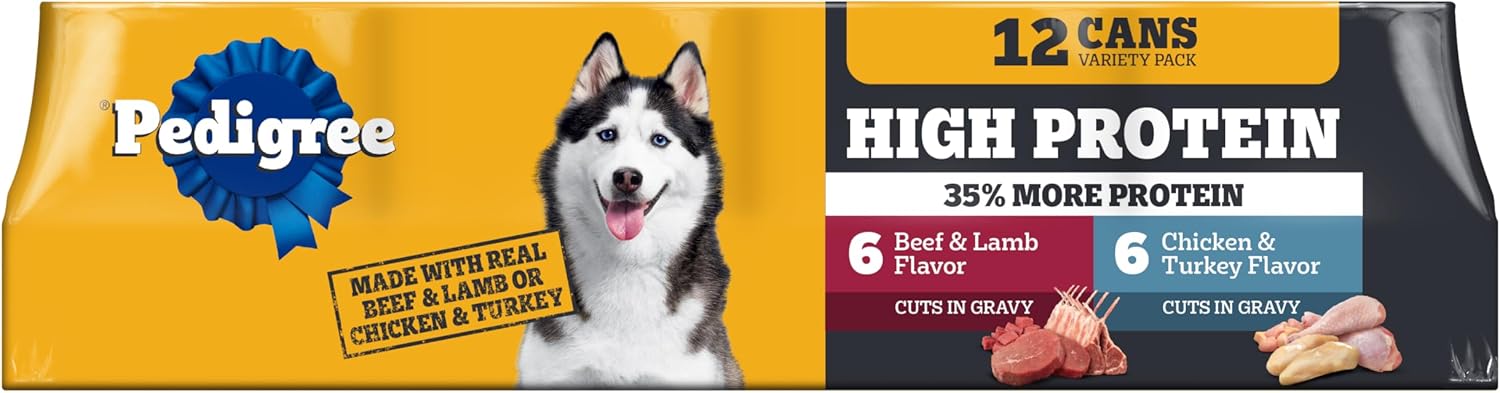
Pedigree High Protein canned wet dog food is a ready-to-serve variety pack of 13.2 oz cans containing slow-cooked beef & lamb and chicken & turkey cuts in gravy for adult dogs. It is typically used as a full meal, a topper to boost palatability and calories, or mixed with dry kibble to increase moisture and protein. The recipe emphasizes high protein levels and includes added vitamins and minerals to support digestion, skin and coat, and strong teeth and bones. Practical benefits include easy portioning from single-serve cans, strong appeal to picky eaters thanks to gravy and real meat, and flexibility for daily feeding or mixing to increase calorie density. Limitations to consider are the inclusion of wheat/gluten and some meat by-products and added colors in certain flavors, which may not suit dogs with grain sensitivities or owners seeking limited-ingredient formulations. Also refrigerate unused portions and follow the feeding guide to avoid overfeeding when using as a topper.
Best for: Dog owners who need a palatable, calorie-and-protein–dense wet food to entice picky eaters or to help underweight adult dogs gain and maintain healthy weight.
Less Ideal for: Owners seeking grain-free, limited-ingredient, or hypoallergenic formulas for dogs with food sensitivities should consider alternative specialized diets.
- High protein content to support calorie-dense meals and weight gain
- Slow-cooked with real meat or poultry for strong palatability
- Versatile use as a complete meal, topper, or mixed with dry food
- Single-serve 13.2 oz cans make portioning and storage simple
- Fortified with vitamins and minerals for complete adult nutrition
- Contains wheat/gluten and some meat by-products which may not suit sensitive dogs
- Some flavors list added colorings and non-limited ingredients
Verdict: The best wet cheap high-protein food fits pets that need extra palatability or moisture, offering higher-protein wet meals that remain budget-friendly.
Diamond Naturals Adult Beef Meal & Rice 40 lb
Best Large-Bag Cheap High-Protein Food
| Flavor | Beef Meal & Rice – Adult |
|---|---|
| Unit Count | 640 Ounce |
| Special Ingredients | grain-free |
| Breed Recommendation | All Breed Sizes |
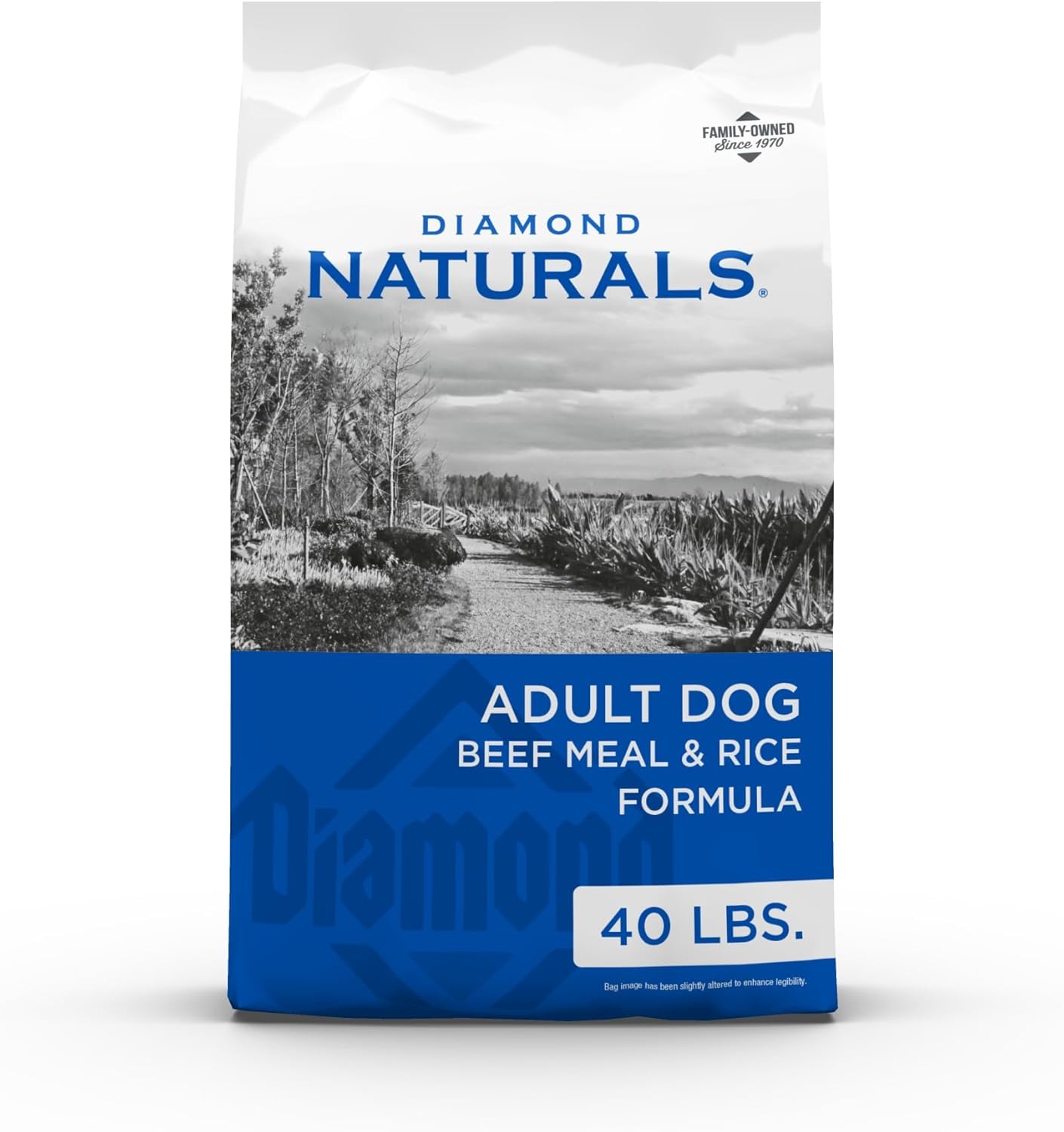
Diamond Naturals Adult Beef Meal & Rice is a high-protein dry dog food sold in a 40-pound bag intended to keep large or multiple dogs fed affordably. The formula lists beef meal first and includes whole-grain rice, omega fatty acids, a blend of fruits and vegetables, and species-specific probiotic strains to support digestion and immune health. In daily use it provides a straightforward feeding plan by weight and is convenient for families who prefer buying in bulk to reduce shopping frequency. Practical benefits include guaranteed antioxidant vitamins, added glucosamine and chondroitin for joint support, and a pea-free recipe that still delivers high protein. Trade-offs are that beef meal rather than fresh meat is the top ingredient and the bag is large to store and handle, which can be awkward for smaller households or messy storage areas. The product is made in the U.S. by a family-owned company and targets general adult maintenance rather than veterinary prescription needs.
Best for: Families with one or more large dogs who prioritize a cost-efficient bulk supply and want a nutritionally rounded adult formula with probiotics and joint support.
Less Ideal for: Single-dog households with limited storage or owners who prefer fresh-meat-first recipes or limited-ingredient diets.
- 40-pound bag size reduces shopping frequency for large dogs or multi-dog households
- Beef meal-first formula supplies concentrated protein for muscle maintenance
- Includes species-specific probiotics and prebiotics to support digestion
- Added omega-3/6 and antioxidant vitamins support skin, coat, and immune health
- Contains glucosamine and chondroitin for joint support relevant to large breeds
- Top ingredient is beef meal rather than fresh meat
- Large 40 lb bag can be bulky to lift and requires adequate dry storage
Verdict: The best large-bag cheap high-protein food is ideal for multi-pet households or long-term feeders who want lower per-pound cost without sacrificing protein content.
Choosing the Right Cheap High Protein Dog Food: Key Factors to Consider
Protein Source and Placement on the Label
The type of protein matters because animal-based proteins generally provide a more complete amino acid profile for dogs. Look for named meats or meat meals listed high on the ingredient list rather than vague terms like meat by-products or unspecified protein. Meat meals can be concentrated sources of protein, but they vary in quality depending on the source and processing.
Where protein ingredients appear on the label gives a practical snapshot of how much of the formula is derived from those proteins. If a named meat or meat meal is first or second on the list, the formula is more likely to meet higher protein claims in meaningful ways. For budget formulas, balance high placement with other quality indicators so you do not pick a product that lists meat but relies heavily on fillers.
Guaranteed Analysis and Protein Percentage
Guaranteed analysis tells you crude protein, crude fat, crude fiber, and moisture. For higher-protein budget foods, compare the crude protein percentage and consider the dog's life stage and activity level. Active adult and working dogs often need higher protein than sedentary pets or senior dogs.
Remember crude protein is measured on an as-fed basis; moisture affects how that number reads. For dry kibble, protein percentages are generally comparable across brands, but check caloric density to understand how much protein your dog actually consumes per serving. If precise amino acid balance is a concern, consult a veterinarian for life-stage targets.
Digestibility and Fiber Content
High protein is useful only if the dog can digest and absorb it. Digestibility depends on ingredient quality and processing. Look for moderate fiber levels and easily digestible carbohydrate sources, which help maintain stool quality and nutrient absorption. Ingredients like whole grains, peas, and pumpkin can affect digestion differently depending on the dog.
Poor digestibility may show up as loose stool, gas, or less efficient weight maintenance. For budget formulations, favor recipes that balance protein with digestible carbs and a modest amount of fiber to support gut health.
Caloric Density and Feeding Amounts
A high-protein food can also be more calorie-dense, which changes portion sizes and affects cost per day. Check kcal per cup or per kilogram and use that to calculate realistic feeding costs based on your dog's weight and activity level. A dense formula may seem more expensive per bag but require smaller portions, so compare on a per-calorie basis where possible.
Feeding guidance from the manufacturer is a starting point. Monitor your dog's body condition and adjust portions rather than relying solely on the printed chart. For active dogs, prioritize calorie and protein needs together; for less active dogs, prevent excess calorie intake while preserving lean mass.
Added Nutrients and Fortification
High-protein formulations should still provide complete vitamin and mineral profiles. Check that the food is labeled complete and balanced for the intended life stage and that it includes sources of essential fatty acids, calcium, phosphorus, and added vitamins. Adequate micronutrients support bone health, skin and coat, and metabolic function alongside protein.
Some budget foods compensate for lower ingredient quality with synthetic vitamins and minerals. That is acceptable when the formula is complete, but ingredient transparency and nutrient sourcing matter for long-term feeding plans, especially for growing puppies or dogs with higher metabolic demands.
Ingredient Quality and Potential Allergens
Budget does not mean you must accept poor ingredients, but you should be realistic about trade-offs. Check for clearly named protein sources and avoid formulas that hide sources behind vague terms. Also consider common allergens like soy, wheat, or certain legumes if your dog has a known sensitivity.
If your dog has food sensitivities, prioritize formulas with limited ingredient lists or single protein sources. For dogs without sensitivities, a broader ingredient list with multiple protein sources can still be nutritionally sound as long as the overall protein profile and digestibility are solid.
How Do I Transition My Dog to a Higher-protein Budget Food Safely?
Switch gradually over 7 to 10 days by increasing the new food proportion each day to minimize digestive upset. Start with about 10 percent new food mixed into 90 percent old food and increase the share slowly while monitoring stool consistency and appetite.
If your dog shows signs of intolerance such as prolonged loose stools, decreased appetite, or excessive gas, slow the transition or consult your veterinarian. For dogs with sensitive stomachs, extend the transition period to two weeks and consider mixing in a small amount of plain cooked protein or a digestive supplement as recommended by a veterinarian.
- Day 1–3: 10–25 percent new food
- Day 4–6: 50 percent new food
- Day 7–10: 75–100 percent new food
Will a Cheap High-protein Food Help My Dog Gain Muscle?
Higher-protein foods provide the amino acids needed for maintenance and muscle repair, but muscle gain depends on overall calories and exercise. Pairing a higher-protein diet with an appropriate exercise program is necessary for measurable muscle development.
If your dog is underweight or losing lean mass, increasing dietary protein can help, but make sure caloric intake is sufficient. For working or sporting dogs, monitor body condition and adjust both feeding amounts and training load to support safe muscle gains.
- Protein supports muscle repair; calories support growth
- Combine diet with strength-building activity for results
How to Read Kibble Labels to Spot Real Protein Value
Focus on named animal proteins near the top of the ingredient list and a clear guaranteed analysis. Watch for vague descriptors and weigh the crude protein percentage against the food's moisture content to make fair comparisons. Also check kcal per cup so you understand how much protein your dog consumes with each serving.
Ingredient order, meal ingredients, and the presence of digestibility-supporting ingredients like probiotics or prebiotic fiber provide additional context. Use those signals together rather than relying on a single metric.
- Named meats or meat meals near the top are good signals
- Compare protein on a dry-matter or per-calorie basis when possible
Feeding Active Dogs, Seniors, and Puppies Different Protein Needs
Active adult and working dogs often need higher protein and calories to recover and maintain muscle. Seniors may need moderate to high protein to prevent sarcopenia, but their calorie needs may be lower, so choose nutrient-dense options and monitor body condition closely.
Puppies require high protein and fat for growth; ensure any budget high-protein food you consider is specifically formulated for growth and labeled complete for puppies. Never substitute an adult maintenance formula for a growing puppy without veterinary guidance.
- Active adults: higher protein and calories
- Seniors: maintain protein, reduce excess calories
- Puppies: use formulas labeled for growth
Practical Tips to Stretch a Bag Without Cutting Nutrition
Measure portions precisely and store kibble in an airtight container to preserve freshness and prevent waste. If your dog tolerates it, mix in safe high-protein toppers like plain cooked eggs or lean cooked meat occasionally to boost protein without changing the base formula frequently.
You can also adjust feeding frequency and portion size based on activity—smaller meals before activity and recovery meals afterward. Avoid diluting the main protein by over-relying on low-protein fillers as a cost-saving measure.
- Store kibble airtight and follow feeding charts as a baseline
- Use safe protein toppers for occasional boosts
How We Chose the Best Cheap High Protein Dog Food
We focused on products that deliver a clear protein advantage while keeping overall cost reasonable and ingredient quality acceptable for everyday feeding. Our selection prioritized complete and balanced formulations that list identifiable animal protein sources near the top of the ingredient list and provide guaranteed crude protein percentages appropriate for the dog's life stage. Key evaluation criteria included protein source clarity, guaranteed analysis for protein and fat, ingredient digestibility and fiber content, caloric density and portioning guidance, presence and type of added vitamins and minerals, and manufacturing safety standards like third-party testing or quality control disclosures. We also considered practical factors such as bag sizes and shelf life that affect cost per feeding and freshness for typical households. We excluded specialty therapeutic diets, prescription-only formulas, and novelty single-use products that are not intended for regular feeding. Low-protein foods, diets lacking clear protein sources, and items with undisclosed sourcing or inconsistent labeling were removed from contention. The final picks reflect a balance between protein content, ingredient transparency, and everyday affordability.
Our full evaluation process is outlined in our review methodology.
FAQ
Is higher protein always better for dogs?
Not always. Protein needs depend on age, activity level, and health. Active adult and working dogs often benefit from higher protein, while sedentary or overweight dogs may need fewer calories even if protein remains adequate.
Can cheap high-protein food upset my dog's stomach?
It can if the protein source or ingredient mix is unfamiliar. Transition slowly and monitor stool. Choosing formulas with digestible carbs and moderate fiber reduces the likelihood of gastrointestinal upset.
How do I compare protein across different bag sizes and brands?
Compare crude protein on a dry-matter or per-calorie basis when possible and check kcal per cup. That shows how much protein your dog consumes for a given caloric intake rather than relying solely on label percentages.
Are plant-based proteins useful in budget high-protein foods?
Plant proteins can increase crude protein numbers but may not provide the full amino acid profile dogs need. Animal proteins or complementary combinations of ingredients usually offer better amino acid balance for canine nutrition.
Should I choose a single-protein formula if my dog has allergies?
Single-protein or limited-ingredient formulas can help identify and manage food sensitivities, but higher protein alone does not guarantee hypoallergenicity. Work with a veterinarian to design an elimination trial if you suspect food allergies.
Final Verdict
For budget-conscious buyers, prioritize formulas that list named animal proteins near the top, offer a clear guaranteed analysis, and provide appropriate caloric density for your dog's activity level. Balance protein percentage with digestibility and complete nutrition rather than chasing the highest number on the label. Consider life stage and health status first: puppies need growth-formulated diets, active dogs need extra calories and protein, and seniors need protein without excess calories. Use portion control, airtight storage, and careful transitions to make a cheaper high-protein food work well long term.

