

If you own a German Shepherd, choosing the right chew treat matters for dental health, mental stimulation, and safety. German Shepherds are strong chewers with higher calorie needs and sometimes sensitive stomachs, so a treat that withstands sustained chewing while remaining digestible helps reduce destructive behavior and supports oral hygiene. This guide highlights the top shortlisted chew treats selected for toughness, ingredient quality, and digestibility, and explains how we evaluated each choice. Use the summaries and buying guidance below to find treats that match your dog's chewing style and dietary needs.
Top Picks at a Glance
| Best Overall Chew Treat The top all-around chew treat for most German Shepherd owners | EcoKind Yak Cheese Dog Chews |  |
| Best Budget Chew Treat A low-cost option that still satisfies and is safe | Cadet Stuffed Shin Bone Large |  |
| Best Premium Chew Treat Higher-end ingredients and craftsmanship for discerning pet owners | Greenies Large Dental Treats 24 Count |  |
| Best Long-Lasting Chew Treat Built to withstand heavy chewers and extended gnawing sessions | Himalayan Yak Cheese Dog Chew 4-Pack |  |
| Best Soft Chew Treat Gentler texture for older dogs or sensitive mouths | Cesar Softies Medley Trio 16 oz |  |
| Best Grain-Free Chew Treat Formulated without grains for ingredient-sensitive dogs | Pur Luv Chicken Jerky Treats 16 oz |  |
| Best Training-Friendly Chew Treat Easily portioned, highly rewarding treats for training sessions | Pupford Soft & Chewy Training Treats 5 oz |  |
EcoKind Yak Cheese Dog Chews
Best Overall Chew Treat

| Flavor | Cheese |
|---|---|
| Item Form | Stick |
| Age Range Description | All Life Stages |
| Special Ingredients | Yak and Cow milk; Salt; Lime |
| Unit Count | 16 Ounce |
These yak cheese chews are hardened treats made from yak and cow milk that give dogs a dense, long‑lasting object to gnaw on. Typically offered as an occasional treat, they are used to keep dogs occupied during crate time, grooming, or quiet periods and are described as suitable for moderate to aggressive chewers. The product is essentially a single-ingredient chew cured into a hard stick, which makes it low-odor, low-mess, and higher in protein and calcium than many processed chews. Because they are very hard, they provide significant mechanical abrasion on teeth that can help reduce plaque with regular supervised chewing, but the hardness also means small fragments can break off so supervision and removal of small pieces is recommended. These chews are lactose free and made without additives, which can make them easier on sensitive stomachs, but they are not intended as a meal replacement and should be given as a treat under supervision.
Best for: Owners who prioritize a durable, attention-holding chew to occupy dogs for extended periods and prefer natural, low-odor options that are gentler on sensitive stomachs.
Less Ideal for: People looking for soft, easily digestible training treats or those who do not supervise chews closely should consider softer, portioned options instead.
- Very hard, dense texture designed for long chewing sessions
- Single‑ingredient base of yak and cow milk with no artificial additives
- Low odor and low mess compared with rawhide
- Lactose free and positioned as gentle on sensitive stomachs
- Provides mechanical chewing action that can help oral hygiene
- Extremely hard texture can break into small pieces that require supervision and removal
- Not suitable as a meal substitute and meant strictly as an occasional treat
Verdict: The best overall chew treat balances durability, palatability, ingredient quality, and portion size to suit most German Shepherds' chewing habits and nutritional needs.
Cadet Stuffed Shin Bone Large
Best Budget Chew Treat

| Flavor | Peanut Butter |
|---|---|
| Item Form | Bone |
| Allergen Information | Rawhide-Free |
| Unit Count | 1 Count |
The Cadet Stuffed Shin Bone is a single filled beef chew with a peanut butter flavored center made to keep strong chewers occupied while being softer in the middle for easier gnawing. In use you give it as an intermittent chew or reward; dogs work the outer beef bone and reach a softer bully-stick style filling that can be topped off with soft spreads for extended interest. The product emphasizes long-lasting chewing and dental benefits, since the outer bone helps scrape tartar while the filling delivers flavor that encourages engagement. It is made from beef-based ingredients with a limited-ingredient approach and is marketed as rawhide-free. Important limitations are that it is intended as a treat rather than a meal, should be given under supervision, and contains artificial peanut butter flavor and preservatives that some owners may avoid. For large or power chewers it offers a satisfying combination of durability and softer center appeal, but monitor for pieces and remove if the bone becomes small enough to swallow.
Best for: Buyers looking for a softer-centered chew that still gives a chewing challenge for puppies, seniors, or dogs with sensitive teeth who need a more forgiving bite.
Less Ideal for: Owners who need fully natural ingredient lists without artificial flavors or who want a chew designed as a complete meal replacement should consider other options.
- Peanut butter flavored filled center that increases palatability
- Durable outer beef bone designed for extended chewing
- Rawhide-free formulation
- Refillable center for added longevity and repeat use
- Contains artificial flavor and a preservative (potassium sorbate)
- Not a meal replacement and intended for intermittent feeding only
- Requires supervision since pieces can break off with aggressive chewing
Verdict: The best budget chew treat gives reliable enjoyment and safe ingredients at a lower price for owners prioritizing value over premium features.
Greenies Large Dental Treats 24 Count
Best Premium Chew Treat

| Flavor | Original |
|---|---|
| Age Range Description | Adult |
| Item Form | Stick |
| Unit Count | 36 Ounce |
| Number of Items | 1 |
Greenies Large Natural Dental Dog Treats are daily chewable dental sticks designed for large dogs (50–100 lbs) to support oral hygiene by mechanically cleaning teeth and freshening breath. The chewy, bendable texture and unique surface are intended to scrape plaque and tartar down to the gumline, and the brand cites clinical data showing reduced tartar and plaque accumulation over 28 days when used as directed. They are rawhide-free, easy to digest, and made with natural ingredients plus vitamins and minerals, so they work as a daily reward while contributing to dental care. Use one chew per day with fresh water available and supervise to ensure adequate chewing. Limitations include the single-size focus on large breeds and the need to monitor for gulping; they are not suitable for very small or very young dogs. As a premium dental treat, they prioritize a veterinarian-recommended formula and proven cleaning action over being a general training reward multipack.
Best for: Owners who prioritize clinically backed dental results and ingredient quality for their large-breed dog and are willing to use a daily, premium chew as part of an oral care routine.
Less Ideal for: People seeking a multi-size pack for mixed-breed households or those who need tiny training rewards for small or very young dogs.
- Clinically supported claims for plaque and tartar reduction when used daily
- Unique textured, chewy design that cleans down to the gumline
- Rawhide-free and bendable formulation reduces snap risk and aids digestibility
- Formulated with natural ingredients plus added vitamins and minerals
- Veterinarian recommended and VOHC-accepted dental product
- Sized specifically for large dogs so not appropriate for small breeds or puppies
- Requires daily use and supervision to ensure the chew is adequately eaten
Verdict: The best premium chew treat is geared toward owners willing to pay more for superior ingredients, longer-lasting construction, and meticulous quality control.
Himalayan Yak Cheese Dog Chew 4-Pack
Best Long-Lasting Chew Treat

| Flavor | Yak Cheese – 4 sticks |
|---|---|
| Item Form | Stick |
| Age Range Description | All Life Stages |
| Special Ingredients | yak milk, cow milk |
| Animal Food Diet Type | Limited Ingredient |
These Himalayan Yak Cheese chews are hard, naturally crafted sticks made from yak and cow milk using a traditional Himalayan process. They are typically given as a long‑lasting chew to occupy dogs and encourage slow gnawing rather than quick ingestion; owners present one stick, supervise while the dog works the ends down and remove small pieces to avoid choking. The product is single‑ingredient style with no preservatives, binding agents, grains or lactose, which makes it a straightforward, limited‑ingredient option for dogs with sensitive stomachs. In practice the chews are very durable and can keep active chewers busy for hours, but that durability means they are firm rather than soft and require sustained biting effort to soften and break off small pieces. For dogs that need a forgiving texture for tender teeth or gums, these perform more like a tough chew that eventually yields rather than an immediately pliable soft chew. Packaged by weight, stick sizes can vary, and supervision is recommended for safe use.
Best for: Buyers looking for a natural, limited‑ingredient chew to occupy Bulldogs and reduce boredom while being gentle on sensitive digestive systems.
Less Ideal for: Owners seeking an immediately soft, pliable chew for dogs with tender teeth, recent dental work, or severe gum sensitivity should consider softer alternatives.
- Made from simple natural ingredients with no preservatives or additives
- Long lasting formulation that keeps dogs occupied for extended periods
- Lactose free, grain free, and gluten free which suits sensitive stomachs
- Handcrafted using traditional techniques for an authentic product experience
- Firm, hard texture rather than a soft, pliable chew
- Stick sizes vary since packages are sold by weight which affects consistency of portioning
Verdict: The best long-lasting chew treat is designed for powerful chewers who need durable texture and structure to provide extended engagement and reduce frequent replacements.
Cesar Softies Medley Trio 16 oz
Best Soft Chew Treat
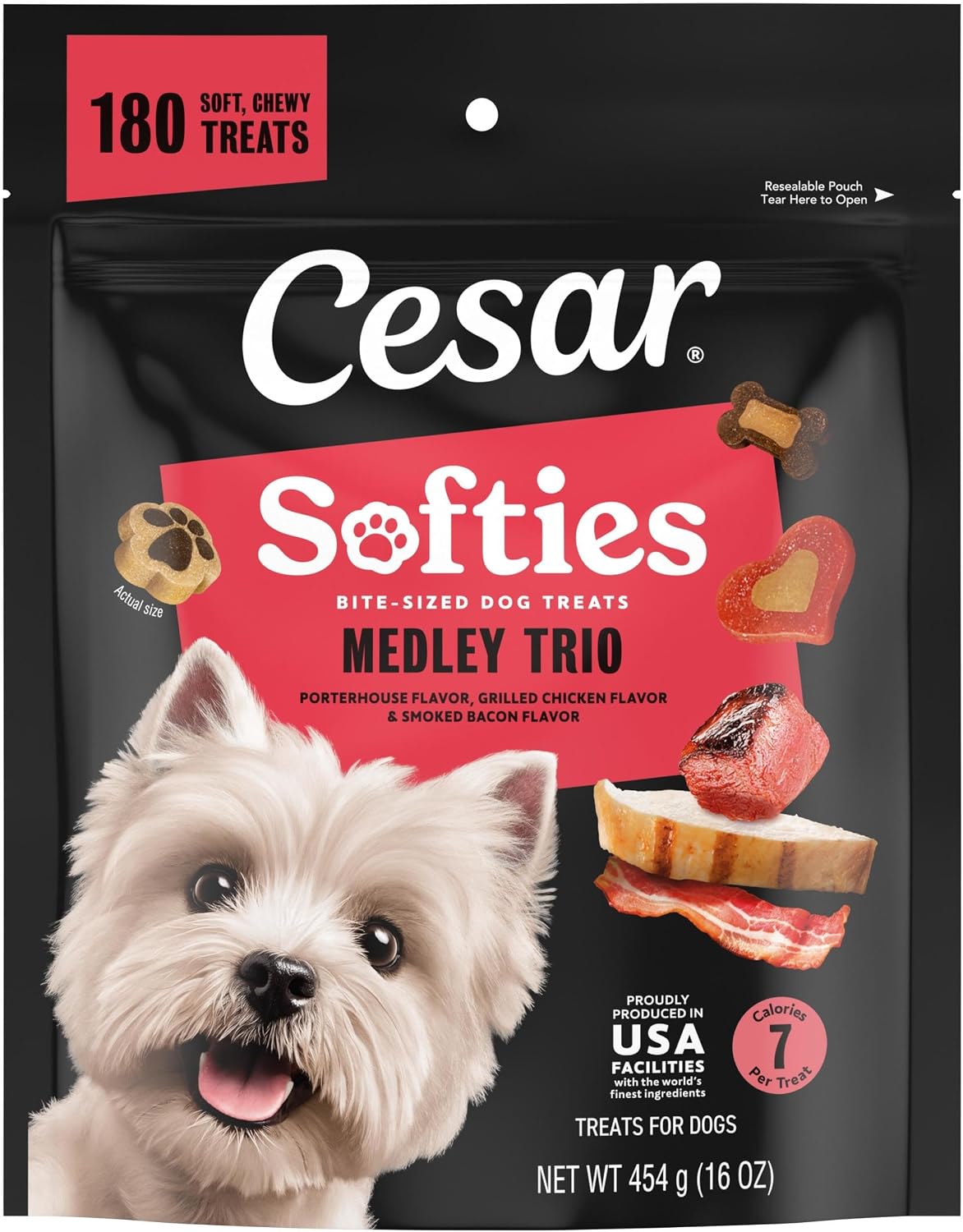
| Flavor | Trio: Porterhouse, Chicken, Bacon |
|---|---|
| Item Form | Chunk |
| Unit Count | 16 Ounce |
| Recommended Uses For Product | Training, Treating |
Cesar Softies Medley Trio delivers small, chewy rewards in Porterhouse, Grilled Chicken, and Smoked Bacon flavors that are aimed at reinforcing training and everyday good behavior. The treats are bite-sized and soft, so dogs consume them quickly during sessions without long chewing breaks, and at about seven calories each they are simple to portion into frequent rewards. The pouch format keeps treats accessible for on-the-go training and the playful heart, paw, and bone shapes are an added bonus for engagement. Ingredients list is straightforward for a snack and the product is made in U.S. facilities, but it does contain wheat, glycerin, sugars, animal fat preserved with BHA, and color additives, so it is not an elimination-diet option. For dogs with mild sensitivities who tolerate grains and common preservatives, the soft texture and low calorie count make these convenient training treats; for dogs with known allergies to the listed components, consult your veterinarian before introducing them.
Best for: Owners who need low‑calorie, easy‑to‑chew treats for frequent training rewards and whose dogs tolerate common grain and preservative ingredients.
Less Ideal for: Dogs on elimination diets or with known allergies to wheat, artificial colors, or specific preservatives should avoid these and choose vet‑recommended hypoallergenic treats instead.
- Very soft, chewy texture that is easy for dogs to eat quickly during training
- Low calorie per treat (about 7 calories) which supports frequent rewarding
- Bite-sized shapes and trio of savory flavors increase palatability for picky eaters
- Pouch packaging is convenient for travel and training sessions
- Contains wheat, sugar, glycerin, preservatives (BHA, potassium sorbate) and artificial color Red 40
- Not suitable as an elimination or hypoallergenic option for dogs with ingredient-specific sensitivities
Verdict: The best soft chew treat suits German Shepherds with dental sensitivity, puppies, or older dogs by offering an easy-to-chew texture without sacrificing flavor.
Pur Luv Chicken Jerky Treats 16 oz
Best Grain-Free Chew Treat

| Unit Count | 16 Ounce |
|---|---|
| Item Form | Stick |
| Age Range Description | All Life Stages |
| Allergen Information | Pea-Free |
Pur Luv Chicken Jerky treats are dehydrated strips made with 100% real chicken breast as the first ingredient plus vegetable glycerin and salt, packaged in a resealable 16 oz bag. They function as everyday rewards for training, high-value incentives during behavior sessions, or occasional chew-worthy snacks to keep dogs engaged. The simple ingredient list and absence of artificial colors, flavors, or preservatives make them easy to understand for pet owners watching diets or ingredient sensitivity. In practice the strips are chewy and easy to portion into small pieces for multiple rewards and the resealable bag helps maintain freshness between sessions. These treats are high in protein and relatively low in fat compared with many soft treats, but because they are meat-based jerky they are more calorie-dense than single-bite low-cal treats and can be messy if given outdoors. Dogs that need very soft or tiny training bites may require you to break pieces down further. Overall they are a straightforward, wholesome option for routine rewarding when you want real meat and minimal extras.
Best for: Buyers who prioritize simple, meat-first ingredients and want a high-protein, everyday reward that is easy to portion for training and bonding.
Less Ideal for: Owners who need ultra-small, calorie-minimal training nibbles or who prefer completely dry, crumb-free treats for outdoor use should consider alternatives.
- Real chicken breast is the first ingredient providing high protein and clear sourcing
- Limited ingredient recipe with no artificial colors, flavors, or preservatives
- Resealable 16 oz bag keeps treats fresher between uses
- Chewy texture satisfies natural chewing behavior and works as a reward or chew alternative
- Jerky strips are thicker than tiny training treats so you may need to break them into smaller pieces
- Can be messier or stickier than dry biscuit-style treats when handled
Verdict: The best grain-free chew treat is tailored for dogs with grain sensitivities or owners avoiding grains, emphasizing alternative ingredients while maintaining taste and texture.
Pupford Soft & Chewy Training Treats 5 oz
Best Training-Friendly Chew Treat

| Flavor | Chicken |
|---|---|
| Item Form | Bite-Sized Treat |
| Unit Count | 5 Ounce |
| Special Ingredients | Chicken, Sweet Potato |
| Animal Food Diet Type | Limited Ingredient |
Pupford Soft & Chewy Training Treats are bite-sized, chicken-flavored rewards designed for frequent use during training and enrichment. The treats come in a small pouch and have a soft, chewy texture that makes them easy to break into pieces or feed whole to young pups and dogs with sensitive teeth. Each treat is made from a short ingredient list that includes chicken and sweet potato and is free from artificial colors and fillers, which supports use with dogs that benefit from limited-ingredient snacks. With under 2 kcal per treat and a high protein claim, these are useful for extended training sessions without adding excess calories. They are intended for one-bite rewards, which helps keep sessions moving and reduces crumb mess. Limitations: the pouch is a 5 ounce size, so power users or trainers who reward very frequently may need to buy multiple packs, and the product information does not list guaranteed analysis values beyond general claims so buyers with strict allergy concerns should check ingredients closely.
Best for: Puppy owners and trainers seeking a soft, hypoallergenic-style reward for teething pups or dogs with sensitive mouths who need frequent, low-calorie treats during sessions.
Less Ideal for: Households that reward constantly or train multiple dogs at once and need bulk quantities or complete nutrient breakdowns for strict medical diets.
- Soft, easily chewable texture suitable for teething puppies and senior dogs
- Limited ingredient recipe focused on chicken and sweet potato, reducing exposure to fillers
- Low calorie per treat (<2 kcal) for frequent rewarding without weight gain
- Bite-sized pieces that minimize crumbs and keep training sessions fast
- Small 5 oz pouch may be insufficient for heavy trainers or multi-dog households
- Nutrient details are summarized by claims rather than full guaranteed analysis on the listing
Verdict: The best training-friendly chew treat is small, palatable, and easy to break into portions so owners can use it effectively for repeated rewards during training.
Choosing the Right Chew Treat German Shepherd: Key Factors to Consider
Durability and Chew Density
A German Shepherd's bites generate high force, so treat durability is a primary factor. Denser treats last longer and deliver better mental enrichment, but overly hard items can risk tooth damage in very aggressive chewers. Look for chew density that resists quick shredding while still yielding small, manageable pieces as the treat wears down.
Durability also affects cost-per-use since longer-lasting treats reduce frequency of replacement. Consider how the treat fragments during use: items designed to wear gradually and produce small, soft particles are generally safer than those that splinter into hard shards.
Ingredient Quality and Digestibility
Ingredients determine how well a treat sits with your dog's stomach. German Shepherds can have food sensitivities, so simple, named protein sources and limited fillers help reduce digestive upset. Digestible ingredients lower the risk of gastrointestinal blockage when small pieces are swallowed.
Avoid vague labeling that hides the true composition. Look for treats formulated with digestibility in mind, and check for common allergens if your dog has a history of reactions. Treats that use whole-food proteins and natural binders tend to be gentler for frequent feeding.
Size and Portion Guidance
Treat dimensions should match the dog's mouth and chewing style. Too-small treats present a choking risk if swallowed whole by a large dog. Too-large items can be unmanageable and encourage destructive behavior trying to break them down.
Good products provide clear feeding and trimming guidance for large-breed adult dogs, including how long a single piece should be offered and when to remove partially chewed remains. Consider whether the treat can be portioned for shorter sessions or training rewards.
Dental Benefit and Texture
Texture influences how a chew treat interacts with teeth and gums. Abrasive surfaces can help scrape plaque and massage gums, which is useful for German Shepherds that are prone to tartar buildup. However, highly abrasive or very hard treats may accelerate tooth wear in older dogs or those with dental issues.
Look for a balance where the texture offers cleaning action without excessive hardness. Some treats combine ridged surfaces with a slightly yielding center to provide both scrubbing and safer consumption as the treat breaks down.
Caloric Content and Feeding Frequency
Chew treats can add significant calories, especially for a large, active breed. Pay attention to the calorie-per-treat figure and adjust daily food portions to maintain weight. Frequent long chews are great for enrichment but may require smaller meal portions or less frequent offering to avoid excess calories.
Manufacturers sometimes provide a recommended weekly allowance; use that in planning. If you use treats for daily enrichment, choose lower-calorie options or reserve richer chews for less frequent special occasions.
Safety Labeling and Packaging Information
Clear safety labeling reduces risk. Packaging that specifies age and size suitability, choking warnings, and first-aid steps for ingestion incidents is more useful for busy owners. Inclusion of handling tips, such as supervising the first few sessions or trimming instructions, shows the brand has considered real-world use.
Also note any batch or lot identification for traceability and whether the product is manufactured under recognized safety standards. Transparent labeling helps you respond promptly if your dog shows signs of distress after chewing.
How Tough Should a Chew Be for a German Shepherd?
German Shepherds vary from moderate to extreme chewers, so choose toughness based on your dog's individual style. Start with a treat that resists immediate shredding but does not require crushing through pure enamel. Watch the first session to see whether your dog can break the treat into large chunks quickly; if so, step up to a denser option.
If your dog has a history of dental issues, select chews that prioritize a forgiving texture over absolute hardness. For very powerful chewers with healthy teeth, a firmer chew can extend engagement time and provide better abrasion for plaque control.
- Observe first-use wear patterns to judge appropriate hardness
- Supervise the first chew to identify dangerous splintering
- Prefer treats designed to erode gradually rather than shatter
What to Do if Your Dog Swallows a Large Piece
If your dog swallows a sizeable fragment, monitor breathing and behavior closely. Immediate signs of distress include gagging, excessive drooling, retching, lethargy, or signs of abdominal pain. If the dog shows any of those symptoms, contact a veterinarian without delay.
For asymptomatic swallowing, monitor stools for passage of the fragment and watch appetite and energy over the next 24 to 48 hours. Call your veterinarian if you notice vomiting, constipation, or any behavioral change that suggests discomfort.
- Watch for breathing difficulty and drooling as urgent signs
- Monitor stool for passage of chewed fragments
- Contact your vet for persistent vomiting or abdominal discomfort
How to Introduce New Chew Treats Safely
Introduce a new chew gradually and under supervision during the first few sessions. Offer the treat while the dog is calm and remove it if aggressive breakage begins. Limit initial exposure to short sessions to observe digestibility and chewing behavior.
Offer water nearby and avoid giving new treats right before sleep or unsupervised periods. If the dog shows any digestive upset after a trial, discontinue that treat and try an alternative with simpler ingredients.
- Supervise first 2 to 3 chewing sessions
- Limit initial exposure to 10 to 15 minutes
- Keep fresh water available during chewing
Managing Calories when Using Daily Chew Treats
Account for treat calories within your dog's daily intake. For an active German Shepherd, treats can be part of maintenance calories, but frequent high-calorie chews will add up quickly. Track treat frequency and reduce meal portions if you offer long-lasting chews daily.
Rotate lower-calorie and more substantial treats to provide variety without consistently increasing caloric intake. Use treats strategically during high-energy activity days and reduce them on rest days to maintain weight stability.
- Log the calorie count per treat and adjust meals accordingly
- Alternate light chews with richer options across the week
- Use chews as activity-based rewards rather than continuous snacks
Recognizing Ingredients That May Cause Sensitivity
Common triggers include unnamed meat byproducts, artificial colors, and certain preservatives. If your German Shepherd has a known sensitivity to a protein source, choose treats with alternative single-protein options. Simple ingredient lists make it easier to isolate a culprit if a reaction occurs.
When trying a new ingredient, offer it in small amounts and watch for skin irritation, loose stools, or changes in appetite. If you suspect a food-related problem, consult your veterinarian about allergy testing or an elimination trial.
- Favor single-protein, named ingredient lists for allergy-prone dogs
- Introduce novel proteins slowly and in supervised sessions
- Consult your vet for persistent digestive or skin symptoms
How We Chose the Best Chew Treat German Shepherd
Our selection process focused on the attributes most relevant to German Shepherd owners: chew durability against powerful jaws, ingredient safety for common canine sensitivities, digestibility for medium to large breeds, and value relative to treat longevity. We prioritized products with clear ingredient lists and formulations designed to minimize gastrointestinal upset, especially proteins and fillers known to cause reactions in some dogs. Texture and density were assessed as proxies for how long a treat lasts and how it impacts dental scraping and plaque removal. We also reviewed product sizing and portion guidance to ensure treats suit adult German Shepherds without encouraging overfeeding. Items were excluded if they relied on ambiguous or unnamed ingredients, were clearly intended only for light chewers, or lacked guidance for feeding large-breed dogs. Final picks balance toughness, ingredient transparency, and realistic safety guidance for regular use.
Our full evaluation process is outlined in our review methodology.
FAQ
Are chew treats safe for daily use with a German Shepherd?
Often yes, but it depends on the treat's caloric density, ingredient quality, and durability. Choose low-calorie, digestible options for daily enrichment and monitor weight and stool quality. Rotate treats and adjust meals if you use richer chews frequently.
How can I tell if a chew treat is too hard for my dog?
Too-hard treats may cause your dog to avoid chewing or produce loud cracking sounds. Watch for reluctance, sudden tooth sensitivity, or visible tooth damage. If your dog has dental work or a history of broken teeth, opt for softer textures that still resist rapid shredding.
What size chew treat should I buy for an adult German Shepherd?
Select sizes that the dog can comfortably hold in its mouth without swallowing whole but cannot break into large pieces in seconds. Products that offer trimming guidance or size options for large breeds are preferable. Always supervise initial use to confirm appropriateness.
Can chew treats help with my dog's dental health?
Some chew treats with abrasive textures can reduce plaque and tartar through mechanical action, especially when used regularly. They are not a substitute for professional dental care, but they can complement brushing and routine veterinary cleanings.
How do I safely dispose of a partially chewed treat?
Remove and discard any pieces that are small enough to be swallowed whole or that have become jagged. Replace a worn treat before it fragments into hazardous pieces. Washing your hands after handling chews and storing replacements safely keeps them sanitary.
Final Verdict
Choose chew treats that match your German Shepherd's chewing strength, dietary needs, and daily calorie plan. Prioritize treats with transparent, digestible ingredients and a texture that balances durability with safe wear patterns. Supervise initial use, trim or replace treats as they break down, and factor treat calories into your dog's daily intake. With those priorities in mind, you can select chews that provide lasting enrichment and support oral health without creating unnecessary risk.

