

If your dog chews to relieve itching, choosing the right chew makes a big difference for comfort and household sanity. The wrong chew can irritate skin further or fall apart quickly, while the right one can provide gentle counter-pressure, distract from scratching, and support better oral health. This guide shortlists five top chews for itchy dogs and explains how we evaluated texture, ingredient safety, and longevity. Use the quick criteria and the following sections to find a chew that suits your dog's chewing style and skin sensitivities.
Top Picks at a Glance
| Best Overall Chew The top all-around chew that suits most dogs and needs | Zesty Paws Dog Allergy Chews 90 Ct |  |
| Best Budget Chew A low-cost chew that still offers safe, acceptable play value | PENPEN Dog Allergy Relief Chews 50ct |  |
| Best Premium Chew A higher-end chew with superior materials and construction quality | Nutramax Dermaquin Soft Chews 60ct |  |
| Best Gentle Chew Softer, low-impact chews suitable for sensitive mouths or puppies | Pet Naturals Skin and Coat Soft Chews 30ct |  |
| Best Natural-Ingredient Chew Made from simple, minimally processed ingredients for cleaner snacking | Finn Allergy & Itch Soft Chews 90 Ct |  |
Zesty Paws Dog Allergy Chews 90 Ct
Best Overall Chew

| Item Form | Soft Chews |
|---|---|
| Flavor | Peanut Butter |
| Active Ingredients | Colostrum (Bovine); EpiCor® Pets; Astragalus Root; 6-Strain Gut Health Blend |
| Unit Count | 90 Count |
Zesty Paws Dog Allergy Chews are daily soft chews intended to reduce itching and support immune and digestive health in dogs. They are typically given as a treat once daily according to weight, making them easy to include in a pet's routine; the peanut butter flavor and soft texture improve acceptance for picky eaters. The formula combines bovine colostrum, EpiCor Pets (a yeast fermentate), astragalus root, and a six-strain probiotic blend, which together aim to support normal histamine response, gut health, and overall immune function—factors commonly linked to skin irritation. Practical benefits include simple dosing, multi-pronged ingredient support for seasonal and year-round allergies, and use as both a supplement and a treat. Important limitations are that this is a supplement rather than a medication, so results may take a couple of weeks and will vary by dog, and safety in pregnant or breeding animals is not established; owners should stop use and consult a veterinarian if symptoms worsen. The product is best used as part of a broader allergy management plan rather than a lone acute treatment.
Best for: Buyers who want an easy-to-dose, palatable daily supplement that targets itch through immune and gut support and prefer a tolerable, multi-ingredient approach over single-ingredient options.
Less Ideal for: Owners seeking a fast-acting prescription-strength treatment for severe allergic reactions or for dogs with unknown medical causes of itching should pursue veterinary evaluation and alternatives.
- Combines immune-supporting EpiCor Pets with bovine colostrum for a multi-pathway approach to itch relief
- Includes a 6-strain probiotic blend to support gut health linked to skin condition
- Soft, peanut butter-flavored chews that are easy to give and well accepted by many dogs
- Suitable for daily, year-round use to support seasonal and chronic allergy management
- Not a drug-level treatment so may take weeks and effectiveness varies between dogs
- Safety in pregnant or breeding animals has not been established
Verdict: The best overall chew balances safety, engagement, and durability to satisfy typical chewers while fitting routine pet-care needs.
PENPEN Dog Allergy Relief Chews 50ct
Best Budget Chew
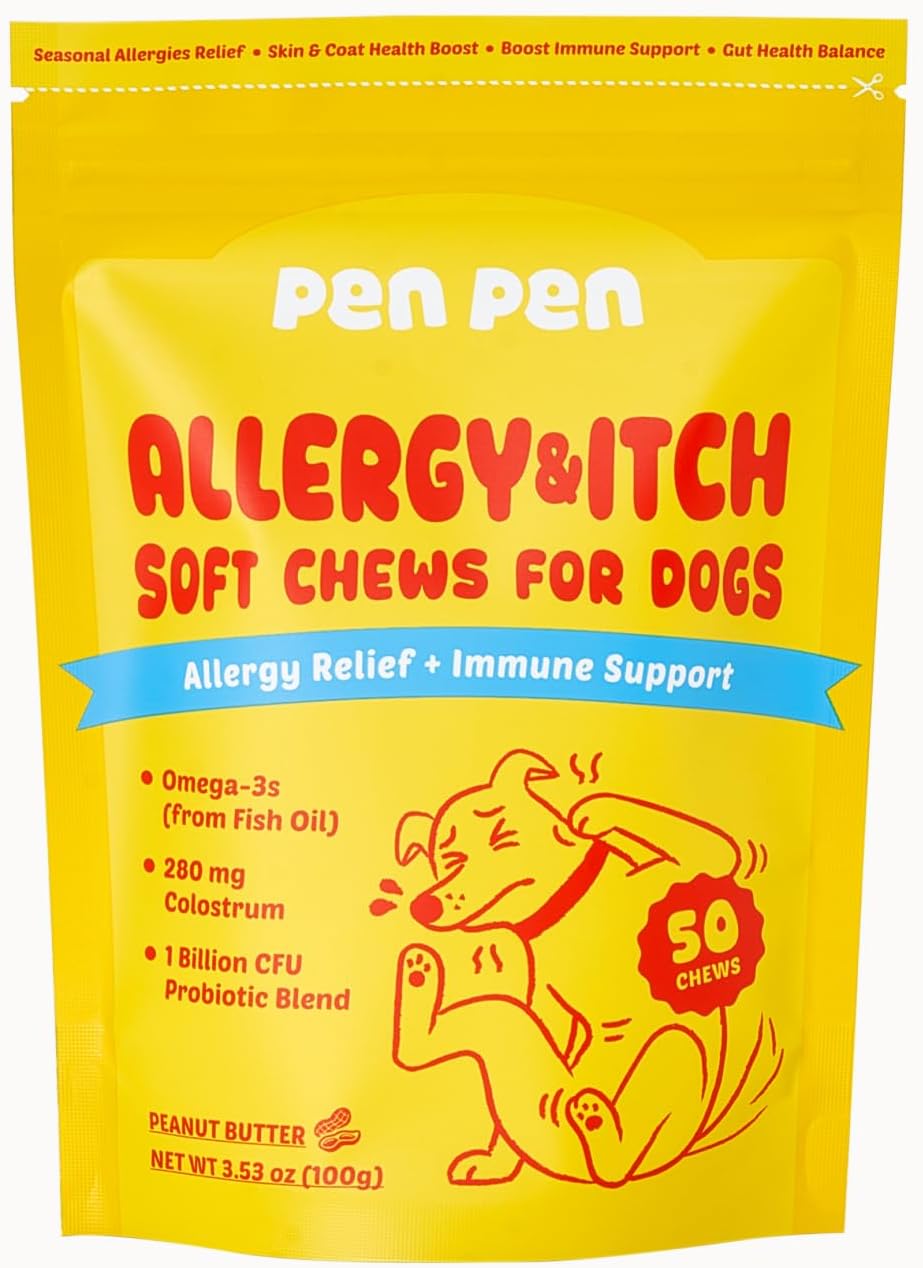
| Flavor | Peanut Butter |
|---|---|
| Count | 50 Chews |
| Intended use | Itchy Skin |
| Core actives | Allergy-soothing Botanicals + Probiotics |
PENPEN Dog Allergy Relief Chews are soft, peanut butter-flavored tablets intended as a daily supplement to reduce itching and support skin and coat health. You give them as a treat once per serving, which makes administration easy for picky dogs compared with pills or powders. The formula combines allergy-soothing botanicals such as turmeric, licorice root, and ginger with colostrum and a probiotic blend (listed in the description at 1 billion CFUs per serving) to support immune function and gut health—useful when itching is linked to seasonal allergies or low-grade digestive imbalance. Practical benefits include a palatable texture, multi-target support (immune, skin, digestion), and compact 50-count packaging for trialing a new supplement. Limitations are that precise dosing by weight and full ingredient amounts are not shown in the provided details, so dogs with severe allergies or those on medication should consult a vet before switching; this is a supportive supplement rather than a prescription treatment.
Best for: Cost-conscious dog owners who want an affordable, easy-to-give supplement that targets itching, skin health, and gut support as a first-line or adjunct option.
Less Ideal for: Dogs with severe or chronic allergic dermatitis, dogs on multiple medications, or owners seeking veterinary-prescribed treatments should pursue professional guidance instead.
- Palatable peanut butter soft chews that simplify daily dosing
- Contains probiotics and prebiotics to support digestion alongside allergy relief
- Includes botanicals like turmeric, licorice, and ginger for immune and skin support
- Compact 50-count size suitable for trying the supplement before committing to larger bottles
- Does not provide full labeled active amounts or weight-based dosing guidance in the available details
- Not a substitute for veterinary allergy diagnostics or prescription therapies
Verdict: The best budget chew is an affordable option that provides safe, short-term enjoyment and decent durability for cost-conscious pet owners.
Nutramax Dermaquin Soft Chews 60ct
Best Premium Chew

| Item Form | Soft Chew |
|---|---|
| Active Ingredients | Hardy Kiwi, PEA, Beta-glucan, Omega-3s |
| Dog Breed Size | Large |
| Unit Count | 60 Count |
Dermaquin delivers a veterinary-backed approach to managing itchy skin by combining hardy kiwi extract, palmitoylethanolamide (PEA), beta-glucan and omega-3s into an easy-to-give soft chew. It is used daily during an initial 2–4 week loading phase then tapered per the dosing schedule by weight, so owners can start with a concentrated regimen and move to maintenance dosing. The formulation targets multiple pathways in the skin: hardy kiwi and PEA for allergen response and inflammation, beta-glucan to support local immune resilience, and omega-3 fatty acids to help rebuild the skin barrier. Practical benefits include palatable chews that simplify administration and clear manufacturer directions for different weight ranges. Limitations are that results may take several weeks to appear and it is a supplemental approach rather than an immediate itch reliever, so dogs with severe acute reactions may still need veterinary treatment or concurrent medications. The product is best for owners seeking a clinically minded, long-term skin support option rather than a fast-acting topical or drug therapy.
Best for: Owners who prioritize veterinarian-developed supplements and want an ingredient-transparent, long-term supportive option for dogs with recurring allergic skin issues.
Less Ideal for: Owners needing rapid relief for acute severe itching or those who prefer single-ingredient or additive-free alternatives.
- Veterinarian-formulated ingredient blend targeting multiple skin health pathways
- Palatable soft chew format simplifies daily administration
- Clear, weight-based dosing schedule for loading and maintenance
- Includes omega-3s to support skin barrier composition
- Not an immediate itch rescue; may require weeks to show benefit
- Contains natural and artificial flavors and other additives some owners may avoid
Verdict: The best premium chew is for owners willing to pay more for top-tier materials, extra durability, and thoughtful design that extends lifespan and safety.
Pet Naturals Skin and Coat Soft Chews 30ct
Best Gentle Chew
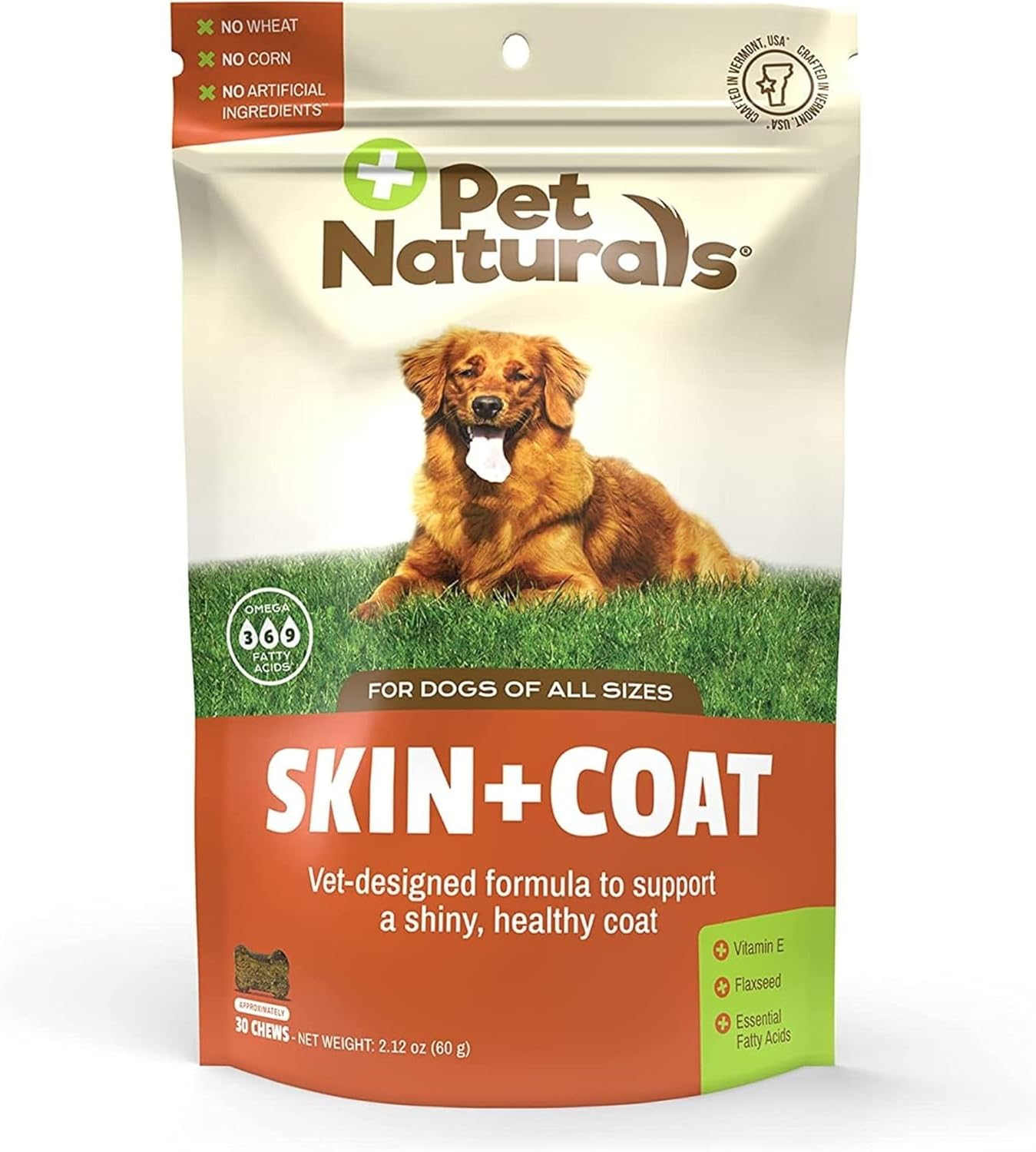
| Flavor | Veggie |
|---|---|
| Item Form | Chew |
| Active Ingredients | Omega 3, Omega 6, Omega 9 |
| Product Benefits | Skin Care |
| Dog Breed Size | Large |
Pet Naturals Skin + Coat soft chews are a daily supplement in a soft, chewable form designed to support healthy skin and a shiny coat. Each veggie-flavored chew delivers salmon oil for EPA and DHA, flaxseed oil for ALA and additional omegas, plus vitamin E as an antioxidant, which together aim to reduce dryness, soothe irritation, and support coat quality without the mess of liquid fish oil. The soft texture makes these easy to give as a treat or mixed into a routine for dogs that resist pills or have sensitive mouths, and the veggie flavor is intended to be allergy-friendly for pets sensitive to meat flavors. Directions recommend one chew per 25 pounds daily, so dosing is straightforward, but very small dogs will need fractional dosing or veterinary guidance. Ingredients list is simple and the product omits wheat, corn, artificial flavors, and colors, though the active ingredient listing is broad (Omega 3/6/9) rather than providing exact EPA/DHA amounts. If you want a no-mess, palatable omega supplement in a gentle chew format, this performs well; buyers seeking precise fatty-acid dosing or a liquid option for syringe feeding should look elsewhere.
Best for: Dog owners looking for a gentle, easy-to-give omega supplement for puppies, seniors, or dogs with sensitive mouths who need skin and coat support without messy liquids.
Less Ideal for: Owners who require precise EPA/DHA dosing, syringe-feeding liquid supplements, or veterinary-prescribed therapeutic levels should consider alternative formats.
- Soft, palatable chew suitable for pets that dislike hard tablets or liquid fish oil
- Contains salmon oil, flaxseed oil, and vitamin E to deliver omega fatty acids and antioxidant support
- Veggie flavor and no wheat or corn reduce common dietary irritants
- Simple, single-chew-per-25-lb dosing is easy to follow
- No sticky or smelly liquid to measure or handle
- Active ingredient amounts (EPA/DHA) are not specified on the product detail listings
- One-chew dosing can be imprecise for very small dogs or exact therapeutic needs
Verdict: The best gentle chew works well for puppies, seniors, or dogs with sensitive teeth by providing softer textures that clean and soothe without stressing enamel.
Finn Allergy & Itch Soft Chews 90 Ct
Best Natural-Ingredient Chew

| Unit Count | 90 Count |
|---|---|
| Flavor | Beef Liver |
| Item Form | Soft Chew |
| Active Ingredients | Colostrum, Bee Propolis, Prebiotics, Probiotics, Digestive Enzymes, Omega-3 Fatty Acids |
Finn Allergy & Itch is a daily soft-chew supplement designed to reduce seasonal itching and support skin and immune health using a blend of colostrum, bee propolis, quercetin, probiotics, digestive enzymes, and wild Alaskan salmon oil. You give it once daily by weight as a treat-like chew, so it is easy to include in a routine and dogs generally find the beef liver flavor palatable. The formula targets the gut–skin connection with probiotics and enzymes while the omega-3s and antioxidants aim to improve coat hydration and moderate normal histamine responses during seasonal flare ups. It is NASC certified and vet-formulated, which supports higher manufacturing standards and ingredient transparency. Limitations are that it is a supplement rather than a direct medical treatment for severe allergies or active hot spots, and the product contains dairy and bee-derived propolis which could be triggers for dogs with those specific sensitivities. For owners seeking a premium, vet-developed daily supplement to help manage mild to moderate seasonal itch, these chews are a convenient option.
Best for: Buyers who prioritize premium, transparent ingredient sourcing and stricter manufacturing standards and who want a daily, vet-formulated supplement to help manage seasonal or environmental itch in dogs.
Less Ideal for: Owners looking for an immediate topical or prescription treatment for active hot spots or dogs known to be allergic to dairy or bee products should choose alternative therapies.
- Vet-formulated blend targeting skin and immune support
- NASC certification indicating quality and manufacturing oversight
- Includes probiotics and digestive enzymes to support the gut–skin connection
- Wild Alaskan salmon oil provides omega-3s for skin hydration and coat health
- Beef liver flavor and soft-chew format make daily dosing easy
- Contains dairy and bee propolis which may trigger allergic dogs
- Intended as a daily supplement not a substitute for veterinary treatment of severe or persistent skin conditions
Verdict: The best natural-ingredient chew is aimed at owners who prioritize simple, recognizable ingredients and minimal processing while still offering safe, engaging chewing.
Choosing the Right Chew Itchy Dog: Key Factors to Consider
Material and Surface Texture
The material determines how a chew interacts with irritated skin and an itch-driven chewing habit. Softer rubber or flexible synthetic materials provide cushioning and gentle counter-pressure that can feel soothing without scraping raw areas. Firmer materials last longer but can create abrasive contact if the dog chews on inflamed skin; choose firmness based on whether chewing is primarily a comfort behavior or an aggressive chewing habit.
Surface texture matters too. Smooth, nonporous surfaces are easier to clean and less likely to trap dirt, pollen, or dander that could aggravate skin. Textured surfaces that are too rough may abrade inflamed patches, while mild nubs or ridges can massage the jaw and distract dogs from pawing or biting at itchy spots.
Ingredient Transparency and Hypoallergenic Concerns
Many chews contain binders, flavorings, or coatings that can provoke allergic reactions in sensitive dogs. Look for products that list materials clearly and avoid common triggers like wheat, soy, or beef if your dog has known sensitivities. Inert, nonreactive materials such as medical-grade silicone or single-source natural fibers reduce the chance of topical or systemic reactions.
Also consider whether the chew has flavor coatings or scented finishes; these can encourage chewing but may introduce potential allergens. When in doubt, start with an unflavored, simple composition and monitor the dog for any change in skin condition or itch frequency.
Durability and Fragmentation Risk
Durability is about safety as much as value. Chews that fragment into small pieces create ingestion hazards and can leave abrasive shards that worsen skin issues if the dog rubs them on its body. Assess the expected lifespan relative to your dog's bite strength category and choose a chew rated for that level.
Look for construction features that reduce fragmentation risk, such as single-piece molding or tightly bound fibers. If a chew is intended to be replaceable, plan a replacement schedule to avoid using a heavily worn item that could break unexpectedly.
Size and Shape Fit
A chew must match your dog's mouth size and chewing technique to be effective and safe. Too small a chew can be a choking hazard, while too large a chew can be awkward and discourage use. Shapes that allow the dog to hold the chew comfortably while applying gentle jaw pressure tend to work best for itch relief, because they let the dog control intensity and duration.
Consider also whether the shape encourages focused chewing on one end, which can be useful for dogs that prefer to work on a single spot, or if it distributes contact across the mouth for more generalized soothing. Many chews offer multiple size options; choose the one closest to your dog's weight and bite style.
Cleanability and Maintenance
Chews that trap moisture, dirt, or allergens become counterproductive for dogs with skin issues. Nonporous materials that can be rinsed or put through a sanitizing cycle reduce buildup of irritants. If a chew cannot be cleaned easily, plan to replace it more often to avoid contaminant accumulation.
Maintenance also includes inspecting the chew regularly for wear and removing it at the first sign of cracking or loose fragments. Some chews are dishwasher-safe or compatible with pet-safe disinfectants; those options help keep the item hygienic and less likely to harbor bacteria that could affect skin health.
How Can a Chew Actually Help an Itchy Dog?
Chewing provides focused oral stimulation that can distract a dog from scratching or biting at irritated skin. The pressure and motion of chewing can also give a mild massaging effect, which some dogs find calming and which may reduce the impulse to paw at itchy areas.
Beyond distraction, a well-chosen chew offers an outlet for the energy and frustration that often accompany chronic itch. By redirecting the behavior to a safe object, you reduce the likelihood of secondary skin damage from repetitive licking or nibbling.
- Chewing redirects attention away from the itchy spot
- Gentle pressure can relieve stress-linked scratching impulses
- Durable chews reduce the need for constant replacement
What Textures Soothe Versus Irritate Sensitive Skin?
Softer, slightly yielding textures tend to soothe because they provide gentle counter-pressure without harsh friction. Look for materials labeled as soft rubber, flexible silicone, or chew-safe thermoplastic elastomers. These compress under bite and rebound, lessening abrasive contact with inflamed areas.
Avoid very rough or jagged surfaces for dogs with open sores or raw patches. Smooth or gently nubbled surfaces are preferable and easier to clean, which helps prevent grime from irritating the skin.
- Soft and flexible: calming and low abrasion
- Mild nubs: provide massage without scraping
- Rough textures: increased risk of abrasion and trapped debris
Can Chews Be Part of a Skin-care Routine?
Yes. When used alongside topical treatments and veterinary guidance, chews can be a helpful behavioral tool that reduces repetitive licking or chewing of affected areas. They are not a replacement for medical treatment, but they can lower the incidence of self-inflicted secondary damage while skin heals.
Integrate chews into a routine by offering them at times when your dog shows increased itching, such as after walks or during high-stress moments. Keep a few clean chews on hand so you can swap out items and maintain hygiene.
- Use chews as a behavioral aid, not as medical therapy
- Offer chews proactively during known high-itch times
- Rotate and sanitize chews to limit contaminant buildup
How to Introduce a New Chew to a Cautious Dog?
Introduce the new chew in a calm environment and allow the dog to sniff and investigate it without pressure. Try offering a short supervised session and reward any interaction with praise or a small treat to build positive association.
If the dog ignores the chew, try swapping it for a different texture or offering it during play to increase interest. Never force chewing; gradual, positive reinforcement usually works best for dogs who are hesitant or worried about new objects.
- Let your dog inspect the chew at their own pace
- Use rewards to encourage initial interest
- Supervise early sessions to ensure safe use
When Should You Stop Using a Chew and Seek Veterinary Help?
If you notice increased redness, open sores, swelling, or worsening rubbing after introducing a chew, stop using it and consult your veterinarian. These signs can indicate an allergic reaction or that the chew is aggravating a preexisting condition.
Also seek care if the dog starts ingesting fragments or shows signs of gastrointestinal distress after chewing. Persistent itching despite behavioral interventions is another reason to pursue veterinary diagnostics, as underlying causes may require medical treatment.
- Stop use if skin worsens after introducing the chew
- Seek immediate help for ingestion of fragments or GI symptoms
- Consult a vet for persistent or unexplained itching
How We Chose the Best Chew Itchy Dog
We prioritized products that address the root reasons dogs chew when itchy: texture that soothes rather than abrades, ingredient lists unlikely to trigger skin reactions, and construction that lasts long enough to be useful without breaking into irritating fragments. Our evaluation emphasized safety and practicality: chew material and finish, known sources of common allergens, bite strength categories, and whether the chew can be cleaned or disinfected. We also considered chew size ranges and shape options to match different mouth sizes and chewing behaviors. Excluded items included soft toys and purely edible treats that disintegrate quickly, because they do not provide sustained, safe chewing relief for dogs with persistent itching. We filtered out chews with obvious safety concerns such as sharp edges, loose components, or unspecified materials. Final selections were based on durability testing notes, ingredient transparency, and user-reported outcomes for dogs with sensitive skin or allergy histories.
Our full evaluation process is outlined in our review methodology.
FAQ
Are edible chews a good option for itchy dogs?
Edible chews can provide short-term distraction, but they often disintegrate quickly and may contain ingredients that trigger sensitivities. For dogs with ongoing itch, longer-lasting nonedible chews made from simple, transparent materials are usually safer and more effective.
How often should I replace a chew for safety?
Replace a chew as soon as you see significant wear, cracking, or small pieces breaking off. For aggressive chewers this may be weekly; for gentler chewers it could be monthly. Regular inspection is the safest practice.
Can chews spread allergens that affect my dog's skin?
Yes. Porous or textured chews can trap pollen, dust, and dander that may irritate sensitive skin. Choosing nonporous, easy-to-clean materials and washing chews regularly reduces this risk.
Is it okay to give a chew to a dog with open sores?
If a dog has open sores or raw patches, avoid hard or rough chews that could abrade the area. Consult your veterinarian before offering a new chew; they may recommend gentler options or temporary alternatives until the skin heals.
What size chew is appropriate for my dog?
Pick a chew sized to prevent choking while allowing comfortable handling. Use the manufacturer's suggested size ranges as a starting point and adjust based on your dog's mouth shape and bite strength. When in doubt, choose the larger of two sizes to reduce ingestion risk.
Final Verdict
When selecting chews for itchy dogs, balance soothing texture with safe durability and clear ingredient listings. Prioritize materials that are easy to clean and match the firmness to your dog's chewing style to avoid abrasion or fragmentation. Monitor skin response after introducing any new chew and replace worn items promptly. By focusing on texture, material transparency, and maintenance, you can choose chews that reduce itch-driven behaviors while keeping your dog safe and comfortable.

