

If you use training collars as part of on-leash control or behavior work, picking the right choke collar dog matters for safety and reliable handling. The wrong fit or poor materials can cause discomfort, slipping, or inconsistent correction that undermines training. This guide shortlists six top choke collars selected for durability, fit, and predictable performance so you can choose with confidence. We evaluate construction, sizing, adjustment, and how each collar balances control with reduced risk of injury. Read on to find the style and features that match your dog and training approach.
Top Picks at a Glance
| Best Overall Choke Collar A well-rounded choke collar for most owners and everyday walks | Herm Sprenger Stainless Steel Choke Chain 20in |  |
| Best Budget Choke Collar A low-cost option that still provides reliable basic control | TagME Choke Chain Collar M |  |
| Best Heavy-Duty Choke Collar Reinforced hardware and thicker links for strong, powerful dogs | Hamilton Metal Slip Link Choke Chain 30" |  |
| Best Adjustable Choke Collar Easier size customization to get a safer, more secure fit | Serijoars Chain Choke Collar L |  |
| Best Lightweight Choke Collar Minimal weight for small dogs or pets sensitive to bulk | SGODA Chain Dog Choke Collar 19" |  |
| Best Training Choke Collar Designed specifically for obedience work and controlled corrections | SGODA Chain Dog Training Choke Collar 22 in |  |
Herm Sprenger Stainless Steel Choke Chain 20in
Best Overall Choke Collar
| Material Type | Stainless Steel |
|---|---|
| Size | 20in (Neck Size up to 17in) |
| Wire Gauge | 3 mm |
| Closure Type | Pull On |
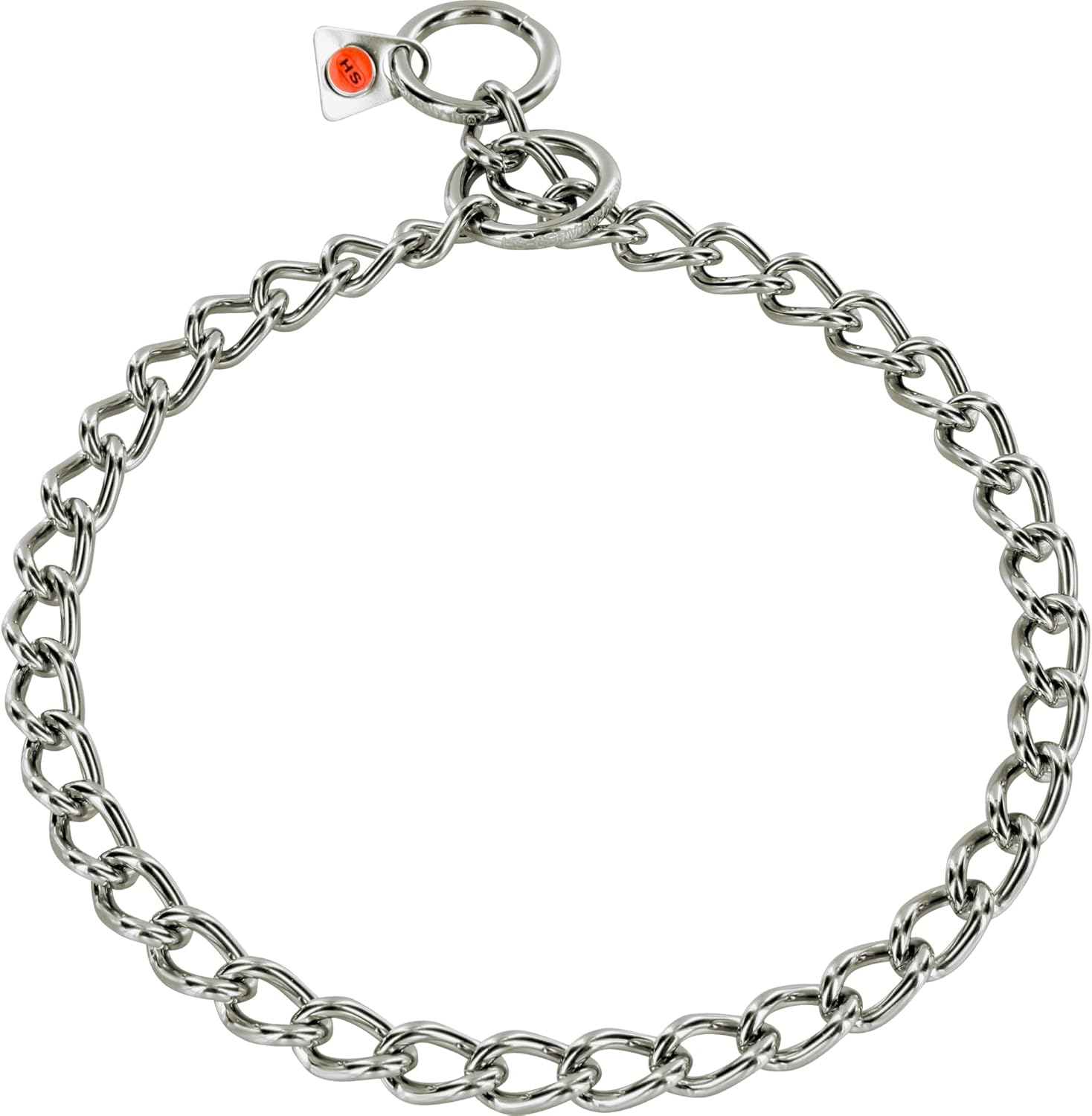
This Herm Sprenger stainless steel choke chain is a straightforward training collar built from round links and two O-rings so the chain forms a loop that slips over the dog's head. It is typically used for leash training and short-term correction: attach the leash to the live O-ring for a tightening response or to the dead O-ring to use it as a regular collar. The 3 mm wire gauge and welded link construction give it a durable, rust-resistant feel that holds up to wet conditions and frequent use. Because it is a slip-on style it is not adjustable and must be sized to the dog's head and neck so it fits and slips on cleanly; owners should practice safe handling and avoid prolonged use as a permanent restraint. Made in Germany with stamped Sprenger O-rings, the collar delivers a professional-grade, no-frills tool for handlers who want reliable mechanical performance rather than padding or decorative features.
Best for: Buyers who want a simple, professional-quality training collar that offers dependable mechanical control for leash training and short corrective cues.
Less Ideal for: Owners seeking a padded, forgiveness-oriented collar for daily wear, or first-time trainers uncomfortable with choke-style corrections should consider alternatives.
- Durable stainless steel construction resists rust and holds up to wet conditions.
- Welded links and 3 mm wire gauge provide reliable strength for training use.
- Dual O-ring design allows quick switch between slip/choke and regular collar functions.
- Made in Germany with Sprenger-stamped O-rings indicating factory-quality manufacturing.
- Slip-on design is not adjustable and must be sized carefully to fit the dog’s head and neck.
- Provides correction via tightening which requires experienced, controlled handling to avoid misuse.
Verdict: The best overall choke collar balances effective control, durable construction, adjustable fit, and comfort for routine training and leash walks.
TagME Choke Chain Collar M
Best Budget Choke Collar

| Material Type | Alloy |
|---|---|
| Breed Recommendation | Medium |
| Closure Type | Pull On |
| Size | M Length:18.1"(Recommend Neck Max 16") |
This TagME choke chain collar is a basic slip-style training collar made from chrome-plated alloy links intended to give quick corrective feedback during walks or short training sessions. It is used by slipping it over the dog's head so the chain tightens when the dog pulls and releases when pressure is removed, helping reinforce commands like sit, stay, and heel. The collar is thin (approx 2.5 mm links) and relatively light, so it provides a noticeable correction without a lot of bulk, and the chrome plating helps resist rust and discoloration with routine drying after exposure to moisture. Practical benefits include an easy on/off slip design, a trainer-recommended approach for boundary and leash manners, and a compact length that fits medium necks when sized per the listing. Important limitations are that it requires responsible handling and should never be left on an unsupervised dog, it offers no padding or anti-chafe features, and the corrective effect depends on proper sizing and technique rather than built-in safety stops.
Best for: Buyers who need an inexpensive, no-frills correction collar for supervised training sessions and leash control and who prioritize straightforward function over comfort features.
Less Ideal for: Owners looking for a gentle, padded, or no-pull harness alternative or anyone who wants a collar meant for continuous wear or unsupervised use should consider other solutions.
- Lightweight thin links deliver clear corrective feedback without heavy bulk
- Chrome-plated alloy resists rust and is easy to clean
- Simple slip-on pull closure is quick to fit and use during training
- Appropriate length and sizing guidance for medium-neck dogs
- No padding or anti-chafe features for sensitive necks
- Not intended for unsupervised or continuous wear
Verdict: The best budget choke collar gives pet owners dependable correction and acceptable durability at a lower price without unnecessary frills.
Hamilton Metal Slip Link Choke Chain 30"
Best Heavy-Duty Choke Collar
| Material Type | Steel |
|---|---|
| Item Type Name | Extra Heavy Choke Chain |
| Item Length | 30 inches |
| Item Width | 4 millimeters |
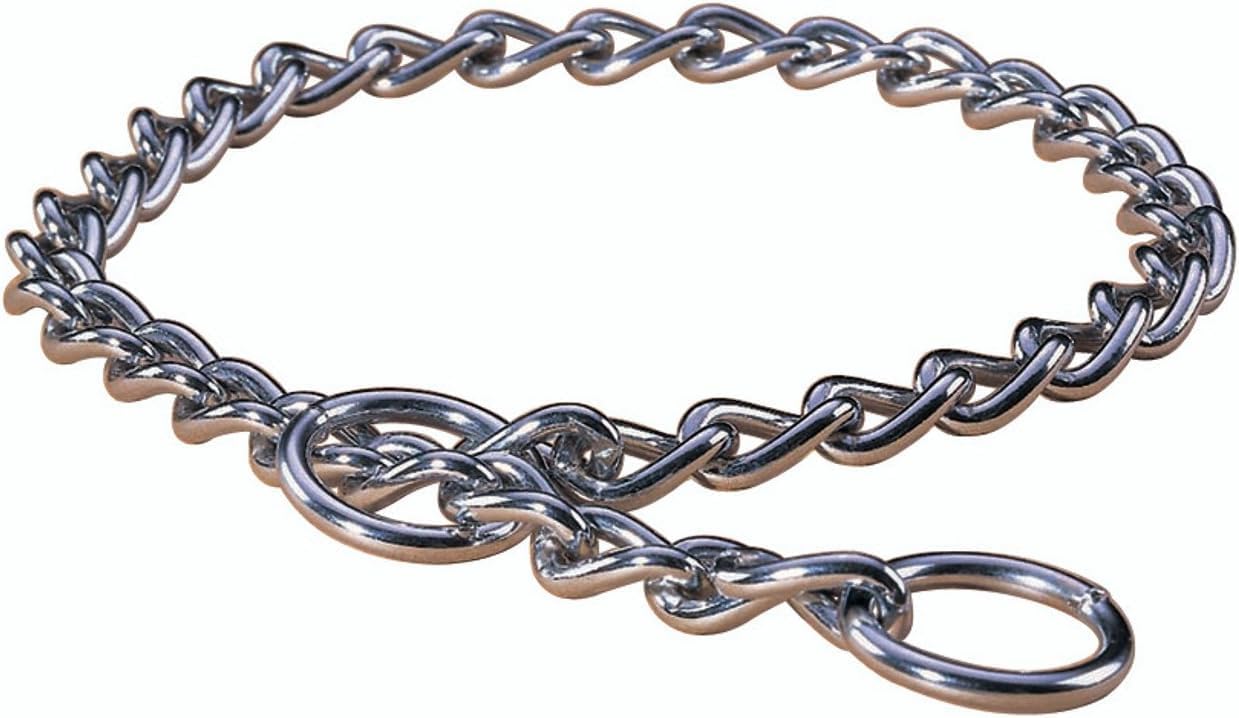
The Hamilton Metal Slip Link Choke Chain is a straightforward heavy-duty training collar built from 4.0mm steel links and a 30 inch length for larger necks. It works as a slip collar that tightens evenly when the leash is pulled to give a quick, consistent correction used during heel and leash-training sessions. The steel construction and chrome plating make it durable for frequent outdoor use and resistant to day-to-day wear, while the simple chain design is easy to put on and adjust by sliding through the ring. Practical benefits include reliable strength for strong dogs and a slim profile that is unlikely to snag under most conditions. Important limitations are that choke chains require correct fitting and handler experience to avoid discomfort or injury, and they are not a stop-gap for dogs that lunge or react unpredictably without additional training. Use this as a training tool with positive reinforcement and appropriate precautions.
Best for: Buyers who need a rugged, no-frills training collar for strong or large dogs and who are comfortable using slip collars as part of a structured training plan.
Less Ideal for: Owners who prefer force-free training tools or who lack experience fitting and using choke chains should consider alternative training collars or consult a trainer.
- 4.0mm steel links provide strong, heavy-duty construction for powerful dogs
- 30 inch length fits larger necks and gives room for proper slip action
- Chrome plated finish improves corrosion resistance for outdoor use
- Simple slip-link design is easy to put on and offers consistent, even pressure
- Requires knowledgeable fitting and handling to be used safely
- Not suitable as a standalone solution for behavior problems that need training beyond leash corrections
Verdict: The best heavy-duty choke collar is designed for strong or large dogs, featuring tougher hardware and construction to withstand persistent pulling and heavy use.
Serijoars Chain Choke Collar L
Best Adjustable Choke Collar

| Material Type | Metal |
|---|---|
| Animal Collar Type | Choke Collar |
| Included Components | Chain, Slip Link |
| Age Range Description | Puppy to Adult |
This Serijoars chain choke collar is a simple, heavy-duty training collar built from metal links that tighten when tension is applied. It functions as a martingale-style slip collar so you can use it for on-leash control, corrective guidance during training sessions, and to keep a snug fit on dogs with changing neck sizes or thicker coats. The chain slip-link lets you fine-tune the fit and the attached ring makes leash connection straightforward. Because it is metal, the collar is durable and resists chewing and stretching better than many fabric alternatives, but it also requires careful sizing and responsible handling to avoid excessive tightening. The seller notes a limited tightening action, but proper placement and supervision are still necessary, and this style is best used by owners familiar with correction-based collars and humane reinforcement practices. For those who want a low-cost, adjustable metal choke collar for occasional training, this model is a practical choice; owners seeking a gentler or fully non-slip option should consider other collar types.
Best for: Owners who need precise, adjustable sizing for training or to accommodate changing neck size or coat thickness and who are comfortable using corrective slip collars responsibly.
Less Ideal for: Pet owners who prefer hands-off, purely positive reinforcement tools or need a padded, non-metal collar for comfort-sensitive dogs should look elsewhere.
- Durable metal construction resists chewing and deformation
- Slip-link martingale design allows adjustable, limited tightening for more precise fit
- Includes a ring for easy leash attachment
- Suitable across a wide range of breeds and sizes thanks to adjustable length
- Requires careful fit and handling to prevent excessive tightening or discomfort
- Metal chain can be less comfortable against skin or fur compared with padded alternatives
Verdict: The best adjustable choke collar is ideal for owners who need precise sizing options to ensure a snug, effective fit across growth or changing coat thickness.
SGODA Chain Dog Choke Collar 19"
Best Lightweight Choke Collar

| Material | 304 stainless steel |
|---|---|
| Size | 19" |
| Thickness option | 2.5 mm (also available other sizes) |
| Closure Type | Pinch |
This SGODA chain choke collar is a lightweight stainless steel slip collar made for training and on-leash corrections. It tightens under tension to provide quick feedback and has an O-ring for attaching a leash so it is simple to put on and remove. The 304 stainless construction resists rust and keeps the chain low-profile, which makes it easier for smaller dogs or handlers who prefer minimal bulk. Sizes and link thicknesses are listed so you can pick a thinner 2.5 mm option for less weight and a smaller loop width that suits smaller necks. Practical limits include the fact that it is a choke-style collar that applies pressure to the neck and therefore requires experienced, controlled use and proper fit to avoid injury, and metal chain collars are not padded so comfort depends on correct handling. For owners who want a durable, minimal-weight metal training collar, this model delivers straightforward, no-frills performance.
Best for: Owners who prioritize minimal weight and a low-profile metal training collar for smaller dogs and want a durable, simple slip collar for short controlled training sessions.
Less Ideal for: Pet owners seeking a hands-off or gentle constant-wear collar, those uncomfortable with corrective neck pressure, or first-time trainers who prefer harnesses or padded alternatives.
- 304 stainless steel construction resists rust and is durable
- Multiple thickness options (including 2.5 mm) allow a lighter fit for smaller dogs
- O-ring leash attachment makes on/off and leash connection quick and simple
- Slip design provides immediate training feedback with minimal bulk
- Choke-style action requires experienced handling and careful sizing to avoid neck injury
- No padding or comfort features for prolonged wear
Verdict: The best lightweight choke collar suits smaller dogs or pets that are bothered by heavy gear, offering control with minimal bulk and reduced strain.
SGODA Chain Dog Training Choke Collar 22 in
Best Training Choke Collar
| Material Type | Stainless Steel |
|---|---|
| Item Length | 22 inches |
| Item Width | 3 millimeters |
| Included Components | 2 |
| Breed Recommendation | Large Breeds |
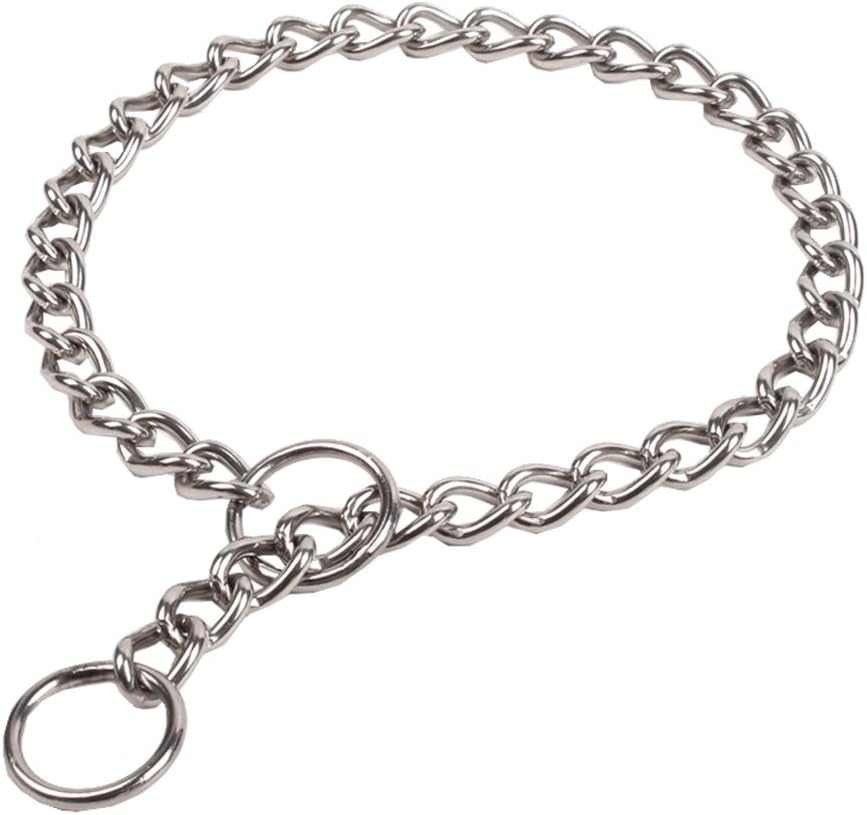
The SGODA Chain Dog Training Choke Collar is a simple, heavy-duty training collar made from 304 stainless steel intended for structured obedience work. You assemble the collar by sliding the chain through one of the rings, then fit it so it sits snugly with a couple inches of slack; an O-ring lets you clip a leash on quickly. In practice it provides predictable, immediate tightening under leash tension to give a clear correction during recall, heel, or loose-leash training. The stainless construction feels durable and resists tarnish or rust, so it stands up to repeated outdoor use. Sizing guidance and multiple thickness/length options make it usable across many large-breed dogs, and the plain chain design keeps the tool straightforward for experienced handlers. Important limitations are that this is a corrective tool requiring proper technique and supervision, it offers no padding or pressure distribution, and it is not appropriate for handlers seeking a non-aversive training approach. When used correctly it is an effective, no-frills collar for achieving repeatable responses in formal training sessions.
Best for: Buyers who run structured obedience sessions and want a simple, durable tool that delivers clear, repeatable corrections for large-breed dogs under experienced handling.
Less Ideal for: People seeking a completely positive, non-aversive training method or owners uncomfortable using neck-pressure corrective devices should consider alternative tools.
- 304 stainless steel construction resists rust and provides long-term durability
- O-ring leash attachment for quick, secure connection
- Multiple length and thickness options to fit a range of large-breed necks
- Straightforward chain design gives predictable, immediate feedback during corrections
- Requires skilled, supervised use since it applies pressure directly to the neck
- No padding or pressure-dispersing features for sensitive dogs
Verdict: The best training choke collar is optimized for structured obedience sessions, providing predictable, immediate feedback while focusing on handler control and repeatable responses.
Choosing the Right Choke Collar Dog: Key Factors to Consider
Fit and Neck Sizing
A correct fit is the single most important factor for effective and safe use. A choke collar should be sized so it sits high on the dog's neck behind the ears when the dog is standing, with room to tighten and release without catching loose skin. Too loose and the collar will slip forward or rotate, reducing control and increasing the chance of pinching. Too tight and the collar can apply constant pressure or cause choking, which increases risk to the trachea and windpipe.
Measure your dog's neck at the base and compare that to a collar's minimum and maximum sizing. Adjustable designs or collars with multiple link lengths make it easier to achieve a consistent fit across different dogs or changes in winter and summer coats.
Material and Construction
Material choices determine durability, feel, and how aggressively a collar will behave under tension. High-strength steel or plated metal links resist stretching and breakage, while reinforced hardware and solid rings prevent deformation during hard pulls. Cloth-covered or chain collars with welded links reduce the chance of sharp edges, and smooth finishes minimize hair catching and skin irritation.
Inspect stitching, welds, and ring connections when evaluating construction. Corrosion-resistant finishes are important if the collar will be exposed to moisture or frequent washing, and materials that maintain shape under repeated pulls deliver more predictable handling over time.
Adjustment and Control Precision
Some choke collars offer fine adjustment via multiple removable links or sliding mechanisms, which allows you to set the amount of correction more precisely. This precision matters when training subtle behaviors where a small, consistent tug is needed rather than a harsh correction. Sliding choke styles can provide quick tightening and release, but they must move smoothly and not catch to ensure predictable behavior.
Consider whether the collar design provides incremental adjustments and whether those adjustments hold under load. Designs that lock or incorporate thicker links may change how the collar tightens and should be tested for consistent release.
Safety Features and Edge Finish
Safety-focused details reduce the chance of injury during use. Smooth, rounded edges on links and rings minimize hair and skin pinching. Wider link shapes can distribute pressure more evenly and reduce focal stress on the neck. Breakaway features are rare for training choke collars and usually not desirable, but consider collars that minimize sharp contact points and have welded or closed rings to prevent accidental opening.
Also look for collars that avoid narrow hinges or thin wire sections that can bend or create pinch points. A collar that is easy to disengage intentionally can be useful in emergency handling, but it should not open under normal tension.
Ease of Use and Handling
A choke collar must be straightforward to fit, adjust, and operate during walks or training sessions. Quick link removal for sizing, clear orientation so the collar sits correctly, and predictable movement when tension is applied all contribute to reliable handling. If the collar is difficult to reposition or tends to flip, it will complicate training rather than help.
Practice installing and removing the collar before use. Consider whether the collar works well with your leash and whether it allows for one-handed management when you need to give commands and maintain control.
Maintenance and Longevity
Durable collars reduce long-term costs and maintain consistent behavior. Think about how easy the collar is to clean, whether finishes resist rust, and if replacement links or components are available when parts wear. Some materials are easier to keep sanitary after messy outdoor sessions, while others require occasional polishing to prevent corrosion.
A collar that keeps its shape and smooth feel after repeated washing or exposure to elements will perform more predictably and be safer for continued use.
How Tight Should a Choke Collar Sit During Training?
The collar should sit high on the neck behind the ears and be snug enough that it does not slide over the head when tension is applied, yet loose enough to allow a quick release. Tighten only as much as needed to get attention or correct an undesired behavior and immediately release after the correction.
Watch how the collar moves when you apply a short, controlled tug. If the collar stays rotated or digs into the windpipe, it is too tight or the wrong shape for your dog's neck. Aim for a balance where the handler feels immediate feedback but the dog is not subjected to prolonged compression.
- Place collar high on the neck behind the ears for best control
- Apply brief, controlled corrections rather than sustained pressure
- Reassess fit after grooming or coat changes
Can Choke Collars Be Used with Puppies or Small Breeds?
Choke collars are generally not recommended for very young puppies or tiny breeds because their necks are more delicate and a choke-style correction can cause harm. For dogs that are still developing, gentler training tools are usually a better choice.
If you consider a choke collar for a small or adolescent dog, choose a collar specifically sized for smaller necks with the mildest effective action and consult a trainer or veterinarian to confirm suitability for your dog's size and maturity level.
- Avoid choke collars on very young puppies or small toy breeds
- Use the smallest effective collar and proceed under professional guidance
What Are Practical Alternatives and when to Use Them?
Depending on your training goals, alternatives such as head halters, martingale-style collars, or harnesses can provide control with different pressure patterns. Head halters change where pressure is applied and can reduce neck strain, while martingales limit slip without full choke action.
Consider alternatives when you need ongoing control without repeated corrections, when a dog has respiratory or neck-health issues, or when working with very young dogs. Each tool has tradeoffs, so match the choice to the behavior you are addressing and the dog's physical condition.
- Use head halters for steering-style control
- Use martingales to prevent slip-through without full choking action
- Use harnesses for steady pulling control without neck pressure
How to Check a Collar for Safety Before Each Use
Inspect the collar visually for bent links, cracked welds, or rough edges that could snag fur or cut skin. Move the chain or sliding sections to ensure smooth action and no unexpected catching points. Check rings and connectors to verify they are fully closed and not deformed.
Regularly test the collar under controlled tension to confirm it tightens and releases smoothly. If any component shows wear, replace the collar or the affected part before using it again.
- Look for bent links and rough edges
- Ensure rings and connectors are closed and secure
- Test tightening and release in a safe, controlled setting
Training Tips for Using Choke Collars Responsibly
Use short, consistent corrections paired with a clear verbal or physical cue so the dog learns the association. Corrections should be brief and timed correctly; repeated long pulls will create anxiety and reduce training effectiveness. Combine collar use with positive reinforcement so the dog learns alternative behaviors rather than simply avoiding correction.
Avoid leaving a choke collar on the dog unattended and do not use it as a primary restraint for long periods. Work in short training sessions and stop if the dog shows signs of distress, coughing, or persistent resistance.
- Use brief, consistent tugs paired with a cue
- Follow corrections with positive reinforcement
- Do not leave choke collars on unattended dogs
How We Chose the Best Choke Collar Dog
We selected options that meet practical requirements for owners who use choke collars as part of leash handling or training work. Our editorial filters emphasized quality of materials, predictable tension and release behavior, sizing and adjustment range, and features that reduce slippage and skin pinching. We prioritized collars built from strong metal or reinforced links and durable stitching where applicable, and we favored designs that allow fine tuning of fit for different neck shapes. Ease of cleaning, resistance to rust and corrosion, and secure ring placement were included as durability criteria. Safety-focused design elements such as smooth edges, consistent chain link sizing, and options that reduce chin or tracheal pressure were considered essential. We excluded any collar styles obviously intended for prolonged constant wear, novelty items, or products with poor manufacturing tolerances. The final choices reflect items that meet these functional standards and are appropriate for owners seeking controlled corrections during walks or short training sessions.
Our full evaluation process is outlined in our review methodology.
FAQ
How often should I check a choke collar for wear?
You should inspect the collar before each use and do a more thorough check weekly. Look for bent links, loose rings, and rough edges; any sign of deformation means you should stop using the collar until it is repaired or replaced.
Will a choke collar damage my dog's trachea?
A choke collar can cause tracheal or soft-tissue injury if used improperly or left too tight. Proper fit, brief corrections, and correct placement high on the neck reduce that risk. If your dog has existing respiratory issues, consult a veterinarian before use.
Can all dogs wear the same style of choke collar?
No. Neck shape, coat density, and behavior change how a collar performs. Some dogs need finer adjustment or smoother links to avoid pinching, while others benefit from a heavier link design for better control. Fit and material must be matched to the individual dog.
Is special training required to use a choke collar safely?
While not legally required, basic instruction from a qualified trainer is strongly recommended. Proper timing, pressure, and pairing corrections with cues improve safety and effectiveness and help avoid unintentional harm.
How do I size a choke collar for my dog?
Measure the neck where the collar will sit, usually high behind the ears, and compare that measurement to the collar's size range. Allow enough slack for a quick release but not so much that the collar flips or slips forward when tension is applied.
Final Verdict
Choosing the right choke collar dog is a balance between effective control and minimizing risk. Prioritize correct fit, smooth construction, and adjustable control so corrections are consistent and brief. Consider the dog's size, neck shape, and any health issues before selecting a collar, and be prepared to use alternatives when ongoing neck pressure is not appropriate. When used carefully, with proper sizing and mindful technique, a choke collar can be a useful short-term training tool. Focus on predictable performance and safety features, and pair collar use with positive reinforcement and professional guidance when necessary.

