

If you live with a deaf dog, a standard collar may not give the tactile feedback you need for safe daily handling and recall. The right collar can provide reliable vibration cues, comfortable wear, and secure attachment points for leashes or ID tags. This guide highlights our top picks for collars designed specifically for deaf dogs and explains the features that matter most when you need consistent, non-audible signaling. We shortlisted products that focus on clear vibration feedback, adjustable fit, and durable construction. Read on to see the evaluation criteria we used and what to prioritize when choosing a collar for a deaf dog.
Top Picks at a Glance
| Best Overall Collar The best all-around collar for most deaf dogs and owners | PaiPaitek Vibration Training Collar PD 519V |  |
| Best Budget Collar A low-cost collar that still delivers solid fit and function | Native Pup Deaf Dog Collar Large |  |
| Best Waterproof Collar Water-resistant materials for wet walks, swim sessions, and easy drying | DOGLinsen No Shock Vibrating Collar |  |
| Best Reflective Collar High-visibility reflectivity to improve night and low-light safety | Dogline Omega Nylon Collar 16"-21" |  |
| Best Adjustable Collar Wide size adjustability and secure closures for growing or variable necks | Dexil Deaf Dog Color-Coded Collar L-XL |  |
| Best Training-Friendly Collar Designed to pair with vibration or light training devices and cues | PaiPaitek No Shock Training Collar |  |
| Best Premium Collar Higher-end materials and craftsmanship for long-term comfort and durability | Tacticollar Do Not Pet Collar Large |  |
PaiPaitek Vibration Training Collar PD 519V
Best Overall Collar

| Training modes | Beep, Vibration, Beep+Vibration |
|---|---|
| Range | 3300 ft |
| Waterproof receiver | IPX7 |
| Channels | 3 Channels |
| Neck size fit | 8-27 inches |
The PaiPaitek PD 519V is a vibration-and-beep training collar aimed at gentle, distance-based recall and behavior work without shocks or prongs. It pairs a handheld remote with a waterproof receiver and supports three channels so one remote can control up to three dogs. The system offers nine vibration levels plus nine beep tones and a combined beep-plus-vibrate mode, letting you match intensity to a dog's sensitivity. The receiver is rated IPX7 so it can stay on during swims or heavy rain while the remote is water resistant, and both units charge in about two hours with claimed 20-day battery life between charges. Practical benefits include the long 3300 ft range for off-leash training in large yards, a safety lock on the remote to prevent accidental activation, and an adjustable reflective strap that fits a wide range of neck sizes. Limitations to note are that vibration-only systems rely on the dog learning the cue rather than an immediate physical correction, and very stubborn or high-drive dogs may not respond to vibration at distance as reliably as to stronger stimuli. Follow the brand directions on wear time and frequent checks when using the collar for extended periods.
Best for: Owners who train off-leash or work recall in large open spaces and prioritize a humane, vibration-based cue with long remote range and multi-dog control.
Less Ideal for: Handlers who need instantaneous physical deterrents for extreme escape or aggression issues should consider other training tools or professional behavior help.
- Long 3300 ft remote range suitable for large yards and open areas
- No-shock design with vibration and beep modes for humane, positive-focused training
- IPX7 waterproof receiver and water-resistant remote for use in wet conditions
- Supports up to 3 receivers on one remote for multi-dog households
- Multiple intensity levels and tones plus a remote safety lock for precise, accidental-free control
- Vibration and beep cues depend on training and may be less effective on very high-drive dogs at long distances
- Remote is only water resistant (IPX3) so it should be kept dry for heavy rain or immersion
Verdict: The best overall collar balances comfort, durability, visibility, and fit so it suits most deaf dogs and everyday use.
Native Pup Deaf Dog Collar Large
Best Budget Collar

| Size | Large |
|---|---|
| Material Type | Metal, Plastic, Polyester |
| Closure Type | Buckle |
| Pet Type | Dog |
The Native Pup Deaf Dog Collar is a no-frills, brightly colored collar made to warn others that a dog is deaf or hard of hearing. It is constructed from polyester webbing with a plastic buckle and metal D-ring, so it functions like a standard adjustable collar for everyday walks and identification tags. The collar's vivid green color makes the alert message clear at a glance and the buckle closure and slide adjuster let you dial in fit for most large-breed necks. Practical benefits include easy on/off with the buckle, a sturdy attachment point for a leash or ID, and materials that resist tearing under normal use. Limitations are its basic hardware and lack of padding or reflective trim, so it is best for owners who want an affordable visual warning rather than extra comfort or night-time visibility features. For a budget-conscious buyer needing a clear deaf-dog indicator, this collar covers the essentials reliably.
Best for: Owners who need an inexpensive, clearly visible collar to communicate their dog’s hearing status and want a straightforward, functional option.
Less Ideal for: Buyers seeking a heavy-duty, padded, or reflective collar for extensive outdoor nighttime use should consider other models.
- High-visibility green color that clearly signals hearing impairment
- Durable polyester webbing suitable for everyday wear
- Metal D-ring provides a secure leash and tag attachment point
- Adjustable sizing and quick-release buckle for easy fitting and removal
- No reflective material for low-light visibility
- Basic plastic buckle and minimal padding may be less comfortable for long-term wear
Verdict: The best budget collar offers reliable construction, a secure fit, and decent visibility at a price-conscious level for owners on a tight budget.
DOGLinsen No Shock Vibrating Collar
Best Waterproof Collar

| Control range | 2800 ft |
|---|---|
| Waterproof rating | IPX7 |
| Training modes | Tone, Vibration, Tone & Vibration |
| Adjustable fit | Neck 8–27 inches |
| Charging time | 2 hours |
The DOGLinsen No Shock Vibrating Collar is a remote-controlled training collar that uses tone and adjustable vibration levels to correct behavior without shock or prongs. You use the compact remote to issue a beep, a vibration, or both across up to 2800 feet, and the receiver clips to an adjustable nylon strap that fits a wide range of neck sizes. Notable features include three saved channels for training up to three dogs with one remote, an IPX7 waterproof receiver suitable for rain and puddles, a bright LED on the receiver for low-light visibility, and long battery claims (receiver up to 30 days, remote up to 90 days) with about a two-hour charge time. In practice the collar is lightweight and unobtrusive, making it comfortable for small dogs during walks or short training sessions, and the remote is pocketable for field use. Limitations are that strength and effectiveness of vibration depend on dog sensitivity so very stubborn behavior may require patience and consistent conditioning, and the system relies on rechargeable batteries rather than user-replaceable cells.
Best for: Owners of small dogs who want a humane, easy-to-use collar that balances comfort and reliable remote range for everyday obedience and recall training.
Less Ideal for: People who need guaranteed immediate correction for extreme behavioral issues or who prefer collars that use replaceable batteries should consider other training tools or professional behavior help.
- Humane no-shock design using tone and adjustable vibration levels
- Long 2800 ft remote range for outdoor training
- IPX7 waterproof receiver suitable for wet conditions
- Lightweight receiver and adjustable nylon strap for comfortable fit on small dogs
- Remote supports up to 3 channels to train multiple dogs with saved settings
- Vibration effectiveness varies by dog and may not stop deeply entrenched behaviors
- Battery is rechargeable only, so you cannot swap in standard disposable cells quickly
Verdict: The best waterproof collar keeps working and stays comfortable when exposed to water, making it ideal for dogs that swim, splash, or live in rainy areas.
Dogline Omega Nylon Collar 16"-21"
Best Reflective Collar
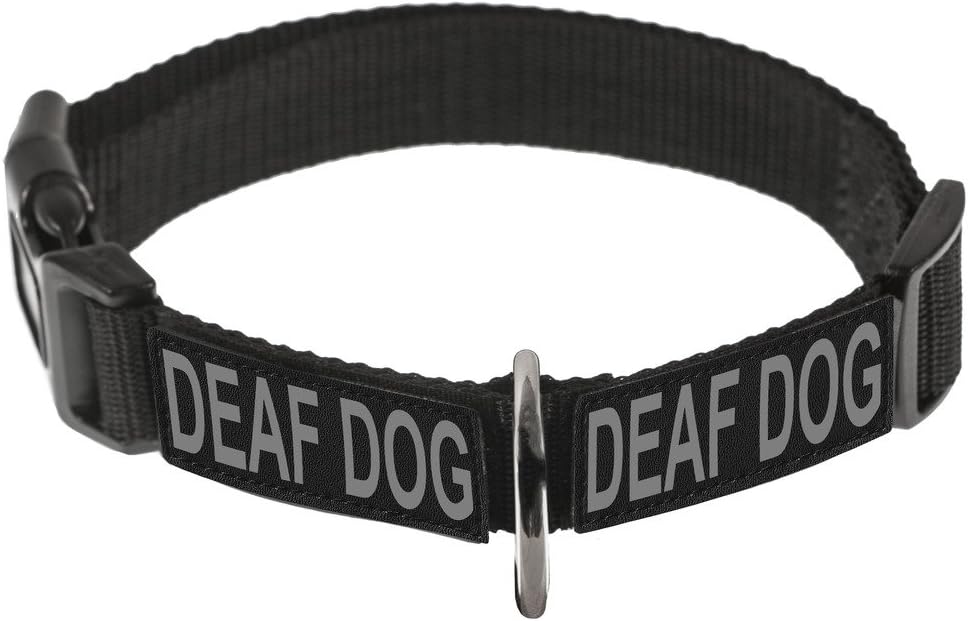
| Material Type | Nylon |
|---|---|
| Closure Type | Buckle |
| Size | (16"-21") |
| Includes | 2 removable deaf dog patches |
The Dogline Omega is a straightforward nylon collar built for everyday use and working dogs, made from ballistic nylon that stands up to weather and rough handling. It fastens with a quick-release buckle and includes a heavy-duty D ring for attaching a leash or ID tags, while two removable deaf dog patches let you add a visible identifier for a dog with hearing loss. In use it feels sturdy and low-maintenance; the nylon resists wet conditions and the hardware is simple to operate, which is helpful on evening walks when you want a reliable fit. The collar does not integrate dedicated reflective trim or high-visibility piping, so visibility at night depends on the patches you attach and any separate reflective gear you pair with it. For owners who need a durable, utilitarian collar that can display a deaf indicator, this is a solid basic option, but buyers wanting built-in reflective visibility should plan to add a reflective strap or use an LED light.
Best for: Buyers who need a rugged, low-maintenance collar that can display a clear deaf dog identifier and will be used for everyday walks or working tasks.
Less Ideal for: Owners who prioritize built-in nighttime visibility or reflective safety features should consider collars designed specifically for high-visibility use instead.
- Durable ballistic nylon construction suitable for working dogs and outdoor use
- Quick-release buckle for fast on and off
- Heavy-duty D ring for secure leash attachment
- Includes two removable deaf dog patches for visible identification
- No built-in reflective trim or high-visibility piping for nighttime visibility
- Limited color/visibility options without adding aftermarket reflective accessories
Verdict: The best reflective collar maximizes nighttime visibility with durable reflective trim so a deaf dog is easier to spot on evening walks.
Dexil Deaf Dog Color-Coded Collar L-XL
Best Adjustable Collar

| Material Type | Nylon |
|---|---|
| Closure Type | Buckle |
| Size | L-XL 15-25"L x 1.5"W |
| Breed Recommendation | Large |
| Product Care Instructions | Hand wash cold or machine wash gentle |
This collar is a wide, adjustable nylon buckle collar intended to signal that a dog is deaf or needs special handling. It fastens with a plastic buckle and includes a D‑ring for leash attachment, embroidered wording and a bright, color‑coded design so other walkers and children can see the warning from a distance. Typical use is everyday walks where visibility of the dog's status can reduce unwanted interactions; the durable nylon and anti‑corrosion hardware mean it stands up to routine outdoor use and is easy to clean by hand or on a gentle machine cycle. The broad 1.5‑inch width and the listed 15–25 inch neck range give good coverage for larger dogs and leave room to adjust for seasonal coat changes. Limitations: the buckle is plastic rather than metal so it is less heavy‑duty for extremely strong pullers, and the product is primarily communicative rather than a behavior-control tool so owners should pair it with appropriate training and a secure harness for strong or reactive dogs.
Best for: Buyers who need a clearly visible, adjustable collar to warn others about a deaf dog and want a simple, washable solution that adapts across seasonal coat or size changes.
Less Ideal for: Owners who need a heavy‑duty restraint for powerful pullers or who prefer metal‑hardware collars for maximum durability should consider a sturdier control collar or a dedicated harness instead.
- Wide 1.5‑inch nylon strap increases visibility and distributes pressure across the neck
- Adjustable fit covers a broad 15–25 inch neck range for growth or coat changes
- Embroidered, color‑coded wording communicates the dog’s status to others at a distance
- Durable nylon with anti‑corrosion hardware is washable and suitable for regular outdoor use
- Plastic buckle is less robust than metal options for very strong or escape‑prone dogs
- Designed for signaling rather than control, so a harness is recommended for heavy pullers
Verdict: The best adjustable collar provides a broad range of sizing and reliable fastenings so it fits snugly and safely across growth or seasonal coat changes.
PaiPaitek No Shock Training Collar
Best Training-Friendly Collar

| Range | 3300 ft |
|---|---|
| Waterproof | IPX7 |
| Intensity levels | 9 vibration, 9 beep |
| Channels | 3 |
| Battery life | 20 days |
The PaiPaitek No Shock Training Collar is a vibration-and-beep e-collar designed for gentle, positive reinforcement training rather than static correction. It pairs a small receiver worn on the dog with an ergonomic remote that locks to avoid accidental signals and includes a wrist strap for on-the-go handling. You can select from nine vibration levels and nine beep patterns, so it is simple to find a setting that gets a French Bulldog's attention without causing fear. The system supports one remote controlling up to three receivers, useful if you train multiple dogs, and the advertised 3300 ft range makes it usable in yards or parks. IPX7 waterproofing and a rechargeable battery that the listing says lasts up to 20 days reduce interruptions during outdoor sessions. Limitations to note are typical of vibration-only collars: they rely on consistent timing and rewards from the handler and may be less effective on dogs that ignore vibration cues or are highly food- or distraction-driven, and very short-faced breeds like French Bulldogs need careful fit and monitoring to avoid rubbing or discomfort. For novices the intuitive controls, safety lock, and stepped intensity levels make the unit easy and confidence-building to use.
Best for: Owners new to electronic training who want an intuitive, low-stress collar with clear stepped intensity settings and simple setup to build safe training habits for a compact, brachycephalic breed.
Less Ideal for: Handlers who need immediate deterrence of high-risk behaviors or dogs that consistently ignore vibration cues should consider alternative training tools or professional guidance.
- No-shock vibration and beep modes with 9 adjustable intensity levels for gentle, customizable cues
- Safety lock and grippy remote design reduce accidental activations for beginner confidence
- Supports up to 3 receivers per remote for training multiple dogs independently
- IPX7 waterproof receiver and long advertised battery life simplify outdoor use
- Vibration-only stimulation can be ignored by some dogs and may be less effective than other modalities for stubborn behaviors
Verdict: The best training-friendly collar is built to work well with visual or vibration cueing tools and supports hands-on training without causing discomfort.
Tacticollar Do Not Pet Collar Large
Best Premium Collar

| Material Type | Nylon |
|---|---|
| Closure Type | Buckle |
| Inner Lining | Neoprene |
| Size (Large) | 20-26in neck, 2in width |
| Included Components | Leash |
This Tacticollar Do Not Pet collar is a rugged, visibly embroidered nylon collar with a soft neoprene inner lining designed to reduce chafing for reactive or easily stressed dogs. It is meant to be used as an everyday walking/training collar to signal others and limit unwanted approach, and it includes a quick-release metal buckle plus a strong metal D-ring and additional V-ring for secure leash attachment. The neoprene padding helps protect the neck from rubbing during prolonged wear or active outings, while the 2-inch width on medium/large sizes gives extra surface area for the message and distributes pressure more evenly than narrower collars. Its sturdy construction makes it suitable for working dogs and reactive dogs that need clear visual cues, but the collar is relatively heavy compared with thin webbing and is not a substitute for a properly fitted harness when you need serious control or to reduce pulling forces. Buyers should measure carefully for fit because the collar is firm and sized by neck circumference.
Best for: Someone who prioritizes comfort for a reactive dog while wanting a clear, durable visual warning to prevent unwanted interactions during walks and public outings.
Less Ideal for: Owners who need maximum control for large strong pullers or who prefer ultra-light minimalist collars for very small breeds should consider harnesses or lighter alternatives.
- Visible embroidered "Do Not Pet" message reduces unwanted interactions by pedestrians and other dogs
- Neoprene padded inner lining reduces chafing during extended wear
- Sturdy metal quick-release buckle and D-ring provide reliable leash attachment
- Wide 2-inch profile distributes pressure and supports clear messaging area
- Heavier and firmer than lightweight collars, which may feel bulky on very small dogs
- Not a replacement for a harness when needing to manage strong pulling or escape risks
Verdict: The best premium collar uses superior materials and construction for extra comfort, longevity, and refined details for owners willing to invest more.
Choosing the Right Collar Deaf Dog: Key Factors to Consider
Vibration Strength and Clarity
A collar for a deaf dog must deliver vibration patterns that are easily felt without startling. Different dogs vary in sensitivity, so look for collars with multiple intensity settings and distinct pulse patterns. Consistent motor performance matters because weak or inconsistent vibration can confuse training and frustrate both owner and dog.
Testable control over pattern and strength helps you teach cue-response associations. Collars with adjustable durations and distinct rhythm options make it easier to create reliable training prompts for recall, attention, and behavior correction without relying on sound.
Fit and Adjustability
Proper fit ensures the vibration is transmitted to the dog and prevents excessive movement that reduces cue clarity. A collar should offer a wide range of size adjustments and secure buckles or quick-release clasps that sit flat against the neck. Consider the collar width and padding for dogs with sensitive skin or thin necks.
An ill-fitting collar either chafes or slips, undermining both comfort and signal transmission. Adjustable designs that allow the device to sit at the correct contact point under the throat are preferable for consistent tactile feedback during training and daily wear.
Battery Life and Power Options
Reliable battery life keeps vibration consistent across walks, training sessions, and outings. Short-lived batteries risk leaving you without tactile cues when you need them most. Rechargeable batteries are convenient and reduce long-term operating costs, while some collars offer easily replaceable cells for quick swaps on long trips.
Consider realistic run-time expectations based on vibration intensity and daily use. Look for clear manufacturer guidance on charge cycles, low-battery warnings, and how long a full charge lasts at common settings so you can plan recharging without interrupting training.
Durability and Water Resistance
Collars must withstand everyday wear, tugging, and outdoor conditions. Durable materials and solid construction prevent premature failure that could leave a deaf dog without effective signaling. Water resistance is important for rainy walks, puddles, and humid environments; collars with at least splash resistance reduce the risk of electrical faults.
Check for corrosion-resistant hardware and robust stitching on fabric collars. A washable or wipeable design helps with hygiene after messy outdoor activities. Longevity reduces the need for frequent replacement and helps maintain consistent training protocols.
Attachment Points and Visibility
Secure attachment points for leashes and ID tags keep your dog safe and identifiable. Metal D-rings or reinforced loops that do not shift under tension are preferable to flimsy attachments. Visibility features such as reflective strips or bright colors help you spot the dog in low light, which is useful if the dog does not respond to auditory recall.
Think about where the leash will sit relative to the vibration unit; a design that maintains contact with the neck without interference from the leash leads to better communication. Balanced placement of attachment hardware also prevents rotation that can break skin contact and reduce signal effectiveness.
Comfort and Skin-friendly Materials
Long-wear comfort is essential since deaf dogs will often rely on tactile cues throughout the day. Soft, breathable materials and rounded edges reduce the risk of rubbing and hair breakage. Padding at pressure points helps distribute contact, especially on smaller necks or short-coated breeds.
Skin-friendly construction also reduces the chance of allergic reactions or hot spots. Look for collars that list hypoallergenic materials or that have user-replaceable straps to swap in a softer option if needed.
How Do Vibration Patterns Affect Training Success?
Different vibration patterns communicate different intents. Short, sharp pulses are best for attention or recall, while longer, steady vibrations can signal a sustained command such as wait. Consistent use of the same pattern for the same cue helps the dog form clear associations.
When introducing patterns, start with low intensity and a predictable sequence so the dog learns to link the sensation to a command. Increase intensity only if the dog does not notice the cue, and avoid escalating to the point of distress. Clear, repeatable patterns are easier to train than variable or ambiguous signals.
- Use a single pattern for recall and another for attention to avoid confusion
- Start with short sessions to teach association before using in real-world situations
- Check that the pattern remains consistent across battery levels
Can a Collar Cause Discomfort or Skin Problems?
Yes, any collar can cause rubbing or pressure points if it does not fit correctly or if materials are abrasive. Regularly inspect the neck area for redness, hair loss, or soreness, especially after introducing a new collar.
Choose collars with smooth edges, breathable materials, and adequate padding for long wear. Rotate the collar off the dog during extended rest periods and clean the collar frequently to prevent buildup of dirt and oils that can irritate skin.
- Remove the collar periodically to let the skin breathe
- Keep straps clean and dry to avoid bacterial growth
- Adjust fit after heavy play to maintain proper contact without tightness
Where Should the Vibration Unit Sit on the Neck?
For the best tactile feedback, the vibration unit should sit on the wider part of the neck beneath the jawline where it makes consistent contact with skin or short fur. Placement too far back or too loose can reduce the effectiveness of cues.
When adjusting the collar, ensure the unit lies flat and does not rotate when the dog moves. If the design allows, position the unit slightly off-center to avoid pressure on the trachea while maintaining good contact.
- Aim for flat contact against the neck under the chin
- Avoid placing the unit directly over the windpipe
- Re-check placement after a few minutes of walking to confirm it stays put
How to Introduce a Vibration Collar to a Deaf Dog
Introduce the collar gradually in a calm setting. Allow the dog to wear the collar without activating it at first, then pair short, gentle vibrations with high-value rewards so the dog forms a positive association. Keep sessions brief and consistent.
Gradually increase the context in which you use the vibration cue, moving from indoors to controlled outdoor environments, then to everyday recall scenarios. Track the dog's responses and adjust intensity and pattern only as needed to maintain clarity without causing distress.
- Begin with short, highly rewarding training sessions
- Use consistent verbal-free routines so the dog links the vibration with the desired action
- Increase real-world distractions slowly to generalize the cue
Maintenance Tips to Keep the Collar Working Reliably
Regular maintenance extends the life of vibration collars. Wipe the unit and straps after outdoor use, charge or replace batteries according to the manufacturer's guidance, and inspect attachment points for wear. Avoid submerging non-waterproof units.
Store the collar in a dry place and run occasional function checks to ensure vibration motors and controls remain responsive. Replace worn straps promptly to preserve fit and signal transfer.
- Wipe down after muddy or wet outings
- Check charge level before long walks or training sessions
- Inspect buckles and D-rings monthly for signs of fatigue
How We Chose the Best Collar Deaf Dog
To build this list we prioritized features that directly affect safety, communication, and daily comfort for deaf dogs. We evaluated collars based on vibration clarity and adjustable intensity, since tactile signaling is the core function for a deaf dog. Fit and adjustability were weighted heavily because a secure, comfortable fit prevents slippage and skin irritation during repeated cues. Battery life and power options were considered to ensure the collar can deliver consistent vibration through a typical day of use. Durability and water resistance were included so the collar remains reliable during walks, outdoor play, and light water exposure. Finally, attachment points and visibility features such as reflective trim or bright colors were assessed for their role in safe handling and locating a pet. We excluded any products that rely solely on sound alerts or that lacked clear documentation for vibration settings. We also filtered out collars with limited size ranges or poor materials likely to cause chafing. The final list reflects collars that meet practical performance thresholds across the criteria above, with emphasis on repeatable vibration signaling, comfortable fit, and long-term reliability.
Our full evaluation process is outlined in our review methodology.
FAQ
Will a vibration collar startle my deaf dog?
Some dogs may startle at first, especially if the vibration is strong or used without preparation. Introducing the collar slowly and pairing vibrations with rewards helps reduce startle responses and builds a positive association.
How often should I use vibration cues for training?
Use short, frequent training sessions at first to establish the association. Once the dog responds reliably, use cues as needed for real-world situations rather than constant prompting to avoid desensitization.
Can a vibration collar be worn all day?
Wearing a collar all day is possible for many dogs, but check the fit regularly and remove it during extended rest or sleeping periods. Monitor the skin for signs of irritation and give breaks to reduce pressure buildup.
Are rechargeable collars better than replaceable batteries?
Rechargeable collars are convenient for daily use because they avoid frequent cell changes, but replaceable batteries can be useful for long trips when recharging is not available. Consider your usage pattern and access to charging when choosing power type.
How do I know the vibration is strong enough?
A properly set vibration should be noticeable without causing distress. Start at the lowest effective intensity and observe the dog's reaction. If the dog consistently fails to respond, increase intensity incrementally until the cue is detected.
Final Verdict
Prioritize reliable vibration signaling, a comfortable secure fit, and durable construction when choosing a collar for a deaf dog. Tradeoffs usually involve balance between stronger motors and battery life, or between a snug fit and skin comfort. Focus on collars that offer adjustable vibration patterns, clear placement guidance, and materials that tolerate daily wear. Choose based on the dog's size, neck shape, and sensitivity, and plan to introduce the device gradually with positive reinforcement. With the right priorities in mind you can select a collar that improves communication and safety for a deaf dog with minimal stress.

