

If you own a dog that slips out of standard neckwear, choosing the right collar can prevent stressful escapes and reduce injury risk. A purposeful escape-resistant collar focuses on fit, attachment security, and materials that hold up to pulling and rubbing. This guide shortlists the top collars for dogs that escape and explains why each type made the cut. Below you will find our top picks followed by practical buying guidance and clear criteria used to evaluate fit, durability, and safety so you can choose confidently.
Top Picks at a Glance
| Best Overall Collar for Dogs That Escape The top all-around escape-resistant collar for most dog owners | haapaw Escape-Proof Martingale Collar M |  |
| Best Budget Collar for Dogs That Escape An affordable, reliable option that helps prevent escapes without breaking the bank | PetSafe Martingale Quick-Snap Collar Medium |  |
| Best Escape-Proof Collar Designed specifically to minimize slipping and accidental release during walks | Hikiko Martingale Dog Collar Medium |  |
| Best Heavy-Duty Collar Built with tougher materials and hardware for strong, determined dogs | WINGOIN Tactical Dog Collar Large |  |
| Best Martingale Collar A limited-slip design that tightens slightly to prevent backing out | Hyhug Martingale Dog Collar Medium |  |
| Best Quick-Release Collar Fast-release buckles for safety while maintaining a secure everyday fit | Erbine Padded Martingale Collar M | 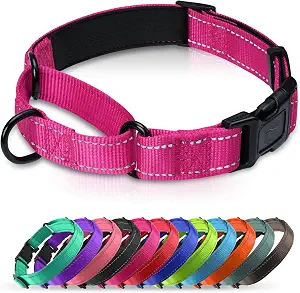 |
haapaw Escape-Proof Martingale Collar M
Best Overall Collar for Dogs That Escape

| Included Components | Dog collar, Dog leash |
|---|---|
| Material Type | Nylon |
| Closure Type | Buckle |
| Size | Medium |
This haapaw martingale collar is built to keep dogs from slipping out while remaining relatively comfortable for everyday walks. It works like a typical martingale by tightening slightly when the dog pulls, which prevents the collar from sliding over the head but does not function as a choke when sized and used correctly. The quick-release buckle has a safety lock to stop accidental openings and makes the collar easy to put on and remove. High-density nylon webbing, box tacking at pressure points, and heavy-duty hardware give the collar a durable feel, and the included leash uses climbing rope with a foam handle to reduce leash burn and add grip. Reflective piping on both collar and leash improves visibility on low-light walks. Downsides are the standard martingale behavior — it tightens under tension so it requires proper sizing and supervision — and the set is a basic nylon build without padded comfort around the neck for dogs that need extra cushioning.
Best for: Buyers who need a practical, escape-reducing collar that balances secure control and everyday durability for regular walks and training.
Less Ideal for: Owners seeking a heavily padded or fashion-forward collar, or those who prefer harness-only restraint systems for strong pullers.
- Martingale design tightens to prevent dogs from slipping out without relying on choke pressure
- Quick-release buckle with safety lock for secure, easy on/off
- Durable high-density nylon webbing and reinforced box stitching at pressure points
- Reflective piping on collar and leash increases nighttime visibility
- Leash made from climbing rope with foam handle reduces leash burn and improves grip
- Tightening action requires correct sizing and monitoring to avoid discomfort
- No padded neck lining for dogs that need extra cushioning
- Basic nylon construction may not be as premium-feeling as thicker padded alternatives
Verdict: The best overall collar for dogs that escape, balancing secure fit, durable materials, and humane restraint to prevent slipping out without causing harm.
PetSafe Martingale Quick-Snap Collar Medium
Best Budget Collar for Dogs That Escape

| Breed Recommendation | Medium Breeds |
|---|---|
| Material Type | Nylon |
| Closure Type | Snap |
| Included Components | Collar |
The PetSafe Martingale Quick-Snap Collar is a simple escape-prevention collar made from durable nylon and fitted with a quick-release snap buckle for fast on/off. It uses the martingale loop design so the collar tightens when a dog backs or pulls, reducing the chance of slipping out while still releasing pressure when tension stops. That makes it useful for training walks and for dogs with narrow heads like greyhounds or escape-prone mixes. The nylon webbing is lightweight and machine washable, and the quick-snap closure saves time compared with a standard martingale that must be threaded over the head. Limitations: it does not provide full choke-style correction so very determined escapers may still slip out if the fit is incorrect, and the narrow width is best suited to medium breeds rather than heavy pullers. For the price point you get a durable, easy-to-use collar focused on increasing security without adding harsh correction.
Best for: Buyers who need an inexpensive, no-frills collar that reduces escape risk during walks and training and who prioritize ease of use and durability over strong correction.
Less Ideal for: Owners seeking a heavy-duty control collar for large strong pullers or those who need electronic or prong-style containment solutions should consider other options.
- Martingale design tightens under tension to reduce slipping out
- Quick-snap buckle for fast, convenient on and off
- Durable nylon construction that is machine washable
- Lightweight construction suitable for everyday wear
- Narrow 3/4 inch width is not ideal for strong pullers or large-breed control
- Does not provide aggressive correction for very determined escape behaviors
Verdict: The best budget collar for dogs that escape, offering solid escape-prevention features and durable construction at a low price for cost-conscious pet owners.
Hikiko Martingale Dog Collar Medium
Best Escape-Proof Collar

| Material Type | Nylon |
|---|---|
| Closure Type | Buckle |
| Size | Medium |
| Reflective | Yes |
This Hikiko martingale collar combines the traditional no-slip loop with a quick-release buckle and reflective trim to help prevent dogs from backing out while keeping them visible at night. It is made from soft nylon with reinforced hardware and is intended for training and daily outdoor use; when the dog pulls the martingale loop tightens to limit slippage but remains loose when the dog is relaxed if sized properly. The quick-release buckle makes it easy to remove in an emergency, and the reflective strip improves visibility on walks after dark. Practical benefits include a simple fitting procedure and light weight that is comfortable for most medium-breed dogs, plus durability from nylon construction. Limitations are that martingale collars are not collars to leave on unsupervised dogs and they rely on correct sizing and clipping technique to be effective, and the product is not a substitute for a harness for strong pullers or dogs that lunge frequently.
Best for: Owners who need a collar that actively tightens to stop dogs from slipping out and who will use it for outdoor training and walks where secure fit and visibility matter.
Less Ideal for: People seeking a full no-pull solution for very strong pullers or dogs that lunge aggressively should consider a harness or specialized training equipment instead.
- Martingale design reduces chance of collar slipping over the head when the dog pulls or backs out
- Quick-release buckle allows fast removal in emergencies
- Reflective material improves nighttime visibility on walks
- Soft nylon construction is lightweight and comfortable for everyday wear
- Not intended to be left on unsupervised dogs during play or crating
- Effectiveness depends on correct sizing and proper use during training
Verdict: The best escape-proof collar for owners whose dogs frequently back out of collars, using secure closures and fit features that reduce slippage under pressure.
WINGOIN Tactical Dog Collar Large
Best Heavy-Duty Collar

| Size | L (16.9"-21.7") |
|---|---|
| Material Type | Alloy Steel, Nylon |
| Closure Type | Buckle |
| Included Components | AirTag Holder |
| Water resistance (holder) | IPX5 |
The WINGOIN tactical collar is built for strong, escape-prone dogs and daily outdoor use. It pairs double-layer 1.2mm nylon webbing with a heavy-duty quick-release zinc buckle and dual-press buckles intended to resist chewing and accidental release, while two D-rings give a secure leash attachment plus a spot for the provided snap-on AirTag case. A 4mm neoprene soft liner and a PU control handle add comfort and a handhold for close steering during walks or training, and 360° reflective strips improve low-light visibility. The collar is sized for large dogs (L fits 16.9 to 21.7 inches) and is designed to be splash resistant thanks to the IPX5-rated AirTag holder. Expect a robust, supportive collar that balances control and comfort; however it is relatively wide and heavy compared with minimalist collars and the AirTag must be purchased separately if you want active tracking beyond the included holder.
Best for: Owners of strong, tenacious large dogs who prioritize a collar that resists chewing and accidental release and provides a firm, comfortable handhold for control during walks and training.
Less Ideal for: Owners seeking an ultra-lightweight or minimalist everyday collar for small or low-energy dogs should consider slimmer options instead.
- Double-layer 1.2mm nylon webbing for increased chew and wear resistance
- Heavy-duty rust-proof zinc quick-release buckle and dual-press buckles for secure closure
- PU control handle for close control and to reduce rope burn during pulls
- 360° reflective strips improve visibility at dawn and dusk
- Snap-on IPX5 AirTag holder integrates a tracker without tools
- Larger, heavier profile may be overbuilt for small or calm dogs
- AirTag not included so tracking requires a separate purchase
Verdict: The best heavy-duty collar for strong or tenacious dogs, prioritizing robust webbing and reinforced hardware to resist wear and escape attempts.
Hyhug Martingale Dog Collar Medium
Best Martingale Collar

| Size | Medium |
|---|---|
| Adjustable length | 13"-19" |
| Material | Nylon |
| Closure type | Pull On |
The Hyhug Martingale Dog Collar is a no-buckle, slip-on training collar made from nylon that tightens modestly when a dog pulls and relaxes when tension is released. It is meant for daily walks and training sessions where escape prevention is the priority; the martingale loop limits how much the collar tightens so pressure is distributed across the neck rather than focused on the trachea. The Medium size adjusts to fit a 13"–19" neck and the collar comes colorfast-dyed so it resists fading from sun and washing. Practical benefits include a simple on/off wear without needing to thread a head through a buckle, compatibility with standard leash clips, and a lightweight build that suits medium breeds. Limitations are that martingale collars should not be used for tying a dog up and they require correct sizing and adjustment to work properly; very aggressive chewers may damage the nylon and dogs that lunge hard may still generate noticeable pressure despite the limited-tightening design.
Best for: Owners who need a simple, effective collar to stop medium dogs from slipping out during walks or training and who prioritize gentle control over harsh correction.
Less Ideal for: People who require a collar for tethering or for dogs that habitually chew or destroy collars should consider different hardware or reinforced options.
- Patented martingale design provides gentle, limited tightening to prevent slipping out of the collar
- Durable nylon construction suited for daily training and walking
- Colorfast dyeing helps maintain appearance after sun exposure and washing
- Adjustable range (13"–19") fits typical medium-dog neck sizes and is easy to set up
- Not intended for tying a dog up or long-term tethering
- Nylon material can be chewed through by determined chewers
Verdict: The best martingale collar for dogs that escape by slipping collars, providing gentle tightening under tension to stop escapes while avoiding choke-style pressure.
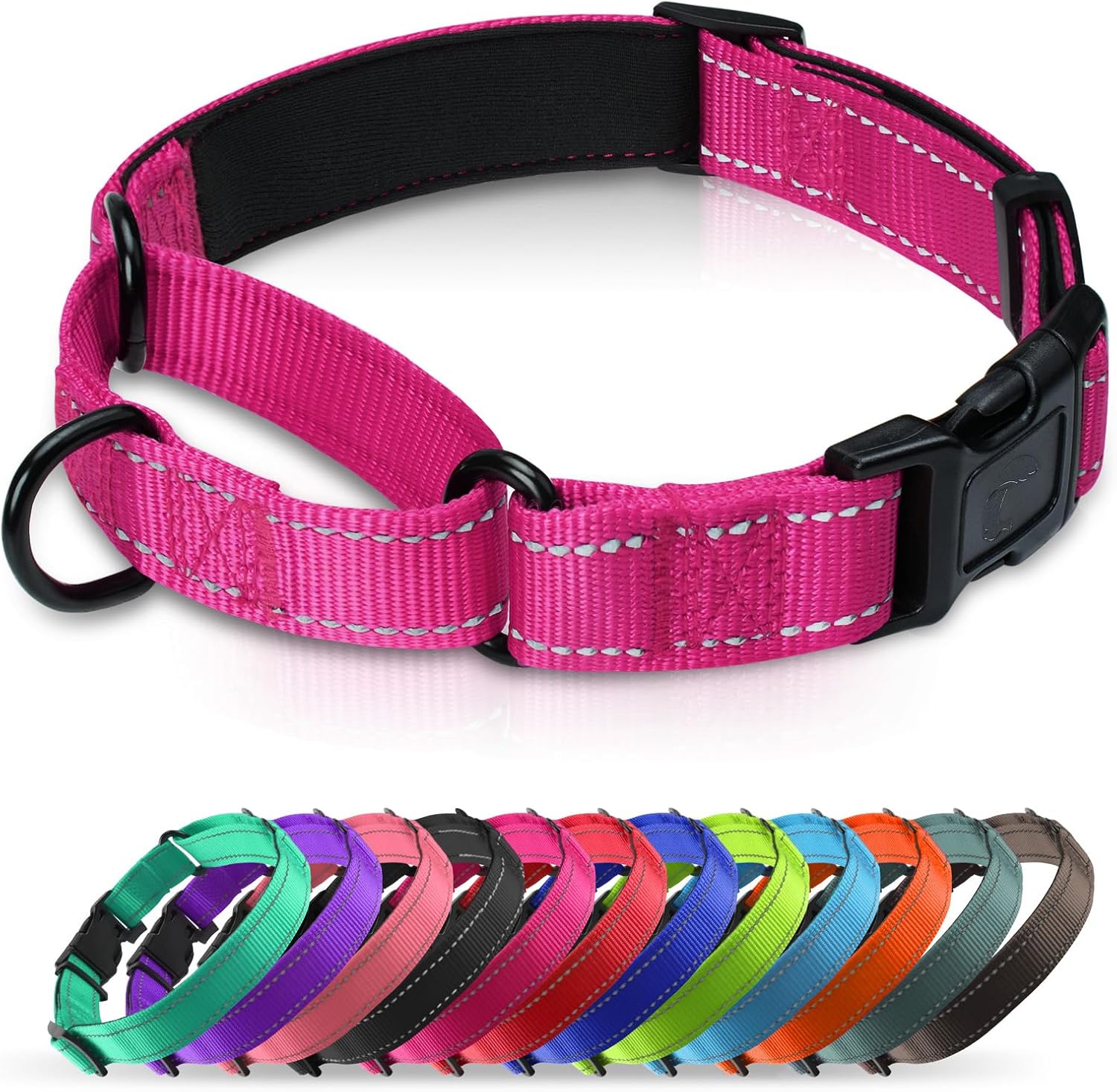
Erbine Padded Martingale Collar M
Best Quick-Release Collar
| Material Type | Alloy Steel, Neoprene, Nylon, Plastic |
|---|---|
| Closure Type | Buckle |
| Size | M:width 1"neck 14.5-19" |
| Pet Type | Dog |
This Erbine padded martingale collar combines the tightening control of a martingale with a soft, neoprene-lined strap to reduce neck pressure during walks and training. It is used like a standard martingale: the loop tightens gently when the dog pulls and relaxes when they stop, helping prevent dogs with narrow heads from slipping free without resorting to choke corrections. The quick-release plastic buckle makes removal fast and the metal D-ring provides a secure leash connection for everyday walks, while reflective stitching improves visibility in low light. Practical benefits include the padded interior for sensitive necks, machine-washable construction for easy cleaning, and multiple size options to fit a range of breeds. Limitations are that the quick-release plastic buckle and the advice to only use the collar under supervision mean it is not intended for unattended wear, tie-outs, or heavy-duty pulling by very strong dogs, so handlers of powerful pullers may prefer a harness or heavier hardware. For typical leash training and regular walks the collar balances gentle control and comfort effectively.
Best for: Owners seeking a martingale collar that eases neck pressure during frequent walks or training and prioritizes cushioned comfort for dogs with sensitive throats.
Less Ideal for: Handlers who need a collar for unsupervised wear, tie-outs, or for very strong dogs that require heavy-duty metal hardware or a harness.
- Neoprene-padded interior reduces pressure on the throat for sensitive dogs
- Martingale design offers gentle tightening to prevent slipping without a choke effect
- Reflective stitching increases visibility on dawn or dusk walks
- Quick-release buckle allows fast on and off for walk sessions
- Machine-washable for straightforward cleaning after outdoor use
- Plastic quick-release buckle may not suit very strong pullers or heavy-duty use
- Designed for supervised wear only and not for unattended or tied use
Verdict: The best quick-release collar for owners who want a secure fit with the ability to remove the collar quickly in emergencies without sacrificing escape resistance.
Choosing the Right Collar Dog Escape: Key Factors to Consider
Fit and Adjustability
A collar that does not fit well is the single biggest contributor to escape risk. Look for collars with a broad adjustment range and clear measurement guidance so you can set a snug fit without causing discomfort.
A wider band distributes force better and reduces the chance of the collar sliding over the dog's head. Multiple adjustment points or sliding buckles let you fine-tune the fit as the dog grows or gains and loses weight. Pay attention to how the collar sits relative to the throat and windpipe; it should be firm enough to stay in place but loose enough so the dog can pant and swallow normally.
Closure Type and Security
The closure is the component most responsible for accidental release. Heavy-duty metal buckles or purpose-designed locking buckles typically outlast plastic snaps on an escape-prone dog.
A closure that resists unintentional opening but still allows a handler to remove it quickly in an emergency is ideal. Look for collars with secondary security features such as a sewn-over buckle tab or a small locking mechanism. Avoid closures that can be triggered by a paw or by rubbing against obstacles during play.
Material Strength and Abrasion Resistance
Collars on dogs that escape will often undergo repeated abrasion from fences, brushes, and pavement. Strong, tightly woven webbing or thick bonded materials resist fraying and stretching over time.
Materials should maintain shape when wet and not loosen after repeated exposure to dirt or moisture. Reinforced stitching at stress points and quality edge finishing reduce the chance of gradual failure. Chew resistance is an added plus for dogs that mouth or chew their collars during attempts to escape.
Hardware Durability
D-rings, rivets, and buckle hardware take the load when a dog pulls against the collar; inferior hardware can bend or break, creating an immediate escape risk. Opt for stainless steel or solid alloy components rated for strength.
Welded or riveted attachment points are preferable to thin stamped rings. Check how the hardware is attached to the collar body and whether the design prevents the ring from sliding into a position that could weaken the attachment. Corrosion resistance matters if the collar will be exposed to salt, damp environments, or frequent washing.
Anti-slip Design Features
Certain design elements reduce the chance a collar will slip over a dog's head during the rigors of walking, running, or squeezing through gaps. Wider contact surfaces, contoured shapes, and rolled edges help the collar ride more stably on the neck.
Some collars include non-slip backing or textured inner surfaces that increase friction against fur. Elastic keepers or fixed loops that prevent hardware from sliding toward the throat also contribute. Consider how the collar behaves when the dog twists or pulls rather than only when the dog stands still.
Emergency Release and Safety Balance
You need a collar that is secure during normal activity but removable quickly if the dog becomes entangled or injured. Balanced designs provide secure fastenings with an accessible quick-release option or a fail-safe breakaway that only operates under specific conditions.
Understand the trade-off between tamper-resistant closures and emergency freeing. If a breakaway is used, ensure it is rated to remain closed during typical play but will separate under extreme force to protect the animal from strangulation. Train handlers to perform emergency releases so removal is fast when seconds matter.
How Tight Should a Collar Be to Stop Slipping but Not Choke?
Set the collar so you can fit two fingers between the collar and the dog's neck. This provides a secure fit that minimizes slipping while allowing the dog to move, pant, and swallow comfortably.
After initial adjustment, observe the dog walking, turning the head, and jumping to ensure the collar does not slide forward over the jaw. Recheck fit after a week of normal activity because webbing and buckles can settle or stretch.
- Check for rotation: collar should not rotate to the front when the dog turns its head.
- Re-measure periodically, especially for growing or active dogs.
- Use a wider collar for breeds with narrow heads to reduce slippage.
When Should You Use a Martingale-style or Limited-slip Collar?
A martingale-style or limited-slip collar reduces the chance of a dog backing out of a collar by tightening slightly under load without choking. These designs are useful for dogs with narrow heads or deep necks where standard collars tend to slip.
Use them with supervision and proper adjustment: the tightening action should stop before exerting pressure on the windpipe. They are not a substitute for a properly fitted, escape-resistant collar with solid closures, but they can be a helpful secondary measure for specific body shapes.
- Adjust so the collar tightens only enough to prevent back-out, not to constrict breathing.
- Do not leave martingale or limited-slip collars on unsupervised dogs that chew or paw at their collars.
How Do You Test a Collar's Hardware Before Relying on It?
Inspect hardware for solid construction and try the closure several times to ensure it seats firmly and does not wiggle. Pull gently on the leash attachment points and feel for play or bending.
If possible, simulate typical forces by tugging at various angles to see if the D-ring shifts or the buckle deforms. Check stitching and rivets while applying pressure to seams; any movement indicates a weakness that could fail during a real escape scenario.
- Look for welded D-rings or reinforced stitching at the leash point.
- Confirm the closure stays engaged under side pressure, not just direct pull.
- Examine seams for double stitching or bar tacks at stress areas.
Can You Combine a Collar with Other Escape-prevention Measures?
A collar is one part of an escape prevention system. Pairing a secure collar with a properly sized harness, supervised outdoor time, and secure fencing reduces overall escape risk.
For dogs that habitually slip out of neckwear, keep identification on both collar and harness so contact information remains available if one attachment becomes lost. Training to respond to recall and distraction cues further lowers the chances of a successful escape.
- Use a harness for rides in vehicles or when extra control is needed.
- Keep current id tags and microchip information updated as redundant identification.
- Supervise outings in unfamiliar areas even with a secure collar.
What Maintenance Keeps an Escape-resistant Collar Reliable?
Regular inspection and cleaning prolong a collar's useful life. Wash dirt and salt from webbing, dry thoroughly, and lubricate metal closures if they stiffen. Replace any collar showing frayed edges, stretched webbing, or corroded hardware.
Rotate through spare collars so you always have a known-good option available. Small repairs like reinforcing stitches or replacing a worn keeper can extend service life but do not attempt repairs that compromise the closure strength.
- Inspect seams and hardware monthly for active dogs.
- Avoid drying webbing at high heat which can degrade fibers.
- Keep a labeled spare collar in your emergency kit.
How We Chose the Best Collar Dog Escape
We prioritized real-world safety and reliability when evaluating collars for dogs that escape. Key evaluation criteria included fit adjustability to ensure a snug, non-restrictive hold across neck shapes; fastening security, focusing on buckles and closures that resist accidental release or tampering; material strength and abrasion resistance to stand up to pulling, chewing, and outdoor wear; hardware quality, including D-rings and attachment points that do not bend or fail under load; design features that reduce slipping, such as wider contact surfaces and rolled edges; and ease of removal in an emergency, balancing security with a quick-release contingency. We excluded collars intended strictly for training correction or electronic containment systems and any products that require specialized receivers or professional fitting. The list favors solutions that combine reliable mechanical construction with user-friendly adjustment. Products were filtered for measurable safety features and construction details rather than marketing claims alone. The final selection emphasizes collars that reduce escape incidents through better fit and stronger components.
Our full evaluation process is outlined in our review methodology.
FAQ
Are breakaway collars safe for dogs that try to escape?
Breakaway collars are designed to release under force, reducing strangulation risk if a dog is caught. They may not be ideal as the only escape-prevention measure because they can release during normal snagging rather than preventing the dog from slipping away.
Will a wider collar prevent a dog from backing out?
A wider collar increases surface area against the neck and can reduce slipping, especially on dogs with narrow heads. Combined with proper adjustment and sturdy hardware, width helps but is not a standalone solution for dogs that habitually escape.
Is a harness better than a collar for escape-prone dogs?
A harness offers more body control and can prevent a dog from slipping free from a neck-only attachment, but it should fit correctly to avoid creating new escape routes. Many owners use both a secure collar and a properly fitted harness depending on the activity.
How often should I replace a collar used outdoors daily?
Replace collars that show signs of wear such as frayed webbing, pulled stitching, or corroded hardware. For active outdoor use, inspect monthly and plan on replacement as soon as any structural weakness is detected rather than waiting for catastrophic failure.
Can chewing ruin an escape-resistant collar quickly?
Persistent chewing can compromise even heavy-duty collars by weakening webbing and hardware attachments. If your dog chews, choose chew-resistant materials, supervise wear, and remove the collar when unsupervised if chewing persists.
Final Verdict
Picking a collar for a dog that escapes is about balancing secure fit, strong hardware, and predictable release behavior in an emergency. Prioritize collars that allow fine adjustment, use durable materials, and include robust attachment points so the collar stays in place during normal activity. Expect trade-offs: the most tamper-resistant closures may take longer to remove in an emergency, and excessively tight settings create risk to breathing. Use the factors above to select a collar that minimizes escape risk while keeping removal straightforward when needed.

