

After surgery your dog needs protection, comfort, and limited access to wounds so healing proceeds without setbacks. The right collar reduces licking and chewing, prevents accidental reopening of incisions, and still lets your dog rest and move comfortably around home. This guide covers seven top-rated collars for dogs after surgery that balance protection, comfort, and practical features such as adjustability, breathable materials, and easy cleaning. Below you will find how we evaluated each option and the key factors to consider when choosing the right collar for your pet's recovery.
Top Picks at a Glance
| Best Overall Collar for Dogs After Surgery A reliable recovery collar that balances protection and comfort | BENCMATE Inflatable Dog Collar Medium |  |
| Best Budget Collar for Dogs After Surgery An affordable recovery option that still protects surgical sites | Didopet Inflatable Donut Dog Cone Medium |  |
| Best Premium Collar Higher-end recovery collars with superior materials and fit options | SUNFURA Soft Dog Cone Large |  |
| Best Inflatable Collar A low-profile, cushioned design that limits licking without a cone | Supet Inflatable Dog Cone Collar |  |
| Best Soft Collar A flexible, padded option that minimizes rubbing and stress | AnimaCure Soft Dog Cone Collar L |  |
| Best Rigid Collar A firm, cone-style collar that prevents most paw and mouth access | Andiker Pet Recovery Cone Medium |  |
| Best Easy-Clean Collar Washable or wipeable designs built for frequent cleaning after accidents | Autrous Soft Dog Cone Collar S |  |
BENCMATE Inflatable Dog Collar Medium
Best Overall Collar for Dogs After Surgery

| Material Type | Polyvinyl Chloride (PVC) |
|---|---|
| Closure Type | Zipper |
| Fit Type | Snug Fit |
| Neck Size | 12 inches |
The BENCMATE inflatable dog collar replaces bulky Elizabethan cones with a soft, donut-shaped barrier that protects surgical sites, rashes, and other injuries while letting pets see, eat, and move more freely. It is used by slipping the everyday collar through the inner loop, then inflating the PVC air bladder to a comfortable firmness and securing the outer cover with the zipper and hook-and-loop closure. Key features include a plush or anti-stick outer fabric option, an inner fixation strap to prevent slipping, and a zipper for removing the cover for cleaning. In practice the collar is much less intrusive than a rigid cone and is easier for most dogs to tolerate during recovery, and deflates for compact storage when not in use. Limitations are that very flexible dogs or those with long snouts may still reach extremities, the PVC bladder can lose air in extreme temperature changes, and it does not offer rigid, full-face protection for dogs that persistently try to remove barriers.
Best for: Buyers who want a comfortable, low-stress recovery collar that balances protection with the pet's ability to eat, sleep, and move during healing.
Less Ideal for: Owners whose pets repeatedly try to bite or reach wounds despite soft barriers or who need a completely rigid, full-face shield for aggressive chewers should consider a hard cone alternative.
- Comfortable soft donut design that preserves vision and mobility
- Inner loop/strap allows use with the pet's regular collar to prevent slipping
- Removable outer cover and zipper make cleaning easier
- Inflatable bladder deflates for compact storage and transport
- May not fully block access to paws or long-snout pets
- Air bladder can be affected by temperature-related pressure changes
Verdict: The best overall collar for dogs after surgery offers dependable incision protection while maximizing comfort, fit adjustability, and ease of use for most pet owners.
Didopet Inflatable Donut Dog Cone Medium
Best Budget Collar for Dogs After Surgery
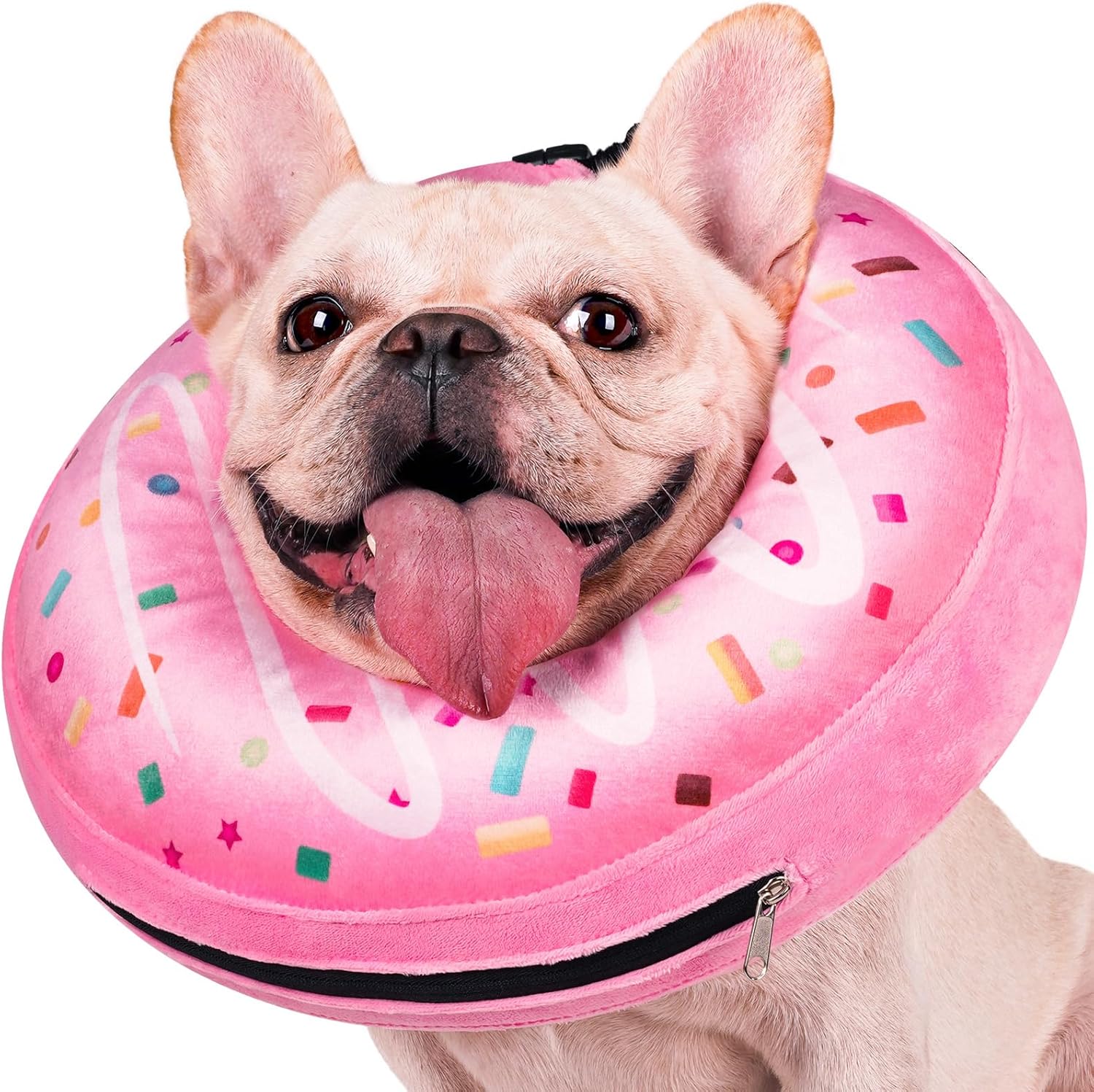
| Size guide | M (Neck 8"-11") |
|---|---|
| Closure type | Buckle, Hook & Loop, Zipper |
| Fit type | Adjustable |
| Water resistance | Water Resistant |
This inflatable donut collar replaces a hard Elizabethan cone with a soft, lightweight ring that keeps a dog from reaching wounds while allowing normal activities like eating and playing. Made of velvet with an internal air bladder, it inflates to provide a cushioned barrier and can be adjusted with a buckle, hook-and-loop, and zipper closure for a secure fit; five elastic loops let you attach it to the dog's regular collar for extra security. The design is aimed at pug-faced and other short-muzzled breeds and doubles as a neck pillow when not in active recovery use. Practical benefits include easier mobility and less stress for sensitive or small pets, machine-washable cover after deflating, and water resistance for quick cleaning. Important limitations are breed fit: it is not suitable for long-snouted or long-bodied breeds, and very determined chewers can still damage or bypass the collar, so supervision is required.
Best for: Pet owners who need a lightweight, low-stress recovery option for small or short-muzzled dogs that still prevents access to surgical sites while letting the animal move and eat normally.
Less Ideal for: Owners of long-snouted, large, or very powerful dogs that can reach wounds despite a donut collar or may chew through an inflatable design should choose a more substantial, rigid protector.
- Low-profile inflatable design reduces weight and improves mobility compared with rigid cones
- Velvet cover and air cushioning double as a comfortable neck pillow during recovery
- Multiple closures (buckle, hook & loop, zipper) and elastic loops help secure fit and prevent escapes
- Machine-washable cover and water resistant construction make cleaning straightforward
- Not suitable for long-nosed or long-bodied breeds by manufacturer guidance
- Can be damaged or bypassed by determined chewers, so it requires supervision
Verdict: The best budget collar for dogs after surgery gives basic, reliable protection for wounds or sutures at a low cost while remaining durable enough for everyday recovery needs.
SUNFURA Soft Dog Cone Large
Best Premium Collar
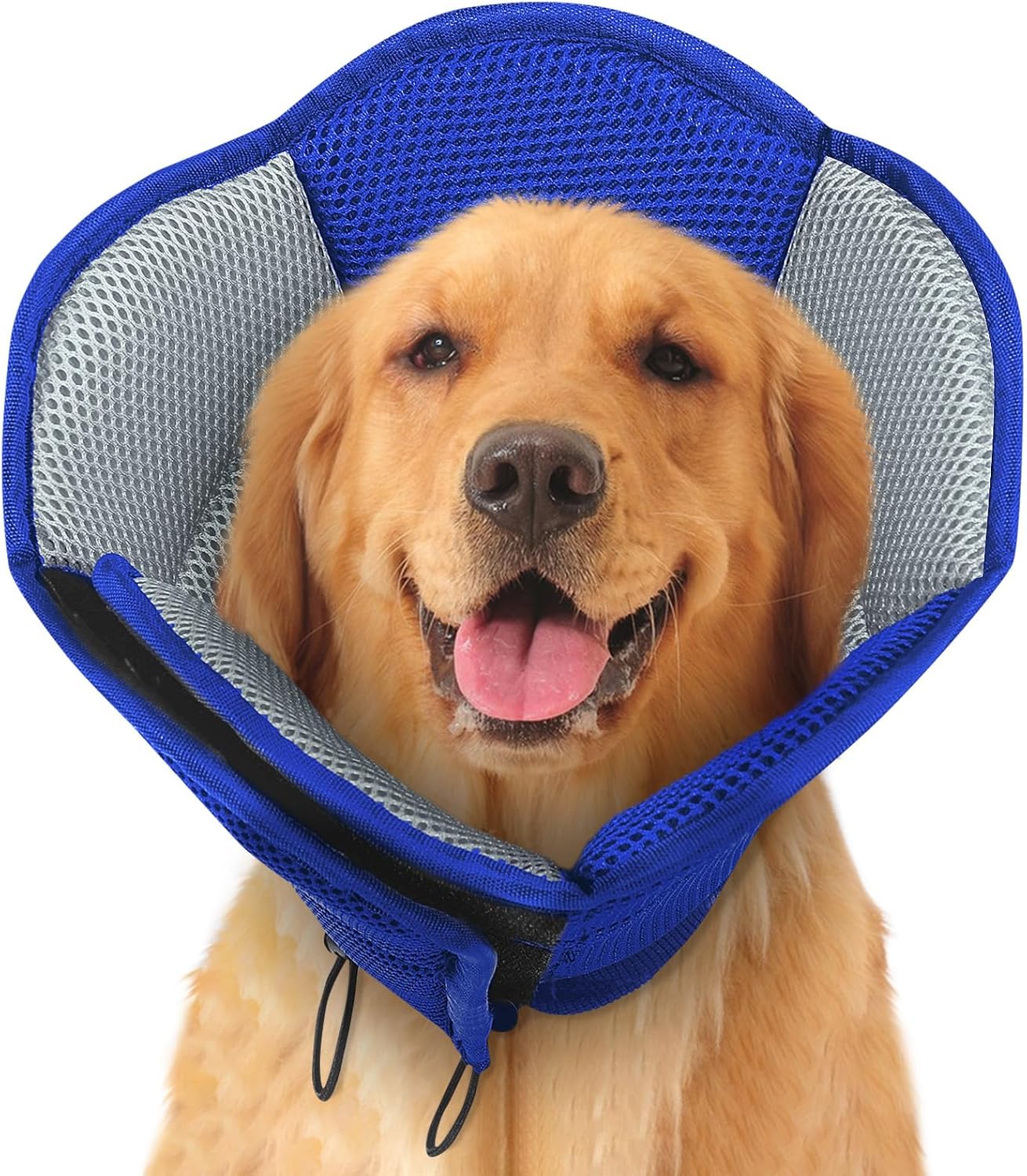
| Closure Type | Hook & Loop |
|---|---|
| Fit Type | Adjustable |
| Water Resistance Level | Not Water Resistant |
| Target Species | Dog |
| Dog Breed Size | Large |
The SUNFURA soft dog cone is a fabric Elizabethan collar built from breathable mesh to reduce rubbing while keeping a protective barrier around the head. It fastens with hook-and-loop closure and includes an adjustable drawstring so you can fine-tune the fit quickly, which makes putting it on and taking it off straightforward for everyday use. The soft construction is lightweight and more comfortable than rigid plastic cones, so dogs can sleep, drink, and move through doorways more easily while still being blocked from reaching wounds. It is marketed for large dogs and intended to prevent licking or biting at incisions or irritated skin. Important limitations are that it is not water resistant and the protection depends on sizing and head length, so it may not stop determined dogs that can reach certain areas or those with long snouts; also fabric cones can show wear faster than molded plastic. For owners who prioritize comfort and thoughtful fastening over harsh rigidity, this collar is a good premium-feeling alternative during recovery care.
Best for: Buyers who want a more comfortable, well-constructed recovery collar and are willing to pay for softer materials and adjustable fit for better day-to-day tolerance during healing.
Less Ideal for: Owners who need a fully waterproof or maximum physical barrier solution for aggressive chewers or dogs with very long snouts should consider a sturdier alternative.
- Breathable mesh fabric reduces skin rubbing and improves comfort
- Adjustable fit with drawstring and hook-and-loop closure for quick on/off
- Soft, lightweight design lets dogs eat, drink, and navigate more easily than rigid cones
- Designed for large dogs so the depth and neck sizing suit bigger breeds
- Not water resistant so it can soak and take longer to dry
- Soft fabric may wear or lose shape faster than rigid plastic cones
Verdict: The best premium collar is for owners willing to pay more for advanced materials, superior comfort, refined fit adjustments, and longer-lasting construction during a pet's recovery.
Supet Inflatable Dog Cone Collar
Best Inflatable Collar

| Fit Type | Adjustable |
|---|---|
| Closure Type | Hook & Loop |
| Water Resistance Level | Water Resistant |
| Target Species | Dog |
| Neck Size | 11 inches |
The Supet inflatable dog cone is a donut-shaped recovery collar designed to keep dogs and cats from reaching wounds while staying lightweight and comfortable. It inflates into a cushioned ring and secures with an inner loop system that lets you thread your pet's regular collar through to help prevent slipping, plus an outer hook-and-loop strap for adjustment. The non-stick outer fabric resists hair clinging and can be removed for cleaning, and the water-resistant inner bladder provides neck support without blocking peripheral vision so pets can eat, sleep, and move more naturally than in a hard Elizabethan cone. It is best used for typical post-surgery protection, hotspot care, or to stop persistent licking on body areas the donut can physically block; however, the shape and size mean it is not suitable for breeds with very long noses or extremely long bodies. You will need to measure neck circumference to pick the right size and inflate it properly; very determined chewers may still be able to damage the bladder if left unsupervised.
Best for: Pet owners who want a low-profile, cushioned alternative to rigid Elizabethan collars for routine post-surgery or wound protection and prioritize comfort and mobility for their animal.
Less Ideal for: Owners of very long-nosed or very long-bodied breeds and households with pets that chew persistently should consider a different style of protective collar.
- Soft, cushioned barrier that is gentler than rigid cones
- Inner loops let you thread the pet’s regular collar to reduce slipping
- Outer hook-and-loop strap provides adjustable fit
- Non-stick outer fabric resists pet hair and is removable for cleaning
- Lightweight and water resistant so pets can eat and rest comfortably
- Not suitable for breeds with very long noses, legs, tails, or bodies
- Inflatable bladder can be punctured by determined chewers
Verdict: The best inflatable collar reduces access to surgical sites while keeping the dog's field of vision and mobility more normal, making recovery less stressful for pets that tolerate soft barriers.
AnimaCure Soft Dog Cone Collar L
Best Soft Collar

| Closure Type | Hook & Loop |
|---|---|
| Fit Type | Adjustable |
| Water Resistance Level | Waterproof |
| Target Species | Dog |
| Dog Breed Size | Large |
The AnimaCure Soft Dog Cone Collar is a padded, double-layer recovery collar that keeps dogs from reaching surgical sites or irritations while remaining quieter and more flexible than rigid plastic cones. It is typically used during post-surgery recovery, skin treatment, or after nail work and fits around the neck with hook-and-loop straps, an adjustable drawstring stopper, and a loop to attach your dog's regular collar for extra security. The breathable mesh inner layer and ventilated PVC outer provide airflow to reduce overheating, while a plush outer edge cushions furniture bumps and minimizes startling noises. Practical benefits include a waterproof exterior for easy spot cleaning, reflective trim for low-light visibility, and a wide adjustment range to suit different neck circumferences. Limitations are that it relies on soft materials rather than a rigid barrier, so extremely determined dogs or pets that aggressively paw at wounds may still find ways to reach affected areas, and sizing must be checked carefully since fit is important for effectiveness.
Best for: Buyers who prioritize a gentle, low-noise recovery option that keeps a dog comfortable while preventing access to wounds and who value easy cleaning and breathable materials.
Less Ideal for: Owners of dogs that chew or paw aggressively or who need a completely rigid barrier to guarantee wound protection should consider sturdier alternatives.
- Soft double-layer construction balances comfort and protection
- Breathable mesh and ventilated PVC holes reduce overheating
- Triple anti-slip fit with hook-and-loop, drawstring stopper, and collar loop for secure placement
- Waterproof exterior allows quick spot cleaning without full washing
- Plush edging and quieter material reduce furniture noise and startle responses
- Soft design is less effective than rigid cones against very persistent chewers or pawers
- Requires accurate sizing to ensure the cone depth blocks the snout fully
Verdict: The best soft collar is ideal for dogs who need gentle protection without the rigid structure of a cone, offering comfortable coverage and reduced irritation around the neck.
Andiker Pet Recovery Cone Medium
Best Rigid Collar
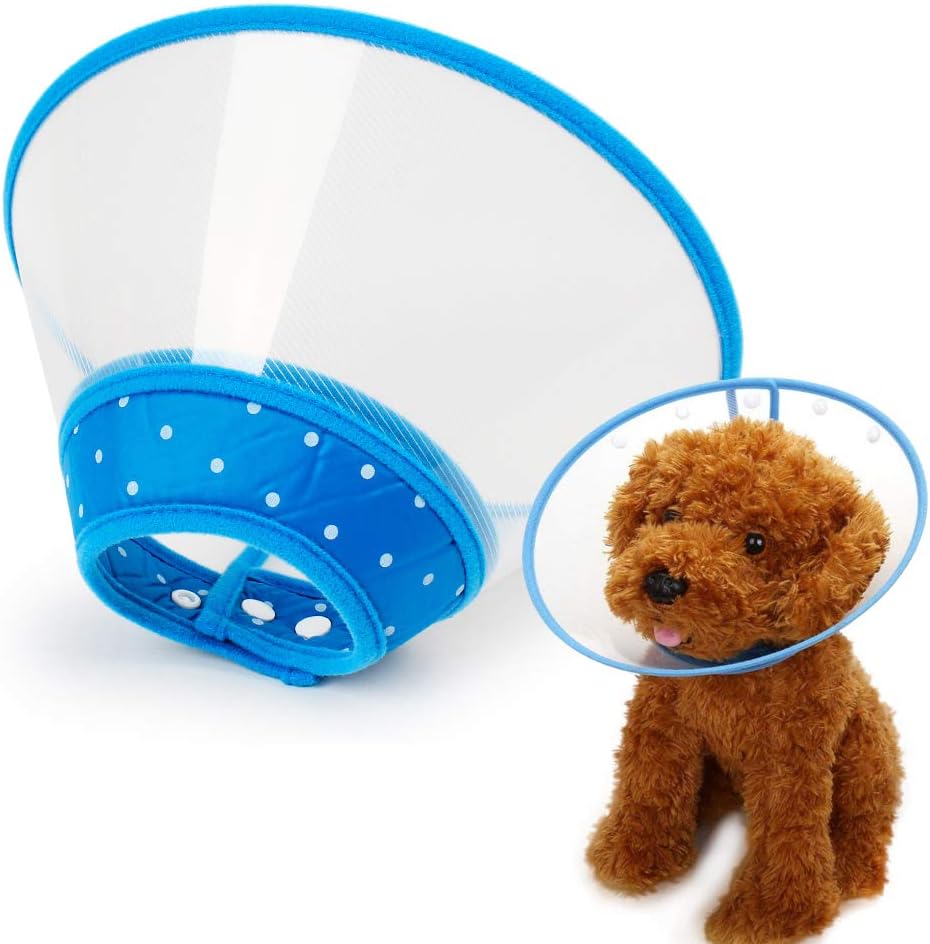
| Material Type | Polyvinyl Chloride (PVC) |
|---|---|
| Closure Type | Buckle |
| Fit Type | Adjustable |
| Recommended Uses For Product | Post-surgery recovery for dogs and cats |
This clear Andiker recovery cone is a rigid yet lightweight PVC collar intended to keep dogs and cats from reaching surgical sites. It fastens with a buckle and an adjustable fit system, and the transparent body preserves peripheral visibility so pets can still see while wearing it. The inner flannelette padding around the rim softens contact with the neck and reduces chafing compared with bare plastic cones, and the cone folds for compact storage when not in use. In practice it works well for steady supervision periods and everyday recovery tasks like preventing licking or chewing of stitches, but its PVC body is not water resistant and can be less durable against heavy scratching or determined pets that paw strongly at the cone. Sizing is by neck circumference and requires choosing the correct medium or larger option for larger breeds, and the simple buckle closure is quick to fit but not as secure as some rigid molded collars with reinforced fasteners.
Best for: Buyers who need a straightforward, physical barrier to stop licking during recovery and prefer a lightweight, visible cone that is easy to fit and store.
Less Ideal for: Pets that aggressively chew or paw at collars, or owners who need a fully water resistant or heavy‑duty, reinforced protective collar.
- Transparent PVC body preserves pet visibility while restricting access to wounds
- Padded flannelette edge reduces neck irritation compared with raw plastic rims
- Adjustable buckle fit allows quick sizing to typical neck circumferences
- Lightweight and foldable design is easy to store and carry
- Not water resistant which can make cleaning after soiling harder
- PVC construction can be less durable for strong chewers or very active pets
Verdict: The best rigid collar provides maximum physical barrier against licking or chewing of incisions and is suited to pets that need stronger, no-nonsense protection during healing.
Autrous Soft Dog Cone Collar S
Best Easy-Clean Collar

| Material Type | Cotton |
|---|---|
| Closure Type | Buckle |
| Fit Type | Snug Fit |
| Water Resistance Level | Not Water Resistant |
| Neck Size | 10.6 inches |
The Autrous soft dog cone is a fabric Elizabethan collar intended to keep dogs from licking or scratching wounds during recovery while offering a gentler alternative to rigid plastic cones. Constructed from breathable sandwich mesh and cotton materials, it fits with a buckle and Velcro closure for quick on/off use and a snug fit that resists deformation. In practice the collar is easy to clean with routine washing or spot wiping because the textile construction dries quickly and does not trap the same smells as rigid plastic. Its padded, noise-free build and moderate depth let pets rest more comfortably and move through doorways without the clunk of a hard cone, though very determined chewers may still be able to reach some areas. The collar is not water resistant, so heavy baths or soaked conditions will require drying before reuse, and sizing must be chosen carefully for effective coverage. For owners who prioritize comfort and simple laundering during a healing period, this offers a practical, low-stress option compared with traditional cones.
Best for: Someone who needs a comfortable, washable recovery collar to keep a dog from licking wounds and who values ease of cleaning and low-stress wear during convalescence.
Less Ideal for: Owners who need a fully water resistant or chewproof cone for dogs that bathe during recovery or aggressively try to remove collars should consider sturdier alternatives.
- Soft, breathable mesh and cotton construction for greater comfort than rigid cones
- Velcro plus buckle closure allows fast, tool-free on and off
- Padded, noise-free design helps dogs rest and move without loud clacking
- Textile materials are easy to wipe down and launder for routine hygiene maintenance
- Not water resistant so it must be dried after heavy exposure to moisture
- May not block access completely for very determined chewers or scratchers
Verdict: The best easy-clean collar is designed to withstand regular washing or quick wipe-downs so owners can maintain hygiene and reduce odor while their dog recovers.
Choosing the Right Collar Dog Surgery: Key Factors to Consider
Coverage and Protection Level
How much of the wound and surrounding area the collar prevents the dog from reaching directly affects healing. Full-coverage designs block access to the torso and limbs more effectively, while shorter collars may only discourage head and neck access. Consider the incision location and choose a collar style that prevents contact without forcing the dog into an uncomfortable posture.
Poor coverage can lead to repeated licking or chewing, which increases infection risk and can delay suture absorption or wound closure. At the same time, excessive coverage that forces the head forward or prevents normal rest can cause stress and inhibit recovery, so balance is essential.
Fit and Adjustability
A collar that fits correctly will stay in place without causing chafing or restricting breathing. Adjustable straps, multiple sizing options, and easily secured fasteners let you fine-tune fit as swelling decreases or bandages are changed. Proper fit also prevents the collar from slipping over the head or rotating into positions that expose the incision.
Measure your dog before purchasing and recheck fit after any swelling reduction. If a collar's sizing range is narrow, you may need to switch sizes during recovery; look for designs that accommodate small changes safely.
Material and Comfort
Soft, breathable materials reduce irritation on delicate or shaved skin near surgical sites. Foam, padded fabric, or soft inflatable structures cushion contact points and distribute pressure evenly around the neck and shoulders. Materials that wick moisture help keep sutures and bandaging dry, reducing the chance of infection or odor.
Avoid stiff or abrasive fabrics that can rub raw skin. Also consider hypoallergenic and washable materials if your pet has sensitive skin or will wear the collar for extended periods.
Ease of Eating, Drinking, and Resting
Post-surgery collars must allow basic activities like eating and drinking without forcing risky neck or body positions. Collars that block the mouth entirely can interfere with feeding and stress the animal. Look for collars with cutouts, collapsible edges, or shapes that permit comfortable access to bowls while still blocking the paw and mouth from reaching wounds.
Consider how well the collar lets your dog rest naturally. Some rigid cones make lying down awkward; softer, low-profile alternatives can be better for sleep while still limiting access to the incision.
Cleaning and Maintenance
Surgical recovery can be messy due to discharge, ointments, or soiling from bedding. Collars that are machine-washable or have easily wipeable surfaces make it simpler to maintain hygiene and reduce odor. Quick-drying materials also help when frequent cleaning is needed.
If a collar has removable covers or lining, those elements simplify cleaning and extend usable life. Avoid designs with many crevices that trap debris or harbor bacteria.
Visibility and Safety Features
Reflective patches, bright trim, or secure closures improve safety during short leashed walks and make it easier to check the collar at a glance. Breakaway features or quick-release buckles are useful in case the collar gets caught on furniture, but be sure any breakaway mechanism does not defeat the collar's protective purpose.
Evaluate how closures behave when the dog is restless; robust, secure fastenings help the collar stay effective through normal activity and recovery-related movements.
How Long Should My Dog Wear a Collar After Surgery?
The recommended wear time depends on the type of procedure and your veterinarian's instructions, but many dogs need a protective collar in place until sutures are removed or the incision has fully closed. That usually ranges from 7 to 14 days, though some procedures require longer monitoring. Keep the collar on any time the dog is unsupervised and consider removing it briefly only when you are present and can prevent licking by other means.
- Follow your veterinarian's timeline for suture or staple removal
- Increase monitoring if you notice swelling, discharge, or excessive licking
- Expect to adjust fit as swelling changes during the first week post-op
Can My Dog Eat and Drink While Wearing a Recovery Collar?
Many recovery collars are designed to allow eating and drinking without removal. Low-profile soft collars or structured shapes with mouth access let a dog reach bowls comfortably. If your dog struggles, raise or change the bowl height, switch to a shallow dish, or temporarily remove the collar for supervised feeding to avoid stress and ensure they receive adequate nutrition and water.
- Use a raised feeder or shallow bowl to ease access
- Supervise any brief collar removals during feeding
- Check that collars do not press on bandages while your dog eats
When Should I Use a Soft Collar Versus a Rigid Cone?
Soft collars and inflatable styles are more comfortable for lounging and often reduce anxiety, making them a good choice for dogs that need light-to-moderate protection. Rigid cones give stronger protection for active dogs or wounds in awkward locations because they physically block access more reliably. Choose the softer option when the incision is easily covered and the dog is calm; pick a more rigid design for persistent licking or complex wound sites.
- Soft collars are better for rest and minor access prevention
- Rigid cones provide more reliable barrier for determined chewers
- Monitor behavior after switching to confirm the wound remains protected
How Do I Measure My Dog for the Right Collar Size?
Measure your dog's neck circumference where a collar normally sits and add the manufacturer-recommended allowance for padding and bandages. Also measure head size if the collar must slip over the ears. For cone-style collars, measure from the base of the neck to just past the nose length to ensure sufficient forward projection. Recheck measurements after bandage removal or changes in swelling.
- Measure neck circumference and head width when needed
- For cones, measure base of neck to nose tip for correct projection
- Allow room for bandaging and expect to remeasure during recovery
Are There Alternatives to Collars That Still Protect an Incision?
In cases where a collar is poorly tolerated, protective garments such as recovery suits or surgical onesies can cover torso or limb incisions without restricting the neck. These can be a good alternative for wounds on the body, although they may not prevent paw access in all cases. Always ensure garments fit snugly without adding pressure to the incision and that they are breathable and washable.
- Recovery suits work well for torso and flank incisions
- They may be less effective for wounds near the face or paws
- Pair garments with a short-term collar if your dog can still reach the wound
How We Chose the Best Collar Dog Surgery
We prioritized features that matter specifically for post-surgical recovery in dogs and applied editorial filters to narrow the field to collars that reliably protect surgical sites while minimizing stress. Evaluation criteria included material and comfort, coverage and protection, adjustability and fit range, ease of cleaning, and practical usability for feeding and resting. We favored collars made from breathable, soft materials or structured designs that prevent licking without forcing awkward neck positions. Fit and adjustability were critical because a secure but non-restrictive fit reduces rubbing and hot spots. Ease of cleaning and durability were also decisive so collars remain sanitary through recovery. We excluded products that rely solely on rigid, abrasive components or that severely restrict normal breathing and movement. Collars that offered only minimal coverage or lacked clear sizing ranges were not considered. The final choices reflect a balance of protection, comfort, and real-world usability for dogs recovering from surgery.
Our full evaluation process is outlined in our review methodology.
FAQ
How tight should a post-surgery collar be?
The collar should be snug enough to stay in place but loose enough to fit two fingers between the collar and the neck. This prevents chafing and allows normal breathing while keeping the collar effective.
Can I leave a collar on my dog overnight?
Yes, you can usually leave a recovery collar on overnight, especially if your dog is prone to licking when unsupervised. Make sure bedding is arranged so the dog can lie down comfortably and check the collar for rubbing in the morning.
What if my dog keeps pawing the collar?
Pawing is common at first. Distract with calm, supervised activity, provide extra attention, or use short supervised breaks without the collar during which you prevent licking. If pawing persists and risks exposing the incision, consider a more restrictive collar style temporarily.
How do I clean a collar that gets soiled?
Follow the product care instructions, but generally wipeable surfaces or machine-washable covers are easiest. Remove any detachable padding before washing and air-dry to preserve shape; clean frequently to prevent odor and bacterial buildup.
Is an inflatable collar as effective as a cone?
Inflatable collars can be effective for head and neck protection in calm dogs and are more comfortable for resting. However, they may not prevent access to all wound locations and can be less reliable for determined chewers compared with rigid cones.
Final Verdict
Choose a collar that balances protection for the incision with comfort that your dog can tolerate for days at a time. Prioritize fit, material, and how the collar affects eating and resting because those factors most influence stress and healing speed. If your dog resists one style, switch to a different shape or pair a collar with a recovery suit; always follow the veterinarian's timeline for wound checks and suture removal to decide when the collar can come off. A well-chosen collar reduces licking, lowers infection risk, and helps your dog return to normal activity faster. Focus on the protective coverage you need, the comfort your dog will accept, and the practical details of cleaning and adjustment when making the final choice.

