

If your dog lunges, pulls, or gets tense on leash, the right collar can make walks safer and less stressful for both of you. A collar designed for leash reactive dogs helps you manage strong pulls while minimizing pressure in the wrong places and encouraging calmer behavior. This guide covers the top shortlisted collars suited to leash reactive behavior, explaining the design features and user needs that matter. We evaluated options for control, fit, and comfort so you can pick a collar that reduces strain, keeps control predictable, and stays comfortable for everyday use. Read on to see the top picks and why they made the list.
Top Picks at a Glance
| Best Overall Collar for Leash Reactive Dogs A reliable, well-rounded collar that works for most reactive dogs | PetSafe Gentle Leader Headcollar Medium |  |
| Best Budget Collar for Leash Reactive Dogs An affordable collar that still offers safety and basic control | ESGPET Martingale Collar and Leash Set Medium |  |
| Best Premium Collar Higher-end materials and craftsmanship for owners wanting extra quality | Halti Optifit Headcollar Large |  |
| Best Heavy-Duty Collar Built for strength with reinforced hardware for powerful or strong pullers | OneTigris Heavy Duty Dog Collar Large |  |
| Best Padded Comfort Collar Extra soft padding to reduce chafing during frequent leash corrections | PupSensei Headcollar Medium |  |
| Best Reflective Collar High-visibility materials for safer walks in low-light conditions | Maiiu Reflective Dog Collar Small |  |
| Best Martingale Collar Limited-slip martingale design for snug fit without choking pressure | haapaw Martingale Dog Collar Medium |  |
PetSafe Gentle Leader Headcollar Medium
Best Overall Collar for Leash Reactive Dogs

| Breed Recommendation | Medium Breeds |
|---|---|
| Material Type | Nylon |
| Closure Type | Snap |
| Included Components | PetSafe Gentle Leader Head Collar |
The PetSafe Gentle Leader is a headcollar designed to stop pulling by guiding the dog's head toward the handler when tension is applied to the leash. It is typically used during training walks and on dogs that become leash reactive or fixated on distractions; the nose loop sits on the muzzle while a neck strap fastens high behind the ears. Notable features include a padded neoprene nose loop for added comfort, minimal straps to reduce overheating, and a quick-snap buckle that makes fitting and removal fast. In practice the Gentle Leader gives strong directional control without shutting a dog's mouth, so dogs can still pant, eat treats, and play, while owners gain immediate leverage to redirect attention. Important limitations are the need for careful fitting and gradual desensitization so the dog accepts the nose loop, and that it will not work for very short-snouted breeds. For handlers seeking a durable, behaviorist-designed tool to improve leash manners, it balances effective control with straightforward real-world use, though some dogs may need training time to wear it comfortably.
Best for: Dog owners who prioritize effective, behaviorist-approved control on walks and want a collar-style tool that improves leash manners while allowing the dog to pant and take treats.
Less Ideal for: Owners of brachycephalic breeds or people who prefer harness-based no-pull solutions should consider alternatives instead.
- Directs the head to interrupt pulling for immediate, reliable control
- Padded neoprene nose loop increases comfort during wear
- Minimal strap design keeps the dog cooler than bulky harnesses
- Quick-snap neck buckle makes fitting and removal fast and secure
- Requires careful measurement and gradual training for dogs to accept the nose loop
- Not suitable for short-snouted breeds such as pugs and bulldogs
Verdict: The best all-around collar for leash reactive dogs, balancing control, comfort, secure fastening, and durable construction to improve handling during walks.
ESGPET Martingale Collar and Leash Set Medium
Best Budget Collar for Leash Reactive Dogs

| Included Components | Leash |
|---|---|
| Breed Recommendation | Small, Medium, Large |
| Closure Type | Buckle |
| Size | Medium |
This ESGPET martingale collar and leash set pairs a noose-style training collar with a comfort-padded leash to help control dogs that pull or try to slip out of traditional collars. The martingale loop tightens when the dog pulls to discourage escape while the quick-release buckle and adjustable sliders let you set a secure fit for everyday walking and training. Heavy-duty nylon webbing, metal hardware, and a reflective strip make the set usable in wet conditions and visible on evening walks, and the padded leash handle improves hand comfort on longer outings. The set is sold as a two-piece pack and is available in three sizes so you can match neck measurements for a snug fit. It is a budget-friendly option that covers basic durability and safety needs, though it lacks advanced padding on the collar itself and is not a dedicated no-pull harness alternative for very strong pullers.
Best for: Buyers who want an inexpensive, reliable collar-and-leash combo that improves fit and escape prevention for leash-reactive dogs during routine walks and basic training.
Less Ideal for: Owners seeking a training tool for very strong pullers or who need a harness-based solution for severe leash reactivity should look elsewhere.
- Martingale design reduces slip-outs and gives better control during training
- Reflective strip improves visibility on low-light walks
- Durable high-density nylon webbing and metal hardware for everyday use
- Padded leash handle increases comfort during longer walks
- Collar lacks significant padding against the neck for dogs that pull hard
- Not a substitute for a no-pull harness for very strong or reactive pullers
Verdict: The best low-cost collar for leash reactive dogs that delivers dependable fit and durability for everyday walks without a big price tag.
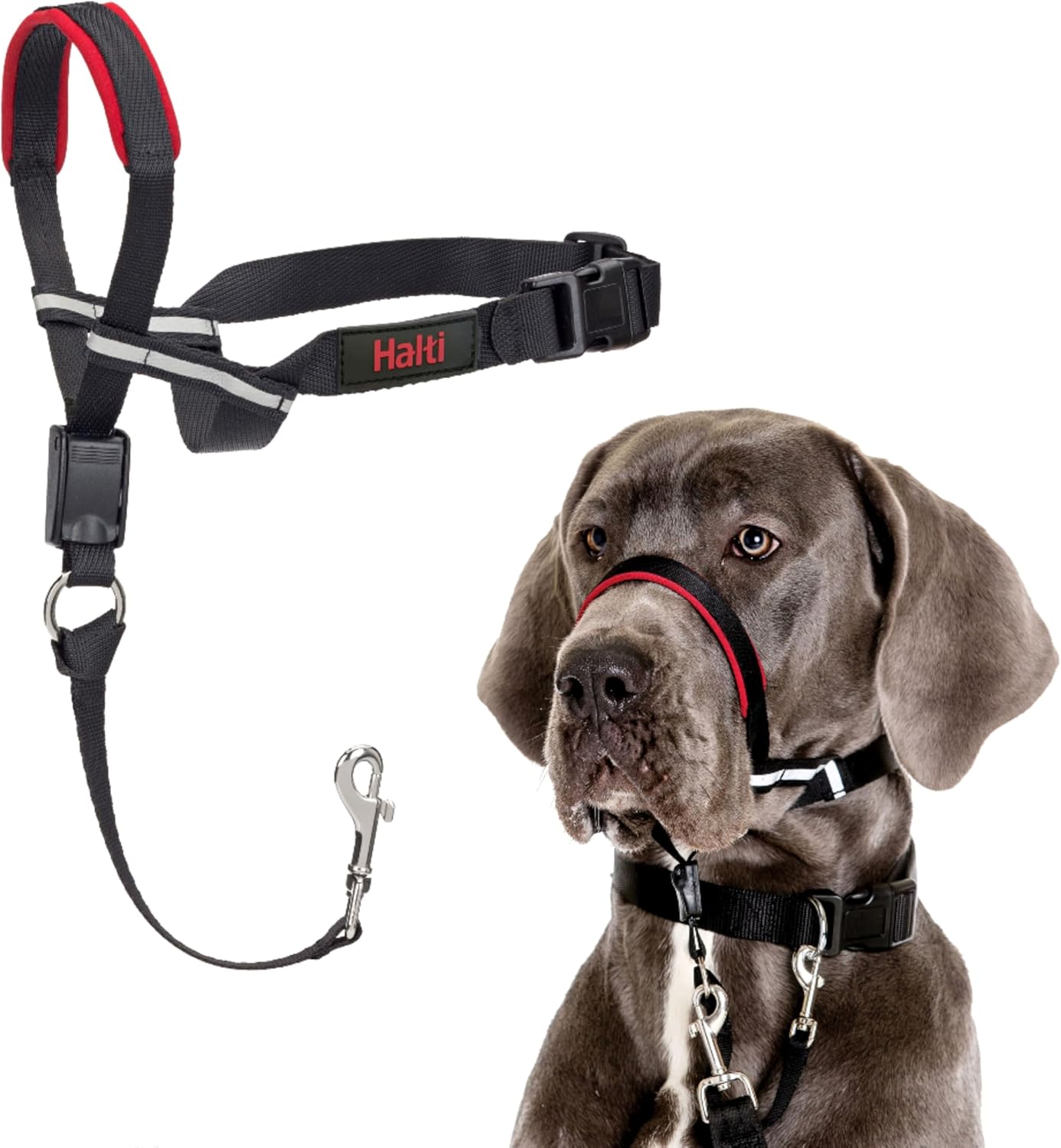
Halti Optifit Headcollar Large
Best Premium Collar
| Breed Recommendation | All Breeds |
|---|---|
| Dog Breed Size | Large |
| Material Type | Nylon |
| Closure Type | Pull On |
The Halti Optifit Headcollar is a no-pull headcollar that steers the dog by guiding the head rather than by force on the neck, making leash walks easier to manage for reactive or strong pullers. It is typically fitted around the muzzle and behind the ears, with an adjustable nose band and cheek straps secured by a camlock so you can dial in the fit for breeds with unusual nose shapes. The padded nose band and lightweight nylon webbing keep it comfortable and do not prevent panting or eating when used correctly, while reflective cheek straps increase visibility on low-light walks and a safety link attaches to the dog collar for redundancy. In practice it works as a training aid to redirect forward momentum and discourage pulling, and it pairs well with a front-clip or double-clip training leash. Limitations include the learning curve for dogs that have never worn a headcollar and the need for careful adjustment to avoid chafing; it is not a substitute for comprehensive behavior training.
Best for: Owners prioritizing control and consistent daily walks who want a durable, comfortable head-guiding solution for dogs that pull or lunge on leash.
Less Ideal for: Owners seeking a hands-off or purely harness-based solution, or handlers of dogs that react poorly to head restraint without prior training.
- Adjustable nose band and cheek straps allow a tailored fit for varied muzzle shapes
- Padded nose band and lightweight nylon reduce discomfort during use
- Reflective cheek straps improve visibility on low-light walks
- Safety link clips to the regular collar for added security
- Takes time and patience to acclimate some dogs to wearing a headcollar
- Requires careful adjustment to avoid rubbing if fitted incorrectly
Verdict: The best premium collar for owners who want top-tier materials, reinforced hardware, and superior comfort that withstands frequent use.
OneTigris Heavy Duty Dog Collar Large
Best Heavy-Duty Collar

| Material | 1000D Nylon |
|---|---|
| Buckle type | Metal quick-release |
| D-ring | Stainless steel |
| Included components | Collar |
| Size | Large |
The OneTigris Heavy Duty Dog Collar is built for strong, active dogs that need a tough, secure collar for training and everyday use. Made from 1000D nylon with EVA padding, it combines a metal quick-release buckle (tested to 485 lbs) and a stainless steel D-ring (tested to 330 lbs) for durable leash attachment and reliable holding power. The collar includes a padded control handle and reinforced stitching, which makes short-duration control maneuvers and traffic holds easier and more comfortable for both handler and dog. A patch panel allows personalization and the adjustable webbing fits a range of neck sizes. Expect a rugged, utilitarian feel rather than a soft lifestyle collar; the hardware and thick webbing add weight and stiffness that break in over time. It is suited to outdoor training, hiking, and reactive dogs that require stronger hardware, but owners wanting a lightweight or decorative collar may find it heavier than necessary.
Best for: Owners who need a rugged, reliable collar for strong or leash-reactive dogs and want heavy-duty hardware and a control handle for safer short-term handling and training.
Less Ideal for: People who prefer a lightweight, minimalist collar for daily comfort or owners of very small breeds who do not need reinforced hardware.
- Metal quick-release buckle rated to 485 lbs for high-strength fastening
- Stainless steel D-ring tested to 330 lbs for secure leash connection
- Padded control handle provides comfortable, direct control in traffic or training
- Reinforced 1000D nylon webbing and stitching for long-term durability
- Adjustable fit with patch panel for personalization
- Thicker, heavier construction can feel stiff and add weight for smaller dogs
- Designed for control rather than comfort during long continuous wear
Verdict: The best heavy-duty collar for dogs that need extra strength and reliable hardware to resist wear and provide secure control.
PupSensei Headcollar Medium
Best Padded Comfort Collar

| Included Components | Collar, Leash |
|---|---|
| Material Type | Nylon |
| Closure Type | Buckle |
| Size | Medium |
The PupSensei headcollar is a no-pull head restraint intended to curb pulling, lunging, and jumping by steering the dog's head for easier handling during walks and training. It ships as a kit with the headcollar and a durable nylon leash featuring a padded handle for a more comfortable grip. The collar has extra soft padding around the nose and head contact points to minimize chafing during extended use, and reflective stitching increases visibility for low-light walks. Practical use requires careful fitting and following the provided instructions; the design is not suitable for short-snouted breeds and the brand warns against upward tugs that can release the clip. For leash-reactive dogs the headcollar gives owners leverage to redirect attention without harsh pressure on the throat, though success depends on correct fit and gradual training. The included leash and padding make daily walks more manageable, but users should learn safe handling technique to avoid accidental discomfort.
Best for: Owners who prioritize a cushioned, low-chafe headcollar to manage leash reactivity and want a kit that pairs a padded restraint with a comfortable leash for everyday walks.
Less Ideal for: People with short-snouted breeds or owners unwilling to learn proper fitting and handling techniques should look for alternative control options.
- Soft padded nose and head contact points reduce chafing during longer walks
- Reflective stitching improves visibility in low-light conditions
- Includes a durable nylon leash with a padded handle for a secure, comfortable grip
- No-pull design redirects the dog’s head to help control pulling and lunging
- Does not fit short-snouted breeds such as pugs or bulldogs
- Requires careful fitting and correct handling to be safe and effective
Verdict: The best padded comfort collar for dogs that need softer, cushioned contact to minimize rubbing while still maintaining control on walks.
Maiiu Reflective Dog Collar Small
Best Reflective Collar

| Material Type | Nylon |
|---|---|
| Included Components | collar, leash |
| Closure Type | Buckle |
| Size | Small (Width 3/4") |
| Product Care Instructions | Clean with mild soap and water, air dry |
This Maiiu set pairs a narrow reflective nylon collar with a matching leash to improve visibility during low-light walks. The collar uses a quick-release plastic buckle for fast on/off and an upgraded metal D-ring for attaching the leash and tags, while the leash features a padded handle and a sturdy metal clasp for secure connection. The reflective stripes on both collar and leash increase side visibility to drivers and cyclists at dawn and dusk, and the lightweight nylon construction keeps the collar comfortable for regular wear. Because the collar is thin (3/4 inch) it is best suited for dogs that do not pull extremely hard; owners of reactive dogs will appreciate the padded leash grip for better control but may want a harness or traffic handle if they need extra stopping power. Sizing is adjustable but check measurements for a proper fit, and the quick-release buckle is plastic rather than metal which is lighter but less heavy-duty.
Best for: Owners who prioritize visibility and a comfortable leash grip when walking reactive dogs near roads at dawn or dusk and want a simple, lightweight collar-and-leash solution.
Less Ideal for: People who need maximum stopping power or advanced control for extremely strong or highly reactive pullers should consider a harness with a traffic handle or a heavier-duty collar system.
- High-visibility reflective stripes on both collar and leash for improved low-light safety
- Padded leash handle provides a more comfortable, secure grip during reactive pulls
- Metal D-ring and metal leash clasp offer reliable attachment points for tags and leash
- Lightweight nylon construction stays comfortable for everyday wear and is easy to clean
- 3/4 inch narrow collar and plastic quick-release buckle limit stopping strength for very strong pullers
- Set is a basic collar/leash combination and lacks specialized traffic-handle or no-pull harness features
Verdict: The best reflective collar for owners who walk reactive dogs near roads or at dawn/dusk and need improved visibility for safety.
haapaw Martingale Dog Collar Medium
Best Martingale Collar

| Included Components | Dog collar, Dog leash |
|---|---|
| Material Type | Nylon |
| Closure Type | Buckle |
| Size | Medium |
This haapaw martingale collar set is built for dogs that try to back out of standard collars and for owners who need a simple, reliable control option. The collar tightens gently when a dog pulls, which helps prevent escapes without applying a choke effect, and the quick-release buckle includes a safety lock so you can put it on and remove it quickly. Reflective piping on both collar and leash improves night visibility and the nylon webbing plus box stitching at pressure points gives the set a durable feel for regular walks. The included leash uses rope-style webbing and a foam handle to reduce leash burn and make brief corrections more comfortable for the handler. Limitations: the tightening action is designed for fit and escape prevention rather than heavy-duty braking on very strong pullers, and buyers who need padded or fully no-pull harness solutions may prefer a different product.
Best for: Buyers who need a simple escape-preventing collar for leash reactive dogs and value quick on/off convenience and nighttime visibility during walks.
Less Ideal for: Owners seeking a full no-pull solution for very strong pullers or those who prefer padded harnesses for extended wear should consider alternative restraint types.
- Martingale design tightens to prevent slipping out without choking when used correctly
- Quick-release buckle with safety lock for fast on/off and accidental-release protection
- Reflective piping on collar and leash improves visibility for low-light walks
- High-density nylon webbing and box stitching add durability at pressure points
- Foam-handled rope-style leash reduces leash burn and feels comfortable in hand
- Not intended as a heavy-duty braking tool for very strong, sustained pullers
- Collar provides control by tightening rather than redistributing force like a no-pull harness
Verdict: The best martingale collar for leash reactive dogs that tend to slip out of standard collars, offering a gentler tightening action to improve fit and control.
Choosing the Right Collar Leash Reactive Dog: Key Factors to Consider
Restraint and Attachment Design
How and where the leash attaches affects control and the forces applied during reactive episodes. Front-attachment designs redirect forward momentum while rear clips give more traditional steering control. A stable attachment point that does not rotate or slip helps keep leash tension predictable so you can respond consistently.
Attachment hardware quality matters because reactive dogs can put sudden, high loads on a collar. Look for welded rings or robust stamped hardware that resists bending. The design should allow for easy clipping and unclipping while remaining secure during activity.
Fit and Adjustability
A properly fitted collar sits high enough on the neck to avoid slippage but not so tight that it restricts breathing or vocalization. Multiple adjustment points let you fine-tune fit for a growing dog or changes in coat thickness between seasons. A collar that shifts under load can cause rubbing and reduce control effectiveness.
Measure neck circumference and leave enough room for two fingers between collar and skin if using a standard flat collar. When using collars with additional hardware or layered rings, ensure adjustment range still allows a snug, safe fit without creating pressure hotspots.
Padding and Pressure Distribution
Reactive behavior can create brief spikes in force that concentrate pressure on small areas of the neck. Padding along the contact surface helps disperse these forces and prevents chafing during longer walks. Wide, contoured collars spread load over a larger area, which is gentler on the dog's skin and underlying tissues.
Materials that retain cushioning when wet are preferable for all-weather use. Consider how easily padding cleans and dries, since soiled or matted padding can irritate the skin and hide damage to the collar's structure.
Durability and Materials
Collars for leash reactive dogs must withstand frequent, high-tension pulls without stretching, fraying, or breaking. Nylon webbing is common and strong, while biothane-style materials offer easy cleaning and resistance to odor. Stitching quality, rivets, and ring attachments determine whether a collar will hold up under stress.
Inspect seams and hardware anchoring when evaluating build quality. Materials that resist fading and degradation from sun, salt, or sweat extend usable life and reduce the chance of sudden failure during walks.
Visibility and Safety Features
Walks with reactive dogs can happen at dawn, dusk, or in busy areas where visibility matters for both you and others. Reflective threads, bright colors, or integrated light attachments improve safety by making the dog easier to see. Some collars include ID tag attachment points that keep identification accessible even under tension.
Consider whether the collar's visibility features remain effective when the dog is in motion and at different orientations relative to oncoming traffic or other pedestrians.
Ease of Use and Everyday Comfort
If a collar is cumbersome to remove or adjust, owners are less likely to use it consistently. Quick-release buckles, simple slide adjustments, and clear sizing marks save time and reduce fitting errors. Comfort also includes how the collar feels during normal activity; soft edges, breathable materials, and low-bulk hardware reduce irritation.
Think about grooming needs too: collars that interfere with grooming or mat near the neck may require more frequent removal, which can be inconvenient for regular walks and training sessions.
How Does Collar Attachment Affect Leash-reactive Behavior?
Attachment location changes how your handling cues translate into the dog's movement. A front-clip position redirects forward propulsion toward the handler, which can interrupt lunging and give you more direct steering. Rear clips are familiar and comfortable for many dogs, but they transmit pulling force to the back of the neck more directly.
Understanding how different attachment points interact with your dog's typical reactions helps you choose a collar that supports your training or management approach without introducing confusing pressure signals.
- Front attachment: helps steer and reduce forward momentum.
- Rear attachment: offers traditional control and is often more comfortable for nonreactive dogs.
- Dual-attachment systems: offer versatility for different walking scenarios.
When Should You Combine a Collar with Other Management Tools?
For many leash reactive dogs, a collar is one part of a broader management and behavior plan. If your dog is prone to sudden lunges, pairing an appropriate collar with handled control techniques, distance management, and behavior modification work will produce better outcomes than relying on a collar alone.
If reactivity includes aggression or escape risk, consult a qualified trainer or behaviorist for a supervised plan that may include additional equipment, environmental changes, and stepwise desensitization techniques.
- Use collars for everyday management and consistent handling.
- Add training tools and professional guidance when reactivity is severe or escalating.
How to Fit a Collar for a Leash Reactive Dog
Measure the widest part of the neck and choose a size that leaves two fingers of space for standard flat collars. For collars meant to sit higher on the neck, such as those with front-attachment points, place the collar so it cannot slip over the head when tension is applied but still allow comfortable breathing and movement.
Check fit after putting the collar on and again after a short walk, because padding and the dog's coat can settle differently in use. Make small adjustments rather than large ones to avoid creating pressure points.
- Check hardware alignment so rings sit centered under leash pull.
- Reassess fit seasonally as coat thickness changes.
What Maintenance Keeps a Collar Safe and Long-lasting?
Regularly inspect stitching, attachment points, and hardware for signs of wear such as fraying, corrosion, or loose rivets. Clean collars according to the material: rinse and air-dry nylon, wipe biothane-like straps, and brush out padded liners to remove hair and debris that can cause abrasion.
Replace collars that show any structural weakness rather than risking failure during a reactive incident. Keep a backup collar available so you can rotate while one is drying or being inspected.
- Dry collars completely after exposure to moisture to prevent mold and hardware corrosion.
- Tighten screws or replace split rings promptly if they show deformation.
Can a Collar Help with Training Leash Manners?
A well-designed collar provides predictable, consistent feedback that supports training techniques aimed at reducing pulling and reactive responses. It does not replace the need for conditioned cues, reward-based desensitization, or structured practice sessions. Use a collar that complements the training methods you plan to use, whether that means front attachment for redirection or a secure rear clip for basic leash manners.
Gradual, consistent training combined with a collar that fits correctly will usually produce better long-term results than relying on forceful corrections or sporadic use of restrictive equipment.
- Use collars as an aid for consistency, not as a sole training method.
- Pair collar use with short training sessions focused on calmness and orientation to handler.
How We Chose the Best Collar Leash Reactive Dog
We prioritized features that directly affect safety and daily usability for dogs that react on leash. Our selection criteria included restraint design that helps reduce sudden force on the neck, material and construction for durability under frequent pulling, and adjustability to ensure a secure, customized fit. We also factored in padding and pressure-distribution elements that reduce chafing and concentrated pressure points during episodes of reactive behavior. Additional criteria included attachment placement and hardware quality to maintain leash alignment and prevent unexpected failures, as well as visibility features for low-light walking. We excluded any options intended solely for training use by professionals or those that require specialized knowledge to fit safely. Products that depended on collars alone to stop severe reactivity without concurrent behavior work or managed tools were not prioritized. Ultimately, the choices reflect a balance of mechanical control, everyday comfort, and practical durability, with an emphasis on options that owners can fit and use reliably on routine walks.
Our full evaluation process is outlined in our review methodology.
FAQ
Is a special collar necessary for a leash reactive dog?
Often it helps to choose a collar designed for higher control and better pressure distribution, but collars are just one tool. Behavior modification and consistent handling are necessary for lasting change.
Will a front-attachment collar stop my dog from lunging?
A front attachment can reduce forward momentum and make steering easier, but it usually works best alongside training techniques that address the underlying triggers for lunging.
How tight should a collar be for a dog that pulls?
Fit should be snug enough to prevent slipping under load while leaving comfortable breathing space. Adjustability and periodic checks during walks help maintain correct fit as the dog moves and the coat shifts.
Can I use padding or a cover to make a collar gentler?
Padding and covers can improve comfort and spread pressure, but ensure added layers do not allow the collar to slip or hide wear. Materials that dry quickly and resist matting are preferable.
How often should I replace a collar used daily on a reactive dog?
Replace it whenever you see structural wear such as frayed webbing, bent hardware, or compromised stitching. Regular inspection after walks helps catch issues early.
Should puppies with leash reactivity use the same collars as adults?
Puppies need collars sized for their growth and gentler pressure distribution. Choose adjustable options and reassess fit frequently as they grow, and pair collars with age-appropriate training methods.
Final Verdict
Choose a collar that balances effective control with comfort and durability. Prioritize a secure attachment design and materials that distribute force so you can manage reactive episodes without causing unnecessary discomfort. Fit and adjustability matter as much as restraint style; take time to measure and recheck fit, and pair collar use with consistent training and management. Ultimately, think of a collar as one component of a broader plan to improve leash behavior. Focus on predictable control, regular inspection, and progressive training so you can walk more safely and confidently with your dog.

