

If your small dog tends to lunge or pull on walks, the right collar can make outings safer and more manageable. You want something that reduces pressure on a tiny neck while giving you reliable control and room for gentle correction. This guide lists seven shortlisted collars that suit small dogs that pull and explains the practical reasons each feature matters. We evaluated fit, materials, safety features, and how each design affects handler control and canine comfort. Read on to find the collar style and features that match your dog's size, behavior, and daily routine.
Top Picks at a Glance
| Best Overall Collar for Small Dogs That Pull Reliable, well-rounded collar that manages light pulling and fits small breeds | PetSafe Gentle Leader Headcollar Small |  |
| Best Budget Collar for Small Dogs That Pull Low-cost option that provides basic control and acceptable durability | PetSafe Martingale Quick-Snap Collar Small |  |
| Best No-Pull Collar Designed specifically to reduce pulling with leash-control features | Halti Optifit Headcollar Small |  |
| Best Padded Collar Extra padding for added comfort and reduced neck strain on small dogs | Joytale Reflective Dog Collar Medium |  |
| Best Reflective Collar High-visibility construction to improve safety on low-light walks | Fidohug Martingale Collar Small |  |
| Best Adjustable Collar Highly adjustable sizing for a secure, custom fit on small pups | DEYACE Stainless Steel Training Collar M/L |  |
| Best Heavy-Duty Collar Sturdier materials and hardware for stronger pullers and longer wear | Herm Sprenger Prong Collar Medium |  |
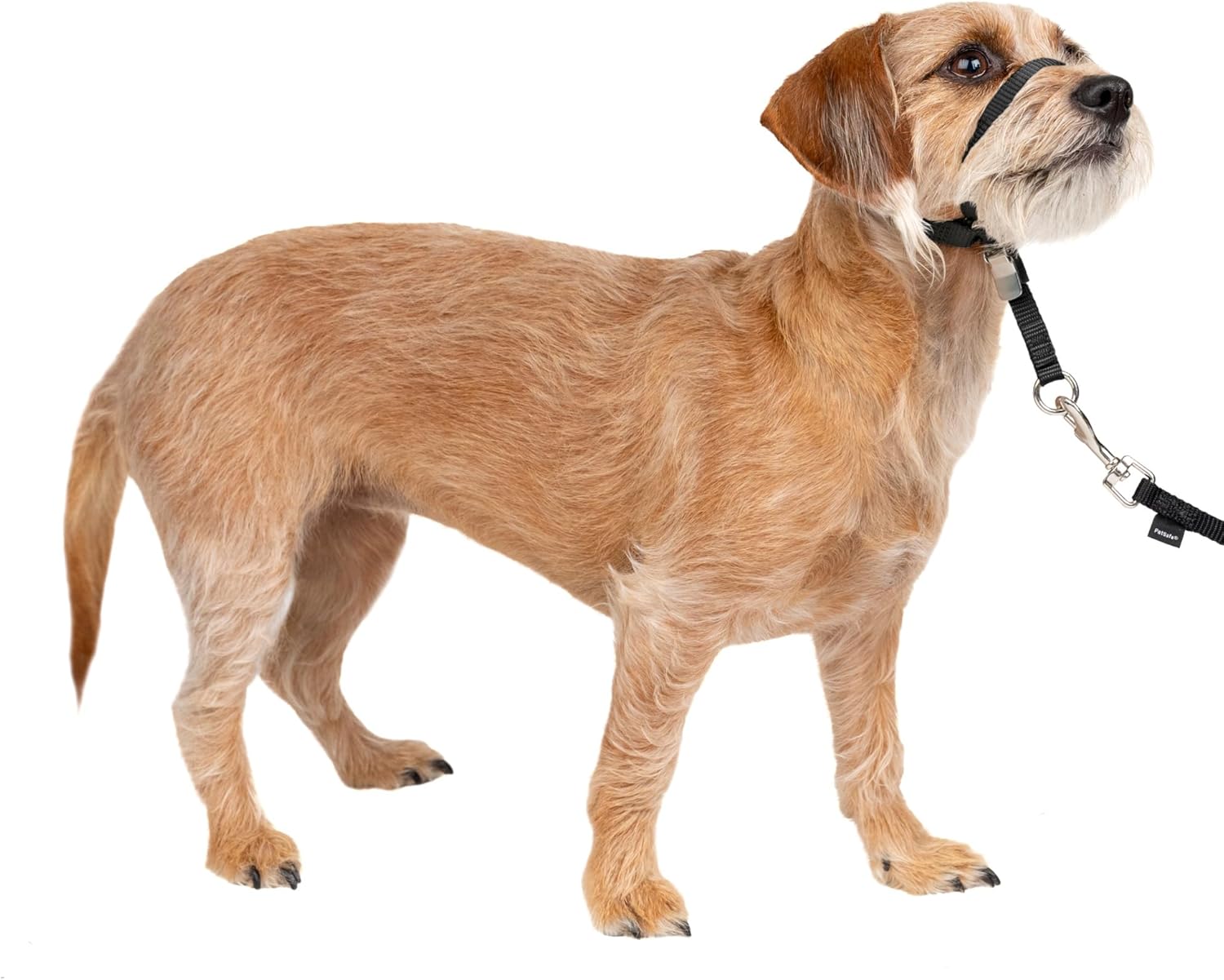
PetSafe Gentle Leader Headcollar Small
Best Overall Collar for Small Dogs That Pull
| Material Type | Nylon |
|---|---|
| Included Components | Gentle Leader Head Collar |
| Closure Type | Snap |
| Breed Recommendation | Small Breeds |
| Size | Small |
The PetSafe Gentle Leader Headcollar is a head-mounted no-pull tool that controls leash pulling by turning a dog's head toward the handler when tension is applied. It is typically used for daily walks and training sessions with dogs that pull; you slide the nose loop over the muzzle, fasten the quick-snap neck strap high behind the ears, and attach the leash to the centerbar under the chin. Notable features include a padded neoprene nose loop for comfort, minimal strap design to reduce bulk and heat, and an easy quick-snap buckle that speeds fitting. Practically, it provides direct steering control without restricting the mouth so dogs can eat, pant, and drink while learning better leash manners, and it is backed by step-by-step fitting and acclimation guidance. Important limitations are that it will not fit short-snouted breeds and requires patient desensitization—some dogs paw or rub at the nose loop initially until they are comfortable. The Small size targets small-breed proportions and is best used as a training aid or occasional control backup once leash skills improve.
Best for: Buyers who need a reliable no-pull solution that balances control and comfort for everyday walks with a small dog and who are willing to spend time fitting and training the dog to accept the headcollar.
Less Ideal for: Owners of short-muzzled breeds or people seeking a harness-style solution rather than a head-mounted training tool.
- Directly reduces pulling by steering the head for faster behavioral correction
- Padded neoprene nose loop improves comfort during wear
- Minimal strap design keeps the collar lightweight and cooler on small dogs
- Quick-snap neck buckle and adjustable nose loop make fitting straightforward
- Allows normal mouth movement so the dog can eat, drink, and play while wearing it
- Not suitable for breeds with very short snouts such as pugs or bulldogs
- Requires patient, positive acclimation as some dogs initially paw or resist the nose loop
Verdict: The best overall collar for small dogs that pull, balancing control, comfort, adjustable fit, and durable construction for everyday walks.
PetSafe Martingale Quick-Snap Collar Small
Best Budget Collar for Small Dogs That Pull

| Breed Recommendation | Small Breeds |
|---|---|
| Material Type | Nylon |
| Closure Type | Snap |
| Item Width | 0.75 inches |
The PetSafe Martingale Quick-Snap Collar is a simple nylon martingale built for small dogs that tend to slip or pull on leash. It uses a two-loop martingale design so the collar tightens modestly when the dog pulls, which helps prevent backing out while still distributing pressure across the neck. The quick-snap buckle makes it easy to put on and remove without threading the collar each time, and the nylon webbing feels durable and easy to clean. In practice this collar gives dependable short-term control for walks and training sessions where you want a secure fit without using a choke or prong device. Limitations are that it is not a training harness substitute for heavy, sustained pulling and it does not provide front-clip leash options to redirect force; dogs that pull hard will still transfer pressure to the neck. For small breeds that need a reliable, budget-friendly collar to reduce escapes and improve control during walks, it is a practical pick.
Best for: Buyers who need an inexpensive, secure collar to stop small dogs from slipping out and to gain short-term control on walks and during basic training.
Less Ideal for: Owners looking to eliminate pulling through force redirection or who have dogs that pull strongly for long periods should consider a no-pull harness instead.
- Martingale design prevents dogs from slipping out while limiting over-tightening
- Quick-snap buckle for fast on/off without rethreading
- Durable nylon webbing that is lightweight and easy to clean
- Available in small width suited to small-breed necks
- Provides neck pressure during pulls so not suitable for dogs that need force redirection
- Not a long-term replacement for a no-pull harness for strong pullers
Verdict: The best budget collar for small dogs that pull that gives dependable short-term control and a secure fit without a high price tag.
Halti Optifit Headcollar Small
Best No-Pull Collar

| Size | Small |
|---|---|
| Material Type | Nylon |
| Included Components | 2 Halti Optifit Headcollar |
| Closure Type | Pull On |
The Halti Optifit is a headcollar training aid that gently steers a dog by controlling head direction, which reduces pulling during walks. It is typically used as a no-pull tool during leash walks and training sessions, attaching around the muzzle and behind the ears with an additional safety link to the regular collar. Notable features include an adjustable noseband and cheek straps with a camlock for secure, fine-tuned fitting, padding on the noseband for added comfort, reflective side webbing for low-light visibility, and lightweight nylon construction that does not block panting, eating, or drinking. In practice the multiple adjustment points make it straightforward to tailor the fit for different head shapes, and the safety link adds peace of mind if the headcollar slips. Limitations are that it requires an acclimation period for many dogs and owners should follow the included fitting instructions to avoid incorrect placement; it is a training aid rather than a substitute for basic leash control skills.
Best for: Buyers who want a headcollar with easy, precise adjustments to fit a variety of dog head shapes and who are ready to use it as a training aid during walks.
Less Ideal for: Owners who prefer harness-style no-pull solutions or who cannot spend time acclimating their dog to a headcollar should consider other options.
- Multiple adjustment points (noseband and cheek straps) allow a secure, customized fit for different head shapes
- Padded noseband improves comfort during use
- Lightweight nylon construction permits normal panting, eating, and drinking
- Reflective side webbing increases visibility in low light
- Includes a safety link to attach to the dog’s collar for added security
- Requires patient, guided acclimation for dogs unfamiliar with headcollars
- Not intended as a replacement for leash training and proper handling
Verdict: The best no-pull collar for owners who want a collar-based solution that discourages forward lunging and improves leash manners with gentle correction.
Joytale Reflective Dog Collar Medium
Best Padded Collar

| Material Type | Metal, Neoprene, Nylon |
|---|---|
| Closure Type | Buckle |
| Size | Medium (Pack of 1) |
The Joytale Reflective Dog Collar pairs a 360° reflective nylon webbing with a soft neoprene padded lining to keep dogs visible and comfortable on daily walks and outdoor adventures. It uses a solid metal D-ring for secure leash attachment and a quick-release buckle that makes taking the collar on and off fast while staying locked during activity. The neoprene padding reduces chafing and helps protect sensitive necks during extended wear, and the adjustable design fits growing puppies through medium-sized dogs. Reflective threads improve low-light visibility from all angles, which is useful for nighttime walks or locating a dog in a dark yard. Practical limitations are the basic buckle-style closure rather than a no-pull harness solution and the collar is marketed as medium size so buyers should check the sizing chart before ordering. For routine walking, training, and travel this collar offers a solid blend of visibility, comfort, and durability at an accessible level.
Best for: Buyers who want a daily-wear collar that balances nighttime visibility, comfort, and reliable hardware for routine walks and outdoor activity.
Less Ideal for: Owners who need a training no-pull solution or who prefer a harness-style option for strong pullers should consider a different product.
- 360° reflective nylon webbing for improved nighttime visibility
- Soft neoprene padding reduces chafing and increases comfort for all-day wear
- Solid metal D-ring provides a durable, secure leash attachment
- Quick-release buckle allows fast on/off while remaining secure during use
- Sized as Medium in this listing so fit requires checking the size chart before purchase
- Not a no-pull harness alternative for strong pullers
Verdict: The best padded collar for small dogs that pull who need softer, cushioned contact at the neck to minimize chafing and discomfort during walks.
Fidohug Martingale Collar Small
Best Reflective Collar

| Size | Small |
|---|---|
| Material Type | Nylon |
| Closure Type | Buckle |
| Reflective | Yes |
This Fidohug martingale collar is a training-style collar for small dogs that combines a limited-slip martingale loop with an adjustable quick-release buckle for everyday walks. It uses soft nylon webbing with reflective threads woven into the pattern, so it increases visibility at dawn and dusk while remaining comfortable for the dog. The collar tightens slightly under tension to discourage slipping out without choking, making it useful for dogs that tend to back out of regular collars during training or on busy walks. The quick-release buckle speeds on and off and is handy in an emergency, and the adjustable length accommodates growth and seasonal coat changes. Because it is nylon the collar cleans easily but will show wear faster than heavier hardware options, and it relies on proper sizing to avoid being too loose or too tight. For owners focused on safer evening walks and basic no-pull training, this collar offers a visible, lightweight solution; owners needing heavy-duty control or metal hardware may prefer a sturdier alternative.
Best for: Small-dog owners who walk their dogs in low-light conditions and want a lightweight, escape-resistant collar that improves visibility while assisting basic no-pull training.
Less Ideal for: Owners who need maximum control for very strong pullers or those who prefer metal hardware and industrial-strength collars for heavy-duty handling.
- Reflective threads increase visibility in low light for safer dawn and dusk walks
- Martingale design reduces slipping out without full choking effect
- Quick-release buckle allows fast removal in emergencies
- Adjustable nylon strap fits small necks and is easy to clean
- Nylon webbing is lightweight but less durable than heavy-duty hardware options
- Not intended for dogs needing very high control or severe pullers
Verdict: The best reflective collar for owners who walk small dogs that pull in dawn, dusk, or night conditions and need extra visibility for safety.
DEYACE Stainless Steel Training Collar M/L
Best Adjustable Collar

| Material Type | Stainless Steel |
|---|---|
| Closure Type | Buckle |
| Size | M/L Neck Girth 14.5"-18.6" |
| Included Components | EXTRA LINKS |
This DEYACE stainless steel training collar is built for walking and behavior correction, using interlocking links to distribute pressure evenly around the neck and a tactical quick-release buckle for fast on/off. In use it functions like a chain training collar but with slightly beveled link tips, rubber covers for comfort, and additional blunt tops to reduce skin contact, which helps make short corrections without focusing pressure on the trachea. The buckle is metal and designed for secure fastening yet can be released quickly with two fingers in an emergency, so it is convenient for owners who need to change collars often. Links are removable or addable for a tailored fit and the stainless finish improves rust resistance and keeps light fur from staining in most cases. Important limitations are that this is a training tool rather than an everyday flat collar and it should not be left on an unattended dog, and some dogs may still resist or react to correction-style collars during training.
Best for: Owners who prioritize a fast, reliable buckle for quick on/off during walks and want a training collar that lets them fine-tune fit and pressure distribution while working on loose-leash behavior.
Less Ideal for: Pet owners seeking a soft everyday flat collar for constant wear or those uncomfortable using correction-style collars should choose a different style.
- Quick-release metal tactical buckle allows fast, secure on and off
- Interlocking stainless steel links provide even pressure distribution
- Includes rubber covers and extra link for added comfort and fit adjustment
- Two-step plating increases rust resistance for humid or wet conditions
- Designed as a correction/training collar so not intended for continuous wear
- May require link adjustments and minor tools or effort to size precisely
Verdict: The best adjustable collar for small dogs that pull who require precise fit adjustments as they grow or for different coat thicknesses.
Herm Sprenger Prong Collar Medium
Best Heavy-Duty Collar

| Size | 22in x 3.0mm (neck size up to 18in) |
|---|---|
| Material Type | Steel |
| Closure Type | Double Ring |
| Manufacturer | HS HERM. SPRENGER GERMANY |
The Herm Sprenger Chrome Plated Steel prong collar is a premium-style training collar built from German steel and intended for short-term leash corrections during walks and training sessions. It uses interlocking links with blunt prong tips and a center plate so pressure distributes evenly around the neck rather than focusing on the trachea, and links can be removed or added to adjust fit. The double ring closure and swivel ring make it easy to attach a lead and to put on or take off by slipping it over the head, while the chrome finish resists rust and cleans up easily. In practice this collar is effective for experienced handlers who need precise, momentary corrections and value durable, factory-quality construction that will last years. It is not a casual everyday flat collar replacement and requires correct sizing and handling to avoid misuse; buyers should plan on learning proper fitting and timing to use it humanely. Dogs with very sensitive necks or those in novice training programs may prefer gentler alternatives.
Best for: Buyers who prioritize long-term, factory-quality materials and precise control during walks or training and who are comfortable using corrective collars responsibly.
Less Ideal for: Owners seeking a daily wear flat collar, first-time trainers, or anyone who prefers non-corrective, low-pressure training tools.
- High-quality German chrome-plated steel construction for long-term durability
- Center plate and interlocking links distribute pressure evenly around the neck
- Removable links allow fine adjustments to fit a wide range of neck sizes
- Double-ring closure and swivel ring make attaching and removing a leash simple
- Requires correct sizing and experienced handling to use safely
- Not suitable as a constant wear or identification collar
Verdict: The best heavy-duty collar for small dogs that pull and need reinforced stitching, stronger buckles, and tougher webbing to withstand frequent force.
Choosing the Right Collar Small Dog Pulling: Key Factors to Consider
Proper Fit and Adjustability
A correct fit prevents injury and ensures control. For small dogs that pull, collars should offer multiple adjustment points so you can fine-tune snugness without restricting breathing. Measure the neck and allow two fingers of space as a baseline; adjustments should be easy to make as your dog grows or carries seasonal fur.
Neck shape matters too. Some small breeds have tapered or short necks that cause slippage; collars with narrower widths or martingale-style constriction reduce escape risk while distributing pressure more evenly.
Material and Construction Quality
Durable materials resist fraying and then sudden failure during a tug. Look for tightly woven webbing, reinforced stitching at stress points, and rust-resistant hardware. Soft liners or padding at the contact points reduce chafing during repeated pulls.
Lightweight does not mean flimsy. For small dogs, choose materials that balance low weight with tensile strength so the collar does not cut into the neck when the dog leans or lunges.
Hardware and Attachment Points
The ring and buckle should handle the forces small dogs can generate during a strong pull. Solid metal D-rings or welded hardware are preferable to plastic clips, which can fail under sudden load. Consider collars with a front or dual attachment point if you need additional steering control.
Quick-release buckles are convenient but must be rated for real-world tension. If a collar relies on a sliding or snap buckle, verify its build quality and how it behaves under strain to avoid accidental openings.
Pressure Distribution and Padding
Small necks are more vulnerable to pressure injuries. Collars that spread force across a wider surface or include soft padding reduce the risk of tissue damage. Padding materials should be breathable and washable so they remain hygienic after outdoor use.
Avoid narrow, thin collars for dogs that pull frequently; they concentrate force on a small area and can increase discomfort and the chance of injury.
Escape Prevention and Security Features
Some small dogs slip their collars when excited. Features that reduce escape risk include martingale or limited-slip designs that tighten slightly under load without choking, and contoured shapes that follow the neck's curve. Secure buckles and secondary safety closures further reduce accidental release.
Balance escape prevention with safety: the collar should still release or be removable quickly in an emergency, and it should not apply constant constriction when the dog is relaxed.
Compatibility with Training Methods
Different training goals demand different collar designs. If you are working on leash manners, a front-clip attachment or a martingale can offer more leverage for redirection without harsh corrections. Ensure the collar works with the training approach you plan to use and that it allows for short, controlled corrections rather than abrupt jerks.
Consider how the collar integrates with other gear, such as harnesses used for specific training stages, to maintain consistent cues and avoid confusing your dog.
How Do Martingale Collars Help Small Dogs That Pull?
Martingale collars tighten slightly when the dog pulls, preventing the collar from slipping over a narrow head while avoiding full constriction. For many small breeds with slim heads relative to necks, this design gives secure control with a built-in safety margin that stops the collar from becoming a noose.
Bullets are not permitted in paragraph arrays, so use the bullets field when needed.
- Provides increased security without choking
- Works well for dogs prone to backing out of collars
- Requires correct adjustment to be safe and effective
When Should You Prefer a Front-clip Attachment?
A front-clip attachment changes the angle of force and redirects the dog toward you when they pull, making it easier to teach loose-leash walking. For small dogs, a front clip can offer significant behavioral benefits because it reduces forward momentum without concentrating force directly on the throat.
Front-clip collars are most effective when combined with consistent training; they are not a shortcut to fix chronic pulling on their own.
- Reduces forward momentum and improves steering
- Best when used with positive reinforcement training
- May require a harness alternative during high-exertion activities
How to Size a Collar for a Small Dog
Measure at the base of the neck where the collar will sit, not at the thickest point of the head. Use a flexible tape and add one to two fingers for comfort. Confirm the manufacturer's sizing chart and test fit: you should be able to slide two fingers under the collar comfortably while it is snug enough to keep the dog from backing out.
Try short supervised walks after fitting and recheck adjustment; padding and fur compression can change the effective fit after a few minutes of activity.
- Measure base of the neck, add one to two fingers of slack
- Confirm with a short supervised walk to ensure security and comfort
Can Collars Replace a Harness for Training Small Pullers?
Collars and harnesses serve different roles. Harnesses spread force across the chest and are typically safer for prolonged pulling or for dogs with respiratory sensitivities. However, certain collar styles designed for small dogs that pull offer targeted control and escape prevention that some harnesses do not provide. If your dog pulls heavily or you have concerns about neck strain, consider using a harness for everyday walks and reserve corrective collar use for focused leash-training sessions under supervision.
- Harnesses distribute pressure and reduce neck strain
- Collars can be useful for specific training cues and escape prevention
Care and Maintenance Tips to Extend Collar Life
Regularly inspect collars for frayed webbing, loose stitching, or compromised hardware. Wash padded collars according to care instructions to prevent odor and material breakdown. Replace any collar that shows signs of structural weakness rather than trying to repair it for safety reasons. Store spare collars away from heat and direct sunlight to prevent UV degradation of materials and maintain hardware integrity.
- Check stitching and hardware before each walk
- Follow washing instructions and replace worn collars promptly
How We Chose the Best Collar Small Dog Pulling
To assemble this list we prioritized features that directly affect safety, control, and comfort for small, pulling dogs. Our evaluation criteria included fit range and adjustability to ensure secure contact without choking; material durability and seam quality to withstand repeated tension; hardware strength for leash attachment and predictable behavior under load; padding and contact surface to protect delicate neck tissue; and design function that moderates pulling (front-clip, martingale-style, or limited-slip designs). We also considered ease of use for daily walks, washability, and whether the collar allowed for attachment of ID and low-profile tags without interfering with performance. We excluded any collars designed exclusively for large or giant breeds, products that rely on harsh correction mechanisms, and items lacking clear sizing guidance. Products were assessed on objective specifications and user-focused performance characteristics rather than unverified claims. The result is a set of practical, well-rounded options suited for small dogs that pull.
Our full evaluation process is outlined in our review methodology.
FAQ
Will a no-pull collar hurt my small dog?
No-pull collars designed for small dogs aim to control pulling with minimal pressure. When sized and adjusted properly, they reduce forward momentum without causing harm. Monitor your dog for signs of discomfort and consult a trainer if corrections seem excessive.
How tight should a collar be on a small dog that pulls?
A collar should be snug enough to prevent slipping but loose enough to allow two fingers between the collar and the neck. Recheck fit after a short walk because movement and fur compression can alter how the collar sits.
Are padded collars better for small dogs that pull?
Padded collars can be more comfortable and reduce chafing from repeated pulls. They also distribute pressure slightly more evenly, which helps protect delicate neck tissue. Ensure padding is breathable and washable to avoid hygiene issues.
Can a martingale collar prevent my dog from escaping?
Martingale collars reduce the chance of escape by tightening a small amount under tension, making them effective for dogs with narrow heads. They do not constrict fully when fitted correctly, but they must be adjusted and monitored to be safe.
Should I use a collar or a harness for walks if my small dog pulls?
It depends on your dog's pulling intensity and any health concerns. Harnesses spread force and are often better for heavy or sustained pulling, while specific collar styles can offer better short-term control and escape prevention during training.
How often should I replace a collar on a small dog?
Replace a collar as soon as you notice fraying, weakened stitching, or hardware damage. Even without visible wear, consider replacing collars every few years based on usage and exposure to the elements to maintain safety.
Final Verdict
Choose a collar that balances control with gentle pressure distribution and secure fit. Prioritize adjustable sizing, reliable hardware, and padding to protect a small dog's neck while you work on leash manners. For dogs that pull frequently, consider combining collar use with training techniques or a supportive harness for longer walks. Ultimately, pick the option that matches your dog's neck shape, behavior, and training goals, and monitor fit and wear to keep walks safe and comfortable.

