

If your dog pulls on leash, the right collar can make walks safer and more manageable for both of you. A collar designed to discourage pulling helps redirect motion, reduces strain on the handler, and can make training cues more effective during everyday walks. This guide covers the top shortlisted collars to stop dog pulling, selected for reliability, fit options, and humane control features. Below you will find our top picks followed by clear buying factors and practical advice to help you pick the best collar for your dog and walking style.
Top Picks at a Glance
| Best Overall Collar A reliable, all-purpose anti-pull collar for most dog owners | PetSafe Gentle Leader Headcollar Medium | 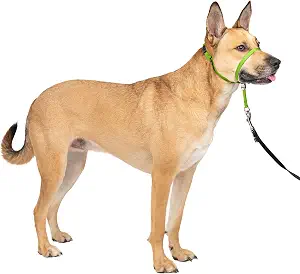 |
| Best Budget Collar A low-cost anti-pull option that still performs reliably | SGODA Martingale Dog Collar Medium |  |
| Best Premium Collar A higher-end pick with superior materials and refined features | Herm Sprenger Prong Collar 20in |  |
| Best Heavy-Duty Collar Built for strong pullers and extra-tough day-to-day wear | AKDNZ No Pull Prong Collar 3mm M/L |  |
| Best No-Pull Collar Specifically designed to discourage pulling with intentional mechanics | Freedom&Soul No Pull Collar M-L |  |
| Best Head-Halter Collar A head-control style that redirects forward pulling at the head | Halti Optifit Headcollar Medium |  |
| Best Martingale Collar A limited-slip style that tightens slightly to prevent escapes | Joytale Martingale Collar Large |  |
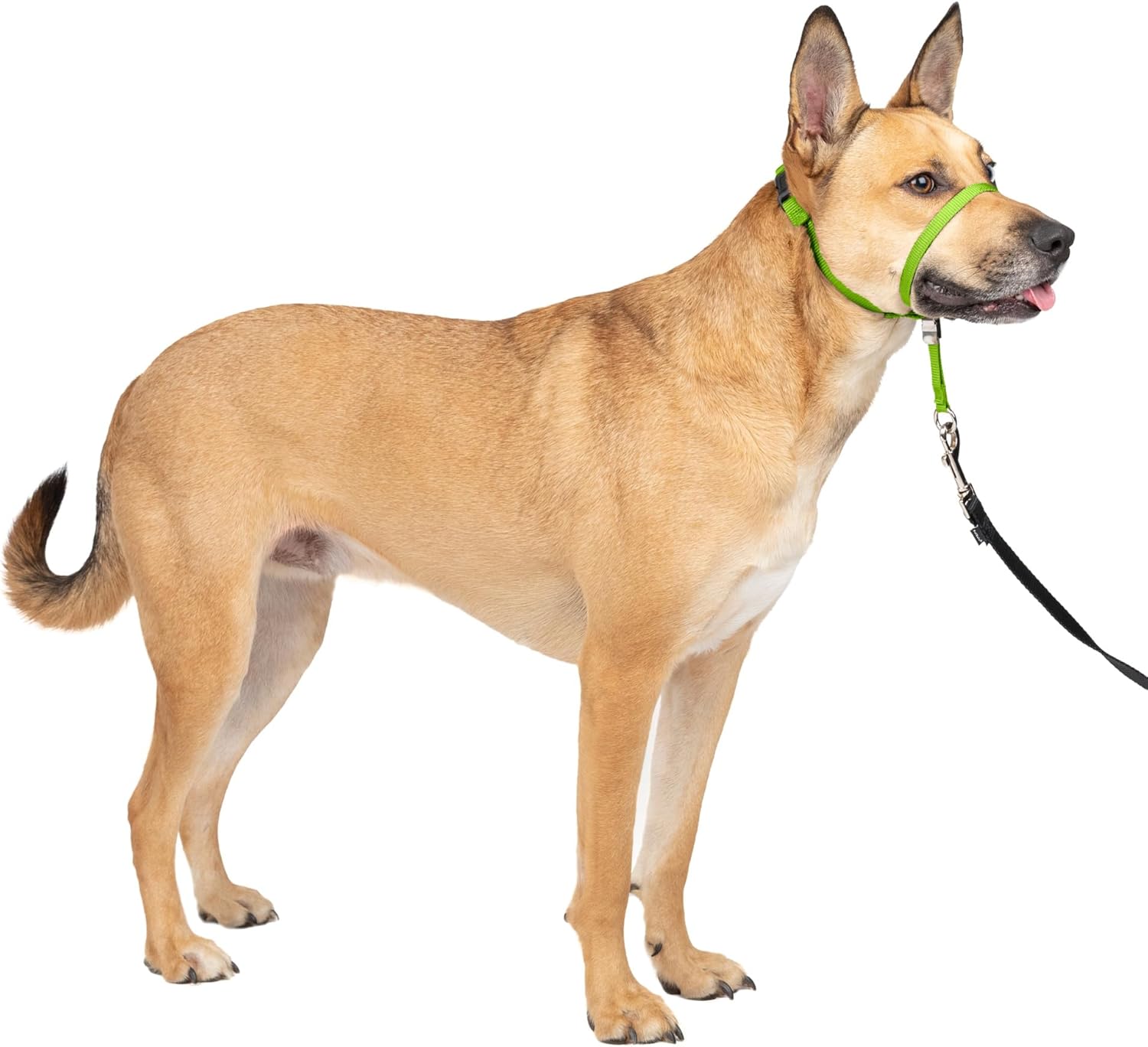
PetSafe Gentle Leader Headcollar Medium
Best Overall Collar
| Breed Recommendation | Medium |
|---|---|
| Material Type | Nylon |
| Closure Type | Snap |
| Size | Medium |
The PetSafe Gentle Leader is a headcollar designed to stop dogs from pulling by guiding the head rather than applying pressure to the throat or chest. You fit the nose loop over the snout and secure the neck strap high behind the ears, then attach a leash to the center ring under the chin so forward pulling gently turns the dog toward you. The padded neoprene nose loop and minimal nylon straps make it comfortable for extended walks while allowing the dog to pant, eat treats, and play. The quick-snap buckle and adjustable nose loop make fitting straightforward, and the included fitting directions and measurement ranges help pick the right size. It is most effective for dogs with standard snout lengths and may not work for short-muzzled breeds. Proper fitting and gradual desensitization are important to avoid rubbing or resistance during training. For everyday use it gives firm, predictable control without heavy choking force, but it requires practice so the dog accepts the nose loop calmly.
Best for: Buyers who want a reliable no-pull solution that prioritizes effective control while keeping walks comfortable and usable for daily training and outings.
Less Ideal for: Owners of short-muzzled breeds or people unwilling to spend time fitting and training their dog to wear a headcollar should consider other no-pull options.
- Directly reduces pulling by steering the head for predictable control
- Padded neoprene nose loop improves comfort during walks
- Quick-snap neck buckle and adjustable nose loop simplify fitting
- Minimal strap design keeps the dog cooler and reduces bulk
- Allows normal behaviors like panting, eating treats, and playing while worn
- Not suitable for short-nosed breeds such as pugs or bulldogs
- Requires time and positive training for dogs to accept the nose loop comfortably
Verdict: The best overall collar balances effectiveness at reducing pulling, comfort, safety, and adjustable fit so most owners can use it daily during walks and training.
SGODA Martingale Dog Collar Medium
Best Budget Collar

| Material Type | Nylon |
|---|---|
| Size | Medium (Neck: 14"-18") |
| Closure Type | Pull On |
| Product Care Instructions | Hand Wash |
The SGODA Martingale Dog Collar is a lightweight training collar that tightens gently when a dog pulls to discourage slipping out while still limiting how much it can close. It is made from nylon with neoprene padding and a nickel-plated D-ring, so it provides basic durability and a comfortable contact surface for short to regular walks and training sessions. Reflective trim increases visibility in low-light conditions and the pull-on closure and adjustable range (neck 14"–18") make it quick to fit without buckles. Expect the collar to handle everyday leash work and occasional training corrections, but not heavy-duty jobs or very strong pullers since the webbing and hardware are aimed at value buyers. Care is hand wash only, and sizes are important to get the right limited closure effect. For owners wanting an inexpensive, easy-to-use martingale for preventing escapes and reducing pulling during walks, this delivers clear practical benefits at a low price point.
Best for: Buyers looking for an inexpensive training collar to curb pulling and prevent escapes during everyday walks and occasional training sessions.
Less Ideal for: Owners who need a heavy-duty collar for very strong dogs, frequent high-force training, or locking buckle features should consider sturdier alternatives.
- Martingale limited-slip design helps prevent escape and reduces pulling during walks
- Neoprene padding improves comfort against the neck compared with unpadded webbing
- Reflective trim adds low-light visibility for evening walks
- Adjustable fit for medium necks (14"–18") and simple pull-on operation
- Hardware and webbing are basic and not designed for heavy-duty or frequent high-force use
Verdict: The best budget collar gives pet owners an affordable way to reduce pulling with acceptable durability and comfort for occasional to regular use.
Herm Sprenger Prong Collar 20in
Best Premium Collar

| Material Type | Chrome Plated Steel |
|---|---|
| Size | 20in x 3.0mm (neck size up to 16in) |
| Closure Type | Pull On |
| Included Components | Collar |
The Herm Sprenger Prong Collar is a professional-grade chrome plated steel training collar designed to give handlers precise, even pressure around a dog's neck when correcting pulling or leash-reactive behavior. It is built with interlocking short links and a center plate so the links tighten symmetrically; links can be added or removed to fine-tune fit. The Ultra-Plus style uses blunt, slightly beveled prongs intended to avoid direct trachea pressure while still providing a clear feedback cue, and a swivel D-ring lets the leash move freely. In practice this collar is used for on-leash obedience sessions under supervision, fitted just below the ears and adjusted so it sits snugly. The German-made construction and solid hardware make it durable for frequent use, and the removable links allow precise sizing for many neck circumferences. Important limitations are that it requires knowledgeable, careful handling and is not appropriate for casual or unsupervised wear, and some owners prefer gentler alternatives for sensitive or light-colored dogs.
Best for: Owners who prioritize premium materials and refined hardware and who plan to use a high-quality training tool under guided, on-leash training to manage pulling.
Less Ideal for: Owners seeking a purely gentle or hands-off solution, first-time trainers unfamiliar with prong collar use, or those who need an everyday identification collar.
- Durable chrome plated steel construction and German engineering
- Interlocking short links and center plate deliver symmetrical, even pressure
- Removable links allow precise size adjustment for a snug fit
- Swivel D-ring reduces leash twist for smoother handling
- Requires experienced handling and proper fitting to be safe and effective
- Not suitable for unsupervised wear or as an everyday collar for all dogs
Verdict: The best premium collar is for owners willing to pay more for top-tier materials, enhanced comfort, polished hardware, and longer-lasting performance during regular walks and training.
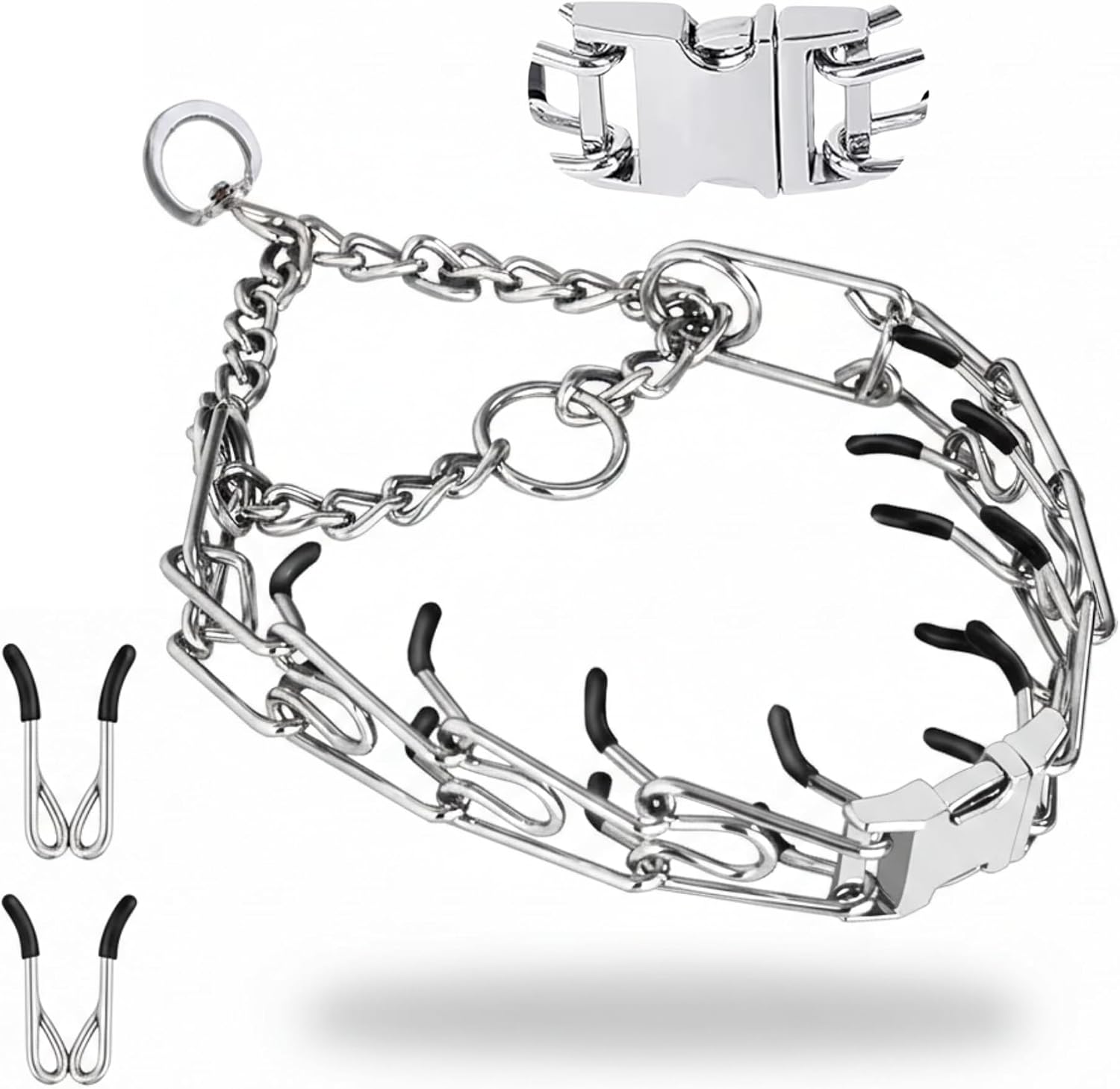
AKDNZ No Pull Prong Collar 3mm M/L
Best Heavy-Duty Collar
| Size | 3mm (18-23 Inches) M/L |
|---|---|
| Included Components | 2 Extra Links |
| Closure Type | Buckle |
| Animal Collar Type | Animal Pinch Collar |
This AKDNZ prong collar is a stainless steel, adjustable training collar built to discourage pulling during walks. It is sized for 18–23 inch necks and ships with two extra links so you can fine-tune the fit or extend it for larger necks without tools. The collar uses blunt, rounded prongs with rubber end caps to distribute pressure more evenly and reduce sharp contact, and a quick-release buckle lets you remove it quickly between sessions. In practice it functions as a corrective tool for short, supervised training sessions rather than a daily wear collar; fit high on the neck behind the ears and use brief, positive introductions as the listing advises. Strength guidance in the product notes suggests it is suitable for dogs roughly 45–85 pounds, so it offers a balance of firm control and humane design for many medium to large dogs. Limitations are that the 3mm gauge and components are not rated for the heaviest or most powerful breeds, and any prong collar requires informed, careful use to avoid misuse during unsupervised wear.
Best for: Buyers who need a sturdy corrective tool for medium to large dogs that pull and who plan to use it for controlled training sessions.
Less Ideal for: Owners of very large or extremely powerful breeds that require heavier-gauge hardware or handlers who want an everyday, hands-off solution for loose-leash walking.
- Professional-grade stainless steel construction for corrosion resistance and durability
- Adjustable length with two extra removable links for a closer or larger fit without tools
- Blunt prongs with rubber caps spread pressure to reduce sharp contact
- Quick-release buckle for fast on/off during training sessions
- Sized specifically for 18–23 inch necks, matching many medium and large dogs
- 3mm gauge and hardware are not intended for the largest, strongest pullers
- Designed for supervised training rather than continuous daily wear
Verdict: The best heavy-duty collar is designed for powerful dogs or rugged use, prioritizing reinforced construction, strong hardware, and abrasion resistance to withstand sustained pulling.
Freedom&Soul No Pull Collar M-L
Best No-Pull Collar

| Size | M-L (18-23") |
|---|---|
| Material | 304 stainless steel |
| Chain Diameter | 3.5mm |
| Closure Type | Quick-release buckle |
This linked pinch-style no-pull collar applies gentle, evenly distributed corrective pressure when a dog pulls, using rounded stainless steel links and rubber-capped prongs to mimic a mother dog's correction without sharp pokes. It is typically used on leash during walks or training sessions; you size it by adding or removing links and can fit it quickly with the front quick-release buckle and the included spare links. Notable features include 304 stainless steel construction with chrome plating for rust resistance, fully welded joints for strength, a reinforced 360° swivel ring to prevent leash tangles, and natural rubber sleeves to protect fur and soften contact. In practice the collar provides clearer communication on the leash than a flat collar and can reduce persistent pulling when used correctly and humanely. Important limitations are that it is a correction-style tool that requires proper fit and handling to avoid misuse, and some owners may prefer non-pinch front-clip harnesses for gentler control on dogs with respiratory or neck issues.
Best for: Buyers who want a proven corrective collar that gives clear, low-force feedback on the leash and who are comfortable using a pinch-style tool as part of training to stop pulling.
Less Ideal for: Owners seeking a purely force-free solution or those with dogs that have neck, tracheal, or spinal concerns should consider front-clip harnesses or consult a trainer or veterinarian instead.
- Rounded, polished stainless links with rubber caps reduce sharp pressure and protect coat
- Quick-release buckle and removable links make fitting and on/off fast
- 304 stainless steel with chrome plating and fully welded joints for durability
- 360° swivel reinforced ring prevents leash tangling during walks
- Requires correct sizing and handling to be effective and safe
- Correction-style design is not appropriate for every dog or every owner preference
Verdict: The best no-pull collar uses a proven anti-pull design—like limited leash leverage or front-clip control—to reduce leash tension while remaining safe and comfortable for the dog.
Halti Optifit Headcollar Medium
Best Head-Halter Collar

| Size | Medium |
|---|---|
| Material Type | Nylon |
| Included Components | 1 Halti Optifit Headcollar |
| Closure Type | Pull On |
The Halti Optifit Headcollar fits over the dog's muzzle and behind the ears to give owners head-level control that discourages pulling without harsh corrections. It is typically used on walks: the adjustable nose band and cheek straps (with a camlock) let you fine-tune fit for breeds with unusual nose shapes, and a safety link attaches to the dog's collar so the headcollar cannot come off unexpectedly. The padded nose band and lightweight nylon webbing keep it comfortable and allow panting, eating, and drinking while worn. Reflective cheek straps improve visibility for low-light walks and the pull-on closure makes it quick to put on. Limitations include the need to acclimate some dogs to having something over the nose and the headcollar is not a substitute for consistent training; improper fit reduces effectiveness. For owners who want a gentle, steering-style alternative to forceful leash corrections, the Halti Optifit is a practical tool that lets you regain control of walks when used correctly.
Best for: Owners who prefer a gentle, head-level steering method to reduce leash pulling and are willing to train their dog to accept a headcollar.
Less Ideal for: People who want a hands-off solution without any training or owners of dogs who react negatively to gear over the nose should consider other training methods.
- Adjustable nose band and cheek straps for a tailored fit to varied nose shapes
- Padded nose band and lightweight webbing for comfort during walks
- Reflective cheek straps for better visibility in low light
- Safety link to attach to the dog’s collar prevents accidental release
- Requires patient desensitization for dogs not used to headwear
- Effectiveness depends on correct sizing and adjustment
Verdict: The best head-halter collar offers head-level control to redirect pulling without excessive force, ideal for owners who prefer gentle redirection over leash-only corrections.
Joytale Martingale Collar Large
Best Martingale Collar

| Material Type | Nylon |
|---|---|
| Closure Type | Buckle |
| Size | L |
| Reflective | Yes |
The Joytale Martingale Collar is a budget-friendly nylon training collar designed to give owners more control over dogs that back out of standard collars or pull. It uses a cinch loop that tightens gently when the dog pulls, providing a corrective cue without a choke-chain feel, while a tri-glide slider and quick-release buckle make it easy to size and remove. Reflective stitching runs around the collar for added nighttime visibility and a rust-proof D-ring provides a leash attachment point. The collar is machine washable and made from high-density ripstop nylon, so it stands up to outdoor use and muddy walks. On the downside the corrective action is modest compared with heavier training systems, so very strong or highly reactive dogs may still require a harness or stronger head-control option, and the nylon hardware is basic compared with metal-only trainers. For owners on a tight budget who need a dependable escape-proof collar with decent durability and visibility, this is a practical choice.
Best for: Owners looking for an affordable, escape-resistant collar that gives gentle corrective feedback and improves visibility during everyday walks and basic leash training.
Less Ideal for: Handlers needing strong forceful control for very large, power-pulling or dangerously reactive dogs should consider a sturdier head halter or certified training harness instead.
- Cinch-style martingale provides gentle correction without a choke-chain effect
- Reflective stitching improves night visibility up to road headlight range
- Machine washable ripstop nylon holds up to outdoor use and mud
- Safety quick-release buckle and tri-glide slider allow easier on/off and a more precise fit
- Not as strong or forceful as specialty head-control collars or heavy-duty training gear
- Basic hardware may wear faster under extreme pulling or very large, highly reactive dogs
Verdict: The best martingale collar is for owners who need a secure, non-choking limited-slip option that tightens to discourage pulling and prevent slippage while maintaining comfort.
Choosing the Right Collar No Pull: Key Factors to Consider
Fit and Adjustability
A proper fit is essential because an ill-fitting collar can slip, choke, or fail to deliver consistent control. Look for collars with a wide adjustment range so you can fine-tune placement high on the neck if needed, and confirm the manufacturer's neck-measure guidance before choosing. Multiple size increments and clearly marked adjustment ranges make it easier to dial in a secure fit that stays put when your dog moves.
Different designs sit in different positions: some work best higher on the neck behind the ears, others lower on the throat. Padding or a wider contact area can prevent chafing on longer walks. Re-check fit periodically as your dog's weight or coat changes to avoid gaps that reduce effectiveness.
Control Mechanics and How They Work
Understand whether the collar redirects momentum with leverage, increases pressure around the neck, or combines gentle tightening with a back-clip anchor. Each mechanical approach creates different handling outcomes: leverage styles can steer the dog without large force spikes, while tightening styles concentrate pressure and require precise fit and user technique.
Choose a mechanism that matches your training goals and your dog's pulling intensity. For dogs that lunge or pull hard, a design that allows corrective steering without abrupt spikes in force is often more effective and safer. Consider how the collar interacts with standard leashes and harnesses you already own.
Material, Durability, and Maintenance
Collars are exposed to dirt, moisture, and abrasion, so materials matter for longevity. Nylon webbing is lightweight and quick-drying, while coated fabrics or neoprene offer extra weather resistance and padding. Metal hardware should be corrosion-resistant and rated for your dog's size.
Evaluate stitching quality and reinforcement at stress points to avoid premature failure. Also consider how easy the collar is to clean: machine-washable components or wipeable finishes reduce odor and bacteria buildup, which is especially important for daily walkers.
Comfort and Injury Risk
A collar that discourages pulling should not increase the risk of throat or neck injury. Look for designs that distribute force across a wider contact area or that apply gentle lateral pressure rather than sharp central compression. Padding, rounded edges, and soft-touch liners help prevent chafing and pressure sores on frequent walks.
Monitor your dog for signs of discomfort, hair loss, or skin irritation, and adjust or discontinue use if you see changes. For dogs with preexisting neck conditions, consult a veterinarian before using any control-oriented collar.
Ease of Use and Real-world Handling
A collar that is difficult to put on or adjust will be used less consistently. Quick-release buckles, clear adjustment markers, and intuitive routing for any control lines speed routine use. Also consider how easily you can attach identification tags and whether the collar interferes with leash clips or training tools.
Practical handling features reduce wasted time and frustration during walks, making consistent training much more likely to succeed.
Safety Features and Compliance
Safety features include breakaway elements for escape risk mitigation, reflective strips for low-light visibility, and hardware that matches the expected load. Reflective or high-visibility fabrics greatly reduce accident risk during dawn or dusk walks. Ensure any breakaway components are appropriate for your dog's strength and walking environment.
Avoid collars that rely on excessive restraint or punitive measures. Prioritize designs that combine predictable performance with clear safety engineering.
How Should a No-pull Collar Sit on My Dog?
The correct placement depends on the collar design, but a general rule is to position the collar so it makes contact without riding too low on the throat. For collars that rely on lateral redirection, higher placement behind the ears often improves steering and reduces throat pressure. For tightening-style collars, a snug but not choking fit ensures the mechanism works while minimizing airway restriction.
Always check fit with the leash attached and with your dog standing and moving. You should be able to fit two fingers under a well-fitted collar and observe that it remains stable when the dog turns or moves.
- Position depends on design: higher for steering styles, snug for tightening types
- Two-finger rule for general comfort check
- Re-check fit after running, play, or coat changes
Can a Collar Alone Solve Strong Pulling Behavior?
A collar can help manage pulling but rarely fixes the underlying behavior by itself. Effective leash manners usually require consistent training, reward-based reinforcement, and sometimes professional guidance. Use the collar as a tool to shape more desirable behavior while rewarding loose-leash walking.
Combine collar use with short, focused training sessions, clear cues, and predictable consequences so your dog learns the desired response instead of simply being restrained.
- Use collar with training, not as a sole solution
- Short, consistent practice sessions yield faster progress
- Consider professional training for persistent or intense pulling
What Safety Checks Should I Do Before Every Walk?
Before each outing, inspect the collar for frayed stitching, damaged hardware, or compromised webbing. Confirm buckles and adjustment sliders hold their positions and that any sewn loops have not loosened. Make sure the leash attachment point is secure and that identification tags remain readable and firmly attached.
Also verify the fit quickly: two fingers under the collar and a brief walk around the yard will show if the collar shifts or rubs. Replace or repair components that show wear to avoid failure mid-walk.
- Inspect stitching and hardware for wear
- Confirm buckle and slider function
- Perform a quick fit and movement check
How to Transition an Anxious or Unfamiliar Dog to a Control-focused Collar
Introduce new collars gradually, letting the dog sniff and explore the gear off-leash first. Clip the collar on for short periods indoors while engaging in positive activities like treats or play so the dog forms a favorable association. Increase wear time gradually until the dog remains relaxed while wearing the collar for a full walk.
When using a collar that delivers a corrective sensation, start with very short, gentle practice sessions and reward any calm behavior. Avoid applying repeated corrections in quick succession and stop sessions if the dog becomes stressed.
- Allow sniffing and short, supervised wear indoors
- Pair collar use with treats and calm activities
- Increase duration gradually and watch for stress signals
Which Leash Attachments Work Best with No-pull Collars?
Different collars have different recommended attachment points. Front or dual-anchor systems can improve steering by redirecting the dog's shoulder line, while back-clip attachments are more common for steady walking but offer less direct control over pulling. Match leash style to collar design to maximize the intended control effect.
Consider using a short training leash for tighter control during practice sessions and a slightly longer leash for relaxed neighborhood walks. Make sure any swivel hardware reduces tangling and that attachment points are rated for your dog's size.
- Front anchors improve steering and reduce forward momentum
- Back clips are simpler but offer less pulling control
- Short training leashes help during correction practice
Signs a Collar Might Be Causing Harm or Discomfort
Watch for hair loss, redness, scabs, persistent rubbing marks, or behavioral changes such as avoidance of collaring or sudden flinching at leash touch. Respiratory changes, coughing, or gagging during walks can indicate excessive throat pressure. Any of these signs warrant immediate discontinuation and a veterinary check for potential injury.
Early detection prevents chronic issues. Rotate collar placement and inspect the skin regularly during the first weeks of use to catch problems before they worsen.
- Look for hair loss, redness, and scabbing
- Monitor for coughing or respiratory changes
- Stop use and consult a vet if signs appear
How We Chose the Best Collar No Pull
We focused on practical, measurable traits that correlate with real-world walking results and humane handling. Our selection criteria emphasized secure, adjustable fit so collars work on a range of neck sizes and maintain proper placement during movement. We prioritized control effectiveness, meaning how reliably a collar redirects a pulling dog without encouraging harmful force or sudden jerks. Build quality and materials were assessed for durability, comfort, and resistance to moisture and wear. Safety features such as breakaway options where appropriate, padding, and hardware strength were considered to reduce injury risk during regular use. Ease of use was included so owners can quickly put on, remove, and adjust collars during walks or training sessions. We excluded products that rely solely on punitive shock or that lack clear adjustment ranges. We also excluded collars that are only suitable for very specific medical conditions rather than general leash manners. The final list reflects balances between humane control, user-friendly adjustment, and long-term durability.
Our full evaluation process is outlined in our review methodology.
FAQ
Will a no-pull collar hurt my dog?
When used correctly and fitted properly, a no-pull collar should not cause injury. Choose designs that distribute force, avoid excessive tightening, and use padding when available. Stop use and consult a veterinarian if you notice skin irritation or signs of pain.
How long should my dog wear a training collar each day?
Short, focused sessions are usually best. Start with brief supervised wear during walks and training sessions rather than continuous all-day use. Gradually increase duration as your dog acclimates, watching closely for discomfort.
Can puppies use collars designed to stop pulling?
Puppies can use gentler control collars that are sized appropriately, but training emphasis should be on positive reinforcement rather than force. Ensure the collar fits a growing puppy and check adjustments frequently as neck size changes.
Should I use a no-pull collar with a harness?
It depends on the goal. Some collars are meant to replace a harness for steering control, while others work alongside a back-clip harness for general walking. Avoid simultaneous conflicting attachments and choose the combination that supports your training plan.
How do I know which size collar to buy?
Measure your dog's neck at the location where the collar will sit, usually just behind the ears or at the base of the neck depending on design, and compare to the product's adjustment range. Allow room for two fingers for comfort while ensuring the collar will remain secure during movement.
Final Verdict
Prioritize a collar that balances predictable control with comfort and safety. Fit, control mechanics, and material quality are the three most important considerations for reducing pulling without causing harm. Use the collar as one part of a consistent training plan that rewards loose-leash walking and reinforces desired behavior. If you focus on proper fit, gradual introduction, and routine safety checks, you can confidently choose a collar that improves leash manners while keeping your dog comfortable and protected.

