

If you want smoother, safer neighborhood walks, the right training collar makes a big difference. The best collars for training a dog to walk help you manage pulling, redirect attention, and teach consistent leash manners without causing unnecessary discomfort. In this guide we shortlisted top options that balance control, fit, and durability for everyday use and training sessions. Each pick was evaluated for how well it supports progressive training, how comfortable it is for the dog, and how simple it is for you to use. Read on to find the collar style that matches your training plan and walking routine.
Top Picks at a Glance
| Best Overall Collar A well-rounded choice that suits most dogs and owners | PetSafe Gentle Leader Headcollar Large |  |
| Best Budget Collar A low-cost option that still meets basic durability and fit needs | Joytale Reflective Padded Dog Collar Small |  |
| Best Training Collar Designed to aid leash training and better on‑lead behavior | Starmark Pro-Training Collar Small |  |
| Best Premium Collar A higher-end pick with superior materials and refined features | Garmin Sport PRO Training Collar |  |
| Best Heavy-Duty Collar Built for strong pullers and long-lasting, rugged daily use | DAGANXI Tactical Dog Collar L |  |
| Best Waterproof Collar Materials and hardware resist moisture, salt, and quick drying | CIUZL C94 Dog Shock Collar |  |
| Best Reflective Collar High-visibility elements improve safety during low-light walks | ESGPET Martingale Collar and Leash Set Medium |  |
PetSafe Gentle Leader Headcollar Large
Best Overall Collar

| Breed Recommendation | Large Breeds |
|---|---|
| Material Type | Nylon |
| Closure Type | Snap |
| Size | Large |
The PetSafe Gentle Leader Headcollar is a no-pull training tool that redirects a dog's forward momentum by steering the head toward the handler, which makes leash walks calmer and easier to manage. It is typically fitted with the nose loop sitting on the muzzle and a quick-snap neck strap high behind the ears; once properly sized it lets the dog pant, eat treats, and play while preventing hard pulls. Notable features include a padded neoprene nose loop for comfort, durable nylon construction, and a quick-snap buckle that speeds on/off fitting. The product is practical for everyday walks and training sessions because it interrupts the instinct to pull without restricting the mouth, and its simple adjustment instructions support a correct fit for most long-snouted breeds. Important limitations are that it does not fit short-snouted breeds and that success depends on careful fitting and gradual training so the dog accepts the headcollar without fear or pawing. New users should budget a short acclimation period and follow the fitting steps for best results.
Best for: Dog owners who want a reliable, everyday no-pull solution that prioritizes effective leash control and a comfortable fit during regular walks and training sessions.
Less Ideal for: Owners of short-snouted breeds or those seeking a harness-style no-pull option should consider different products better suited to those body types or preferences.
- Directly reduces pulling by guiding the head rather than pulling the body
- Padded neoprene nose loop improves comfort during wear
- Quick-snap neck buckle and adjustable nose loop make fitting relatively fast
- Durable nylon construction suitable for regular daily use
- Not suitable for breeds with very short snouts such as pugs or bulldogs
- Requires patient acclimation and careful fitting to avoid pawing or rubbing
Verdict: The best overall collar balances comfort, durability, adjustability, and training usefulness to work well for the majority of everyday walks and lessons.
Joytale Reflective Padded Dog Collar Small
Best Budget Collar
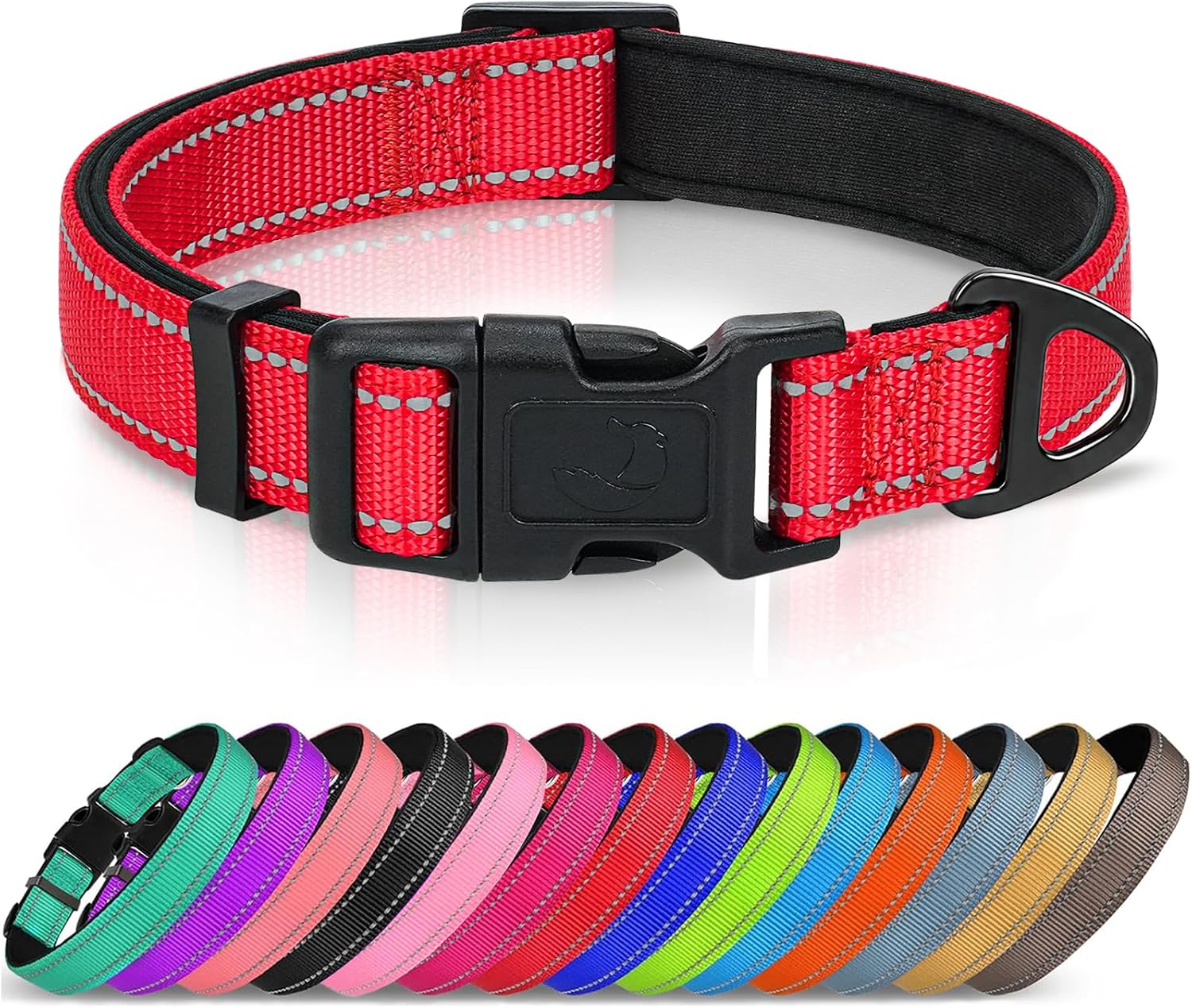
| Material Type | Metal, Neoprene, Nylon |
|---|---|
| Closure Type | Buckle |
| Size | Small (Pack of 1 |
| Suitable For | All Life Stages |
This Joytale small collar combines reflective nylon webbing with a soft neoprene lining to give small dogs a comfortable, all-day collar that also improves visibility after dark. It is typically used for daily walks, backyard play, and short training sessions where a lightweight, low-profile collar is preferred. The metal D-ring and solid alloy hardware provide a secure leash attachment that holds up better to pulling than plastic fittings, and the quick-release snap buckle makes putting the collar on and off fast and simple. The reflective threads run around the collar for 360 degree visibility when headlights or flashlights hit them, which helps locate a dog in low light. Because it is a basic buckle collar rather than a harness or no-pull design, it is best paired with routine leash control and supervision rather than heavy pulling or reactive behavior. Sizing requires measuring the neck to pick the correct small size, but once fitted the soft padding reduces rubbing and chafing during longer wear.
Best for: Buyers who want a comfortable, everyday collar for a small dog that balances visibility, durability, and ease of use for walks and general wear.
Less Ideal for: Owners who need a training no-pull solution or who walk very strong pullers should choose a harness or reinforced training collar instead.
- Neoprene padding for reduced chafing and all-day comfort
- Reflective threads for improved 360° visibility in low light
- Metal D-ring and alloy hardware for stronger, durable leash attachment
- Quick-release buckle for fast on/off and convenience
- Not a no-pull or harness solution for dogs that pull heavily
Verdict: The best budget collar gives pet owners a dependable, affordable way to secure and walk their dog while maintaining acceptable comfort and stay-put performance.
Starmark Pro-Training Collar Small
Best Training Collar

| Breed Recommendation | Small-medium Breeds |
|---|---|
| Item Type Name | dog training collar |
| Material Type | Polymer |
| Closure Type | Snap |
| Included Components | Safety Clip |
The Starmark Pro-Training Collar is a compact martingale-style training collar made for small dogs that uses high-strength links you add or remove to size the loop precisely. It is intended for supervised training and walking to discourage pulling and lunging by applying gentle, distributed pressure around the neck rather than a hard pinch. Rounded link tips and a humane patented design make corrections less abrupt, and the included safety clip and backup nylon slip collar increase security during sessions. In practice the collar is lightweight and unobtrusive for everyday walks and travel, and the link system makes fitting straightforward without bulky hardware. Limitations include that it is a training tool meant to be used under supervision and should not be left on an unattended dog, and it does not replace a secure everyday buckle collar or harness for dogs that pull strongly or for long off-leash use.
Best for: Owners of small or lightweight dogs who want a low-profile training collar for walks and short supervised training sessions and prioritize a compact, travel-friendly option.
Less Ideal for: People needing a primary everyday restraint for strong pullers, large breeds, or off-leash control should choose a sturdier buckle collar or harness instead.
- Adjustable link system for a precise, low-profile fit
- Patented humane martingale design provides gentler corrections than metal prongs
- Lightweight and compact for travel and everyday wear on small dogs
- Includes safety clip and backup nylon slip collar for added security
- Not intended to be left on an unattended dog and requires supervised use
- Not suitable as the sole restraint for dogs that pull heavily or escape-minded
Verdict: The best training collar provides the control, feedback, and secure fit needed to help teach loose-leash walking and basic manners during training sessions.
Garmin Sport PRO Training Collar
Best Premium Collar
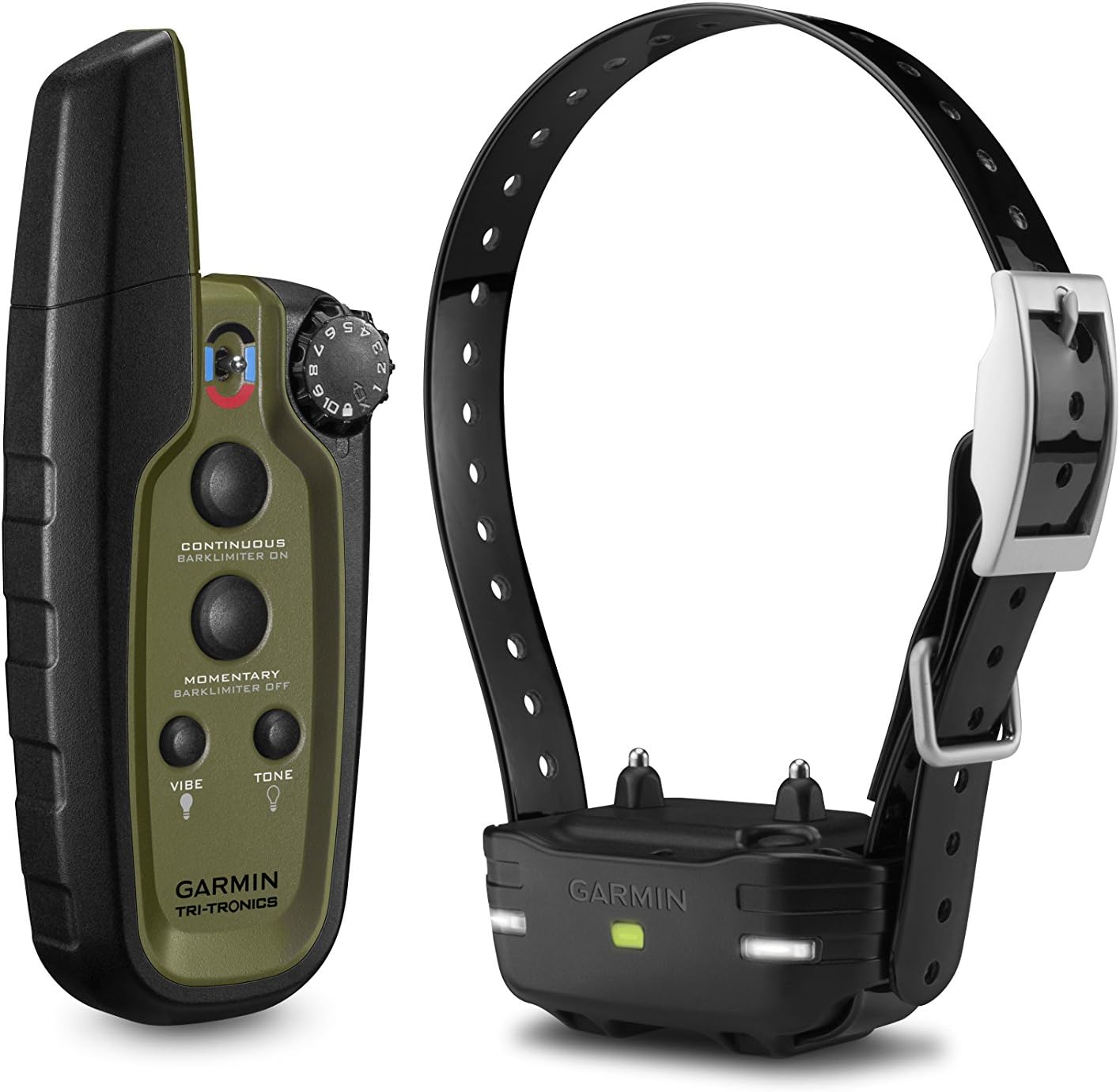
| Range | 3/4 mile |
|---|---|
| Training modes | Tone, Vibration, 10 stimulation levels |
| Dog capacity | Up to 3 dogs |
| Handheld battery life | Up to 60 hours |
| Handheld water rating | IPX7 |
The Garmin Sport PRO bundle pairs a one-handed handheld transmitter with a rechargeable dog device to deliver tone, vibration and 10 levels of static stimulation for training at distances up to three quarters of a mile. The handheld is ergonomically shaped for one-handed, no-look operation and uses a quick-turn dial with positive clicks to step through stimulation levels and auxiliary functions, while four buttons provide momentary and continuous corrections plus vibration and tone. Built-in LED beacon lights help locate a dog in low light and a settable BarkLimiter offers automatic barking control. Both units use rechargeable lithium-ion batteries and the handheld floats, adding practical durability for field use. The dog device accepts long and short stainless steel contact points for wet conditions and the system is rated water-resistant for rugged outdoor use. Limitations include no GPS tracking or advanced smartphone integration and the dog device water rating is lower than the handheld, so fully submerged use is limited.
Best for: Buyers who need a rugged, easy-to-operate remote trainer for active outdoor work and want reliable controls and durable contact hardware for strong, energetic dogs.
Less Ideal for: If you require GPS tracking, smartphone integration, or full waterproofing for underwater use, consider alternatives with those specific features.
- One-handed ergonomic handheld with quick-turn dial for easy level changes
- Up to 3/4 mile range suitable for open-field training
- Rechargeable, user-replaceable lithium-ion batteries for long runtimes
- Interchangeable long and short stainless steel contact points for wet use and durability
- Built-in LED beacon lights and settable BarkLimiter for locating and barking control
- Dog device has lower water rating than the handheld, limiting submerged use
- No GPS location tracking or smartphone app integration
Verdict: The best premium collar is for owners willing to pay more for top-tier materials, superior construction, and extra comfort or style details.
DAGANXI Tactical Dog Collar L
Best Heavy-Duty Collar
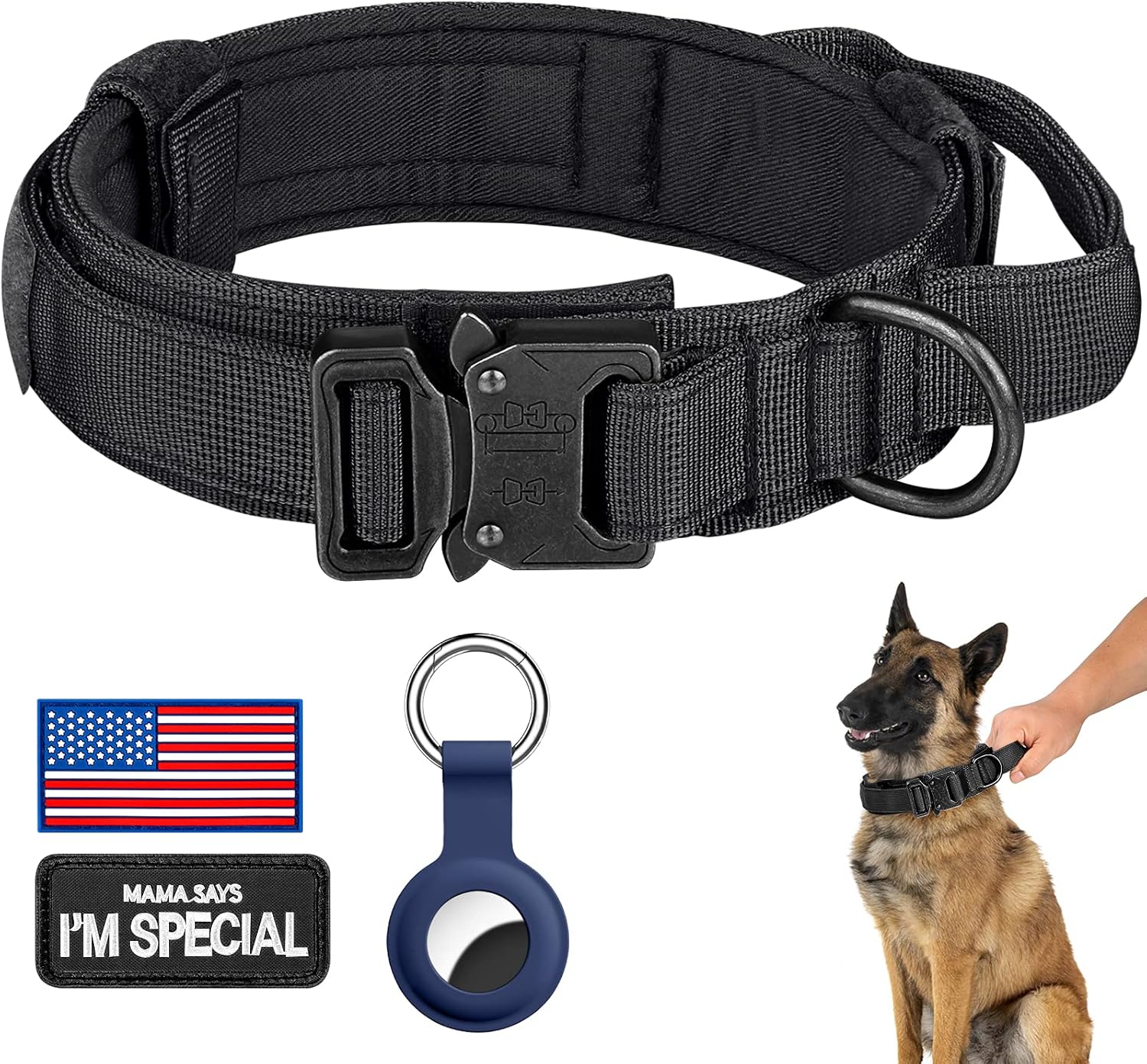
| Material Type | Nylon |
|---|---|
| Closure Type | Buckle |
| Included Components | Leash |
| Breed Recommendation | Medium, Large Breeds |
This DAGANXI tactical collar is built for control and durability during walks and training. Made from 1000D nylon with a soft padded lining, it combines a heavy-duty quick-release metal buckle with a Velcro ID panel and a reinforced control handle so you can manage a strong-pulling medium or large dog without reaching for a leash attachment. The included AirTag protective case and two hook-and-loop patches add practical tracking and ID options. Its adjustable design lets you fine-tune fit for growing dogs or when swapping collars between pets, and the neoprene-like padding helps prevent chafing on longer outings. Expect a bit more bulk than a slim everyday collar and limited color/size details if you need exact aesthetic matching, but for handlers who prioritize sturdiness and on-collar control this collar performs as advertised.
Best for: Buyers who need a strongly built, adjustable walking collar that gives precise fit changes and on-collar control for medium to large dogs during training and active walks.
Less Ideal for: Owners seeking a thin, low-profile everyday collar for very small breeds or those who prioritize fashion over rugged function should consider slimmer alternatives.
- 1000D nylon construction for high abrasion resistance and long life
- Heavy-duty quick-release metal buckle for reliable fastening and emergency release
- Padded inner lining reduces rubbing and improves comfort on walks
- Integrated control handle provides immediate short-range control without a leash
- Includes AirTag protective case and Velcro patches for ID and tracking
- Bulkier profile than minimalist collars which may be noticeable on smaller dogs
- Limited published color and size detail may make exact matching harder
Verdict: The best heavy-duty collar is constructed to withstand strong pulling, frequent use, and rough conditions without compromising fit or safety.
CIUZL C94 Dog Shock Collar
Best Waterproof Collar

| Range | 3300 ft |
|---|---|
| Waterproof rating | IP67 (receiver) |
| Neck fit | 6 – 26 inches |
| Suitable weight | 8 – 120 pounds |
| Charge time | 2 hours |
The CIUZL C94 is a straightforward training collar that gives basic, adjustable correction options across beep, vibration, and safety shock modes and is built for outdoor use thanks to an IP67 receiver. You use the handheld remote to cue or correct at distances up to 3300 feet, which makes it useful for backyard, park, or beach sessions where you need reliable range. The collar includes two probe lengths and a silicone sleeve to fit both short- and long-haired dogs and the nylon strap adjusts from 6 to 26 inches so it fits large necks. Rechargeable batteries with quick two-hour charge and long standby times mean less frequent charging for the collar and remote, and the built-in light modes help locate a dog at night. Practical limitations are its simple feature set and basic remote ergonomics — there are no advanced training programs or multi-dog channel details in the listing — but for buyers seeking a no-frills, budget-friendly system that covers the essential training functions it performs as expected.
Best for: Buyers wanting an affordable, no-frills training collar for large dogs who prioritize reliable range and basic adjustable stimulation for outdoor recall and behavior work.
Less Ideal for: Owners who need feature-rich professional training tools, programmable multi-dog setups, or premium ergonomics should consider higher-end systems.
- Long remote range up to 3300 ft for open-area training
- Adjustable beep, vibration, and safety shock levels for graduated corrections
- IP67 waterproof receiver suitable for outdoor use
- Rechargeable batteries with short charge time and extended standby
- Includes two probe lengths and silicone sleeves to adapt to different coat types
- Remote is only splash-proof and not fully waterproof
- No advanced training modes or detailed multi-dog channel information provided
Verdict: The best waterproof collar keeps working through wet walks, swims, and rainy weather by using water-resistant materials and corrosion-resistant hardware for easy upkeep.
ESGPET Martingale Collar and Leash Set Medium
Best Reflective Collar

| Included Components | Leash |
|---|---|
| Breed Recommendation | Small, Medium, Large |
| Closure Type | Buckle |
| Size | Medium |
This ESGPET martingale collar and leash set is built for basic training and everyday walks where a dog tends to slip out of standard collars or pulls on the lead. The martingale design tightens under tension to give better control without choking, and the included leash has a padded handle for more comfortable gripping on longer walks. Reflective trim on both collar and leash increases nighttime visibility and the heavy-duty nylon webbing plus metal hardware feel durable for routine use. The quick-release buckle makes it easy to remove the collar and acts as a safety feature in an emergency. Expect straightforward, no-frills performance: it works well for discouraging escape and giving handlers better leverage, but it is not a substitute for a properly fitted front-clip harness for very strong pullers or dogs that lunge. The set covers small through large sizes and includes one collar plus one leash for immediate use, offering solid value for owners on a tight budget.
Best for: Buyers on a budget who need a simple, effective way to prevent escape and gain more control during walks without buying a specialized harness or trainer gear.
Less Ideal for: Owners of large, extremely strong dogs that consistently pull hard or lunge should consider a reinforced front-clip harness or dedicated training equipment instead.
- Martingale design improves control and reduces slipping without constant tightness
- Reflective strip increases visibility on low-light walks
- Sturdy nylon webbing and metal hardware for everyday durability
- Padded leash handle adds comfort during longer walks
- Quick-release buckle for easy removal and emergency release
- Not intended as a replacement for a front-clip harness for very strong or persistent pullers
- Limited adjustment range compared with some premium training collars
Verdict: The best reflective collar enhances nighttime and low-light visibility with integrated reflective strips or materials to make both dog and owner safer on evening outings.
Choosing the Right Collar Training Dog Walk: Key Factors to Consider
Fit and Sizing
A correct fit is the foundation of any training collar. A collar that is too loose can slip off or rotate, which reduces control and can confuse the dog; a collar that is too tight can cause discomfort and potentially injure the neck. Measure your dog's neck and choose a collar with an adjustment range that leaves room for growth or seasonal coat changes. Look for clear sizing guides and multiple adjustment points so you can fine-tune the placement.
Proper placement affects where pressure is applied during leash corrections and how the dog responds, so confirm the collar sits on the lower part of the neck without obstructing the windpipe. For puppies or dogs with delicate necks, prioritize collars with more adjustment range and softer materials.
Control and Training Effectiveness
Different collar styles deliver different levels of control, and effectiveness depends on your training approach. For gentle redirection, collars that provide mild leverage or momentary tightening can teach attention and discourage pulling. For dogs that lunge or pull heavily, designs that distribute pressure or offer mechanical advantage help you manage force more safely.
Consider how the collar interacts with your leash and whether it allows for quick, consistent cues. The ideal collar for this purpose supports progressive training methods and lets you give clear, repeatable signals without causing panic or pain.
Comfort and Materials
Comfort influences training outcomes because a dog that is uncomfortable will be distracted or resistant. Look for collars made from soft, nonabrasive fabrics, rounded edges, and padding where the collar contacts the neck. Breathable materials reduce sweat and odor buildup on long walks, while hypoallergenic options can prevent irritation for sensitive dogs.
Materials also affect long-term wear; leather may soften and mold to the neck over time, while synthetic webbing stays lightweight and dries quickly after exposure to rain or baths.
Adjustment and Hardware
Easy, precise adjustment makes fitting and swapping collars quicker and safer. Buckles should allow secure fastening and be easy to operate with one hand, especially when you are managing a leash. Metal D-rings for leash attachment are often more durable than plastic, but consider the weight they add for very small dogs.
Check that hardware resists rust and bend under repeated tension. Quick-release mechanisms help in emergencies, and multiple attachment points can support front-clip setups or training tools when needed.
Visibility and Safety Features
Visibility is important for early-morning or evening walks. Reflective stitching or high-visibility colors improve safety around traffic and make it easier to spot your dog at a distance. Some collars include ID tag attachments or integrated tag plates that keep identification secure and reduce tag noise.
Other safety features to consider are breakaway designs for certain outdoor situations and reinforced stitching in stress points to prevent sudden failures under load.
Durability and Maintenance
A training collar needs to stand up to regular use, weather exposure, and repeated washing. Strong stitching, corrosion-resistant hardware, and abrasion-resistant webbing extend the collar's useful life. Consider how easy it is to clean: machine-washable collars or those with removable covers simplify maintenance after muddy walks or training sessions.
Durability also affects value. A well-built collar that retains its fit and function over time reduces the need for frequent replacements.
How Do Different Collar Designs Affect Walking and Pulling Behavior?
Collar design changes how force is applied and how the dog experiences leash cues. Low-profile flat collars offer minimal mechanical advantage and work best for dogs that respond to loose-leash training, while designs that tighten slightly can give clearer feedback to dogs that do not yet understand leash manners. Front-clip attachment points can reduce pulling by redirecting motion toward you, whereas rear-clip setups are simple and comfortable for calm walking.
When choosing a design, match it to your training goals: simple guidance for casual walkers, gentle leverage for teaching attention, or more controlled distribution of pressure for stronger pullers. Observe your dog's reaction during short practice sessions to confirm the design you choose produces the intended response without distress.
- Flat collars: everyday use, good for dogs already attentive on leash
- Front-clip: discourages pulling by turning the dog toward handler
- Limited-slip styles: provide brief corrective feedback when needed
Can I Use a Training Collar with a Harness?
Yes, many handlers use a collar and harness together to separate teaching signals and safety. A properly fitted collar can provide a location for ID and short corrections, while a harness handles most forward-pulling forces, which protects the dog's neck. This combination works well during transitions when you are teaching a dog to stop relying on pulling.
If you plan to use both, ensure each piece fits correctly and that leash attachment points do not conflict. Avoid setups that create competing signals by having two points of significant forward tension at the same time.
- Use harness for sustained pulling; collar for attention cues
- Check fit to prevent rubbing where collar and harness meet
What Size and Placement Adjustments Should I Make for Puppies?
Puppies change neck size rapidly, so choose a collar that offers a wide adjustment range and a lightweight, soft material. Check fit frequently and allow room for growth: you should be able to slide two fingers between the collar and the puppy's neck. For very young puppies, avoid collars that rely on significant pressure; instead use gentle guidance while teaching leash manners.
Frequent short training sessions are preferable to long walks with corrective devices. As the puppy grows, reassess the collar style and move to designs that match developing strength and attention span.
- Adjust often during growth phases
- Prefer lightweight, soft collars for early stages
How to Introduce a New Collar for Training Sessions
Introduce the collar slowly to build positive associations. Start by letting the dog inspect the collar while offering treats and praise, then put it on for brief periods indoors without leash pressure. Gradually add short leash walks and simple cues, increasing duration as the dog remains comfortable.
Monitor the dog for signs of discomfort or stress and adjust fit as needed. A gradual introduction reduces resistance and helps the dog link the collar with training and rewards rather than punishment.
- Begin with short, calm sessions
- Use positive reinforcement when the dog wears the collar
What Maintenance Keeps a Training Collar Working Well?
Regular maintenance preserves function and safety. Inspect the collar before each use for frayed webbing, loose stitching, or bent hardware. Clean it according to the manufacturer's recommendations; many collars are machine-washable or can be hand-washed with mild soap and water. Dry thoroughly before reuse to prevent corrosion of metal parts.
Replace collars that show significant wear or fail to hold adjustment to avoid unexpected breakage during walks or training sessions.
- Inspect hardware and stitching regularly
- Clean and dry fully after exposure to moisture
How We Chose the Best Collar Training Dog Walk
We focused on criteria that matter when selecting a collar specifically for training a dog to walk. Primary evaluation points included collar fit and sizing range to ensure secure, correct placement during walks; control and effectiveness for redirecting attention without causing harm; comfort and padding to reduce chafing and wear during frequent use; and construction durability to withstand regular leash pressure and outdoor conditions. We also considered ease of adjustment and attachment points for leashes and training aids, plus user-friendly features such as quick-release buckles and reflective trim for low-light safety. Exclusions: we filtered out collars intended solely for containment systems, invisible barriers, or those designed only for heavy-duty restraint rather than training. Final selections emphasized humane, progressive training use and practical everyday walking performance.
Our full evaluation process is outlined in our review methodology.
FAQ
Will a training collar stop my dog from pulling immediately?
Not always. While certain collar designs make it easier to redirect pulling, lasting change usually requires consistent training. Use short sessions to teach alternative behaviors, and combine the collar with reward-based cues for the best results.
How tight should a training collar be during walks?
A training collar should be snug enough to stay in place but loose enough to allow two fingers between the collar and the dog's neck. Proper placement prevents slippage and reduces the risk of irritation or breathing restriction.
Are padded collars better for long walks?
Padded collars can increase comfort on long walks by reducing pressure points and chafing. They are especially helpful for dogs with short or sensitive coats, though the added bulk may not suit very small breeds.
Can I leave a training collar on my dog all day?
It depends on the collar type. Some collars are suitable for continuous wear, while others designed for corrective feedback should be used only during supervised training sessions. Check fit and comfort frequently if worn for extended periods.
How do I know when to replace a collar?
Replace a collar when you see fraying, broken hardware, or if it no longer holds adjustments securely. Any sign of weakening at stress points warrants replacement to maintain safety during walks.
Final Verdict
Choose a collar that matches the training steps you plan to teach and the physical needs of your dog. Prioritize correct fit, comfortable materials, and reliable attachment points so the collar supports consistent cues without causing distress. Balance control and gentleness: a collar that provides clear, repeatable guidance while remaining comfortable will speed learning and make daily walks more pleasant for both of you. Focus on progressive training, monitor your dog's response, and adjust tools and techniques as the dog improves.

