

If you own a bichon frise, choosing the right comb matters for daily maintenance, knot prevention, and skin comfort. their hair texture tends to mat close to the skin, so a comb designed for careful detangling and efficient fur removal saves time and reduces stress for both you and your dog. This guide shortlists seven top combs suited to bichon frise coats and explains the important features to look for. Below you will find clear reasons each type of comb made the cut and the evaluation criteria we used, so you can pick a tool that fits your routine and grooming skills.
Top Picks at a Glance
| Best Overall Comb for Bichon Frise A reliable, all-purpose comb that handles everyday grooming needs | POODLIE Detangling Pet Comb |  |
| Best Budget Comb for Bichon Frise An affordable comb that still performs well on common coat issues | yumflan Fine Tooth Flea Comb |  |
| Best Wide-Tooth Comb Wide-spaced teeth for gentle detangling of thick or matted areas | LBMBAIC Metal Grooming Comb Medium |  |
| Best Fine-Tooth Comb Closely spaced teeth for smoothing, finishing, and catching small debris | Petpost Tear Stain Comb |  |
| Best Dematting Comb Designed specifically to cut through mats and stubborn tangles safely | Andis Stainless Steel Dematting Comb 10in |  |
| Best Compact Comb A small, portable comb ideal for travel and quick touch-ups | Coastal Li'l Pals Double-Sided Comb |  |
| Best Premium Comb A higher-end comb with superior materials and ergonomic construction | Chris Christensen 000 Buttercomb |  |
POODLIE Detangling Pet Comb
Best Overall Comb for Bichon Frise

| Power Source | Manual |
|---|---|
| Hair Type | Long |
| Size | Detangling Pet Comb |
| Material Type | Plastic |
The POODLIE Detangling Pet Comb is a manual two-in-one grooming tool that combines long and short stainless steel teeth to tackle tangles, mats, and loose undercoat fur. You use the long-tooth side to work through heavy mats and the short-tooth side for finishing and smoothing, starting at the ends and working up toward the skin to reduce pulling. The steel tines are rigid enough to cut through tight knots yet shaped for everyday detangling on long or short coats, which makes it suitable for breeds like poodles, pomeranians, and longhaired cats. The compact plastic handle keeps the tool lightweight and easy to maneuver for quick touch-ups or regular grooming sessions. It is manual and simple so there are no replacement parts or batteries, but very thick severely matted areas may still require a dematting rake or professional attention. For owners who brush regularly this comb speeds up detangling and reduces coat maintenance time, while being gentle enough for sensitive skin when used properly.
Best for: Owners of long, curly, or dense-coated small to medium pets who want a gentle wide-tooth tool to work through tangles at home and reduce brushing time.
Less Ideal for: People with very large breeds or pets with extreme, hardened mats that need heavy-duty dematting tools or a groomer should look elsewhere.
- Two-length stainless steel teeth let you attack heavy mats and then smooth with finer tines
- Manual, no-power tool that is simple to use and easy to clean
- Suitable for both long and short hair types, including small dogs and cats
- Lightweight plastic handle makes the comb easy to control during grooming
- Plastic handle may feel less durable than metal-handled grooming tools
- Not intended for extremely severe matting where a dedicated dematting tool or professional groomer is needed
Verdict: The best all-around comb for Bichon Frise owners who want a single reliable tool that detangles, smooths, and preps the coat without causing damage.
yumflan Fine Tooth Flea Comb
Best Budget Comb for Bichon Frise

| Material | Stainless steel teeth |
|---|---|
| Handle | Rubber-sheathed anti-slip |
| Length | 7 inches |
| Item weight | 1.47 ounces |
The yumflan Fine Tooth Flea Comb is a compact stainless-steel comb built for precision grooming and flea removal. Its closely spaced, higher-grade metal teeth pick up tiny clumps, flea dirt, and short undercoat fibers when stroked close to the skin, and the rubber-sheathed, anti-slip handle makes repetitive short strokes more comfortable and controlled. Typical use is systematic: start behind the ears and neck, work down the back and along the belly and hindquarters, and dip the comb into soapy water between passes to remove captured fleas. The comb is lightweight and easy to maneuver on small areas and finishing passes after a brush-out, but it is not intended for heavy de-matting or very dense, heavily matted coats where the fine teeth could bend or snag. It works across coat types for touch-ups and inspection and is especially useful for checking for flea dirt or targeting short guard and undercoat fibers that wider-tooth tools miss.
Best for: Buyers who need a precise finishing tool to remove tiny clumps, flea dirt, and short undercoat hairs and who prioritize accuracy during targeted grooming or flea checks.
Less Ideal for: Owners looking for a main all-in-one dematting tool or who need to process very thick, severely matted coats quickly should choose a wider-tooth brush or specialized de-matter instead.
- Very fine, high-grade stainless-steel teeth catch tiny fleas, flea dirt, and short undercoat fibers.
- Rubber-sheathed handle provides an anti-slip grip for controlled, repetitive strokes.
- Compact, lightweight design allows precise finishing work around ears, neck, and tail base.
- Suitable for use on both dogs and cats and useful for regular pet health checks.
- Not designed for heavy mats or very dense coats and may bend if used aggressively.
- Small comb covers less surface area so full-body combing is slower than using wider tools.
Verdict: The best low-cost comb for Bichon Frise owners who need effective detangling and everyday grooming on a tight budget without fragile construction.
LBMBAIC Metal Grooming Comb Medium
Best Wide-Tooth Comb

| Material Type | Stainless Steel |
|---|---|
| Power Source | manual |
| Hair Type | Curly,Straight,Long,Thick,Normal |
| Size | Medium |
| Unit Count | 1 Count |
This metal grooming comb is built for working through mats and heavy undercoat without tearing fragile fur. It has long tapered stainless pins on both coarse and finer sides so you can use the wide-tooth side to open and remove tangles over large areas and flip to the finer side for face and finishing work. The cambered handle and matte finish improve grip during longer sessions, and the seller states the steel is treated against rust and color loss so it should hold up to routine grooming. In practice the rigid metal pins provide strong detangling power on Bichon-type coats, but because the comb is metal it can feel less forgiving than a wide plastic tooth comb on very sensitive skin. It is manual and lightweight, so it pairs well with a slicker brush or dematting tool for regular maintenance, but heavy matting may still require patience or a professional groomer. For owners who want a durable, two-sided wide-tooth option for fluffy, dense coats, this comb is a practical everyday tool.
Best for: Owners of fluffy, dense-coated small dogs who need a durable wide-tooth comb to carefully work through tangles and maintain a Bichon-style coat between professional trims.
Less Ideal for: People seeking an ultra-gentle comb for puppies or dogs with skin sensitivity or those who prefer a cushioned-tooth tool that flexes over the coat.
- Double-sided design with wide and fine tapered stainless pins for both large-area detangling and detailed finishing
- Long, tapered pins reach the undercoat to remove loose hair and mats effectively
- Cambered, matte handle improves grip and comfort during longer grooming sessions
- Stainless steel treated for corrosion resistance to maintain durability
- Metal pins are rigid and can be less gentle on very sensitive skin compared with softer plastic or rubber-tooth combs
- Manual tool requires time and patience on severe matting and may not replace trimming or professional dematting
Verdict: The best wide-tooth comb for gently working through tangles and preventing breakage in fluffy, dense coats.
Petpost Tear Stain Comb
Best Fine-Tooth Comb

| Material | Stainless steel |
|---|---|
| Teeth count | 65 rounded teeth |
| Intended use | Eyes, facial fur |
| Model number | PP-6032 |
The Petpost Tear Stain Comb is a compact stainless steel fine-tooth comb built for delicate finishing around a dog's eyes and face. With 65 extra-fine rounded teeth it gently lifts dried tear crust, boogers and tiny debris without tugging long facial fur, making it useful for daily cleanup or before shows. The rust-resistant metal rinses clean and holds shape, so the comb doubles as a light flea comb for small dogs and puppies. Its small footprint and fine spacing let you smooth and separate hairs for a polished look on breeds with dense facial coats. Limitations include the tiny size, which is optimized for small breeds and close-up work rather than whole-body grooming, and the lack of a protective cover for storage. For routine tear-stain maintenance and final finishing on a Bichon Frise face, it is effective and easy to use when paired with a gentle wipe or solution.
Best for: Buyers who need a precise finishing tool to remove tiny particles and sculpt facial hair on small-breed dogs like Bichon Frise and prioritize gentle, close-up grooming.
Less Ideal for: Owners looking for a general-purpose or full-size grooming comb for whole-body coat work should choose a larger, wider-tooth tool instead.
- 65 extra-fine rounded stainless steel teeth lift crust and debris without scratching skin
- Rust-resistant metal that rinses clean and keeps its shape
- Compact size for precise finishing around eyes and muzzle
- Also functions as a light flea comb for small dogs
- Small form factor not suitable for brushing larger areas or full-body grooming
- No protective sheath or case for the teeth during storage
Verdict: The best fine-tooth comb for finishing work, removing small particles, and smoothing the coat for a polished look.
Andis Stainless Steel Dematting Comb 10in
Best Dematting Comb

| Material Type | Stainless Steel |
|---|---|
| Size | 10 Inch |
| Power Source | Manual |
| Hair Type | All |
The Andis 10-inch stainless steel dematting comb is built to work through tangles, mats and loose hair while remaining lightweight and easy to handle. Its stainless steel teeth, offered in coarse and fine spacing, are rigid enough to cut through stubborn mats and to pull out loose undercoat without bending or breaking, and the rounded tips reduce discomfort when working close to the skin. The balanced, fatigue-free design makes it suitable for finishing and regular maintenance on both dogs and cats, and because it is manual there are no batteries or motors to worry about. Practical benefits include improved coat smoothness, less mat buildup between professional grooms, and a durable tool that should last for many sessions. Limitations are that manual dematting requires patience and a steady hand on heavily matted coats and the comb does not include a protective sleeve or storage case.
Best for: Buyers who want a durable, purpose-built hand tool for safely loosening and removing mats during regular grooming sessions and who prefer a simple, no-power solution.
Less Ideal for: Owners who need a faster, motorized dematting solution for very heavy or neglected matting should look at powered options or professional grooming services.
- Stainless steel teeth provide durability and resistance to bending
- Coarse and fine tooth spacing handles both thick mats and finer tangles
- Rounded tooth tips help reduce discomfort during grooming
- Lightweight, balanced design reduces hand fatigue for longer sessions
- Manual tool requires time and care on severe matting compared with powered dematting devices
- No included storage sleeve or protective cover
Verdict: The best dematting comb for owners who need a tool engineered to loosen and remove stubborn mats without pulling or irritating the skin.
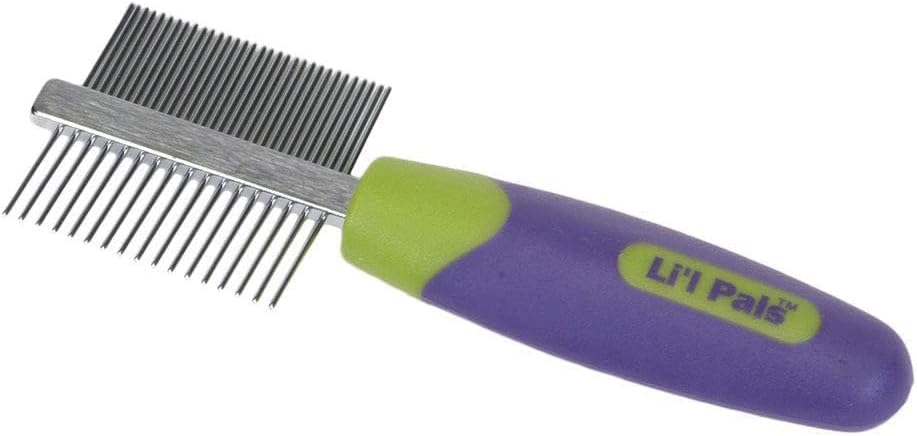
Coastal Li'l Pals Double-Sided Comb
Best Compact Comb
| Material Type | Stainless Steel |
|---|---|
| Power Source | manual |
| Hair Type | All |
| Package Size Name | One Size |
The Coastal Li'l Pals double-sided comb is a compact stainless steel grooming tool that works well for quick touch-ups and light detangling on small to medium coats. One side has finer teeth for removing fleas, burs, and close tangles while the wider-tooth side smooths longer fur and whiskers, so it is typically used for spot brushing between full grooming sessions or on the go. Its slim, one-piece stainless steel construction makes it durable and easy to clean, and the one-size design fits neatly in a travel kit or tote. For Cavalier King Charles Spaniels it can help manage facial hair and small mats around the ears and chest when used gently and regularly. The comb is manual and not intended to replace a slicker or bristle brush for heavy shedding or deep undercoat work, and its narrow width means it takes longer to cover large areas of coat.
Best for: Owners who want a portable, easy-to-store tool for quick touch-ups, small tangles, and facial grooming while traveling or between full grooming sessions.
Less Ideal for: Owners needing a brush for daily heavy shedding control, deep undercoat work, or removing large mats should choose a larger slicker or dematting tool instead.
- Double-sided teeth for both fine detangling and wider smoothing
- Stainless steel construction is durable and easy to clean
- Compact, slim shape stores well in travel kits
- Fine-tooth side doubles as a tick and flea comb for spot checks
- Small head covers less coat per stroke, so full grooming takes longer
- Not designed for heavy undercoat removal or severe matting
Verdict: The best compact comb for pet parents who want a travel-friendly tool for quick grooming and on-the-go touch-ups.
Chris Christensen 000 Buttercomb
Best Premium Comb

| Length | 7.5 inches |
|---|---|
| Teeth type | Stainless steel fine and coarse |
| Core | Solid brass |
| Finish | Nickel chrome plating |
The Chris Christensen 000 Buttercomb is a salon-grade dual-sided comb built for frequent use and precise work. It combines a fine and a coarse side in a 7.5-inch greyhound-style profile so you can check for tangles, remove undercoat, and finish a groom without switching tools. Rounded, polished tips and stainless steel teeth glide through coats to detangle with minimal friction and reduced static, while the solid brass core gives the comb balance and enough weight to move through hair under its own gravity. The nickel chrome plating protects the spine and teeth from wear, making this comb feel sturdy in hand and resilient to daily salon use. Because it is manual and metal, it is not intended for aggressive flea extraction like disposable fine-tooth flea combs, but its closely spaced fine teeth are well suited to frequent, careful comb-throughs and inspection for parasites on small areas. The main compromises are a higher price and a metal construction that requires drying after wet use to avoid corrosion over time, but for owners who groom often and want a durable, professional tool this comb delivers long-lasting performance.
Best for: Owners who groom frequently and want a durable, salon-quality comb with finely tuned teeth and long-term performance rather than a cheap disposable tool.
Less Ideal for: People looking for the cheapest or single-use flea comb for occasional checks should choose a basic plastic or disposable fine-tooth comb instead.
- Dual-sided fine and coarse stainless steel teeth for checking and detangling
- Rounded, polished tips reduce friction and help prevent coat breakage
- Solid brass core provides balance and durability for frequent use
- Nickel chrome finish resists wear and gives a smooth glide through hair
- Higher cost compared with basic flea combs
- Metal construction needs to be dried and cared for after wet use to avoid corrosion
Verdict: The best premium comb for owners willing to invest in durable materials, comfortable handling, and finer finishing performance for regular grooming.
Choosing the Right Comb Bichon Frise: Key Factors to Consider
Tooth Spacing and Layout
Tooth spacing determines how a comb moves through dense bichon frise fur. Wider teeth are better for initial passes through mats and heavy tangles because they separate hair with less resistance. Finer teeth are useful for finishing passes to smooth the coat and remove small snags and loose undercoat. A comb that combines both wide and fine sections or a set with complementary spacings is often most versatile.
Also consider tooth length and taper. Longer, tapered teeth reach through the outer coat to the undercoat without scraping the skin. Rounded or polished tips are essential to prevent scratching or irritation during detangling.
Tooth Material and Finish
Material affects durability and how smoothly teeth glide through hair. Stainless steel teeth resist bending and corrosion and can handle wet grooming without warping. High-quality resin or nylon teeth can be gentler and are less likely to snag, but lower-grade plastics may flex or break.
A polished, rounded finish on each tooth reduces pulling and prevents micro-cuts to the coat or skin. Avoid combs with rough edges or visible seams along teeth that can catch delicate hair.
Handle Ergonomics and Control
Grooming a bichon frise often takes time, so grip and balance matter. A handle with a non-slip texture and an ergonomic shape reduces wrist strain and gives you better control when working through stubborn mats. Lightweight handles help with long sessions, while a slightly heavier, balanced comb can provide steady pressure for more efficient detangling.
Look for handles that accommodate your typical hand size and grip style. Some combs include finger grooves or soft overmolds that make precise work around ears and legs easier.
Ease of Cleaning and Maintenance
Combs pick up loose hair and dander, so quick cleaning saves time and keeps the tool sanitary. Designs that let you push out trapped hair or have removable sections are easier to maintain. Metal combs that tolerate soap and water or dishwasher-safe construction reduce buildup of oils and grooming products.
Also consider how a comb tolerates routine care. Durable finishes resist rust and sticky residue from conditioning sprays, while fragile coatings may degrade and snag hair after repeated cleaning.
Durability and Build Quality
A well-built comb maintains its tooth alignment and finish after repeated use. Teeth that bend or break will snag and damage a bichon frise coat, so look for solid construction and firm tooth anchoring. Reinforced necks and metal-to-handle joints extend lifetime under regular grooming.
Durability also affects long-term cost and performance: a single reliable comb will outperform cheaper tools that require frequent replacement, and it keeps grooming sessions consistent for sensitive dogs.
Safety Features for Sensitive Skin
Bichon frise have sensitive skin that can react to aggressive grooming. Safety features such as rounded tooth tips, a shallow tooth profile near the base, and a gentle tooth taper all reduce the risk of skin irritation. Some combs include a safety guard or a blunted edge to keep pressure even across the tooth set.
Consider how a comb behaves when it hits a tight mat. Tools that allow gradual loosening rather than sudden yanking are safer and more comfortable for the dog.
How Often Should I Comb a Bichon Frise to Avoid Mats?
Daily light combing prevents tangles from forming and keeps the coat manageable. A short, smooth pass each day targets loose hairs and small tangles before they tighten into mats. For most owners, 5 to 10 minutes is sufficient when done consistently.
When you spot thicker tangles or seasonal shedding, increase combing frequency and use wider-toothed passes first to break up knots gently, followed by finer teeth to smooth the coat.
- Daily quick combing for surface maintenance
- Longer sessions once or twice weekly for full detangling
- Add a comb-through after bathing when the coat is partially dry
What Technique Reduces Pulling and Skin Irritation?
Work in sections and start with the widest-tooth area. Hold the coat close to the skin with your free hand to prevent tugging the skin when you comb. Move slowly and use short strokes through a mat rather than forcing a single long pass.
Apply a detangling spray or conditioner on stubborn mats and gently tease them apart from the ends inward. If a mat is too tight, cut it out carefully with blunt-ended scissors rather than yanking.
- Support the skin while combing
- Work from ends toward the skin
- Use conditioner or spray on tight knots
Can I Comb a Bichon Frise After Bathing?
Combing after a bath is effective, but wait until the coat is partially damp rather than soaking wet. Wet hair is more elastic and can stretch; slightly damp hair lets you detangle with less breakage. Start with a wide-tooth comb to remove major tangles and finish with finer teeth for smoothing.
Ensure the comb material tolerates moisture; metal combs handle damp coats well, while some plastics may flex when wet.
- Comb when coat is towel-dried or slightly damp
- Start wide-toothed, finish fine
- Dry fully after grooming to prevent skin issues
Which Comb Styles Work Best on Sensitive Areas Like the Face and Paws?
Use a small, fine-tooth comb with rounded tips for delicate areas. Shorter teeth and a compact head let you control pressure and avoid pulling hairs at the roots. Work slowly and keep strokes shallow near the face, ears, and paws to avoid startling or hurting the dog.
For very sensitive patches, a soft-tooth comb or a grooming finger comb can provide extra safety while still removing loose hair and small tangles.
- Small head combs for precision
- Rounded tips for safety
- Gentle, short strokes around sensitive spots
How Do I Know when to Replace a Comb?
Replace a comb when teeth bend, break, or develop rough edges that catch hair. Visible corrosion or worn finishes that snag the coat are signs the tool has reached the end of its useful life. If grooming takes noticeably longer or your dog shows more discomfort, inspect the comb closely for damage.
Regularly cleaning and drying your comb extends life, but a worn tool should be replaced to protect the coat and skin.
- Inspect teeth regularly for alignment and smoothness
- Replace if bending or corrosion appears
- Swap tools if grooming becomes more stressful for the dog
Are Double-ended Combs Worth It?
Double-ended combs provide versatility by combining wide and fine teeth in one tool, making transitions between detangling and finishing passes faster. They are convenient for travel and reduce the number of tools on hand. For many bichon frise owners, a well-designed double-ended comb covers most routine needs.
However, ensure the comb's balance and handle are comfortable; some double-ended designs sacrifice ergonomics for dual functionality.
- Good for quick transitions between tasks
- Check balance and handle comfort
- Ideal for owners who want fewer tools
How We Chose the Best Comb Bichon Frise
We focused on practical, measurable criteria that matter when grooming bichon frise coats. Our evaluation prioritized tooth design and spacing, since these directly affect how well a comb detangles without pulling. We also assessed handle ergonomics and grip to reduce hand fatigue during longer sessions. Material and finish were included to ensure teeth are smooth and corrosion-resistant for wet or humid use. Build quality and durability were considered so a comb holds its alignment and teeth under regular use. Finally, ease of cleaning and how easily a tool removes loose undercoat and debris influenced selection. Exclusions: we excluded multipurpose tools that are primarily brushes or clippers rather than combs, and any grooming tools lacking clear tooth spacing specs or with finishes prone to snagging. The list favors combs that balance gentle detangling with efficient mat removal, prioritize user comfort, and are straightforward to sanitize between grooming sessions.
Our full evaluation process is outlined in our review methodology.
FAQ
How do I remove a stubborn mat without hurting my bichon frise?
Work from the ends inward, hold the base of the hair to protect the skin, and use a wide-tooth comb to gradually loosen the mat. Apply a detangling conditioner and gently tease the fibers apart. If the mat cannot be loosened safely, cut it out carefully with blunt scissors or seek professional grooming help.
Is a metal comb better than a plastic comb for bichon frise coats?
Metal combs are generally more durable and hold their shape, making them effective for dense coats and wet grooming. Plastic combs can be gentler and lighter, but quality varies. Choose a material with smooth, rounded teeth and good tooth spacing regardless of the base material.
Can I use a comb on a bichon frise puppy?
Yes, but use a fine, soft-tooth comb and very gentle technique. Puppies have delicate skin and a developing coat, so short, careful sessions and positive reinforcement work best. Increase grooming duration gradually as the puppy becomes comfortable.
How should I care for my comb to keep it sanitary?
Remove trapped hair after each session and wash the comb with mild soap and warm water when needed. Dry thoroughly to prevent corrosion on metal parts. For stubborn residue, use a soft brush to clean between teeth and avoid harsh chemicals that can degrade finishes.
Will regular combing change my bichon frise's coat texture?
Regular grooming keeps the coat free of tangles and can make it appear smoother and healthier, but it does not permanently alter natural texture. Proper technique and suitable tools prevent breakage and help the coat lie neatly without damaging hair structure.
Final Verdict
When choosing a comb for a bichon frise, prioritize tools with appropriate tooth spacing, smooth rounded tips, and comfortable grip. These features reduce pulling and skin irritation while making grooming faster and more effective. Balance durability and ease of cleaning with a comb that fits your technique and session length. Focus on consistent maintenance rather than occasional heavy sessions: regular, gentle combing prevents mats and keeps your dog comfortable. Choose a comb that matches the coat condition you most often face and replace it when teeth show wear to keep grooming safe and efficient.

