

Picking the right complete puppy food shapes your puppy's first year of growth and lifelong health. The right formula provides the nutrients puppies need for steady weight gain, brain development, immune support, and reliable digestion. Poor choices can lead to slow growth, nutrient gaps, or gastrointestinal upset that set back training and wellbeing. This guide shortlists the top options in complete puppy food that meet core nutritional and safety expectations. We evaluated each choice for nutrient balance, ingredient quality, digestibility, and ease of feeding so you can quickly find a diet that fits your puppy's life stage and activity level.
Top Picks at a Glance
| Best Overall Complete Puppy Food The top all-around puppy formula that suits most growing dogs | Wellness Complete Health Puppy 15 lb |  |
| Best Budget Complete Puppy Food A reliable, lower-cost option that still meets puppy nutritional needs | Pedigree Puppy Dry Dog Food 3.5 lb |  |
| Best High-Protein Complete Puppy Food Formulas with extra protein for energetic or muscle-building puppies | Purina Pro Plan Puppy Small Breed Chicken & Rice |  |
| Best Limited-Ingredient Complete Puppy Food Simpler recipes focused on fewer ingredients for sensitive pups | Natural Balance Limited Ingredient Puppy Lamb & Brown Rice 12 lb |  |
| Best Large-Breed Complete Puppy Food Nutritionally tailored for bigger breeds with controlled growth support | Hill's Science Diet Puppy Large Breed |  |
| Best Small-Breed Complete Puppy Food Smaller kibble and nutrient balance for toy and small breeds | Royal Canin Small Indoor Puppy Dry Dog Food 2.5 lb |  |
| Best Wet Complete Puppy Food Canned or pouched puppy meals for extra moisture and palatability | Wellness Complete Health Pate Puppy 12.5 oz |  |
Wellness Complete Health Puppy 15 lb
Best Overall Complete Puppy Food

| Flavor | Chicken, Salmon & Oatmeal |
|---|---|
| Age Range Description | Puppy |
| Item Form | Kibble |
| Allergen Information | Soy Free, Wheat Free |
| Package Size Name | 15 lb |
Wellness Complete Health Puppy is a grain-included dry kibble designed to support whole-body growth in puppies. It combines real deboned chicken and salmon meal with oatmeal and added salmon oil to deliver protein and DHA for brain development, plus calcium and phosphorus to support bone growth. The formula includes probiotics and balanced fiber to aid digestion, antioxidants for immune support, and omega fatty acids for skin and coat health. Typical use is daily feeding as a complete diet across puppy life stages with the package providing portion guidance by weight and age. Practical benefits include high protein from named meat sources, added functional nutrients like glucosamine and probiotics, and no corn, wheat, soy, artificial colors, or preservatives listed. Limitations are that it is not grain-free and some puppies with specific grain sensitivities may do better on a different formula, and kibble size/texture may not suit very small breeds despite a medium breed recommendation. For most owners wanting a vet-developed, nutritionally complete puppy food, this offers a well-rounded balance of ingredient quality and growth-focused nutrients.
Best for: Buyers who want a single, vet-developed puppy formula that supports growth, digestion, and overall development for most breeds and life-stage transitions.
Less Ideal for: Owners strictly requiring a grain-free diet or those feeding very small toy-breed puppies who need miniature kibble shapes should consider alternatives.
- Real meat first ingredients (debonded chicken and chicken meal) for high protein quality
- Includes DHA from salmon oil to support brain development
- Added probiotics and balanced fiber to help digestion and nutrient absorption
- Contains antioxidants, glucosamine, and omegas for immune, joint, and skin support
- Contains grains so not suitable for owners seeking grain-free diets
- Kibble form and medium breed labeling may not be optimal for very small toy puppies
Verdict: The best overall complete puppy food balances balanced nutrition, digestibility, and ingredient quality to support healthy growth for the majority of puppies.
Pedigree Puppy Dry Dog Food 3.5 lb
Best Budget Complete Puppy Food

| Flavor | Steak & Vegetable |
|---|---|
| Age Range Description | Puppy |
| Item Form | Dry Kibble |
| Unit Count | 56 Ounce |
| Target Species | Dog |
Pedigree Puppy Dry Dog Food is a traditional, affordable puppy kibble formulated to support growth and basic developmental needs. It is designed for daily feeding and includes high protein sources, DHA, calcium and phosphorus to support muscle, brain and bone development, plus a mix of vitamins and minerals to support immune health. The bag works well for routine feeding at home and can be served dry or softened with water for younger puppies. Ingredients include animal meals, chicken by-product meal and grains, so digestibility and ingredient quality are typical for value-focused formulas rather than premium grain-free or limited-ingredient diets. Practical benefits are straightforward: widely available, familiar feeding guidelines for different puppy weights, and added micronutrients like DHA. Important limitations are that the formula contains multiple common allergens and colored additives, and it is not aimed at owners seeking grain-free, single-protein, or specialty ingredient lists for sensitive pups.
Best for: Buyers prioritizing low-cost, complete puppy nutrition who want a straightforward, easy-to-feed formula for routine daily meals.
Less Ideal for: Owners of puppies with food sensitivities, those who need grain-free or single-protein diets, or buyers seeking premium ingredient lists and novel proteins.
- Formulated with DHA and minerals to support brain and bone development
- Complete and balanced for daily puppy feeding with established feeding guidelines
- Includes high-protein sources to support muscle growth
- Versatile serving—can be fed dry or softened with water for younger puppies
- Contains multiple common allergens and artificial color additives
- Uses by-product meals and grains rather than premium single-source proteins
Verdict: The best budget complete puppy food provides essential growth nutrients and consistent quality at a lower price for cost-conscious puppy owners.
Purina Pro Plan Puppy Small Breed Chicken & Rice
Best High-Protein Complete Puppy Food

| Flavor | Chicken & Rice |
|---|---|
| Age Range Description | Puppy – Small Breed |
| Item Form | Dry |
| Unit Count | 96 Ounce |
This Purina Pro Plan Small Breed Puppy Chicken & Rice formula is a high-protein dry puppy food aimed at active small-breed puppies. It delivers real chicken as the first ingredient, concentrated protein to support growth, and DHA from fish oil to help brain and vision development. The bite-sized kibble is designed for small mouths and the formula includes guaranteed live probiotics to support digestion and immune health, making it practical for everyday feeding and weaning. Typical use is daily meals for small-breed puppies or highly active youngsters that need extra calories and protein; feeding amounts are guided by the chart on the bag. The product focuses on functional nutrition rather than limited-ingredient or grain-free marketing, so buyers get targeted puppy nutrients like antioxidants and added glucosamine sources in a conventional dry food. Limitations to consider are the inclusion of grains and some by-product meal ingredients, which may not suit owners seeking grain-free or single-protein recipes, and the formula is specialized to small breeds rather than larger puppies. For cost-conscious owners wanting a protein-forward puppy diet, this is a straightforward, nutrition-focused option.
Best for: Owners on a budget who need a protein-forward puppy food to support rapid growth and high activity in small-breed puppies and want functional extras like DHA and probiotics.
Less Ideal for: Owners seeking grain-free, single-protein, or large-breed puppy formulas should consider other specialized diets.
- Real chicken is listed as the first ingredient for quality protein
- High protein formulation tailored for active small-breed puppies
- Includes DHA for brain and vision development
- Guaranteed live probiotics to support digestive and immune health
- Bite-sized kibble suited to small mouths and easy chewing
- Contains grains and poultry by-product meal, so not a single-source or grain-free recipe
- Formulated specifically for small breeds and not appropriate for medium or large-breed puppies
Verdict: The best high-protein complete puppy food is ideal for very active puppies or breeds needing extra protein to support lean muscle and development.
Natural Balance Limited Ingredient Puppy Lamb & Brown Rice 12 lb
Best Limited-Ingredient Complete Puppy Food

| Flavor | Lamb & Brown Rice |
|---|---|
| Item Form | Pellet |
| Age Range Description | Puppy |
| Animal Food Diet Type | Limited Ingredient |
| Unit Count | 192 Ounce |
Natural Balance Limited Ingredient Lamb & Brown Rice puppy formula is a simplified dry kibble built around a single animal protein and wholesome grains to support growing puppies, especially those with mild ingredient sensitivities. You feed it as a daily complete diet following the package feeding chart and transition guidance; it can be moistened for weaning puppies and increased for pregnant or nursing dogs. The recipe lists lamb and lamb meal as primary protein sources and brown rice as a digestible carbohydrate, plus added omega fatty acids, vitamins and minerals for skin, coat, bone and immune support. The formula is free of corn, wheat, soy and artificial colors or flavors, which helps reduce exposure to common irritants and makes portioning and mixing with wet food straightforward. Buyers should note this is a grain-containing limited ingredient diet rather than a grain-free formula and ingredients like brewers rice and rice bran appear lower on the list, so dogs with severe grain allergies may need a different plan. Packaging quantities and feeding volumes are tailored to growth stages, so expect to follow the chart closely for steady growth.
Best for: Puppy owners who want a straightforward limited-ingredient complete diet to support growth while reducing exposure to common dietary irritants and easing digestion.
Less Ideal for: Owners seeking a grain-free limited-ingredient puppy diet or managing a diagnosed grain allergy should consider alternative formulas or consult a veterinarian.
- Single primary animal protein (lamb) to simplify the ingredient profile
- Formulated for puppies with added DHA and omega fatty acids to support brain development and skin and coat health
- Free of corn, wheat, soy, artificial colors and flavors which can help with mild food sensitivities
- Includes feeding guidance for different growth stages and can be moistened for weaning puppies
- Contains grains (brown rice and rice derivatives) so it is not grain-free
- Includes multiple processed grain ingredients lower in the formula such as brewers rice and rice bran
Verdict: The best limited-ingredient complete puppy food suits puppies with mild food sensitivities or owners who want a straightforward ingredient profile for easier digestion.
Hill's Science Diet Puppy Large Breed
Best Large-Breed Complete Puppy Food
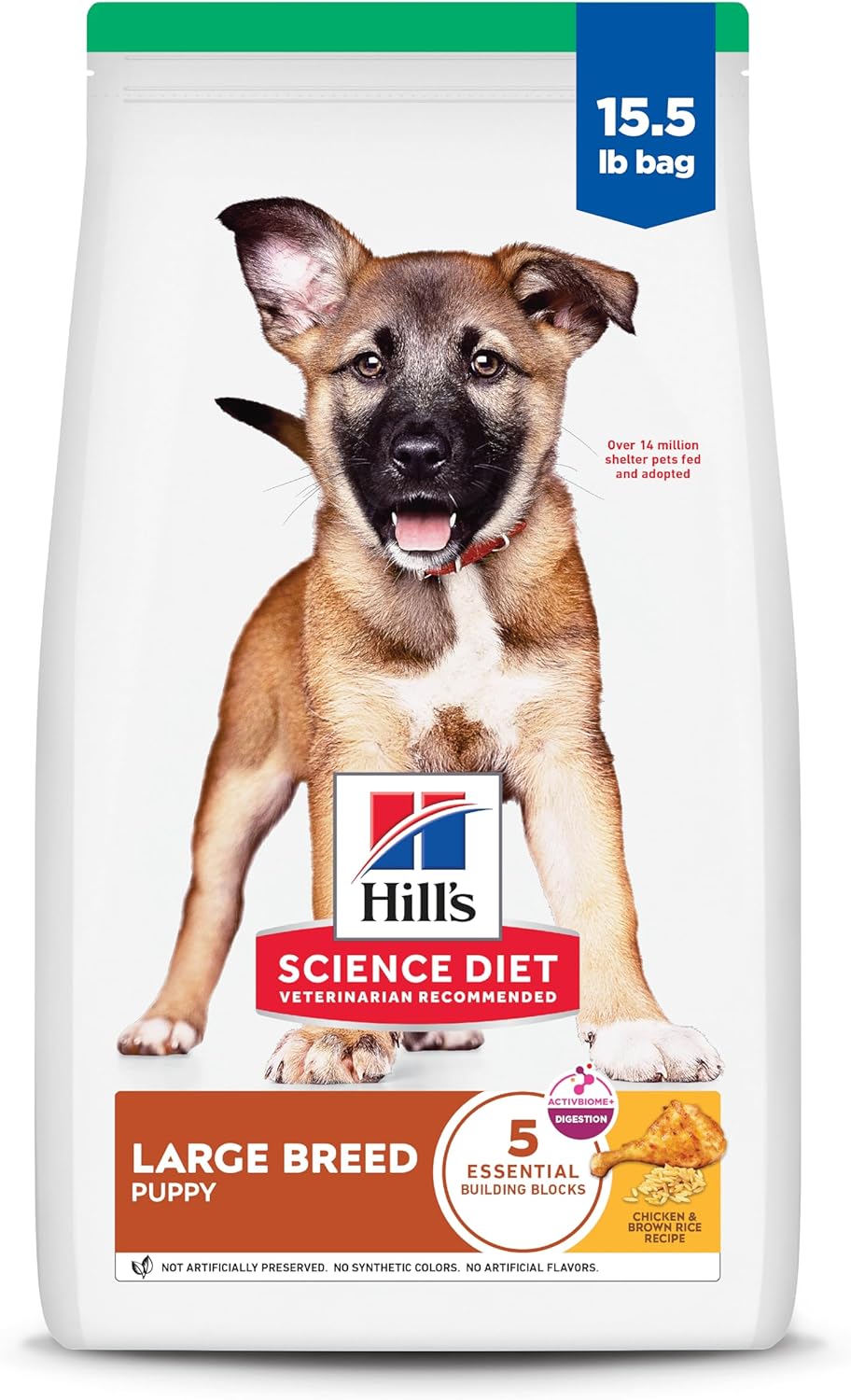
| Flavor | Chicken & Brown Rice |
|---|---|
| Age Range Description | Puppy |
| Breed Recommendation | Large Breeds |
| Item Form | Dry Food |
| Special Ingredients | all-natural |
Hill's Science Diet Puppy Large Breed Chicken & Brown Rice is a dry formula designed to support the specific growth needs of large-breed puppies. It is used as an everyday maintenance diet during the rapid growth phase, providing controlled calcium levels for measured bone development and high-quality protein to support muscle growth. The formula includes marine algae oil as a DHA source for brain and eye development, a blend of prebiotic fibers to support digestive health, and antioxidants to bolster the developing immune system. In practice the kibble is intended to be fed following the package feeding guide and gradually introduced over a 7-day transition when switching foods. This product focuses on growth-stage nutrition rather than therapeutic joint repair so it does not list added glucosamine or chondroitin explicitly, and buyers should monitor weight to avoid excess calories during growth. For owners of very large breeds like Great Danes, the controlled calcium and balanced nutrient profile make this a sensible foundational diet to help promote appropriate skeletal development and overall puppy health.
Best for: Buyers raising very large-breed puppies who prioritize controlled skeletal development and foundational, vet-recommended growth nutrition for long-term joint health.
Less Ideal for: Owners seeking a therapeutic formula specifically concentrated on joint repair with added glucosamine or chondroitin should consider veterinary prescription joint-support diets instead.
- Formulated with controlled calcium to support appropriate bone growth in large-breed puppies
- Includes marine algae oil providing DHA for brain and eye development
- Prebiotic fiber blend supports digestive health and nutrient absorption
- Antioxidant blend helps strengthen the developing immune system
- Does not explicitly list glucosamine or chondroitin for targeted joint repair
- Higher calorie density may require careful portion control to prevent excess weight gain
Verdict: The best large-breed complete puppy food meets growth-rate and joint-support needs specific to large-breed puppies to help reduce developmental issues.
Royal Canin Small Indoor Puppy Dry Dog Food 2.5 lb
Best Small-Breed Complete Puppy Food

| Flavor | Chicken |
|---|---|
| Age Range Description | Puppy |
| Breed Recommendation | Small Breeds |
| Unit Count | 40 Ounce |
| Specific Uses For Product | Brain Health, Digestive Health, Immune Support |
Royal Canin Small Indoor Puppy is a targeted dry kibble designed for small-breed puppies up to about 10 months and expected adult weights up to ~22 lb. The formula combines highly digestible proteins, a specific fiber blend and prebiotics to support digestion and help reduce stool volume and odor, while clinically proven antioxidants (vitamins E and C) support immune development. Added DHA and EPA support brain development and skin and coat condition, and the exclusive small kibble shape suits miniature jaws and picky eaters. In practice this food works well as an everyday sole diet or mixed with wet food during transitions; feeding guidelines focus on the small-breed growth window. Limitations to note are the ingredient list, which includes grain ingredients and chicken by-product meal rather than single-source novel proteins, so it may not suit puppies with specific protein or grain sensitivities. Also the bag is a modest 2.5 lb size, which means more frequent repurchasing for multi-puppy households. For owners prioritizing digestive support and balanced growth for small indoor puppies, this formula provides practical benefits backed by breed-targeted research.
Best for: Buyers who want a digestion-focused, breed-targeted puppy kibble that supports immune and brain development while fitting the needs of small indoor puppies.
Less Ideal for: Owners who need a limited‑ingredient, grain‑free, or single‑source protein diet for diagnosed food sensitivities should consider specialized veterinary or hypoallergenic formulas instead.
- Formulated with prebiotics and a specific fiber blend to support digestion and reduce stool odor and volume
- Clinically proven antioxidants (vitamins E and C) to help develop immune function
- Includes DHA and EPA to support brain development and healthy skin and coat
- Small, exclusive kibble shape for miniature jaws and picky small-breed puppies
- Contains grain ingredients and chicken by-product meal, so not ideal for puppies with specific protein or grain sensitivities
- Small 2.5 lb bag size requires more frequent replacement for households with multiple puppies
Verdict: The best small-breed complete puppy food is formulated with appropriately sized kibble and higher calorie density to meet the faster metabolisms of small puppies.
Wellness Complete Health Pate Puppy 12.5 oz
Best Wet Complete Puppy Food

| Flavor | Chicken |
|---|---|
| Age Range Description | Puppy |
| Item Form | Wet |
| Unit Count | 150 Ounce |
| Number of Items | 12 |
Wellness Complete Health Pate Puppy is a smooth, protein-forward wet food designed for puppies and mixed feeding routines. It comes as a true pate made from chicken, chicken liver and salmon in a broth base with added vegetables and grains, so it is easy to portion, scoop, and mix into dry kibble as a topper. The formula emphasizes brain and bone development with guaranteed DHA from salmon oil plus added calcium and phosphorus, and it avoids common allergens like corn, wheat, and soy while listing no artificial colors or preservatives. Practical benefits include palatability for picky eaters, convenient feeding guidelines for different puppy ages and life stages, and the flexibility to use as a full meal or a kibble mixer. Limits to consider are that the pate texture may not satisfy puppies that prefer chunkier or shredded textures, and buyers who need grain-free recipes will need a different Wellness line. Also, opened cans require refrigeration and timely use within a few days like most wet foods.
Best for: Puppy owners who want a smooth, easy-to-serve canned food to feed as a complete meal or to mix with dry kibble for added moisture and nutrition.
Less Ideal for: Owners specifically seeking grain-free wet puppy food or dogs that prefer chunky, meaty textures over smooth pates.
- Smooth pate texture that is easy to portion and mix with kibble
- Contains real chicken and salmon with added DHA to support brain development
- Formulated without corn, wheat, or soy and no artificial colors or preservatives
- Clear feeding directions for puppy growth stages and appropriate for use as full meals or toppers
- Not grain-free in this formulation
- Pate texture may not suit puppies that prefer chunky or shredded pieces
Verdict: The best wet complete puppy food offers higher moisture content and strong palatability for picky puppies or those needing extra hydration and texture variety.
Choosing the Right Complete Puppy Food: Key Factors to Consider
Guaranteed Analysis and Nutrient Balance
Look for a complete guaranteed analysis that lists crude protein, crude fat, crude fiber, and moisture plus, ideally, specified levels for omega fatty acids. Puppies require higher protein and fat levels than adult dogs to fuel growth and activity. The balance of protein to fat affects weight gain pace and energy, while fiber influences stool quality.
Pay attention to calcium and phosphorus values or statements that the food meets AAFCO growth guidelines. Incorrect calcium-phosphorus ratios during rapid growth can negatively affect bone development. A transparent nutrient panel helps you compare options and ensures the formula is appropriate for growth rather than maintenance.
Protein Source and Digestibility
High-quality animal-based proteins are preferable for essential amino acids and digestibility. Ingredients that specify muscle meat, poultry meal, or fish meal generally deliver concentrated protein and sensible amino acid profiles. Plant proteins add bulk but are often less bioavailable, so good puppy formulas combine digestible animal proteins with supportive plant ingredients.
Digestibility affects how much usable nutrition your puppy actually absorbs and also impacts stool volume and consistency. Ingredients such as named meat meals, enzymatic processing, or added digestive enzymes can improve bioavailability and make it easier for puppies with sensitive stomachs to thrive.
Fatty Acids and Brain Development
Long-chain omega-3 fatty acids, particularly DHA, play a direct role in early brain and vision development. A puppy formula should include sources of DHA or fish oil to support cognitive growth. Adequate total fat provides concentrated calories necessary for growth and supports skin and coat health.
Consider the balance between omega-6 and omega-3 fats. Excessive omega-6 without enough omega-3 can promote inflammation, so look for formulas that list both types and provide specific omega-3 contributors in the ingredient list.
Kibble Size and Feeding Practicality
Kibble size and texture matter for puppies' small mouths and developing teeth. Smaller, bite-sized pieces make it easier for young puppies to chew and reduce the risk of gagging or food aversion. Texture also affects how quickly a puppy eats; overly dense or very hard kibble may be difficult for very young animals.
Practical feeding considerations include packaging that protects freshness, clear feeding guides by weight and age, and whether the formula is easy to mix with water or toppers for picky eaters. Choose formats that fit your routine and make consistent feeding straightforward for training and growth monitoring.
Digestive Support and Stool Quality
Puppies often experience gastrointestinal sensitivity during weaning and the first months of life. Formulas with prebiotic fibers, probiotics, and moderate fiber levels can promote a balanced gut microbiome and more consistent stools. Ingredients like chicory root, FOS, or specific probiotic strains are helpful indicators of digestive support.
Good stool quality makes housetraining and veterinary checks simpler. If your puppy has a history of loose stools or sensitivity, prioritize formulas formulated for digestive health and consider introducing new diets gradually to minimize upset.
Life-stage Labeling and Regulatory Compliance
Ensure the product is explicitly labeled for growth or all life stages with a statement that it meets recognized nutrient profiles for puppy growth. This labeling indicates the formula was designed with the higher nutrient needs of growing dogs in mind rather than adult maintenance.
Regulatory compliance, clear manufacturing information, and recalls history are also worth checking. Products that provide feeding trials or reference established nutrient profiles offer more assurance that the diet will support development when fed as directed.
How Much Should I Feed My Puppy at Each Stage?
Portion size depends on your puppy's current weight, expected adult weight, age, and activity level. Most manufacturers provide feeding tables by age and weight; use those as a starting point, then monitor body condition and adjust. Puppies typically need multiple small meals a day—often three to four feedings until about four months, then two to three feedings through adolescence.
Watch for steady, controlled weight gain rather than rapid jumps. Check ribs by feel and observe energy levels; if your puppy looks pudgy or lethargic, reduce portions slightly. If the puppy is too thin or not meeting growth milestones, increase calories and consult your veterinarian.
- Feed smaller, frequent meals for very young puppies to manage digestion.
- Adjust portions as growth slows; adolescent puppies need fewer meals but still higher calories than adults.
- Reweigh your puppy periodically and update portions to match growth.
Can I Switch Foods During the First Year?
Switching foods is common as puppies grow or when you want a different nutrient profile. Make changes gradually over 7 to 10 days to reduce digestive upset by mixing increasing amounts of the new food with the old each day. Monitor stool quality and appetite during the transition.
If you need to change for medical reasons, follow veterinary guidance. For normal transitions, pick a nutritionally complete puppy formula and check that protein, fat, and calcium levels remain appropriate for growth to avoid nutritional disruptions.
- Introduce new formulas slowly and one at a time.
- Keep feeding schedules and portion sizes consistent during transitions.
- Pause changes if your puppy develops persistent diarrhea or decreased appetite and consult your veterinarian.
What Role Does Kibble Texture Play in Teething?
During teething, puppies may prefer softer food or enjoy chewing to soothe sore gums. Some owners temporarily moisten kibble or offer moistened options to ease discomfort. However, completely switching to very soft diets for long periods can affect dental cleaning benefits that dry kibble provides.
You can offer appropriately sized chew toys and rotate between dry and slightly moistened meals to balance comfort and oral health. If your puppy avoids hard kibble entirely, choose a formula with smaller, palatable pieces to encourage eating and avoid nutrient gaps.
- Moisten kibble with warm water for sore gums while keeping meals nutritionally complete.
- Provide safe chew options to relieve teething discomfort without replacing balanced meals.
- Monitor chewing habits so dental issues or pain do not lead to prolonged picky eating.
Are Grain-free or Limited-ingredient Options Necessary?
Grain-free and limited-ingredient formulas can be useful for puppies with identified sensitivities, but they are not automatically superior for all puppies. Grains can be a healthy source of energy and fiber when well processed. Limited-ingredient diets simplify the ingredient list, which helps identify and exclude specific triggers for food sensitivity.
If you suspect a food sensitivity, work with your veterinarian to run an elimination trial using a single-protein or limited-ingredient puppy formula. For most healthy puppies, standard complete formulas that include grains provide balanced nutrition and good digestibility.
- Reserve grain-free or limited-ingredient diets for confirmed sensitivities.
- Always confirm a suspected intolerance with a methodical elimination process.
- Check ingredient sources rather than assuming grain-free equals higher quality.
When Should I Consult a Veterinarian About Diet?
Consult your veterinarian if your puppy shows poor weight gain, persistent vomiting or diarrhea, skin issues that do not improve, or signs of lethargy. Rapid growth issues or abnormal stool quality can indicate a nutrient imbalance or an underlying health concern that needs professional evaluation.
Also consult before making major diet changes for puppies with known health issues or before starting supplements. A veterinarian can help tailor feeding plans to breed-specific growth patterns or medical conditions.
- Seek veterinary advice for unexplained weight loss or gain during growth.
- Ask for nutrient testing or tailored feeding plans for puppies with medical histories.
- Get guidance before adding supplements that could unbalance growth-stage nutrient ratios.
How We Chose the Best Complete Puppy Food
Our selection began with products formulated specifically to be complete puppy foods, meaning each formula must deliver a full nutrient profile appropriate for growth. We prioritized options that list a clear source of animal protein high on the ingredient list and include essential growth nutrients such as adequate levels of high-quality protein, essential fatty acids, calcium and phosphorus for bone development, and bioavailable vitamins and minerals. Digestibility and gut tolerance were a key filter. We looked for formulas with digestible carbohydrate sources and added prebiotic or probiotic support where available. Safety and manufacturing transparency were considered next, favoring products with clear ingredient sourcing and straightforward labeling. Palatability and practical feeding formats were evaluated so the picks work for typical puppy appetites and household routines. We excluded any foods intended only for adult maintenance, therapeutic prescription diets, or those lacking a complete-for-growth statement. The final list reflects products that meet growth-stage nutrient targets, show evidence of formulation for young dogs, and offer sensible ingredient choices and digestibility for most puppies.
Our full evaluation process is outlined in our review methodology.
FAQ
How quickly should I expect growth after switching to a complete puppy food?
You should see steady improvements in energy and healthy weight gain within a few weeks if the diet matches your puppy's needs. Exact timing depends on age, breed, and prior nutrition; monitor body condition and consult your veterinarian if growth seems too fast or too slow.
Is wet food better than dry for puppies?
Wet food can be more palatable and easier to chew for some puppies, but dry food offers convenience, longer shelf life after opening, and mild dental benefits. Both can be complete for growth if labeled appropriately; choose the format that your puppy accepts and that fits your feeding routine.
Can I mix human food into puppy meals for added appeal?
Small amounts of plain, cooked lean meats or vegetables can be used as occasional toppers, but regular mixing can unbalance a complete formula. Avoid adding seasonings, sauces, or foods toxic to dogs. Keep additions minimal and use them primarily to encourage appetite during temporary picky phases.
How important is DHA in puppy diets?
DHA supports brain and vision development in early life and is a helpful component of a complete puppy food. Many growth-focused formulas include DHA from fish oil or algal sources; it is one of several nutrients that contribute to healthy development.
Will a higher calorie puppy food make my puppy grow faster?
Higher calorie foods can increase weight gain, but too-rapid growth, especially in large-breed puppies, can stress developing bones and joints. Follow feeding guidelines, monitor growth carefully, and consult a veterinarian to adjust calories according to breed and body condition.
Final Verdict
Choosing the right complete puppy food means prioritizing balanced nutrients, digestible protein, appropriate fats, and formulas labeled for growth. Match kibble size and feeding frequency to your puppy's age and monitor body condition regularly so you can adjust portions as needed. Tradeoffs often come down to digestibility versus convenience and specialized formulations versus broad suitability. Focus on a complete growth-stage formula that supports steady weight gain, good stool quality, and essential nutrients like DHA. When in doubt, use feeding guides and veterinary advice to refine your choice and keep your puppy on track.

