

Setting up a crate properly makes a big difference in how quickly your puppy settles, sleeps, and learns basic housetraining. A thoughtful crate arrangement helps your puppy feel safe, prevents bad habits, and creates a consistent retreat you can rely on during naps, travel, and overnight. This guide covers the top shortlisted crates and the accessories that matter most for puppies, with a clear look at safety, comfort, and everyday convenience. Read on to see which setups earned a spot and why those choices matter for early training and long-term routine.
Top Picks at a Glance
| Best Overall Crate The top all-around crate that suits most puppies and homes | Amazon Basics Foldable Metal Dog Crate 24" |  |
| Best Budget Crate A low-cost crate that covers basic containment and safety needs | Love's cabin Pet Playpen Small |  |
| Best Compact Crate A smaller-footprint crate for apartments, travel, and tight spaces | MidWest iCrate 24-Inch Single Door |  |
| Best Large-Capacity Crate A roomy crate designed for larger breeds or fast-growing puppies | DONORO Dog Crate Medium |  |
| Best Heavy-Duty Crate Built for extra durability with reinforced materials and secure latches | VEVOR Dog Playpen 24 Inch |  |
| Best Portable Crate Lightweight, foldable, or airline-friendly designs for easy transport | PETSFIT Portable Dog Crate 19" |  |
| Best Easy-Clean Crate Designed for quick cleanup with removable trays and washable surfaces | Aidoly Single Door Dog Crate 30 Inch |  |
Amazon Basics Foldable Metal Dog Crate 24"
Best Overall Crate

| Specific Uses For Product | Indoor |
|---|---|
| Breed Recommendation | Small Breeds |
| Number of Doors | 1 |
| Included Components | Divider |
| Material Type | Metal |
This Amazon Basics 24" foldable metal wire crate is a straightforward, space-conscious option for housing a small dog or puppy indoors. It assembles quickly, folds flat for storage or transport, and includes a top handle so you can move it without disassembly. The removable plastic tray makes spot cleaning simple, while the included divider lets you shrink the interior for younger pups as they grow. The manual door latch is secure for everyday containment and the crate's metal construction uses a high proportion of recycled material. On the practical side it is basic rather than plush: there is no padding or full enclosure for added warmth and the single-door layout limits placement flexibility. The 15 mm gap between wires suits small breeds but would not contain persistent escape artists or larger dogs. For small-space homes this crate balances durability, portability, and easy cleaning, but expect to add bedding or a mat for comfort and consider heavier-duty hardware if your puppy chews or pushes aggressively.
Best for: Buyers needing a compact, easy-to-store containment solution for a small puppy in apartments or homes with limited floor space who prioritize portability and simple cleaning.
Less Ideal for: People who need a heavy-duty crate for larger or destructive dogs, or those who want an insulated, fully enclosed den-style crate without adding bedding or accessories.
- Compact, foldable design for easy storage and transport
- Removable plastic tray speeds up cleaning
- Included divider lets you reduce interior space for young puppies
- Durable metal wire construction with manual latch for secure containment
- Top handle simplifies carrying when folded flat
- Single-door layout can limit placement options in tight rooms
- No built-in padding or insulation so bedding is required for comfort
- Wire gap size and lightweight latch may not deter very persistent chewers
Verdict: The best overall crate balances size range, safety, ventilation, and ease of cleaning to fit the needs of most puppy owners.
Love's cabin Pet Playpen Small
Best Budget Crate

| Material Type | Polyester |
|---|---|
| Closure Type | Zipper |
| Pet Type | Cat, Dog, Small Animal |
| Dog Breed Size | Medium |
This Love's cabin playpen is a pop-up, 8-panel circular enclosure that gives small dogs, puppies and other small pets a temporary safe space indoors or outdoors. It uses 600D polyester and thick mesh with a removable zippered top and a zippered door so you can leave it closed for outdoor shade or open for indoor access. The playpen folds flat into the included carrying case and requires no assembly, making setup and transport straightforward for short-term use around the house, at the park, or on trips. Practical benefits include a low-weight design that is easy to move, mesh sides for ventilation and visibility, and wipe-clean fabric for simple care. Important limitations are its light frame and fabric construction, which makes it unsuitable for strong chewers or animals that jump or push hard against barriers, and the small size option is intended only for very small pets up to the listed weight limit.
Best for: Buyers who need a fast, lightweight indoor play area they can move or pack away easily for short-term confinement and supervised play.
Less Ideal for: People who need a durable, permanent crate for unsupervised containment or who have strong chewers, climbers, or larger dogs that require a rigid enclosure.
- Pop-up, no-assembly design for seconds-level setup
- Removable zippered top and zippered door for flexible access and shade
- Lightweight and folds into included carrying case for easy transport
- Mesh panels provide good airflow and visibility
- Wipe-clean polyester fabric for simple maintenance
- Not sturdy enough for heavy chewers or persistent jumpers
- Smaller size has limited interior space for larger small-breed dogs
Verdict: The best budget crate offers reliable containment and decent durability at a lower price for owners prioritizing affordability.
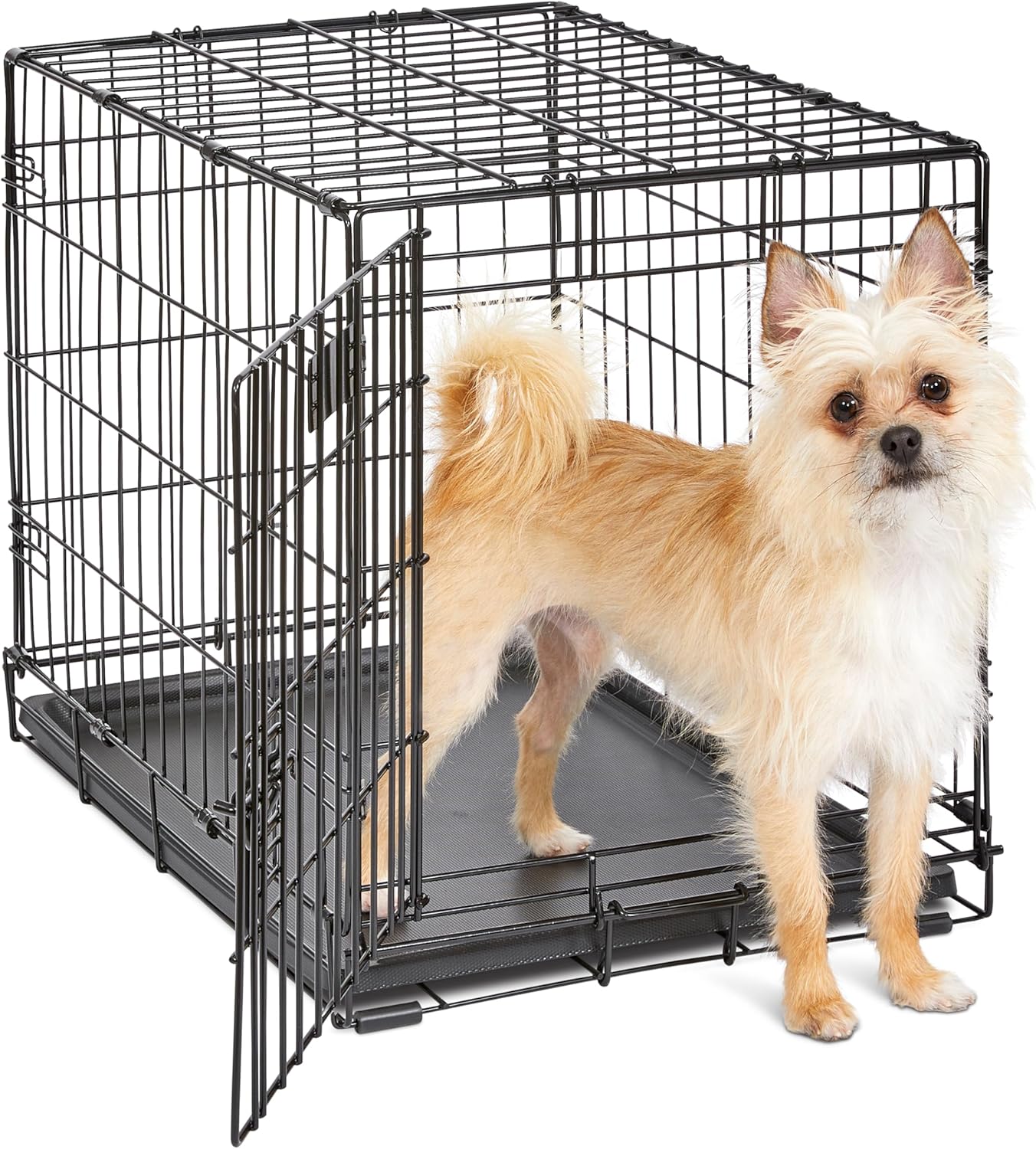
MidWest iCrate 24-Inch Single Door
Best Compact Crate
| Breed recommendation | Small (12-20 lbs) |
|---|---|
| Included components | Divider, Removable Tray |
| Number of doors | 2 |
| Gap size | 1.5 inches |
The MidWest iCrate is a straightforward, durable wire crate designed for puppy and small-dog use. It folds flat for storage and travel, sets up without tools, and includes a removable leak-proof tray and rubber feet that make daily cleanup and floor protection simple. Security features such as a slide-bolt latch with a patented Paw Block and locking tips improve escape resistance compared with basic wire crates, and the divider panel lets you shrink the interior for a growing puppy. The low threshold and larger openings make it easier for puppies to enter and exit during crate training, while the carry handle and relatively lightweight construction help with moving the crate between rooms. Trade-offs are the basic metal-wire styling and lack of sound-absorbing panels, so it will not mask noise as well as soft-sided or more heavily padded options, and very active chewers may eventually damage the wire. For everyday house training and short-term confinement, the iCrate balances safety, convenience, and value.
Best for: Buyers who want a practical, durable crate for everyday crate training and short-term confinement that can grow with a puppy and is easy to clean and move around the home.
Less Ideal for: People seeking a noise-dampening, heavily padded den-style crate or a solution for dogs that are destructive chewers should consider other crate types.
- Fold-flat, tool-free setup and portable carry handle for easy moving and storage
- Divider panel included to adjust interior space as a puppy grows
- Leak-proof removable tray makes cleaning fast and sanitary
- Slide-bolt latch with Paw Block and locking tips increases escape resistance
- Precision-welded metal wire with black e-coat finish resists rust for long-term use
- Metal wire construction offers minimal sound insulation or cushioning
- Not suited for heavy chewers who can bend or damage wire panels
Verdict: The best compact crate is sized for small spaces and easier transport while still providing a secure den for a puppy.
DONORO Dog Crate Medium
Best Large-Capacity Crate

| Material Type | 600D oxford cloth, ABS plastic tray, Metal |
|---|---|
| Number of Doors | 1 |
| Included Components | Cover, Removable Tray |
| Additional Features | Collapsible, Durable, Portable, Waterproof, Weather Resistant |
This DONORO dog crate kit is a practical, ready-to-use option for pet owners who want a contained, den-like sleeping space. The crate is metal-wire construction with two doors—front and side—each secured by heavy-duty slide-bolt latches, and it includes a leak-proof removable tray and a brown 600D oxford fabric cover that slips over the top to darken the interior. Setup and folding for storage are straightforward, and the carry handle makes short moves easier. The oxford cover and roll-up door panels provide a quieter, more enclosed sleeping environment, which helps dogs relax and supports house training. On the downside, the listed gap size and lightweight wire frame mean highly determined chewers may eventually bend or exploit the bars, and the cover is hand-wash only which adds maintenance. The crate is best used as an indoor sleeping den or travel-ready kennel for dogs that are not heavy chewers and for owners who value portability and a covered sleeping area.
Best for: Buyers who need a portable, covered indoor sleeping crate that is easy to set up and provides a secure, den-like space for everyday resting and house training.
Less Ideal for: Owners of powerful chewers, escape-prone dogs, or pets requiring a heavy-duty reinforced crate should consider a sturdier, solid-panel option instead.
- Double-door design for easier access from front or side
- Heavy-duty slide-bolt latches on each door for secure closure
- Includes removable leak-proof tray for easier cleaning
- 600D oxford fabric cover creates a den-like, low-light sleeping area
- Wire frame and 1.5 gap size are not optimized for strong chewers or escape artists
- Cover requires hand washing which may be inconvenient for frequent cleaning
Verdict: The best large-capacity crate provides extra internal space and sturdy construction to comfortably accommodate bigger or rapidly growing dogs.
VEVOR Dog Playpen 24 Inch
Best Heavy-Duty Crate

| Number of panels | 8 Panels |
|---|---|
| Main material | A36 Rust-Resistant Steel |
| Bottom pad material | 600D Waterproof Oxford Fabric |
| Playpen height | 24''H |
| Suitable dog shoulder height | 14''H |
This VEVOR playpen is a heavy-duty, portable enclosure aimed at keeping puppies and small dogs contained indoors or on covered patios. It uses A36 rust-resistant steel with double-thick wire and six horizontal bars per panel to reduce gaps that paws and teeth can reach, which helps prevent pad damage and resists bending from chewing or pushing. The included 600D waterproof octagonal bottom pad fits the layout, wipes clean easily, and has raised edges to stay tucked under the lower crossbars. Setup is tool-free and fast — panels fold flat for travel or storage and can be reconfigured into multiple shapes. The front panel's full-size walk-through gate has a secure latch and rounded corners that protect pets. Limitations for this heavy-duty slot: the 24-inch height and recommendation for pets up to about 14 inches shoulder height mean it is only suitable for small or non-climbing animals, and very determined large chewers could still stress welds or latches over long-term use.
Best for: Buyers who need a rugged, travel-ready pen for puppies and small dogs that resists pawing and pad damage and can be set up quickly in living spaces or on trips.
Less Ideal for: Owners of medium or large dogs, or anyone who needs a tall, high-security kennel for persistent escape artists or oversized chewers.
- Robust A36 rust-resistant steel construction with double-thick wire and extra horizontal bars to limit gaps
- Waterproof 600D bottom pad custom-shaped for the octagonal layout and easy to wipe clean
- Tool-free 8-panel foldable design that stores flat and can be rearranged into multiple layouts
- Full-size walk-through gate with secure latch and rounded corners for safer handling
- 24 inch height limits use to small or non-climbing animals
- Not intended for large-breed dogs or heavy long-term destructive chewing by very strong chewers
Verdict: The best heavy-duty crate is made for chewers, strong dogs, or long-term use, prioritizing rugged construction and tamper-resistant hardware.
PETSFIT Portable Dog Crate 19"
Best Portable Crate

| Size | 19 inch (fits up to 15 lbs) |
|---|---|
| Closure Type | Zipper |
| Material Type | Oxford cloth |
| Ventilation | Three mesh sides |
The PETSFIT 19-inch portable dog crate is a soft-sided, collapsible travel kennel aimed at small dogs and puppies that need a lightweight, easy-to-carry retreat. It pops up for quick setup and folds flat for storage, making it convenient for road trips, camping, or short stays away from home. Three mesh sides provide ventilation and visibility while anti-scratch Oxford fabric and reinforced seams plus internal wire framing and extra fiber rods help the crate hold its shape better than basic pop-ups. A reversible thick mattress that is machine washable adds comfort and makes cleaning straightforward. The crate uses zippers for closure and includes a carry option when folded, so it is simple to move and lift for frequent travelers. Limits to consider are size and weight capacity — it is intended for small breeds up to about 15 pounds at this size — and soft sides offer less protection than metal crates against determined chewers or for dogs that need strong confinement. The design favors portability and comfort over heavy-duty security.
Best for: Buyers who travel often with a puppy or small dog and need the lightest, easiest-to-handle crate that still offers comfort and quick setup.
Less Ideal for: Owners who need a heavy-duty, chew-proof, or long-term containment solution should choose a metal or reinforced crate instead.
- Very lightweight and collapsible for easy carrying and storage
- Three mesh panels provide good airflow and visibility
- Reinforced seams and extra fiber rods improve structural stability compared with basic pop-ups
- Includes a reversible, machine-washable mattress for comfort and easy cleaning
- Soft-sided construction is not as escape-resistant or protective as metal crates
- Small size suitable only for very small dogs or puppies with a low weight limit
Verdict: The best portable crate is easy to fold, carry, and set up for travel or seasonal moves while still keeping a puppy comfortable.
Aidoly Single Door Dog Crate 30 Inch
Best Easy-Clean Crate

| Material Type | Metal |
|---|---|
| Number of Doors | 1 |
| Included Components | Dog Crate, User Manual |
| Specific Uses For Product | Indoor, Outdoor, Transport |
This Aidoly 30-inch single-door crate is a basic, no-frills metal kennel that focuses on easy cleanup and portability. It uses a removable ABS composite pan that sits under the wire frame to catch messes and is marketed as leak-proof, which makes wiping and rinsing quick after accidents or meal time. The wire frame folds flat and assembles without tools, so it is convenient to move between rooms or for occasional travel and storage. Security is handled by a heavy-duty sliding bolt on the single door and rounded wire edges reduce snag and injury risk. Because it is a metal wire crate, it provides ventilation and visibility but offers minimal sound insulation or cushioning, so buyers should add a pad or bed for comfort. The build is utilitarian rather than premium; expect a lightweight frame suited to medium-breed dogs and typical indoor/outdoor family use rather than heavy chewers or escape artists.
Best for: Buyers who prioritize minimal maintenance and quick cleanup for everyday housetraining or travel will appreciate this crate's removable tray and fold-flat convenience.
Less Ideal for: Households needing a chew-proof, heavy-duty containment solution or those that require sound-dampening and built-in padding should consider sturdier or more insulated alternatives.
- Removable ABS leak-proof pan for fast, low-effort cleaning
- Foldable design that assembles without tools for easy transport and storage
- Single sliding bolt lock and rounded wire edges for basic containment and safety
- Metal wire construction provides good ventilation and visibility
- Lightweight frame not intended for heavy chewers or strong escape behavior
- Single door limits access orientation compared with dual-door crates
Verdict: The best easy-clean crate focuses on hygiene and convenience with removable pans, smooth finishes, and materials that simplify accidents and routine cleaning.
Choosing the Right Crate Set Up Puppy: Key Factors to Consider
Crate Size and Future Growth
Getting the right size is essential because puppies grow quickly and an inappropriate crate can undermine housetraining and comfort. The crate should be large enough for the puppy to stand, turn, and lie down comfortably, but not so big that they can use one end as a bathroom. Adjustable dividers or multiple size options let you restrict usable space as the puppy grows without forcing an immediate replacement. Consider the adult size of the breed and measure from nose to tail and paw to shoulder when in doubt.
A properly sized crate also influences behavior: too much empty space encourages roaming and accidents, while too small a crate causes stress and restlessness. For multi-puppy litters or rapid growth breeds, look for crates that are easy to resize or that offer extension panels to extend usable life. Accurate sizing reduces the need for repeated rehoming of crates and helps maintain a consistent training environment.
Safety and Ventilation
Ventilation and construction quality directly affect a puppy's wellbeing while crated. Adequate airflow prevents overheating and keeps the environment comfortable during naps and overnight stays. Metal bar spacing, panel strength, and well-fitted doors reduce the risk of injury or escape attempts. Check for smooth welds and edges and avoid setups with small parts a puppy could chew off.
The locking mechanism should be simple for owners to operate quickly but secure enough that a curious or determined puppy cannot push the door open. For very young puppies, avoid crates with sharp hardware or breathable mesh that a teething pup can shred. Proper ventilation combined with sturdy construction creates a safer, calmer space that supports longer rest periods.
Bedding, Chew Resistance, and Cleanliness
Comfortable bedding makes a crate inviting, but puppies chew and have accidents, so choose materials that balance softness with washability and chew resistance. Removable, machine-washable covers and waterproof liners protect the crate base and simplify cleanups after accidents. For teething puppies, avoid plush items that shred easily and introduce durable chew-resistant pads or fleece covers you can replace.
A washable bedding system reduces lingering odors and stains, which helps the crate remain acceptable as a sleeping area. Consider layered bedding—an absorbent waterproof layer beneath a cozy, replaceable top layer—to keep maintenance simple while providing consistent comfort.
Placement and Environmental Control
Where you place the crate affects how quickly a puppy acclimates and how well housetraining goes. Position the crate in a quiet, draft-free area with moderate temperature and a familiar family scent nearby, such as a worn t-shirt, to reduce anxiety. Avoid direct sunlight or areas with heavy foot traffic that may startle or overstimulate a young pup.
Placement also influences routine: a crate near family activity encourages socialization during daytime naps, while a bedroom location can help nighttime reassurance. Balance closeness with periods of quiet so the puppy learns both social calm and independence.
Accessories for Training and Comfort
Thoughtful accessories can speed training and improve daily life. A secure divider lets you limit space as the puppy grows. A chew-safe toy or lick mat provides enrichment that redirects teething behaviour. Portable water attachments that do not spill and a removable tray for easy cleaning add convenience. A cover or blanket draped loosely over part of the crate can create a den-like feeling but must not restrict airflow.
Accessories should prioritize safety and durability. Avoid small toys that present choking hazards and choose materials that tolerate frequent washing. The right accessory package reduces stress for both puppy and owner and supports more consistent training sessions.
Ease of Access and Daily Use
A crate that is easy to use will get used more consistently, which directly benefits housetraining and routine building. Look for doors that open smoothly and latches that operate fast with one hand. Double-door crates or side access can make placing a restless puppy inside easier during bedding changes or cleaning. For travel or temporary relocation, a crate that folds or disassembles without tools speeds setup and storage.
If a crate is hard to clean or awkward to reach, owners may delay maintenance or avoid using it, undermining training. Prioritizing daily usability reduces friction in your schedule and helps the crate become an integrated tool rather than a chore.
How Soon Should I Start Crate Training My Puppy?
Begin crate introduction as early as the first days the puppy comes home, using short, positive sessions to build a calm association. Start with meals and short naps inside the crate with the door open so the puppy learns to enter voluntarily.
Progress gradually to closed-door sessions of increasing length as the puppy shows comfort. Keep sessions predictable and end them on a calm note to reinforce the crate as a safe place rather than a punishment.
- Use treats and gentle praise for voluntary entry
- Keep initial closed-door times brief, then slowly extend
- Never use the crate for punishment
What Bedding Is Safest for a Teething Puppy?
Choose bedding that balances softness with durability and easy laundering. A waterproof base layer beneath a machine-washable cover reduces the mess from accidents, while a second, replaceable soft layer provides comfort without permanence.
Avoid loosely stuffed toys or materials that shred easily. For teething puppies, consider a chew-resistant mat or a removable chew-proof pad that can be swapped out if damaged.
- Waterproof liner under a washable top layer
- Avoid small or easily shredded stuffing
- Replace worn bedding promptly
How Can I Prevent Barking or Whining in the Crate?
Barking and whining often come from separation anxiety, boredom, or unmet needs. First rule out simple causes: ensure the puppy has had a recent potty break, is not hungry, and has had appropriate playtime before being crated. A tired puppy is more likely to rest quietly.
Use short, predictable crate sessions and increase them gradually. Provide safe enrichment such as a chew-safe toy or a food puzzle before crating to occupy the puppy. If noise persists, avoid responding immediately every time, since attention can unintentionally reinforce the behavior; instead, wait for a quiet moment to give attention or a break.
- Check physical needs before crating
- Build duration slowly and maintain consistency
- Use enrichment to reduce boredom
Should the Crate Be Covered at Night?
A light cover can create a den-like feel that some puppies find comforting, but it must not block ventilation or trap heat. Use breathable fabric and cover only part of the crate so airflow remains adequate.
Monitor the puppy's comfort and avoid covering in warm environments. If the puppy seems unsettled by a full cover, try covering only the back and sides or leaving the front open to maintain sightlines and airflow.
- Use breathable fabric and partial covering
- Avoid covering in hot conditions
- Adjust based on the puppy's response
How to Handle Accidents in the Crate
Accidents are common with puppies and are usually a sign of developmental stage or timing rather than stubbornness. Clean the crate promptly with an enzymatic cleaner to remove odors that encourage repeat soiling and replace any soiled bedding layers.
Reassess the crate schedule to ensure bathroom breaks are frequent enough and consider reducing the length of closed-door periods until the puppy shows greater bladder control. Avoid scolding, as negative reactions can create anxiety about the crate.
- Clean with enzyme-based products to remove odor
- Shorten sessions if accidents recur frequently
- Prioritize frequent potty breaks and consistency
What Travel Considerations Should I Plan For?
If you plan to transport your puppy, choose a crate setup that adapts to travel: secure latches, a stable base, and a bedding system that stays in place during movement. Ensure the crate fits the vehicle area you intend to use and that ventilation is not compromised in transit.
Introduce the travel crate gradually with short car rides and positive reinforcement so the puppy associates vehicle time with calm experiences rather than stress. For longer trips, plan regular stops to check on the puppy and offer brief breaks for exercise and relief.
- Secure the crate and bedding for movement
- Acclimate with short, positive rides
- Plan stops for potty breaks on long trips
How We Chose the Best Crate Set Up Puppy
We selected products and setups based on criteria that matter specifically for puppies and for caretakers building a crate environment. First, we prioritized safety features such as secure latches, smooth edges, and ventilation that prevent escapes and reduce injury risk. Second, we evaluated comfort and restability including crate size options, breathable bedding compatibility, and materials that support a puppy's developing joints. Third, we looked at housetraining and behavior support: how easy a setup is to use for crate training, whether it helps with settling, and whether the layout supports a den-like space. Fourth, practical maintenance matters for busy households, so we favored setups that simplify cleaning, include washable liners or easy-access trays, and resist odors. Fifth, versatility and longevity were considered so a crate setup can adapt as the puppy grows. We excluded items that lacked necessary safety documentation, had poor ventilation, or were unsuitable for indoor housetraining. The final list balances safety, comfort, ease of use, and durability to reflect realistic needs for new puppy owners.
Our full evaluation process is outlined in our review methodology.
FAQ
How long can a puppy safely stay in a crate?
Young puppies should have frequent breaks; a general guideline is no more than one hour per month of age during the day, plus overnight sleep time. Always provide regular potty and exercise breaks and avoid extended confinement for long periods.
When should I move my puppy to a larger crate?
Increase the usable space as the puppy grows when they can stand, turn, and lie down comfortably but are consistently housetrained at the current divider setting. Use adjustable dividers to delay upsizing until necessary.
What if my puppy refuses the crate?
Go back to very short, positive introductions with the door open and use meals or high-value treats inside the crate to encourage voluntary entry. Avoid forcing the puppy in and keep sessions pleasant and predictable until they accept the space.
Can I leave water in the crate?
For short periods, a spill-proof water attachment can be used, but avoid free water bowls for long unattended sessions to reduce mess and damp bedding. Monitor water availability around exercise and potty schedules.
Is it okay to leave a toy in the crate?
A single, durable, appropriately sized chew toy or enrichment item is often helpful, but avoid soft toys with small parts for teething puppies. Rotate items to keep novelty and inspect toys regularly for wear.
Final Verdict
Focus on safety, correct sizing, and a bedding system that is both comfortable and easy to clean when choosing a crate setup for a puppy. Balance den-like security with proper ventilation and regular breaks to support housetraining and prevent anxiety. Prioritize setups that are easy to use daily and that include features—like adjustable dividers and washable liners—that make the crate useful as the puppy grows. With those tradeoffs in mind, select a setup that fits your living space and routine so the crate becomes a reliable, positive part of your puppy's life.

